
Reviewed · CAJUN & CREOLE FOOD TOURS
New Orleans: Hands-on Cajun Roux Cooking Class
The real star here is the dark roux. You do not simply watch a chef stir one while standing safely behind a counter. You chop the Cajun Holy Trinity, learn how color changes flavor, and help turn flour and fat into the backbone of gumbo. You then make shrimp etouffee and finish with bananas foster.
I like the small group size, limited to 10, because it gives you a fair chance to handle the food. I also like the relaxed teaching style: Chef Raymond brings music and energy, while Chef Jason and Mark have been praised for clear instruction and good stories. The main caution is the price, $157 per person, which is a serious sum for a three-hour meal, even with drinks included.
In This Review
- Key details before you book
- Why this cooking class works in New Orleans
- Starting with the Holy Trinity
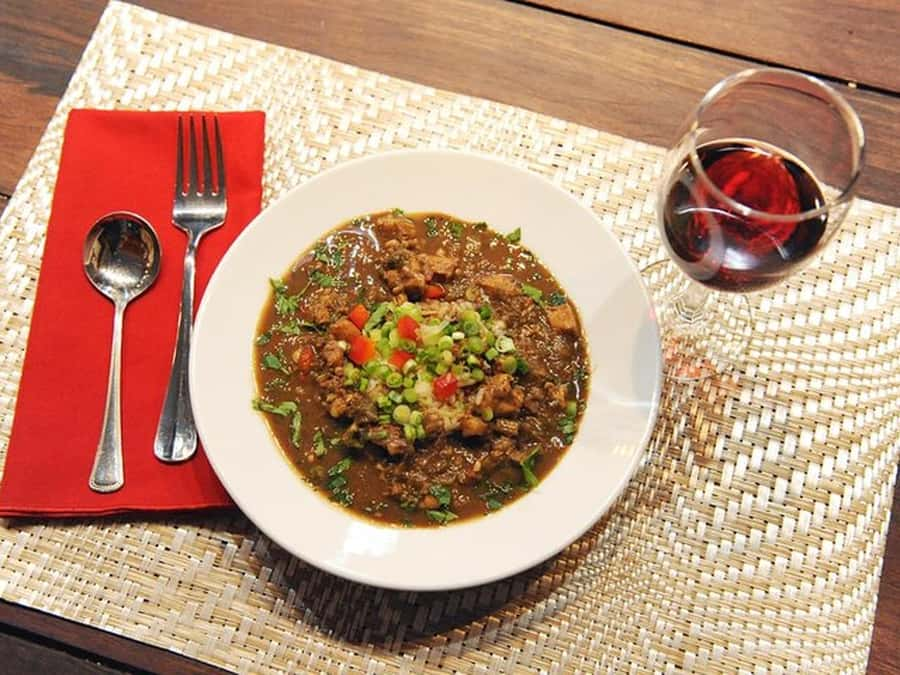
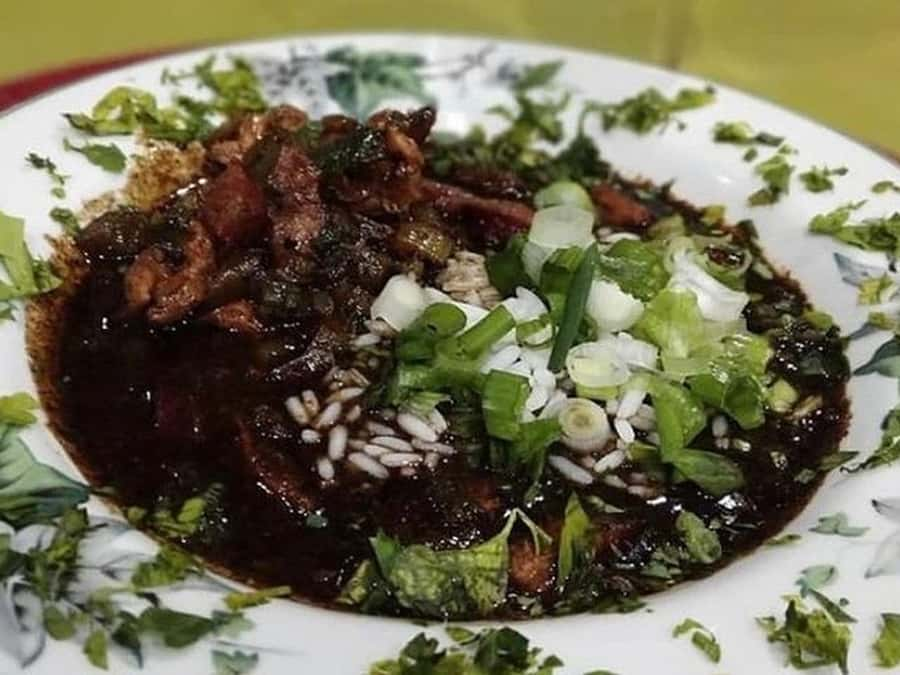
- The dark roux and chicken andouille gumbo
- Shrimp etouffee and the lighter roux
- Sitting down to eat what you made
- Bananas Foster finishes the class
- The instructors and teaching style
- What the $157 price includes
- Who should book this three-hour class
- Practical details for your French Quarter plans
- Should you book the Mardi Gras School of Cooking?
- FAQ
- Where does the cooking class take place?
- How long does the experience last?
- How much does the class cost?
- What dishes will I prepare?
- Are drinks included?
- Is a meal included?
- How many people are in the group?
- Can children attend?
- Is the class wheelchair accessible?
Key details before you book
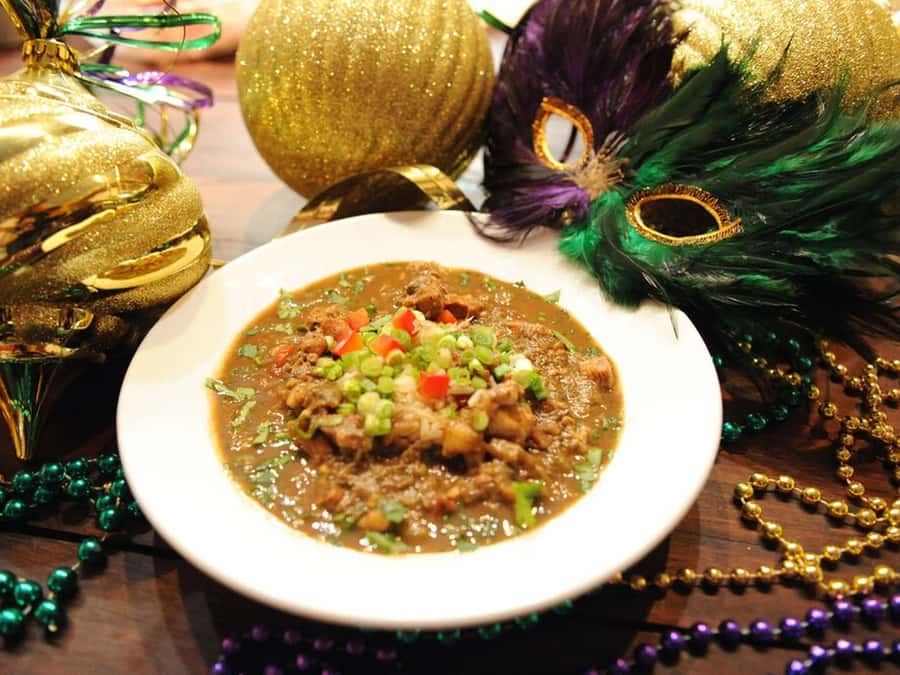
- Three Louisiana dishes in one class: Prepare chicken and andouille sausage gumbo, shrimp etouffee, and bananas foster.
- Roux takes center stage: You learn both a dark roux for gumbo and a light roux for etouffee.
- Small French Quarter setting: The class is limited to 10 people and meets at Suite 101 on the ground level.
- Drinks are part of the meal: Wine, beer, soda, and bottled water are included.
- A hands-on lesson: You chop, prep, cook, plate, and eat rather than simply watch a demonstration.
- Best for cooks aged 10 and up: Children over 10 may attend if they are willing to participate and enjoy cooking.
Why this cooking class works in New Orleans
New Orleans food makes more sense when you learn the basic building blocks. This class focuses on two of them: the Cajun Holy Trinity and roux.
The Holy Trinity is the familiar Louisiana mix of onion, bell pepper, and celery. It is not a fancy garnish. It is the starting point for the dishes you prepare, and chopping it yourself helps you see how a few ordinary ingredients form the base of a meal with a strong local identity.
The roux lesson is the useful part to take home. A roux is a cooked mixture of fat and flour, but the cooking time changes its role. The dark roux for gumbo gives the dish its deep color and toasted flavor. The lighter roux for shrimp etouffee has a gentler taste and helps create a different sauce.
That comparison is worth your time. Many cooking classes hand you a recipe and send you home with a full stomach. Here, you learn why two dishes that both use roux can taste so different. If you have tried Louisiana food before but never understood what makes it work, this class fills in the missing pieces.
More Cajun and Creole food tours:
- Paddlewheeler Creole Queen Historic Mississippi River Cruise
★ 4.5 · 1,948 reviews - Paddlewheeler Creole Queen Jazz Dinner Cruise in New Orleans
★ 4.0 · 1,469 reviews - Laura Creole Plantation Guided Tour
★ 5.0 · 1,279 reviews
Starting with the Holy Trinity
The class begins with an introduction to Cajun and Creole cooking, followed by aprons, knives, and preparation. You start by cutting the Holy Trinity and organizing the ingredients needed for the meal.
This is the mise en place stage, the French kitchen term for having everything measured, chopped, and ready before cooking. It may feel less exciting than stirring a pot, but it matters. Roux waits for no one, and a cook who is still hunting for ingredients can lose control quickly.
You also get an introduction to the seasonings used in the dishes. The goal is not simply to copy a recipe. You learn how the ingredients fit together and why preparation order matters.
At this point, you have a chance to settle in with the other participants. The small group format should make it easier to ask questions and keep your hands busy. You are not one face in a packed lecture. The stated limit is 10 people, which is a practical size for a shared cooking lesson.
The dark roux and chicken andouille gumbo
The gumbo is the main event. Once the Holy Trinity is prepared, you begin the dark roux.
This takes patience. A roux can shift from pale to dark, and then from dark to burned, in a short time. The instructor shows you how to handle it, when to keep stirring, and how to judge the color. That lesson has value beyond this meal because roux is one of those techniques that recipes often describe too briefly.
The gumbo includes chicken and andouille sausage. Andouille brings a smoky, savory note, while the chicken gives the dish substance. You help build the pot after preparing the roux, then follow the cooking process until the flavors come together.
The class also links the food to New Orleans and Louisiana cooking traditions. That background is useful because gumbo is not just a list of ingredients. It reflects the way local cooking developed through multiple cultural influences and practical use of what was available.
Do not expect a quick recipe demonstration. A dark roux requires attention, and the class gives it room. If you enjoy active cooking, this is likely the most satisfying section. If you prefer a fast meal with little instruction, the careful pace may feel long.
Shrimp etouffee and the lighter roux
After gumbo, the focus shifts to shrimp etouffee and a light roux. The change gives you a direct lesson in contrast.
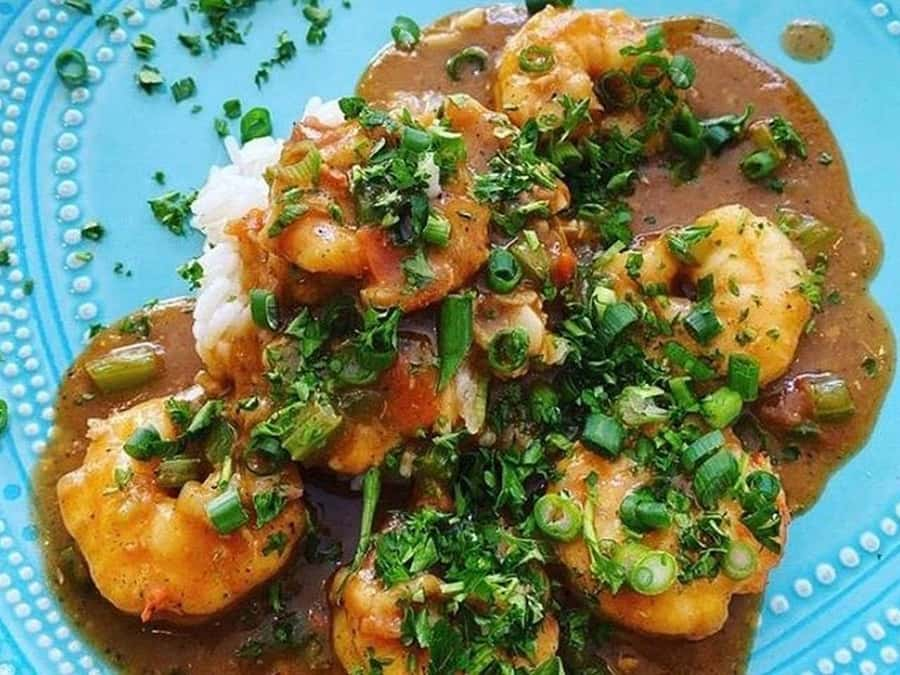
Etouffee means the shrimp are cooked in a seasoned sauce, and the lighter roux helps thicken it without the darker, toastier flavor of gumbo. You work through another set of steps, then prepare the shrimp mixture for plating.
This part is especially useful for home cooks because it shows how small changes produce a different dish. You are not making three unrelated recipes. You are learning one core technique and seeing how the technique changes with the dish.
The seafood also breaks up the heavier gumbo course. By the time you reach the meal, you have prepared a proper Louisiana spread rather than one large pot. That makes the $157 fee easier to assess, since the class includes instruction, cooking time, and a substantial lunch or dinner.
Still, keep the price in mind. The cost covers food, teaching, and alcoholic and nonalcoholic drinks, but it is not a budget meal. You are paying for a guided activity in the French Quarter, not simply buying gumbo and etouffee at a restaurant.
More cooking classes in New Orleans:
- New Orleans Demonstration Cooking Class with Meal
★ 5.0 · 3,000 reviews - New Orleans Hands-On Cooking Class with Meal
★ 5.0 · 1,183 reviews - New Orleans: Cajun and Creole Cooking Class
★ 4.9 · 730 reviews - Hands-on Cajun Roux Cooking Class in New Orleans
★ 5.0 · 356 reviews
Sitting down to eat what you made
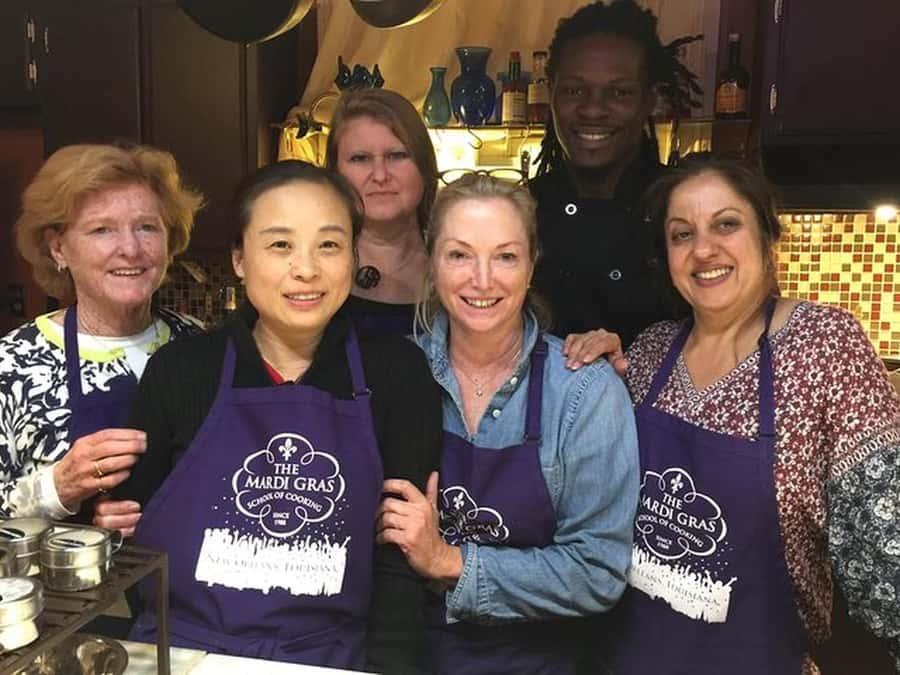
Once the dishes are plated, you sit down and eat the meal you helped prepare. Lunch or dinner is included, along with wine, beer, soda, and bottled water.
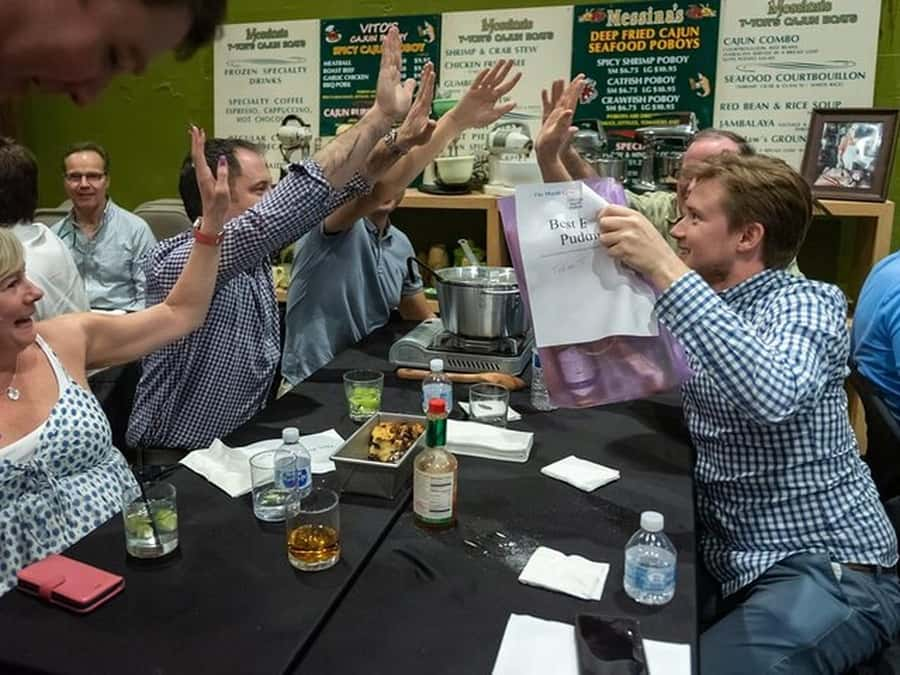
The drinks help make the class feel like a social meal rather than a strict technical workshop. One account of the class described music playing while the group worked on the roux, creating an easygoing kitchen atmosphere. That detail matters if you want an activity with conversation and personality, not a silent lesson built around exact measurements.
You should arrive ready to eat. The class includes three dishes, and the meal comes after a good deal of chopping and cooking. The practical advice is simple: do not schedule a large dinner immediately afterward.
The meal also gives you a chance to judge the recipes while the instructions are fresh. You can taste the gumbo and etouffee, note the seasoning, and ask questions about adapting the dishes at home. That is more useful than leaving with a recipe card but no sense of how the finished food should taste.
Bananas Foster finishes the class
The final cooking lesson is bananas foster. This dessert is famous in New Orleans, and it provides a sweet finish after the savory dishes.
You are shown a dependable method designed to be repeated in your own kitchen. The class presents it as a practical dessert for impressing friends and family, but the important point is that you get to learn the steps rather than watch a finished plate arrive.
Bananas foster also changes the mood of the class. By this stage, you have handled the main cooking techniques, eaten the gumbo and etouffee, and can focus on a shorter dessert preparation. It is a fitting final lesson because it connects the class to a well-known New Orleans restaurant tradition while keeping the recipe approachable.
The dessert is not the reason to book this experience. The roux work is the core value. Bananas foster is a pleasant bonus and a recipe you may find easier to repeat at home than gumbo.
The instructors and teaching style
Several instructor names appear in the experience record, including Chef Raymond, Chef Jason, and Mark. You may not have the same chef on every date, so I would not book around one particular name. The useful point is the teaching approach described across the sessions.
Chef Raymond is associated with an enthusiastic, welcoming style, music, and a relaxed kitchen atmosphere. Chef Jason is noted for explaining the food clearly, sharing New Orleans cooking history, and keeping everyone involved. Mark is described as careful, fun, and easy to follow.
That combination suits a class aimed at regular people rather than professional cooks. You need enough instruction to manage roux and seasoning, but you do not need advanced kitchen training before you arrive.
The best feature is that the teaching stays active. You chop, prep, stir, and plate. You are expected to take part, which is why the age rule matters. Children over 10 are allowed, but they need to be willing to cook and genuinely interested in the process. This is not a show where a child can sit back with a soft drink.
The high posted rating of 4.9 from seven reviews reflects strong praise for the friendly staff, clear explanations, enthusiastic chefs, and hands-on format. That is a small sample, so I would treat it as encouraging rather than final proof. The format itself is clear enough to judge: you are signing up for an active, social cooking session.
What the $157 price includes
At $157 per person, this is one of the pricier food activities you can add to a New Orleans visit. Its value depends on what you want from the experience.
The fee includes three dishes, a lunch or dinner, wine, beer, soda, and bottled water. It also includes three hours of instruction in the French Quarter, with a small group capped at 10 participants. If you compare it with an ordinary restaurant meal, the price looks high. If you compare it with a cooking lesson plus a full meal and drinks, it becomes more reasonable.
I would see the cost as worthwhile for someone who wants to take home real technique, especially the two roux methods. It is less compelling if you mainly want a cheap introduction to local food or have limited interest in cooking.
Transportation is not included. You need to make your own way to the venue and locate Suite 101 on the ground level. The activity is listed as wheelchair accessible, which is useful information when planning, but you should still confirm any personal access needs before booking.
Free cancellation is available up to 24 hours before the start time, and you can reserve now and pay later. Those terms make the booking less rigid, especially if your French Quarter schedule is still taking shape.
Who should book this three-hour class
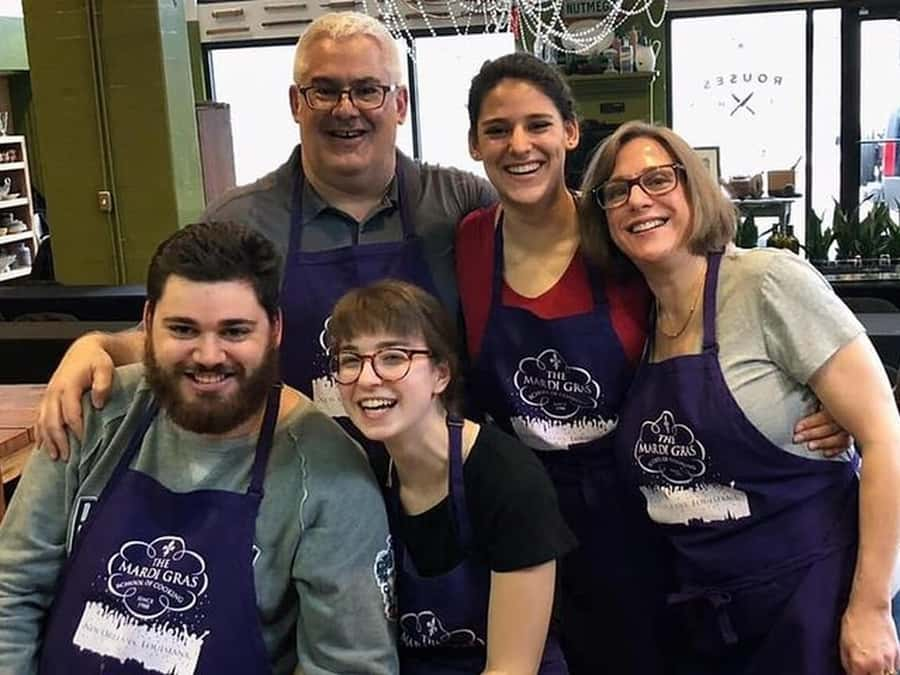
I would recommend this for couples, friends, solo food fans, and families with older children who enjoy doing rather than watching. It also fits a New Orleans itinerary that already includes sightseeing and music but needs one activity where you slow down and work with your hands.
You will get the most from it if you have never made gumbo or etouffee. Experienced home cooks can still benefit from the roux comparison, but you may find the introductory explanations familiar.
This is also a good rainy-day plan. The class gives you a warm indoor activity, a meal, drinks, and something useful to bring home. Since it takes three hours, it deserves a clear block in your schedule rather than being squeezed between two timed attractions.
I would skip it if you dislike group activities, cannot eat the planned meal, or want a quick demonstration. The experience depends on participation and shared cooking. You should be comfortable following instructions, handling ingredients, and spending a good part of the afternoon or evening at the stove.
Practical details for your French Quarter plans
The class takes place in the French Quarter, a convenient setting for combining food with other New Orleans plans. The exact meeting point is Suite 101 on the ground level, and you arrange your own transportation there.
The activity lasts three hours, but starting times vary, so check the available session before you book. Instruction is in English.
The group limit of 10 is important. A small class generally means more access to the cooking stations and more opportunity to ask about roux, seasonings, and substitutions. It also means the social side of the experience matters. You will be cooking alongside other people, not working through a private lesson.
The minimum age is 10. Children over that age may book only if they are ready to participate and enjoy cooking. There is no separate child-focused format described, so families should expect the same active class as adults.
Should you book the Mardi Gras School of Cooking?
Book it if you want to understand Louisiana cooking from the pan outward. The dark and light roux lessons, hands-on prep, three-course meal, and small group make this more than a tasting stop.
I especially like it for a first visit to New Orleans because it gives you context you can use afterward. When you order gumbo or etouffee elsewhere, you will have a better sense of the work behind the bowl. The friendly, music-filled teaching style described for Chef Raymond, Chef Jason, and Mark adds warmth without changing the practical focus.
The price is the deciding factor. At $157, you should want the class itself, not just the food. If that sounds right, reserve a three-hour slot and arrive hungry, curious, and ready to stir.
FAQ
Where does the cooking class take place?
The class takes place in New Orleans’ French Quarter at Suite 101 on the ground level.
How long does the experience last?
The cooking class lasts three hours. Starting times vary, so you should check availability for your chosen date.
How much does the class cost?
The listed price is $157 per person.
What dishes will I prepare?
You will prepare chicken and andouille sausage gumbo, shrimp etouffee, and bananas foster.
Are drinks included?
Yes. Wine, beer, soda, and bottled water are included.
Is a meal included?
Yes. Lunch or dinner is included after you prepare and plate the dishes.
How many people are in the group?
The class is limited to 10 participants.
Can children attend?
Children over 10 may book if they are willing to participate and enjoy cooking. Children under 10 are not suitable for this activity.
Is the class wheelchair accessible?
Yes. The activity is listed as wheelchair accessible, and the meeting point is on the ground level.
More Workshops in New Orleans
- Hands-on Cajun Traditions Cooking Class
★ 5.0 · 132 reviews - New Orleans Cooking Class and Cocktail Walking Tour
★ 4.5 · 109 reviews - New Orleans Small-Group Food Walking Tour and Cooking Class
★ 5.0 · 47 reviews - Voodoo Doll Class in New Orleans
★ 5.0 · 40 reviews
Just added around New Orleans
- New Orleans: Whitney Plantation Audio Tour with Transfers★ 4.7 · 3 reviews
- New Orleans Instagram Photo Tour★ 4.5 · 3 reviews
- New Orleans: Voodoo, Storyville, and Treme Walking Tour★ 3.3 · 3 reviews
- Outdoor Escape Room in New Orleans – The French Quarter★ 5.0 · 3 reviews
- New Orleans: Private Custom Guided Walking Tour★ 4.0 · 3 reviews
- New Orleans: Voodoo History Guided Walking Tour★ 4.8 · 3 reviews
- Private New Orleans City and Cemetery Bus Tour Up to 24 People★ 5.0 · 3 reviews
- New Orleans: French Quarter Cocktail and Foodie Crawl Tour★ 5.0 · 3 reviews
Cajun & Creole Food Tours, compared.

Paddlewheeler Creole Queen Historic Mississippi River Cruise
Read our review →
Paddlewheeler Creole Queen Jazz Dinner Cruise in New Orleans
Read our review →
New Orleans French Quarter Food Tour: Cajun, Creole and Culture
Read our review →
Creole Queen History Cruise with Optional Lunch
Read our review →
New Orleans Delicious Donuts & Beignets: A Sweet Walking Tour
Read our review →
Browse the lists this tour appears in