
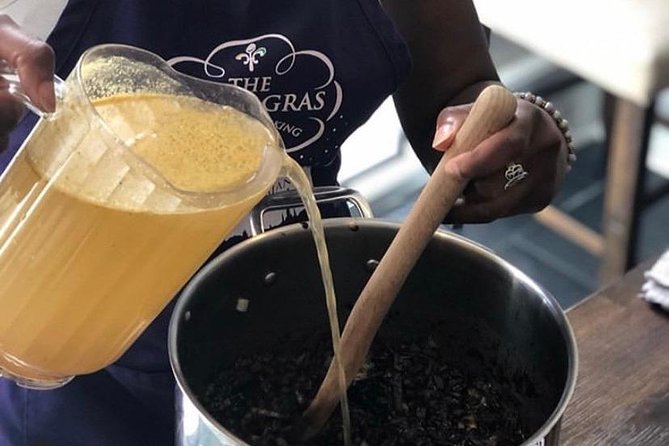
Reviewed · CAJUN & CREOLE FOOD TOURS
Hands-on Cajun Roux Cooking Class in New Orleans
New Orleans cooking is built on patience, and this class puts that lesson right in front of you. You’ll chop the Cajun Holy Trinity, learn the difference between a dark roux and a light roux, and use both to make gumbo and shrimp étouffée. The best part is that you do the cooking, rather than simply watching a chef work.
I like the small class size, capped at 10 people, because it gives you a real task at the stove. I also like the generous finish: wine or soda during class, then a sit-down meal of what you prepared, followed by bananas Foster. The one caution is price. At $163.85 per person, this is not a quick budget meal, so you’ll want to value the instruction and social time as much as the food.
In This Review
- Key points before you book
- Why the roux is the real lesson
- Chopping the Cajun Holy Trinity
- Gumbo with a dark roux
- Shrimp étouffée with a light roux
- Wine, soda, and the sit-down meal
- Bananas Foster and the final flourish
- The chefs shape the mood
- Is $163.85 a fair price?
- Location, timing, and planning your visit
- Who should take this class?
- Should you book the Cajun Roux class?
- FAQ
- How long does the Cajun Roux cooking class last?
- What dishes are included?
- Is the class hands-on?
- Are drinks included?
- Where does the class meet?
- How many people can join the class?
- Can I cancel for a full refund?
Key points before you book
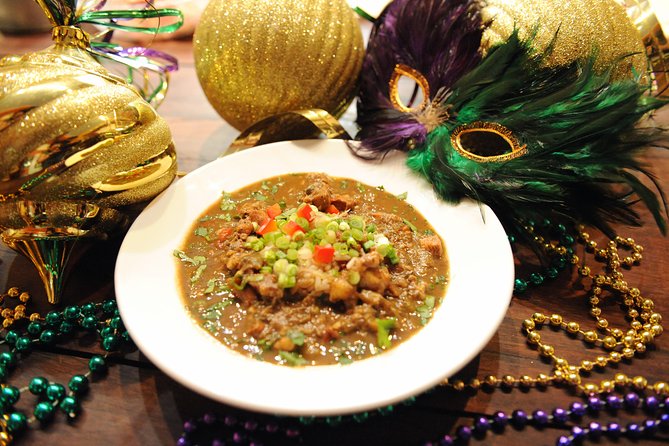
- Two kinds of roux: You make a dark roux for chicken and andouille sausage gumbo, then a light roux for shrimp étouffée.
- Hands-on from the start: Chopping, prepping, stirring, plating, and dessert work are part of the class.
- Small groups matter: The maximum is 10 people, and some sessions are even smaller, allowing more personal instruction.
- A full Cajun-style meal: The menu includes gumbo, shrimp étouffée, and bananas Foster, with wine or soda included.
- Several chef personalities: Raymond, Mark, Jason, Cam, Connor, Erika, and Randy have all led classes, so the exact teaching style can vary.
- Convenient French Quarter area location: You meet at 519 Wilkinson Street and return there after roughly three hours.
Why the roux is the real lesson
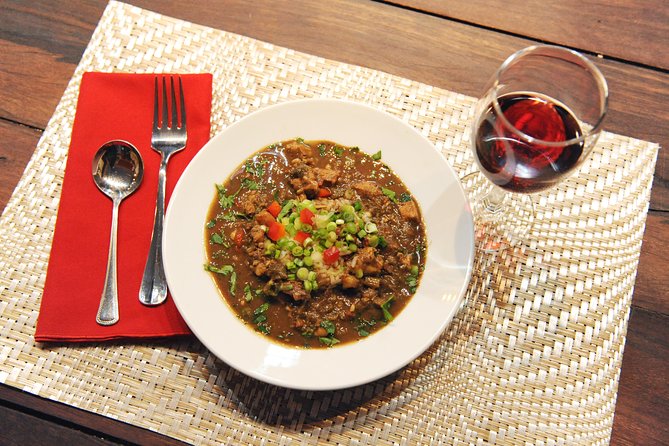
Many New Orleans cooking classes give you a recipe and a short demonstration. This one centers on the part that most often worries home cooks: roux.
You start by learning about the Cajun Holy Trinity and preparing the ingredients for the meal. This opening matters because it shows you how a dish is organized before the heat starts. The class uses the French phrase mise en place, meaning everything in its place, as a practical rule rather than fancy kitchen talk.
Then comes the dark roux for the gumbo. You’ll see how much attention it needs and why the color matters. A dark roux gives gumbo its deep, toasted character, but it also demands care. The instructor guides the process so you can learn the technique without being left to guess.
After the gumbo, the class turns to a light roux for shrimp étouffée. Making the two roux in one session is one of the strongest features here. You can compare the methods and see how a small change in cooking time affects the final dish.
I especially like this approach for people who already cook at home. You are not just collecting a New Orleans recipe. You are learning a repeatable way to build flavor, manage heat, and prepare ingredients in an orderly fashion.
More Cajun and Creole food tours:
- Paddlewheeler Creole Queen Historic Mississippi River Cruise
★ 4.5 · 1,948 reviews - Paddlewheeler Creole Queen Jazz Dinner Cruise in New Orleans
★ 4.0 · 1,469 reviews - Laura Creole Plantation Guided Tour
★ 5.0 · 1,279 reviews
Chopping the Cajun Holy Trinity
The class begins with cutting and prep. That may sound simple, but it is where the session becomes genuinely hands-on.
You will work through the Cajun Holy Trinity, the base used to start many Louisiana dishes. The class presents it as one of the keys to authentic New Orleans cooking. You’ll chop the ingredients, get the work area ready, and prepare for the roux stages ahead.
This is also a good point for the instructor to explain how Cajun cooking works. The supplied details do not promise a formal history lecture, but the chefs regularly add local stories and practical food background while teaching. Raymond, Mark, Cam, Jason, Connor, Erika, and Randy have each been praised for making the class friendly and easy to follow, though your instructor will depend on the date you choose.
The prep stage can feel less exciting than the finished meal, especially if you came hoping to eat quickly. That is the tradeoff. You spend time on the foundation, but you leave with skills that make the dishes easier to repeat at home.
Gumbo with a dark roux
The first main dish is chicken and andouille sausage gumbo. The recipe is listed as the starter, but it is substantial enough to feel like one of the central dishes of the class.
The dark roux is the focus. You’ll take part in the process instead of standing behind a demonstration counter. The chef explains what is happening as the roux develops, and the class then builds the gumbo around it.
This is where instructor quality makes a big difference. Raymond has been praised for breaking techniques into manageable steps and making the kitchen comfortable for people who are not confident cooks. Mark is known for adding stories and practical tips. Jason has been described as personable and clear when explaining Cajun roux technique. Those details point to a class suited to beginners, not just people who already know their way around a saucepan.
The gumbo has been singled out as a favorite dish by several people who took the class. That does not mean every batch will taste identical, since cooking depends on the group and instructor, but the format gives you a direct role in producing it.
If you love gumbo, this is likely the most valuable part of the class. You get to see how the dish is made, then eat it while the method is still fresh in your mind. If you mainly want a restaurant meal, though, a cooking class is a slower and more expensive way to get there.
Shrimp étouffée with a light roux
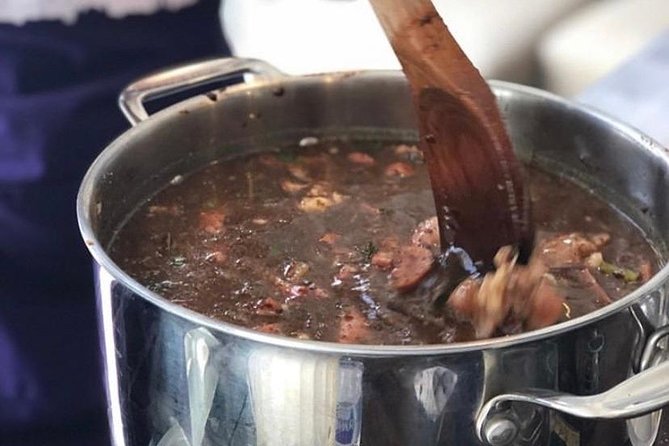
Next comes shrimp étouffée. The light roux gives you a useful contrast with the gumbo’s darker base.
The chef leads you through the technique, then the class prepares and plates the dish. You should expect the focus to remain on method rather than speed. The point is to learn how the roux, ingredients, and seasoning work together.
This dish can be a good bridge between Cajun cooking and everyday home cooking. The class is not only about reproducing one meal in New Orleans. It also teaches ways to build flavor that you can use in other dishes. One of the more useful comments from past sessions is that the techniques can be adapted for ordinary home kitchens.
The shrimp adds a special-occasion feel, which helps explain part of the cost. You are not making a single basic dish and heading out. You are preparing two distinct Louisiana staples, each with its own roux technique, then sitting down to eat.
Portions are described as ample, with enough work for everyone to have a task in the kitchen. Still, the exact pace can depend on the number of people in your group. A full class of 10 may feel more communal, while a class of four can give you more room to take an individual turn.
More cooking classes in New Orleans:
- New Orleans Demonstration Cooking Class with Meal
★ 5.0 · 3,000 reviews - New Orleans Hands-On Cooking Class with Meal
★ 5.0 · 1,183 reviews - New Orleans: Cajun and Creole Cooking Class
★ 4.9 · 730 reviews - Hands-on Cajun Traditions Cooking Class
★ 5.0 · 132 reviews
Wine, soda, and the sit-down meal
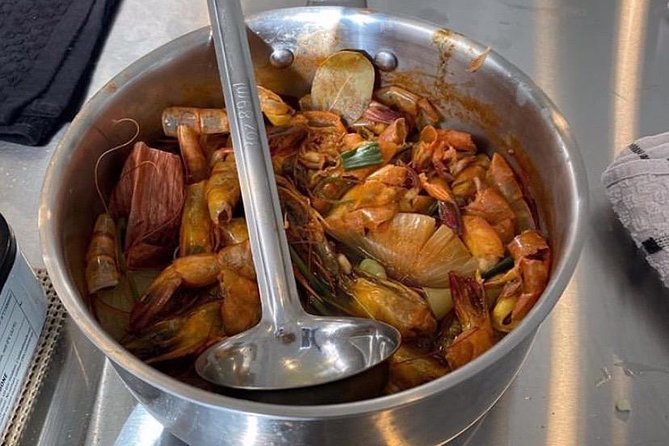
A glass of wine is included during the class, with soda pop available as an alternative. The drink is a small detail, but it helps turn the lesson into a social evening rather than a strict kitchen workshop.
Once the gumbo and étouffée are ready, you plate the food and sit down to eat. I like this structure because you get a clear reward for the work. You are not sent off with a quick sample while the chef cleans up. The meal is part of the activity.
The shared table also suits couples, families, and friend groups. A party of eight has enough people to make the kitchen lively without exceeding the stated 10-person limit. Smaller groups can feel more personal. Several descriptions of four-person classes point to plenty of individual participation.
If you are booking for a family, note that the class has worked well for teenagers. A 12-year-old was described as enjoying the session, and two 17-year-olds were able to follow along and feel excited about trying the recipes at home. The class is not presented as a children’s program, but it can work well for older children who enjoy food and hands-on activities.
Bananas Foster and the final flourish
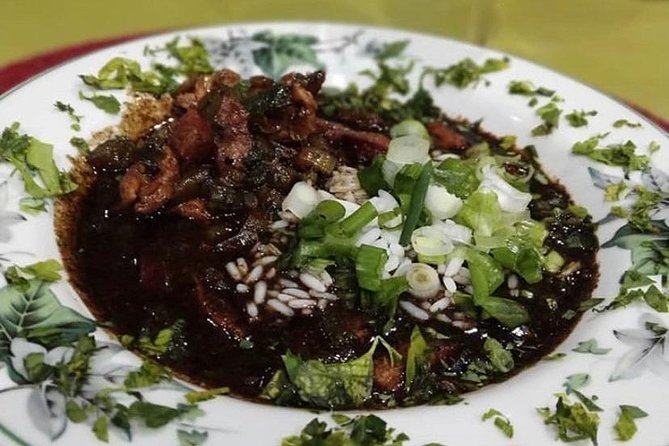
The last cooking segment is bananas Foster. The chef teaches a method described as foolproof and designed to impress friends and family.
Dessert is made after the main meal preparation, so it provides a lighter, more playful finish. It also adds variety to the class. You are not spending three hours on savory dishes alone.
Past sessions have praised the dessert as especially memorable, with enough enthusiasm for people to ask for more. The exact preparation details are not specified, so I would not book this expecting a particular flaming presentation or a certain liquor. What you can count on is instruction in making the dessert and the chance to finish the meal with it.
For many people, bananas Foster may be the easiest recipe to repeat at home. Gumbo and étouffée take more planning, while the dessert can become a useful party trick after you return from New Orleans.
The chefs shape the mood
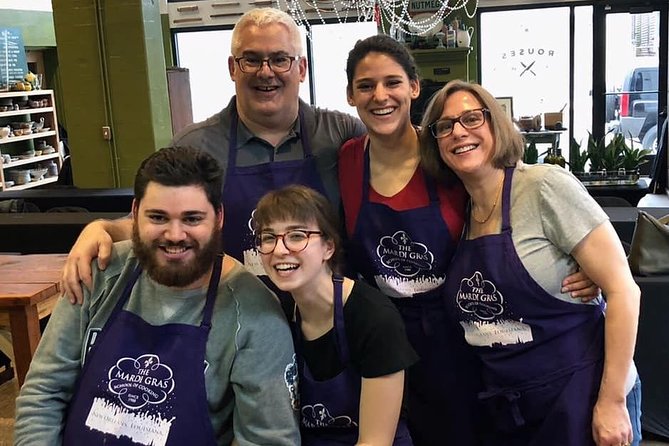
The cooking plan remains fairly consistent, but the person leading the class affects the tone.
Raymond is repeatedly described as funny, patient, encouraging, and full of personal stories. One session included references to his cooking background, competitions, and work connected with the Super Bowl. Mark brings humor, local stories, and clear cooking tips. Jason is often praised for his energy and approachable teaching style.
Cam has been described as personable and good at explaining both cooking technique and Cajun and Creole culture. Connor is noted for patience, professionalism, and careful coaching. Erika and Randy have also received strong praise for teaching and organization.
That range is worth keeping in mind. You cannot select a guaranteed instructor from the information provided, and the class will not feel exactly the same every time. The consistent theme is direct instruction, a clean kitchen, and a chef who works with the group rather than simply performing in front of it.
Some participants have returned for another class or planned to take additional classes at the Mardi Gras School of Cooking. That makes sense if you enjoy food-focused activities and want more than a single recipe. For a first visit to New Orleans, this class can also serve as an informal introduction to local food culture.
Is $163.85 a fair price?
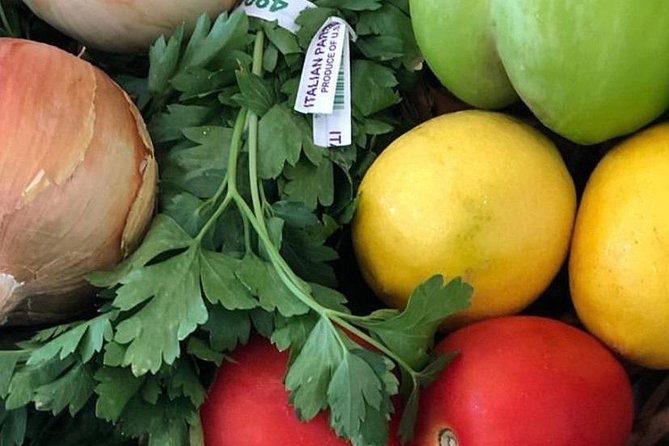
At $163.85 per person, the class costs more than ordering gumbo and étouffée at a restaurant. The price makes sense only if you want the full package: about three hours of instruction, hands-on kitchen time, drinks, dessert, and a seated meal.
I would compare it with the price of a high-quality cooking lesson, not with the cost of dinner alone. You are paying for access to a chef, the structure of the class, the small group setting, and the ability to take the techniques home.
The value is strongest for couples, families, and groups of friends who want an activity everyone can share. It is also a good use of time for a repeat New Orleans visitor who has already eaten plenty of local food and now wants to learn how it is made.
The value is weaker if you are traveling on a tight food budget or want a quick introduction. You may also feel the price more sharply if you do not enjoy chopping, stirring, and waiting for a roux. This is a cooking lesson first and a meal second.
Group discounts are available, which can help if you are arranging a larger party. Ask about the discount when booking rather than assuming it applies automatically.
Location, timing, and planning your visit
The meeting point is 519 Wilkinson Street, New Orleans, Louisiana 70130. The activity ends at the same location, so you do not need to arrange a separate return transfer.
The site is near public transportation. The exact transport route is not provided, so check your starting point and allow enough time to arrive before the class begins. The total session lasts approximately three hours, making it easy to fit into a morning or afternoon, depending on the available start time.
English is the offered language. Confirmation is provided at booking, and the class accepts mobile tickets, which keeps your paperwork simple.
The activity is commonly booked about 26 days ahead. That is useful planning information for a small class with a maximum of 10 people. I would reserve ahead if your New Orleans dates are fixed, especially if you are coordinating a group.
Free cancellation is available up to 24 hours before the start time for a full refund. Changes or cancellations made less than 24 hours before the start time are not accepted for a refund, and cut-off times follow New Orleans local time.
Who should take this class?
I would choose this for:
- Couples who want a shared food activity with a proper meal at the end
- Families with older children or teenagers who enjoy practical projects
- Friends who like cooking, conversation, and a relaxed group setting
- Home cooks who want to improve roux technique
- First-time visitors who want context for the Cajun dishes on restaurant menus
- Repeat visitors looking for something beyond another restaurant reservation
I would think twice if you dislike group activities or have very little time in New Orleans. You should also consider dietary needs before booking, since the stated menu includes chicken, andouille sausage, and shrimp. The provided information does not list substitutions or allergy accommodations.
Should you book the Cajun Roux class?
Book it if you want to understand how New Orleans cooking is built, not just taste the final plate. The dark and light roux comparison, hands-on prep, small group format, and sit-down meal give the class real substance.
The strongest reason to go is practical. You can return home with a better grasp of how to make gumbo and étouffée, along with a dessert you can use for company. The chefs also add stories and encouragement, which helps the lesson feel welcoming even if you are not an experienced cook.
Skip it if your main goal is the cheapest possible meal or a short demonstration. At $163.85, you need to take part to get your money’s worth.
For most food-minded visitors, especially couples and groups, I would book it in advance. Arrive ready to chop, stir, listen, and eat what you make. That is the real appeal: New Orleans flavor, taught at the stove and served at your own table.
FAQ
How long does the Cajun Roux cooking class last?
The class lasts approximately three hours, including preparation, cooking, dining, and the bananas Foster lesson.
What dishes are included?
The stated menu includes chicken and andouille sausage gumbo, shrimp étouffée, and bananas Foster.
Is the class hands-on?
Yes. You take part in chopping, preparation, roux-making, cooking, and plating. This is not only a chef demonstration.
Are drinks included?
Yes. Wine is included, and soda pop is available as an alternative.
Where does the class meet?
The class starts at 519 Wilkinson Street, New Orleans, Louisiana 70130, USA, and ends back at the same meeting point.
How many people can join the class?
The maximum group size is 10 people. Group discounts are available.
Can I cancel for a full refund?
Yes, if you cancel at least 24 hours before the experience start time. Cancellations or changes made less than 24 hours in advance are not accepted for a refund.
More Workshops in New Orleans
- New Orleans Cooking Class and Cocktail Walking Tour
★ 4.5 · 109 reviews - New Orleans Small-Group Food Walking Tour and Cooking Class
★ 5.0 · 47 reviews - Voodoo Doll Class in New Orleans
★ 5.0 · 40 reviews - Sip History in the Crescent City Cocktail Making Class
★ 4.5 · 32 reviews
Just added around New Orleans
- New Orleans Garden District Tour★ 5.0 · 8 reviews
- New Orleans Seance Experience★ 4.0 · 8 reviews
- Airport and City Transfers in New Orleans★ 5.0 · 8 reviews
- Sin and Tonic Pub Crawl in New Orleans★ 4.5 · 8 reviews
- The New Orleans Darkness Tour★ 4.4 · 9 reviews
- New Orleans Plantation Tour with Transportation★ 5.0 · 9 reviews
- New Orleans Self-Guided Kayak Bayou Swamp Tour★ 5.0 · 9 reviews
- Historic Carrollton Neighborhood Walking Tour★ 5.0 · 9 reviews
Cajun & Creole Food Tours, compared.

Paddlewheeler Creole Queen Historic Mississippi River Cruise
Read our review →
Paddlewheeler Creole Queen Jazz Dinner Cruise in New Orleans
Read our review →

New Orleans French Quarter Food Tour: Cajun, Creole and Culture
Read our review →
Creole Queen History Cruise with Optional Lunch
Read our review →
New Orleans Delicious Donuts & Beignets: A Sweet Walking Tour
Read our review →
Browse the lists this tour appears in