
Reviewed · TREME TOURS
New Orleans Treme’ Walking Tour
New Orleans music history comes into focus on this walk through Tremé and Armstrong Park, where stories of enslavement, free people of color, jazz, civil rights, and local traditions meet in one compact area. You will visit Congo Square, the Tomb of the Unknown Slave, St. Augustine’s Church, and the former site of J&M Recording Studio.
I like the small maximum of 14 people, which gives you room to ask questions and hear the guide. I also like the use of music during the walk. Guides such as Kwaku, Claire, Erin, and Nika have used short musical selections to make the history easier to grasp.
The main caution is the route. Much of the time may be spent in Armstrong Park, and one recent booking found that the group saw only a block or two of the wider Tremé neighborhood. If you want a long residential walk, this may feel limited.
In This Review
- Key points to know before you go
- Why Tremé belongs on your New Orleans schedule
- Starting at North Rampart Street
- Storyville and the early sound of jazz
- Armstrong Park, Tremé, and the city’s harder truths
- Congo Square and the roots of New Orleans music
- The Lost Sock and a remarkable recording address
- What the guides do best
- Price, timing, and who gets good value
- The best way to approach the walk
- Should you book the Tremé walking tour?
- FAQ
- How long is the New Orleans Tremé walking tour?
- What time does the tour start?
- Where does the tour meet?
- Where does the tour end?
- What language is the tour offered in?
- How many people can join the tour?
- What happens if I need to cancel?
Key points to know before you go
- Music is part of the storytelling: Guides often play short jazz and blues selections tied to the people and places discussed.
- The route covers major Tremé landmarks: Expect Congo Square, St. Augustine’s Church, the Tomb of the Unknown Slave, and Armstrong Park.
- The group stays small: The maximum is 14 people, a useful size for questions and clear listening.
- The walk is short but full of weighty subjects: In about 1 hour and 45 minutes, you cover slavery, race, religion, jazz, recording history, and the changing neighborhood.
- The final stop has strong music connections: The Lost Sock at Rampart occupies the former home of Cosimo’s J&M Recording Studio.
- Wear shoes for city walking: Tours run rain or shine and begin at 10:30 a.m. at Voodoo Lounge on North Rampart Street.
Why Tremé belongs on your New Orleans schedule
The French Quarter gets much of the attention in New Orleans, but Tremé helps explain why the city sounds the way it does. This walk is less about grand architecture and more about the people, gatherings, music, faith, and struggle that shaped New Orleans over generations.
You will hear about the lives of enslaved people and free people of color, the growth of jazz, the civil rights movement, and the musicians who carried New Orleans sound far beyond Louisiana. The guide connects those subjects rather than treating them as separate facts.
That approach matters. You can visit a statue or church on your own, but without context, the meaning can pass quickly. A good guide explains who gathered here, what happened, and why the location still matters.
The guides are the heart of the experience. Kwaku has been praised for linking current Tremé life with music and local history. Claire has used audio examples and clear storytelling. Erin has been noted for presenting Black history directly, without softening difficult parts. Nika has paired her explanations with music clips and answered questions at a measured pace.
Those names do not mean you can request a particular guide or that one person is guaranteed for your departure. They do show the range of the guide team and the qualities to hope for: strong narration, local interest, humor, music, and a willingness to take questions.
More Treme and Congo Square walks:
- New Orleans: Tremé African American & Creole History Tour
★ 4.9 · 208 reviews - True Voodoo History of NOLA’s Congo Square with Local Guide
★ 5.0 · 133 reviews - 60-minute Tremé Walking Tour & Photo Experience
★ 5.0 · 72 reviews
Starting at North Rampart Street
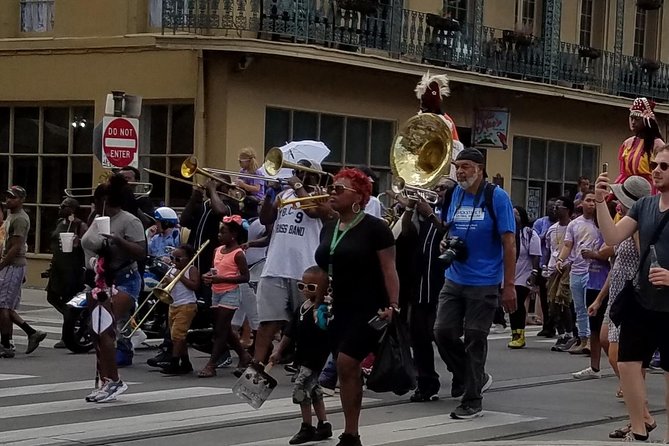
The meeting point is Voodoo Lounge, at 718 North Rampart Street. The tour starts at 10:30 a.m. and ends back at the same place, so you do not need to arrange a second pickup point.
The operator is French Quarter Phantoms, a company better known for New Orleans-themed tours. This particular walk is historical and cultural rather than a ghost tour. You should arrive ready to walk, listen, and participate in a serious discussion of the city’s past.
A mobile ticket makes the start simple. Confirmation comes when you book. The tour is offered in English, and the maximum group size is 14 people.
The short length is useful if you are planning a busy day. At 1 hour and 45 minutes, you can fit the walk between other New Orleans plans. The 10:30 a.m. start also leaves your afternoon open, though the city’s heat can make comfortable clothing and water sensible choices.
The route is described as an easy walk, and one booking specifically found it manageable for seniors. Still, you should wear comfortable shoes. You may bring a camera, but videotaping is not allowed. Tours operate rain or shine, so check the forecast and dress for the conditions.
Storyville and the early sound of jazz
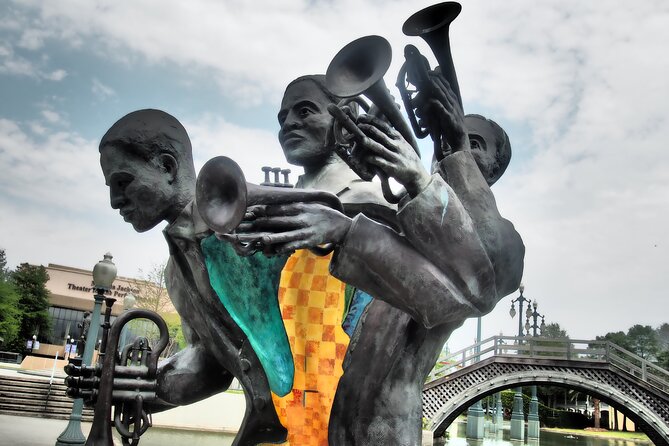
The walk includes the old Storyville District, an area that operated from 1897 to 1917. Storyville was a red-light district with brothels, bars, and dance halls. Musicians performed and socialized there, helping create the setting in which New Orleans-style jazz developed.
It is important to hear this story with some care. Storyville has often been romanticized as the birthplace of jazz, but the music came from wider Black cultural traditions and communities. The guide helps place the district within that larger story rather than presenting it as a single, tidy starting point.
You should not expect preserved brothels or a museum-like district. The value is in the narration and the connection to the city’s music past. The stop lasts about 15 minutes and has no separate admission charge.
For anyone interested in jazz, this part gives useful background before the walk reaches Congo Square and the old recording studio. For someone mainly seeking colorful streets and historic buildings, it may feel more like a talk than a visual attraction.
Armstrong Park, Tremé, and the city’s harder truths
The main portion of the tour lasts about 50 minutes and focuses on Tremé. It includes several historic sites, among them St. Augustine’s Church and the Tomb of the Unknown Slave.
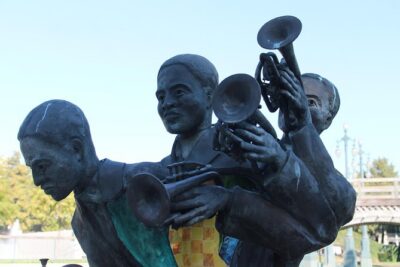
Armstrong Park is likely to be a major part of this section. The park contains statues and spaces tied to New Orleans music and Black history, and it gives the guide a place to explain how Tremé developed. Musical examples can be especially effective here. A song or recording can turn a list of names into something you can hear and remember.
The Tomb of the Unknown Slave is one of the more sobering stops. It points toward the people whose labor and suffering helped build New Orleans but whose individual names were not recorded or preserved. Several guides have used this location to discuss slavery, faith, and the lives of Black New Orleanians.
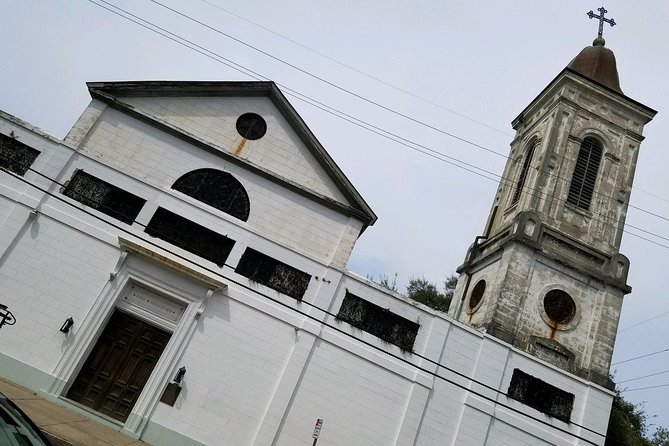
St. Augustine’s Church adds another layer. The tour presents it among the historic sites connected with Tremé’s Black Catholic community. You will want to pay attention to the guide’s explanation rather than simply treating the church as another photo stop.
The subject matter can be uncomfortable. That is a strength, not a flaw, if you want a more honest understanding of New Orleans. The best version of this tour does not reduce Tremé to jazz clubs, colorful houses, and local charm. It explains the unequal systems and painful events that shaped the neighborhood.
One point deserves attention when you set expectations. The advertised experience is a Tremé walking tour, but the route may spend a large share of its time inside Armstrong Park. One recent participant felt disappointed after walking only a block or two beyond the park. If your priority is seeing a broad stretch of present-day Tremé streets, ask at the start how far the group will go.
More walking tours in New Orleans:
- New Orleans Premier Ghost, Voodoo and Vampire Walking Tour
★ 4.5 · 12,856 reviews - New Orleans Food Walking Tour of the French Quarter with Small-Group Option
★ 5.0 · 6,118 reviews - St. Louis Cemetery No. 1 Official Walking Tour
★ 4.5 · 3,941 reviews - New Orleans French Quarter, Voodoo and Culture Walking Tour
★ 4.5 · 2,961 reviews
Congo Square and the roots of New Orleans music
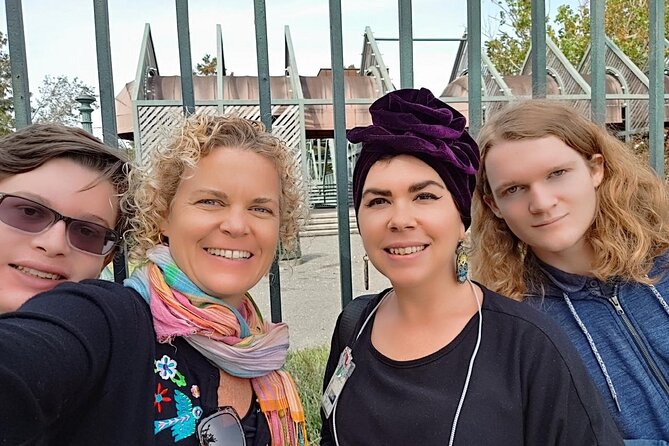
Congo Square is the tour’s most important stop for understanding the connection between Black cultural life and jazz. Enslaved people and free people of color gathered there during the 19th century for meetings, open markets, dancing, and drumming.
These gatherings mattered because music and movement carried memory, identity, and community under conditions designed to limit freedom. The guide explains how African dance and drumming traditions contributed to the later development of jazz.
This is not simply a stop for music fans. Congo Square helps you see that jazz did not appear out of nowhere in a New Orleans club. It grew from older traditions, shared gatherings, and the creativity of people who preserved culture in difficult circumstances.
The visit lasts about 15 minutes. Admission is included, and there is no extra ticket to buy. During the walk, a guide may play a related piece of music to illustrate a point. That small detail has been one of the most effective parts of the tour for many people because you hear the connection as the story unfolds.
If you attend during a public event or drum gathering, the atmosphere may feel especially immediate. The tour information specifically notes the possibility of a drum festival at Congo Square, but you should not assume one will be taking place on your date.
The Lost Sock and a remarkable recording address
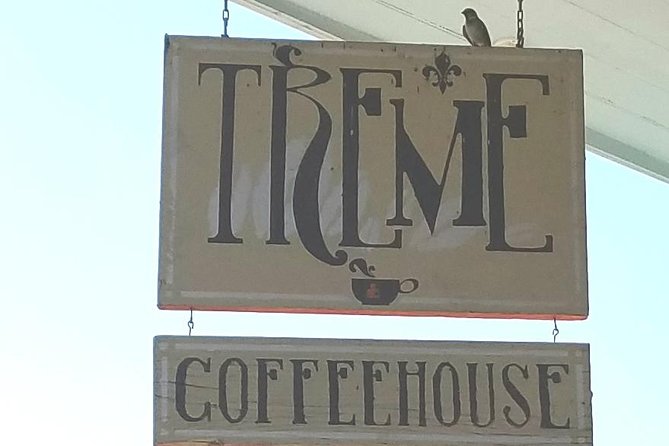
The last listed stop is The Lost Sock at Rampart, a laundry and museum as well as a Rock and Roll Hall of Fame location. The site occupies the former home of Cosimo’s J&M Recording Studio.
That name carries real weight. Fats Domino, Little Richard, Professor Longhair, and other musicians recorded some of their early music there. The stop ties the earlier discussion of jazz and Black musical traditions to the recording industry that helped spread New Orleans sound.
This is an unusual stop because it connects an everyday business, a laundry, with major music history. You may find it more memorable than a standard plaque or monument because the location has had a practical life as well as a musical one.
The stop lasts about 15 minutes and has no separate admission charge. It also gives the tour a strong finish. You begin with the social and cultural roots of the music, then end at a place where musicians turned those traditions into recorded sound.
What the guides do best
The strongest feature of this tour is the guide’s delivery. The subject covers a lot of ground, so a flat lecture would be hard to follow. The better guides use humor, music, stories, and questions to keep the walk moving.
Kwaku has been described as bringing Tremé’s past and present to life through music. Claire has been praised for her command of New Orleans and music history, along with the audio material she uses to support her explanations. Erin has a strong reputation for passion, clear speaking, and frank discussion of the Black experience.
Nika has been singled out for her preparation, detailed stories, and related music selections. Other guides, including Pepe, Eva, Bobby, Erica, and Angelina, have also led tours that included local stories, music, and open questions.
Because the guide changes, the tone can vary. You might get a guide who focuses heavily on music, another who gives more attention to race and civil rights, or someone who adjusts the talk around your questions. That flexibility is useful, but it also means you should not book expecting a scripted performance by a particular person.
The small group helps. With no more than 14 people, you can hear the guide more easily than in a large street procession. You also have a better chance to ask about a musician, building, or historical point that catches your attention.
Price, timing, and who gets good value
At $20.50 per person, this is a modestly priced guided walk. You are paying for nearly two hours with a professional guide, not for a meal, transportation, or a ticketed attraction.
I consider the price good if you want interpretation. The landmarks themselves do not require costly admission, but the context is the product. A guide who can connect Congo Square, Storyville, St. Augustine’s Church, Tremé, and J&M Recording Studio gives you something a self-guided stroll may not.
The value drops if you want a long-distance walk through many residential blocks. The route may remain concentrated around Armstrong Park and nearby sites. In that case, you are buying a history talk with walking between locations, not a full neighborhood tour.
The average booking lead time is 16 days, so it is sensible to reserve ahead if your dates are fixed. Free cancellation is available up to 24 hours before the start time for a full refund. Changes or cancellations inside that 24-hour window are not accepted for a refund.
You will need to buy your own food and drinks. Alcohol is available for purchase, but it is not included. Hotel pickup and drop-off are not provided, so plan to reach North Rampart Street on your own. The meeting point is near public transportation.
Service animals are allowed, and most people can take part. The operator does not list a separate wheelchair-accessibility description, so if you need specific route information, ask before booking rather than guessing.
The best way to approach the walk
Come with curiosity, not just a checklist. The most useful question is not how many landmarks you can photograph, but how the places connect.
Listen for the difference between jazz as a commercial label and the older traditions that fed it. Pay attention when the guide moves from music to slavery, religion, civil rights, and neighborhood change. Those links are the reason to choose this tour instead of a simple music-themed stroll.
Use the small group to ask about names and dates. If the guide plays a piece of music, ask what you are hearing and how it relates to the site. The guides have been praised for answering questions and changing the commentary to fit the group, so take advantage of that.
Bring a camera if you like, but do not expect to film the tour. Give yourself time to arrive at Voodoo Lounge before 10:30 a.m. and wear shoes that feel good on city pavement. Since the tour runs in all weather, a hot or rainy day can change your comfort level even if the route itself is not strenuous.
Should you book the Tremé walking tour?
Book it if you want a compact, thoughtful introduction to Black New Orleans history and music. The guide’s storytelling, musical examples, Congo Square, the Tomb of the Unknown Slave, and the J&M Recording Studio connection give the tour real substance for $20.50.
It is especially suitable for first-time visitors who want more than the French Quarter, music fans curious about jazz’s roots, and anyone who values a direct discussion of race, culture, and the city’s past. It also works well for older visitors who prefer an easy walk rather than a long day on foot.
Think twice if your main goal is to wander through a large portion of Tremé’s residential streets. Much of the experience may center on Armstrong Park, and the neighborhood portion can be shorter than the name suggests.
For most people, I would book it early in a New Orleans stay. It gives you context for the city’s music and people, and the rest of your sightseeing will make more sense afterward.
FAQ
How long is the New Orleans Tremé walking tour?
The tour lasts approximately 1 hour and 45 minutes.
What time does the tour start?
The tour begins at 10:30 a.m.
Where does the tour meet?
The meeting point is Voodoo Lounge at 718 North Rampart Street, New Orleans, Louisiana 70116.
Where does the tour end?
The tour ends back at the meeting point.
What language is the tour offered in?
The tour is offered in English.
How many people can join the tour?
The maximum group size is 14 people.
What happens if I need to cancel?
You can receive a full refund if you cancel at least 24 hours before the local start time. Cancellations or changes made less than 24 hours before the start time are not refunded or accepted.
Just added around New Orleans
- New Orleans Garden District Tour★ 5.0 · 8 reviews
- New Orleans Seance Experience★ 4.0 · 8 reviews
- Airport and City Transfers in New Orleans★ 5.0 · 8 reviews
- Sin and Tonic Pub Crawl in New Orleans★ 4.5 · 8 reviews
- New Orleans Plantation Tour with Transportation★ 5.0 · 9 reviews
- New Orleans Self-Guided Kayak Bayou Swamp Tour★ 5.0 · 9 reviews
- The New Orleans Darkness Tour★ 4.4 · 9 reviews
- Historic Carrollton Neighborhood Walking Tour★ 5.0 · 9 reviews
Treme Tours, compared.
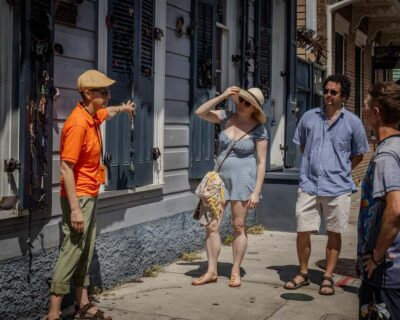
True Voodoo History of NOLA’s Congo Square with Local Guide
Read our review →
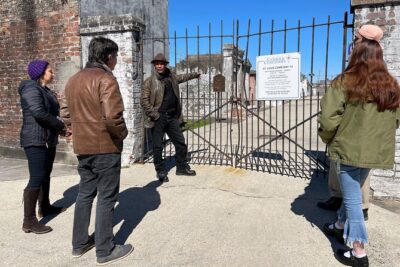
New Orleans Voodoo, Storyville, Treme, Walking Tour
Read our review →
Private French Quarter, Voodoo, and Congo Square Walking Tour
Read our review →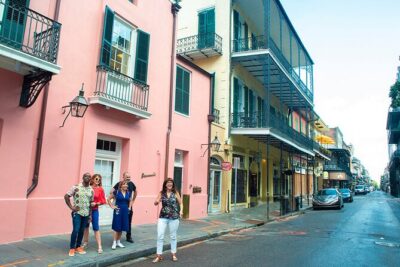
Walking the Tremé: A Self-guided Audio Tour of New Orleans
Read our review →
New Orleans Driving Tour with Bayou St. John, City Park, Treme
Read our review →Browse the lists this tour appears in