
Reviewed · SWAMP & BAYOU TOURS
New Orleans Driving Tour with Bayou St. John, City Park, Treme
New Orleans reveals itself best once you leave the French Quarter, and this tour makes that easy. In about three hours, you’ll move from Creole mansions and haunted tombs to bayous, oak trees, birds, alligators, a lakefront lighthouse, and old fort ruins. I especially like the visit to St. Louis Cemetery No. 3 and the scenic route through Bayou St. John, two places that are easy to miss on your own.
I also like the small maximum of seven people and the chance to stop for photos and beignets at Cafe Du Monde. The main drawback is the brisk schedule: some stops are short, and the experience depends on good weather. If you want long walks or museum time, this is not that kind of tour.
In This Review
- Key points at a glance
- Why this tour is a useful break from the French Quarter
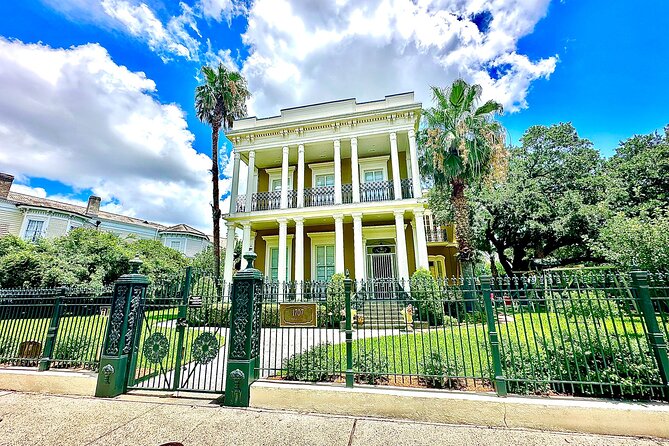
- Treme and Esplanade Avenue: mansions beyond the tourist core
- St. Louis Cemetery No. 3 and the city’s tomb traditions
- Bayou St. John and the waterway that shaped New Orleans
- City Park: oak trees, duels, birds, and beignets
- Lake Pontchartrain, the levees, and a very old fort
- What the three-hour schedule feels like
- Who will get the most from this tour
- The final call: book it for range, not for lengthy stops
- FAQ
- How long does the driving tour last?
- What time does the tour start?
- Where does the tour start?
- Where does the tour end?
- Are beignets included in the price?
- How many people can join the tour?
- What happens if the weather is poor?
Key points at a glance

- Treme by way of Esplanade Avenue: See historic Creole homes and mansions from the comfort of a small tour vehicle, with time to stop for photos.
- St. Louis Cemetery No. 3: Take a short walk among old tombs and hear about New Orleans’ ghostly side.
- Bayou St. John stories: Learn why this waterway helped shape the city, with stops tied to old homes, markets, brick streets, birds, and Marie Laveau.
- City Park and Cafe Du Monde: See giant oak trees, hear about old duels, watch for wildlife, and buy beignets at your own cost.
- Lake Pontchartrain and Fort St. John ruins: Follow the levees to the lakefront, pass an old lighthouse, and visit the remains of a fort more than 300 years old.
- Small-group format: The tour has a maximum of seven people, with pickup details sent by text on the day.
Why this tour is a useful break from the French Quarter
The French Quarter gives you the city’s famous balconies, bars, courtyards, and old streets. But New Orleans is much larger than that compact center. This tour takes you into neighborhoods and natural areas where the city’s story feels less polished and more connected to water, cemeteries, wildlife, and local tradition.
I like the way the route links those subjects together. Bayou St. John explains why the city developed where it did. The cemetery shows how New Orleans handles death and memory. City Park brings in oak trees, bayous, birds, and old dueling grounds. The lakefront and fort ruins widen the story again, showing the city’s long relationship with water and defense.
The tour is led by Brian, whose style comes across as upbeat, curious, and full of local detail. He does not limit the commentary to major buildings. You may hear about birds, neighborhood cats, old rituals, and other details that give the route a more personal feel.
At $50 per person, the value depends on what you want from a city tour. You are paying for transport, guiding, several stops, and access to parts of New Orleans that are spread too far apart for a comfortable walk. You will still pay separately for beignets at Cafe Du Monde, but that is a small extra rather than a major cost. For a first visit, or for a return visit when you have already seen the French Quarter, the price is reasonable.
More Treme and Congo Square walks:
- New Orleans Treme’ Walking Tour
★ 5.0 · 240 reviews - New Orleans: Tremé African American & Creole History Tour
★ 4.9 · 208 reviews - True Voodoo History of NOLA’s Congo Square with Local Guide
★ 5.0 · 133 reviews
Treme and Esplanade Avenue: mansions beyond the tourist core

The tour begins near the French Quarter at 701 North Rampart Street, then heads into Treme and along Esplanade Avenue. This is a smart opening because the route changes quickly from the concentrated streets of the Quarter to a broader avenue lined with historic homes.
You will see old Creole architecture from the vehicle, with Brian explaining the background of some of the more interesting houses. The tour allows about 30 minutes here, including time to stop for photos when appropriate. That makes this more than a drive-by sightseeing loop, though you should not expect a long architectural walking tour.
Treme is one of the city’s storied neighborhoods, and the value here is the setting. You are not just looking at attractive facades. You are seeing how New Orleans grew outward from the French Quarter and how different neighborhoods developed their own character.
The amount of walking is limited, which helps in hot or humid weather. On the other hand, anyone hoping to enter several buildings will need to adjust expectations. This is an overview, not a house-by-house tour.
St. Louis Cemetery No. 3 and the city’s tomb traditions
The stop at St. Louis Cemetery No. 3 lasts about 15 minutes, so it is brief but focused. You will take a short walk among old tombs and graves while hearing about the cemetery’s haunted side and its ghostly residents.
This is one of the more distinctive stops because New Orleans cemeteries look different from ordinary burial grounds. Above-ground tombs are part of the city’s visual identity, and they make the cemetery feel like a place with its own architecture, not simply a quiet patch of ground.
The haunted material adds atmosphere without taking over the entire tour. If you enjoy New Orleans stories that mix fact, folklore, and the supernatural, this stop should suit you. If you prefer a long historical explanation or time to study individual tombs, 15 minutes will feel short.
I would treat this as an introduction rather than a full cemetery visit. It gives you a taste of an important New Orleans tradition while keeping the tour moving toward the bayou and park.
Bayou St. John and the waterway that shaped New Orleans
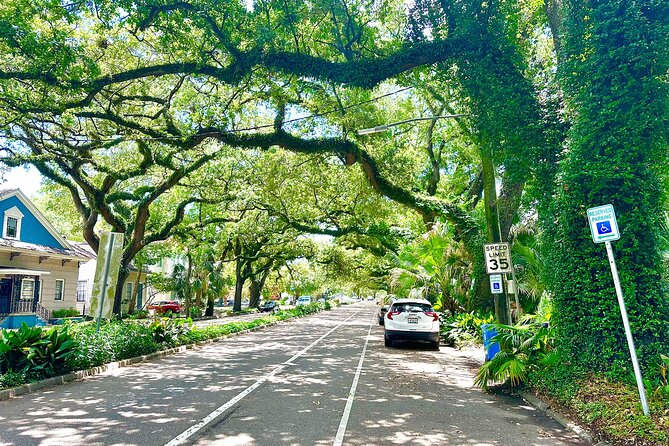
The Bayou St. John section is one of the strongest parts of the route. The tour explains how the bayou’s location influenced the choice of the site where New Orleans developed. That context helps you understand the city as a place built around waterways, not simply a collection of old streets.
You will drive through the Bayou St. John neighborhood and along the water. The route includes several unusual details: one of the oldest houses in New Orleans, a market built in the mid-1800s, and what is described as the oldest brick road in the city.
These sights may not be the grandest monuments in New Orleans, but they are exactly the sort of details that make a driving tour worthwhile. A large attraction usually comes with signs and guidebooks. An old road, an early market, or a house passed during a neighborhood drive is much easier to miss without someone pointing it out.
The bayou also brings in the city’s spiritual history. You will hear about rituals once held in the area by Voodoo Queen Marie Laveau. This is an important part of the tour’s character, though the stop is not presented as a formal museum visit or a long walking lesson.
There is also a heron breeding ground along the route. That gives the bayou a living quality. You are not only looking at historic streets and water. You may also be watching for birds and other signs of nature in the middle of the city.
More swamp and bayou trips from New Orleans:
- New Orleans Swamp and Bayou Boat Tour with Transportation
★ 5.0 · 5,399 reviews - New Orleans Airboat Ride
★ 4.5 · 4,891 reviews - Swamp Boat Ride and Oak Alley Plantation Tour from New Orleans
★ 5.0 · 3,303 reviews - New Orleans Self-Transport Swamp and Bayou Boat Tour
★ 5.0 · 2,824 reviews
City Park: oak trees, duels, birds, and beignets
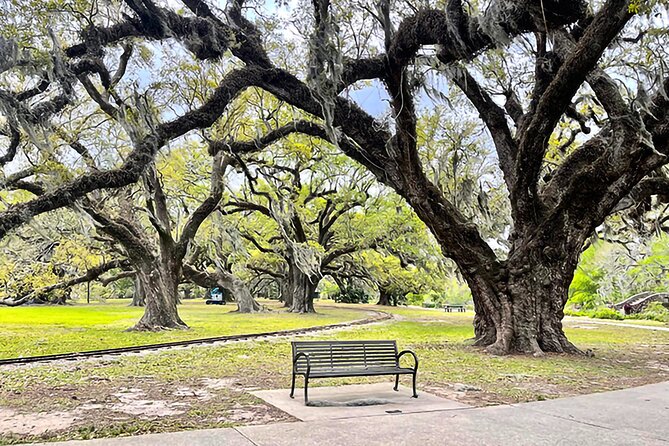
The City Park stop lasts about 50 minutes, making it the longest stop on the tour. You will see some of New Orleans’ oldest oak trees and hear how the park, nearby bayous, and surrounding land fit into the city’s past.
The oak trees are a major reason to value this stop. Their size and age give City Park a different feel from the French Quarter. Instead of tight streets and busy sidewalks, you get open space, broad views, and large trees that have watched the city change.
Brian also covers the history of duels held in this area, with a playful chance to stage a duel of your own. That humor helps keep the history from becoming a dry lecture. It also gives you a memorable photo opportunity.
The Cafe Du Monde stop is another practical pleasure. You can buy beignets during the visit, but they are not included in the $50 price. Bring a little spending money if you want this classic New Orleans treat. Since the stop combines photos, park time, and food, it works well for people who like a tour with varied short activities rather than one long talk.
The itinerary then includes nature watching, with birds and alligators mentioned as possible sights. I would keep your expectations sensible. Wildlife is never guaranteed, but the chance to look for it adds something that many city tours lack.
Lake Pontchartrain, the levees, and a very old fort
From City Park, the route continues toward Lake Pontchartrain along the levees. This section shifts the mood again. You will have a scenic drive beside the lakefront and opportunities for nature watching along the way.
The lakefront gives you a wider view of New Orleans and its surroundings. After the close streets of Treme and the shaded paths of City Park, the open water and levees provide a useful sense of scale. They also underline how closely the city’s daily life is tied to flood control and waterways.
The route includes an old lighthouse, followed by the ruins of a fort that once guarded the entrance to Bayou St. John. The fort is described as more than 300 years old, so this is one of the oldest historical elements on the tour.
You should think of this section as a scenic and interpretive drive with short stops, not a formal military history visit. The appeal is seeing the remains in their setting and connecting them to the bayou route you have already followed.
After the lakefront and fort, the tour returns to the French Quarter area along the bayou. The activity ends back at the meeting point.
What the three-hour schedule feels like
The tour starts at 1 p.m. and lasts about three hours. That timing gives you a useful afternoon plan, especially if you want to spend the morning in the French Quarter and use the evening for dinner or music.
The schedule is active without requiring constant walking. Treme receives about 30 minutes, St. Louis Cemetery No. 3 about 15 minutes, Bayou St. John about 30 minutes, City Park about 50 minutes, and the lakefront and fort section about 45 minutes. Some time is also used driving between areas.
That balance is a good fit for New Orleans heat, when a fully outdoor walking tour can become tiring. You get regular changes of scene and time to sit in the vehicle while moving between neighborhoods.
The tradeoff is that the stops are selective. You will see several places, but you will not have hours to explore any one of them. I would book this tour to build a broad picture of the city, then return independently to any place that catches your interest.
Pickup is offered, and the operator sends pickup details by text on the day of the tour. Since the listed starting point is 701 North Rampart Street, check the message carefully before setting out. The tour is offered in English, uses mobile tickets, and is limited to seven people.
Who will get the most from this tour
I would recommend this experience to you if you have already seen the French Quarter or want to see a different side of New Orleans without arranging several separate trips. It is especially useful for first-time visitors who want neighborhood history, nature, architecture, and folklore in one afternoon.
It also suits repeat visitors. One review describes returning to New Orleans for 17 years and still finding new and interesting places on this route. That is a useful clue: the tour is not only for people seeing the city for the first time.
The small group should appeal to anyone who prefers a more personal outing than a large bus tour. With no more than seven people, there is a better chance to ask Brian about a house, bird, cemetery story, or neighborhood detail that catches your eye.
I would be less likely to choose it if your main goal is food tasting, live music, or extended time inside museums. Beignets are an optional purchase, and the tour does not include a broad food program. It is also not the best match if you want to explore every stop on foot.
Good weather matters. The experience can be canceled for poor weather, with a different date or full refund offered. You can also cancel for a full refund if you do so at least 24 hours before the start time. Changes or cancellations inside that 24-hour window are not accepted.
The final call: book it for range, not for lengthy stops
I would book the New Orleans Driving Tour with Bayou St. John, City Park, and Treme if you want a compact, well-rounded look beyond the French Quarter. The route covers historic homes, a cemetery, a famous bayou, old brickwork, oak trees, wildlife, a lake, a lighthouse, and fort ruins. That is an unusually broad mix for $50 and three hours.
Its strongest feature is the connection between subjects. You are not simply ticking off attractions. You are seeing how water, settlement, faith, folklore, wildlife, and defense all helped shape New Orleans.
Book it with the right expectations. You will get a lively overview led by Brian, several photo stops, and a small-group ride through places you might not reach on your own. You will not get long, quiet visits at every stop. For a practical introduction to the wider city, it is a strong choice. For a slow, single-neighborhood walking experience, choose something more focused.
FAQ
How long does the driving tour last?
The tour lasts approximately three hours.
What time does the tour start?
The scheduled start time is 1 p.m.
Where does the tour start?
The listed meeting point is 701 N Rampart St, New Orleans, Louisiana 70116, USA. Pickup is offered, and pickup details are sent by text on the day of the tour.
Where does the tour end?
The activity ends back at the meeting point.
Are beignets included in the price?
No. You can stop at Cafe Du Monde for beignets, but you pay for them separately.
How many people can join the tour?
The tour has a maximum of seven travelers.
What happens if the weather is poor?
The experience requires good weather. If it is canceled because of poor weather, you will be offered a different date or a full refund.
Just added around New Orleans
- New Orleans Garden District Tour★ 5.0 · 8 reviews
- New Orleans Seance Experience★ 4.0 · 8 reviews
- Airport and City Transfers in New Orleans★ 5.0 · 8 reviews
- Sin and Tonic Pub Crawl in New Orleans★ 4.5 · 8 reviews
- The New Orleans Darkness Tour★ 4.4 · 9 reviews
- New Orleans Plantation Tour with Transportation★ 5.0 · 9 reviews
- New Orleans Self-Guided Kayak Bayou Swamp Tour★ 5.0 · 9 reviews
- Historic Carrollton Neighborhood Walking Tour★ 5.0 · 9 reviews
Swamp & Bayou Tours, compared.

New Orleans Swamp and Bayou Boat Tour with Transportation
Read our review →

Swamp Boat Ride and Oak Alley Plantation Tour from New Orleans
Read our review →
New Orleans Self-Transport Swamp and Bayou Boat Tour
Read our review →

Large Airboat Swamp Tour with Transportation from New Orleans
Read our review →
Small-Group Airboat Swamp Tour with Downtown New Orleans Pickup
Read our review →Browse the lists this tour appears in