
Reviewed · TREME TOURS
60-minute Tremé Walking Tour & Photo Experience
Tremé gives you a sharper look at New Orleans than the usual French Quarter stroll. This private walk links old Storyville, the shuttered Charity Hospital story, the Claiborne Avenue highway, and Mardi Gras traditions, with local guide Hollis adding an African American point of view. I especially like the small private format and the practical photo help, which make a short tour feel personal rather than scripted.
At $15 per person, it is an easy way to add local context to your trip. The main drawback is timing: the walk is advertised as 60 to 90 minutes, yet the listed stops total about an hour, so you should expect a brisk introduction rather than a long neighborhood exploration. Poor weather can also force a cancellation.
In This Review
- Key points to know before you book
- Why Tremé makes a better history lesson than another French Quarter loop
- Starting at Backatown Coffee Parlour and old Storyville
- Storyville in ten minutes
- The Charity Hospital story and the cost of Katrina
- Standing beneath the Claiborne Avenue highway
- Costumes and Carnival at the Mardi Gras Museum
- What the private format adds
- What the $15 price really buys you
- Who will get the most from this walk
- Timing, transport, and weather cautions
- Should you book the Tremé walking tour?
- FAQ
- How much does the Tremé walking tour cost?
- How long does the tour last?
- Is the tour private?
- Who is the guide?
- What language is the tour offered in?
- Where does the tour start?
- Where does the tour end?
- Is admission to the Mardi Gras Museum included?
- What happens if bad weather cancels the tour?
Key points to know before you book
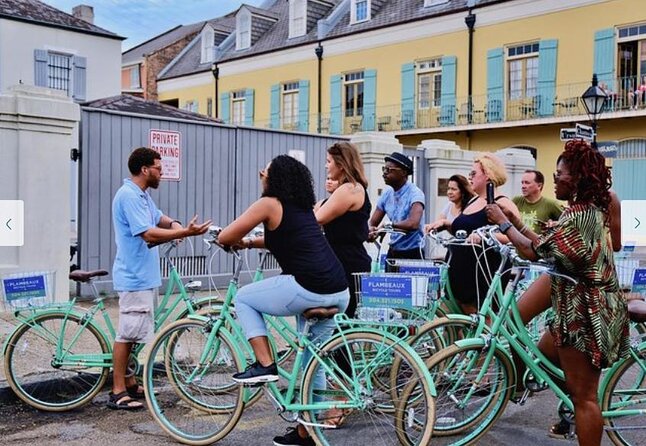
- Hollis leads a private local walk: Only your group takes part, so you can ask questions and request help with photographs.
- Tremé receives the attention: The route moves away from the standard French Quarter circuit and focuses on Black New Orleans, urban change, and local traditions.
- Old Storyville sets the tone: Backatown Coffee Parlour and the former red-light district provide an unusual opening to the tour.
- The Claiborne Avenue highway is part of the story: You’ll consider how Interstate 10 changed Tremé and its oak-lined avenue.
- The Mardi Gras Museum is the longest stop: About 20 minutes are set aside for costumes, pageantry, and grassroots Carnival culture.
- The price is unusually low: At $15 per person, the tour offers a lot of local context for a short outing, though museum access and timing should be confirmed when booking.
Why Tremé makes a better history lesson than another French Quarter loop
New Orleans is easy to reduce to balconies, cocktails, and jazz clubs. Tremé pushes you past that postcard version.
This neighborhood is tied to Black New Orleans culture, music, neighborhood life, and the long effects of city planning. The route also brings in Storyville, the former red-light district, and the legacy of Charity Hospital. Those subjects do not always fit neatly into a cheerful sightseeing script. That is part of the value here.
You walk with a local guide rather than joining a large group. Hollis is identified as the guide, and the tour’s tone is direct and personal. The strongest reason to choose this experience is the chance to ask questions as you go. You can also get assistance with taking better photos, a useful touch if you want more than quick snapshots of street scenes and buildings.
The private format matters at this price. A $15 tour can sometimes feel like a basic orientation, but private attention gives you room to focus on the subjects that interest you most. If you want more detail about neighborhood change, Black history, music, food, or photography, ask early. The walk is short, so your questions will help shape the hour.
More Treme and Congo Square walks:
- New Orleans Treme’ Walking Tour
★ 5.0 · 240 reviews - New Orleans: Tremé African American & Creole History Tour
★ 4.9 · 208 reviews - True Voodoo History of NOLA’s Congo Square with Local Guide
★ 5.0 · 133 reviews
Starting at Backatown Coffee Parlour and old Storyville
The meeting point is at 301 Basin Street, near Backatown Coffee Parlour. The café sits on the site of old Storyville, giving the tour an immediate connection to one of New Orleans’ more complicated chapters.
Backatown presents itself as a community gathering place. Its setting recalls the period when musicians such as Jelly Roll Morton, Louis Armstrong, and King Oliver were part of the city’s sound. The stop is scheduled for about 10 minutes, and admission is not included.
I like this opening because it starts with a real place rather than a list of dates. You get a sense of how music, commerce, and social life overlapped in this part of the city. The coffeehouse setting also gives you an easy place to get oriented before walking.
Do not expect a long café visit. Ten minutes passes quickly, and the tour does not include a coffee or food purchase. If Backatown interests you, you may want to return on your own after the walk, but the supplied tour details do not promise extra time there.
Storyville in ten minutes
Storyville operated from 1897 to 1917 as New Orleans’ regulated red-light district. It was created through a municipal ordinance, with rules written by city alderman Sidney Story to control prostitution.
That brief explanation makes this stop more than a colorful anecdote. Storyville was part of a city effort to organize and contain an activity that already existed. The district also became tied to music, nightlife, migration, and the public image of New Orleans.
The tour allows about 10 minutes here. That is enough for an introduction, but not enough for a full account of the district’s social history. I would treat this as a doorway into the subject, not the final word.
This stop may suit you if you want to understand how New Orleans built its reputation as a permissive city. It may disappoint you if you expect preserved buildings or an extensive museum visit. The value is in the guide’s explanation of the place and its role in the wider neighborhood.
The Charity Hospital story and the cost of Katrina
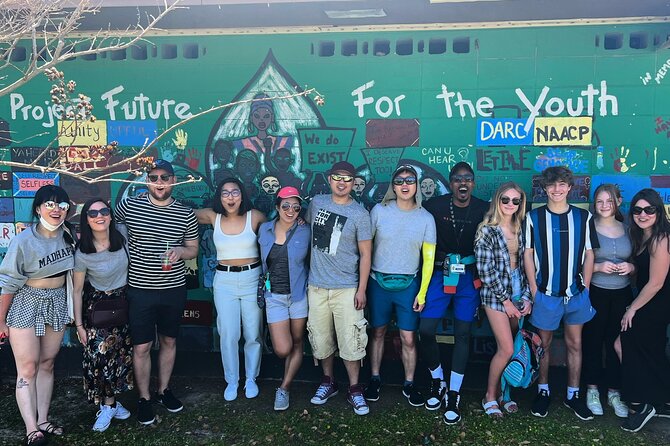
Another 10-minute stop concerns Charity Hospital and the Medical Center of Louisiana at New Orleans. The hospital was one of two teaching hospitals connected to the medical center, alongside University Hospital.
Hurricane Katrina changed its future. Three weeks after the storm, Governor Kathleen Blanco said Charity Hospital would not reopen as a functioning hospital. The building was owned by the Louisiana State University System, which decided not to reopen it at its original location. A new medical center was later completed in lower Mid-City in August 2015 and named University Medical Center New Orleans.
This is a useful stop because it connects a major disaster to decisions about public services, neighborhoods, and rebuilding. It also keeps the tour from treating Tremé as a frozen historical district. The area’s story includes institutions that closed, moved, or changed after Katrina.
The itinerary describes this stop as the Medical Center of Louisiana at New Orleans East Campus, while the accompanying history centers on Charity Hospital and the replacement medical center in lower Mid-City. Because those names can be confusing, ask Hollis to clarify exactly what you are seeing and how it relates to the former hospital. The stop is free, but the time is short.
More walking tours in New Orleans:
- New Orleans Premier Ghost, Voodoo and Vampire Walking Tour
★ 4.5 · 12,856 reviews - New Orleans Food Walking Tour of the French Quarter with Small-Group Option
★ 5.0 · 6,118 reviews - St. Louis Cemetery No. 1 Official Walking Tour
★ 4.5 · 3,941 reviews - New Orleans French Quarter, Voodoo and Culture Walking Tour
★ 4.5 · 2,961 reviews
Standing beneath the Claiborne Avenue highway
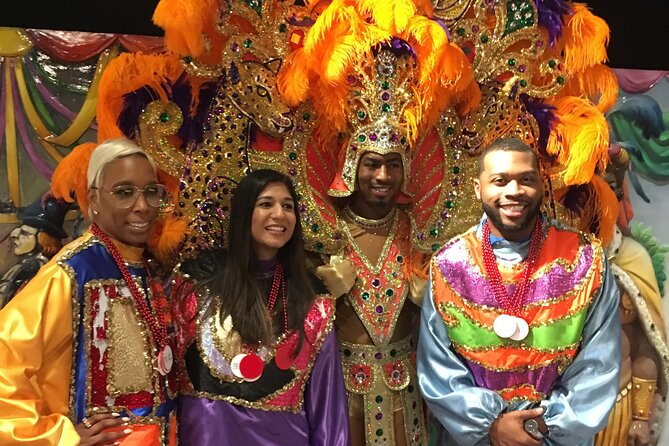
The Tremé portion focuses on Interstate 10, the elevated highway running above North Claiborne Avenue. For generations, residents have criticized the highway for taking homes, businesses, and a major line of oak trees when it was built more than half a century ago.
This is one of the tour’s most important subjects. A highway can look like ordinary infrastructure if you do not know what came before it. With context, the concrete structure becomes part of a story about urban planning and the damage done to a historic African American neighborhood.
The tour also notes federal funding intended to help neighborhoods such as Tremé. That does not mean the area has been restored to its former condition, or that the highway issue is settled. Instead, you get a look at an ongoing question: how can a city repair harm caused by earlier public works?
Again, the scheduled time is about 10 minutes. You will not have time for a long architectural walk or a full examination of every block. The strength lies in the conversation. Hollis can help you connect what you see overhead with the homes, businesses, and trees that once shaped North Claiborne Avenue.
Costumes and Carnival at the Mardi Gras Museum
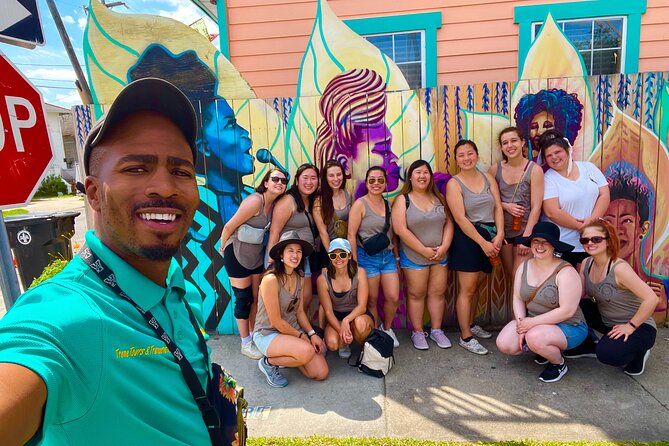
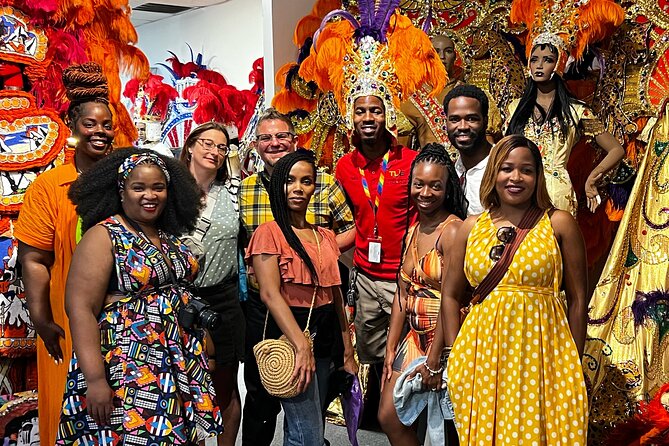
The final stop is the Mardi Gras Museum of Costumes and Culture, at 1010 Conti Street. About 20 minutes are set aside here, and admission is included.
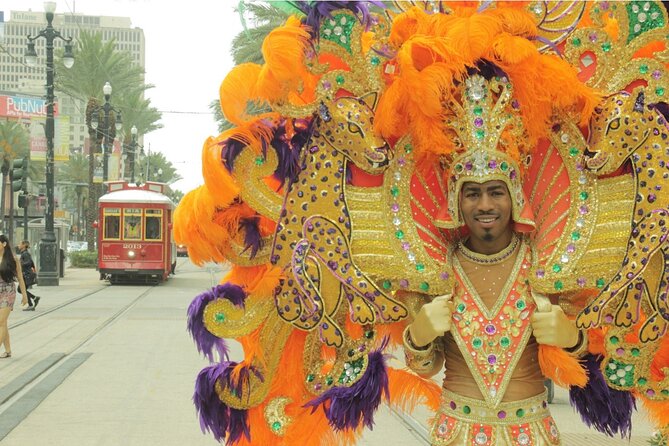
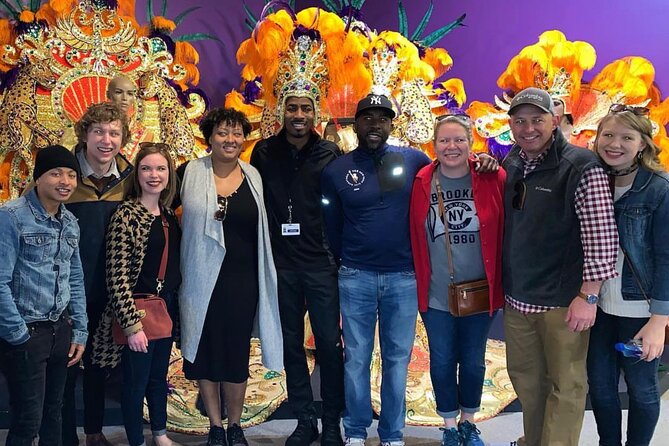
The museum presents Mardi Gras through costumes, pageantry, and local traditions. Its emphasis is on the creativity of grassroots Carnival culture rather than only the large, famous parades that most people associate with New Orleans.
This is the tour’s most visual stop, and it pairs well with the photo focus. Costumes give you colorful subjects and details to photograph, while the guide can help explain what you are seeing. Twenty minutes is enough for a quick look, but not a full museum visit at a slow pace.
The supplied opening hours show Tuesday sessions from 8:00 to 10:00 a.m. and 6:30 to 8:00 p.m., with dates listed from June 28, 2022, through March 5, 2027. Since the tour’s schedule and museum access may not line up perfectly, confirm the current timing before you pay. The museum is included in the tour, but the details do not promise extra time after the official end.
What the private format adds
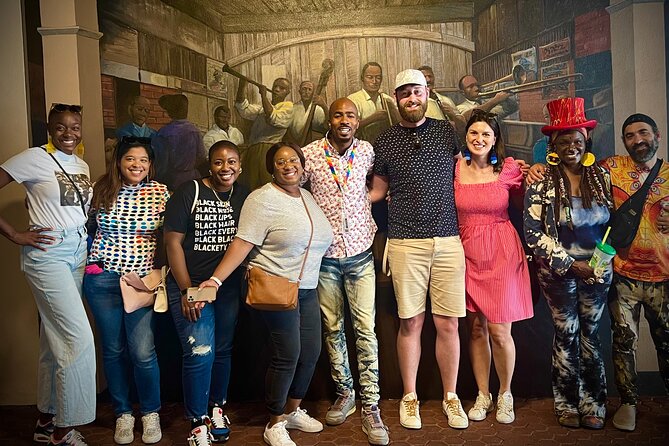
The tour is for your group only. That makes a real difference in Tremé, where the best part of a walk is often the explanation behind an ordinary-looking street, building, or highway support.
You can ask Hollis to slow down when a topic matters to you. You can also ask for photo advice instead of trying to frame everything while keeping up with a crowd. The photo assistance is not described as a professional photo shoot, so think of it as practical help with taking better pictures during the walk.
The private format may also make difficult subjects easier to discuss. The tour addresses displacement, racial history, prostitution, Katrina, and the destruction caused by the Claiborne Avenue highway. A personal conversation can offer more room for questions than a large group moving from one talking point to the next.
The trade-off is that the experience depends heavily on the guide. Hollis is praised for sharing local stories, recommending food spots, and presenting New Orleans from a Black community perspective. If he is unavailable, the quality may feel different. The published information identifies him by name, so confirm who will lead your booking.
What the $15 price really buys you
At $15 per person, this is inexpensive for a private New Orleans activity. The price includes the guide’s time, the neighborhood walk, photo assistance, and admission to the Mardi Gras Museum of Costumes and Culture. The two coffee and Storyville stops do not include admission, although no admission charge is specified for either one.
The best value comes from the combination of subjects. You are not paying only for a walk past buildings. In about an hour, you get an introduction to Storyville, the Charity Hospital story, the effect of Interstate 10 on Tremé, and Mardi Gras costume traditions.
Still, keep expectations sensible. This is not a half-day tour. The stops are tightly timed, and the experience may last anywhere from one hour to one hour and 30 minutes. If you want long museum browsing, extended café time, or a detailed neighborhood photo session, you will need to arrange more time separately.
The price is especially sensible for a first day in New Orleans. It can give you context before you spend more time in Tremé, visit food spots, or explore the city’s music and Carnival traditions on your own.
Who will get the most from this walk
I would choose this tour if you want local history told from an African American perspective and prefer a private conversation to a large group. It also suits photographers who want help making better use of a short walk.
It is a good match for people who have already seen the French Quarter and want a different part of New Orleans. The route is also useful for anyone interested in the effects of Katrina, urban highways, and the way city decisions shape neighborhoods.
You may want a longer tour if you have mobility concerns, need frequent breaks, or prefer a slow pace. The information says most people can participate and that the tour is near public transportation, but it does not describe the walking surface, distance, seating, or accessibility details. Ask before booking if those points matter to you.
Families may enjoy the costume museum and the photo element, but some Storyville material concerns prostitution and may not suit very young children. The official information does not give an age recommendation, so use your judgment.
Timing, transport, and weather cautions
The walk begins at 301 Basin Street and ends at 1010 Conti Street, at the Mardi Gras Museum of Costume and Culture. Both points are in New Orleans and the area is near public transportation.
The listed stops add up to about 60 minutes: 10 minutes at Backatown Coffee Parlour, 10 at Storyville, 10 at the medical center subject, 10 in Tremé, and 20 at the museum. Since the overall duration is given as one to 1.5 hours, allow the longer window for walking and conversation.
Good weather is required. If poor weather causes the operator to cancel, you are offered another date or a full refund. Your own cancellation is different: the experience is non-refundable and cannot be changed for any reason, so do not book casually if your schedule is uncertain.
The confirmation arrives at booking, and the experience is offered in English. The tour has a 4.9 rating from 72 submitted ratings, with 99 percent recommending it, but the weather cancellation policy is worth taking seriously. New Orleans heat, rain, and storms can change plans quickly.
Should you book the Tremé walking tour?
Book it if you want a short, private introduction to Tremé with a local guide, an African American view of New Orleans history, and a little help with photos. The $15 cost is hard to fault, especially with museum admission included.
Choose another experience if you want a long walk, a broad city tour, or extended time inside the museum. You should also confirm the current schedule, meeting details, and guide before booking, since the route is compact and weather can interfere.
For many visitors, this works best as a focused first look at Tremé rather than a complete neighborhood visit. It gives you several important subjects to think about, then leaves room for you to return and explore at your own pace.
FAQ
How much does the Tremé walking tour cost?
The price is $15 per person.
How long does the tour last?
The experience lasts approximately one hour to one hour and 30 minutes. The listed stops account for about one hour, with additional time likely used for walking and conversation.
Is the tour private?
Yes. Only your group participates in the private activity.
Who is the guide?
The guide identified for this experience is Hollis, from Treme Luxury Experience.
What language is the tour offered in?
The tour is offered in English.
Where does the tour start?
It starts at 301 Basin Street, number 1, New Orleans, Louisiana 70112.
Where does the tour end?
It ends at 1010 Conti Street, New Orleans, Louisiana 70112, at the Mardi Gras Museum of Costume and Culture.
Is admission to the Mardi Gras Museum included?
Yes. Admission to the Mardi Gras Museum of Costumes and Culture is included.
What happens if bad weather cancels the tour?
If poor weather causes the experience to be canceled, you will be offered a different date or a full refund. Your own cancellation or amendment is non-refundable.
Just added around New Orleans
- New Orleans Garden District Tour★ 5.0 · 8 reviews
- New Orleans Seance Experience★ 4.0 · 8 reviews
- Airport and City Transfers in New Orleans★ 5.0 · 8 reviews
- Sin and Tonic Pub Crawl in New Orleans★ 4.5 · 8 reviews
- The New Orleans Darkness Tour★ 4.4 · 9 reviews
- New Orleans Plantation Tour with Transportation★ 5.0 · 9 reviews
- New Orleans Self-Guided Kayak Bayou Swamp Tour★ 5.0 · 9 reviews
- New Orleans Premium Six-Passenger Airboat Adventure★ 5.0 · 9 reviews
Treme Tours, compared.
True Voodoo History of NOLA’s Congo Square with Local Guide
Read our review →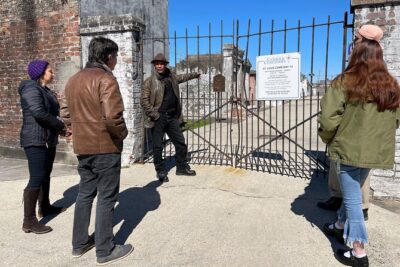
New Orleans Voodoo, Storyville, Treme, Walking Tour
Read our review →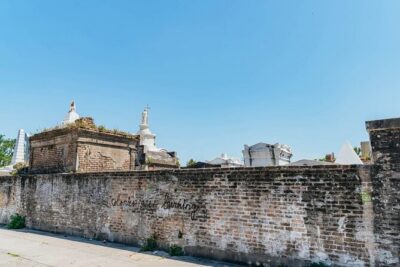
Private French Quarter, Voodoo, and Congo Square Walking Tour
Read our review →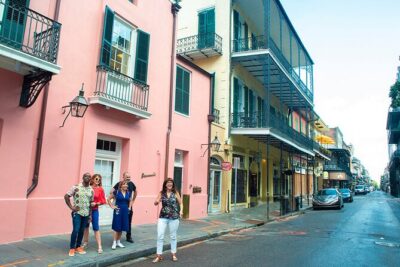
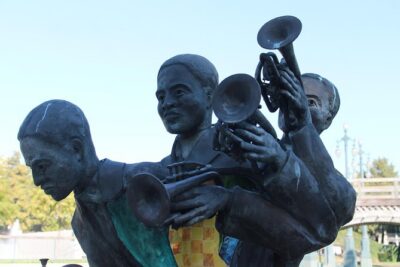
Walking the Tremé: A Self-guided Audio Tour of New Orleans
Read our review →
New Orleans Driving Tour with Bayou St. John, City Park, Treme
Read our review →Browse the lists this tour appears in