
Reviewed · VOODOO TOURS
New Orleans Voodoo, Storyville, Treme, Walking Tour
New Orleans tells some of its best stories on foot, and this walk takes you from the old Storyville red-light district to Congo Square, where music, faith, and resistance shaped the city. You will see the three remaining Storyville buildings, visit two historic churches, and finish at the Tomb of the Unknown Slave in Tremé.
I like the way the tour connects the birth of jazz to the lives of enslaved and free Black New Orleanians. I also like the small group cap of 20 and the personal style of guides such as David Higgins and New Orleans Nate, who add family stories, jokes, music, and local detail.
The main caution is that the advertised voodoo focus may not receive equal time on every departure. Guide substitutions have led some tours toward music and general New Orleans history, so book this for a broad look at Tremé and Storyville rather than a dedicated ritual or voodoo lesson.
In This Review
- Key points to know before you book
- Why this walk matters beyond the usual French Quarter tour
- Starting at Backatown Coffee Parlour on Basin Street
- Storyville and the three buildings that survived
- Our Lady of Guadalupe Church and a quieter side of New Orleans
- Congo Square, where music and resistance meet
- Louis Armstrong Park and the city’s musical son
- St. Augustine Church and Black Catholic New Orleans
- The Tomb of the Unknown Slave
- How much voodoo will you actually get?
- Guides make the biggest difference
- Is $29 a fair price?
- Who should book this walk?
- My recommendation
- FAQ
- How long is the New Orleans Voodoo, Storyville, Tremé, Walking Tour?
- How much does the tour cost?
- Where does the tour begin?
- Where does the tour end?
- Which places are included?
- Is the Backstreet Cultural Museum included?
- Is voodoo the only subject covered?
- Is the tour offered in English?
- Can I cancel for a refund?
Key points to know before you book
- Storyville has only three surviving buildings, making the opening stop brief but striking.
- Congo Square links music with resistance, showing how African traditions helped shape New Orleans culture.
- Our Lady of Guadalupe Church is the oldest surviving church in New Orleans, with about 20 minutes devoted to its story.
- St. Augustine Church is the oldest predominantly Black Catholic parish in the country, and the tour ends beside its Tomb of the Unknown Slave.
- David Higgins and New Orleans Nate are especially strong storytellers, but your guide may be someone else.
- The $29 price covers a licensed guide and a 2-hour-15-minute walk, with no dinner or paid admissions included.
Why this walk matters beyond the usual French Quarter tour
This is a history walk with music at its center. You are not simply moving from one pretty building to another. The route asks how New Orleans became New Orleans, and the answer leads through slavery, Catholic faith, African traditions, jazz, migration, and the long struggle for dignity.
Storyville gives you one part of that answer. Congo Square gives you another. Tremé, with its churches and memorials, brings the story into the lives of people and communities who are often reduced to footnotes in standard city tours.
I especially like that the route includes places with different kinds of importance. A few stops are tied to famous names, such as Louis Armstrong. Others carry weight because of what happened there, including the gatherings at Congo Square and the memorial beside St. Augustine Church.
The experience is also a useful counterpoint to the tourist-friendly side of New Orleans. You will still hear about music and colorful local characters, but the walk treats painful parts of American history with care. That balance matters. Voodoo is not presented as a spooky prop, at least in the best version of this tour. It appears within a larger story about African spiritual traditions and the people who preserved culture under harsh conditions.
More Treme and Congo Square walks:
- New Orleans Treme’ Walking Tour
★ 5.0 · 240 reviews - New Orleans: Tremé African American & Creole History Tour
★ 4.9 · 208 reviews - True Voodoo History of NOLA’s Congo Square with Local Guide
★ 5.0 · 133 reviews
Starting at Backatown Coffee Parlour on Basin Street
The tour begins at Backatown Coffee Parlour, at 301 Basin Street. This is a practical meeting place near public transportation, and the coffee shop gives you somewhere recognizable to find the guide before setting off.
The opening location also places you near the edge of the old Storyville district. That helps the tour begin with a clear sense of place rather than a long walk to the subject.
Bring water and wear comfortable shoes. The tour lasts about 2 hours and 15 minutes, and the route includes several stops with time on your feet. The operator recommends a moderate level of physical fitness, so this is not the best pick if standing and walking for more than two hours will be difficult.
The group can include up to 20 people. That is small enough for a personal feel, though you should stay close to the guide when the group is near traffic or spread across a sidewalk. A strong guide, such as David Higgins, has been praised for speaking clearly and adjusting the walk around group interests. Other departures may feel different, especially if a substitute guide takes over.
Storyville and the three buildings that survived
Storyville was once New Orleans’ official red-light district and is closely tied to the city’s early jazz scene. Today, only three buildings from the district remain.
Do not expect a preserved neighborhood or a large museum complex. The stop lasts about 10 minutes and is mainly an outdoor look at what remains. Its value comes from the explanation. Without context, the buildings are easy to pass without noticing. With a guide, they become markers of a district where musicians worked, styles mixed, and the city’s entertainment economy took shape.
This is also where the tour’s jazz thread begins. The guide may explain how musicians found work around Storyville and how the district helped create conditions for early jazz. That music did not appear from nowhere. It grew from African American traditions, local performance spaces, marching bands, church music, and the daily exchange of ideas in New Orleans.
If you have already spent time at the New Orleans Jazz Museum, some music material may be familiar. The difference here is that you hear the story while standing in the streets connected to it.
Our Lady of Guadalupe Church and a quieter side of New Orleans
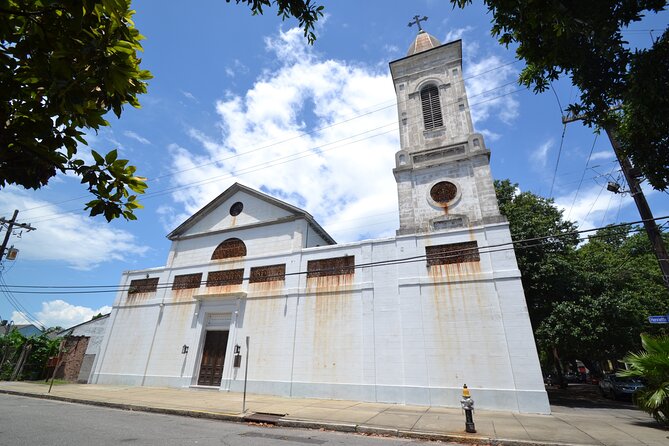
The next major stop is Our Lady of Guadalupe Church, where the guide spends about 20 minutes. It is described as the oldest surviving church in New Orleans, which gives the building unusual importance in a city full of historic religious sites.
This stop slows the pace. After Storyville’s association with nightlife and jazz, the church brings in faith, community, and the city’s long Catholic tradition. Your guide explains the church’s past and gives you a chance to see a landmark that can be easy to miss when you are focused only on the French Quarter.
The church also helps prevent the tour from becoming a simple music walk. New Orleans culture was built through many institutions, and churches were central places for worship, social life, music, and mutual support.
The supplied details do not promise a formal inside tour on every departure, so you should follow the guide’s instructions about entry. Admission is included in the sense that no separate ticket is listed, but this is still a walking tour, not a private church visit.
More voodoo history tours in New Orleans:
- New Orleans Premier Ghost, Voodoo and Vampire Walking Tour
★ 4.5 · 12,856 reviews - Adults-Only New Orleans Ghost, Crime, Voodoo, and Vampire Tour
★ 5.0 · 6,545 reviews - New Orleans Adults-Only Ghost, Voodoo and Vampire Tour
★ 5.0 · 3,291 reviews - New Orleans French Quarter, Voodoo and Culture Walking Tour
★ 4.5 · 2,961 reviews
Congo Square, where music and resistance meet
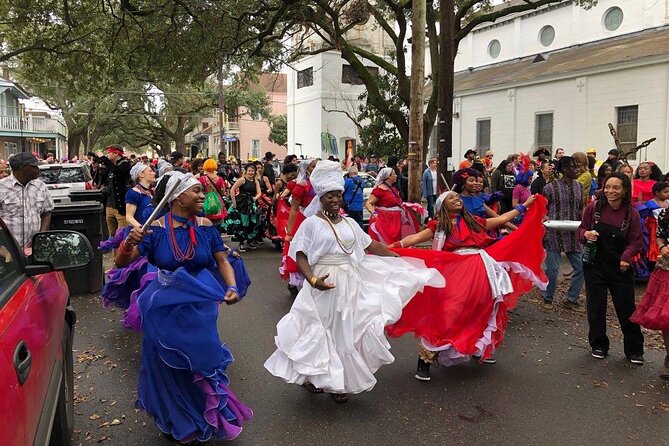
Congo Square is the emotional center of the walk. This historic gathering place is connected to enslaved Africans who met there, maintained cultural practices, made music, and formed bonds under a system designed to strip away freedom and identity.
The stop lasts about 15 minutes, but its meaning reaches far beyond that short block of time. Your guide explains how gatherings at Congo Square helped preserve African musical and cultural traditions. Those traditions later fed into the sound of New Orleans, including the rhythms that helped shape jazz.
I value this part of the tour because it places African American creativity at the beginning of the story, not at the end. New Orleans music is often sold as a colorful party, but Congo Square reminds you that its roots also lie in survival and resistance.
The site itself may not deliver a dramatic visual spectacle. You are looking at a public park and an urban setting, not a fully reconstructed historical scene. The guide’s explanation does most of the work here. If your guide is hard to hear, as can happen in an outdoor group, move close and ask for clarification.
Louis Armstrong Park and the city’s musical son
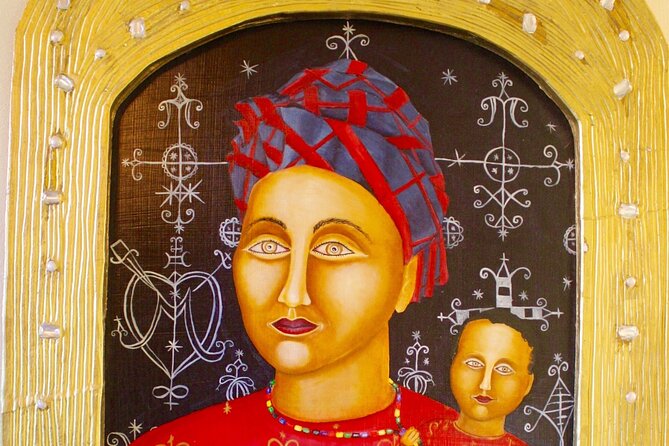
The walk continues through Louis Armstrong Park, named for New Orleans’ most famous musician. The park provides a natural bridge between Congo Square and the Tremé neighborhood.
Armstrong’s name brings the music story into the modern era. He became one of the city’s great musical ambassadors, but this stop works best when the guide connects him to the musicians, neighborhoods, and traditions that came before him.
The park is also a good place for the tour to breathe. You can take photographs, listen to the guide, and connect the earlier history of Congo Square with the later development of jazz. Guides such as David Higgins have used humor, music, and small observations to keep this section lively. One particularly playful detail involved playing Miles Davis for a bird along the route, the kind of odd local moment that can make a history walk feel personal.
Do not expect a concert or a long music performance. This is a storytelling stop, with the park serving as the setting.
St. Augustine Church and Black Catholic New Orleans
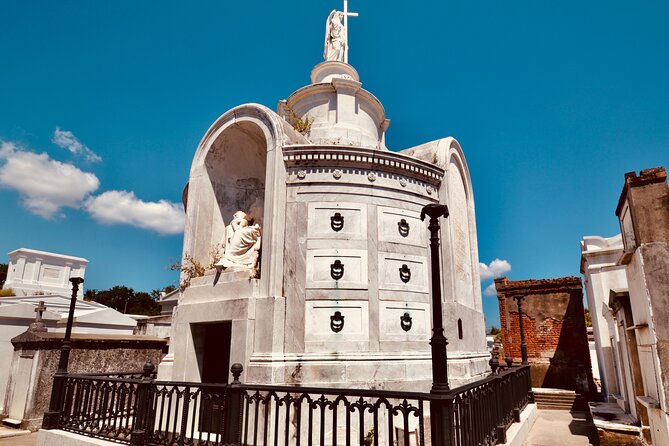
St. Augustine Church receives about 20 minutes and is one of the most important stops on the route. It is identified as the oldest predominantly Black Catholic parish in the country.
That fact gives the church weight beyond its architecture. The congregation reflects the complex history of New Orleans, where Catholicism, African traditions, French and Creole culture, slavery, freedom, and community life met in the same city.
Your guide explains the church’s place in Tremé and in Black New Orleans. This is a good moment to listen carefully rather than rush for photographs. The church helps you understand that Tremé is not simply a backdrop for music festivals or a convenient stop on a sightseeing route. It is a neighborhood with deep ties to Black faith, family, art, and political life.
The experience can vary by guide. David Higgins has been praised for animated storytelling and useful historical context. New Orleans Nate, also called Nawlins Nate, is known for adding family and personal experiences to his explanations. Neither guide is guaranteed, but the operator’s strongest departures seem to depend heavily on the person leading the group.
The Tomb of the Unknown Slave
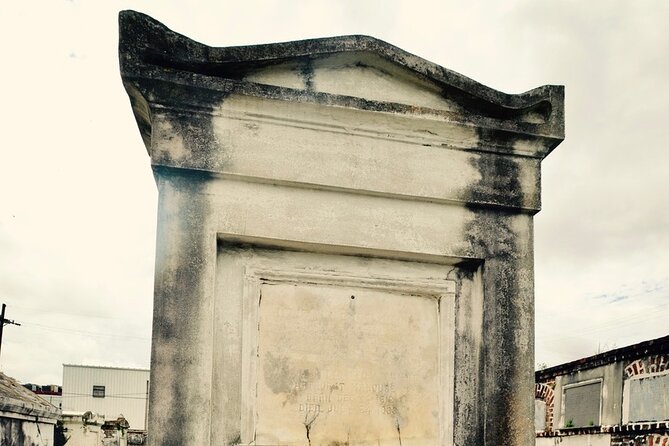
The final stop is the Tomb of the Unknown Slave, located on the side of St. Augustine Church. It is described as the only memorial of its kind in America.
The memorial gives the tour a serious ending. After stories about jazz, nightlife, churches, and neighborhood life, you are brought back to the people whose names were lost or never recorded. The site honors enslaved people whose suffering and labor helped build the city.
You spend about 20 minutes in this area, and that time allows the guide to explain why the memorial matters. It is not a grand monument in the style of a national memorial. Its power comes from its location and purpose, set beside a church in a neighborhood shaped by Black New Orleanians.
The tour ends here at 1210 Governor Nicholls Street. That is useful because you can continue exploring Tremé afterward, though the tour does not include dinner or a meal stop.
One point needs special attention: the former Backstreet Cultural Museum is across the street but is now closed. The stop focuses on the Tomb of the Unknown Slave, not a museum visit. If the museum is part of your reason for booking, adjust your expectations.
How much voodoo will you actually get?
The title promises voodoo, but the actual balance can change. Some guides may discuss voodoo as part of African spiritual practice, New Orleans culture, and the city’s history. Other departures may focus more heavily on jazz, musicians, Tremé, and general local history.
That variation is the biggest weakness of the experience. One substitute guide was described as good but difficult to hear, and the focus leaned toward music rather than voodoo. Another departure was changed to a different tour, leaving the group disappointed because it covered less of Tremé than expected.
I would not book this if your main goal is a detailed study of voodoo ceremonies, named practitioners, or modern spiritual practice. The supplied information does not promise that level of focus.
I would book it if you want voodoo placed within a broader New Orleans story. You will get more from the tour if you are interested in how music, religion, slavery, Black community life, and neighborhood identity overlap.
Guides make the biggest difference
The strongest praise goes to the guides’ storytelling. David Higgins is described as charismatic, funny, punctual, and highly engaged with New Orleans. He has adjusted tours around group interests and used music, jokes, and personal observations to make the past easier to follow.
New Orleans Nate receives similar praise for his energy, local background, and use of family stories. He has been described as patient with photographs and clear enough for the group to hear. He also helped a participant retrieve a phone left at the coffee shop, a small act that says a lot about the personal tone he brings to the job.
You cannot count on requesting a particular guide, but you may ask when booking. The guide can shape the whole experience, especially because several stops depend on explanation rather than visual displays.
There is also an important practical lesson here: stand near the guide. Outdoor history walks can be noisy, and one guide was hard to hear. If you miss a point, ask the guide to repeat it. A good guide will usually prefer that to having half the group quietly lose the thread.
Is $29 a fair price?
At $29 per person, this is a reasonable price for a 2-hour-15-minute guided walk. You are paying for a licensed guide, not for admission to a major attraction. The churches, parks, streets, and memorial do not require separate ticket fees according to the tour details.
The value depends on how much context you want. If you are happy to read plaques and walk through Louis Armstrong Park on your own, you can see many of these locations without paying. But you will miss the connections among Storyville, Congo Square, jazz, Tremé, and Black Catholic life.
The small group limit of 20 helps justify the cost. It is not a private tour, yet it is more manageable than a large crowd. I would consider the price especially fair early in a New Orleans visit, when the guide can point out places and themes you may want to explore later on your own.
Dinner is not included. Plan a separate meal after the walk rather than expecting food samples or a restaurant stop. One unrelated tour comment refers to food samples, but that should not be treated as part of this experience.
Who should book this walk?
I recommend it for first-time visitors who want a stronger sense of New Orleans beyond the French Quarter. It also suits returning visitors who have already seen the main sights and want to understand Tremé, jazz origins, and the city’s Black cultural story.
Solo visitors can fit in easily, and families can enjoy the humor and stories, though adults should decide how much discussion of slavery and the red-light district is suitable for younger children. Couples and friends who like local history will get the most from the slower church and memorial stops.
You should have moderate physical fitness and be comfortable walking for more than two hours. Service animals are allowed, and the start is near public transportation. The ticket is mobile, which keeps the meeting process simple.
The tour operates in English. If you need another language, this is not the right choice based on the information provided.
Book early if your dates are fixed. The average booking lead time is about 20 days, which suggests that popular departure times may fill ahead of your visit. Free cancellation is available until 24 hours before the start time. Cancellations inside that window are not refunded, and poor weather may lead to a new date or a full refund.
My recommendation
Book this tour if you want a compact, serious introduction to Storyville, Congo Square, Louis Armstrong Park, and Tremé. Its best feature is the way a guide turns separate places into one story about music, faith, oppression, survival, and local identity.
Choose another experience if you want a tightly controlled voodoo tour or guaranteed coverage of every advertised theme. Guide assignments can change the balance, and the walk may become more of a music and neighborhood history tour.
For the best value, take it near the start of your New Orleans stay. Listen closely at Congo Square and St. Augustine Church, ask questions, and use the final stop at the Tomb of the Unknown Slave as a prompt to explore Tremé with more care. At $29, that is a fair exchange for two hours of context you would be unlikely to gather from a casual stroll.
FAQ
How long is the New Orleans Voodoo, Storyville, Tremé, Walking Tour?
The tour lasts approximately 2 hours and 15 minutes.
How much does the tour cost?
The listed price is $29 per person.
Where does the tour begin?
It begins at Backatown Coffee Parlour, 301 Basin Street, New Orleans, Louisiana 70112.
Where does the tour end?
It ends at St. Augustine Catholic Church, 1210 Governor Nicholls Street. The Tomb of the Unknown Slave is located on the side of the church.
Which places are included?
The route includes Storyville, Our Lady of Guadalupe Church, Congo Square, Louis Armstrong Park, St. Augustine Church, and the Tomb of the Unknown Slave.
Is the Backstreet Cultural Museum included?
No. The former Backstreet Cultural Museum is now closed. The tour visits the Tomb of the Unknown Slave across the street.
Is voodoo the only subject covered?
No. The tour also covers Storyville, jazz, Congo Square, Black New Orleans, Tremé, churches, Louis Armstrong, and local history. The balance can vary by guide.
Is the tour offered in English?
Yes. English is the stated tour language.
Can I cancel for a refund?
Yes, if you cancel at least 24 hours before the experience start time. Cancellations within 24 hours are not refunded. If bad weather cancels the tour, you will be offered another date or a full refund.
More Walking Tours in New Orleans
- New Orleans Food Walking Tour of the French Quarter with Small-Group Option
★ 5.0 · 6,118 reviews - St. Louis Cemetery No. 1 Official Walking Tour
★ 4.5 · 3,941 reviews - New Orleans Garden District History Walking Tour
★ 5.0 · 2,879 reviews - French Quarter Historical Sights and Stories Walking Tour
★ 5.0 · 2,724 reviews
Just added around New Orleans
- New Orleans Garden District Tour★ 5.0 · 8 reviews
- New Orleans Seance Experience★ 4.0 · 8 reviews
- Airport and City Transfers in New Orleans★ 5.0 · 8 reviews
- Sin and Tonic Pub Crawl in New Orleans★ 4.5 · 8 reviews
- New Orleans Plantation Tour with Transportation★ 5.0 · 9 reviews
- New Orleans Self-Guided Kayak Bayou Swamp Tour★ 5.0 · 9 reviews
- The New Orleans Darkness Tour★ 4.4 · 9 reviews
- Historic Carrollton Neighborhood Walking Tour★ 5.0 · 9 reviews
Voodoo Tours, compared.
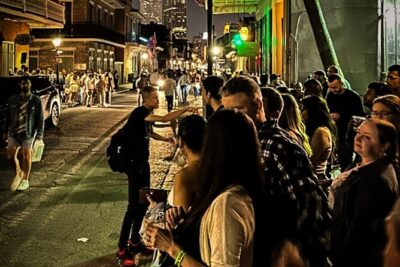
New Orleans Premier Ghost, Voodoo and Vampire Walking Tour
Read our review →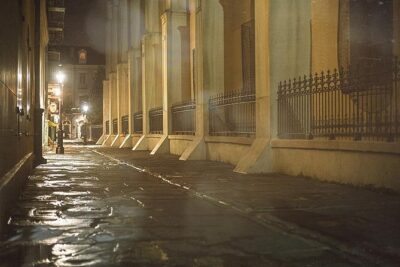
Adults-Only New Orleans Ghost, Crime, Voodoo, and Vampire Tour
Read our review →
New Orleans Adults-Only Ghost, Voodoo and Vampire Tour
Read our review →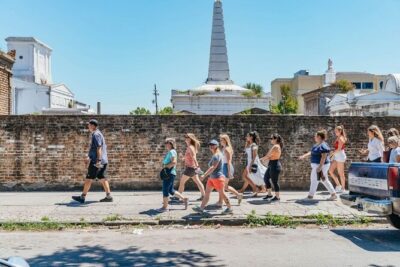
New Orleans French Quarter, Voodoo and Culture Walking Tour
Read our review →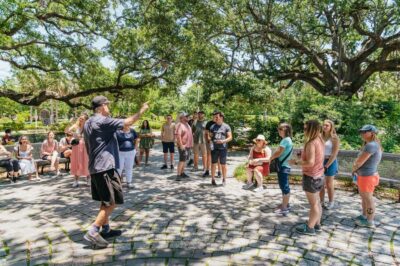
New Orleans Ghost, Vampire, Witch, Voodoo, and Mystery Tour
Read our review →
New Orleans Spirits & Spells: Witchcraft, Voodoo, and Ghost Tour
Read our review →Browse the lists this tour appears in