
Reviewed · CAJUN & CREOLE FOOD TOURS
The Original ‘Creole and Crescent’ Bike Tour
New Orleans history comes into focus when you leave the French Quarter by bicycle. This ride follows the city’s early Creole roots along Esplanade Avenue, then moves through City Park, Bayou St. John, Treme, and Congo Square, where the city’s musical story gathers force.
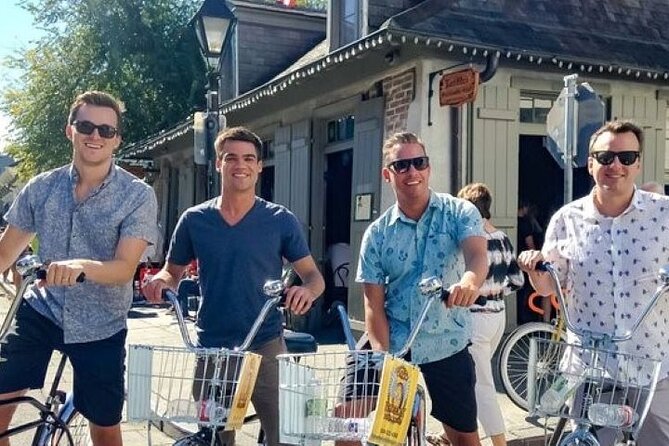
I like the small group size, capped at 12, and the way the route reaches places a standard French Quarter walk cannot. I also like the practical touches: water, a helmet, handlebar bag, bell, and free rain ponchos. Guides such as Teddy and Laura bring a friendly local voice, with safety kept in view.
The main tradeoff is pace. You cover a lot in two to three hours, so several stops are short, and one rider wished for more stories and longer stops. You should also be comfortable riding a bicycle and keep an eye on the weather, since cancellations can happen in poor conditions.
In This Review
- Key points before you book
- Why this bike route tells New Orleans better than a street circuit
- Starting at 317 Burgundy Street in the French Quarter
- Esplanade Avenue and the Creole city
- Frenchmen Street, City Park, and the live oak grove
- Crossing Magnolia Bridge over Bayou St. John
- Treme, Armstrong Park, and Congo Square
- St. Louis Cemetery No. 3 and the limits of the stop
- How the guides affect the ride
- Is $55 a fair price?
- Timing, weather, and cancellation risk
- Who should book the Creole and Crescent ride?
- Should you book it?
- FAQ
- Where does the bike tour begin?
- Where does the tour end?
- How long does the tour take?
- How many people can join the tour?
- What equipment is included?
- Do I need to know how to ride a bicycle?
- What happens if bad weather cancels the tour?
Key points before you book
- Ride beyond the French Quarter: Follow the original settlement corridor along Esplanade Avenue, then continue into City Park, Bayou St. John, and Treme.
- Local guides shape the experience: Teddy and Laura are specifically praised for friendly guiding, clear history, humor, and careful riding.
- Congo Square gives the ride its purpose: The final part connects the birthplace of jazz with the origins of Jazz Fest.
- A compact but busy route: Many stops fit into roughly two to three hours, so expect short talks and steady movement rather than a slow museum-style tour.
- Useful gear is included: You receive a bicycle, helmet, handlebar bag, bell, bottled water, and a complimentary poncho if rain arrives.
- Good for mixed ages with basic cycling ability: A 67-year-old parent and an 11-year-old child were accommodated, but the tour is not suitable for anyone who cannot ride a bike.
Why this bike route tells New Orleans better than a street circuit
FreeWheelin Bike Tours began in 2011 and presents itself as New Orleans’ original established bike tour company. The company keeps the original owner, guides, and tours in place, which matters here because the route depends on local familiarity more than fancy equipment or theatrical presentation.
You are not simply pedaling from one postcard view to another. The ride traces the old city outward from the French Quarter, following a line shaped by Creole families, bayou travel, public parks, music, and neighborhood life. That gives the outing a clear story.
I like this approach because New Orleans can feel like several cities at once. The French Quarter is the famous face, but Esplanade Avenue, Treme, and Bayou St. John show how the city grew around it. A bicycle lets you connect those areas without spending the whole morning waiting for a car or marching on foot.
The company offers pedal and electric versions of its Creole route. This review concerns the standard bicycle tour, so you should expect to provide your own effort. The route is described as a moderate physical activity, not an athletic challenge, but you still need to be able to ride confidently in an urban setting.
More Cajun and Creole food tours:
- Paddlewheeler Creole Queen Historic Mississippi River Cruise
★ 4.5 · 1,948 reviews - Paddlewheeler Creole Queen Jazz Dinner Cruise in New Orleans
★ 4.0 · 1,469 reviews - Laura Creole Plantation Guided Tour
★ 5.0 · 1,279 reviews
Starting at 317 Burgundy Street in the French Quarter
The meeting point is the FreeWheelin shop at 317 Burgundy Street. You begin with the French Quarter around you, but the point of the tour is to move beyond its familiar blocks.
The opening portion allows time to get organized and begin the ride. Your guide supplies the bicycle and safety equipment, including a helmet, handlebar bag, and bell. Bottled water is included, and complimentary ponchos are available for rainy weather.
That gear makes a difference. A handlebar bag gives you a place for small items without loading your pockets, while the bell helps you announce yourself around other riders and pedestrians. The poncho is useful insurance in a city where weather can change quickly, though the tour still requires generally good conditions.
The group limit is 12 people. That is large enough to keep the outing social but small enough for the guide to speak to the group without shouting every sentence. Safety matters on a route that includes city streets, so pay attention to instructions and stay with the group.
Esplanade Avenue and the Creole city
The longest named stretch is Esplanade Avenue, a four-plus-mile route also known as the Avenue of the Creoles or Millionaires Row. This is where the tour moves from the compact French Quarter into a more spacious view of old New Orleans.
As you ride, you see mansions tied to the old Creole aristocracy. The value here is not just the architecture. Your guide explains who lived in these homes and how those families influenced New Orleans society and culture.
Esplanade gives you time to settle into the bicycle. The avenue is long enough to make the city feel less like a collection of tourist zones and more like a place with grand residential corridors, old social divisions, and layered local identity.
A stop at Gayerre Place adds a specific visual marker: the decorative monument Peace, the Genius of History. It is a short stop, but it breaks up the ride and gives you a chance to hear how public monuments fit into the city’s story.
Do not expect to study every house or hear a long lecture at each stop. The ride has many sections to cover, so the guide must keep the group moving. If you prefer a slow architectural tour with extended time at each building, this will feel brisk.
Frenchmen Street, City Park, and the live oak grove
The route includes a short look at Frenchmen Street, widely known as the local counterpart to Bourbon Street and a center of New Orleans live music. The stop is brief, so think of it as a quick piece of orientation rather than an evening music experience.
From there, the ride continues toward City Park. The park provides a welcome change from city blocks, with a grove of live oaks, including a tree described as roughly a thousand years old. This is one of the ride’s strongest visual pauses.
Your guide also tells stories of duels and tragedies connected with this setting. Those details give the park a darker edge. New Orleans history is not only about food, music, and pretty buildings, and the stories here reflect that.
The park section lasts about 20 minutes, including the ride and stop. That is enough to appreciate the trees and hear the main stories, but not enough for a full tour of City Park. You should treat this as a carefully chosen passage through the park, not a stand-alone park visit.
More bike days around New Orleans:
- New Orleans French Quarter and Garden District Bike Tour
★ 5.0 · 410 reviews - New Orleans Creole Odyssey Small-Group Bike Tour
★ 5.0 · 268 reviews - Creole New Orleans Electric Bike Tour (ages 16 & up)
★ 5.0 · 230 reviews - New Orleans History and Sightseeing Small-Group Bike Tour
★ 5.0 · 215 reviews
Crossing Magnolia Bridge over Bayou St. John
After leaving City Park, the group crosses Bayou St. John on Magnolia Bridge. The bayou is important because it helps explain why this part of New Orleans developed as it did. The route follows the water for a while before turning into the neighborhood that carries its name.
The bayou section is one of the places where a bicycle feels especially useful. You move from the park’s tree cover to the waterway, then into residential streets, all without losing the thread of the route. A walking tour could cover this area, but it would take longer and feel less connected to the wider circuit.
The group stops on tree-lined Ursuline Avenue for another history talk. The setting sounds peaceful, but the value is in the contrast: you are close to the city’s famous core while seeing a calmer side of New Orleans.
This section is also a reminder that the ride is not built around attractions with admission desks. The stops are streets, bridges, trees, monuments, and public spaces. Your guide supplies the context, which means the quality of the narration matters more than a ticketed sight would.
Treme, Armstrong Park, and Congo Square
The Treme section is a central reason to choose this tour. The route goes farther into the neighborhood than many quick sightseeing circuits, aiming to show more than the version often presented in popular television and film.
You ride through streets where local connections matter. The company says its guides have friends in the neighborhood, and the route may include greetings from people along the way. That human contact can make the ride feel less like an observation from outside and more like a passage through a lived-in community.
The route then reaches Louis Armstrong Park. The park offers a quieter ride beside ponds, fountains, and tree-lined paths before the group reaches its final major stop, Congo Square.
Armstrong Park is not just a scenic finish. It prepares you for the cultural meaning of Congo Square. The stop brings together the city’s African American history, music traditions, and public gathering spaces.
Congo Square is described as the birthplace of jazz and the origin of Jazz Fest. That is a large claim in a short stop, so your guide’s explanation is important. You will not receive a full music-history course, but you should come away with a better sense of how New Orleans music grew from community, rhythm, gathering, and cultural survival.
For me, this is the route’s strongest payoff. You begin among French Quarter buildings and finish with the cultural forces that made New Orleans famous around the world. The bicycle journey gives those places a physical connection.
St. Louis Cemetery No. 3 and the limits of the stop
The tour also pauses at St. Louis Cemetery No. 3. You hear about New Orleans burial practices and have time for photographs and a short stroll among the tombs.
It is important to set expectations. This is not a guided cemetery tour, and the stop is limited. You should not expect detailed attention to individual graves or a long explanation of every tomb.
Even so, the stop adds useful context. New Orleans’ above-ground burial customs are closely tied to the city’s environment and traditions, and the cemetery provides a visual place to discuss them. It also gives your legs a short break from the bicycle.
Because the itinerary includes so many areas, this stop is representative of the whole tour: focused, informative, and brief. You get the main idea and a sense of place, then continue.
How the guides affect the ride
The strongest guide comments center on friendliness, local stories, humor, and safety. Teddy is praised for being friendly and for showing the group sights outside the French Quarter. Laura is praised for being fun, informed, and good at keeping the group moving safely.
Those qualities matter more than a memorized list of dates. A bike guide has to watch traffic, manage different riding speeds, position the group, and tell a story at the same time. The best guides make those jobs look easy without letting safety disappear behind entertainment.
You should expect a conversational style rather than a formal lecture. The supplied details describe personal recommendations and local history, which can help you decide what to do after the tour. Ask your guide for suggestions if you want to shape the rest of your New Orleans stay.
The group may include a wide age range. A ride with a 67-year-old mother and an 11-year-old daughter was handled well, and another rider specifically praised the guide’s care. Still, the tour operator requires moderate fitness and clearly says it is not for anyone who cannot ride a bicycle.
Is $55 a fair price?
At $55 per person, this is a reasonable price if you want a broad introduction to New Orleans rather than a single-neighborhood ride. You cover the French Quarter edge, Esplanade Avenue, Frenchmen Street, City Park, Bayou St. John, Treme, Armstrong Park, Congo Square, and a cemetery, with a local guide handling the interpretation.
The value comes from the number of districts connected in one outing. Renting a bicycle on your own might cost less, but it would not provide the route, local stories, safety support, or clear explanation of how these places relate.
The price is less attractive if you want long stops, extensive cemetery detail, or a slow architecture study. One rider enjoyed the tour but wished it lasted longer and included more stories and stops. That is fair criticism given the route’s size.
I would book it early if your dates are fixed. It averages about 35 days of advance booking, which suggests that popular dates may fill well before arrival. Since the group is capped at 12, reserving ahead also helps preserve the small-group feel.
Timing, weather, and cancellation risk
The ride takes about two to three hours. The exact length can depend on the group, the pace, traffic, and the number of brief stops. You should leave enough room in your schedule afterward, but you do not need to give it a full day.
The experience depends on good weather. If poor weather forces a cancellation, you are offered another date or a full refund. The same applies if the minimum number of riders is not met.
Your own cancellation terms are strict: the booking is non-refundable and cannot be changed for any reason if you cancel or request an amendment. That means you should avoid booking this as a loose backup plan.
Wear clothing suited to cycling and bring only what you can manage comfortably. The included handlebar bag helps, but the tour is still a moving activity with several neighborhood sections.
Who should book the Creole and Crescent ride?
I recommend this tour if you want to see more than the French Quarter in a short period. It fits a first visit, especially when you want an introduction to the city’s old residential avenues, parks, waterways, music history, and neighborhoods.
It is also a good match for families with riders who can manage a moderate physical outing. The confirmed age range shows that the ride can work for both an older parent and a child, provided everyone can ride safely.
You may prefer another format if you cannot ride a bicycle, dislike city riding, or want long, detailed talks at each site. You should also think twice if rain is likely and your schedule cannot absorb a change.
Should you book it?
Book The Original Creole and Crescent Bike Tour if you want an active, local-led overview with a clear route and plenty of variety. The best parts are the ride along Esplanade Avenue, the transition through City Park and Bayou St. John, the deeper look at Treme, and the final connection to Congo Square.
Do not book it expecting a leisurely stop-by-stop history seminar. This is a moving tour, and the two to three hour schedule requires short talks and steady progress. For $55, the mix of local guiding, included equipment, and access to several parts of New Orleans makes good sense for riders who value coverage and context.
FAQ
Where does the bike tour begin?
The tour begins at FreeWheelin Bike Tours & Rentals, 317 Burgundy Street, New Orleans, Louisiana 70112.
Where does the tour end?
The activity ends back at the same meeting point on Burgundy Street.
How long does the tour take?
The tour lasts approximately two to three hours.
How many people can join the tour?
The maximum group size is 12 travelers.
What equipment is included?
The price includes use of a bicycle, bottled water, a helmet, a handlebar bag, and a bell. Complimentary ponchos are available for rainy weather.
Do I need to know how to ride a bicycle?
Yes. The tour is not recommended for anyone who cannot ride a bike, and participants should have a moderate level of physical fitness.
What happens if bad weather cancels the tour?
If poor weather causes a cancellation, you are offered a different date or a full refund. A different date, another experience, or a full refund is also offered if the minimum number of participants is not met.
Just added around New Orleans
- New Orleans Garden District Tour★ 5.0 · 8 reviews
- New Orleans Seance Experience★ 4.0 · 8 reviews
- Airport and City Transfers in New Orleans★ 5.0 · 8 reviews
- Sin and Tonic Pub Crawl in New Orleans★ 4.5 · 8 reviews
- The New Orleans Darkness Tour★ 4.4 · 9 reviews
- New Orleans Plantation Tour with Transportation★ 5.0 · 9 reviews
- New Orleans Self-Guided Kayak Bayou Swamp Tour★ 5.0 · 9 reviews
- Historic Carrollton Neighborhood Walking Tour★ 5.0 · 9 reviews
Cajun & Creole Food Tours, compared.
Paddlewheeler Creole Queen Historic Mississippi River Cruise
Read our review →
Paddlewheeler Creole Queen Jazz Dinner Cruise in New Orleans
Read our review →

New Orleans French Quarter Food Tour: Cajun, Creole and Culture
Read our review →
Creole Queen History Cruise with Optional Lunch
Read our review →
New Orleans Delicious Donuts & Beignets: A Sweet Walking Tour
Read our review →
Browse the lists this tour appears in