
Reviewed · CAJUN & CREOLE FOOD TOURS
Lafayette: Cajun History & Folklore Walking Tour
Lafayette’s story comes alive through Cajun folklore, local gossip, food, and music on this compact downtown walk. You’ll hear about the Acadians’ exile from Nova Scotia, the Rougarou, Evangeline and Gabriel, Cajun Mardi Gras, and the people who shaped Lafayette.
I like the way guide Cassie connects history to places you can see right away, especially the Cathedral Live Oak and St. John Cemetery. I also like the practical local advice: where to eat, hear music, shop, and find Cajun French gifts. The main drawback is that two hours moves quickly, and the restaurant stops are recommendation points rather than included meals.
In This Review
- Key points to know before booking
- Why this Lafayette walking tour works
- Starting at St. John’s Cathedral
- The Cathedral Live Oak and the story of Evangeline
- St. John Cemetery and the Rougarou
- Cajun food at Johnson’s Boucaniere
- A proper pause at Carpe Diem
- The Mouton House and Lafayette’s less polished past
- Cajun music at the Acadiana Center of the Arts
- Cajun French at Cocodrie
- Parc International and Lafayette’s festival calendar
- Parc Sans Souci and the Lafayette sign
- Finishing with food, wine, art, and gifts
- What $20 gets you
- Practical details for the two-hour walk
- Should you book Cassie’s Cajun history tour?
- FAQ
- How long is the Lafayette Cajun History and Folklore Walking Tour?
- How much does the tour cost?
- Where does the tour meet?
- Where does the tour finish?
- Is food included in the tour price?
- What language is the tour offered in?
- Is the tour wheelchair accessible?
Key points to know before booking
- Cassie leads an entertaining local tour: Her style combines history, humor, folklore, food, music, and personal recommendations.
- The route covers major downtown sights: You’ll visit the Cathedral of St. John the Evangelist, St. John Cemetery, the Mouton House, Parc International, and Parc Sans Souci.
- Folklore is part of the main event: Expect stories about Evangeline and Gabriel, the Cajun Romeo and Juliet, and the mythical Rougarou.
- Food and music get real attention: Johnson’s Boucaniere, local restaurants, Cajun cuisine, zydeco, and Festival International all fit into the walk.
- There is a 15-minute break: Carpe Diem is a chance to buy coffee, ice cream, or a cocktail during the tour.
- The value is strong at $20: You receive two hours with a live local guide, plus ideas that can shape the rest of your Lafayette visit.
Why this Lafayette walking tour works
Many city walks give you names, dates, and a few photographs. This one adds the stories that help you understand how Acadiana sees itself. Cassie moves from formal landmarks to local legends, then from Cajun food to music, language, and festivals.
That mix is the chief strength. You are not only looking at a cathedral or a park. You are hearing why the place matters, what local traditions grew from it, and where you can continue exploring after the tour ends.
The pace is also sensible. The full experience lasts two hours, with most stops lasting about 10 minutes and a longer 15-minute pause at Carpe Diem. You cover a good number of places without turning the outing into a forced march.
I would book it near the beginning of a Lafayette stay. The food, music, shop, and festival suggestions are useful only if you still have time to follow them.
More Cajun and Creole food tours:
- Paddlewheeler Creole Queen Historic Mississippi River Cruise
★ 4.5 · 1,948 reviews - Paddlewheeler Creole Queen Jazz Dinner Cruise in New Orleans
★ 4.0 · 1,469 reviews - Laura Creole Plantation Guided Tour
★ 5.0 · 1,279 reviews
Starting at St. John’s Cathedral
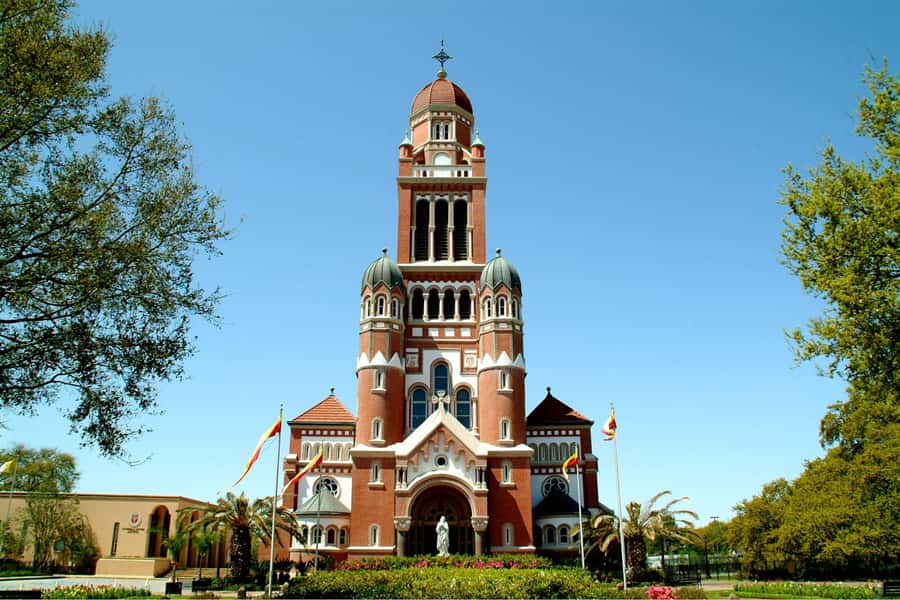
Meet Cassie on the sidewalk in front of the Cathedral of St. John the Evangelist. This is a clear central starting point, and the first discussion sets up one of the key stories of Cajun identity: the Acadians’ exile from Nova Scotia.
That opening gives the rest of the walk a human frame. Cajun culture did not simply appear as a set of recipes, dances, and accents. It grew from displacement, settlement, adaptation, and the preservation of community traditions.
The cathedral also gives you an immediate sense of Lafayette’s older civic center. You begin with a formal religious landmark, then move into stories that are less polished and more personal. That contrast is part of the charm.
Parking takes a little planning. The suggested areas are Vermillion Street and Jefferson Street, where street parking fees may apply. I would arrive early enough to park and walk to the meeting point without rushing.
The Cathedral Live Oak and the story of Evangeline
The route continues to the Cathedral Live Oak, described as 500 years old. This is one of the most memorable stops because the tree becomes the setting for folklore rather than just a botanical landmark.
Here you hear the tale of Evangeline and Gabriel, presented as the Cajun Romeo and Juliet. The story gives emotional shape to the Acadian experience and helps explain why Evangeline remains such a powerful figure in regional culture.
This section is a good example of the tour’s approach. Cassie does not treat folklore as a side note reserved for children. Legends reveal what a community remembers, mourns, and retells. You get a story to carry with you, along with a physical place to connect it to.
The guide also promises local gossip and stories that are not found in standard books. That means the experience is less formal than a museum lecture. If you prefer a strict timeline and heavy academic detail, this may feel loose. If you like history with personality, it should suit you well.
St. John Cemetery and the Rougarou
At St. John Cemetery, the focus shifts to raised cemeteries and the Rougarou, a mythical creature from Cajun folklore. The raised cemetery discussion matters because burial customs reflect the practical realities of life in southern Louisiana.
This stop blends a real local tradition with a supernatural one. The Rougarou story adds a darker edge and gives Cassie room to explain how folklore can guide behavior, reinforce community values, and entertain at the same time.
You should expect to walk through an active historic setting, not a staged attraction. That makes the guide’s explanation especially useful. She helps connect what you are seeing with the beliefs and customs surrounding it.
The cemetery is also one of the places where comfortable shoes matter. The tour is wheelchair accessible, but the route still involves outdoor walking and several stops. If you need extra time at each site, tell Cassie at the start so you can judge the pace together.
More history tours in New Orleans:
- New Orleans Garden District History Walking Tour
★ 5.0 · 2,879 reviews - French Quarter Historical Sights and Stories Walking Tour
★ 5.0 · 2,724 reviews - New Orleans Small-Group Haunted History Carriage Tour
★ 4.5 · 2,289 reviews - New Orleans Haunted History Ghost Tour
★ 4.5 · 2,084 reviews
Cajun food at Johnson’s Boucaniere
Johnson’s Boucaniere is the food-focused stop. Cassie discusses the history and relevance of Cajun cuisine, making this more than a quick restaurant name-drop.
That context is valuable before you order Cajun food on your own. You will have a better sense of how food fits into local culture rather than treating it as a list of spicy dishes. The tour does not include food, so use the stop to listen and make a note of the place if you want to return later.
The same pattern continues as you pass Pop’s PoBoys and Pamplona. Cassie gives personal recommendations and discusses the Acadian flag. These short stops are best viewed as a local orientation session. You are not dining at every restaurant, but you are building a list of possibilities for lunch, dinner, or a later evening.
You may want to keep your phone handy for notes. A two-hour walk includes many names, and it would be easy to forget which restaurant suited your particular taste.
A proper pause at Carpe Diem
About halfway through, the walk includes 15 minutes at Carpe Diem. You can buy coffee, ice cream, or cocktails at this locally owned spot.
This break makes a real difference. A walking tour with many short stops can feel crowded if there is no chance to sit or reset. Here, you have time to cool down, get a drink, and chat with Cassie before the second half.
Purchases are not included in the $20 price, so budget separately if you want something. The pause is long enough for a small refreshment, not a full meal.
I also like the choice of a local business for the break. It keeps the tour tied to Lafayette’s current food scene instead of treating the downtown area as a museum backdrop.
The Mouton House and Lafayette’s less polished past
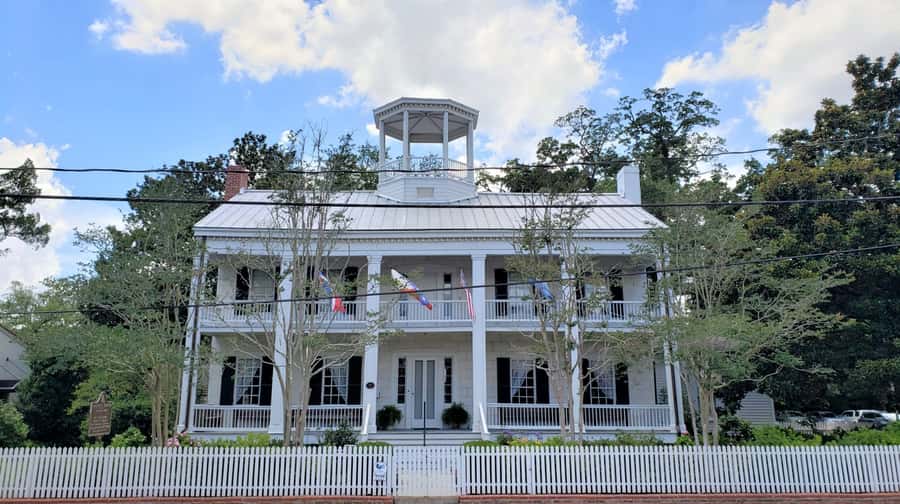
The Historic Mouton House introduces the man who founded Lafayette and some of the area’s sordid pre-Civil War history. This is an important part of the walk because it keeps the story from becoming a postcard version of Cajun culture.
You will hear about people and events connected to the city’s beginnings, including the uncomfortable parts. The supplied details do not give a full list of subjects, so Cassie’s live explanation is central here. Expect interpretation and storytelling rather than a self-guided plaque reading.
For me, this is the kind of stop that adds value to a short tour. You get a clearer idea of how Lafayette was formed, and you are reminded that local history includes conflict, inequality, and difficult choices alongside celebration.
The Mouton House also helps balance the folklore. After Evangeline and the Rougarou, you return to people, property, politics, and the forces that shaped the city.
Cajun music at the Acadiana Center of the Arts
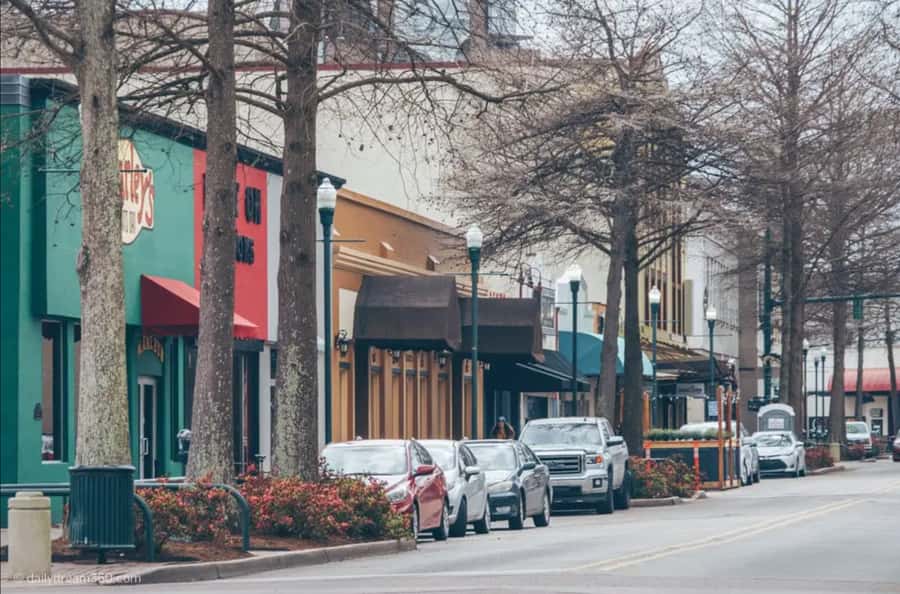
At the Acadiana Center of the Arts, Cassie discusses Cajun and zydeco music, their origins, and their importance today. This is one of the tour’s most useful stops if you want to plan an evening in Lafayette.
Music here is treated as living culture, not a relic. The discussion helps you understand why music remains central to Acadiana and gives you a better reason to seek out a venue after the walk.
The route passes several restaurants, including Vestal and Sarrica’s, as well as Central, Tsunami, and Flats. Cassie offers personal recommendations along the way. Since the tour description does not assign a meal to any of these stops, plan to return later rather than expecting tastings.
That arrangement suits me. You can choose a restaurant based on your own budget and schedule, while the guide gives you a local starting point.
Cajun French at Cocodrie
Cocodrie is a local gift shop where the conversation turns to the Cajun French language. You get about five minutes to look around.
The stop is short, but the subject is significant. Language is one of the clearest ways a culture carries family memory and regional identity forward. Hearing about Cajun French in the context of a local shop makes the topic practical rather than abstract.
You may find gifts connected to local language and culture here, but purchases are your responsibility. The five-minute window is enough for a quick look, not a relaxed shopping session. If something catches your eye, you may want to return after the tour.
This is also a good example of the tour’s balance. You learn about a cultural subject, see how it appears in local commerce, and then move on before the walk loses momentum.
Parc International and Lafayette’s festival calendar
At Parc International, Cassie explains the history of Festival International de Louisiane and introduces major Lafayette celebrations. Courir du Mardi Gras, also called Cajun Mardi Gras or the Chicken Run, gets special attention.
Festival information can be more useful than it first sounds. Lafayette’s identity is tied closely to public celebrations, music, food, and communal traditions. Knowing the names and basic character of these events can help you decide when to return and what kind of experience to seek.
This stop also gives you context for the music discussion at the Acadiana Center of the Arts. Festivals are not isolated events. They are one of the places where food, language, performance, and local pride meet.
The tour cannot provide the full festival experience in 10 minutes, of course. Its job is to give you the background and point you toward events worth researching.
Parc Sans Souci and the Lafayette sign
At Parc Sans Souci, Cassie discusses the city’s current challenges and triumphs. This brings the tour into the present and prevents the visit from becoming a backward glance at an idealized past.
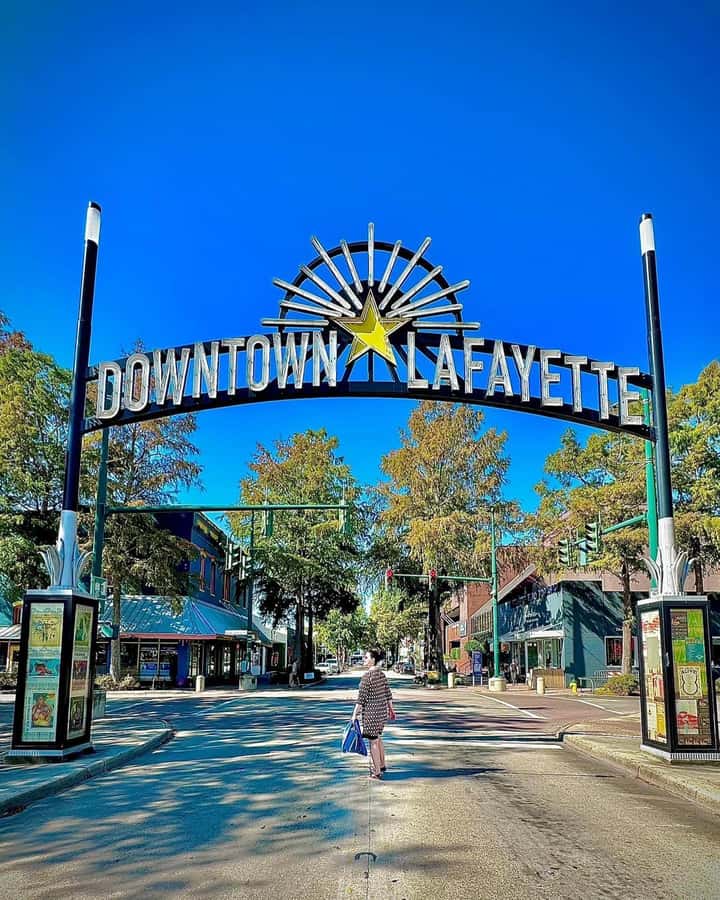
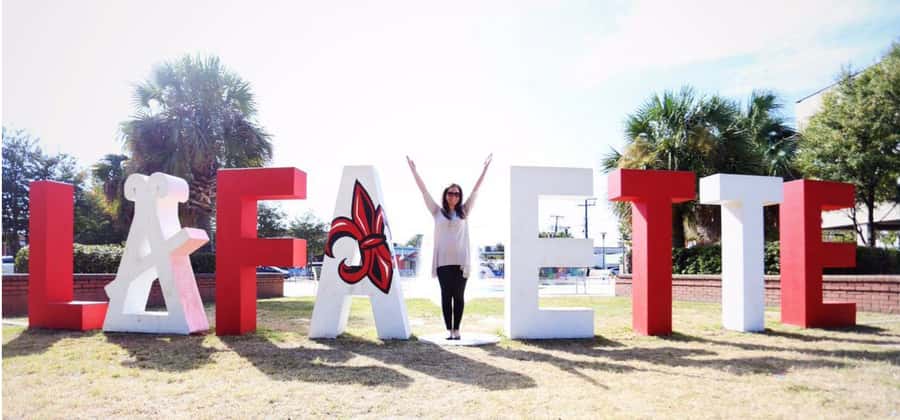
You also have time to take pictures with the Lafayette sign. It is a simple photo stop, but a useful one near the end of a route packed with stories and recommendations.
I appreciate the inclusion of current issues. A place is easier to understand when you hear not only what it celebrates, but also what it is working through. The supplied information does not specify the exact challenges discussed, so you should expect Cassie to frame them during the live talk.
Finishing with food, wine, art, and gifts
The tour ends at Wild Child Wines, described as one of Cassie’s favorite places for food, wine, art, and gifts. It is a fitting final stop because the walk finishes with ideas for continuing your time downtown.
You can say goodbye there, then decide if you want to stay for food or wine. Those purchases are not included, and the tour does not promise a final tasting.
Ending at a local restaurant and shop gives you a practical next step. You are not deposited at a generic transit point. You finish somewhere connected to the kind of eating, browsing, and social time that makes a short Lafayette visit feel more personal.
What $20 gets you
At $20 per person, this is strong value. You receive two hours with Cassie, a live English-speaking guide, a broad downtown route, folklore, local history, food and music guidance, and a short break.
The value is especially good if you use the tour as a first-day introduction. One meal recommendation or music suggestion that works for you can help recover much of the ticket cost, while the historical and cultural context is included from the start.
The price does not cover food, drinks, cocktails, shopping, or gifts. Think of the $20 as payment for interpretation and local direction, not a bundled tasting tour.
The perfect group for this experience is a first-time Lafayette visitor who wants a friendly introduction without spending half a day on formal sightseeing. It also suits people who like folklore, food culture, local music, and stories with a little gossip in the mix.
Practical details for the two-hour walk
The tour is offered in English and has a live guide. It is wheelchair accessible, and comfortable shoes are recommended.
The meeting point is the sidewalk in front of the Cathedral of St. John the Evangelist. Parking is suggested on Vermillion Street or Jefferson Street, with possible street parking fees.
You can cancel up to 24 hours ahead for a full refund, and the reserve-now, pay-later option lets you hold a place without paying immediately. Starting times vary, so check availability for the date you want.
The group size is not specified. The experience can work well for a small group because Cassie’s style includes time for questions and personal conversation, but you should not assume every departure will have the same number of people.
Should you book Cassie’s Cajun history tour?
Book it if you want a lively introduction to Lafayette that mixes real places with folklore, especially if food, music, and local recommendations matter as much to you as formal history.
I would be less likely to choose it if you want a quiet architectural tour, a full meal, or long visits inside each landmark. The itinerary is broad, and the short stops favor variety over extended sightseeing.
The strongest reason to book is Cassie herself. Her tours are described as friendly, funny, personal, and full of useful local detail. At $20, the risk is low, and the payoff is a better sense of what to eat, hear, see, and explore after the walk.
FAQ
How long is the Lafayette Cajun History and Folklore Walking Tour?
The tour lasts two hours.
How much does the tour cost?
The price is $20 per person.
Where does the tour meet?
Meet Cassie on the sidewalk in front of the Cathedral of St. John the Evangelist.
Where does the tour finish?
The tour ends at Wild Child Wines.
Is food included in the tour price?
No. Food, drinks, cocktails, and purchases are not included. The route includes restaurant stops and a 15-minute break at Carpe Diem, where you can buy coffee, ice cream, or cocktails.
What language is the tour offered in?
The live tour is offered in English.
Is the tour wheelchair accessible?
Yes, the activity is wheelchair accessible. Comfortable shoes are recommended, and parking is suggested on Vermillion Street or Jefferson Street, where street parking fees may apply.
More Walking Tours in New Orleans
- New Orleans Premier Ghost, Voodoo and Vampire Walking Tour
★ 4.5 · 12,856 reviews - New Orleans Food Walking Tour of the French Quarter with Small-Group Option
★ 5.0 · 6,118 reviews - St. Louis Cemetery No. 1 Official Walking Tour
★ 4.5 · 3,941 reviews - New Orleans French Quarter, Voodoo and Culture Walking Tour
★ 4.5 · 2,961 reviews
Just added around New Orleans
- New Orleans Garden District Tour★ 5.0 · 8 reviews
- New Orleans Seance Experience★ 4.0 · 8 reviews
- Airport and City Transfers in New Orleans★ 5.0 · 8 reviews
- Sin and Tonic Pub Crawl in New Orleans★ 4.5 · 8 reviews
- The New Orleans Darkness Tour★ 4.4 · 9 reviews
- New Orleans Plantation Tour with Transportation★ 5.0 · 9 reviews
- New Orleans Self-Guided Kayak Bayou Swamp Tour★ 5.0 · 9 reviews
- Historic Carrollton Neighborhood Walking Tour★ 5.0 · 9 reviews
Cajun & Creole Food Tours, compared.
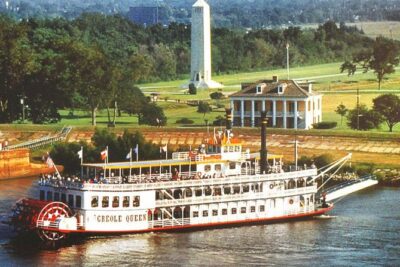
Paddlewheeler Creole Queen Historic Mississippi River Cruise
Read our review →
Paddlewheeler Creole Queen Jazz Dinner Cruise in New Orleans
Read our review →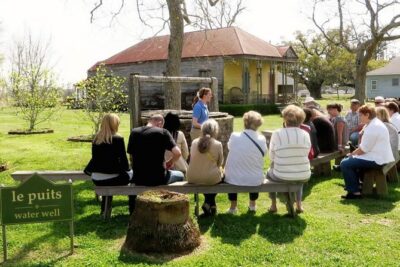

New Orleans French Quarter Food Tour: Cajun, Creole and Culture
Read our review →
Creole Queen History Cruise with Optional Lunch
Read our review →
New Orleans Delicious Donuts & Beignets: A Sweet Walking Tour
Read our review →
Browse the lists this tour appears in