
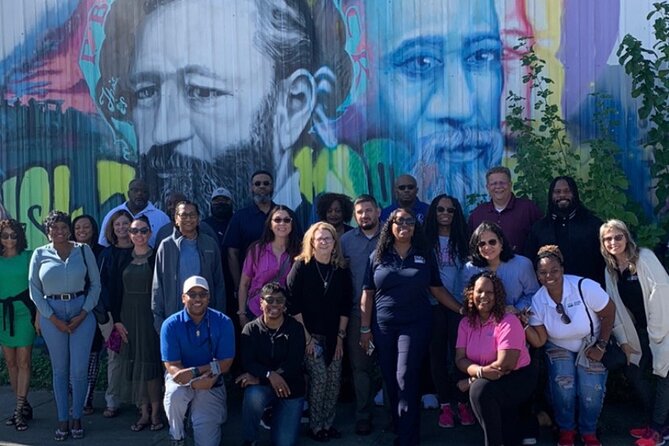
Reviewed · WHITNEY PLANTATION TOURS
Whitney Plantation and Soul of New Orleans City Tour Combo
Whitney Plantation makes this combo different from a standard plantation outing. You focus on the lives of enslaved people through cabins, memorials, names, and artwork, then return to New Orleans for a city tour that connects slavery, segregation, Katrina, and the birth of jazz. The history is direct and difficult, not dressed up as a grand-house sightseeing trip.
I like the pairing for two clear reasons: the Wall of Honor names more than 350 enslaved people, and the city portion puts New Orleans history in real places, including Congo Square, Studio BE, the Lower Ninth Ward, and McDonogh No. 19. The main drawback is that Whitney Plantation is self-guided by audio, so you do not get a live plantation guide to answer questions as you walk.
In This Review
- Key points to know
- Why this combo tells a fuller New Orleans story
- The morning pickup and ride from New Orleans
- Whitney Plantation: memorials instead of plantation romance
- The road back becomes a moving history lesson
- The Ninth Ward and Katrina’s lasting scars
- Studio BE and the city’s living creative voice
- Congo Square and the roots of New Orleans music
- McDonogh No. 19 and the fight over school desegregation
- What the $129 price includes
- Timing, comfort, and what to bring
- Who will get the most from this day
- Should you book the Whitney Plantation and Soul of New Orleans combo?
- FAQ
- How long does the Whitney Plantation and city tour combo last?
- What time does pickup begin?
- Where can I meet the tour if I do not use hotel pickup?
- Is admission to Whitney Plantation included?
- Is the Whitney Plantation tour guided by a person?
- Can I cancel for a full refund?
Key points to know
- Whitney Plantation centers enslaved people, with cabins, memorials, original buildings, and the Field of Angels sculpture.
- The city tour adds essential context, including the Ninth Ward, Katrina flood damage, Congo Square, Studio BE, and school desegregation history.
- Jay and Jeremy have led especially strong city portions, bringing local knowledge and room for questions.
- Round-trip transport is included, with pickup from most downtown hotels or a Canal Street meeting point.
- Plan on eight to nine hours, including about two hours at Whitney and roughly two hours on the city portion.
- The $129 price is strongest for visitors wanting one serious history day, rather than separate sightseeing stops with their own transport.
Why this combo tells a fuller New Orleans story
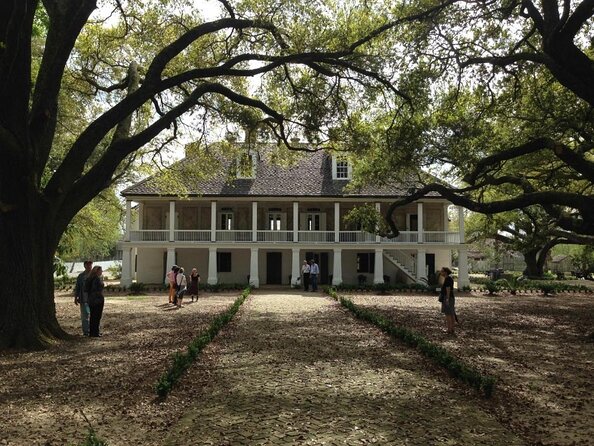
New Orleans history makes more sense when you connect the plantation economy to the city itself. Whitney Plantation gives you the setting where enslaved people lived and worked. The second half shows how the effects of slavery, racism, migration, segregation, and disaster shaped neighborhoods and culture in New Orleans.
That structure is the main reason I would choose this experience over a plantation visit alone. You are not left with a distant story about the past. You see how the city’s music, public spaces, schools, neighborhoods, and memorials grew from those earlier forces.
The day is also more serious than a typical New Orleans sightseeing loop. You will hear about painful subjects, including enslaved children who died in St. John the Baptist Parish and the destruction caused by Hurricane Katrina. This is not the right pick if you want a light day of architecture, food, and party-town folklore. It is a strong fit if you want clear historical context and an honest look at the city.
More Whitney Plantation visits:
- Whitney Plantation Tour with Transportation from New Orleans
★ 4.5 · 1,351 reviews - New Orleans: Whitney Plantation Tour with Transportation
★ 4.7 · 619 reviews - Small-Group Laura and Whitney Plantation Tour from New Orleans
★ 4.5 · 446 reviews
The morning pickup and ride from New Orleans
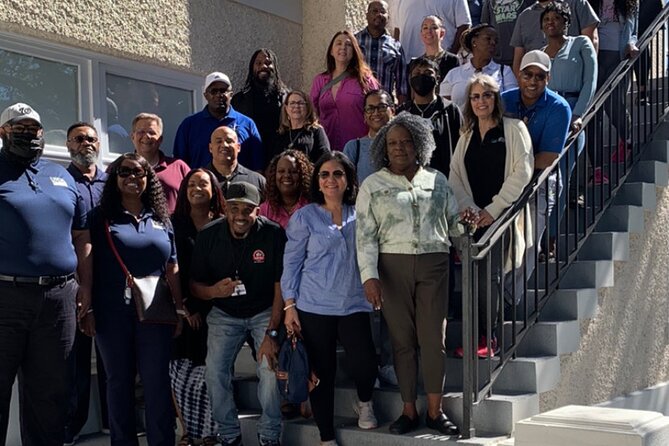
Pickup begins between 8:00 and 8:30 a.m. You should be outside your hotel by 8:00, even if your exact collection time is later. The bus may make several hotel stops, and you are asked to allow up to 30 minutes for it to arrive.
Look for a white bus with the 2nd Line Tours logo. Pickup is available from most downtown hotels. If yours is not listed, choose a nearby listed hotel. You can also meet the bus at the parking lot at 414 Canal Street, where the pickup search requires you to type parking lot.
This arrangement is simple, but it rewards patience. If it is after 8:35 a.m. and you are still waiting, call the operator. The air-conditioned vehicle and included admission fees remove the main hassle of arranging a plantation visit on your own.
The group size is capped at 24 people. That is large enough to keep the price reasonable, but small enough for the city guide to address questions without speaking to a crowd the size of a coach tour. There is no restroom on board, so use facilities before departure and at stops when possible.
Whitney Plantation: memorials instead of plantation romance
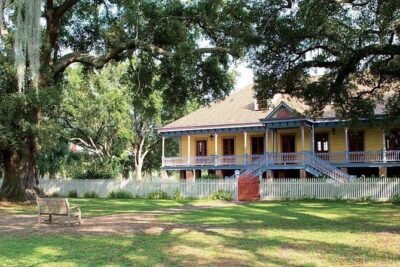
Whitney Plantation receives about two hours of your day. The visit is self-guided with an audio tour, and that format shapes the experience. You move through the grounds at your own pace, listening to the material as you reach the buildings, memorials, and artworks.
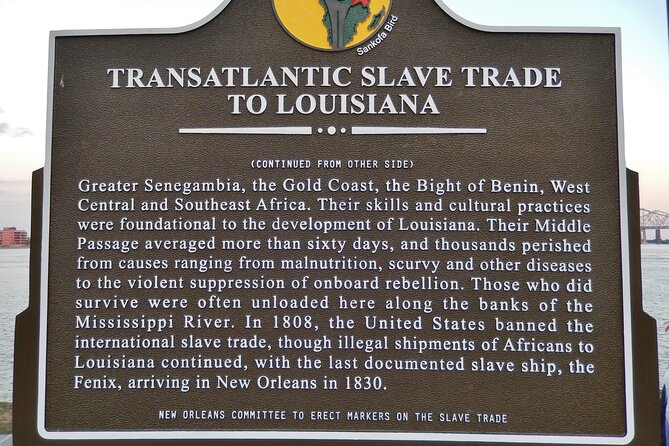
The focus is the lives of enslaved people who lived and worked there. You see original structures and slave cabins, then encounter memorials designed to give names and personal weight to people often reduced to numbers in textbook accounts.
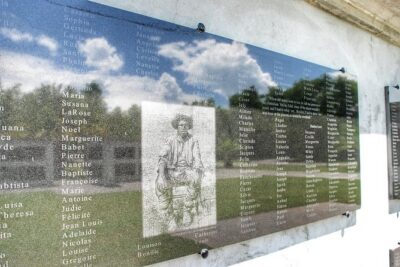
The Wall of Honor is one of the most important stops. It lists more than 350 enslaved people connected with the plantation. Reading names changes the scale of the subject. Instead of thinking only about a system, you are asked to pause over individual lives.
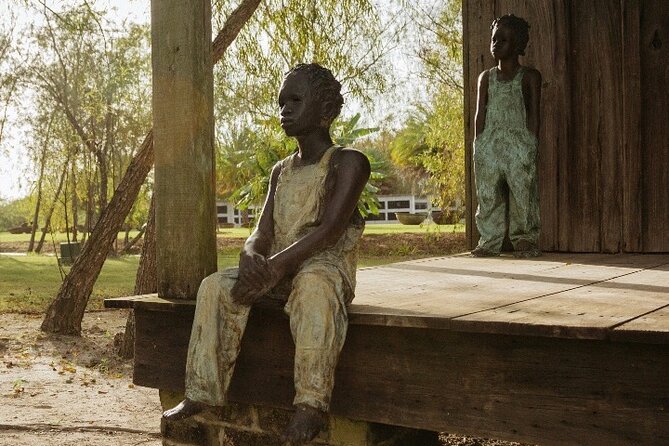
The Field of Angels is another powerful memorial. Its sculpture represents an estimated 2,200 enslaved children who died in St. John the Baptist Parish. That is a hard fact to absorb, and the artwork gives the number a physical presence.
The audio format has a clear advantage: you can stop, reflect, and set your own pace. It also has a real limitation. You cannot easily interrupt a recorded explanation with a question, and the experience may feel less personal than a live guide. If the ability to ask questions matters greatly to you, keep that tradeoff in mind.
Still, the self-guided structure suits Whitney’s purpose. You have time to read names, look at memorial art, and sit with the material rather than rushing through a scripted group talk. The plantation portion is not presented as a celebration of an owner’s lifestyle. It asks you to confront the labor and suffering that made the plantation system possible.
The road back becomes a moving history lesson
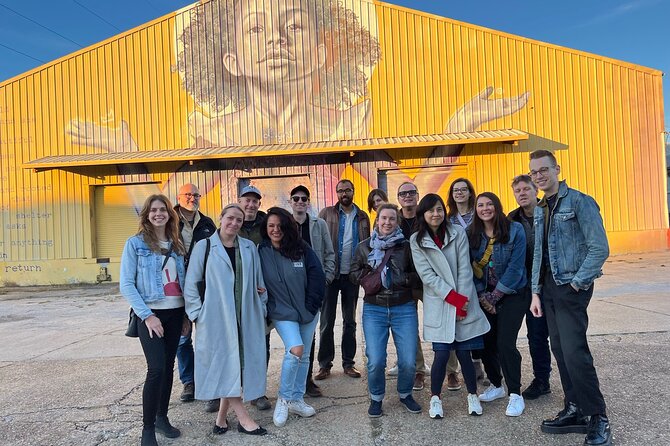
The drive between the plantation and New Orleans is useful because the city guide can point out other places along the way. The exact commentary depends on the guide, but the city portion has been especially strong when led by Jay or Jeremy.
Jay is described as a local New Orleanian who brings energy, answers questions, and explains the city’s urban culture in plain terms. Jeremy is also praised for connecting New Orleans history and culture while taking the group to places many visitors would miss. Guides can change, so treat these names as examples rather than a guarantee.
This part of the day is where the combo moves beyond a museum visit. You begin to see New Orleans as a place shaped by long-running struggles over land, race, schools, levees, neighborhoods, and public memory.
More River Road plantation days:
- Swamp Boat Ride and Oak Alley Plantation Tour from New Orleans
★ 5.0 · 3,303 reviews - Oak Alley Plantation Tour with Transportation from New Orleans
★ 4.5 · 1,747 reviews - Laura Creole Plantation Guided Tour
★ 5.0 · 1,279 reviews - Airboat and Plantations Tour with Gourmet Lunch from New Orleans
★ 4.5 · 1,246 reviews
The Ninth Ward and Katrina’s lasting scars
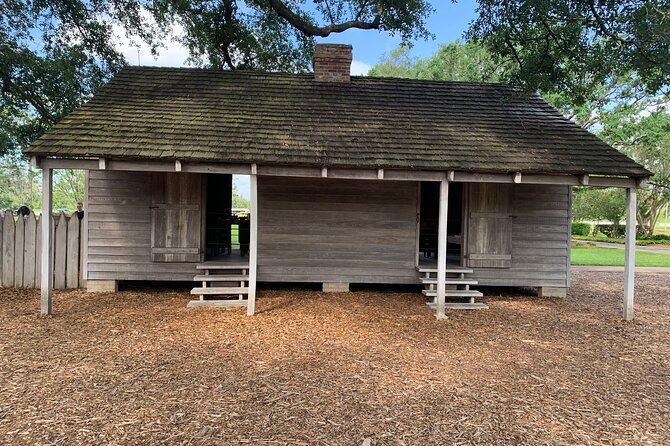
One city segment shows the aftermath of Hurricane Katrina in a neighborhood devastated by the storm. The tour also takes you to the area where the levee wall broke, giving you a physical point of reference for a disaster often discussed only in news images and statistics.
The value here is location. You are not merely told that Katrina caused massive damage. You see the neighborhood connected to that story and hear how the failure of flood protection affected New Orleans.
This stop may be emotionally heavy, and it is not a polished sightseeing attraction. That is part of its purpose. Bring patience and respect. The city portion asks you to look beyond the French Quarter and consider communities that have carried the cost of disaster and public decisions.
The itinerary description gives only a short label for the neighborhood stop, so the amount of time there can vary. Think of it as part of the driving commentary and city orientation, not as a long museum visit.
Studio BE and the city’s living creative voice
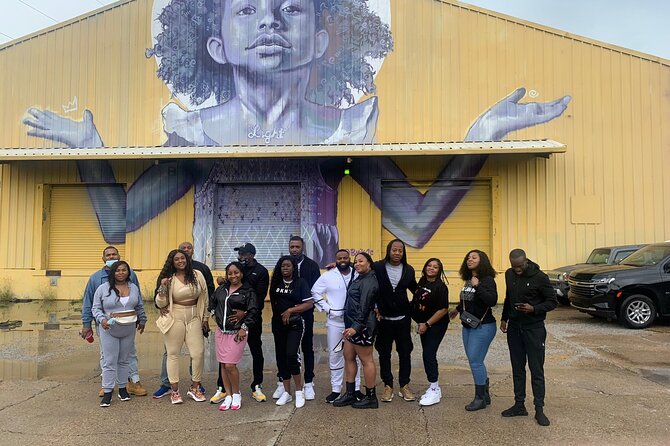
Studio BE is a brief stop of about 15 minutes. Since 2016, the space has developed into a cultural destination built around local art, community, and critical ideas about the future.
Do not expect a long gallery session. Fifteen minutes is enough for a quick look and an introduction, not a full examination of every work. The stop matters because it places contemporary Black artistic expression beside the older history covered at Whitney Plantation.
This is a useful change of pace. After the plantation’s memorials and the Ninth Ward’s disaster history, Studio BE shows how New Orleans culture continues to question the past and imagine what comes next. The short visit also keeps the full-day schedule moving.
Congo Square and the roots of New Orleans music
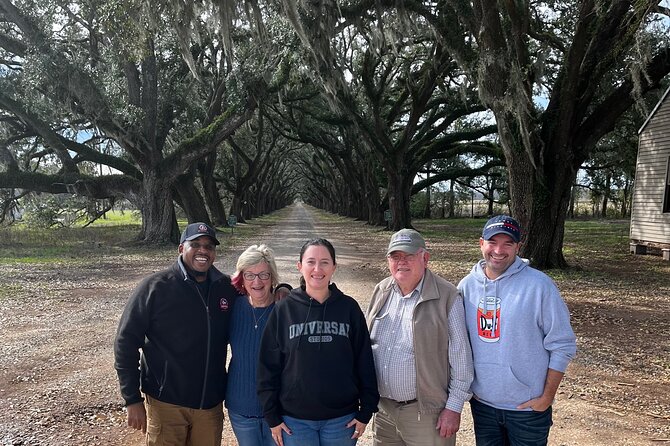
Congo Square is one of the most meaningful stops on the city tour. Enslaved Africans gathered there to preserve traditions through music, dance, and storytelling. Those practices helped create the rhythmic foundation that later shaped jazz and New Orleans musical culture.
The stop gives you a better way to think about jazz. It did not appear from nowhere as a party soundtrack. It grew from African traditions, forced migration, survival, and cultural exchange.
You will not get a concert here, and the itinerary does not promise a long guided walk. The value is the explanation and the sense of place. When you later hear music in New Orleans, Congo Square gives you a historical point of reference for the rhythms and communal traditions behind it.
McDonogh No. 19 and the fight over school desegregation
The city tour can also include McDonogh No. 19, the school connected with the desegregation of New Orleans elementary schools by three girls. A stop here adds civil rights history to the plantation and Katrina portions of the day.
One particularly useful feature is the possibility of speaking with a curator from the Leona Tate Foundation. That contact is not presented as a guaranteed part of every departure, so do not book solely for it. If it happens, it gives the story a personal and local connection that a drive-by explanation cannot match.
This stop also shows why the urban part is valuable. New Orleans history is not only about colonial buildings, plantations, and music. It includes children who faced hostility while changing public education. McDonogh No. 19 puts that struggle into a specific place.
What the $129 price includes
The cost is $129 per person. That includes the air-conditioned vehicle, all fees and taxes, round-trip city pickup, and admission to Whitney Plantation.
I consider that fair value if you would otherwise need to arrange transport to the plantation and pay admission separately. You also get a full city history tour, which adds several locations that would be difficult to connect efficiently on your own in one day.
The value is less clear if you only want a plantation house tour or prefer to spend the day moving independently. Whitney takes about two hours, and the urban section also takes about two hours, but the entire experience lasts eight to nine hours once driving and pickups are included. You are paying for convenience, interpretation, and a structured day as much as for admission tickets.
The group maximum of 24 helps. You are not paying for a private tour, but the format should feel more manageable than a large sightseeing coach. The strongest value comes for first-time visitors who want a serious introduction to New Orleans history without renting a car or planning several separate stops.
Timing, comfort, and what to bring
The day starts early and runs long. Eat before pickup or carry something suitable, since the provided details do not list meals. Wear comfortable clothing and shoes for walking around plantation grounds and city stops.
Because there is no restroom on the bus, use facilities whenever you have the chance. The vehicle is air-conditioned, which matters in New Orleans, but you will still want to prepare for time outside.
The tour is offered in English. Mobile tickets are used, and confirmation arrives when you book. Service animals are allowed, and the activity is near public transportation. Most people can participate, though the information provided does not specify detailed accessibility features for every stop, so ask the operator if you have mobility needs.
Pickup timing can shift because of multiple hotel stops. Keep your phone available, wait outside, and do not assume the bus will arrive at exactly 8:00 a.m.
Who will get the most from this day
I would recommend this experience to first-time visitors who want more than the usual French Quarter highlights. It suits people interested in slavery, civil rights, Black culture, music, Katrina, and the way history continues to shape a city.
It is also a good choice for solo visitors and small groups. The transport keeps the day easy to manage, while the guide gives you someone to ask about the places outside the main tourist areas.
Families with older children and teenagers may find the subjects valuable, but the material is serious. Parents should decide if the discussion of enslaved children, death, racism, and disaster fits their group.
I would hesitate to recommend it to someone seeking a relaxed day of plantation architecture or a broad food-and-music sampler. The plantation is not built around romantic stories of wealthy owners, and the city route is designed to teach rather than entertain every minute.
Should you book the Whitney Plantation and Soul of New Orleans combo?
Book it if you want one long, focused day that connects plantation slavery with modern New Orleans. Whitney Plantation gives you names, memorials, cabins, and the stories of enslaved people. The city portion adds Congo Square, Studio BE, Katrina, the Ninth Ward, and the struggle to desegregate schools.
The best reason to choose this combo is the contrast between the self-guided plantation visit and the local city commentary. If Jay or Jeremy leads the urban section, expect a particularly strong connection to New Orleans culture, though guide assignments can change.
Skip it if you need a live guide at the plantation, dislike a full eight to nine-hour schedule, or want a lighter sightseeing day. For everyone else, the $129 price buys a thoughtful route through difficult but essential parts of New Orleans, with transport taking care of the hard logistics.
FAQ
How long does the Whitney Plantation and city tour combo last?
The full experience lasts approximately eight to nine hours. The Whitney Plantation visit takes about two hours, and the New Orleans city portion is also listed at about two hours, with additional time for transportation and stops.
What time does pickup begin?
Pickup occurs between 8:00 and 8:30 a.m. You should be outside your hotel by 8:00 a.m. Allow up to 30 minutes because the vehicle may stop at several hotels.
Where can I meet the tour if I do not use hotel pickup?
The central meeting point is the parking lot at 414 Canal Street, New Orleans, Louisiana 70130. When searching for the pickup option, type parking lot and select that choice.
Is admission to Whitney Plantation included?
Yes. Admission fees and taxes are included in the $129 price. Transportation is also included in an air-conditioned vehicle.
Is the Whitney Plantation tour guided by a person?
The plantation visit uses a self-guided audio tour. The city portion is led by a tour guide, with Jay and Jeremy among the guides associated with especially well-received city tours.
Can I cancel for a full refund?
You can cancel up to 24 hours before the experience start time for a full refund. Cancellations or changes made less than 24 hours before the start time are not accepted for a refund.
Just added around New Orleans
- New Orleans Garden District Tour★ 5.0 · 8 reviews
- New Orleans Seance Experience★ 4.0 · 8 reviews
- Airport and City Transfers in New Orleans★ 5.0 · 8 reviews
- Sin and Tonic Pub Crawl in New Orleans★ 4.5 · 8 reviews
- The New Orleans Darkness Tour★ 4.4 · 9 reviews
- New Orleans Plantation Tour with Transportation★ 5.0 · 9 reviews
- New Orleans Self-Guided Kayak Bayou Swamp Tour★ 5.0 · 9 reviews
- Historic Carrollton Neighborhood Walking Tour★ 5.0 · 9 reviews
Whitney Plantation Tours, compared.
Whitney Plantation Tour with Transportation from New Orleans
Read our review →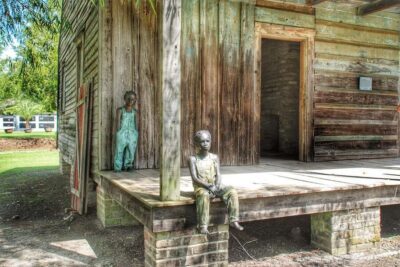
Small-Group Laura and Whitney Plantation Tour from New Orleans
Read our review →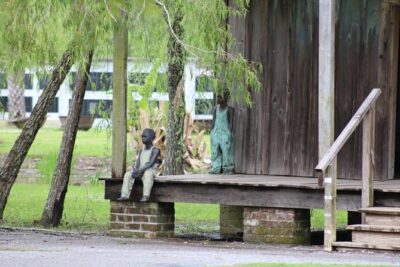
Whitney Plantation Tour from New Orleans with Pickup
Read our review →
Whitney Plantation Tour with New Orleans Hotel Pickup
Read our review →
Whitney Plantation and Airboat Tour from New Orleans
Read our review →
Whitney Plantation Tour with Narrated Bus Ride from New Orleans
Read our review →
Whitney Plantation and Museum Tour from New Orleans
Read our review →Browse the lists this tour appears in