
Reviewed · FRENCH QUARTER TOURS
New Orleans: French Quarter Food History Walking Tour
New Orleans tells its story through food, and this three-hour walk serves that story one generous bite at a time. You’ll cross the French Quarter from gumbo and red beans to catfish po-boy, muffuletta, boudin balls, pralines, and banana bread pudding, with a guide explaining how local dishes grew from the city’s people and past.
I like the strong mix of sit-down restaurants, candy shops, and small local spots. I also like the guides’ teaching style: Beth, Gary, John, Meg, and others have been praised for connecting food with culture without turning the tour into a lecture. The main catch is the fixed menu. If you avoid seafood, alligator, gluten, dairy, or meat, your choices are limited, and the walk may not suit anyone with serious mobility concerns.
In This Review
- Key points to know before you book
- Why this French Quarter food walk works
- Starting inside 3rd Block Depot
- Hot sauce, pralines, and the sweet side of Creole cooking
- Catfish po-boy at NOLA Poboys
- Muffuletta and boudin balls: two very different bites
- Red beans and rice at Creole Cookery
- Banana bread pudding brings the walk home
- What vegetarians can expect
- The walking pace, weather, and practical comfort
- Is $85 a fair price?
- The guides make or break the three hours
- Who should book this food tour?
- Should you book the French Quarter Food History Walking Tour?
- FAQ
- How long is the New Orleans French Quarter food tour?
- Where does the tour begin?
- How many food tastings are included?
- Is there a vegetarian option?
- Does the tour offer vegan, gluten-free, or dairy-free food?
- Are drinks included?
Key points to know before you book
- Eight substantial food stops: Plan on tasting enough food to replace a meal, not just nibbling between restaurants.
- Both famous New Orleans sandwiches: You’ll try a muffuletta and a po-boy, two local classics with very different roots and textures.
- History with every course: Guides connect dishes to New Orleans customs, migration, trade, and Creole and Cajun cooking.
- A real vegetarian menu: Request the option when booking for black-eyed pea soup, vegetable jambalaya, portobello po-boys, and other meat-free dishes.
- A small walking group: The tour is designed for up to nine people, which gives you a better chance to hear the guide and ask questions.
- Come hungry and wear sensible shoes: The tastings are filling, and the tour runs rain or shine.
Why this French Quarter food walk works
Many food tours give you a list of dishes and a few restaurant addresses. This one is built around the idea that a bowl of gumbo or a stuffed sandwich is a piece of New Orleans history you can eat.
That approach gives the walk more purpose. You are not simply moving from one snack to another. You are learning why New Orleans cooking does not fit neatly into one category. French, Spanish, African, Caribbean, Cajun, and Creole influences all appear in the city’s food traditions, and the guide uses the tastings to explain those connections.
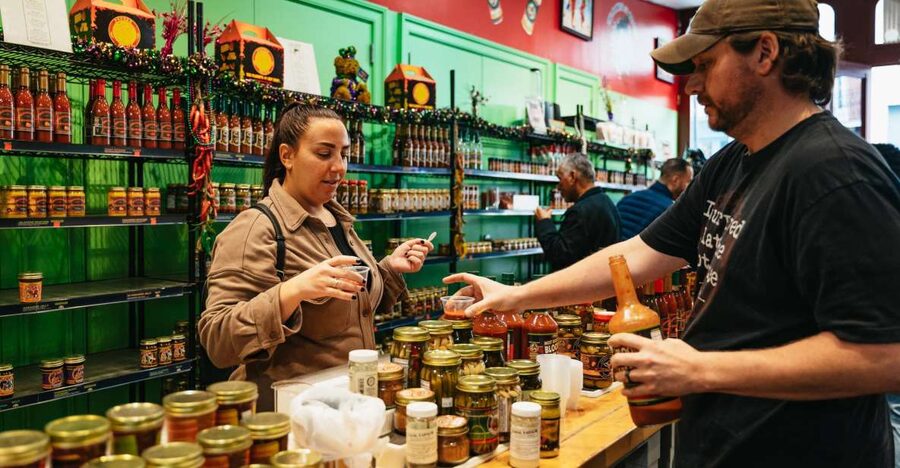
The small group size helps. With no more than nine people, the guide can usually keep the pace relaxed and answer questions along the way. Several guides, including Beth, Gary, John, Meg, and the guide nicknamed Professor, have earned praise for being funny, clear, and easy to talk with. Your guide will vary, but the format favors a personal conversation over a big crowd following a flag.
The timing also makes sense. Three hours is long enough to cover a good stretch of the French Quarter without feeling like an all-day commitment. You finish on Toulouse Street, so you can continue exploring on foot after the last dessert.
More ways to walk the French Quarter:
- New Orleans Food Walking Tour of the French Quarter with Small-Group Option
★ 5.0 · 6,118 reviews - New Orleans French Quarter, Voodoo and Culture Walking Tour
★ 4.5 · 2,961 reviews - French Quarter Historical Sights and Stories Walking Tour
★ 5.0 · 2,724 reviews
Starting inside 3rd Block Depot
Meet your guide inside 3rd Block Depot at 316 Chartres Street. This is not a street-corner meeting point, so give yourself enough time to find the restaurant and enter before the start time.
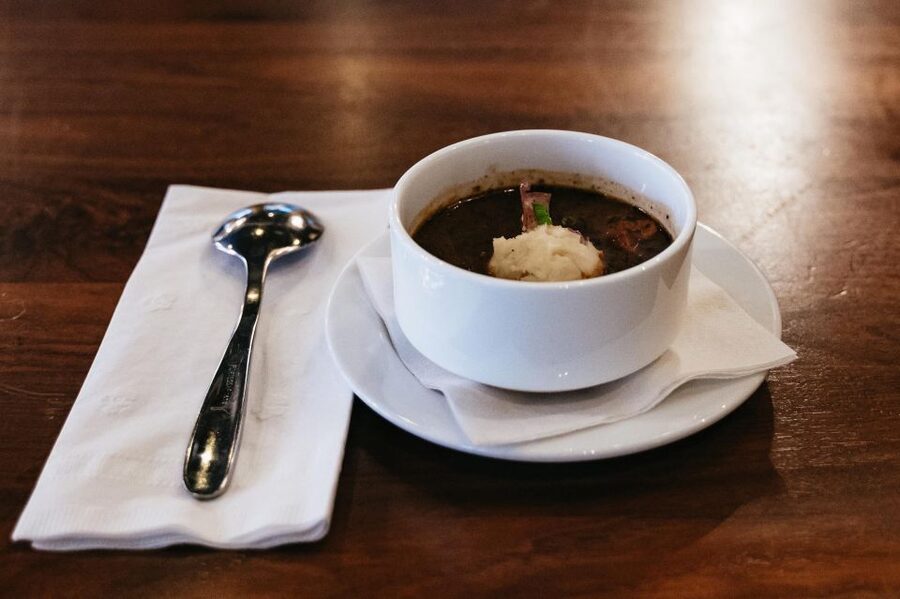
The first tasting is a Cajun-style gumbo served with warm potato salad. Gumbo is an ideal opening dish because it introduces the deep, slow-cooked flavors associated with Louisiana cooking. The potato salad is an especially local touch, since it gives the bowl a cool, creamy contrast instead of treating gumbo as a stand-alone soup.
Expect the guide to begin placing the food in context here. This is where the tour’s history angle starts, and it helps you pay attention to the ingredients and cooking methods rather than rushing through the bowl.
The restaurant setting has one practical downside. A single stop can be noisy, and one visitor specifically found the staff at the first location too loud while the guide was speaking. That may not happen on your visit, but if you have trouble hearing in busy restaurants, stand close to the guide and ask questions when the group moves outside.
Hot sauce, pralines, and the sweet side of Creole cooking
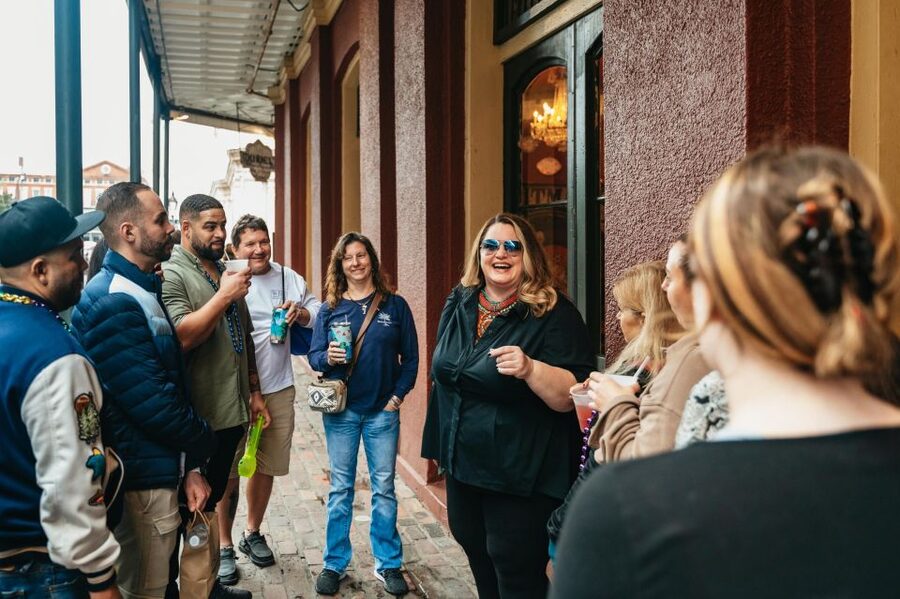
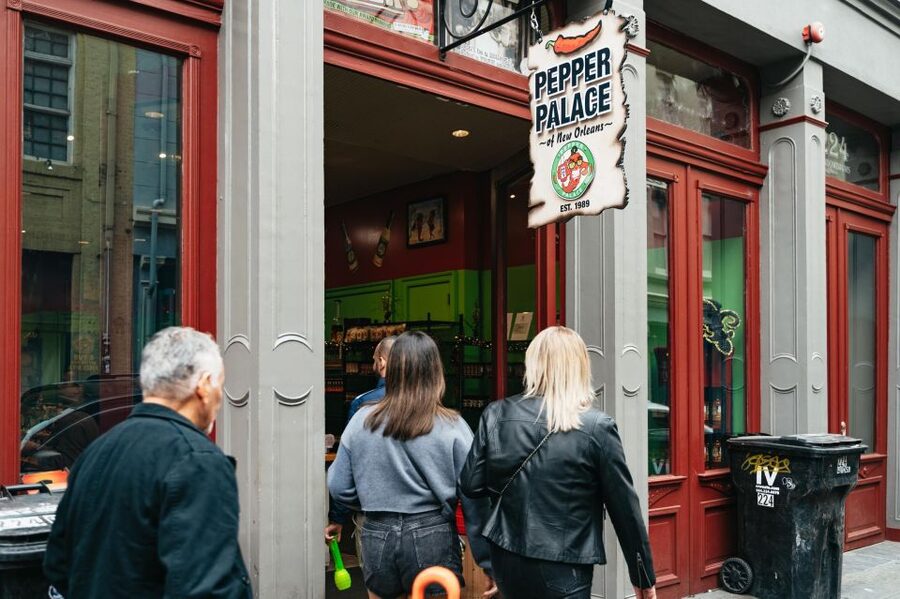
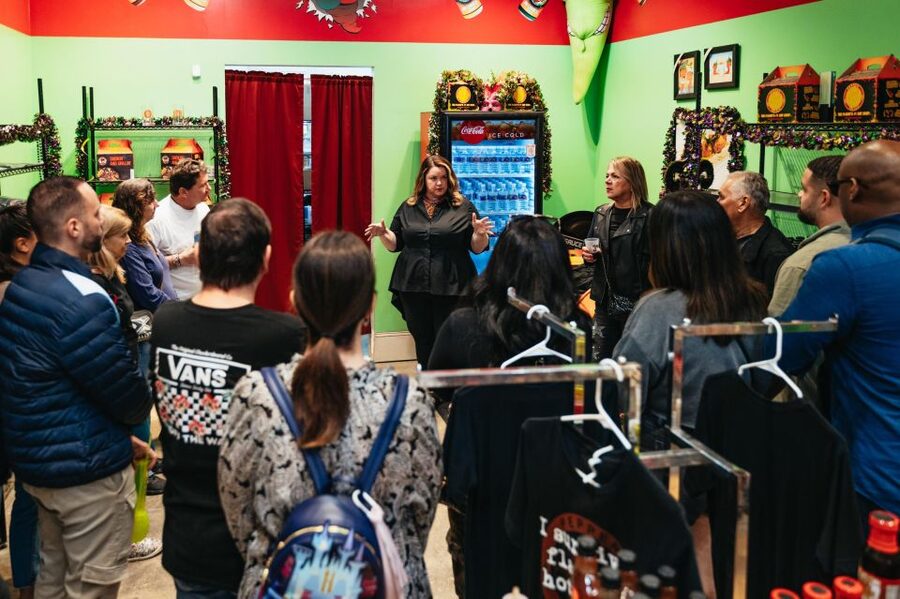
After the opening food, you walk about five minutes to a hot sauce bar. You can sample a wide range of sauces, from mild choices to seriously fiery ones. This is a playful stop, but it also shows how strongly seasoning shapes Louisiana food.
Use some restraint. One person had to ask for milk after trying a sauce that was hotter than expected. You do not need to prove anything to the group. Try a small amount, especially if you are not used to very spicy food.
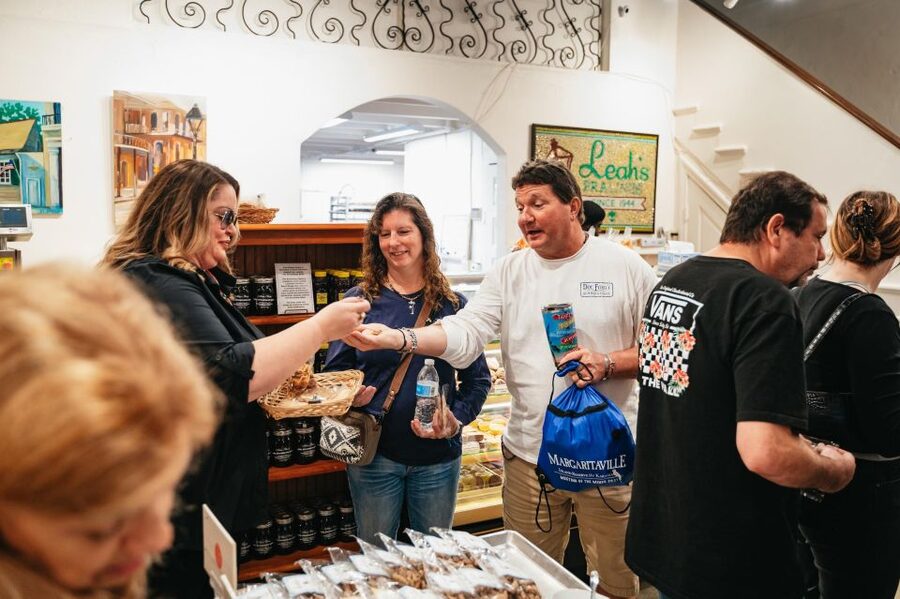
The next stop is Leah’s Pralines, where you taste a traditional Creole praline or the bacon pecan brittle. Pralines are a useful reminder that New Orleans food is not only about seafood, sausage, and heavy sauces. The city’s candy tradition has its own place in local culture, and the pecan-based sweets offer a welcome change after the savory opening stops.
The bacon pecan brittle is the more unusual choice, but the classic praline gives you a clearer sense of the city’s old-fashioned candy style. If you enjoy food souvenirs, this is also the kind of stop that may help you choose a box to take home, though purchases beyond the included sample are your responsibility.
Catfish po-boy at NOLA Poboys
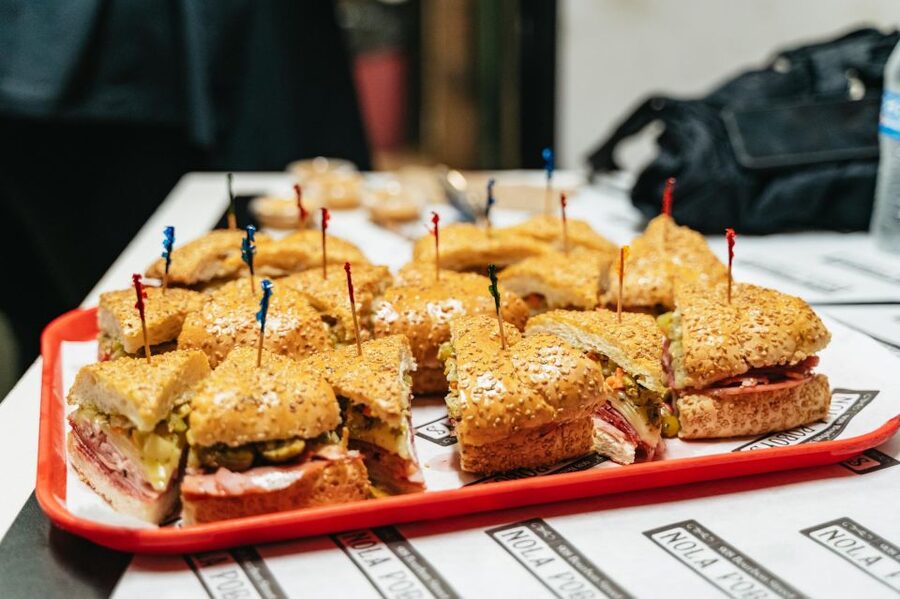
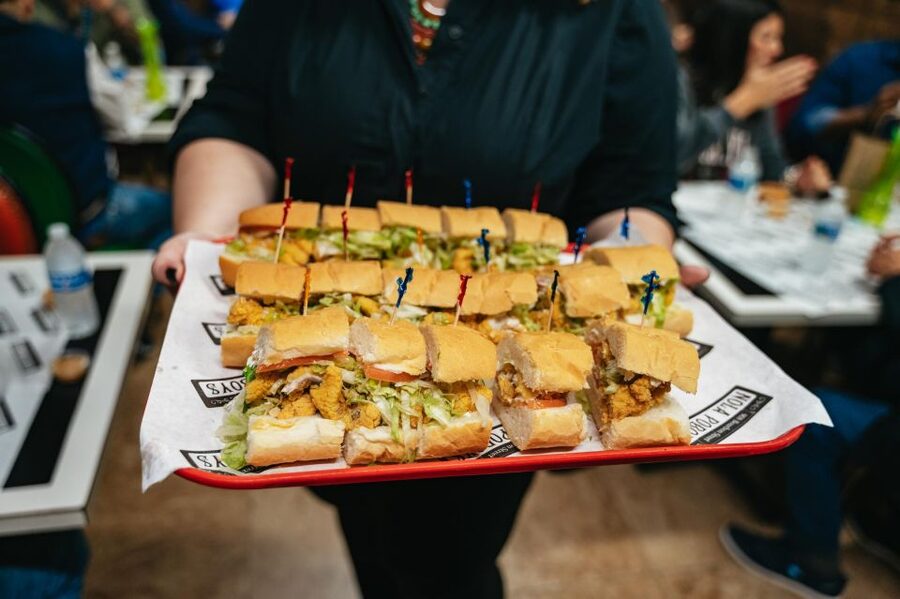
The po-boy is one of New Orleans’ essential foods, and the tour serves a freshly fried catfish version at NOLA Poboys. You’ll learn about Louisiana’s seafood tradition before taking a bite, which makes the sandwich more than a quick fried-food stop.
A good po-boy depends on contrast: crisp coating, soft bread, fresh toppings, and a filling with enough flavor to hold its own. Catfish gives you a taste of the region’s freshwater and Southern cooking traditions without the richness of a long-simmered dish.
This is also where the fixed menu matters most. If you do not eat seafood, you may not be able to enjoy the standard tasting. The vegetarian version replaces this kind of dish with a portobello po-boy, but the tour does not offer a vegan, gluten-free, or dairy-free menu.
Food portions appear to be more than token samples. People regularly describe leaving full, and one person advised arriving with an empty stomach. You should treat the tour as a meal spread across several stops rather than planning lunch immediately before it.
More history tours in New Orleans:
- New Orleans Garden District History Walking Tour
★ 5.0 · 2,879 reviews - New Orleans Small-Group Haunted History Carriage Tour
★ 4.5 · 2,289 reviews - New Orleans Haunted History Ghost Tour
★ 4.5 · 2,084 reviews - Paddlewheeler Creole Queen Historic Mississippi River Cruise
★ 4.5 · 1,948 reviews
Muffuletta and boudin balls: two very different bites
The muffuletta is the other New Orleans sandwich included in the walk. Compared with a po-boy, it is denser and more compact, with a round loaf and a savory olive-based filling. Trying both sandwiches in one tour gives you a useful comparison between two local staples instead of leaving you with only the city’s most familiar fried seafood.
You’ll also taste boudin balls. Boudin is closely tied to Cajun cooking, and the ball format makes it easy to sample while walking between stops. Expect a hearty, seasoned bite rather than something light. This is one of the tastings that may be less familiar to visitors, which is part of its value.
The guide’s role is important here. A list of dishes can blur together after several stops, but guides such as Gary and Beth have been praised for linking what is on the plate to the people and customs behind it. That connection is the difference between simply eating a muffuletta and understanding why the sandwich belongs so strongly to New Orleans.
Red beans and rice at Creole Cookery
At Creole Cookery, the tour turns to red beans and rice. This is one of the city’s best-known comfort foods, and it slows the meal down after the sandwiches and fried items.
The dish gives the guide another chance to explain the difference between Creole and Cajun traditions. You may also notice why simple dishes matter so much in New Orleans cooking. Red beans and rice is filling, practical, and built around seasoning and texture rather than expensive ingredients.
One person singled this out as a favorite tasting. That makes sense if you prefer warm, home-style food to fried seafood or rich sandwiches. If you are already full by this stage, take smaller bites and save room for dessert. The tour continues for a final sweet stop, and the dessert is not an afterthought.
Banana bread pudding brings the walk home
The final tasting is banana foster bread pudding. It closes the tour with a sweet, soft dessert that combines familiar Southern comfort with a New Orleans-style finish.
This is a smart ending. The early tastings introduce spice and savory depth, while the last course gives your palate something gentler. Several people have especially enjoyed the dessert, along with the gumbo, so do not assume the best bites come only from the headline sandwiches.
The last stop also gives you a natural point to compare what you have eaten. You will have sampled Cajun gumbo, Creole candy, seafood, sandwiches, boudin, red beans and rice, and a local-style dessert. That range is the real strength of the tour. It does not claim that one dish defines New Orleans, because no single dish can do that.
What vegetarians can expect
A vegetarian option is available if you request it at checkout. The menu includes black-eyed pea soup, vegetable jambalaya, portobello po-boys, and other meat-free versions of Southern classics.
That is a meaningful choice, not just a plate of side dishes. You still get a range of flavors and a version of the same food story. A vegetarian in a mixed group can eat alongside family or friends who choose the standard menu, which makes the outing easier for groups with different diets.
The limits are clear. There is no vegan, gluten-free, or dairy-free option. You should also report food allergies when booking. The provider asks for allergies rather than simple dislikes or food aversions, so do not assume the guide can redesign the menu around every preference.
If you avoid seafood or alligator, ask for details before paying. One person enjoyed the historical side but could not eat because the served foods did not suit their diet. That is a useful warning: the vegetarian option helps, but the standard tour is not a flexible tasting menu.
The walking pace, weather, and practical comfort
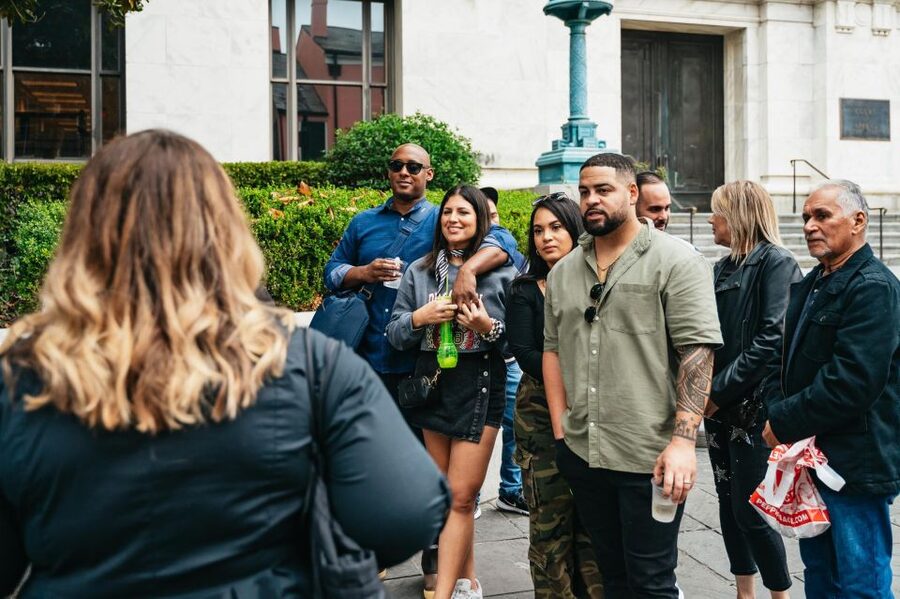
The tour includes several short walks between stops. The listed stretches range from about five to ten minutes, with the longest movement between food locations taking roughly ten minutes. This is a French Quarter walking tour, not a bus ride with food arranged at each door.
The pace has been described as comfortable, including in hot and humid weather. Still, New Orleans weather can make three hours outdoors feel longer than expected. Wear shoes that handle uneven city sidewalks, bring water, and dress for heat if you are visiting in summer.
The tour runs rain or shine. A light rain jacket or compact umbrella is sensible, since you will move between indoor restaurants and shops. Water is included, but soft drinks and alcohol are not. Most restaurant stops have full bars, so you can buy a beer, cocktail, or soft drink if you want one.
The activity is listed as wheelchair accessible, but the information also says it is not suitable for people with mobility impairments. That sounds contradictory, so contact the provider before booking if you use a wheelchair, walker, or need frequent rest. The issue may depend on the group’s walking pace, sidewalk conditions, and the exact restaurant setup on the day.
Is $85 a fair price?
At $85 per person, this is not a cheap way to grab lunch. It is a guided three-hour food and history outing, and the fee includes the walking tour, guide, up to eight food samples, tips for restaurant staff, and water.
The value depends on how you would spend the same time on your own. If you already know where to find gumbo, po-boys, pralines, and muffuletta, you could likely order individual dishes and spend less. You would not get the same structure, explanation, or chance to compare so many specialties in one afternoon.
The included staff tips also make the price easier to understand. You are not calculating a tip at every stop, and you can focus on the food and the guide. Alcohol and other drinks cost extra, so budget for those only if you want them.
I think the price works best for a first visit to New Orleans. You get your bearings in the French Quarter, learn the names of dishes you may want to seek out later, and finish with a full stomach. If your main goal is a low-cost meal, this will feel expensive. If you want a guided introduction to the city through food, the cost is reasonable.
The guides make or break the three hours
The clearest strength of this experience is the guide. The most praised qualities are strong command of New Orleans history, a friendly manner, humor, and the ability to connect the food to local culture.
Beth is described as a gifted storyteller who knows the city’s history and culture. Gary is praised for tying culinary traditions to the wider story of New Orleans. John, sometimes called Professor, is noted for patience, humor, and clear explanations. Meg and Kat have also been appreciated for keeping the group involved and maintaining energy in hot weather.
Your guide will vary, so I would not book solely to get one particular person. The pattern is encouraging, though: the guides are expected to teach, answer questions, and keep the walk moving without making every moment feel like a performance.
This tour suits you if you like to ask questions and notice details. It may be less satisfying if you want to sit quietly and eat without much explanation. The guide is a central part of the product, not background decoration.
Who should book this food tour?
Book it early in your New Orleans stay if you want a useful introduction to local food. You will leave knowing what gumbo, boudin, red beans and rice, muffuletta, and po-boy mean in practical terms, not just as items on a menu.
It also suits couples, families with older children, and small groups who want food and sightseeing together. The compact route and frequent indoor stops make it easier than a long sightseeing walk, although you still need to be comfortable on foot for three hours.
Food-focused visitors should enjoy the range. So should anyone who likes history but does not want a formal museum visit. This is a good way to learn while doing something pleasant and filling.
Skip it if you need a fully adaptable diet, dislike seafood and meat, or have limited walking ability. You should also think twice if you have already planned several large meals that day. The tastings are substantial, and arriving full would undercut much of the experience.
Should you book the French Quarter Food History Walking Tour?
I would book this tour for an early day in New Orleans, especially if you want a clear introduction to local food without spending hours researching restaurants. The combination of gumbo, both signature sandwiches, boudin, red beans and rice, candy, and dessert gives you a broad first taste of the city.
The decision is less clear for strict dietary needs or anyone comparing prices only by the amount of food. At $85, you are paying for the guide’s stories, restaurant access, staff tips, and a planned route as much as for the samples.
Come hungry, request the vegetarian option in advance if needed, and confirm accessibility or allergy concerns before booking. For everyone else, this is a lively, useful way to meet New Orleans through the dishes that locals have carried forward.
FAQ
How long is the New Orleans French Quarter food tour?
The tour lasts three hours and finishes on Toulouse Street in New Orleans.
Where does the tour begin?
Meet your English-speaking guide inside the 3rd Block Depot restaurant at 316 Chartres Street.
How many food tastings are included?
The tour includes up to eight food samples. The tastings include gumbo, hot sauce, praline or bacon pecan brittle, catfish po-boy, muffuletta, boudin balls, red beans and rice, and banana foster bread pudding.
Is there a vegetarian option?
Yes. Request the vegetarian option when booking. It includes items such as black-eyed pea soup, vegetable jambalaya, and portobello po-boys.
Does the tour offer vegan, gluten-free, or dairy-free food?
No. The tour does not offer vegan, gluten-free, or dairy-free options. Notify the provider about food allergies when booking.
Are drinks included?
Water is included. Alcoholic drinks and soft drinks are not included, but most restaurant stops have bars where you can purchase beverages.
More Food Tours in New Orleans
- New Orleans Food and History Walking Tour
★ 5.0 · 1,544 reviews - New Orleans French Quarter Food Tour: Cajun, Creole and Culture
★ 5.0 · 1,246 reviews - French Quarter walking Food Tour Famous Flavors of New Orleans
★ 5.0 · 1,115 reviews - New Orleans Cocktail and Food History Tour
★ 5.0 · 819 reviews
More Walking Tours in New Orleans
- New Orleans Premier Ghost, Voodoo and Vampire Walking Tour
★ 4.5 · 12,856 reviews - St. Louis Cemetery No. 1 Official Walking Tour
★ 4.5 · 3,941 reviews - Ghost and Vampire Walking Tour Of The French Quarter
★ 4.5 · 2,406 reviews - New Orleans Adults-Only True Crime and Ghost Walking Tour
★ 5.0 · 1,666 reviews
Just added around New Orleans
- New Orleans Garden District Tour★ 5.0 · 8 reviews
- New Orleans Seance Experience★ 4.0 · 8 reviews
- Airport and City Transfers in New Orleans★ 5.0 · 8 reviews
- Sin and Tonic Pub Crawl in New Orleans★ 4.5 · 8 reviews
- The New Orleans Darkness Tour★ 4.4 · 9 reviews
- New Orleans Plantation Tour with Transportation★ 5.0 · 9 reviews
- New Orleans Self-Guided Kayak Bayou Swamp Tour★ 5.0 · 9 reviews
- Historic Carrollton Neighborhood Walking Tour★ 5.0 · 9 reviews
French Quarter Tours, compared.
New Orleans Food Walking Tour of the French Quarter with Small-Group Option
Read our review →
New Orleans French Quarter, Voodoo and Culture Walking Tour
Read our review →
French Quarter Historical Sights and Stories Walking Tour
Read our review →
Ghost and Vampire Walking Tour Of The French Quarter
Read our review →
New Orleans City Tour: French Quarter, Garden District & Cemetery
Read our review →
New Orleans French Quarter Food Tour: Cajun, Creole and Culture
Read our review →
New Orleans French Quarter and More Carriage Ride
Read our review →
French Quarter walking Food Tour Famous Flavors of New Orleans
Read our review →Browse the lists this tour appears in