
Reviewed · FRENCH QUARTER TOURS
New Orleans French Quarter and More Carriage Ride
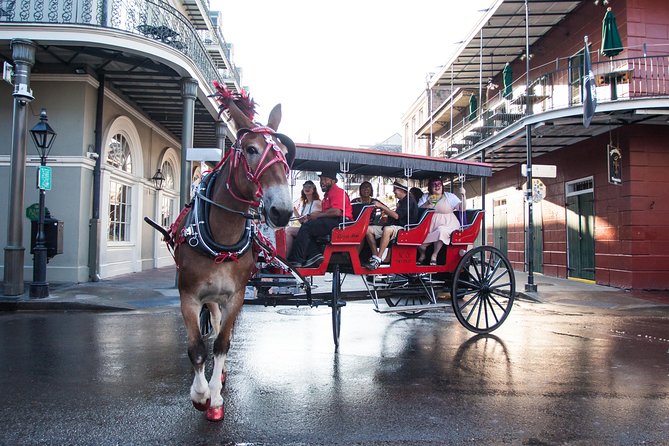
The best thing about this carriage ride is its pace. While New Orleans swirls around you, the carriage gives you time to look up at iron balconies, bright Creole cottages, Spanish patios, and old brick walls instead of rushing from one sight to the next. A local guide fills the hour with stories about fires, battles, architecture, music, and neighborhood legends.
I like the small group of eight because it keeps the ride personal and makes it easier to hear the guide. I also like the useful advice at the end, from places to eat and drink to jazz clubs, museums, and other stops worth adding to your day.
The main consideration is comfort. Some riders find the seats hard after a while, and the carriage may tilt toward the curb when it pulls over for traffic. If you have trouble hearing, sit near the front. The covered top helps with sun and difficult weather, but this is still an outdoor ride and poor weather can lead to cancellation.
In This Review
- Key points at a glance
- Why a carriage is a smart first hour in New Orleans
- Starting at 700 Decatur Street
- St. Louis Cathedral and Place D’Armes
- French Market and the Mississippi side of the Quarter
- Napoleon House and the stories behind the buildings
- The Pontalba Buildings and old New Orleans design
- Marigny views and the benefit of seeing beyond the main streets
- What the guide adds to the ride
- Comfort, weather, and the mule-drawn carriage
- Is $65 a fair price?
- Who should book this carriage ride
- Should you book the New Orleans French Quarter and More Carriage Ride?
- FAQ
- How long is the carriage ride?
- Where does the tour begin?
- Where does the tour end?
- How many people can join the tour?
- Is the carriage covered?
- Which New Orleans areas does the tour visit?
- Which landmarks can I expect to see?
- Is food included?
- What happens if the weather is poor?
Key points at a glance
- A gentle first look at New Orleans: The one-hour ride gives you an easy introduction before you explore on foot.
- Small group, maximum eight: You have a better chance of hearing the guide and asking questions.
- Major French Quarter sights: Pass St. Louis Cathedral, the French Market, Spanish Cabildo, Pontalba Buildings, Place D’Armes, and Napoleon House.
- Stories behind the streets: Learn how the Great Fire of 1788 and the Battle of New Orleans shaped the city.
- Practical local advice: Guides share suggestions for restaurants, nightclubs, jazz, museums, and other places to see.
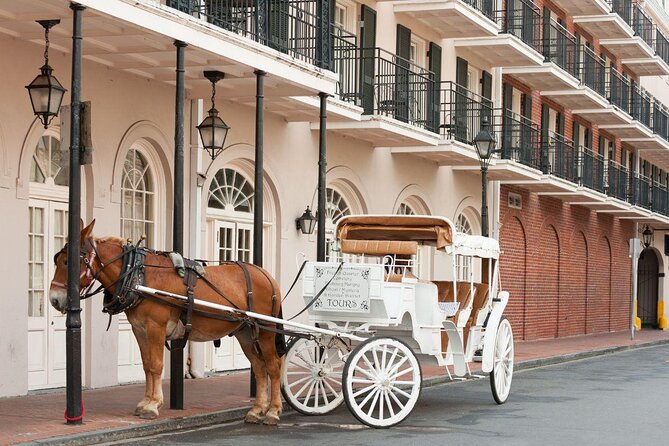
- A covered mule-drawn carriage: The roof offers shade and some protection from unpleasant weather, though the ride remains outdoors.
Why a carriage is a smart first hour in New Orleans
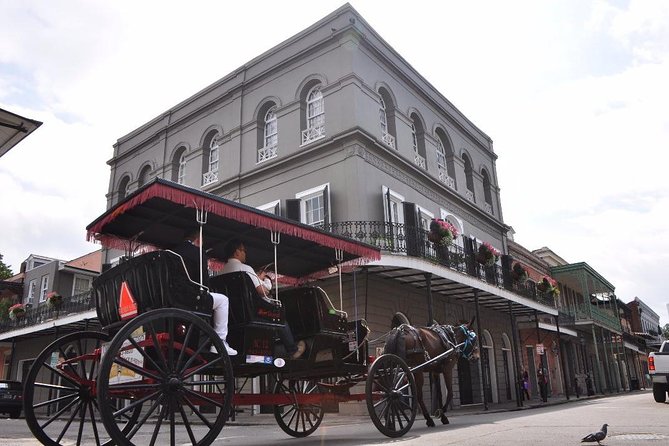
The French Quarter is easy to admire but not always easy to understand at street level. You see bright shutters, wrought iron, courtyards, balconies, and old masonry, yet the reason for those details is not always clear. A carriage ride gives you a moving introduction while you sit back and listen.
I like this approach for a first day in town. You get a sense of the Quarter’s layout, see several major landmarks, and hear enough background to make later walks more rewarding. A guide may point out a restaurant, old coffee house, jazz club, museum, or building that you would otherwise pass without noticing.
The ride also helps if you do not want to begin your visit with a long walk. The carriage moves at an unhurried pace, and several riders have found it a good option when walking long distances is difficult. Families can appreciate the format too. One four-year-old passenger was particularly taken with the mule, which may be as memorable for young children as the buildings are for adults.
Do not expect a full tour of New Orleans. You will see a focused slice of the city, mainly the French Quarter with some attention to Marigny. The hour is enough to get your bearings, not enough to cover every cemetery, museum, neighborhood, or landmark.
More ways to walk the French Quarter:
- New Orleans Food Walking Tour of the French Quarter with Small-Group Option
★ 5.0 · 6,118 reviews - New Orleans French Quarter, Voodoo and Culture Walking Tour
★ 4.5 · 2,961 reviews - French Quarter Historical Sights and Stories Walking Tour
★ 5.0 · 2,724 reviews
Starting at 700 Decatur Street
The tour begins at 700 Decatur Street, a useful location near the French Market and the riverfront side of the French Quarter. You meet the guide and the rest of the group there, then return to the same spot when the ride ends.
That return point is convenient. You can continue into the French Quarter, browse the market area, stop for a meal, or follow one of the guide’s suggestions without arranging another transfer. Since the carriage ride lasts about an hour, it fits neatly into a morning, afternoon, or early evening plan.
The experience is offered in English, and the group is capped at eight people. That limit matters more than it might seem. Carriage tours can feel distant when a large crowd surrounds the guide, but a small carriage allows the commentary to feel more direct.
Arrive with realistic expectations about traffic. This is a working city, not a closed historic park. Cars, delivery vehicles, pedestrians, and street noise are part of the setting. The carriage may pull over to let traffic pass, and the road can slope toward the curb during those pauses.
St. Louis Cathedral and Place D’Armes
The route includes the area around St. Louis Cathedral, the oldest continuously active cathedral in the United States. Its position beside Jackson Square gives you one of the French Quarter’s clearest architectural views, especially when seen with the surrounding buildings rather than as an isolated stop.
Nearby, Place D’Armes adds another layer to the story of the Quarter. The name reflects the square’s early military role, while the buildings around it show the blend of French, Spanish, and later American influence that gives this part of New Orleans its distinctive look.
You may not stop for a long visit inside every landmark. This is primarily a sightseeing ride, so the value comes from seeing the buildings in context and hearing why they matter. If the cathedral or square catches your eye, mark it for a return visit after the carriage ride.
The guide commentary is a major part of the experience. Guides named Sarah, Nate, Marty, and Tony have led rides praised for humor, clear storytelling, and useful facts. The guide you get will vary, and each person will have a different style, but the strongest rides combine historical detail with practical suggestions rather than delivering a dry list of dates.
French Market and the Mississippi side of the Quarter
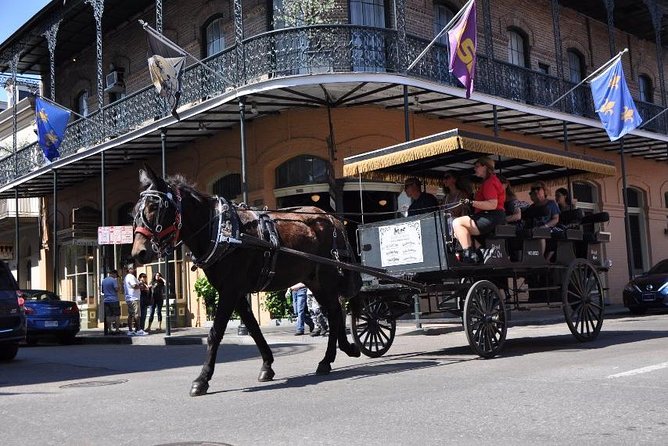
The route also takes in the French Market, the historic market area overlooking the Mississippi. It is one of the places where the Quarter’s commercial past and present meet, and it helps explain why this part of town has long drawn shoppers, sellers, diners, and curious visitors.
Seeing the market from a carriage gives you a quick orientation. You can then decide if you want to return on foot and spend more time there. That is a better plan than trying to treat the carriage as a shopping stop, since the ride is designed for viewing and narration.
The river itself may not be the main focus of the hour, but the market’s location reminds you that New Orleans grew around trade and water. The guide can connect the streets, buildings, and old businesses to the city’s broader story.
The ride is especially useful here because a guide can point out what deserves a closer look later. New Orleans rewards repeat passes through the same streets. On a first trip, it is easy to see only the colorful facades. With a little explanation, you begin to notice how the blocks fit together.
More carriage rides through New Orleans:
- New Orleans Small-Group Haunted History Carriage Tour
★ 4.5 · 2,289 reviews - New Orleans: French Quarter Sightseeing Carriage Ride
★ 4.7 · 644 reviews - New Orleans Private Carriage Tour of the French Quarter
★ 5.0 · 537 reviews
Napoleon House and the stories behind the buildings
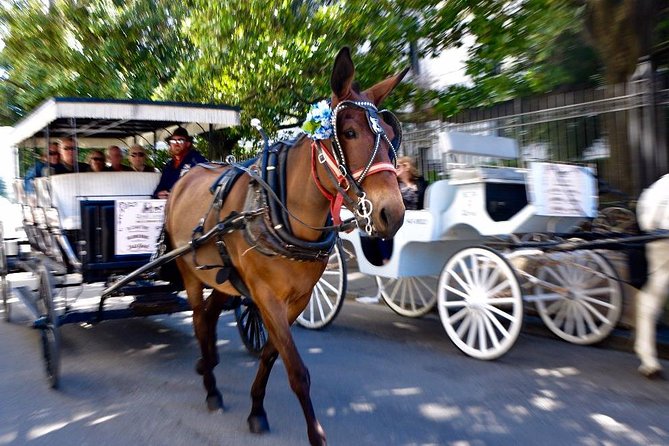
One of the more unusual sights is the Napoleon House, associated with a plan to bring Napoleon Bonaparte to New Orleans after his exile. The building also connects to his death mask, made from a mold crafted by Dr. Francesco Antommarchi, one of Napoleon’s physicians.
This is the kind of detail that makes the ride worthwhile. You are not simply looking at an old building. You are hearing how a distant European figure became part of a New Orleans story, whether or not the original plan ever came to pass.
The guide may also discuss the Great Fire of 1788 and the Battle of New Orleans. These events help explain why the Quarter looks the way it does today. Fire changed building practices, and brick walls, iron balconies, and courtyards are not just decorative choices. They reflect the city’s attempts to adapt to heat, fire, storms, and changing rules.
You will see examples of Creole Esplanade, Spanish patios, French coffee houses, old slave quarters, and ironwork balconies. Some features are easy to miss from a walking route because you are watching traffic or looking at street signs. From the carriage, you have a better chance to look upward and take in the upper floors.
The Pontalba Buildings and old New Orleans design
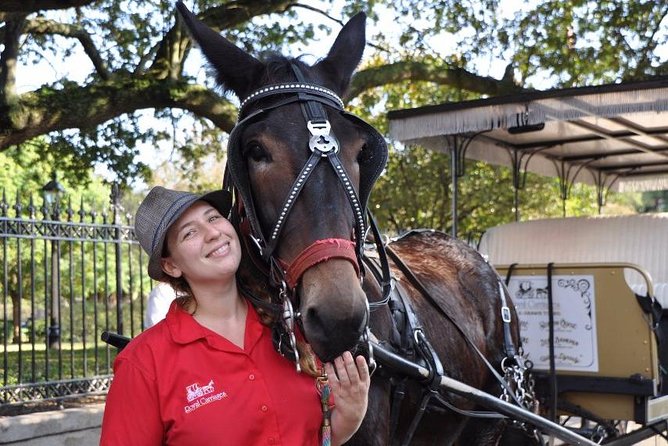
The Pontalba Buildings are often described as the oldest apartment buildings in the United States. Their long galleries and ironwork help define Jackson Square, and they offer a good example of how shared residential buildings shaped the Quarter.
The carriage ride is at its best when the guide explains these structures as part of ordinary city life. You can look at a balcony and then learn how it relates to the building’s age, style, or use. That connection turns architecture into something practical rather than a string of labels.
New Orleans architecture rewards patience. The colors, shutters, balconies, patios, and brickwork can seem theatrical at first, but the guide’s explanation gives them a stronger sense of place. I find that useful because it changes the way you walk through the Quarter afterward.
One limitation is that a moving carriage cannot give you the same close look as a walking tour. If a particular facade interests you, take note of its location and return later. The carriage is the overview; your later walk supplies the close-up.
Marigny views and the benefit of seeing beyond the main streets
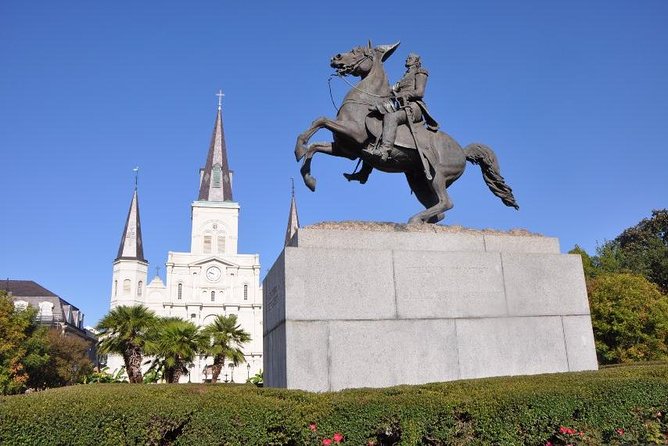
The experience includes the French Quarter and Marigny, offering a look beyond the most familiar tourist blocks. This is valuable because New Orleans character does not stop at the Quarter’s busiest streets. The residential architecture and vivid house colors in the surrounding area can be a highlight of the ride.
The route lets you see more than you could comfortably cover on foot in the same amount of time. One useful feature is the chance to observe how the homes change as the carriage moves through the neighborhoods. The guide may explain why houses are painted in certain ways and how local design differs from the grander buildings near Jackson Square.
Do keep the scope in mind. The published route details emphasize French Quarter landmarks, while Marigny is part of the broader ride rather than a separate, lengthy neighborhood tour. If Marigny is your main interest, ask the guide what you are seeing and plan extra time to explore it on foot.
What the guide adds to the ride
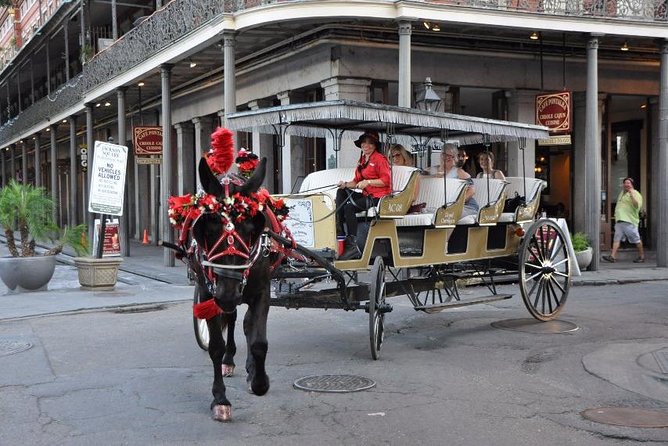
The carriage and mule provide the setting, but the guide makes the hour work. The strongest guide styles combine facts with stories and keep the tone relaxed. Sarah has been singled out for fun historical details and strong restaurant advice, while Nate has been praised for explaining the city’s past in a friendly, easygoing way.
Marty is known for discussing fires and floods that influenced the Quarter’s brick and iron construction. Tony has been remembered for a lively approach and for introducing his mule, Praline. Other guides and mule partners may lead your departure, so do not book solely for one named person.
The practical advice is an important part of the price. You receive suggestions for nightclubs, jazz, museums, restaurants, and other must-see places. I recommend keeping your phone or a small note ready for names you want to remember. The ride can help you plan the rest of your visit, especially if you are new to New Orleans and do not yet know which streets or venues deserve your time.
Sound is worth considering. Several riders found the narration clear and informative, but one useful tip came up repeatedly in practical terms: if you are hard of hearing, choose a front seat. The carriage’s back seats can make it harder to catch every word.
Comfort, weather, and the mule-drawn carriage
The carriage has a covered top, which helps block the sun and offers some shelter from difficult weather. It does not turn the ride into an indoor activity, so dress for the conditions and expect city air, street noise, and changing temperatures.
The ride itself is generally smooth, and the mule-drawn format gives you a slower view than a motor vehicle tour. You can watch the streets pass without the constant stop-and-start feel of a bus. That calm pace is one of the best reasons to choose this experience.
Comfort is not perfect. Some riders find the seats uncomfortable after a while, and the carriage can lean toward the curb when it pulls over. The hour is short enough for most people, but if you are sensitive to firm seating or uneven road angles, this is worth knowing before you book.
The animal is part of the appeal, especially for children, but the ride should be chosen for the full experience, not only the mule. You are paying for transportation, storytelling, and an introduction to the city.
Is $65 a fair price?
At $65 per person, this is not the cheapest way to see the French Quarter. You can walk the same general area for free, and a self-guided stroll costs nothing beyond your time. The carriage earns its price through the small group, the guide’s commentary, the relaxed pace, and the chance to cover more ground without walking continuously.
For a first visit, I think the value is strongest when you use it as an orientation tour. After the hour, you can choose which places deserve a longer visit. The guide’s recommendations may also save you time and help you avoid spending the rest of the day wandering without a plan.
The value is weaker if you already know the French Quarter well or want a detailed visit inside each landmark. This is not an admission package, a food tour, or a cemetery tour. Snacks and gratuity are not included, and the ride ends back at the starting point.
The tour is often booked about 22 days ahead, so popular dates may fill early. Free cancellation is available up to 24 hours before the start time. Changes or cancellations inside that window are not refundable, and poor weather may lead to a different date or a full refund.
Who should book this carriage ride
I would choose this tour for a first-time visitor who wants an easy introduction to New Orleans before tackling the streets on foot. It also suits couples looking for a calm hour, families with children, and anyone who prefers not to walk long distances right away.
It works well for people who enjoy architecture and stories. The carriage gives you time to see balconies, courtyards, brickwork, and colorful homes while the guide explains how the city developed.
You may want another kind of tour if you need extensive historical detail, want to visit interiors, or hope to focus on cemeteries. One rider wished the trip lasted another ten minutes, while another hoped to see a cemetery. Those comments point to the same limit: one hour goes quickly.
Should you book the New Orleans French Quarter and More Carriage Ride?
Book it if you want a comfortable first look at the French Quarter, prefer a small group, and value local suggestions for what to do next. The combination of landmark views, neighborhood architecture, and guide-led stories makes it a useful opening activity rather than a complete tour of New Orleans.
I would especially recommend sitting near the front if hearing every word matters to you, arriving ready for outdoor conditions, and treating the ride as a preview. Return later to the buildings, market, restaurants, and streets that catch your attention.
Skip it if you want a low-cost walking tour or a long, detailed visit to individual sights. At $65, the carriage is a choice for comfort, pace, and orientation. For many first-time visitors, that is exactly what makes the hour worthwhile.
FAQ
How long is the carriage ride?
The experience lasts approximately one hour.
Where does the tour begin?
You meet at 700 Decatur Street, New Orleans, Louisiana 70116.
Where does the tour end?
The ride ends back at the meeting point on Decatur Street.
How many people can join the tour?
The group has a maximum of eight travelers.
Is the carriage covered?
Yes. The carriage has a covered top to help block the sun and provide some protection from difficult weather.
Which New Orleans areas does the tour visit?
The ride introduces you to the French Quarter and Marigny, with the detailed route focusing on major French Quarter sights.
Which landmarks can I expect to see?
The route includes St. Louis Cathedral, the French Market, Spanish Cabildo, Pontalba Buildings, Place D’Armes, and Napoleon House.
Is food included?
No. Snacks are not included in the tour price.
What happens if the weather is poor?
The experience requires good weather. If it is canceled because of poor weather, you will be offered another date or a full refund. You can cancel for a full refund up to 24 hours before the start time.
Just added around New Orleans
- New Orleans Garden District Tour★ 5.0 · 8 reviews
- New Orleans Seance Experience★ 4.0 · 8 reviews
- Airport and City Transfers in New Orleans★ 5.0 · 8 reviews
- Sin and Tonic Pub Crawl in New Orleans★ 4.5 · 8 reviews
- The New Orleans Darkness Tour★ 4.4 · 9 reviews
- New Orleans Plantation Tour with Transportation★ 5.0 · 9 reviews
- New Orleans Self-Guided Kayak Bayou Swamp Tour★ 5.0 · 9 reviews
- Historic Carrollton Neighborhood Walking Tour★ 5.0 · 9 reviews
French Quarter Tours, compared.

New Orleans Food Walking Tour of the French Quarter with Small-Group Option
Read our review →
New Orleans French Quarter, Voodoo and Culture Walking Tour
Read our review →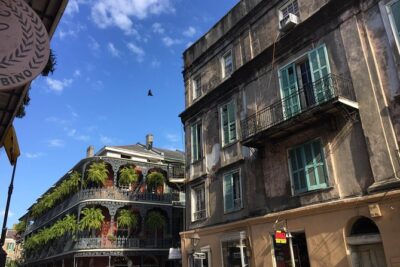
French Quarter Historical Sights and Stories Walking Tour
Read our review →
Ghost and Vampire Walking Tour Of The French Quarter
Read our review →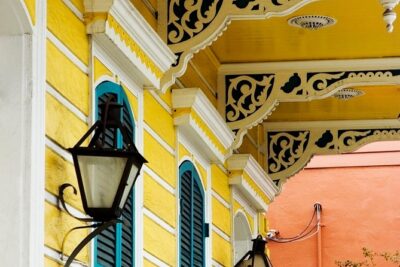
New Orleans City Tour: French Quarter, Garden District & Cemetery
Read our review →
New Orleans French Quarter Food Tour: Cajun, Creole and Culture
Read our review →
French Quarter walking Food Tour Famous Flavors of New Orleans
Read our review →
French Quarter Ghost Tour with Interior Visit
Read our review →Browse the lists this tour appears in