
Reviewed · FRENCH QUARTER TOURS
Creole Louisiana: A French Quarter Walking Tour (English)
The most useful thing about this two-hour French Quarter walk is its focus on the people and ideas behind New Orleans. You will connect Jackson Square, Congo Square, Creole culture, jazz, gumbo, and jambalaya instead of simply checking off pretty buildings.
I like the small maximum of 28 people, which should make it easier to hear the guide, and I like that the tour ends inside the courtyard of Hermann-Grima House. The main consideration is that the quality may depend heavily on your guide. Lawson and Lawton receive especially warm praise, while one guest found a substitute guide less accurate, particularly when discussing Cajun culture.
In This Review
- Key points to know
- Why this walk works as a first look at New Orleans
- Jackson Square sets the historical frame
- St. Louis Cathedral and the old city center
- Congo Square gives the tour its strongest cultural connection
- Hermann-Grima House reveals the private side of the Quarter
- Creole and Cajun history needs a careful guide
- What $35 gets you
- Guide quality makes the biggest difference
- Practical details before you book
- Who will get the most from this French Quarter walk
- Should you book it?
- FAQ
- How long does the Creole Louisiana walking tour last?
- Where does the tour begin?
- Where does the tour end?
- Is entry to Hermann-Grima House included?
- Which sights are visited during the walk?
- How many people can join the tour?
- What is the cancellation policy?
Key points to know
- Congo Square adds cultural depth: Learn why this part of Louis Armstrong Park matters to the story of music and community in New Orleans.
- Hermann-Grima House is the finishing touch: The tour includes entry to its historic courtyard, a rare look at domestic French Quarter architecture.
- Lawson, Lawton, and Laurent are praised by name: Guide assignment may vary, but these guides are singled out for clear, engaging storytelling.
- The tour sorts out Creole and Cajun terms: This is useful because the words are often mixed together too casually.
- The route gives you a quick first look: Jackson Square, St. Louis Cathedral, Louis Armstrong Park, and other French Quarter sights fit into one guided walk.
- You pay $35 for interpretation, not admission: The sights are mostly free to view, so the value rests in the guide’s stories and historical context.
Why this walk works as a first look at New Orleans
New Orleans can be hard to read on your own. The French Quarter is compact, but its courtyards, churches, squares, street names, and cultural traditions point to several different eras and communities. A guided walk gives those pieces an order.
This tour concentrates on old Louisiana and the people who shaped it. You will hear about Louisiana Creoles, the origins of jazz, and the food traditions tied to gumbo and jambalaya. That gives you a better frame for the rest of your visit, especially if this is your first day in town.
I like the balance between famous sights and less obvious context. Jackson Square and St. Louis Cathedral are easy to find on a map. Congo Square and the Hermann-Grima House courtyard are more useful when someone explains why they matter.
The walk lasts about two hours. That is long enough for a proper introduction but short enough to fit around lunch, a museum visit, or an evening reservation. You should still expect to be on your feet for most of the experience, so comfortable shoes are sensible.
The tour starts at 2951 Royal Street and ends at Hermann-Grima House, 820 St. Louis Street. Since the beginning and end are at different points, plan your next activity from the finish rather than from the starting address.
More ways to walk the French Quarter:
- New Orleans Food Walking Tour of the French Quarter with Small-Group Option
★ 5.0 · 6,118 reviews - New Orleans French Quarter, Voodoo and Culture Walking Tour
★ 4.5 · 2,961 reviews - French Quarter Historical Sights and Stories Walking Tour
★ 5.0 · 2,724 reviews
Jackson Square sets the historical frame
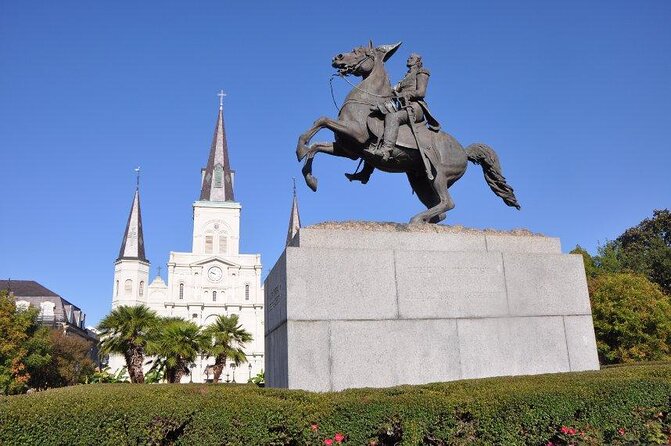
The first stop is Jackson Square, the center of the Vieux Carré, or old French Quarter. The formal square is one of the city’s most recognizable places, but the value here is not just the view. Your guide explains how the square fits into the history of New Orleans and why it has remained a central public space.
The stop is brief, about five minutes. That means you should not expect a long architectural lecture or time to study every building in detail. Instead, think of Jackson Square as the opening chapter, a place where the guide establishes the setting before moving into the city’s wider cultural story.
This is also a useful orientation point. You will see how the French Quarter’s streets and major landmarks relate to one another, which can make later independent wandering less confusing. I would pay close attention to the route here, since you may want to return to the square at a different time of day.
St. Louis Cathedral and the old city center
The next stop is St. Louis Cathedral, described as the most historic church in New Orleans. The stop lasts roughly five minutes and focuses on the cathedral’s place in the city’s past.
The short timing matters. This is a history-focused walk, not a full church tour, so you will likely learn the main story and then continue. If you want extended time inside the cathedral, you should plan a separate visit rather than expect the walking tour to provide it.
Placed after Jackson Square, the cathedral helps show how religion, civic life, and the French Quarter’s public spaces developed side by side. Even a short explanation can make the surrounding area feel less like a collection of old facades and more like a working center of the city.
Congo Square gives the tour its strongest cultural connection
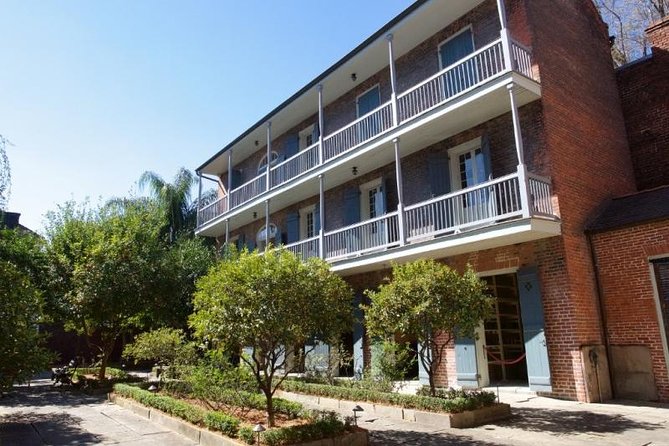
At Louis Armstrong Park, the tour turns toward Congo Square. This stop lasts about ten minutes and covers the square’s cultural significance.
For me, this is one of the most important parts of the route because it connects New Orleans to the origins of its music and communal traditions. The tour’s broader discussion of jazz fits naturally here. You are not only hearing about a music style that later made the city famous. You are also being shown a place tied to the cultural life of the people who helped shape New Orleans.
Louis Armstrong Park also gives the walk a change of pace. The early stops focus on the central French Quarter and its formal landmarks. Congo Square shifts attention toward cultural memory, performance, and community.
The information here needs care. A good guide should explain the subject with precision, without reducing a complex story to a few loose slogans. That is one reason guide quality matters so much on this experience. The strongest feedback goes to Lawson and Lawton for explaining terms and historical connections in a clear way.
More Cajun and Creole food tours:
- Paddlewheeler Creole Queen Historic Mississippi River Cruise
★ 4.5 · 1,948 reviews - Paddlewheeler Creole Queen Jazz Dinner Cruise in New Orleans
★ 4.0 · 1,469 reviews - Laura Creole Plantation Guided Tour
★ 5.0 · 1,279 reviews - New Orleans French Quarter Food Tour: Cajun, Creole and Culture
★ 5.0 · 1,246 reviews
Hermann-Grima House reveals the private side of the Quarter
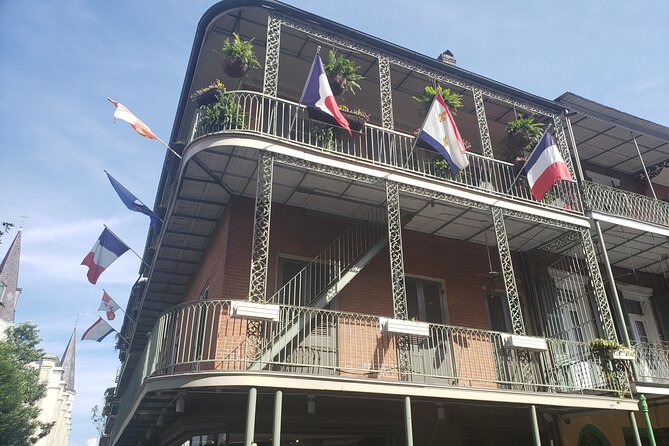
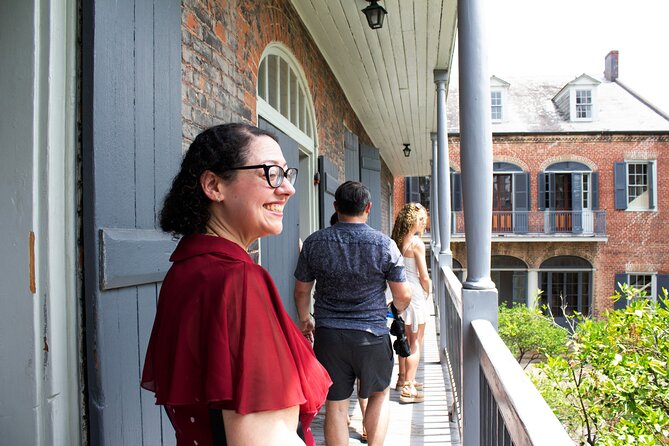
The final destination is Hermann-Grima House at 820 St. Louis Street. The tour includes the fee to enter the historic courtyard, and the courtyard visit lasts about 20 minutes.
This is a smart ending. The earlier stops are public spaces, while the courtyard gives you a look at how people lived behind the French Quarter’s street walls. The description identifies it as typical of the 19th century, so you can expect the focus to be on the form and character of that domestic space rather than on a broad museum visit.
The courtyard is also where the tour’s theme becomes concrete. You have heard about the people, customs, and history of old Louisiana. Now you see an architectural setting that helps explain daily life in the Quarter.
Do not assume that the 20-minute visit covers the entire Hermann-Grima House. The included element is the courtyard. If the house itself is a priority, check what additional admission or visiting arrangements may be needed before planning your day.
Because the tour ends here, you can continue exploring the French Quarter on your own without backtracking to the starting point. That makes the finish practical for an afternoon walk, though the next destination is up to you.
Creole and Cajun history needs a careful guide
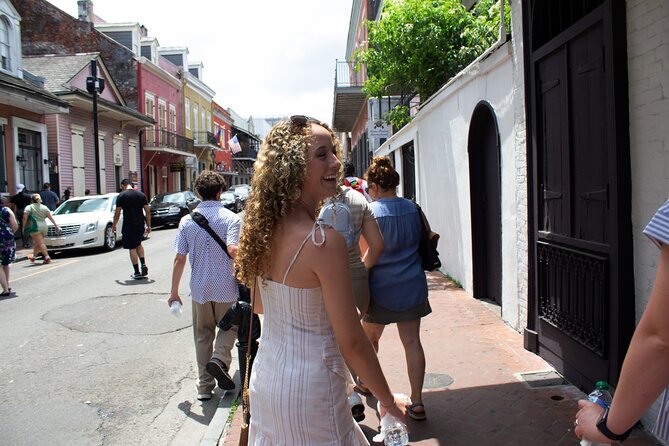
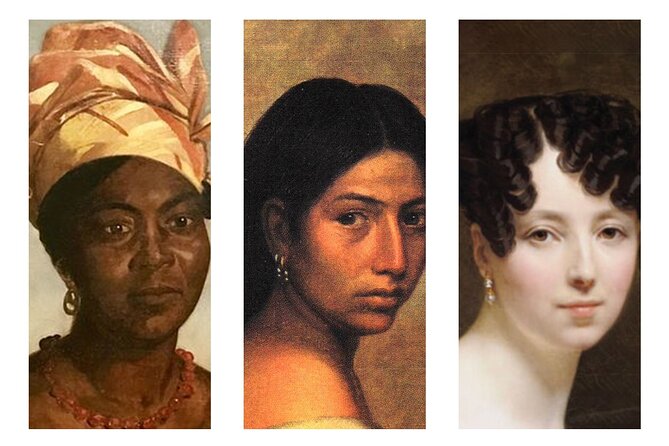
The tour’s central subject is Louisiana Creole culture, and several comments point to this as a major strength when the guide handles it well. Lawton receives particular praise for explaining the terms Creole and Cajun in a way that makes their differences easier to understand.
That distinction matters. New Orleans history is full of overlapping identities, languages, family backgrounds, and cultural traditions. A quick tour cannot explain every detail, but it can prevent the most common confusion and give you better questions to ask during the rest of your trip.
The tour also discusses the origins of gumbo and jambalaya, two foods strongly linked with Louisiana. This is useful context for choosing meals later, though you should not book the walk expecting a food tasting. The information provided describes food history and stories, not a tasting menu.
One guide, Laurent, is praised for connecting food, culture, and history in an engaging way. Lawson is also praised for giving a strong tour even with only two people in his group. Those details suggest that some guides may shape the experience around the group rather than recite a fixed speech.
Still, I would keep expectations sensible. One guest felt a substitute guide provided little new information and made inaccurate comments about Cajuns. That criticism is worth taking seriously, not because it cancels out the many positive reports, but because cultural history deserves accuracy. If you have a personal connection to Cajun or Creole culture, you may notice errors more quickly than a first-time visitor.
What $35 gets you
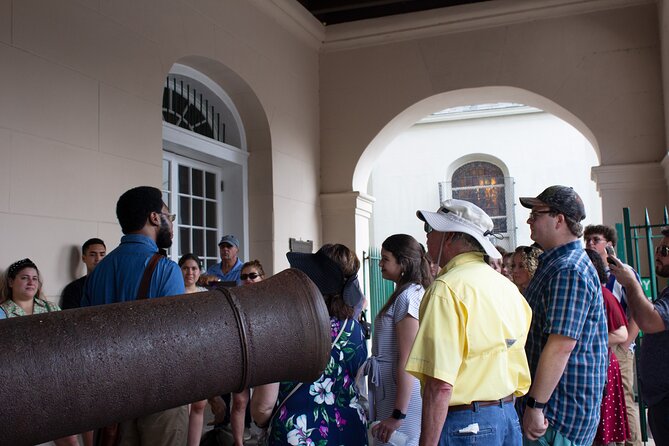
The price is $35 per person. Most of the outdoor sights on the route do not require an admission ticket, so you are paying mainly for the guide’s time, navigation, storytelling, and access to the Hermann-Grima House courtyard.
That can be a fair deal if you want a useful introduction without spending half a day on a large group excursion. The route covers several major themes and includes a historic interior courtyard, while the two-hour length keeps the commitment modest.
The value drops if you already know the French Quarter well or prefer to read plaques and explore at your own pace. This is not an attraction-heavy ticket package. Its success depends on whether the guide adds context you would not easily get by walking the same streets alone.
A group maximum of 28 is reasonable for a city walk. It is not a private tour, and you should not expect every stop to feel intimate. Still, the limit is small enough that the guide should be able to address questions and keep the group together without the scale of a large coach excursion.
The tour is booked, on average, about seven days ahead. That is a useful planning clue. If your schedule is fixed, reserve early rather than assume you can find a same-day place.
Guide quality makes the biggest difference
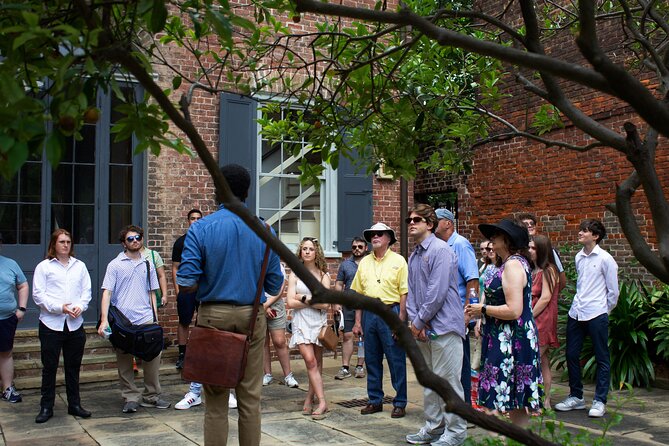
The strongest praise centers on guides who make history easy to follow. Lawson is described as friendly and full of interesting details, even when leading a very small group. Lawton is praised for sorting out Creole and Cajun terminology and for adding unusual historical information, including a claim about the first pharmacist in the United States being in New Orleans.
Laurent receives praise for bringing together food, culture, and history with warmth and good stories. These comments point to the kind of guide this walk needs: someone who can explain complex subjects without turning the tour into a classroom lecture.
You may not receive one of those named guides. The booking information does not promise a particular person, so treat the names as useful indicators of the tour’s best potential rather than a guarantee.
If your guide begins by saying the walk is not their regular assignment, listen closely and ask clear questions. One guest found that situation disappointing. The tour covers topics where precision matters, so a confident tone is not enough.
Practical details before you book
You receive confirmation when you book, and the experience uses a mobile ticket. The starting point is 2951 Royal Street, New Orleans, Louisiana 70116. The ending point is Hermann-Grima House, 820 St. Louis Street, New Orleans, Louisiana 70112.
The walk is near public transportation, and service animals are allowed. Most people can participate, but the tour still involves roughly two hours of walking and standing. The provided information does not give a detailed route surface or seating plan, so anyone with specific mobility concerns should check before booking.
The experience requires good weather. If poor weather cancels the tour, you are offered another date or a full refund. It also requires a minimum number of participants, so a cancellation is possible if that number is not met.
You can cancel for a full refund up to 24 hours before the start time. Inside that 24-hour window, the payment is not refunded and changes are not accepted. The cut-off follows New Orleans local time.
Who will get the most from this French Quarter walk
I would recommend this tour to a first-time visitor who wants a clear introduction to New Orleans without committing to a long bus ride or a full-day program. It also suits anyone who wants cultural context before visiting museums, ordering Louisiana food, or exploring the Quarter alone.
It is a good fit for people who enjoy stories about people and traditions more than a simple list of building dates. The stops are short, so you will keep moving and see several parts of the old city.
Families and mixed-age groups may appreciate the two-hour length, though the provided information does not state a specific child age policy. The modest group limit is also helpful if you want a guide without joining a huge crowd.
I would be more cautious if your main goal is a detailed architectural survey, a full visit inside St. Louis Cathedral, entry to St. Louis Cemetery No. 1, or a meal-based food tour. The walk passes important sights and explains them, but the listed included visit is specifically the Hermann-Grima House courtyard.
Should you book it?
Book this tour if you want the French Quarter explained through Creole culture, music, food, and local history, and if you value a guide’s interpretation more than a long list of admissions. The route is compact, the price is moderate, and the courtyard at Hermann-Grima House gives the walk a worthwhile finish.
I would especially consider it for an early day in New Orleans, when the orientation can help you explore with more purpose afterward. Just remember that guide assignment matters. If accuracy and cultural detail are central to your decision, ask whether Lawson, Lawton, or Laurent is leading when you book, but do not assume one is guaranteed.
FAQ
How long does the Creole Louisiana walking tour last?
The tour lasts approximately two hours.
Where does the tour begin?
It begins at 2951 Royal Street, New Orleans, Louisiana 70116.
Where does the tour end?
The tour ends at Hermann-Grima House, 820 St. Louis Street, New Orleans, Louisiana 70112.
Is entry to Hermann-Grima House included?
The fee to enter the Hermann-Grima House courtyard is included. The information provided does not state that full house admission is included.
Which sights are visited during the walk?
The route includes Jackson Square, St. Louis Cathedral, Louis Armstrong Park and Congo Square, and the Hermann-Grima House courtyard. It also passes notable French Quarter sights such as St. Louis Cemetery No. 1.
How many people can join the tour?
The maximum group size is 28 people.
What is the cancellation policy?
You can cancel at least 24 hours before the start time for a full refund. Cancellations or changes made less than 24 hours before the start time are not refunded or accepted. Poor weather or failure to meet the minimum number of participants can lead to a different date or a full refund.
More Walking Tours in New Orleans
- New Orleans Premier Ghost, Voodoo and Vampire Walking Tour
★ 4.5 · 12,856 reviews - St. Louis Cemetery No. 1 Official Walking Tour
★ 4.5 · 3,941 reviews - New Orleans Garden District History Walking Tour
★ 5.0 · 2,879 reviews - Ghost and Vampire Walking Tour Of The French Quarter
★ 4.5 · 2,406 reviews
Just added around New Orleans
- New Orleans Garden District Tour★ 5.0 · 8 reviews
- New Orleans Seance Experience★ 4.0 · 8 reviews
- Sin and Tonic Pub Crawl in New Orleans★ 4.5 · 8 reviews
- Airport and City Transfers in New Orleans★ 5.0 · 8 reviews
- The New Orleans Darkness Tour★ 4.4 · 9 reviews
- New Orleans Plantation Tour with Transportation★ 5.0 · 9 reviews
- New Orleans Self-Guided Kayak Bayou Swamp Tour★ 5.0 · 9 reviews
- Historic Carrollton Neighborhood Walking Tour★ 5.0 · 9 reviews
French Quarter Tours, compared.
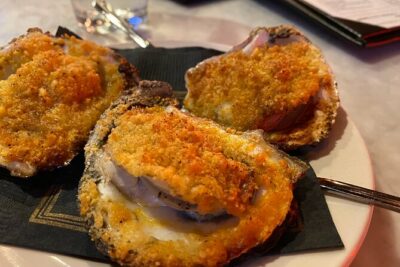
New Orleans Food Walking Tour of the French Quarter with Small-Group Option
Read our review →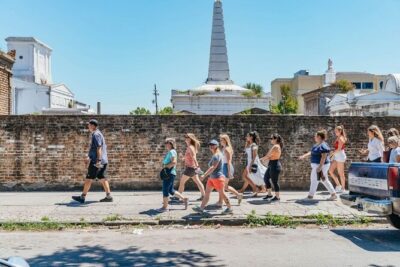
New Orleans French Quarter, Voodoo and Culture Walking Tour
Read our review →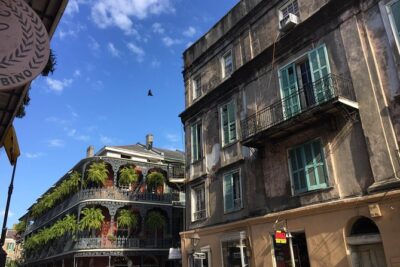
French Quarter Historical Sights and Stories Walking Tour
Read our review →
Ghost and Vampire Walking Tour Of The French Quarter
Read our review →
New Orleans City Tour: French Quarter, Garden District & Cemetery
Read our review →
New Orleans French Quarter Food Tour: Cajun, Creole and Culture
Read our review →
New Orleans French Quarter and More Carriage Ride
Read our review →
French Quarter walking Food Tour Famous Flavors of New Orleans
Read our review →Browse the lists this tour appears in