
Reviewed · MUSEUMS
The National WWII Museum Admission Ticket New Orleans
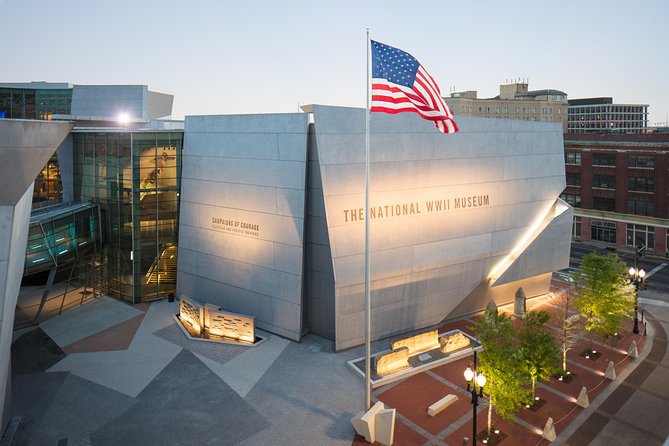
The National WWII Museum tells the story of the war through aircraft, personal belongings, film, sound, and the voices of people who lived through it. The most striking feature is its scale: this is not a quick collection of display cases, but a large series of galleries that can fill a full day.
I like the Campaigns of Courage galleries, where the European and Pacific wars unfold through detailed settings, oral histories, newsreels, and interactive stations. I also like the mix of military and civilian stories, including the Home Front exhibits and the moving sections on liberation and loss. The main drawback is simple: the advertised two to three hours is enough for a brisk look, but not enough to see the museum properly.
In This Review
- Key points
- Start in the Louisiana Memorial Pavilion
- Follow American soldiers through Europe and the Pacific
- See the war machines in the US Freedom Pavilion
- Consider the optional Final Mission submarine experience
- Watch Beyond All Boundaries if you want a large-scale film
- Allow more than the advertised two to three hours
- Expect a powerful but sometimes overwhelming presentation
- Take a proper break at the American Sector
- Judge the $37.80 admission by the time you will spend
- Who will get the most from this museum
- Booking and cancellation details to know
- Should you book the National WWII Museum?
- FAQ
- Where is the National WWII Museum?
- What does the admission ticket include?
- Are the 4D film and Final Mission submarine experience included?
- How much does admission cost?
- How long should I plan to stay?
- What are the museum’s opening hours?
- Is the ticket available on a mobile device?
- Is the museum offered in English?
- Can I cancel for a refund?
Key points
- General admission covers the main museum: Special experiences such as the 4D film and Final Mission cost extra.
- The museum is much larger than a standard New Orleans attraction: Plan at least four hours, and a full day if you read the displays closely.
- The European and Pacific campaigns receive separate treatment: Road to Berlin and Road to Tokyo guide you through the war in chronological order.
- Aircraft and military vehicles give the exhibits physical weight: The Louisiana Memorial Pavilion includes an authentic C-47, while the US Freedom Pavilion holds preserved war machines.
- The presentation can be intense: Films, sound, casualty figures, and liberation displays may be difficult for young children or anyone sensitive to graphic wartime material.
- You can take breaks inside: The American Sector Restaurant and BB’s Stage Door Canteen offer food, drinks, and a change of pace within the museum complex.
Start in the Louisiana Memorial Pavilion
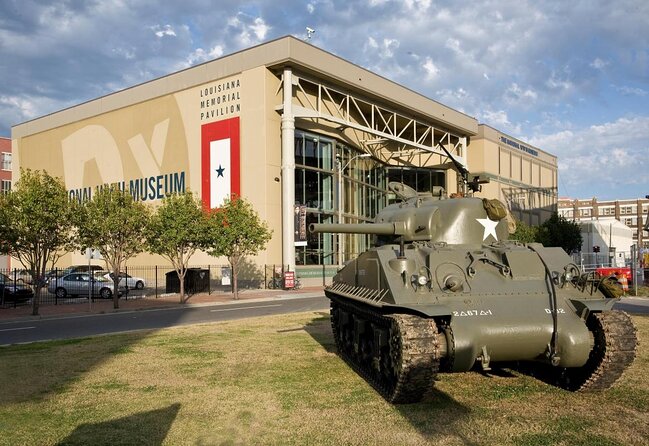
You make your own way to the museum in central New Orleans. Opening hours are 9 a.m. to 5 p.m. daily, and your mobile ticket provides general admission to the main museum.
Begin in the Louisiana Memorial Pavilion. This is where you get your bearings and encounter several themes that return throughout the visit: the D-Day invasion, the Home Front, military transport, and the personal cost of war.
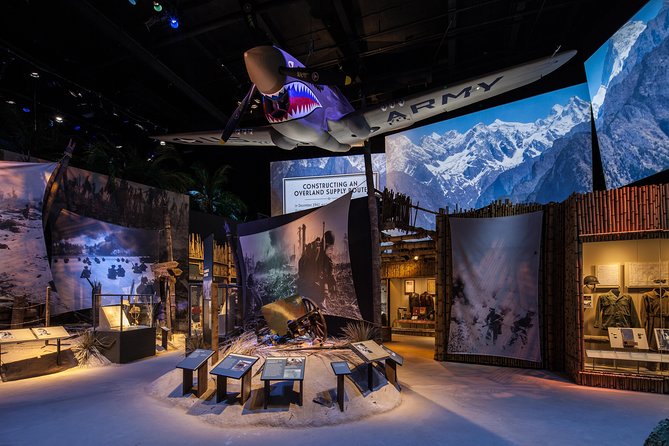
The authentic C-47 is an early visual anchor. The aircraft helps explain how troops, equipment, and supplies moved through the wartime system. It is one thing to read about military transport. It is another to stand below a full-size aircraft and consider the thousands of people whose lives depended on machines like it.
You can also use the mini-train experience to learn how to activate the dog tag feature. Dog tags connect the large military story to individual service members, giving you a personal thread to follow as you move through the museum.
Take a little time here before rushing upstairs. The museum presents a great deal of material, and the opening pavilion gives you useful context for the galleries ahead.
More museums in New Orleans:
- French Quarter Walking Tour With Comp 1850 House Museum Admission
★ 5.0 · 781 reviews - New Orleans: The National WWII Museum Ticket
★ 4.8 · 704 reviews - The National WWII Museum Campus Pass plus 4-D Film
★ 5.0 · 672 reviews
Follow American soldiers through Europe and the Pacific
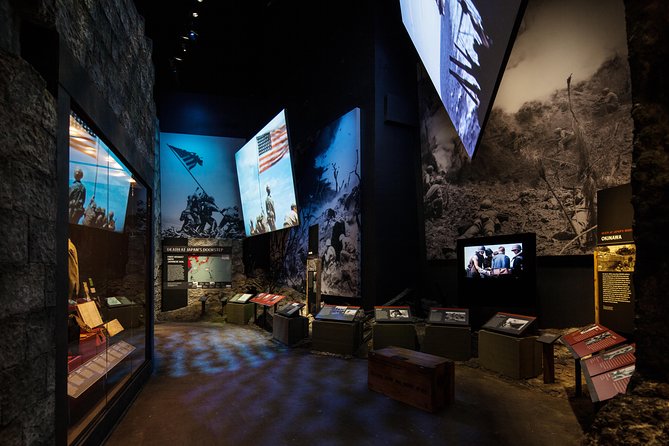
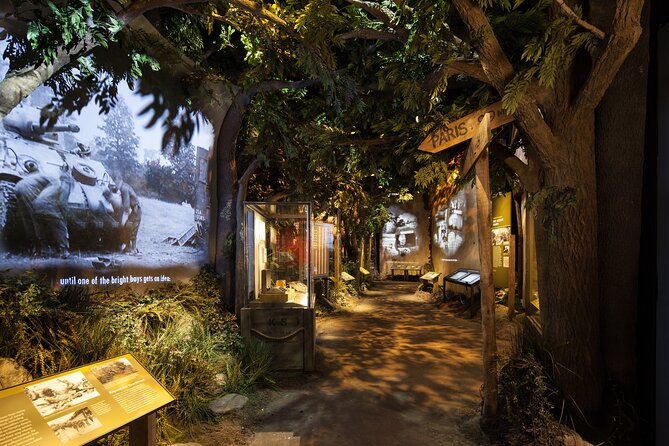
The heart of the museum is Campaigns of Courage, spread across two major sections: Road to Berlin, covering the European Theater, and Road to Tokyo, covering the Pacific Theater.
These galleries follow the war in sequence. You see how events developed, how campaigns were fought, and how decisions made in one place affected people far away. The museum uses set design, period newsreels, narrated and environmental video, oral-history kiosks, personal objects, and interactive displays.
The result is more than a row of labels beside old equipment. You move through settings designed to suggest the places and conditions faced by American troops. At several points, 360-degree displays put you in the middle of a scene rather than leaving you to view it from one fixed angle.
I especially appreciate the use of personal histories. Large battles can become a blur of dates and place names. A letter, recorded memory, or dog tag gives the story a human scale. You are reminded that the war was fought by individuals with families, fears, routines, and hopes, not by anonymous units alone.
The European galleries lead toward Berlin and the defeat of Nazi Germany. They also address liberation and the consequences of Nazi persecution. This part can be emotionally heavy, particularly in the sections dealing with the Holocaust and the human cost of liberation. Give yourself time, and do not feel pressure to move quickly.
The Pacific galleries present a different kind of war, with its own geography, battles, and hardships. Seeing both theaters in one visit helps you understand how varied the American wartime experience was. It also prevents the familiar European narrative from becoming the entire story.
See the war machines in the US Freedom Pavilion
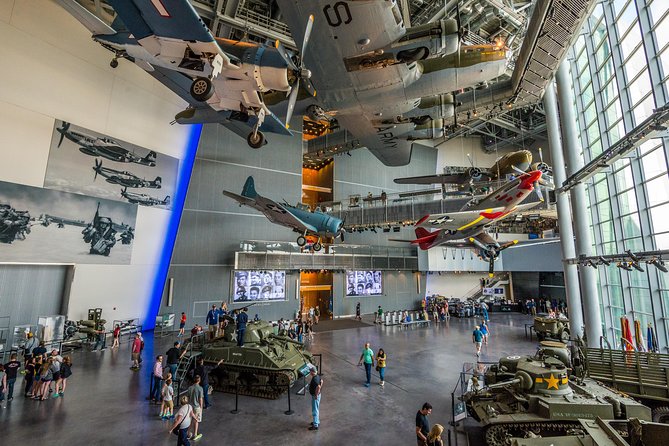
Next, make your way to the US Freedom Pavilion. Here, preserved war machines provide a change from the personal and audiovisual material in Campaigns of Courage.
Large vehicles and equipment show the practical side of the war: mobility, engineering, production, and logistics. These objects are not simply impressive because they are large. They help you see the industrial effort required to send an army across oceans and keep it supplied.
The pavilion also honors American service members. The tone is respectful and often solemn. You will find this section especially meaningful if you want the museum to address remembrance as well as military history.
The amount of material can be tiring by this point. If you have only two or three hours, choose the galleries that matter most to you rather than trying to race through every building. If you have a full day, this is a good place to pause, sit for a moment, and let the earlier exhibits settle before continuing.
Consider the optional Final Mission submarine experience
Final Mission: USS Tang is an additional experience, not part of general admission. It presents an interactive tour connected to one of the most successful submarines of World War II.
The submarine setting gives the war a tight, confined feel. Instead of viewing events from a broad historical distance, you focus on the pressure faced by a crew operating underwater and far from home. It is designed as a more active experience than a standard gallery.
The supplied admission information lists the extra experiences at an additional $7. Because general admission and special attractions are treated separately, check the current price when booking or at the museum before adding this option.
I would consider Final Mission if you have already allowed enough time for the main galleries. Do not sacrifice Road to Berlin, Road to Tokyo, or the US Freedom Pavilion simply to fit in an extra attraction. The main museum contains more than enough material for one visit.
A few more New Orleans tours worth a look
- New Orleans: Vue Orleans Observation Deck Entry Ticket
★ 4.7 · 132 reviews - New Orleans: Audubon Aquarium & Insectarium Ticket
★ 4.5 · 93 reviews - Vue Orleans: Observation Deck Entry Ticket
★ 4.5 · 87 reviews - Audubon Zoo Ticket
★ 4.5 · 75 reviews
Watch Beyond All Boundaries if you want a large-scale film
The Solomon Victory Theater shows Beyond All Boundaries, an approximately 50-minute 4D wartime documentary produced by Tom Hanks. This experience also costs extra.
The film uses first-hand accounts from combat and the Home Front, along with special effects designed to make the presentation feel physical. It offers a different way to process the war, with a fixed running time and a more theatrical format.
This can be useful late in the visit, when your attention is beginning to fade from reading panels. It gives you a chance to sit down while still following the story. On the other hand, the museum already includes many films and audiovisual displays, so visitors who prefer artifacts and written material may decide the extra fee is not necessary.
The 50-minute running time matters. Add it to your schedule rather than treating it as a short film you can squeeze in between galleries.
Allow more than the advertised two to three hours
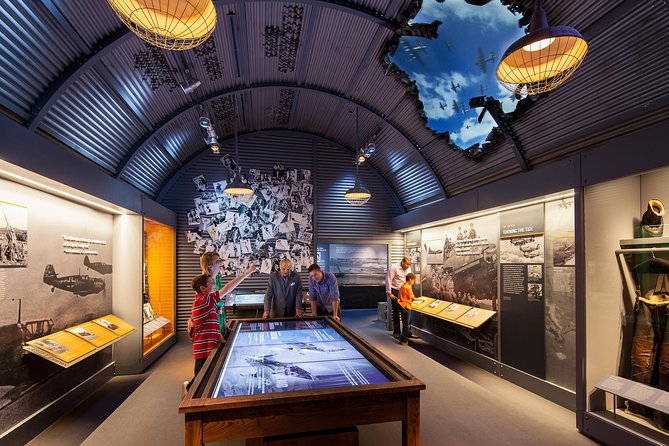
The official visit length is approximately two to three hours, but the museum can easily fill four hours or more. Several people spend six or seven hours and still leave sections for another visit.
Your timing depends on how you explore. A quick visitor can see the major areas and sample the displays in an afternoon. If you read placards, listen to oral histories, watch the films, and follow individual dog tag stories, you need much longer.
A practical plan looks like this:
- Two to three hours: Choose the Louisiana Memorial Pavilion and one major Campaigns of Courage section.
- Four hours: See the main campaign galleries and part of the US Freedom Pavilion without rushing too badly.
- A full day: Add both theaters, take breaks, read more personal accounts, and consider one optional experience.
- A second visit: Return for sections you had to skip. One ticket allows you to come and go during the museum’s opening hours, according to the provided admission details.
Go early if you want the best chance of seeing a large portion of the museum at a comfortable pace. The museum opens at 9 a.m., and starting then gives you room for a food break and the optional film or submarine experience.
Expect a powerful but sometimes overwhelming presentation
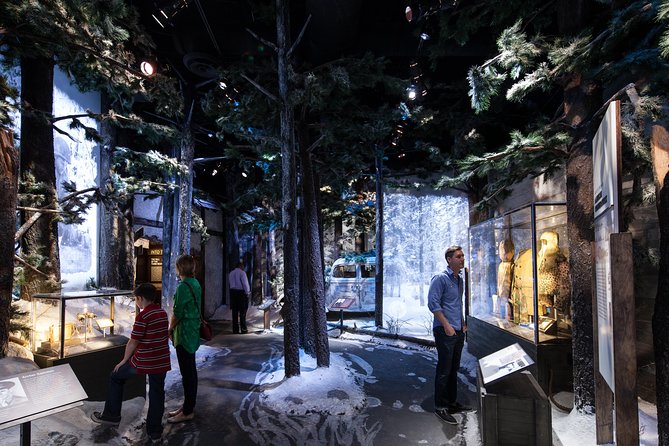
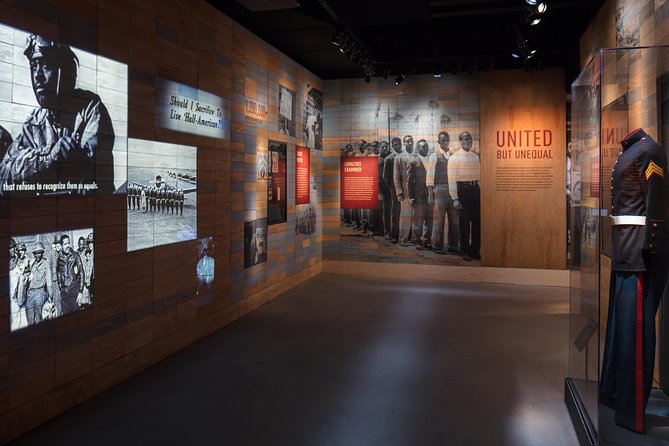
The museum uses sound, moving images, lights, and short film clips throughout the galleries. This makes the exhibits vivid, but it can also create sensory fatigue.
If you are sensitive to noise or multiple videos playing at once, plan regular quiet breaks. One useful suggestion from the experience feedback is to bring noise-canceling headphones, especially if you want to read carefully without competing audio.
The content is also emotionally serious. Casualty figures appear often, and displays about dead soldiers, persecution, liberation, and sacrifice can be upsetting. That is part of the museum’s purpose, but it is worth knowing before you arrive.
I would be cautious about bringing very young children. The material is not presented as a light family attraction, and the combination of wartime images, sound, and death may overwhelm children around age 10 and under. Older children and teenagers may gain a great deal from the visit if you explain the subject beforehand and allow them to take breaks.
Take a proper break at the American Sector
You do not need to leave the museum to eat or rest. The American Sector Restaurant and Bar provides food and drinks at your own expense.
There is also BB’s Stage Door Canteen, a 1940s-style entertainment venue featuring music and performers connected to the wartime years. It offers a welcome shift in mood after several serious galleries.
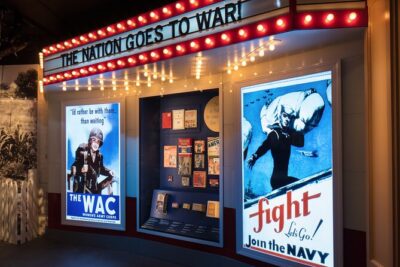
These spaces are useful for more than convenience. The Home Front story includes work, entertainment, food, and daily life, so a period-style setting helps show how Americans maintained ordinary routines while the war continued overseas.
Plan your break rather than waiting until you are exhausted. The museum is large, and tired visitors tend to skim the very exhibits they came to see.
Judge the $37.80 admission by the time you will spend
At $37.80 per person, this is not the cheapest museum admission in New Orleans. It can still be good value if you give it several hours, since the main ticket provides access to a large set of galleries rather than a single small exhibition.
The value is strongest for history fans, students, families with older children, and anyone willing to spend most of a day indoors. The museum combines aircraft, vehicles, personal objects, recorded testimony, film, and carefully built settings. You are paying for the amount of material as much as for the individual displays.
The value is weaker if you have only one free hour or if World War II is not a subject you want to study closely. New Orleans offers many different kinds of attractions, and this museum asks for attention and emotional energy.
The special attractions cost extra, with the provided information listing $7 for the additional experiences. Treat those as optional additions, not required parts of the visit. General admission alone gives you plenty to see.
Who will get the most from this museum
I would choose this experience for:
- History enthusiasts who want both the European and Pacific theaters
- Students looking for a serious, visual way to study World War II
- Families with older children or teenagers
- Visitors needing a strong rainy-day plan in New Orleans
- People interested in personal stories, military technology, and the American Home Front
- Anyone willing to return for a second visit if time runs short
I would think twice if you dislike graphic wartime subjects, loud audiovisual presentations, or long museum visits. You can soften the experience by moving at your own pace, taking breaks, and focusing on selected galleries.
The museum is also a good choice for repeat visitors to New Orleans. It is not tied to the city’s usual music, food, or architecture themes, but it adds an important national and international chapter to your trip.
Booking and cancellation details to know
The ticket is offered with mobile delivery, and confirmation is received at booking. The experience is offered in English.
Free cancellation is available up to 24 hours before the experience start time for a full refund. Cancellations or changes made within 24 hours are not refunded or accepted. The supplied terms also say the experience requires good weather, and a weather-related cancellation offers a different date or a full refund.
The stated physical requirement is moderate fitness. Since the museum is large and can require several hours of walking and standing, wear comfortable shoes and plan rest stops.
Should you book the National WWII Museum?
Book it if you can give it at least four hours, and ideally most of a day. The strongest parts are the Campaigns of Courage galleries, the personal accounts, the aircraft, and the clear contrast between the European and Pacific wars.
Do not book it as a quick filler between lunch and another appointment. You will see the building, but you will miss much of what gives the museum its force.
At $37.80, I consider it a solid buy for serious history fans and a worthwhile educational stop for families with older children. Start early, choose your priority galleries, take a real break, and save the optional 4D film or submarine experience for after you have seen the core museum.
FAQ
Where is the National WWII Museum?
The museum is in central New Orleans, and you make your own way there.
What does the admission ticket include?
The ticket includes general admission to the National WWII Museum.
Are the 4D film and Final Mission submarine experience included?
No. Beyond All Boundaries in the Solomon Victory Theater and Final Mission: USS Tang cost extra.
How much does admission cost?
The stated price is $37.80 per person.
How long should I plan to stay?
The approximate visit time is two to three hours, but the museum is large. You may want four hours or a full day to see more of the galleries.
What are the museum’s opening hours?
The museum is open Monday through Sunday from 9 a.m. to 5 p.m.
Is the ticket available on a mobile device?
Yes. The experience includes a mobile ticket.
Is the museum offered in English?
Yes. The experience is offered in English.
Can I cancel for a refund?
Yes. You can cancel at least 24 hours before the experience start time for a full refund. Cancellations within 24 hours are not refunded.
Just added around New Orleans
- New Orleans Garden District Tour★ 5.0 · 8 reviews
- New Orleans Seance Experience★ 4.0 · 8 reviews
- Airport and City Transfers in New Orleans★ 5.0 · 8 reviews
- Sin and Tonic Pub Crawl in New Orleans★ 4.5 · 8 reviews
- The New Orleans Darkness Tour★ 4.4 · 9 reviews
- New Orleans Plantation Tour with Transportation★ 5.0 · 9 reviews
- New Orleans Self-Guided Kayak Bayou Swamp Tour★ 5.0 · 9 reviews
- Historic Carrollton Neighborhood Walking Tour★ 5.0 · 9 reviews
Museums, compared.

French Quarter Walking Tour With Comp 1850 House Museum Admission
Read our review →
The National WWII Museum Campus Pass plus 4-D Film
Read our review →

Whitney Plantation and Museum Tour from New Orleans
Read our review →
Museum of the Southern Jewish Experience in New Orleans
Read our review →Browse the lists this tour appears in