
Reviewed · MUSEUMS
Museum of the Southern Jewish Experience in New Orleans
The Museum of the Southern Jewish Experience tells a story that is easy to miss: Jewish communities did not simply preserve their traditions in the American South, they also shaped and adapted to Southern life. Through artifacts, films, personal stories, and changing exhibits, the museum connects Jewish identity with the culture of the region.
I like the self-paced format, which lets you pause over a family story or move quickly through material that feels familiar. I also like the strong mix of objects and media, including a moving film and the playful Bubbe feature. The main consideration is time: 90 minutes is enough for a good visit, but not if you want to read every label at length.
In This Review
- Key points to know before you go
- Why this small New Orleans museum matters
- A 90-minute visit through the galleries
- Permanent displays and temporary exhibitions
- What makes the storytelling effective
- The human touch from staff
- Is $15 a fair price?
- Choosing your time and using the mobile ticket
- Location and practical access
- Who will get the most from this visit?
- How to plan your 90 minutes
- Should you book the Museum of the Southern Jewish Experience?
- FAQ
- How much does admission cost?
- How long does a visit take?
- Does admission include the temporary exhibitions?
- Is the visit guided?
- What are the listed Monday opening hours?
- Can I cancel for a refund?
Key points to know before you go
- Jewish life meets Southern culture: The museum explains how Jewish communities influenced the South and how Southern customs shaped Jewish life.
- Your $15 ticket covers both exhibit types: Admission includes the permanent galleries and temporary exhibitions.
- Plan on about 90 minutes: You can see the main material in that time, though careful readers may want longer.
- Independent admission suits curious visitors: There is no fixed tour pace, so you choose where to linger.
- Artifacts, videos, and personal stories carry the visit: The displays move beyond dates and names into everyday life and memory.
- Staff interaction can add a personal layer: Mark, a staff member praised for his helpful explanations, may help you see connections you would otherwise miss.
Why this small New Orleans museum matters
New Orleans is full of museums that explain the city’s food, music, architecture, and history. This one adds a less familiar piece to the picture by showing how Jewish communities became part of Southern life.
The focus is not only on religious practice. You’ll encounter the broader question of how people keep an identity while adapting to a new place. That makes the museum useful even if you are not Jewish or have little background in Jewish American history.
The story reaches across the American South. It looks at the ways Jewish people influenced local communities, businesses, civic life, and culture, while also showing how their surroundings affected family traditions and daily choices.
I appreciate that approach because it avoids presenting Jewish life as something separate from the South. Instead, the museum presents it as part of the region’s wider story. You get a clearer sense of connection, exchange, and change over time.
More museums in New Orleans:
- The National WWII Museum Admission Ticket New Orleans
★ 5.0 · 2,202 reviews - French Quarter Walking Tour With Comp 1850 House Museum Admission
★ 5.0 · 781 reviews - New Orleans: The National WWII Museum Ticket
★ 4.8 · 704 reviews
A 90-minute visit through the galleries
Your visit is independent, so you can set the rhythm. The suggested duration is about one hour and 30 minutes, which gives you enough time to understand the main themes without turning the museum into an all-day commitment.
Begin with the permanent galleries. These provide the central framework for the museum, introducing the story of Jewish communities in the American South and the relationship between Jewish identity and Southern culture.
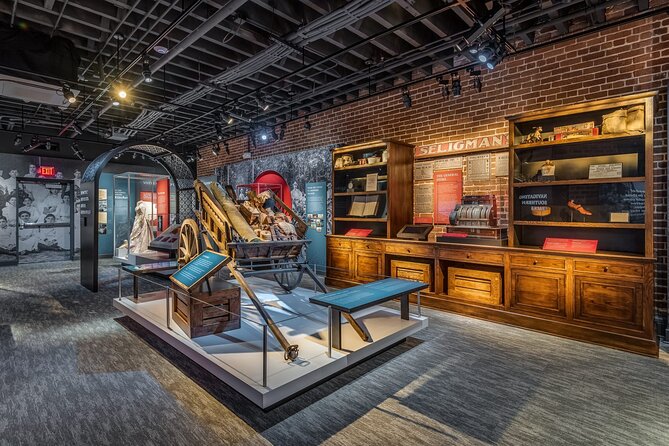
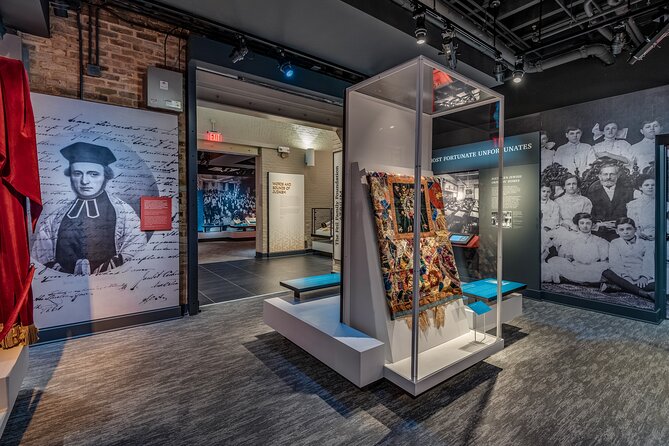
Expect a mix of physical objects, written accounts, videos, and other displays. The artifacts give the history something solid to hold on to, while the stories help explain the people behind them. That combination is important. An object alone can feel distant, but an object tied to a family or community becomes easier to remember.
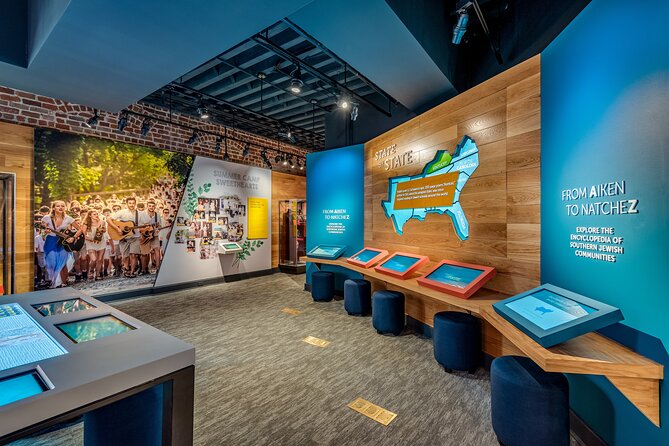
The videos add another layer. One film has been described as particularly moving, so allow yourself time to sit and watch rather than treating every screen as background material. If you are visiting with children or with someone who prefers visual storytelling to long text panels, the media should help keep the visit accessible.
The galleries also include a playful feature involving Bubbe. It offers a lighter moment within a subject that can be emotional and serious. That balance matters, especially if you are visiting with younger family members or simply need a change of pace after a reflective section.
Permanent displays and temporary exhibitions
The $15 admission includes both the permanent galleries and any temporary exhibitions on view. That makes the visit stronger than a ticket limited to one small display, since you get the museum’s main story plus a chance to see a more focused topic.
The permanent galleries are the part to prioritize if you have limited time. They explain the museum’s main purpose and give you the background needed to understand the wider themes.
Temporary exhibitions can change the emphasis of your visit. Depending on what is showing, you might find a closer look at a particular community, period, family story, or aspect of Jewish life. Since the available information does not name the current temporary exhibition, check what is on display when you book if a specific topic matters to you.
I would allow at least 90 minutes for the full visit. You can make it shorter if you mainly want an overview, but you may feel rushed if you stop for each film, read every panel, and spend time with the interactive elements.
What makes the storytelling effective
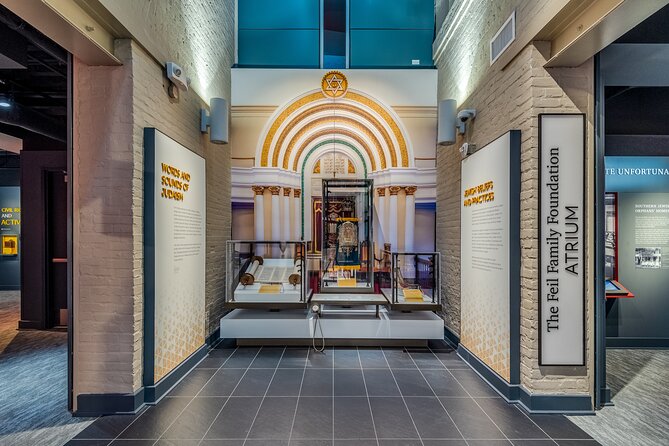
The museum’s strongest feature is its range of storytelling tools. You are not asked to learn the subject through a wall of dates alone.
You may encounter:
- Artifacts that connect broad history to everyday life
- Personal stories that show how identity worked inside families and communities
- Videos and films that bring emotion and human voices into the galleries
- Interactive material such as the Bubbe feature
- Temporary displays that add another point of view
This mix serves different kinds of learners. If you like objects, there are physical pieces to examine. If you prefer narrative, the personal accounts give the subject a human shape. If you learn best by watching, the films provide a clear way into the material.
The emotional tone also deserves attention. The museum can be inviting and playful, but parts of the visit are meant to make you think about identity, acceptance, and the pressures of belonging. I would not treat it as a quick photo stop. The value comes from giving the material a little attention.
A completely different side of New Orleans:
- New Orleans Premier Ghost, Voodoo and Vampire Walking Tour
★ 4.5 · 12,856 reviews - New Orleans Steamboat Natchez Jazz Cruise with Dinner Option
★ 4.0 · 7,533 reviews - Adults-Only New Orleans Ghost, Crime, Voodoo, and Vampire Tour
★ 5.0 · 6,545 reviews - New Orleans Food Walking Tour of the French Quarter with Small-Group Option
★ 5.0 · 6,118 reviews
The human touch from staff
Although this is an independent visit rather than a guided group tour, staff can add useful context. Mark, a staff member singled out for his explanations, has helped visitors understand parts of Southern Jewish history they did not expect to encounter.
That detail is worth keeping in mind. You should not plan on a private guided tour with Mark, since the experience is sold as independent admission. But if staff are available and you have a question, it is worth asking.
A short conversation can help connect the displays. You might want to ask about an artifact, a film, or the way the museum defines the Southern Jewish experience. The museum’s subject covers a wide area, and a staff explanation can help you place a particular story within the larger picture.
The warm staff presence is also useful for families and first-time museum visitors. This is not a place where you need to arrive as an expert. You can come with basic questions and build your understanding as you go.
Is $15 a fair price?
At $15 per person, the admission is reasonably priced for a museum visit lasting about 90 minutes. The ticket includes the permanent galleries and temporary exhibitions, so you are paying for the complete museum experience rather than a single special display.
The value improves if you take your time with the films and stories. A fast walk-through may make the price feel less impressive, but a thoughtful visit gives you a focused history lesson, personal accounts, visual material, and changing content in one stop.
I would compare it with the cost of other paid attractions in New Orleans. Fifteen dollars is a manageable addition to a day of sightseeing, especially if you want something quieter and more reflective than the city’s larger attractions.
The museum is also useful for a particular kind of visitor: someone who wants cultural context instead of only famous sights. If you are building a day around New Orleans history, the ticket offers a subject you may not find covered in the same way elsewhere.
Choosing your time and using the mobile ticket
The pre-booked mobile ticket keeps the visit simple. You choose the day and admission time that fit your plans, then show your ticket on your phone.
Booking ahead makes sense because the experience is booked an average of 20 days in advance. That does not guarantee that every time slot will sell out, but it does suggest that you should not leave your visit until the last minute if your New Orleans schedule is tight.
The listed opening information shows Monday hours from 10:00 a.m. to 5:00 p.m. for the stated operating period. Since only Monday hours are provided here, check the available date and time during booking rather than assuming the museum follows the same schedule every day.
The flexible visit works well before or after another planned activity. At 90 minutes, it can fit into a morning or afternoon without taking over your entire day. Give yourself extra time if you prefer to read closely or discuss the exhibits as you go.
Location and practical access
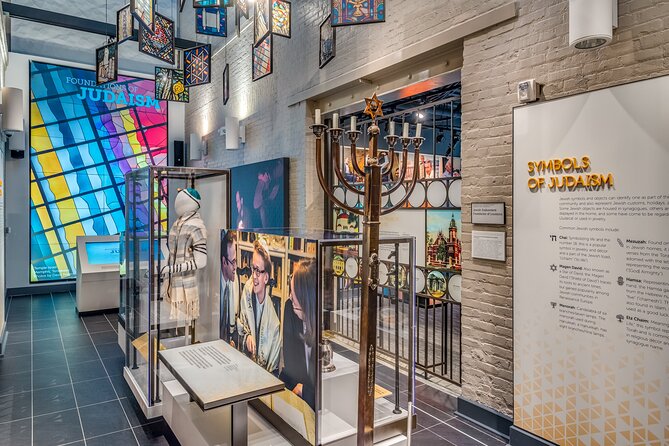
The museum is in New Orleans and is near public transportation, which helps if you are not driving. The provided information does not specify a particular bus or streetcar route, so use the exact museum address and local transit information when planning your route.
Service animals are allowed. Most people can participate, according to the available access information, though the details do not specify every feature of the building or galleries. If you need a particular accommodation, contact the museum before booking.
The experience is listed as requiring good weather, with a different date or a full refund offered if poor weather causes cancellation. That policy is unusual for an indoor museum visit, so check the booking terms for your chosen date and keep a little flexibility in your schedule.
Who will get the most from this visit?
I would recommend the museum to anyone interested in American history, Jewish culture, New Orleans, or the way local communities shape one another.
It suits:
- History-minded adults who want a focused subject rather than a broad city museum
- Families looking for a mixture of objects, stories, film, and interactive material
- Visitors with Jewish heritage who want to consider Southern connections
- First-time learners who want an approachable introduction
- Returning New Orleans visitors seeking a less familiar side of the city
- People who enjoy reflective museums more than fast-moving attractions
You do not need prior knowledge to follow the exhibits. The museum is designed around understanding identity, diversity, and acceptance, so the subject reaches beyond one community.
It may be less suitable if you want a guided tour with a fixed narrator, a large collection of famous masterpieces, or a very quick stop. The museum’s strength is its stories and interpretation, not spectacle.
How to plan your 90 minutes
For a balanced visit, I would use the time this way:
- Spend the first 10 minutes getting oriented and reading the museum’s central explanation.
- Give about 45 minutes to the permanent galleries and their main stories.
- Set aside 15 to 20 minutes for films and interactive material.
- Use the remaining time for the temporary exhibition, questions, and a final look at displays you want to revisit.
This is only a guide. If a family story catches your attention, follow it. The independent format means you are not being pushed along by a group.
The gift shop is another small reason to leave a few minutes at the end. It has been praised as a pleasant part of the visit, though the available information does not detail its stock. If you like taking home books, gifts, or museum-related items, save time rather than rushing out.
Should you book the Museum of the Southern Jewish Experience?
Book it if you want a thoughtful, well-priced New Orleans museum that connects Jewish identity with the history and culture of the American South. The combination of artifacts, stories, video, and interactive material gives the visit more depth than a simple display of objects.
I especially recommend it if you have around 90 minutes, prefer exploring at your own pace, and enjoy museums that ask questions about belonging and acceptance. The $15 price is fair for access to both permanent and temporary exhibitions.
Skip it only if your schedule allows no time for reading, watching, or reflection. This is not a rapid photo stop. Give it a proper hour and a half, ask staff questions if you have them, and let the human stories guide your visit.
FAQ
How much does admission cost?
Admission costs $15 per person.
How long does a visit take?
The visit lasts approximately one hour and 30 minutes.
Does admission include the temporary exhibitions?
Yes. Admission includes access to the permanent galleries and temporary exhibitions.
Is the visit guided?
The experience is an independent visit, allowing you to explore the museum at your own pace.
What are the listed Monday opening hours?
The listed Monday hours are 10:00 a.m. to 5:00 p.m. for the stated operating period from February 22, 2024, through February 16, 2027.
Can I cancel for a refund?
You can cancel at least 24 hours before the experience start time for a full refund. Cancellations or changes made less than 24 hours before the start time are not accepted for a refund. If poor weather causes the experience to be canceled, you will be offered another date or a full refund.
Just added around New Orleans
- New Orleans Garden District Tour★ 5.0 · 8 reviews
- New Orleans Seance Experience★ 4.0 · 8 reviews
- Airport and City Transfers in New Orleans★ 5.0 · 8 reviews
- Sin and Tonic Pub Crawl in New Orleans★ 4.5 · 8 reviews
- The New Orleans Darkness Tour★ 4.4 · 9 reviews
- New Orleans Plantation Tour with Transportation★ 5.0 · 9 reviews
- New Orleans Self-Guided Kayak Bayou Swamp Tour★ 5.0 · 9 reviews
- Historic Carrollton Neighborhood Walking Tour★ 5.0 · 9 reviews
Museums, compared.

The National WWII Museum Admission Ticket New Orleans
Read our review →
French Quarter Walking Tour With Comp 1850 House Museum Admission
Read our review →

The National WWII Museum Campus Pass plus 4-D Film
Read our review →

Whitney Plantation and Museum Tour from New Orleans
Read our review →
Browse the lists this tour appears in