
Reviewed · FRENCH QUARTER TOURS
Private French Quarter Walking Tour
The most useful thing about this private French Quarter walk is its scale. You cover about 1.5 miles in three hours, with time to stop, ask questions, and look closely at places easy to miss on a fast stroll. Dominick, a New Orleans native and urban planner, brings both local roots and a broad view of the city’s past and present.
I like the small four-person limit, which keeps the conversation personal, and I like the route’s mix of major sights and quieter corners such as Pirate’s Alley and Exchange Alley. The main drawback is price: $350 is a serious outlay for a walking tour, though it can be fair for a full group of four.
In This Review
- Key points at a glance
- Starting at Jackson Square and the Mississippi
- St. Louis Cathedral, Pontalba, and the Cabildo
- Royal Street at a slower pace
- The Pharmacy Museum and the complicated story of medicine
- The Louisiana Supreme Court and preservation
- Exchange Alley and the French American divide
- Bevelo gas lights and hand-built craft
- Napoleon House and an unfinished rescue plan
- Nunez House and the fires that changed the Quarter
- What the three-hour format feels like
- Is $350 a fair price?
- Who should book this walk?
- My booking advice
- FAQ
- How long is the Private French Quarter Walking Tour?
- How far do you walk?
- How many people can join the private tour?
- Where does the tour start and finish?
- What language is the tour offered in?
- Are admission tickets included?
- Is transportation provided?
- Can I cancel for a full refund?
Key points at a glance
- Jackson Square to the Mississippi River: Begin near the city’s founding point, then connect the French Quarter to the river that shaped New Orleans.
- A private guide for up to four people: You can set the pace and ask about subjects that interest your group.
- 1.5-mile route over about three hours: This is a gentle walk, but uneven sidewalks require sensible shoes and a moderate fitness level.
- Architecture with a story: See the St. Louis Cathedral, Pontalba buildings, Cabildo, Nunez House, courtyards, and Royal Street.
- Less obvious stops: Exchange Alley, Bevelo’s hand-built gas lights, the Pharmacy Museum, and Napoleon House add texture beyond the usual postcard views.
- Best value with four people: At the listed group price, the cost works out to $87.50 each for four, before any admissions.
Starting at Jackson Square and the Mississippi
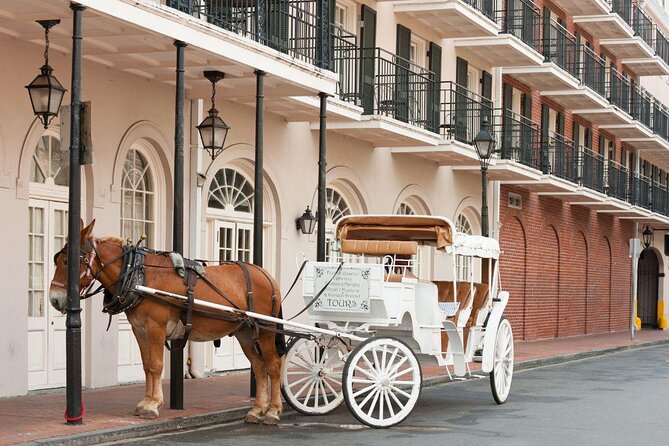
Meet your guide at Tableau by Dickie Brennan & Co., at 616 St. Peter Street, close to Jackson Square. This is a handy place to begin because you are already in the center of the French Quarter, near the cathedral, the Cabildo, and the riverfront.
The first stop sets the tone. You discuss the founding of New Orleans in 1718, then make a short walk to the Mississippi River. The river is not just scenery here. It explains why this settlement grew, how trade shaped the city, and why New Orleans became so important.
I like beginning with the water because it gives the streets behind you a larger purpose. Instead of seeing the French Quarter as a collection of pretty facades, you start to understand its connection to commerce, migration, politics, and transport.
The riverfront portion is brief, so do not expect a long waterfront visit. Its value is the context. The tour uses the river to explain the city before turning into the older streets and courtyards of the Quarter.
More ways to walk the French Quarter:
- New Orleans Food Walking Tour of the French Quarter with Small-Group Option
★ 5.0 · 6,118 reviews - New Orleans French Quarter, Voodoo and Culture Walking Tour
★ 4.5 · 2,961 reviews - French Quarter Historical Sights and Stories Walking Tour
★ 5.0 · 2,724 reviews
St. Louis Cathedral, Pontalba, and the Cabildo
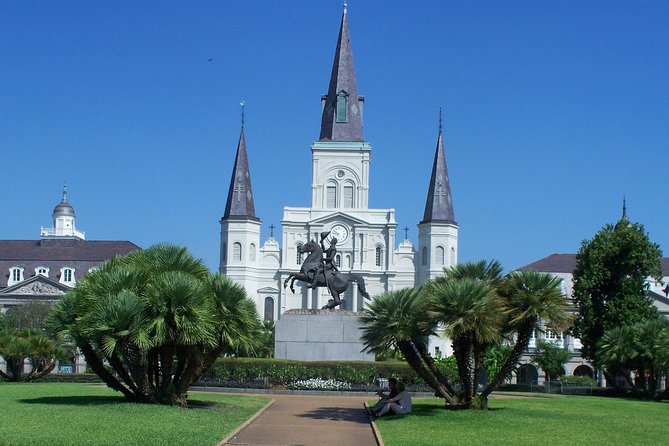
Back around Jackson Square, you spend time looking at St. Louis Cathedral, described as the oldest cathedral in the United States. The tour includes discussion rather than a guaranteed interior visit, and no admission ticket is included for paid attractions.
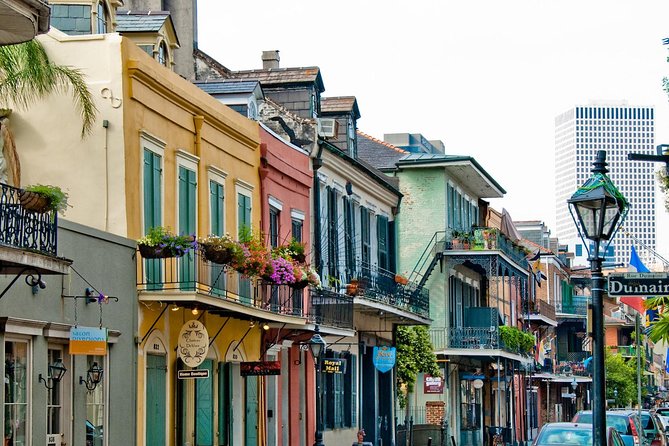
The square also brings the Pontalba buildings into view. Their long galleries and repeated balconies help explain the French Quarter’s visual character. You will have a chance to look at the buildings while your guide connects their design to the people and periods that shaped the neighborhood.
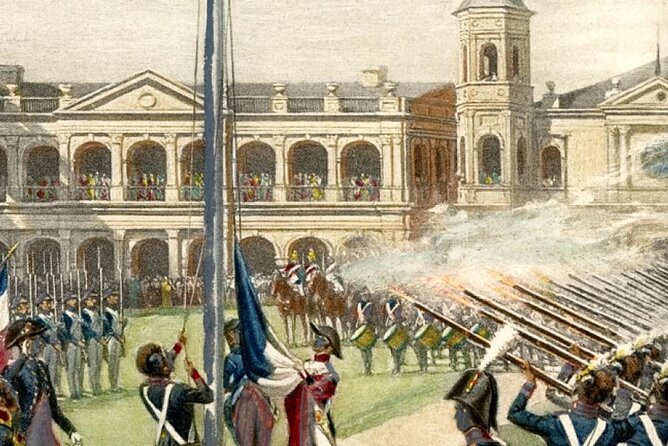
Next comes the Cabildo, one of the key historic buildings around Jackson Square. Here, you discuss the Louisiana Purchase ceremony and the political shift that followed. The Cabildo requires an admission ticket if you enter, so plan on an extra charge if your group wants to spend time inside.
This is a strong early section for anyone who wants political history without sitting through a formal museum lecture. The guide talks through events on location, which makes the setting part of the lesson.
Royal Street at a slower pace
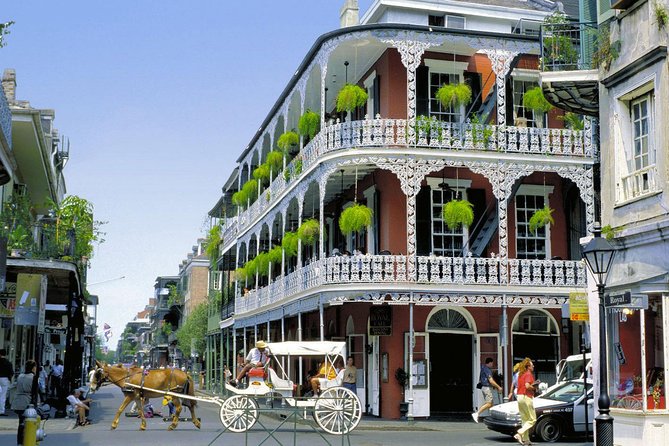
Royal Street receives about 30 minutes, making it the longest single stop on the listed route. You can window-shop while hearing about the many royal governors who lived along the street before Louisiana became a state.
That combination works well. You are not simply walking past galleries, shops, and old buildings while trying to keep up. You have time to examine doorways, balconies, ironwork, and small architectural details.
The leisurely pace is one of the tour’s strongest features. Dominick has been praised for answering questions without rushing the group, and the private format makes it easier to pause when something catches your eye.
Keep your expectations realistic. This is not a dedicated shopping tour, and the focus remains on history and architecture. You can browse windows, but food, shopping, and souvenirs are not included.
The Pharmacy Museum and the complicated story of medicine
The New Orleans Pharmacy Museum is one of the more unusual stops. The discussion covers the first licensed pharmacy practice in the United States and the first woman to practice pharmacy, said to have done so a century before the first licensed pharmacist.
The museum admission is not included. If you want to go inside, confirm the current entry details when you book or meet your guide. The walking tour itself provides the historical explanation, but an interior visit would be a separate expense.
The route information names the Pharmacy Museum twice, with one entry describing the first licensed pharmacist and another returning to the earlier female practitioner. Treat this as one major subject in the walk rather than assuming you will receive two separate museum visits.
I like this stop because it broadens the tour beyond governors, generals, and grand buildings. Medicine reveals everyday life, social rules, and the role of women in a way that a standard architectural walk may skip.
More walking tours in New Orleans:
- New Orleans Premier Ghost, Voodoo and Vampire Walking Tour
★ 4.5 · 12,856 reviews - St. Louis Cemetery No. 1 Official Walking Tour
★ 4.5 · 3,941 reviews - New Orleans Garden District History Walking Tour
★ 5.0 · 2,879 reviews - Ghost and Vampire Walking Tour Of The French Quarter
★ 4.5 · 2,406 reviews
The Louisiana Supreme Court and preservation
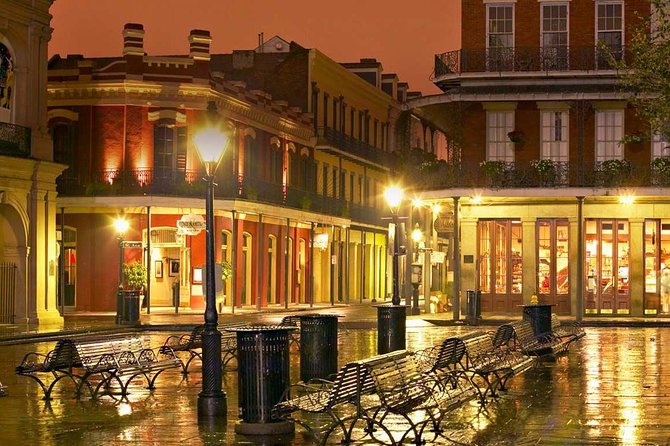
At the Louisiana Supreme Court, you discuss the effort to save the French Quarter from demolition. This is an important change of direction. The Quarter may look protected now, but its survival was not automatic.
For you, the practical benefit is a better understanding of preservation. The tour does not only point out old buildings. It asks why they remain, who fought to keep them, and how the character of the neighborhood might have changed.
The stop is outside and admission is free. It also gives your feet a brief break before the route continues through the narrower lanes and side streets.
Exchange Alley and the French American divide
Exchange Alley offers a compact lesson in the tensions between French and American interests after the Louisiana Purchase. The setting is small, but the subject helps explain why New Orleans developed its own cultural identity rather than simply becoming another American city.
This is the kind of stop that benefits from a local guide. A narrow passage can look like a shortcut unless someone explains its role in the city’s social and political story.
The same is true of Pirate’s Alley, which is included in the wider route. You pass through old lanes and tucked-away spaces that reward careful looking. Since the sidewalks can be uneven, watch your footing instead of walking with your eyes fixed on your phone.
Bevelo gas lights and hand-built craft
At the Bevelo gas light factory, you may watch craftsmen build lights by hand and hear about gas lighting in New Orleans after 1803. This is a welcome change from simply viewing finished buildings.
The stop connects technology to the appearance of the Quarter. Gas lights helped shape the mood and function of the streets, while the workshop shows that the tradition is still presented through hands-on craft.
Admission is listed as free, but the schedule and working activity may vary. The tour promises a stop at the factory, not a guaranteed demonstration at every departure. Your guide can explain what is happening during your visit.
This is a good example of why the route feels more personal than a basic landmark checklist. You see a working place tied to the city’s past, not only a plaque and a facade.
Napoleon House and an unfinished rescue plan
Napoleon House brings together a curious political story and one of the Quarter’s best-known food addresses. The discussion covers plans to rescue Napoleon Bonaparte, along with the food served there today.
You do not receive lunch or drinks as part of the tour, so any meal or refreshment at Napoleon House is your own expense. Still, the stop gives you a useful place to mark for later, especially if you want to return after the walk.
I appreciate this kind of practical overlap. A good walking tour should help you understand the place and also point you toward worthwhile choices for the rest of your day. The guide has recommended places to eat and visit to past clients, so ask directly for suggestions that fit your plans.
Nunez House and the fires that changed the Quarter
The Vincent Nunez House is another architectural stop with a clear reason for being on the route. You discuss the city’s first major fire and how it changed the Quarter from a more French architectural style toward a Spanish one.
That detail helps you read the buildings more accurately. Balconies, courtyards, shutters, and ironwork are not just decorative choices. They reflect rebuilding, changing rule, and the practical need to adapt after disaster.
The Nunez House also works as a final reminder that New Orleans architecture is layered. The French Quarter is not a single frozen period. It is the result of several cultures and political eras meeting, rebuilding, and leaving their mark.
What the three-hour format feels like
The advertised duration is about three hours, while the included description calls it a two to three-hour walk. The route covers roughly 1.5 miles, so the pace should feel measured rather than strenuous.
That does not mean it is effortless. French Quarter streets and sidewalks are uneven, and the tour asks for a moderate level of physical fitness. Wear supportive walking shoes, choose smart-casual clothes, and bring whatever weather protection you normally need for a long outdoor walk.
You can choose from three departure times. The tour ends back at the starting point, which makes it easy to continue exploring on foot afterward. Transportation to or from attractions is not provided, but the meeting point is near public transportation.
The private setup matters most when your group has different interests. You can ask about architecture, food, local demographics, preservation, or city economics instead of following a fixed script. Past praise for Dominick focuses on his ability to explain New Orleans from both historical and present-day angles.
Is $350 a fair price?
The price is $350 per group of up to four people. For one person, that is expensive. For four, it comes to $87.50 each for about three hours with a private licensed and insured local guide.
I would consider it good value for a group of four that wants conversation, flexibility, and a local point of view. Two people would pay $175 each, which is harder to justify unless private guiding is a major priority.
No food, drinks, lunch, souvenirs, transportation, or admission to unplanned attractions are included. The Cabildo and Pharmacy Museum may require separate admission if you go inside, so include those costs in your plan.
The tour is often reserved well ahead, with an average booking time of 33 days before the visit. That suggests you should not leave it until the final morning of a busy New Orleans trip, particularly if you need a specific departure time.
Who should book this walk?
I would recommend it to first-time visitors who want the basic sights explained properly, and to repeat visitors who have already walked Royal Street but feel they only saw the surface.
It also suits people who prefer questions and discussion over a large group lecture. A private group of four can move at its own pace, and the guide can spend more time on subjects that matter to you.
Families and older adults should judge the sidewalks honestly. Service animals are allowed, and the route is near public transportation, but uneven paving remains the main physical concern.
You should look elsewhere if you want a food tour, a ghost tour, a vehicle-based outing, or a museum tour with admissions built into the price. This experience is mainly an outdoor history and architecture walk.
My booking advice
I would book this tour if you can fill most of the four-person group and want to understand how New Orleans was founded, rebuilt, governed, and preserved. The best parts are the personal guide, the steady pace, and the mix of Jackson Square landmarks with smaller places such as Exchange Alley, Bevelo, and the Nunez House.
I would think twice if you are traveling alone or watching every dollar. In that case, the $350 group price may be difficult to defend. For everyone else, this is a practical way to get your bearings early in a New Orleans visit, then use the guide’s local food and sightseeing suggestions for the days that follow.
Free cancellation is available up to 24 hours before the start time. Changes or cancellations inside that window are not refunded, so keep that deadline in mind when planning around weather or a tight arrival schedule.
FAQ
How long is the Private French Quarter Walking Tour?
The walk lasts approximately three hours. The supplied details also describe it as a two to three-hour tour.
How far do you walk?
The route covers about 1.5 miles, or 2.4 kilometers, through the French Quarter.
How many people can join the private tour?
The price covers one group of up to four people. Additional visitors cost more, according to the supplied booking details.
Where does the tour start and finish?
You meet at Tableau by Dickie Brennan & Co., 616 St. Peter Street, New Orleans. The tour ends back at the same meeting point.
What language is the tour offered in?
The tour is offered in English.
Are admission tickets included?
Admission to planned paid attractions is not included. The Cabildo and New Orleans Pharmacy Museum list admission as not included, while many outdoor stops are free.
Is transportation provided?
No. Transportation to and from attractions is not included. The meeting point is near public transportation.
Can I cancel for a full refund?
Yes, if you cancel at least 24 hours before the experience start time. Cancellations or changes made less than 24 hours before the start are not refunded or accepted.
Just added around New Orleans
- New Orleans Garden District Tour★ 5.0 · 8 reviews
- New Orleans Seance Experience★ 4.0 · 8 reviews
- Airport and City Transfers in New Orleans★ 5.0 · 8 reviews
- Sin and Tonic Pub Crawl in New Orleans★ 4.5 · 8 reviews
- The New Orleans Darkness Tour★ 4.4 · 9 reviews
- New Orleans Plantation Tour with Transportation★ 5.0 · 9 reviews
- New Orleans Self-Guided Kayak Bayou Swamp Tour★ 5.0 · 9 reviews
- Historic Carrollton Neighborhood Walking Tour★ 5.0 · 9 reviews
French Quarter Tours, compared.

New Orleans Food Walking Tour of the French Quarter with Small-Group Option
Read our review →
New Orleans French Quarter, Voodoo and Culture Walking Tour
Read our review →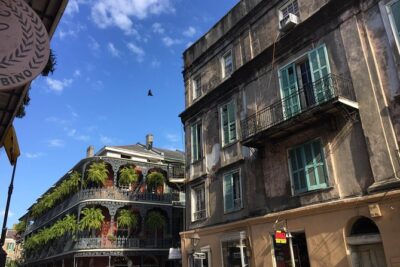
French Quarter Historical Sights and Stories Walking Tour
Read our review →
Ghost and Vampire Walking Tour Of The French Quarter
Read our review →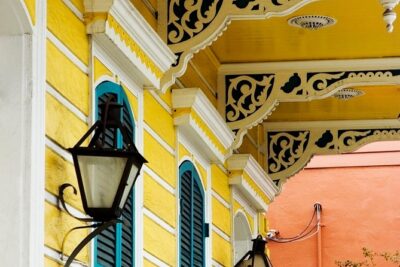
New Orleans City Tour: French Quarter, Garden District & Cemetery
Read our review →
New Orleans French Quarter Food Tour: Cajun, Creole and Culture
Read our review →
New Orleans French Quarter and More Carriage Ride
Read our review →
French Quarter walking Food Tour Famous Flavors of New Orleans
Read our review →Browse the lists this tour appears in