
Reviewed · HISTORICAL TOURS
New Orleans: History, Culture & Architecture Guided Tour
New Orleans makes more sense when you connect its neighborhoods, and this three-hour tour does just that. You move from the French Quarter to Faubourg Treme, oak-lined Esplanade Avenue, City Park, the Garden District, and Metairie Cemetery while your guide explains how the city’s cultures and building styles fit together. I especially like the stop at the cemetery and the attention given to Treme, two places that are easy to miss on a first visit.
I also like the air-conditioned minibus, a real comfort in New Orleans heat, and the chance to see a hurricane Katrina site as part of the city’s modern story. The main tradeoff is time: three hours covers a lot, but several places are seen from the vehicle, and your City Park stop includes a choice between the sculpture garden and coffee and beignets at Morning Call Cafe.
In This Review
- Key points to know before booking
- Why this three-hour route is useful
- Starting with hotel pickup and the French Quarter
- Along Esplanade Avenue toward City Park
- Seeing the Garden District from the road
- Faubourg Treme and the city’s African American story
- The Warehouse District and the former American Sector
- Metairie Cemetery and New Orleans burial customs
- Katrina and the city’s present-day story
- What the guide adds to the ride
- Comfort, pace, and practical limits
- Who should book this New Orleans tour
- Should you book it?
- FAQ
- How long does the New Orleans history and architecture tour last?
- What language is the tour conducted in?
- Is hotel pickup included?
- Which places does the tour visit or pass?
- Are food and drinks included?
- What happens if the weather is poor or the tour does not reach its minimum number?
Key points to know before booking
- Faubourg Treme gets proper attention: You see one of the oldest African American neighborhoods in the United States, with origins dating to the 1700s.
- The cemetery stop explains local burial customs: Metairie Cemetery offers a close look at New Orleans’ above-ground tombs and the practical reasons behind them.
- City Park gives you a choice: Visit the Besthoff Sculpture Garden or stop for coffee and beignets at Morning Call Cafe.
- The route reaches well beyond the French Quarter: You pass the Esplanade, Garden District, Warehouse District, American Sector, and Mississippi Riverfront.
- Joseph and Bob have earned strong praise: Joseph is noted for thoughtful historical detail, while Bob is described as funny and deeply familiar with local culture.
- Hotel pickup keeps the start simple: Pickup and drop-off are included from selected hotels in downtown New Orleans and the French Quarter.
Why this three-hour route is useful
New Orleans is not one single city experience. The French Quarter may be the best-known part, but its balconies, courtyards, music, food, cemeteries, and neighborhood traditions make more sense when you see how the rest of the city developed around it.
This tour is built as a broad introduction. You ride in an air-conditioned mini-coach, listen to live English commentary, and get out at selected points. That format works well if you have only a short time in town, or if you want a city orientation before exploring certain neighborhoods on your own.
At $55 per person, the value comes from the amount of ground covered and the included hotel transportation. You are not paying for a long museum visit or a set meal. You are paying for local explanation, transport between far-flung areas, and a structured look at places that would be difficult to connect efficiently on foot.
I would not treat this as a replacement for a full walking tour of the French Quarter. Instead, think of it as a citywide overview with enough stops to give the place shape.
More history tours in New Orleans:
- New Orleans Garden District History Walking Tour
★ 5.0 · 2,879 reviews - French Quarter Historical Sights and Stories Walking Tour
★ 5.0 · 2,724 reviews - New Orleans Small-Group Haunted History Carriage Tour
★ 4.5 · 2,289 reviews
Starting with hotel pickup and the French Quarter
Pickup is available only from selected hotels in downtown New Orleans and the French Quarter. The exact time depends on the number and location of stops, so you need to be curbside 30 minutes before the scheduled departure.
That early wait may feel excessive, but it gives the operator room to gather passengers from several hotels. If you prefer a tightly timed morning, confirm the pickup details when you book and keep the first part of your day flexible.
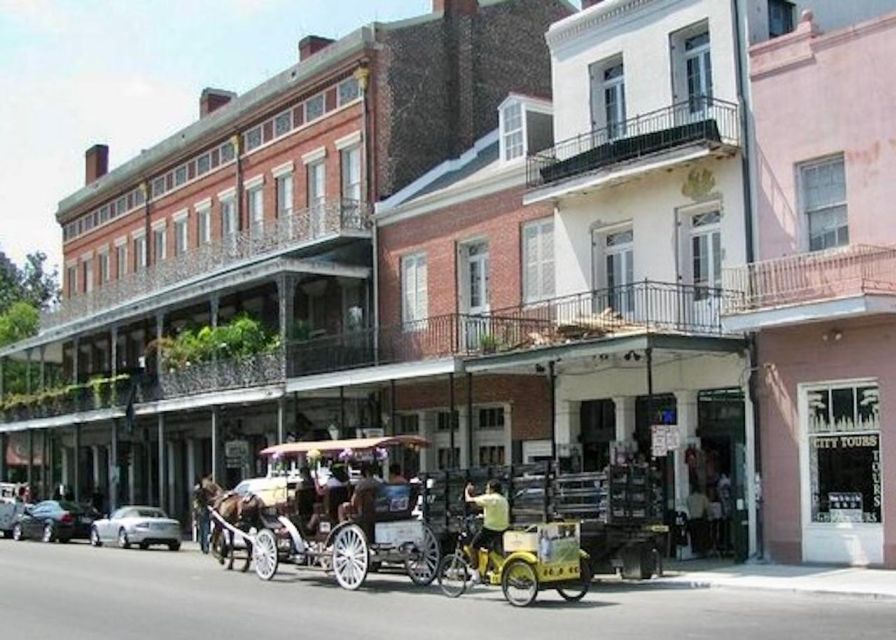
The French Quarter is an obvious starting point, but it is still a useful one. Here, you begin with the city’s best-known architectural language: iron balconies, old façades, narrow streets, and buildings shaped by French and Spanish influence.
The tour does not appear to focus on one long walk through the Quarter. Instead, you see it as part of a wider route and hear how it connects to the rest of New Orleans. That is helpful if this is your first day in town, though you should plan a separate walking visit if you want time inside courtyards, shops, churches, and small museums.
The route also passes St. Louis Cathedral beside the Mississippi River. Founded in 1720, it is described as North America’s oldest cathedral. You should understand this as a sightseeing pass rather than a dedicated cathedral visit, so allow extra time later if you want to explore the building more fully.
Along Esplanade Avenue toward City Park
From the French Quarter, the minibus follows Esplanade Avenue, where broad streets, mature oak trees, and large homes create a sharp contrast with the Quarter’s tighter blocks.
This part of the ride is valuable because the architecture is not presented as a row of pretty houses alone. Your guide connects the homes with the city’s periods of prosperity and explains the architectural details that give the avenue its stately feel.
The route then reaches City Park, one of the most appealing stops because you get a choice. You can visit the Besthoff Sculpture Garden, or you can have coffee and beignets at Morning Call Cafe.
The choice matters. The sculpture garden suits you if you want art, open space, and a quieter break from the vehicle. Morning Call is the better fit if you want a classic New Orleans snack and a relaxed café stop.
Because the tour lasts only three hours, neither option should be treated as an extended City Park visit. You will have a taste of the area rather than a full afternoon there. If the garden is your priority, use your stop carefully and ask the guide how much time is available before setting off.
The air-conditioning is especially welcome here. New Orleans can be hot and humid, and the minibus gives you a cool pause between short outdoor stops.
Seeing the Garden District from the road
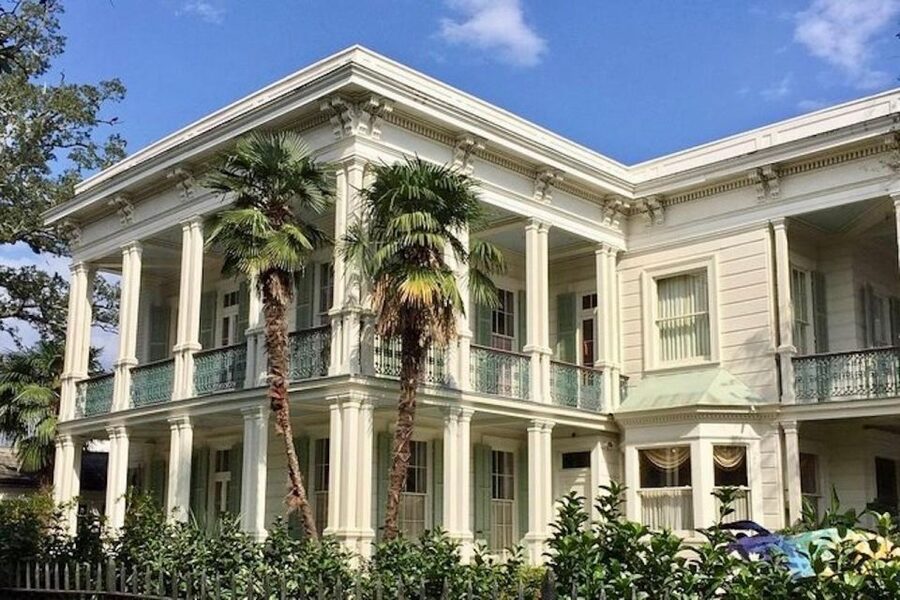
The Garden District brings another change in tone. Here, the route shows Victorian homes, planted gardens, and tree-lined avenues that reflect a later phase of New Orleans development.
I like this section because it prevents the city from being reduced to French Quarter clichés. The Garden District has a polished, residential character, and seeing it after the French Quarter helps you compare different eras and design traditions.
The limitation is the same as with several parts of the tour: you may see much of the neighborhood from the minibus. That gives you context and saves time, but it will not satisfy you if your main goal is to inspect individual houses or spend time taking photographs.
For many people, that is a fair compromise. A guide can point out what you are seeing while someone else handles the driving, and you can return later to the areas that catch your eye.
A few more New Orleans tours worth a look
- Guided Boat Tour of New Orleans Bayou
★ 4.5 · 1,452 reviews - Laura Creole Plantation Guided Tour
★ 5.0 · 1,279 reviews - Houmas House Estate and Gardens Guided Tour
★ 4.5 · 632 reviews - New Orleans: Guided Swamp Cruise by Tour Boat
★ 4.7 · 570 reviews
Faubourg Treme and the city’s African American story
The passage through Faubourg Treme is one of the most important parts of the route. Treme is one of the oldest African American neighborhoods in the United States, with roots reaching back to the 1700s.
This section gives the tour more substance than a simple architecture circuit. New Orleans culture did not come from one European tradition alone, and Treme helps you understand the African American history that shaped the city’s music, food, celebrations, and community life.
The guide’s commentary matters greatly here. Joseph, one of the guides associated with this experience, has been singled out for covering history, architecture, and culture with unusual care. Bob has also been praised for combining humor with strong knowledge of New Orleans’ cultural story.
You should expect to pass through the neighborhood rather than take a lengthy walking tour. Still, the route gives you a useful first look and may help you decide to return for a more focused visit.
The Warehouse District and the former American Sector
The Warehouse District shows yet another side of New Orleans. The area connects art, culture, and the city’s industrial past, and it provides a bridge between older neighborhoods and newer cultural institutions.
The tour also passes through the area once called the American Sector. This is home to the National World War II Museum and the Contemporary Arts Center, described as one of the nation’s first art institutions.
You may not have time to enter either attraction during this tour. That is not a flaw so much as a scheduling reality. The value here is orientation: you learn where these major museums are and can decide if they deserve a separate visit.
If the World War II Museum is high on your list, do not assume this drive-by replaces it. Set aside separate time. The tour can help you place it within the city, but it does not provide a museum program.
Metairie Cemetery and New Orleans burial customs
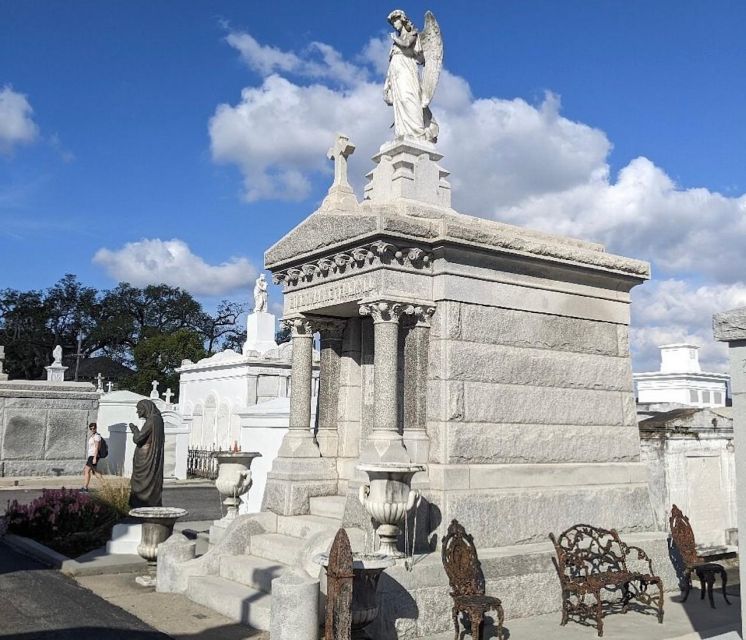
The brief stop at Metairie Cemetery is one of the most distinctive parts of the experience. New Orleans is known for above-ground tombs, and the cemetery gives you a chance to see how burial practices developed in a city shaped by swampy ground and water.
This is more than a quick architectural curiosity. The tombs reveal how local families handled death, memory, and limited space. The setting also shows how practical problems can shape a city’s traditions.
A previous tour guest described the cemetery as a surprising lesson in how burials have been managed since the city’s early years. That matches the stop’s real value: you get a clear example of local history through a place that many people would otherwise pass without understanding.
The stop is brief, so do not expect a full cemetery tour or a long period for quiet exploration. Listen closely to the explanation, take in the tomb design, and use the visit as a starting point for further exploration if the subject interests you.
Katrina and the city’s present-day story
One useful feature of the commentary is that it is not limited to old European settlement, jazz references, and grand houses. The tour can include a hurricane Katrina site as a case study, tying the city’s past to its more recent struggles.
That modern connection is important. New Orleans is a living city, not a museum set. Its neighborhoods, buildings, and public spaces still reflect the effects of storms, flooding, recovery, and change.
The exact site and amount of time devoted to it are not specified, so you should think of this as part of the guide’s broader commentary rather than a guaranteed extended stop. Still, the inclusion adds needed balance to a route that could otherwise focus only on pretty architecture and familiar tourist landmarks.
What the guide adds to the ride

With this tour, the guide is not just pointing out buildings. The strongest part of the experience is the explanation between stops, especially when the route moves quickly through several periods and communities.
Joseph has received specific praise for covering both historic and present-day New Orleans, including subjects beyond the standard French, English, and jazz story. Bob has been described as funny and especially strong on culture and history. The guide you receive may be different, but live commentary is included in English throughout.
A good guide makes the minibus format work. You can look out the window, but the city’s meaning comes from knowing why one neighborhood looks different from the next and how the city’s communities shaped one another.
The score of 4.6 from 38 ratings suggests a consistently positive experience, with historical information and personable guiding receiving the strongest approval. I would book this for interpretation, not for a long list of photo stops.
Comfort, pace, and practical limits
The air-conditioned mini-coach is a major advantage. New Orleans weather can make long outdoor walks tiring, and this vehicle lets you cover more ground without spending the whole morning in the heat.
The pace is also efficient. In three hours, you reach the French Quarter, Esplanade, City Park, Garden District, Warehouse District, Treme, the American Sector, Metairie Cemetery, and the area around St. Louis Cathedral. That is a lot, so some locations receive only a pass-by view or a short stop.
Food and drinks are not included. If you choose Morning Call Cafe, budget separately for coffee and beignets. You may also want water for the ride, especially if the weather is warm, though the supplied details do not specify any onboard food or drink service.
Good weather is required. If conditions are poor, you can reschedule or receive a full refund. The experience also needs a minimum number of participants, and if that number is not reached, you can choose another date or experience or receive a full refund.
You can cancel up to 24 hours before departure for a full refund, and the reserve-now, pay-later option is useful if your itinerary is still changing.
Who should book this New Orleans tour
I would recommend it most strongly to first-time visitors, short-stay visitors, and anyone who wants a broad introduction before choosing which neighborhoods deserve more time.
It also suits you if heat, walking distance, or unfamiliar streets make independent sightseeing less appealing. Hotel pickup, a cool vehicle, and live explanation remove much of the effort involved in linking these scattered parts of town.
History-minded visitors should find plenty to enjoy, especially in Treme, Metairie Cemetery, and the Katrina discussion. Architecture fans will appreciate the contrasts between the French Quarter, Esplanade, Garden District, and the newer cultural districts.
I would be more cautious if you want long stops, extensive walking, or entry to major museums. The tour passes the World War II Museum and Contemporary Arts Center, but those attractions require separate time. The same goes for a serious visit to St. Louis Cathedral or a full exploration of City Park.
Should you book it?
Book this tour if you want the city to make sense as a whole. For $55, you get three hours of transport, hotel pickup and drop-off from selected hotels, a local English-speaking guide, and access to neighborhoods that are spread too far apart for a relaxed first walk.
The best reasons to go are the Treme coverage, the cemetery explanation, the route beyond the French Quarter, and the chance to hear a guide such as Joseph or Bob put local history into context. The main caution is pace: this is an overview, not a series of long neighborhood visits.
I would take it near the start of a New Orleans stay, then return on foot to the places that interest you most. If you have only one day in town, it is an efficient way to see the city’s wider shape. If you have several days and already know New Orleans well, a more focused walking or museum visit may give you more depth.
FAQ
How long does the New Orleans history and architecture tour last?
The tour lasts three hours.
What language is the tour conducted in?
The live tour guide provides commentary in English.
Is hotel pickup included?
Yes. Hotel pickup and drop-off are included, but service is limited to selected hotels in downtown New Orleans and the French Quarter.
Which places does the tour visit or pass?
The route includes the French Quarter, Esplanade Avenue, City Park, the Besthoff Sculpture Garden or Morning Call Cafe, the Garden District, Warehouse District, Faubourg Treme, the former American Sector, Metairie Cemetery, and the area around St. Louis Cathedral.
Are food and drinks included?
No. Food and drinks are not included. If you choose the Morning Call Cafe option, you pay separately for coffee and beignets.
What happens if the weather is poor or the tour does not reach its minimum number?
Good weather is required. In bad conditions, you can reschedule or receive a full refund. If the minimum number of participants is not reached and the tour is canceled, you can choose another date or experience or receive a full refund.
Just added around New Orleans
- New Orleans Garden District Tour★ 5.0 · 8 reviews
- New Orleans Seance Experience★ 4.0 · 8 reviews
- Airport and City Transfers in New Orleans★ 5.0 · 8 reviews
- Sin and Tonic Pub Crawl in New Orleans★ 4.5 · 8 reviews
- The New Orleans Darkness Tour★ 4.4 · 9 reviews
- New Orleans Plantation Tour with Transportation★ 5.0 · 9 reviews
- New Orleans Self-Guided Kayak Bayou Swamp Tour★ 5.0 · 9 reviews
- Historic Carrollton Neighborhood Walking Tour★ 5.0 · 9 reviews
Historical Tours, compared.

New Orleans Garden District History Walking Tour
Read our review →
French Quarter Historical Sights and Stories Walking Tour
Read our review →
New Orleans Small-Group Haunted History Carriage Tour
Read our review →
Paddlewheeler Creole Queen Historic Mississippi River Cruise
Read our review →

Creole Queen History Cruise with Optional Lunch
Read our review →
Browse the lists this tour appears in