
Reviewed · FRENCH QUARTER TOURS
New Orleans: French Quarter Walking Tour
New Orleans’ French Quarter is best understood on foot, where a cathedral, a pirate-haunted alley, literary landmarks, and Bourbon Street all sit within a compact area. This tour moves beyond the beads-and-beer image of the Vieux Carré and connects the neighborhood’s architecture, writers, Mardi Gras traditions, and colonial past.
I like the local guide’s city pride and the chance to enter the Presbytère Museum without waiting in the ticket line. I also like the mix of famous sights and quieter stories, especially Pirate Alley and the homes linked to William Faulkner and Tennessee Williams. The main concern is the stated 30-minute duration. That is a very short time for this many stops, so expect a brisk introduction rather than a slow, detailed walk through every landmark.
In This Review
- Key points at a glance
- Starting beneath Andrew Jackson in Jackson Square
- St. Louis Cathedral and the city’s Catholic roots
- The Cabildo and Louisiana’s colonial past
- A quick look toward the Mississippi River
- Pirate Alley and the literary side of the Quarter
- Tennessee Williams’ house and the stories behind the streets
- Bourbon Street without letting it take over
- Lafitte’s Blacksmith Shop and the final stop
- Presbytère Museum, Mardi Gras, and Hurricane Katrina
- What $39 means in practical value
- Who will get the most from this walk
- Booking advice and small practical details
- Should you book the French Quarter Walking Tour?
- FAQ
- Where does the French Quarter walking tour start?
- Where does the tour end?
- How long does the walking tour last?
- What language is the tour offered in?
- Is admission to a museum included?
- Can I skip the ticket line?
- Does the tour visit Bourbon Street?
- Does the tour cover Mardi Gras?
- What is the cancellation policy?
Key points at a glance
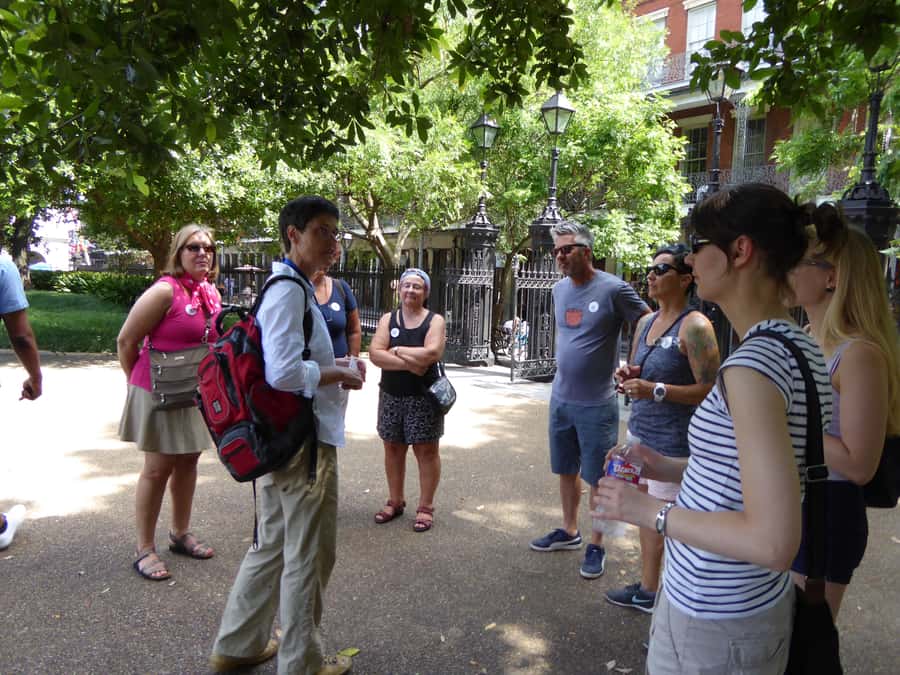
- Jackson Square is the natural starting point: Meet at the Andrew Jackson Equestrian Statue, right in the center of the French Quarter’s best-known public space.
- The tour goes beyond Bourbon Street: You will hear about Mardi Gras, but the route also covers churches, museums, writers, pirates, and Louisiana’s colonial past.
- Presbytère admission is included: The museum’s exhibits cover Mardi Gras and Hurricane Katrina, giving the walk extra context.
- Literary New Orleans gets a proper look: The route includes the former William Faulkner House and Tennessee Williams’ house.
- Bourbon Street appears in its historic setting: You see the famous nightlife corridor, but it is only one part of the neighborhood.
- The experience suits a short visit: At $39 per person, it can help you get your bearings quickly, though the short advertised duration limits how much detail you can absorb.
Starting beneath Andrew Jackson in Jackson Square
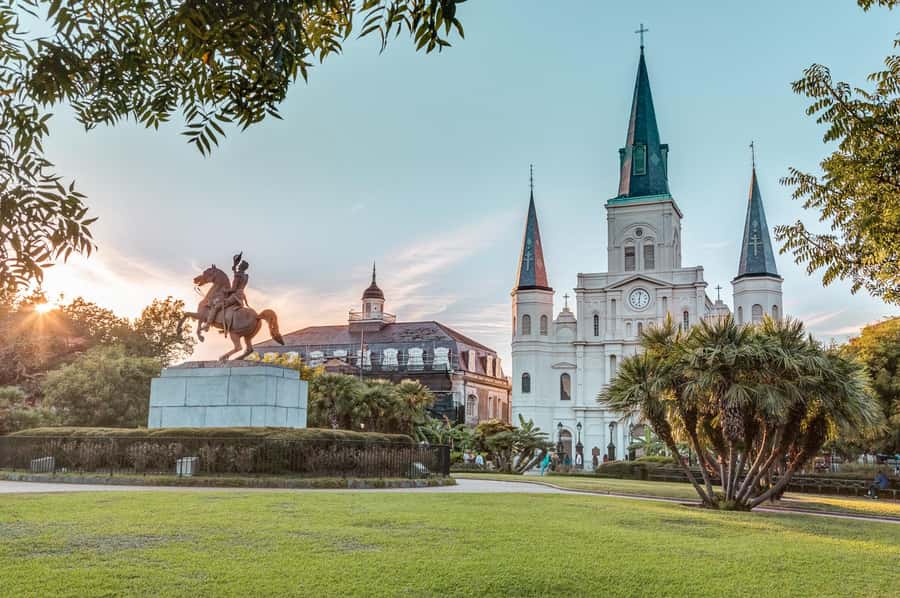
Your guide meets you at the Andrew Jackson Equestrian Statue, located in the center of Jackson Square. This is an easy place to identify, and it puts you in the middle of the French Quarter from the first minute.
Jackson Square has been a central gathering place since the 18th century. Here, the tour begins with the broad story of the neighborhood: its public life, architecture, Catholic heritage, and role in New Orleans culture. I like starting here because you can see several major landmarks in one view, including St. Louis Cathedral, the Cabildo, and the Presbytère.
You should arrive ready to walk and listen at the same time. The square is a photo stop, but it is also the point where the guide helps you understand how the Quarter fits together. Since the tour is listed as only 30 minutes, do not expect a long opening talk or extended free time before moving on.
More ways to walk the French Quarter:
- New Orleans Food Walking Tour of the French Quarter with Small-Group Option
★ 5.0 · 6,118 reviews - New Orleans French Quarter, Voodoo and Culture Walking Tour
★ 4.5 · 2,961 reviews - French Quarter Historical Sights and Stories Walking Tour
★ 5.0 · 2,724 reviews
St. Louis Cathedral and the city’s Catholic roots
St. Louis Cathedral is one of the oldest cathedrals in the United States and one of New Orleans’ most recognizable buildings. Its pale exterior and distinctive form give Jackson Square much of its visual character.
The stop includes time to see and photograph the cathedral. The guide can place it within the city’s long Catholic tradition, which is important for understanding New Orleans beyond its nightlife reputation. The cathedral is not simply a pretty backdrop. It is one of the clearest signs that the French Quarter grew from European and Catholic influences rather than from the party atmosphere associated with Bourbon Street.
The available details do not promise a full interior visit or a long architectural lecture, so keep your expectations measured. You will see the cathedral and hear about its importance, but the short schedule may mean that the visit is more about orientation than close inspection.
The Cabildo and Louisiana’s colonial past
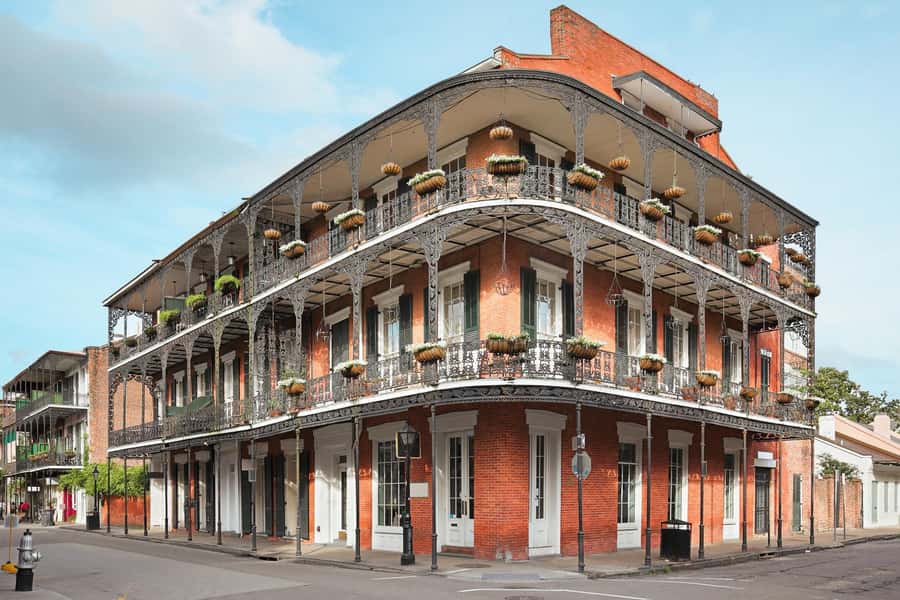
The Cabildo sits beside Jackson Square and adds a political layer to the walk. The building is associated with the signing of the Louisiana Purchase, a turning point that changed the future of the city and the wider United States.
The tour includes a photo stop and a visit. That combination lets you appreciate the building itself while hearing why the site matters. I find this especially useful for anyone who knows New Orleans mainly through music, food, or Mardi Gras. The Cabildo reminds you that the Quarter has also been a place of government, negotiation, and competing colonial powers.
The stop is likely to be fairly brief given the overall timing. If you want to study museum displays in detail, you will need a separate visit. The value here is the connection between the building, the square, and the larger story of Louisiana.
A quick look toward the Mississippi River
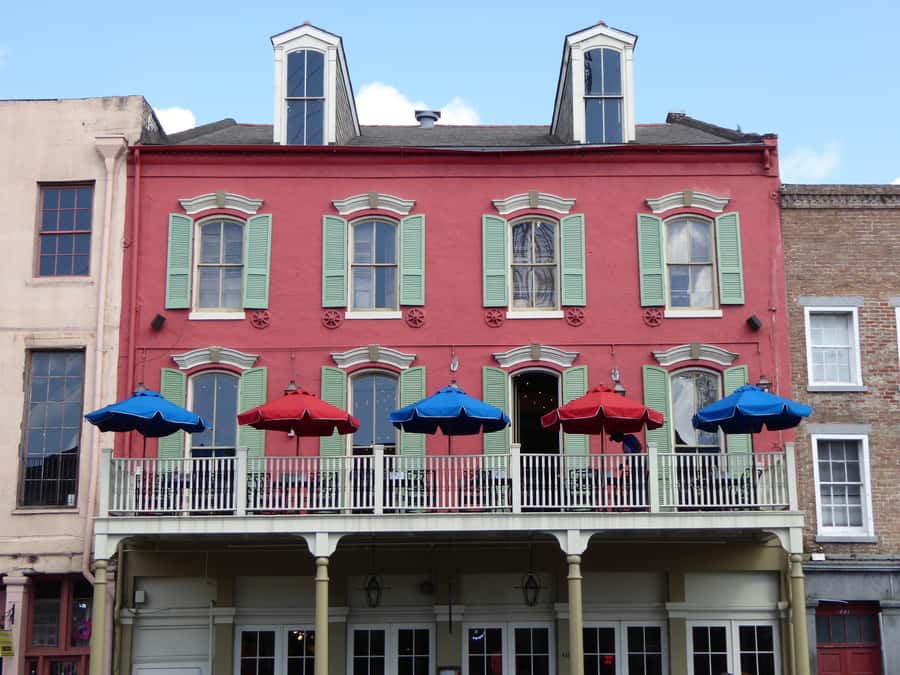
The route includes a photo stop at the Mississippi River. This gives the walk a little breathing room beyond the tightly packed streets of the French Quarter.
The river helps explain why New Orleans developed where it did. Even without a long waterfront talk, seeing it connects the Quarter to the trade and transport network that shaped the city. It also gives you a useful change of view after the architecture around Jackson Square.
The information provided does not specify how long you spend beside the river or exactly where the stop occurs. Treat it as a short scenic and orientation point, not a separate riverfront excursion.
More walking tours in New Orleans:
- New Orleans Premier Ghost, Voodoo and Vampire Walking Tour
★ 4.5 · 12,856 reviews - St. Louis Cemetery No. 1 Official Walking Tour
★ 4.5 · 3,941 reviews - New Orleans Garden District History Walking Tour
★ 5.0 · 2,879 reviews - Ghost and Vampire Walking Tour Of The French Quarter
★ 4.5 · 2,406 reviews
Pirate Alley and the literary side of the Quarter
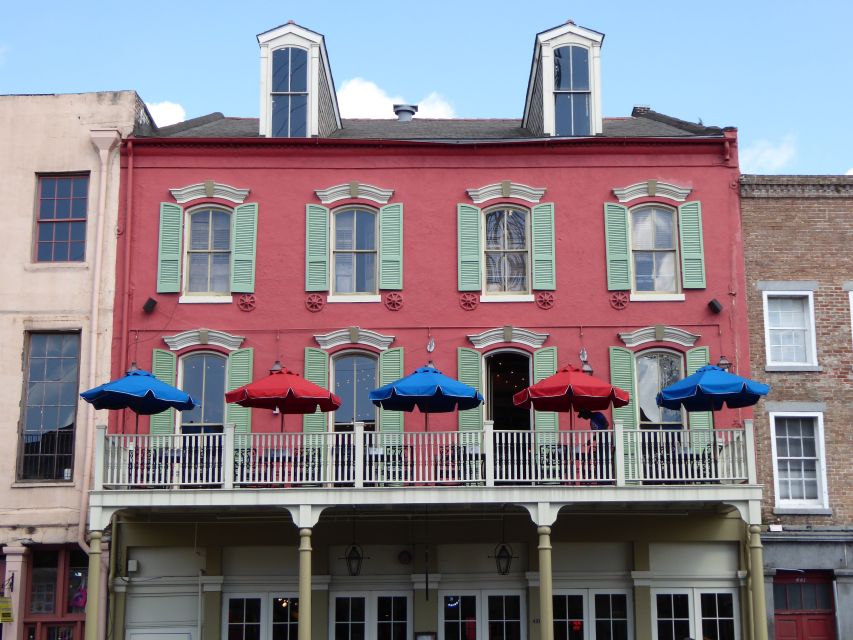
Pirate Alley is one of the more unusual stops. This narrow passage carries stories of pirate lore and literary figures, giving the tour a moodier side of New Orleans.
It is the sort of place that can be easy to pass without context. A guide makes the lane meaningful by tying its setting to local legends and writers. The stop also helps break up the grand public landmarks with a smaller, more atmospheric corner of the Quarter.
The route then points you toward the former William Faulkner House, now a bookstore filled with rare and classic books. You should not assume that this means an extended bookstore visit, but the connection is still worthwhile. Faulkner lived and worked in New Orleans, and the house brings the city’s literary identity into the walk.
For readers who enjoy seeing the places behind famous authors, these stops may be more rewarding than a quick pass along Bourbon Street. They also offer a useful reminder that the French Quarter has long attracted artists and writers, not just nightlife crowds.
Tennessee Williams’ house and the stories behind the streets
The tour also shows the house where Tennessee Williams wrote some of his major work, including A Streetcar Named Desire. That detail gives the stop a direct link to one of the best-known works associated with New Orleans.
You will see the exterior and hear about its connection to Williams. The experience does not include a stated house tour or interior access, so think of it as a literary landmark viewed from the street.
I like the inclusion because it turns an ordinary-looking building into a story. A good guide can help you notice how the Quarter’s buildings carry layers of memory, even when there is no formal plaque or museum entrance. This is another stop where the guide’s personal feel for New Orleans matters more than a long list of dates.
Bourbon Street without letting it take over

No first visit to the French Quarter feels complete without Bourbon Street. The route includes a stroll along this famous corridor, known for nightlife, drinks, beads, and its historic setting.
The useful part is the balance. You will see the street everyone talks about, but the tour does not treat Bourbon Street as the whole French Quarter. That matters because its party image can overshadow the neighborhood’s architecture, museums, churches, and literary connections.
Bourbon Street can feel very different depending on the time of day, but no specific starting time is given here. Check availability before booking so you know when your walk begins. The short duration also means the stroll is likely an introduction rather than a detailed exploration of the entire street.
If you want nightlife advice, ask your guide while you are there. The guide is described as a certified professional and an English-speaking local voice, and the strongest praise centers on friendly, attentive guidance and genuine enthusiasm for the city.
Lafitte’s Blacksmith Shop and the final stop
The walk includes Lafitte’s Blacksmith Shop Bar, one of the oldest surviving structures in New Orleans. It is also linked to the pirate Jean Lafitte, whose name adds another layer of legend to the route.
The building’s age and reputation make it a fitting stop after Pirate Alley and the Quarter’s literary landmarks. You get a sense of how the neighborhood’s stories move between documented events and long-standing local lore.
The tour does not promise a drink, a meal, or time inside the bar beyond the stated visit and photo stop. Plan on seeing the building and learning about its place in New Orleans history rather than treating this as a bar stop.
Presbytère Museum, Mardi Gras, and Hurricane Katrina
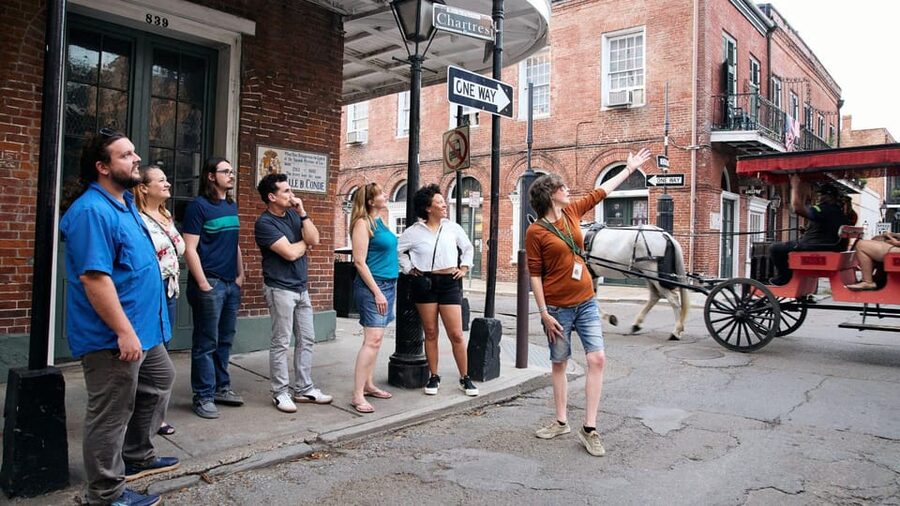
The tour finishes at the Presbytère, beside Jackson Square. Admission is included, and the activity includes skip-the-ticket-line access, which adds real value to a short walking experience.
The museum covers Mardi Gras and Hurricane Katrina. Those subjects show two very different sides of New Orleans. Mardi Gras reveals the city’s traditions, costumes, parades, and public celebration. Hurricane Katrina provides essential context for the city’s more recent struggles and recovery.
This is one of the strongest parts of the experience because the museum can give structure to stories that might otherwise remain scattered. You are not only hearing about the Quarter’s party reputation. You are also seeing how celebration, disaster, memory, and local identity shape the city.
The details say you have free time at the Presbytère, but the tour also ends there. That creates a practical choice. You can spend the remaining time with the exhibits, or you can continue exploring the French Quarter on your own. Since museum admission is included, allow extra time if your schedule permits.
What $39 means in practical value
The price is $39 per person. That is a fair charge if you want a guide to connect several major sights during a short visit, especially with Presbytère admission included.
The value comes from the combination of orientation and access. You get a professional English-speaking guide, a route through the Quarter’s major landmarks, local stories, and a museum visit. For a first afternoon in New Orleans, that can save you from wandering without context.
The limitation is the advertised 30-minute duration. Jackson Square, St. Louis Cathedral, the river, the French Quarter, the Cabildo, Tennessee Williams’ house, Lafitte’s, Bourbon Street, Pirate Alley, the Faulkner House, and the Presbytère represent a lot of ground and subject matter. At this pace, the tour works best as a sharp introduction. It is not a substitute for a longer walking tour or several hours of independent museum time.
I would consider it good value for someone with limited time. If you have a full day or several days in New Orleans, you may want to use this as an orientation and then return to the places that interest you most.
Who will get the most from this walk
This experience fits you best if you are visiting the French Quarter for the first time and want a clear route through its main landmarks. It is also useful if your schedule is tight, since the advertised duration is short.
You will likely appreciate it if you enjoy:
- Architecture and historic public buildings
- New Orleans Catholic traditions
- Mardi Gras and Hurricane Katrina exhibits
- Literary connections involving Faulkner and Williams
- Local legends tied to pirates and old buildings
- A guided introduction before exploring independently
Families, couples, solo visitors, and small groups can all use the route as a starting point. The English-only format is important to note if you need another language.
You may want something else if you prefer long talks at each landmark, extensive museum time, or a food-focused walk. The tour touches many subjects, but the schedule leaves little room for lingering.
Booking advice and small practical details
Meet at the Andrew Jackson Statue in Jackson Square. The activity ends back at the meeting point, with the final stop at the Presbytère. That makes it easy to continue sightseeing in the French Quarter afterward.
Starting times vary, so check availability before you reserve. The tour offers free cancellation up to 24 hours in advance and a reserve-now, pay-later option, which is useful when your New Orleans plans are still shifting.
The guide’s style is a key part of the value. The strongest praise points to guides who are friendly, attentive, enthusiastic about New Orleans, and able to explain the local side of the Quarter rather than giving only a polished tourist version. No individual guide names are provided, so you should not expect to request a particular person.
Should you book the French Quarter Walking Tour?
Book it if you want a fast, story-filled introduction to New Orleans’ most famous neighborhood, with a local English-speaking guide and Presbytère admission included. It is particularly well suited to a short trip or your first few hours in the city.
Think twice if the 30-minute duration does not match the number of stops listed. You may get only a brief look at several places. For the best experience, treat the walk as a map and a set of story leads, then return to the Cabildo, Presbytère, Bourbon Street, or the literary sites that catch your interest.
At $39, the tour makes sense when you value expert orientation and included museum entry more than a leisurely pace. It gives you the real shape of the French Quarter in a compact package, from cathedral to pirate lore, from writers to Mardi Gras, and from Jackson Square back to the Presbytère.
FAQ
Where does the French Quarter walking tour start?
Meet your guide at the Andrew Jackson Equestrian Statue in the center of Jackson Square.
Where does the tour end?
The activity ends back at the meeting point, with the final stop at the Presbytère.
How long does the walking tour last?
The stated duration is 30 minutes. Check availability for the scheduled starting times.
What language is the tour offered in?
The live tour guide speaks English.
Is admission to a museum included?
Yes. Admission to the Presbytère Museum is included.
Can I skip the ticket line?
Yes. Skip-the-ticket-line access is listed for the Presbytère Museum.
Does the tour visit Bourbon Street?
Yes. The route includes a stroll down Bourbon Street.
Does the tour cover Mardi Gras?
Yes. Mardi Gras is discussed during the tour, and the Presbytère includes exhibits about Mardi Gras.
What is the cancellation policy?
You can cancel up to 24 hours in advance for a full refund. A reserve-now, pay-later option is also available.
Just added around New Orleans
- New Orleans Garden District Tour★ 5.0 · 8 reviews
- New Orleans Seance Experience★ 4.0 · 8 reviews
- Sin and Tonic Pub Crawl in New Orleans★ 4.5 · 8 reviews
- Airport and City Transfers in New Orleans★ 5.0 · 8 reviews
- The New Orleans Darkness Tour★ 4.4 · 9 reviews
- New Orleans Plantation Tour with Transportation★ 5.0 · 9 reviews
- New Orleans Self-Guided Kayak Bayou Swamp Tour★ 5.0 · 9 reviews
- Historic Carrollton Neighborhood Walking Tour★ 5.0 · 9 reviews
French Quarter Tours, compared.

New Orleans Food Walking Tour of the French Quarter with Small-Group Option
Read our review →
New Orleans French Quarter, Voodoo and Culture Walking Tour
Read our review →
French Quarter Historical Sights and Stories Walking Tour
Read our review →
Ghost and Vampire Walking Tour Of The French Quarter
Read our review →
New Orleans City Tour: French Quarter, Garden District & Cemetery
Read our review →
New Orleans French Quarter Food Tour: Cajun, Creole and Culture
Read our review →
New Orleans French Quarter and More Carriage Ride
Read our review →
French Quarter walking Food Tour Famous Flavors of New Orleans
Read our review →Browse the lists this tour appears in