
Reviewed · FRENCH QUARTER TOURS
New Orleans French Quarter Architecture Walking Tour
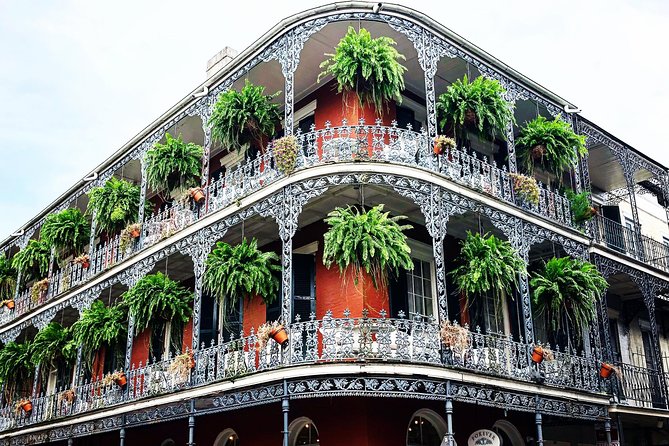
New Orleans reveals its past through its buildings, and this tour teaches you how to read that story. In about two hours, you move from Jackson Square to Chartres and Royal streets, linking the French and Spanish influences to the people and events that shaped the Quarter.
I like the small maximum of 14 people, which gives you room to ask questions, and I like the way the tour connects architectural features with the lives of strong Creole women, settlers, and local families. Guides such as Caroline, Janet, Guy, Angela, and Doug are praised for making the walk personal and lively.
The main thing to consider is that this is an outdoor walking lesson, not a grand tour of building interiors. One recent review found the architectural explanations somewhat basic, and another had trouble hearing the guide, so street noise and group position can affect the experience.
In This Review
- Key points to know before you book
- Why this walk helps you see the French Quarter differently
- Starting at 523 St. Ann Street
- French Quarter: begin with the city’s larger story
- Jackson Square: four major buildings in one view
- St. Louis Cathedral: from wooden church to landmark
- Cabildo and Presbytere: history built around the square
- Chartres Street: follow the city across several eras
- Royal Street: turn the lesson into a self-guided skill
- The guides make the difference
- Is $40 a fair price?
- Weather, pace, and what to bring
- Who should book this French Quarter walk?
- Should you book it?
- FAQ
- How long does the New Orleans French Quarter Architecture Walking Tour last?
- Where does the tour begin and end?
- How many people can join the tour?
- What language is the tour offered in?
- What should I bring?
- What happens if I need to cancel?
Key points to know before you book
- Small groups capped at 14: The modest group size helps keep the pace relaxed and makes questions practical.
- Jackson Square is the historical anchor: St. Louis Cathedral, the Cabildo, the Presbytere, and the Pontalba Buildings create a strong opening lesson.
- Architecture is tied to people: Stories about Creole women, settlers, and local families give the buildings a human side.
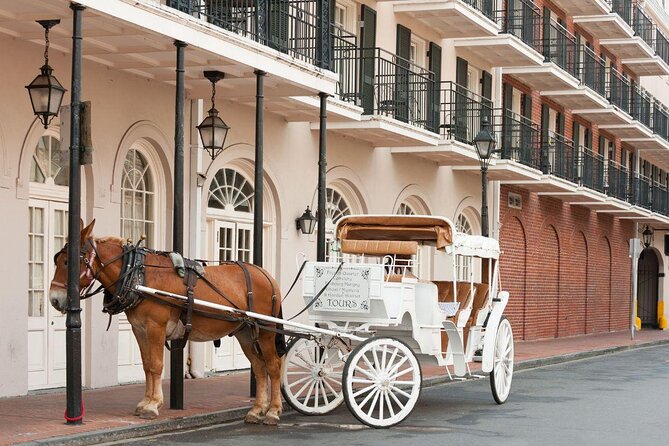
- The route covers central French Quarter streets: You visit French Quarter, Chartres Street, and Royal Street before returning to the starting point.
- Guides bring different strengths: Caroline is noted for family connections and stories of influential women, while Guy uses a binder with photographs and historical material.
- Plan for weather and street noise: Comfortable shoes, sunscreen, and an umbrella matter, and you may need to stand close to hear clearly.
Why this walk helps you see the French Quarter differently
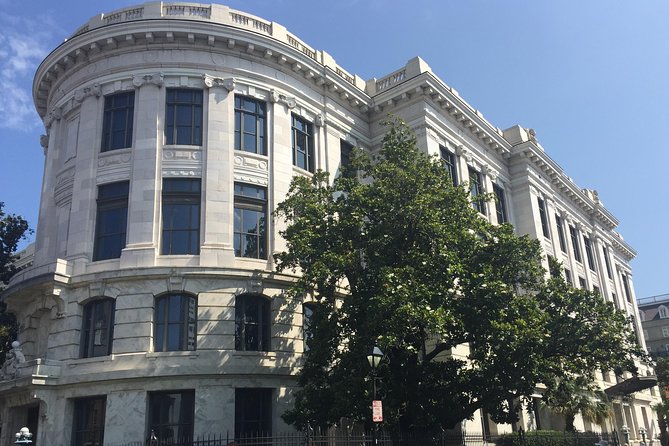
At first glance, the French Quarter can seem like a pleasant maze of balconies, shutters, courtyards, shops, and old facades. This tour gives you a way to sort those details into a story.
The guide begins with an introduction to New Orleans history, then uses nearby buildings as evidence. You learn that architecture here is not just decoration. It reflects changing political control, local climate, construction choices, social customs, and the influence of French, Spanish, and later American periods.
That approach is useful because you can keep using it after the tour ends. Instead of seeing an old building as simply pretty, you begin asking why it looks that way, what materials were used, and which period or cultural influence may have shaped it.
The emphasis is not strictly technical. The strongest parts of the experience appear to come from the blend of buildings and people. Caroline, in particular, is praised for stories about strong Creole women and her own family connection to New Orleans. Those accounts help correct the usual tendency to tell city history only through famous men, wars, and officials.
You should expect a friendly, informal presentation rather than a formal academic lecture. Angela is described as bringing broad historical context, clear architectural explanations, and humor. Janet is noted for a gentle pace, personal warmth, post-tour notes, and book suggestions. Guy has used a binder of photographs to connect past scenes with the buildings in front of you.
More ways to walk the French Quarter:
- New Orleans Food Walking Tour of the French Quarter with Small-Group Option
★ 5.0 · 6,118 reviews - New Orleans French Quarter, Voodoo and Culture Walking Tour
★ 4.5 · 2,961 reviews - French Quarter Historical Sights and Stories Walking Tour
★ 5.0 · 2,724 reviews
Starting at 523 St. Ann Street
The meeting point is 523 St. Ann Street, in the French Quarter. The walk lasts about two hours and ends back at the same location, so you do not need to arrange a ride between stops or find your way to a second ending point.
There is no hotel pickup or transportation included. That is not much of a drawback for a central French Quarter walk, but you should allow time to reach the meeting point on your own.
The tour is offered in English and comes with a mobile ticket. Confirmation arrives when you book, and the activity can include service animals. The stated minimum age is one year, and most people can take part, though you should be comfortable walking and standing outdoors for roughly two hours.
Because the group is limited to 14, I would not wait until the last minute if your schedule is fixed. The experience is booked an average of 23 days ahead, which suggests that popular dates can fill well before arrival.
French Quarter: begin with the city’s larger story
The first stop is a short introduction to the French Quarter and New Orleans history. It lasts about five minutes, but it gives the rest of the walk a frame.
This opening matters because the buildings make more sense when you understand that the Quarter developed across several periods. The guide sets up the French, Spanish, and American influences that appear later in the route.
Do not expect a long historical lecture here. The point is to prepare you for the details ahead. If you already know New Orleans history, this part may feel familiar, but it should still help organize the architectural discussion.
Jackson Square: four major buildings in one view
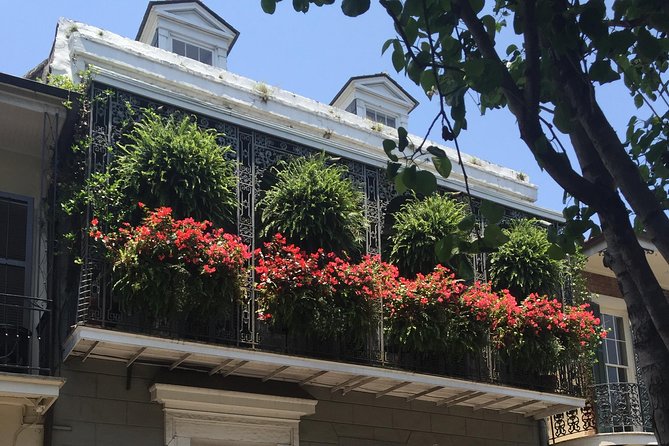
Jackson Square is the tour’s most concentrated stop. From the park, the guide discusses St. Louis Cathedral, the Cabildo, the Presbytere, and the Pontalba Buildings.
You get about 10 minutes here, which is enough to look across the square and understand how these structures work together as a civic and religious center. Rather than studying one facade in isolation, you see how several important buildings occupy the same public space.
The Pontalba Buildings add a particularly useful turn toward social history. The tour does not treat architecture as the work of anonymous designers alone. It places the buildings within the story of the people who shaped the Quarter and the city around it.
This is also a good point to ask questions. The small group makes it easier to speak with the guide without interrupting a large crowd. If you care about design, ask the guide to explain the clues that separate one architectural period from another.
More walking tours in New Orleans:
- New Orleans Premier Ghost, Voodoo and Vampire Walking Tour
★ 4.5 · 12,856 reviews - St. Louis Cemetery No. 1 Official Walking Tour
★ 4.5 · 3,941 reviews - New Orleans Garden District History Walking Tour
★ 5.0 · 2,879 reviews - Ghost and Vampire Walking Tour Of The French Quarter
★ 4.5 · 2,406 reviews
St. Louis Cathedral: from wooden church to landmark
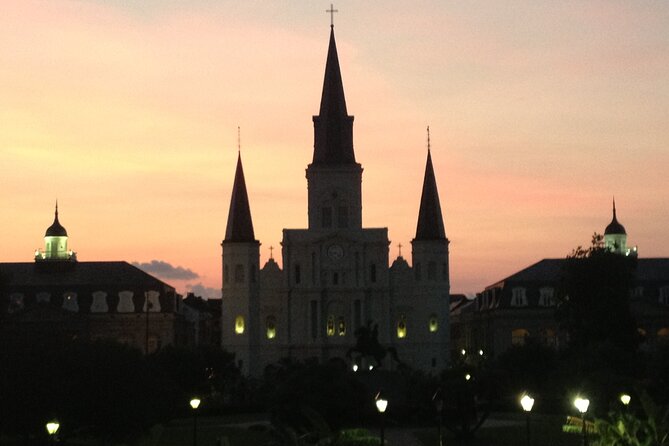
The stop at St. Louis Cathedral lasts about five minutes. The guide explains how it grew from a modest wooden parish church into the major cathedral facing Jackson Square.
That progression gives you a clear example of how New Orleans developed over time. The building is not presented as a frozen object from one date. Its story shows how a religious site can change as the city grows and its institutions gain importance.
You may spend more time looking at the cathedral than discussing it, since the stop is short. Still, the historical sequence helps you understand why the building carries such weight in the square.
Cabildo and Presbytere: history built around the square
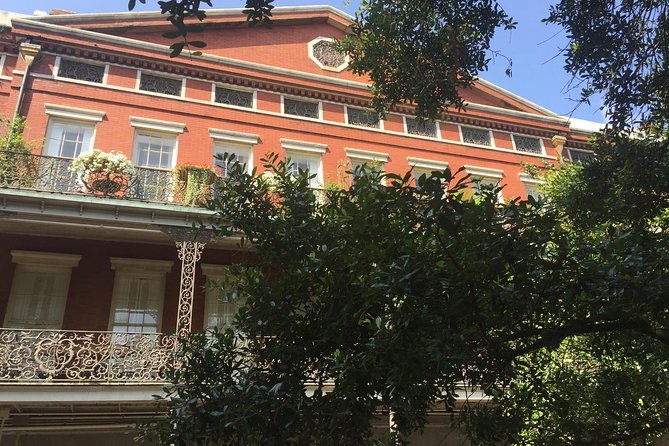
The Cabildo receives its own short stop, with attention to its historical era, importance, and building style. The Presbytere follows, with a discussion of its past and current status.
Taken together, these stops show why Jackson Square deserves more than a quick photograph. The buildings around it represent different civic, religious, and social functions, and the guide uses them to explain how power and public life took shape in New Orleans.
The short timing is both a strength and a limit. You get a clear overview without standing in one place too long, but anyone seeking close technical analysis of every facade may want a longer specialist tour.
The tour focuses on the exterior setting. Admission tickets are not included because the experience is built around walking and looking from public spaces, not visiting museum interiors.
Chartres Street: follow the city across several eras
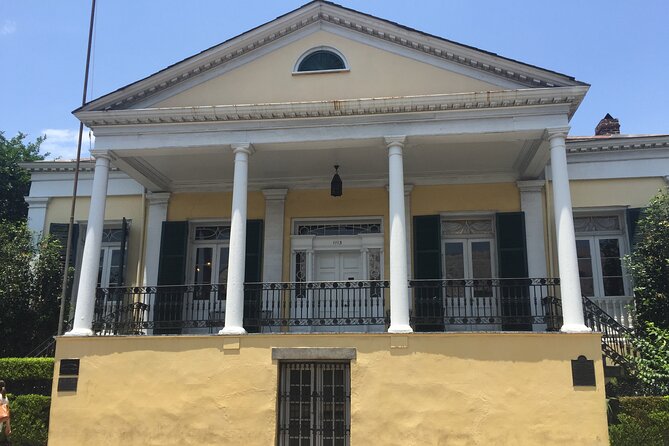
Chartres Street receives about 20 minutes of attention. Here, the guide points out buildings with historical importance dating from the Spanish period through the American period.
This is where the tour’s central idea becomes easier to apply. You are no longer looking at a group of famous landmarks gathered around one square. You are walking along a street and comparing buildings from different moments.
The guide discusses architectural terminology, materials, and stylistic influences, while also explaining how social history and local conditions affected the way buildings developed. The details are meant to stay with you as you continue exploring the Quarter.
This section can be especially helpful if you plan to wander on your own afterward. You begin to notice small features rather than rushing from one headline sight to the next. The tour does not promise a technical course in architecture, but it gives you a working vocabulary and a historical framework.
Royal Street: turn the lesson into a self-guided skill
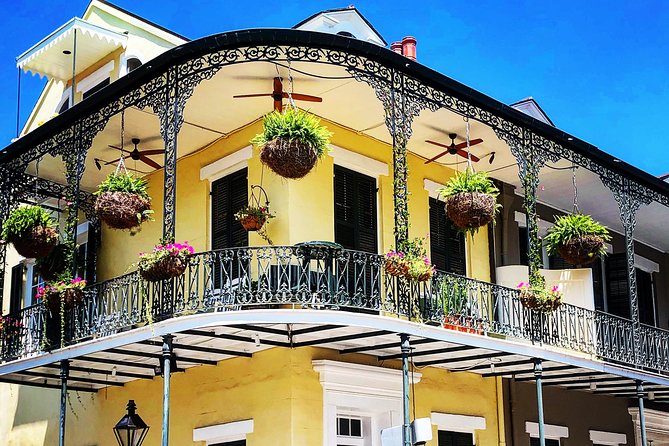
Royal Street is both a shopping and dining street and the final major part of the route. The guide uses its buildings to show you how to identify different architectural types.
This practical element is one of the tour’s best features. You are not simply told what a particular building is. You are encouraged to carry the method with you and use it as you continue through the French Quarter.
The route description allows about 25 minutes on Royal Street, the longest single stop. That extra time gives the guide room to connect earlier ideas, answer questions, and offer suggestions for further exploration.
Royal Street is also more active than a quiet classroom. Shops, restaurants, pedestrians, and street sounds can make it harder to hear. One review specifically noted that hearing the guide was sometimes difficult, so stand near the guide and avoid drifting to the back of the group.
The guides make the difference
The experience uses local, licensed guides, and the individual guide can shape the tone of your morning.
Caroline receives especially strong praise for her storytelling, enthusiasm, and family ties to New Orleans. Her focus on influential Creole women gives the tour a different angle from a standard list of dates and landmarks. She also provides practical suggestions for things to see during the rest of your visit.
Janet is associated with a relaxed, gentle walk and useful follow-up material, including notes and book recommendations. If you like to continue learning after a tour, that extra guidance can add value beyond the two hours on the street.
Guy has been praised for using a binder with photographs and historical information. Visual material can help you understand how the Quarter has changed and how past events relate to the buildings you see today.
Angela is described as personable, historically focused, and funny. Doug is noted for explaining both the city’s past and its architecture while paying attention to heat and shade. These details matter in New Orleans, where comfort can affect how much you retain.
No guide can guarantee a perfect presentation every time. Street noise, weather, the size of the group, and your position on the sidewalk all play a part. The best approach is to arrive ready to stay close, speak up when you need clarification, and use the question time.
Is $40 a fair price?
At $40 per person, this is not the cheapest way to stroll through the French Quarter. You can walk the streets for free, and many landmark exteriors cost nothing to view.
The value comes from the interpretation. A local guide connects several buildings, architectural periods, construction materials, and personal stories in a single route. If you are new to New Orleans, that framework can make the rest of your sightseeing more rewarding.
I think the price is fair for someone who wants a guided introduction rather than a simple neighborhood walk. It is also a reasonable choice at the start of your stay, when tips about further sights, shops, and places to explore can shape your plans.
The value is less certain if you already have a strong background in New Orleans architecture or want detailed analysis of building design. One recent experience was judged too basic and more like a general neighborhood walk. That is a useful warning: the tour combines architecture with culture and history, rather than focusing only on technical terminology.
Weather, pace, and what to bring
This is an outdoor activity, and good weather is required. Bring sunscreen, an umbrella, and comfortable walking shoes. Those suggestions are practical rather than decorative, since you may be outside for the full two hours.
The walk is described as relaxed, and one family found it manageable even in warm conditions because the guide paid attention to shade. Another guide kept a group on the sunny side of the street during a cold day. That flexibility is helpful, but you should still dress for the forecast.
The tour is not described as strenuous, and one person called it not that much walking. You should still expect regular standing and movement on city sidewalks. If you need a specific accessibility arrangement, confirm it before booking because the available information only says most people can participate and service animals are allowed.
Cancellation is free up to 24 hours before the start time for a full refund. Within 24 hours, you receive no refund, and changes are not accepted. If poor weather cancels the activity, you are offered another date or a full refund.
Who should book this French Quarter walk?
I would recommend it to first-time visitors who want an intelligent orientation before exploring alone. It also suits families, couples, solo visitors, and even locals who want a fresh look at familiar streets.
It is a good match for you if people’s stories matter as much as facades. The focus on Creole women, settlers, family connections, and the way culture shaped the Quarter gives the walk emotional weight without abandoning the architecture.
Families may appreciate the moderate pace and short stops. The experience has worked well for a family with a teenager, and the guides’ humor and storytelling can make the subject easier to follow.
You may want something else if you expect interior access, a highly technical architectural seminar, or a long route covering a large part of the city. This experience stays in the central French Quarter and returns to its starting point.
Should you book it?
Book this tour if you want to learn how New Orleans history appears in its buildings, then use that knowledge for the rest of your stay. The strongest reasons are the 14-person limit, the local guides, the useful central route, and the stories that bring overlooked people into the picture.
I would schedule it early in your visit, ideally when the weather is comfortable. Stay close enough to hear, bring sun or rain protection, and ask questions about the features you want to understand.
Skip it only if you want a strictly technical architecture tour or prefer to explore without commentary. For most people seeking a thoughtful introduction to the French Quarter, $40 buys more than a walk. It gives you a way to keep reading the city after the guide says goodbye.
FAQ
How long does the New Orleans French Quarter Architecture Walking Tour last?
The tour lasts approximately two hours.
Where does the tour begin and end?
It begins at 523 St. Ann Street, New Orleans, Louisiana 70116, and ends back at the same meeting point.
How many people can join the tour?
The maximum group size is 14 people.
What language is the tour offered in?
The tour is offered in English.
What should I bring?
Comfortable walking shoes, sunscreen, and an umbrella are recommended.
What happens if I need to cancel?
You can cancel at least 24 hours before the start time for a full refund. Cancellations or changes made less than 24 hours before the start time are not refunded or accepted. If poor weather cancels the tour, you are offered another date or a full refund.
Just added around New Orleans
- New Orleans Garden District Tour★ 5.0 · 8 reviews
- New Orleans Seance Experience★ 4.0 · 8 reviews
- Airport and City Transfers in New Orleans★ 5.0 · 8 reviews
- Sin and Tonic Pub Crawl in New Orleans★ 4.5 · 8 reviews
- The New Orleans Darkness Tour★ 4.4 · 9 reviews
- New Orleans Plantation Tour with Transportation★ 5.0 · 9 reviews
- New Orleans Self-Guided Kayak Bayou Swamp Tour★ 5.0 · 9 reviews
- Historic Carrollton Neighborhood Walking Tour★ 5.0 · 9 reviews
French Quarter Tours, compared.

New Orleans Food Walking Tour of the French Quarter with Small-Group Option
Read our review →
New Orleans French Quarter, Voodoo and Culture Walking Tour
Read our review →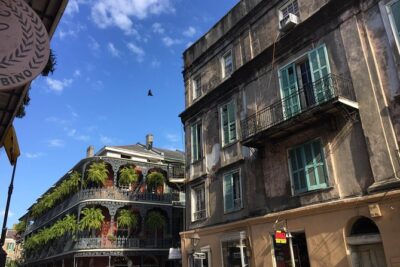
French Quarter Historical Sights and Stories Walking Tour
Read our review →
Ghost and Vampire Walking Tour Of The French Quarter
Read our review →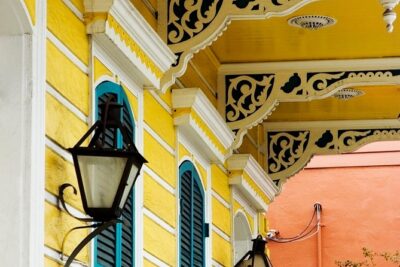
New Orleans City Tour: French Quarter, Garden District & Cemetery
Read our review →
New Orleans French Quarter Food Tour: Cajun, Creole and Culture
Read our review →
New Orleans French Quarter and More Carriage Ride
Read our review →
French Quarter walking Food Tour Famous Flavors of New Orleans
Read our review →Browse the lists this tour appears in