
Reviewed · COCKTAIL TOURS
New Orleans: Combo Cocktail and Food History Tour
New Orleans food makes the most sense when you taste it alongside the city’s layered past. This four-hour walk links gumbo, muffuletta, pralines, hot sauce, plantains, and four classic cocktails while taking you from Bourbon Street to Jackson Square and the French Market.
I like the generous portions, which are often closer to small meals than dainty samples, and the way the tour explains drinks such as the Hurricane, Pimm’s Cup, French 75, and daiquiri. I also like the indoor stops, a real help in New Orleans heat and humidity.
The main drawback is the price: $160 per person is a serious outlay, especially if you are not a big eater or drinker. This is also not suitable for anyone under 21, vegans, or people avoiding gluten or dairy.
In This Review
- Key points at a glance
- Why this food and cocktail walk works
- Red Fish Grill: gumbo, alligator sausage, and the Hurricane
- Leah’s Pralines: a sweet pause with a family story
- Napoleon House: the heartiest stop of the afternoon
- NOLA Sauce Bar: a hands-on stop for heat lovers
- Tableau and the French 75
- Cane & Table: plantains and a classic daiquiri
- What you actually eat and drink
- Vegetarian choices and dietary limits
- Is $160 a fair price?
- Who should book this experience?
- Practical details before you reserve
- Should you book it?
- FAQ
- How long does the New Orleans cocktail and food tour last?
- Where does the tour begin?
- Where does the tour end?
- How many cocktails are included?
- How many food tastings are included?
- Is there a vegetarian option?
- Is the tour suitable for people with dietary restrictions?
Key points at a glance
- Six substantial food tastings: Expect gumbo, alligator sausage, muffuletta, jambalaya, pralines, plantains, and more.
- Four full craft cocktails: The Hurricane, Pimm’s Cup, French 75, and daiquiri form the drinking spine of the tour.
- Five contrasting stops: You visit polished restaurants, a family candy shop, a sauce store, and historic French Quarter dining rooms.
- A useful first-day activity: The route helps you get your bearings around the French Quarter before you explore farther afield.
- Vegetarian substitutions are available: Red beans and rice, meatless muffuletta, and potato salad replace several meat-based dishes.
- Small groups can be a plus: Past departures have sometimes been intimate enough for the guide to tailor the conversation.
Why this food and cocktail walk works
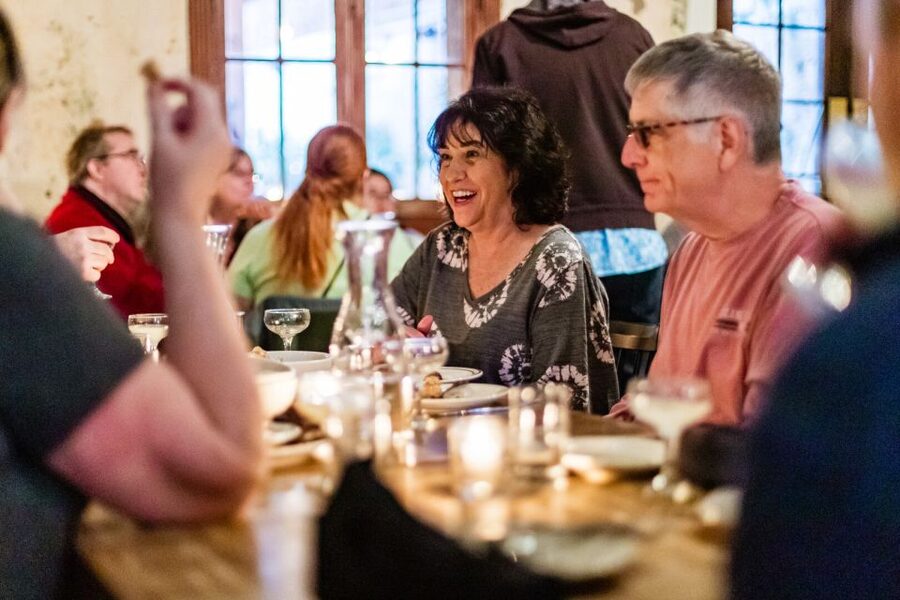
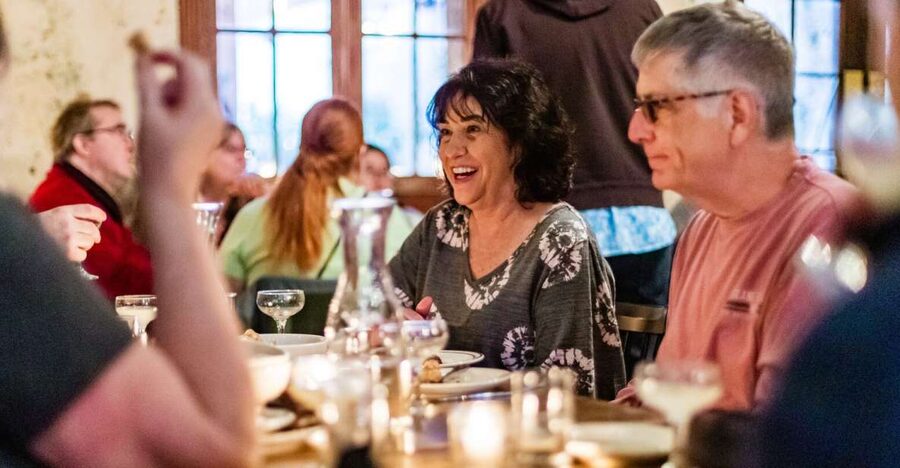
Doctor Gumbo Tours has built this experience around a simple idea: New Orleans food is not just a list of dishes. It reflects colonial influences, Creole and Cajun cooking, local ingredients, restaurant traditions, and the city’s long love affair with strong drinks.
That makes the tour more useful than a meal at one famous restaurant. You get several settings and a broad sampling in one afternoon, with short walks between stops. The food does the teaching, but the route also gives you a practical introduction to a central part of New Orleans.
The guide matters here. Names associated with past tours include Meg or Meaghan, Ben, Nate, Gary, Kat, Lindsay, and Dr. Gumbo. The strongest pattern in the feedback is not one particular dish or venue, but the guides’ ability to explain food and drink in a warm, conversational way. Meg, Ben, and Nate are especially praised for mixing city history with humor and answering questions without making the tour feel like a lecture.
The pace is another strength. Walks between stops are generally about five minutes, with one walk of around ten minutes. The route is compact, but allow the full four hours. You are not simply racing from one plate to the next. Each stop includes time to eat, drink, and hear the story behind it.
More cocktail tours in New Orleans:
- New Orleans Cocktail and Food History Tour
★ 5.0 · 819 reviews - New Orleans Original Craft Cocktail Walking Tour
★ 4.5 · 675 reviews - New Orleans Cocktail History Walking Tour in the French Quarter
★ 5.0 · 604 reviews
Red Fish Grill: gumbo, alligator sausage, and the Hurricane
Meet at Red Fish Grill, at 115 Bourbon Street, in the French Quarter. This is a busy and famous starting point, so give yourself enough time to locate the entrance and arrive ready to begin.
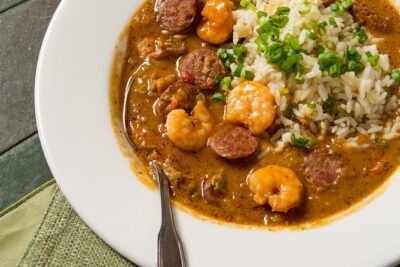
The first tasting introduces two Louisiana staples: alligator sausage and seafood gumbo. The gumbo is a useful opening course because it shows how layered a New Orleans dish can be. It is hearty, seasoned, and built around seafood and a dark, savory base. The alligator sausage adds a local talking point without turning the meal into a novelty act.
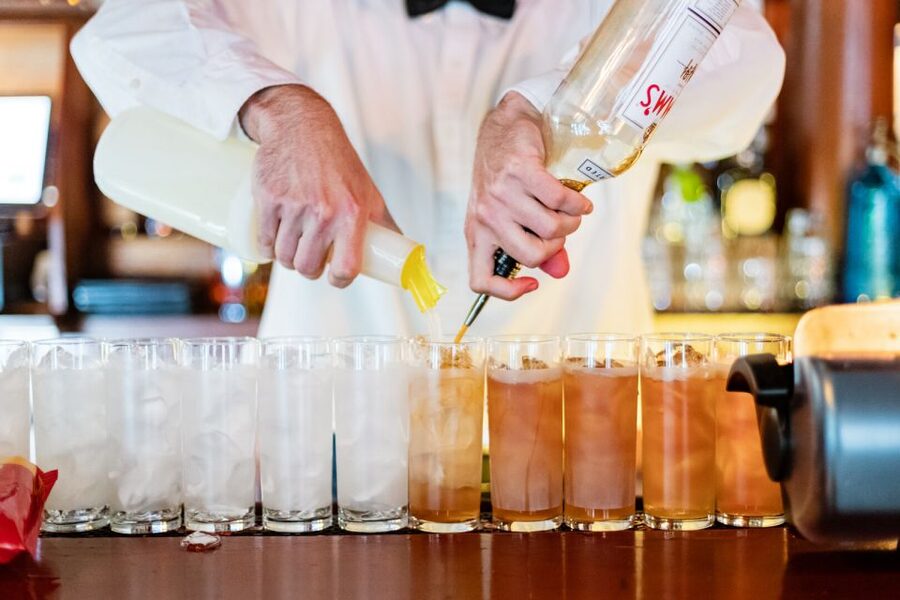
You also get a craft Hurricane. This fruity drink is closely linked with New Orleans and gives the guide a chance to discuss how local drinking culture grew alongside the city’s food traditions. It is also an early warning that this is not a sample-sized cocktail tour. The drinks are described as full servings, so pace yourself from the start.
This first stop lasts about 35 minutes. That is enough time to settle in, eat a proper portion, and hear about Louisiana’s colonial period. I like beginning here because you get context before the route becomes a parade of dishes.
Leah’s Pralines: a sweet pause with a family story
From Red Fish Grill, you walk roughly five minutes to Leah’s Pralines. This third-generation family candy store changes the mood completely. After gumbo and sausage, your palate gets a break with traditional pralines and pecan brittle.
Pralines are more than a sugary souvenir in New Orleans. Their pecans and creamy texture connect the candy to regional ingredients and local food traditions. The pecan brittle offers a different texture and a sharper crunch, so the tasting does not feel like two versions of the same sweet.
This stop lasts about 15 minutes. It is short, but it adds welcome variety. You can also buy something for later, though keep in mind that the tour continues with several more savory servings and cocktails.
Napoleon House: the heartiest stop of the afternoon
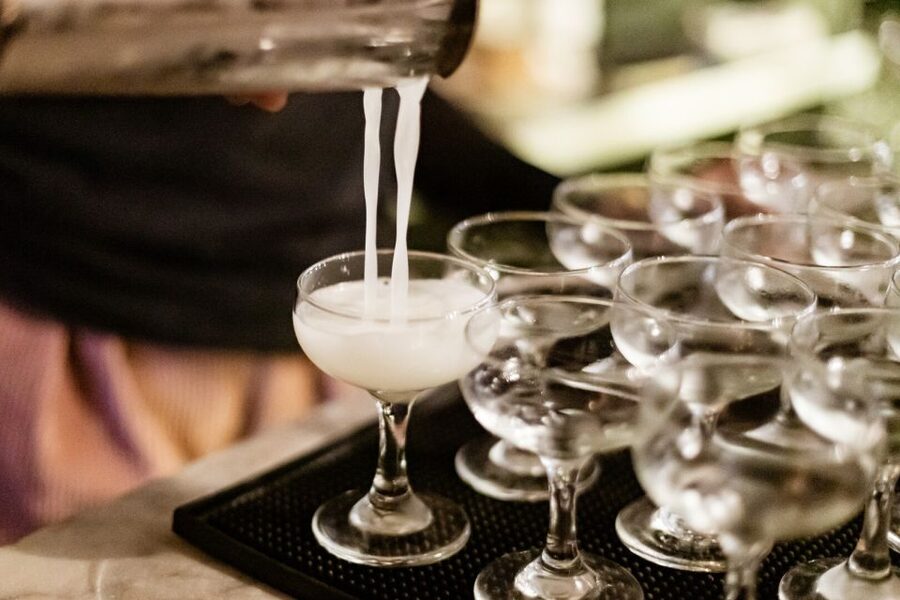
Napoleon House is the longest stop, at about 55 minutes, and it is where the tour begins to feel like a full meal. The setting is one of the classic French Quarter restaurants, and the food includes muffuletta sandwiches, a side of Creole jambalaya, and a Pimm’s Cup.
The muffuletta is one of the dishes you should not miss in New Orleans. It is a round sandwich with a distinctive olive salad and a filling that brings salt, acidity, and richness together. The portion on this tour is substantial enough that you may want to treat it as lunch rather than a nibble.
Creole jambalaya brings another layer of local cooking into the picture. It is useful to taste it after gumbo because you can compare two rice-based dishes with different textures and seasoning. The guide can explain the distinctions between Creole and Cajun influences as you eat.
The Pimm’s Cup is a lighter counterpoint to the Hurricane. It gives the cocktail portion more range instead of serving four similarly sweet drinks. Past customers have singled out the food variety and generous serving sizes here, and I would plan accordingly: arrive hungry, but do not assume every later course will be tiny.
More history tours in New Orleans:
- New Orleans Garden District History Walking Tour
★ 5.0 · 2,879 reviews - French Quarter Historical Sights and Stories Walking Tour
★ 5.0 · 2,724 reviews - New Orleans Small-Group Haunted History Carriage Tour
★ 4.5 · 2,289 reviews - New Orleans Haunted History Ghost Tour
★ 4.5 · 2,084 reviews
NOLA Sauce Bar: a hands-on stop for heat lovers
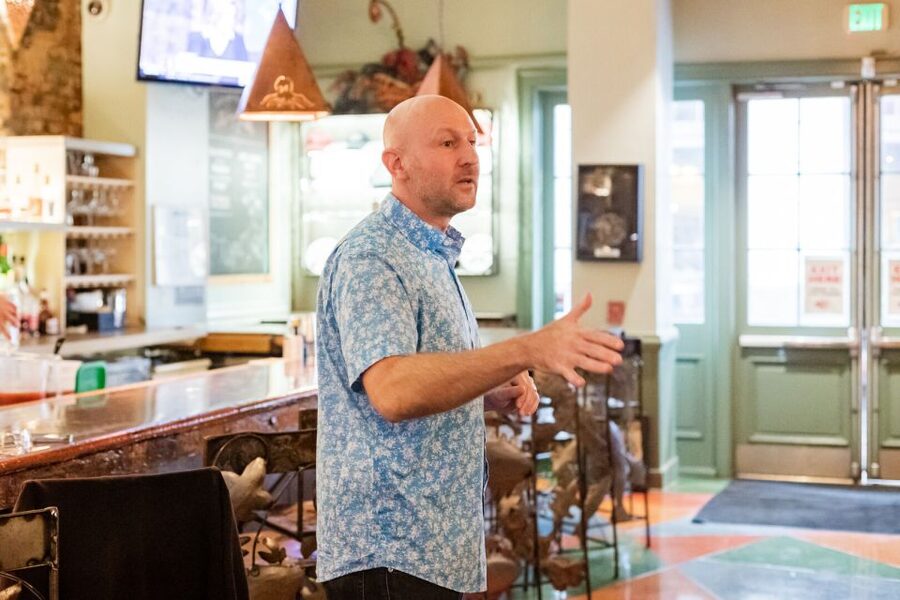
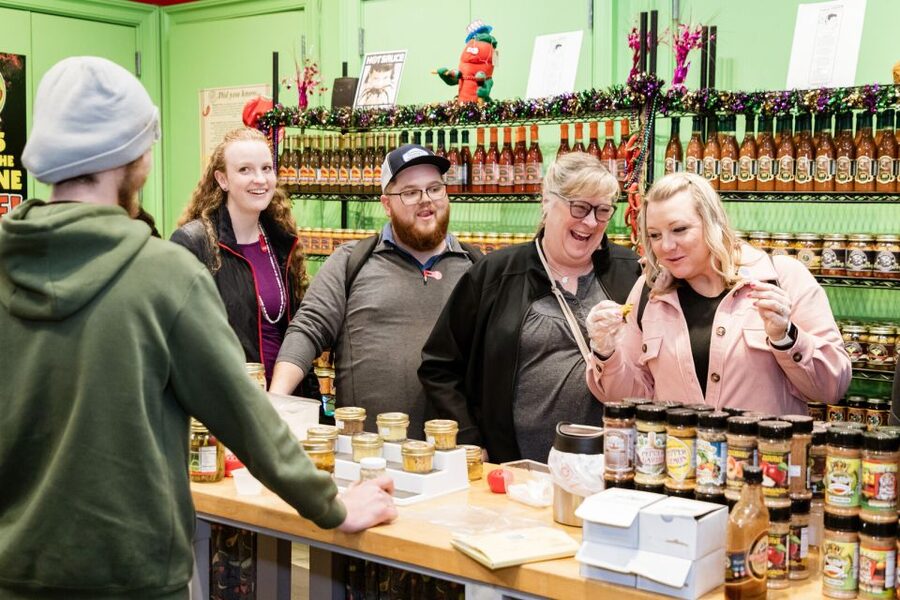
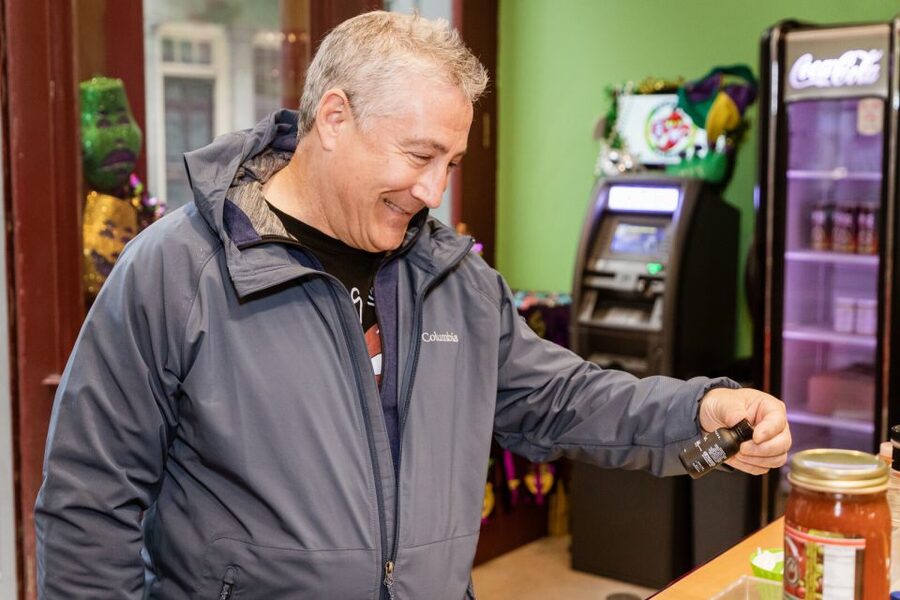
After another short walk, you reach NOLA Sauce Bar for a discussion of Cajun influence and local seasoning. Here you can try an unlimited range of Louisiana-supplied hot sauces, barbecue sauces, buffalo wing sauces, dry rubs, and related products.
This is one of the more interactive sections of the walk. Restaurant tastings can show you what a finished dish tastes like. A sauce shop lets you compare the building blocks that give many Louisiana dishes their punch.
You also receive a complimentary bottle of Louisiana-style seasonings. That small take-home item adds value, particularly if you like to recreate dishes after returning home. The stop lasts about 35 minutes and includes a cocktail, though the supplied details do not name that drink.
The word unlimited applies to the sauce sampling, not to the entire tour. If you are sensitive to heat, ask questions before piling sauces onto a tasting spoon. If you love spicy food, this may become one of your favorite stops.
Tableau and the French 75
The next destination is Dickie Brennan’s Tableau, where you sip a French 75. This cocktail combines fresh lemon, brandy or gin, and bubbles. It is bright, crisp, and very different from the fruit-forward Hurricane and the Pimm’s Cup.
The stop is also about place. The route passes through Jackson Square, one of the most recognizable parts of the French Quarter, before continuing toward the French Market. That walk gives you a chance to reset between tastings and see the city rather than spend the entire afternoon indoors.
The French 75 is a particularly good drink to discuss on a history-focused tour because its ingredients show how a short list can create a very distinct style. Ask whether your version uses gin or brandy, since either may be used.
The walking portion through Jackson Square is one of the few stretches where weather has a bigger effect. New Orleans can be hot, humid, or wet, so wear comfortable shoes and bring water. Water is provided at most stops, but you should still arrive prepared for outdoor walking.
Cane & Table: plantains and a classic daiquiri
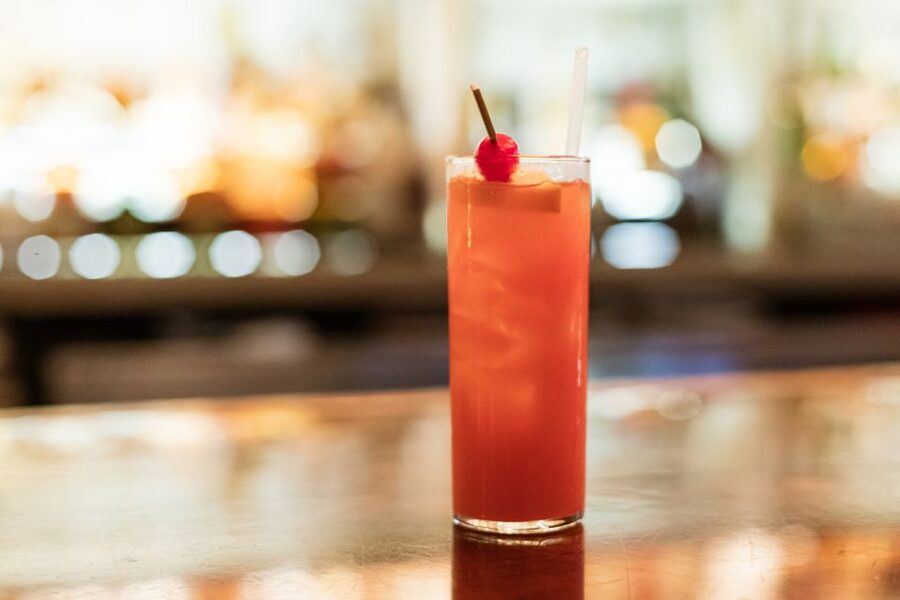
The final stop is Cane & Table, at 1113 Decatur Street, near the French Market. Here you finish with fried sweet plantains and a classic daiquiri.
The plantains provide a warm, caramelized ending to the food portion. They are simple compared with gumbo or muffuletta, but that is part of the appeal. After several strongly seasoned courses, a sweet fried bite gives the meal a softer finish.
The daiquiri closes the cocktail sequence. This is not necessarily the frozen beach drink many people picture. On a food and cocktail tour, it becomes another chance to compare balance, acidity, sweetness, and alcohol across New Orleans favorites.
The tour ends here rather than returning to Bourbon Street. That is handy if you want to continue around the French Market or walk toward other parts of the Quarter. It also means you should not schedule a return transfer from the starting point.
What you actually eat and drink
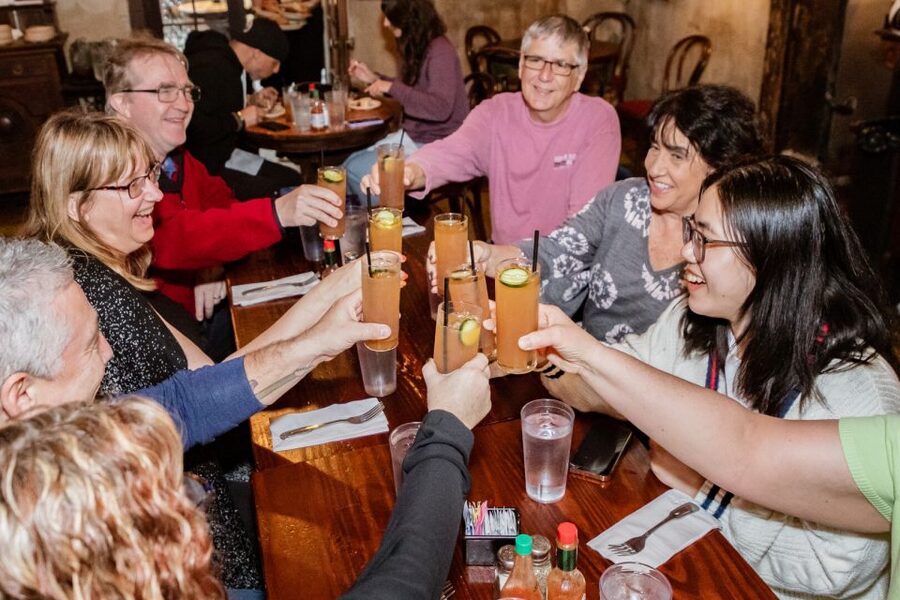
The advertised six food tastings and four craft cocktails sound modest until you see the menu. The food includes:
- Alligator sausage
- Seafood gumbo
- Traditional pralines
- Pecan brittle
- Muffuletta
- Creole jambalaya
- Fried sweet plantains
The exact counting may group some items together, but the practical point is clear: this is enough food to replace lunch for many people. Several past customers describe finishing full or nearly full, with some specifically advising you to go hungry.
The cocktail lineup includes a Hurricane, Pimm’s Cup, French 75, and daiquiri, plus one additional cocktail stop described in the route. The tour materials consistently state four craft cocktails, so expect four total alcoholic drinks rather than small tastes.
That amount of alcohol changes how you should plan the day. Eat lightly beforehand, but do not arrive dehydrated. Avoid scheduling a long drive afterward, and do not assume you will want a large dinner immediately after the finish.
Vegetarian choices and dietary limits
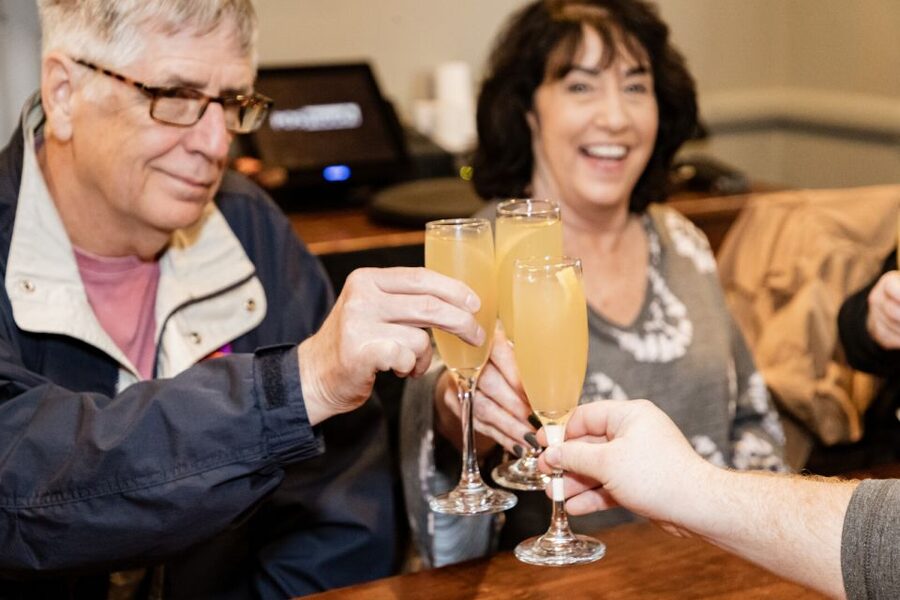
The vegetarian version is a meaningful option rather than a token plate. At Red Fish Grill, red beans and rice replace the alligator sausage and seafood gumbo. At Napoleon House, you receive a meatless muffuletta and potato salad instead of the standard sandwich and jambalaya.
The information provided does not specify a vegan, gluten-free, or dairy-free version. If you have gluten intolerance, this is not the right tour. Vegans should also choose another activity, and anyone with several food allergies should not assume substitutions can be arranged.
Request the vegetarian option at checkout. It is best suited to vegetarians who eat dairy and other ingredients commonly found in restaurant dishes, since the tour does not promise a dairy-free menu.
Is $160 a fair price?
At $160 per person, this costs more than an ordinary walking tour and more than buying one meal in the French Quarter. The value depends on how you use it.
You are paying for four hours, a local guide, six food tastings, four craft cocktails, water at most stops, and server and bar staff tips. You also visit several established venues rather than one restaurant, and the portions are often described as full or near-full servings.
The price makes better sense if you would otherwise book several restaurants and cocktail stops on your own. You get a planned route, historical explanation, and a broad menu without having to research reservations or decide what to order at every turn.
It is less compelling if you do not drink, eat lightly, or already know the French Quarter well. The experience is food-heavy and alcohol-heavy. For a first full day in New Orleans, though, I think it offers a practical introduction to the area and gives you ideas for places to revisit.
Who should book this experience?
I would recommend it most strongly to first-time visitors who want a fast but substantial introduction to New Orleans food. It also suits people who enjoy learning the backstory of a dish instead of simply checking it off a menu.
Small groups are especially valuable here. Some departures have been intimate enough for guides such as Meg to adjust the conversation to the group’s interests. Solo visitors can also find the format social, since you spend several hours sharing food and drinks at close range.
Older walkers should find the route manageable if they are comfortable walking for short stretches. One past customer in their 70s found the stops close enough to reach on foot, but comfort varies, and four hours on your feet is still a commitment.
This is not the best choice for families with children, abstainers, strict vegans, gluten-free diners, or anyone wanting a light, quick food crawl. It is also a poor fit if you want to explore neighborhoods beyond the French Quarter, since nearly all the value comes from the compact central route.
Practical details before you reserve
The tour is in English with a live guide and is listed as wheelchair accessible. The meeting point is Red Fish Grill, 115 Bourbon Street, and the finish is at 1113 Decatur Street.
Bring a passport or ID card. You must be at least 21, and the alcohol component is central to the experience, not an optional extra.
You can cancel up to 24 hours in advance for a full refund, and a reserve-now, pay-later option is available. Starting times vary, so check the date you want before booking.
Wear shoes you can walk in and dress for New Orleans weather. Most tastings take place indoors, which helps in summer heat, but the route includes outdoor walks through the French Quarter and Jackson Square.
Should you book it?
Book this tour if you want a filling, guided introduction to New Orleans cuisine and cocktails, especially on your first full day. The strongest reasons are the range of food, the full-size drinks, the compact French Quarter route, and guides who bring real personality to the history.
Skip it if $160 feels high for a meal-based activity, if you do not drink, or if you need vegan, gluten-free, or dairy-free food. For everyone else, the combination of gumbo, muffuletta, pralines, hot sauces, French 75, and daiquiri offers a well-rounded taste of the city in one carefully paced afternoon.
FAQ
How long does the New Orleans cocktail and food tour last?
The tour lasts four hours. Walking sections between stops generally take about five minutes, with one walk of about ten minutes.
Where does the tour begin?
The meeting point is Red Fish Grill at 115 Bourbon Street in New Orleans’ French Quarter.
Where does the tour end?
The tour finishes at Cane & Table, at 1113 Decatur Street, New Orleans, LA 70116.
How many cocktails are included?
Four craft cocktails are included. The named drinks are a Hurricane, Pimm’s Cup, French 75, and daiquiri.
How many food tastings are included?
Six food samples are included. The tasting selection features dishes such as seafood gumbo, alligator sausage, muffuletta, Creole jambalaya, pralines, pecan brittle, and fried sweet plantains.
Is there a vegetarian option?
Yes. Request it at checkout. Substitutions include red beans and rice, meatless muffuletta, and potato salad.
Is the tour suitable for people with dietary restrictions?
The tour does not offer vegan, gluten-free, or dairy-free options. It is not suitable for vegans or people with gluten intolerance.
More Food Tours in New Orleans
- New Orleans Food Walking Tour of the French Quarter with Small-Group Option
★ 5.0 · 6,118 reviews - New Orleans Food and History Walking Tour
★ 5.0 · 1,544 reviews - New Orleans French Quarter Food Tour: Cajun, Creole and Culture
★ 5.0 · 1,246 reviews - French Quarter walking Food Tour Famous Flavors of New Orleans
★ 5.0 · 1,115 reviews
Just added around New Orleans
- New Orleans Garden District Tour★ 5.0 · 8 reviews
- New Orleans Seance Experience★ 4.0 · 8 reviews
- Airport and City Transfers in New Orleans★ 5.0 · 8 reviews
- Sin and Tonic Pub Crawl in New Orleans★ 4.5 · 8 reviews
- The New Orleans Darkness Tour★ 4.4 · 9 reviews
- New Orleans Plantation Tour with Transportation★ 5.0 · 9 reviews
- New Orleans Self-Guided Kayak Bayou Swamp Tour★ 5.0 · 9 reviews
- Historic Carrollton Neighborhood Walking Tour★ 5.0 · 9 reviews
Cocktail Tours, compared.
New Orleans Original Craft Cocktail Walking Tour
Read our review →
New Orleans Cocktail History Walking Tour in the French Quarter
Read our review →
French Quarter Small-Group Cocktail and Foodie Crawl
Read our review →
New Orleans Cooking Class and Cocktail Walking Tour
Read our review →
Browse the lists this tour appears in