
Reviewed · FRENCH QUARTER TOURS
More Than Mardi Gras: French Quarter Tour (Small Group)
New Orleans reveals itself best in its courtyards, church towers, old apartments, and strange street names, not only in the neon glow of Bourbon Street. This 90-minute small-group walk moves from Jackson Square through the French Quarter’s religious, political, literary, and pirate-filled past, ending at the Presbytère.
I like the clear route, which gives you a useful first look at the Vieux Carré without eating half your day. I also like the guides’ focus on context: Andrew helped one repeat visitor see fresh layers on a fifth trip, while Daniel brought a history major’s command of the city to his tour. The main drawback is that 90 minutes goes quickly, so this is an introduction rather than a leisurely study of every street and building.
In This Review
- Key points before you book
- Starting at Jackson Square and St. Louis Cathedral
- The Pontalba buildings and an early American apartment story
- The Cabildo and the city’s changing governments
- Pirate Alley, privateers, and the rougher side of New Orleans
- Old Ursuline Convent and Catholic Louisiana
- Royal Street, live music, and the French Quarter’s architecture
- Bourbon Street with a bit of practical guidance
- Finishing at the Presbytère with Mardi Gras and Katrina
- What the $39 price gets you
- Who will get the most from this walk
- Timing, group size, and simple planning tips
- Should you book More Than Mardi Gras?
- FAQ
- Where does the French Quarter tour begin?
- What time does the tour start?
- How long does the tour last?
- Where does the tour end?
- What sights are covered?
- Is the tour offered as a small-group experience?
- Is the Presbytère admission included?
- Can I cancel for a full refund?
Key points before you book
- Jackson Square is the starting point: You begin beside St. Louis Cathedral, one of the best places to orient yourself in the French Quarter.
- The walk covers more than Bourbon Street: Royal Street, Pirate Alley, the Pontalba buildings, Old Ursuline Convent, and Bourbon Street all receive attention.
- Guides are central to the experience: Andrew and Daniel have been specifically praised for making the history clear and interesting, including for teenagers and repeat visitors.
- The Presbytère adds a museum finish: The route ends with Mardi Gras and Hurricane Katrina exhibits, linking celebration with the city’s recovery.
- The group can reach 27 people: This is smaller than a large coach excursion, but it may not feel intimate at the maximum size.
- The $39 price is fair for a first look: You get a guided walk and a museum stop, though you should confirm the admission arrangement before booking.
Starting at Jackson Square and St. Louis Cathedral
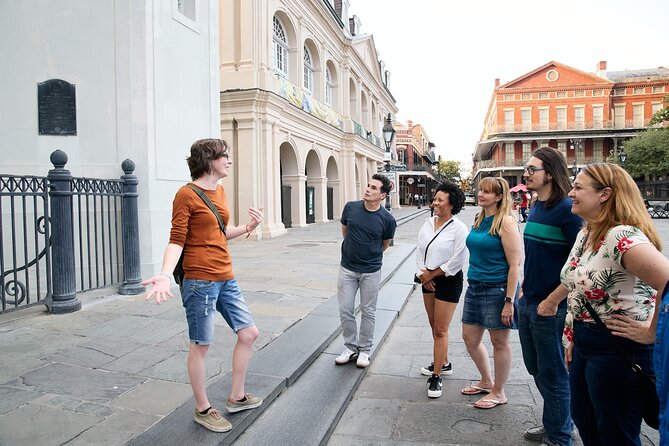
Meet at Jackson Square at 10:30 a.m. This is a sensible place to begin because the square puts several major French Quarter landmarks within a short walk, and the cathedral gives the guide an immediate way to explain how New Orleans developed.
St. Louis Cathedral is described as the oldest cathedral in the United States still in continuous use. Its colonial Louisiana design also opens the door to a larger subject: why Catholic faith has mattered so much to Louisiana’s public life and identity.
You are not simply looking at a pretty church façade. The stop connects architecture with the French, Spanish, and American periods that shaped the city. If you want to go inside the cathedral, ask your guide what is included in the walking tour, since the information provided focuses on discussion of the building rather than a separate interior visit.
Starting here also helps you get your bearings before the streets become more crowded and noisy. Bring water and wear comfortable shoes. The walk is short by city-tour standards, but it takes place on foot through historic streets rather than on a bus.
More ways to walk the French Quarter:
- New Orleans Food Walking Tour of the French Quarter with Small-Group Option
★ 5.0 · 6,118 reviews - New Orleans French Quarter, Voodoo and Culture Walking Tour
★ 4.5 · 2,961 reviews - French Quarter Historical Sights and Stories Walking Tour
★ 5.0 · 2,724 reviews
The Pontalba buildings and an early American apartment story
The next stop concerns the Pontalba buildings, often described as some of the first apartments in the United States. Their story centers on Michaela Pontalba and her struggle to have them built as part of her father’s legacy.
That detail gives the tour a useful change of pace. New Orleans architecture is often admired for balconies, shutters, and ironwork, but the guide also explains the human conflict behind the buildings. You get a story about family money, inheritance, and determination rather than a simple list of dates.
This is one reason a guided walk earns its fee. On your own, you might photograph the buildings and move on. With a guide, the façades become evidence of how property, family power, and city design were connected.
The tour does not promise extended time inside private homes or apartments. You should expect to view the buildings from the street and hear their story while continuing through the quarter.
The Cabildo and the city’s changing governments
The Cabildo once served as a seat of government for the French, Spanish, and Americans. Today it forms part of the Louisiana State Museum, making it one of the clearest places to think about New Orleans as a city shaped by several national systems rather than one single tradition.
Your guide will point out what is worth seeing inside and explain basic do’s and don’ts for visiting. That advice matters because the walking tour itself is not designed as a full museum tour. You get an introduction, then practical help deciding how to spend your own museum time later.
The Cabildo stop is especially useful if you want more than atmosphere. It places the French Quarter’s balconies and courtyards within the story of colonial rule, state power, and changing ownership. The tour keeps the explanation moving, so you will not get a long academic lecture, but you should come away with a better sense of why the quarter looks and feels so distinctive.
Pirate Alley, privateers, and the rougher side of New Orleans
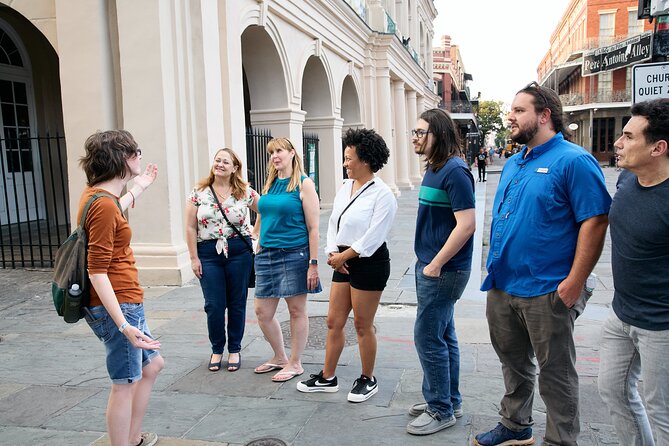
Pirate Alley brings one of the tour’s more colorful subjects. The guide discusses privateers and the role pirates played in the creation of New Orleans.
This is a good example of the tour’s tone. New Orleans history is not presented only through churches and elegant homes. The city also grew through trade, conflict, lawlessness, and people who operated at the edge of official authority.
You should treat the pirate material as historical storytelling within a broader city tour, not as a dedicated pirate attraction. The value comes from seeing how a narrow passage can lead into questions about commerce, defense, and the people who helped shape the region.
The alley is also a reminder that the French Quarter works best at walking speed. Its history is attached to small lanes and building fronts that are easy to miss when you rush from one major sight to another.
More Mardi Gras experiences in New Orleans:
- New Orleans Mardi Gras World Behind-the-Scenes Tour
★ 4.5 · 538 reviews - New Orleans Mardi Gras 2026 Experience
★ 3.5 · 9 reviews - Mardi Gras Mambo Tours: Mambo Nights
★ 5.0 · 3 reviews
Old Ursuline Convent and Catholic Louisiana
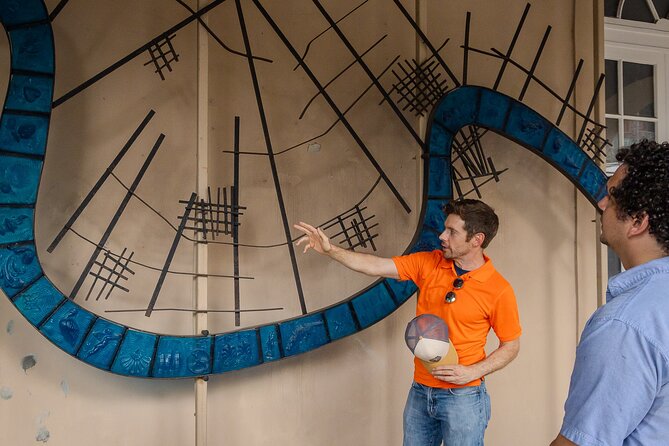
The Old Ursuline Convent Museum introduces the religious side of the quarter. The Ursulines were the first religious order to come to New Orleans, and the convent is a notable example of colonial religious architecture.
This stop adds depth to the opening discussion at St. Louis Cathedral. Catholicism here is not just a feature of one church. It influenced education, social life, architecture, and the public character of Louisiana.
The building itself is worth attention for its restrained colonial design. Compared with the decorative ironwork and bright colors often associated with the French Quarter, the convent offers a quieter look at the city’s early institutions.
The guide explains the site from the outside as part of the walking route. If you want a full museum visit, set aside separate time and check the day’s opening arrangements. The tour’s purpose is to help you understand why the convent matters, not to replace a complete visit.
Royal Street, live music, and the French Quarter’s architecture
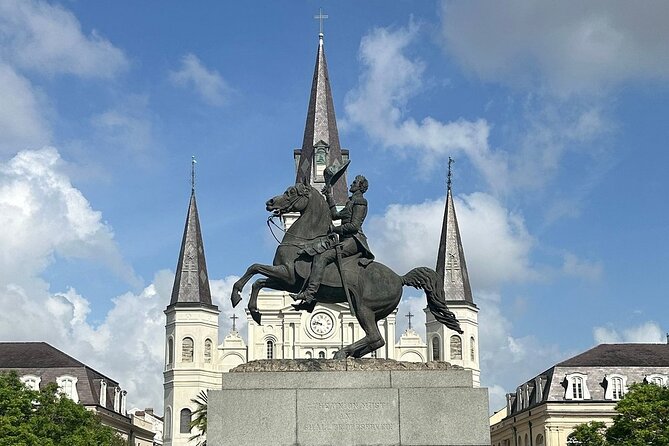
As you walk down Royal Street, the guide turns to street music and the quarter’s mix of architectural styles. This is one of the more enjoyable sections because the setting does some of the work. You can look up at balconies, notice differences between buildings, and hear how music contributes to the street’s daily character.
The route also makes clear that the French Quarter is not one uniform architectural set. The guide discusses different forms and periods, helping you notice contrasts that may otherwise blur together.
Royal Street is a better place than Bourbon Street for understanding the quarter’s visual side. It still feels active, but the focus is less tied to nightlife. You can pay attention to façades and street life without treating the neighborhood as one long party strip.
The pace is a consideration. Because the full walk lasts about an hour and a half, you may stop briefly rather than spend long periods studying details. If you enjoy photography or want time to browse, plan to return after the tour.
Bourbon Street with a bit of practical guidance
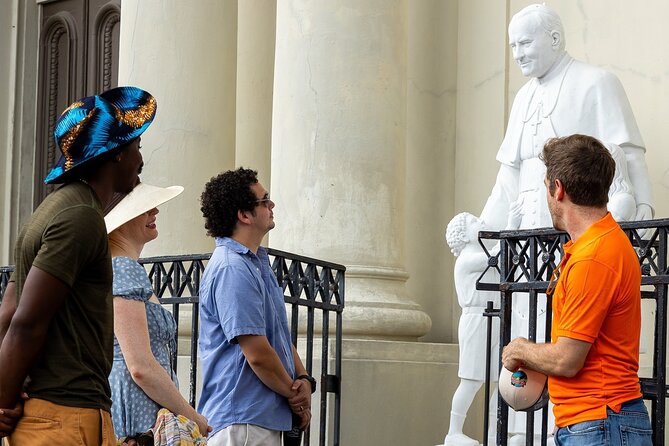
Bourbon Street receives its own stop, including its sordid history and a quick how-to for seeing the street. That practical framing is helpful. Bourbon Street is famous, but it can be easy to misunderstand if you arrive expecting the whole French Quarter to look or feel the same.
You will learn about the street’s past while also getting guidance on how to approach it. The tour does not treat Bourbon Street as the complete story of New Orleans. Instead, it places the nightlife corridor inside the wider history of the Vieux Carré.
That distinction is important. You may like the energy, or you may find the noise and nightlife less appealing. Either way, the stop gives you context before you decide how much time to spend there later.
The tour’s daytime start is useful for seeing Bourbon Street as part of a neighborhood rather than only as a late-night destination. Still, the guide cannot control street conditions or the behavior of other people, so keep your expectations practical.
Finishing at the Presbytère with Mardi Gras and Katrina
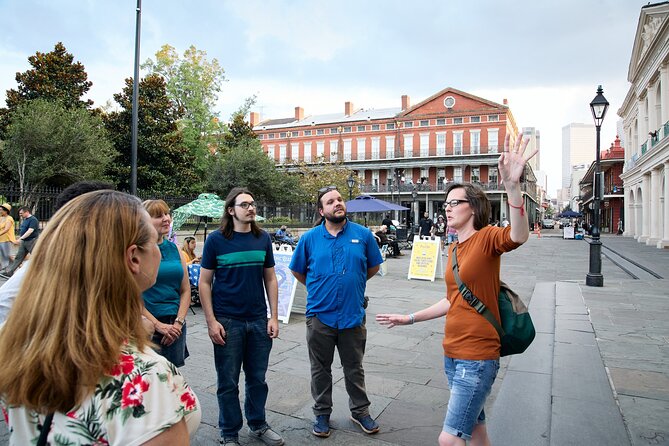
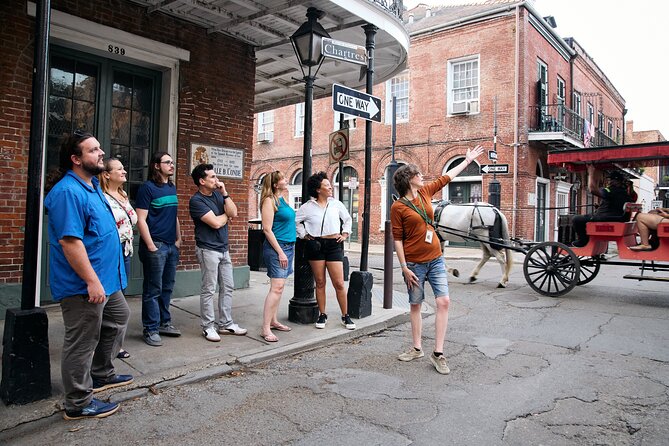
The tour ends at the Presbytère on Chartres Street. The building once served as a home for local priests, and the guide discusses the importance of Catholic faith to Louisiana before directing you to the museum.
This ending gives the walk a strong thematic finish. You begin with a cathedral and religious foundations, pass through government buildings, family power, piracy, architecture, and nightlife, then finish with two exhibits that speak to modern New Orleans: Mardi Gras and Hurricane Katrina.
The Mardi Gras exhibits help explain the celebration beyond costumes and parades. The Hurricane Katrina material adds a necessary reminder that New Orleans is not only a historic setting or party city. It is also a place that has had to rebuild.
The museum visit is self-guided, so you can take in the exhibits at your own pace after the walking portion. The meeting information says the guide will have tickets for you to enter, while the stop information says admission is not included. Since those details do not match, confirm exactly what your $39 covers before you book.
What the $39 price gets you
At $39 per person, this tour is priced for people who want a focused introduction rather than a full-day program. You receive an expert-led walk through several important parts of the French Quarter, plus the final museum component as described in the booking details.
I see good value in the range of subjects. For one fee, you cover Catholic institutions, early government, apartment history, privateers, architecture, music, Bourbon Street, Mardi Gras, and Hurricane Katrina. That breadth would be difficult to organize efficiently on your own in 90 minutes.
The value depends on the guide. Andrew and Daniel have both been praised for clear, detailed storytelling, with one account noting that the experience offered new information even to someone on a fifth New Orleans visit. Another praised Daniel’s history background and found the conversation engaging enough to wish it lasted all day.
The compromise is depth. You will not get a long stop at every building, and the group may reach 27 people. That is still a manageable size for a city walk, but it is not the same as a private tour. If admission to the Presbytère is extra, the final cost also rises, so check that point carefully.
Who will get the most from this walk
This tour suits first-time visitors who want a solid map of the French Quarter before exploring alone. It also works for repeat visitors who enjoy history and want stories behind familiar streets.
Families may find the range of topics useful. The feedback about teenagers enjoying and learning from the tour suggests that the guides can keep younger participants involved, though the experience remains a history walk rather than a children’s activity.
It is also a good fit for anyone who wants to see New Orleans beyond Bourbon Street. The route gives nightlife its place, but it spends equal attention on religious architecture, government, family history, music, and the city’s recovery after disaster.
You may want something else if you prefer a slow architectural study, a food-focused outing, or a tour built around evening entertainment. The 90-minute schedule is efficient, not leisurely.
Timing, group size, and simple planning tips
The start time is 10:30 a.m., and the tour lasts about 90 minutes. That leaves the afternoon open for a longer museum visit, a meal, shopping, or another part of New Orleans.
The meeting point is Jackson Square, and the end point is the Presbytère at 751 Chartres Street. Both are in the French Quarter, so the route keeps you in the historic center rather than sending you across town.
A mobile ticket makes check-in simple. Confirmation is provided when you book, and the tour is near public transportation. Most people can participate, but you should still plan for continuous walking on city streets.
The maximum group size is 27. Ask questions early in the walk if you have a particular interest, especially if the group is full. Free cancellation is available until 24 hours before the start time, which gives you some flexibility if your plans change.
Should you book More Than Mardi Gras?
Book it if you want a well-paced first orientation to the French Quarter, with more substance than a quick stroll down Bourbon Street. The route is varied, the museum finish adds value, and guides such as Andrew and Daniel have shown that strong storytelling can make even familiar New Orleans sights feel new.
I would especially choose it for a first visit, a family trip with older children or teenagers, or a return visit focused on history. I would skip it only if you want a private, highly detailed architectural tour or a relaxed walk with plenty of time at each stop.
Before paying, confirm whether the Presbytère admission is included, since the supplied details give two different answers. Once that is clear, $39 is a reasonable price for a compact, history-first introduction to the city’s most famous neighborhood.
FAQ
Where does the French Quarter tour begin?
The tour begins at Jackson Square in New Orleans, Louisiana.
What time does the tour start?
The scheduled start time is 10:30 a.m.
How long does the tour last?
The walking tour lasts approximately 1 hour and 30 minutes.
Where does the tour end?
The tour ends at the Presbytère, located at 751 Chartres Street in New Orleans.
What sights are covered?
The route includes St. Louis Cathedral, the Pontalba buildings, the Cabildo, Pirate Alley, Old Ursuline Convent, Royal Street, and Bourbon Street. It finishes at the Presbytère.
Is the tour offered as a small-group experience?
Yes. The group can include a maximum of 27 people.
Is the Presbytère admission included?
The information provided says the guide will have tickets for entry to the Mardi Gras and Hurricane Katrina exhibits, but it also marks admission as not included. Confirm this detail with the provider before booking.
Can I cancel for a full refund?
Yes. You can cancel at least 24 hours before the experience start time for a full refund. Changes or cancellations made less than 24 hours in advance are not accepted for a refund.
Just added around New Orleans
- New Orleans Garden District Tour★ 5.0 · 8 reviews
- New Orleans Seance Experience★ 4.0 · 8 reviews
- Airport and City Transfers in New Orleans★ 5.0 · 8 reviews
- Sin and Tonic Pub Crawl in New Orleans★ 4.5 · 8 reviews
- The New Orleans Darkness Tour★ 4.4 · 9 reviews
- New Orleans Plantation Tour with Transportation★ 5.0 · 9 reviews
- New Orleans Self-Guided Kayak Bayou Swamp Tour★ 5.0 · 9 reviews
- Historic Carrollton Neighborhood Walking Tour★ 5.0 · 9 reviews
French Quarter Tours, compared.

New Orleans Food Walking Tour of the French Quarter with Small-Group Option
Read our review →
New Orleans French Quarter, Voodoo and Culture Walking Tour
Read our review →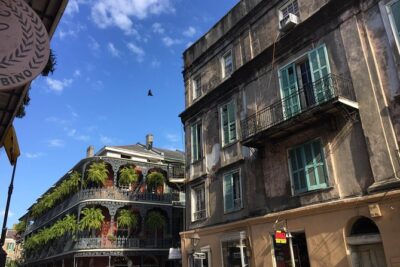
French Quarter Historical Sights and Stories Walking Tour
Read our review →
Ghost and Vampire Walking Tour Of The French Quarter
Read our review →
New Orleans City Tour: French Quarter, Garden District & Cemetery
Read our review →
New Orleans French Quarter Food Tour: Cajun, Creole and Culture
Read our review →
New Orleans French Quarter and More Carriage Ride
Read our review →
French Quarter walking Food Tour Famous Flavors of New Orleans
Read our review →Browse the lists this tour appears in