
Reviewed · FRENCH QUARTER TOURS
French Quarter History: Walking Tour
New Orleans history gets most interesting when it leaves the textbook and reaches the sidewalk. This two-hour French Quarter walk connects architecture, jazz, Mardi Gras, legalized prostitution, floods, cocktails, and the Mississippi River to the people who shaped the city. Guides from founding families add stories passed down through their own relatives.
I especially like the focus on French, Spanish, Native American, enslaved, Creole, and mixed-race communities, rather than a narrow tale of grand buildings and famous men. I also like the guide’s practical finish near Café Du Monde, where you can get beignets and advice on what to see next. The main drawback is that festivals and crowds can block parts of the route, as happened during Jazz Fest.
In This Review
- Key points
- Why this French Quarter walk feels different
- Starting near Decatur Street and the old mint
- Reading French and Spanish architecture in the Quarter
- St. Louis Cathedral and the Mississippi River
- From Native American roots to Creole New Orleans
- Jazz, Mardi Gras, and the city’s public life
- Floods, hurricanes, and why the river matters
- What the two-hour pace is really like
- The finish near Café Du Monde
- Is $30 a fair price?
- Who should book this walk?
- Should you book the French Quarter History Walking Tour?
- FAQ
- How long is the French Quarter History Walking Tour?
- How much does the tour cost?
- What language is the tour offered in?
- Where does the tour meet?
- Where does the tour finish?
- What landmarks are included?
- What should I bring?
- Can I cancel the booking?
Key points
- Family history gives the tour a personal voice: Your guide connects older events with stories from their own ancestors and recent local history.
- The French Quarter is treated as a meeting place of cultures: Expect discussion of Native American, French, Spanish, African, Creole, enslaved, and mixed-race communities.
- The route covers more than architecture: Jazz, Mardi Gras, legalized prostitution, cocktails, floods, hurricanes, and original cuisine all enter the story.
- You see St. Louis Cathedral and the Mississippi River: These are two of the city’s most important visual and historical anchors.
- The finish near Café Du Monde is useful: Your guide can point you toward places to eat, drink, and continue exploring.
- The meeting details need attention: The tour information names both 768 Decatur Street and 400 Esplanade Avenue, so confirm the exact starting point before you go.
Why this French Quarter walk feels different
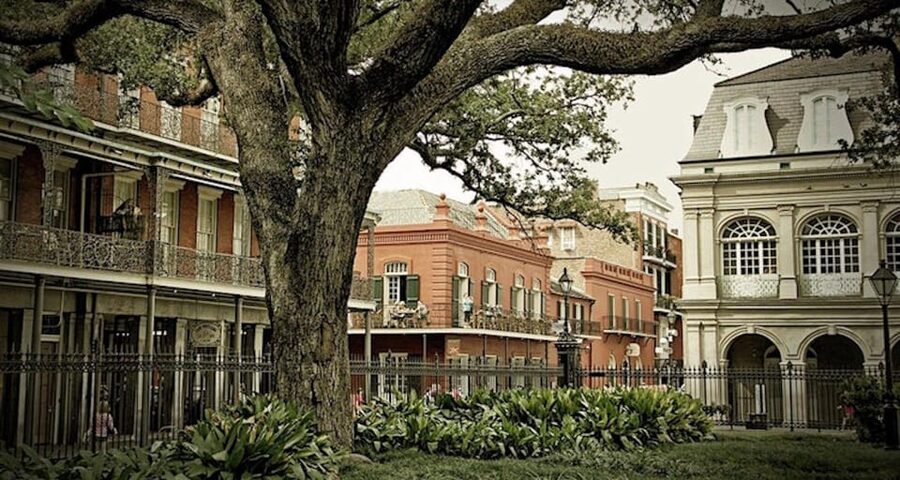
Many city walks give you a string of dates, names, and pretty façades. This one aims for conversation. You are encouraged to ask questions and follow the links between cultures, families, buildings, food, music, and public events.
That approach suits New Orleans. The city’s past does not sit neatly in separate boxes. French and Spanish rule, Native American life, slavery, Creole culture, immigration, religion, commerce, music, and disaster all overlap. A good guide helps you see those connections while you move through the streets.
The tour is led in English by a licensed guide. The company describes its guides as descendants of founding families in the area. That does not mean every story is a private family anecdote, but it does give the walk a personal angle. Recent history can be explained firsthand, while older events are presented through the words and stories of ancestors.
Guides Angela, Charmaine, and DeAnna have led this experience at different times. DeAnna is described as especially engaging, with plenty of anecdotes and historical detail. Angela handled a difficult Jazz Fest day with care, even though blocked streets and heavy crowds meant some places could not be covered.
More ways to walk the French Quarter:
- New Orleans Food Walking Tour of the French Quarter with Small-Group Option
★ 5.0 · 6,118 reviews - New Orleans French Quarter, Voodoo and Culture Walking Tour
★ 4.5 · 2,961 reviews - French Quarter Historical Sights and Stories Walking Tour
★ 5.0 · 2,724 reviews
Starting near Decatur Street and the old mint
The stated meeting point is at 768 Decatur Street, at the bottom of the concrete steps. The longer tour description also refers to beginning at 400 Esplanade Avenue, in front of the United States Mint. Since those locations are not the same, check the confirmed meeting instructions carefully when booking.
That small bit of planning matters. A walking tour does not have a vehicle waiting to collect you if you arrive at the wrong corner. Give yourself time to find the steps, and bring the meeting details with you.
Starting near the old mint places you close to the French Quarter’s eastern edge. From there, the guide can set the area in its larger New Orleans context before leading you farther into the quarter. The point is not simply to admire old walls. It is to ask why this settlement grew here and how the river, trade, government, and different communities shaped its streets.
Wear comfortable shoes. Bring water. Two hours on historic streets can feel easy at the beginning and tiring by the end, particularly in warm weather.
Reading French and Spanish architecture in the Quarter
Architecture is one of the clearest parts of this walk. You will learn to look at the French and Spanish influence in the buildings, rather than treating every old façade as one general style.
The value here is the explanation. A guide can point out how the built environment reflects changes in power, ownership, fire, rebuilding, and local custom. You see places hundreds of years old while hearing why they look the way they do.
The tour also includes the oldest building in the entire Mississippi Valley, according to the experience description. That is a strong historical anchor, especially for anyone who wants more than a quick photograph. Ask your guide to place the building in the timeline of the city and to explain how it survived the changes around it.
You should expect a walking conversation, not an interior tour of every landmark. The supplied details promise sightseeing and historical stories, but they do not promise admission to specific buildings. If you want to go inside a particular site, ask the guide whether that is part of the route or plan a separate visit.
St. Louis Cathedral and the Mississippi River
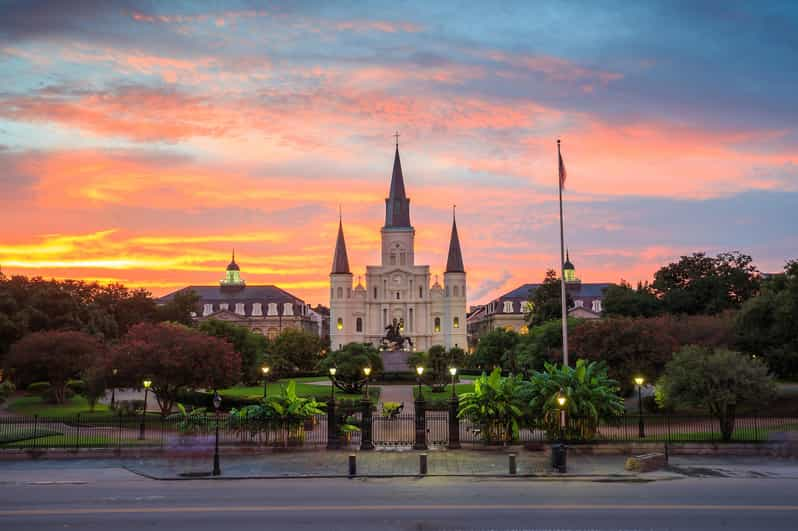
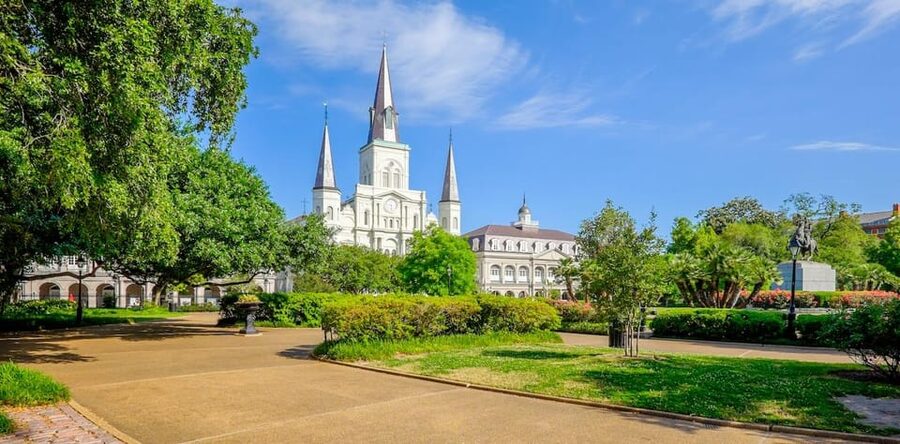
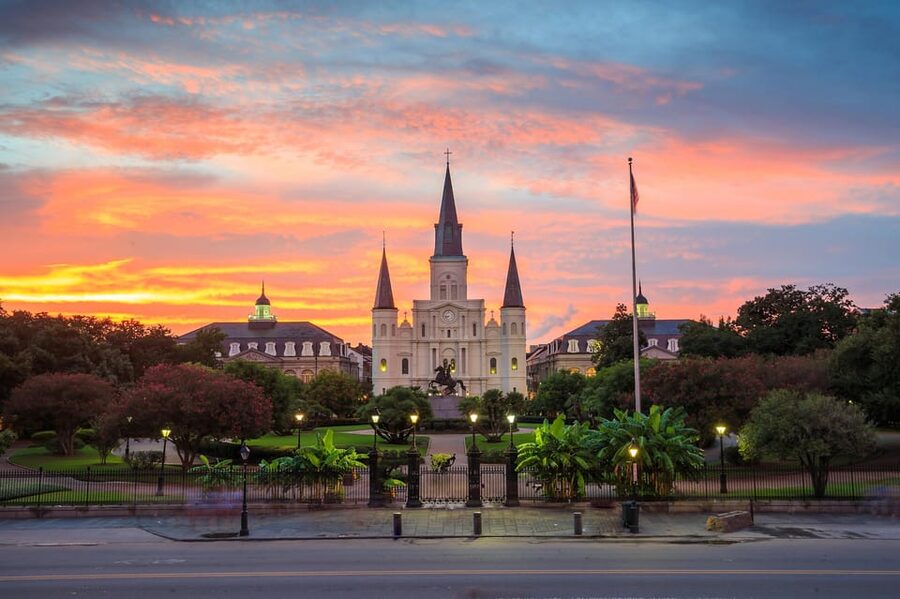
St. Louis Cathedral is one of the central sights. It is described as the most photographed church in the South, and its position in Jackson Square gives it a strong visual role in the French Quarter.
The church matters beyond its appearance. It represents the long religious and colonial story of the city, and it gives the guide a natural place to discuss French, Spanish, Creole, and Catholic influences. You can look at the architecture while hearing about the communities that made the area home.
The walk also reaches the Mississippi River. This is not just a scenic pause. New Orleans exists where it does because of the river. Trade, transportation, food, migration, wealth, flooding, and danger all connect back to this enormous waterway.
Seeing the river during a history tour helps you understand the city’s geography. The winding currents are part of the story, not a background decoration. If the weather is clear, this should be one of the most satisfying points for photographs and orientation.
More history tours in New Orleans:
- New Orleans Garden District History Walking Tour
★ 5.0 · 2,879 reviews - New Orleans Small-Group Haunted History Carriage Tour
★ 4.5 · 2,289 reviews - New Orleans Haunted History Ghost Tour
★ 4.5 · 2,084 reviews - Paddlewheeler Creole Queen Historic Mississippi River Cruise
★ 4.5 · 1,948 reviews
From Native American roots to Creole New Orleans
The tour’s strongest subject is the meeting of cultures. You will hear about Native Americans, enslaved people, French settlers, Spanish influence, Creole communities, and people of mixed racial backgrounds.
That range matters because New Orleans is easy to simplify. A visitor can spend a day seeing French names, Spanish architecture, African American musical traditions, and Caribbean-influenced food without understanding how those threads came together. This walk gives you a framework for reading the city.
The guide’s role is especially important here. The experience promises historical accuracy, but it also promises stories told through the words of ancestors. That combination can make difficult subjects more direct and human. You are not only hearing that communities lived here. You are hearing how their lives and choices shaped the place you are walking through.
Expect serious subjects, including enslavement and racial history. The material is part of the city’s foundation, not an optional side note. If you prefer a tour that focuses only on architecture, restaurants, and cheerful folklore, this may feel more demanding. If you want a fuller account of New Orleans, it is an important part of the two hours.
Jazz, Mardi Gras, and the city’s public life
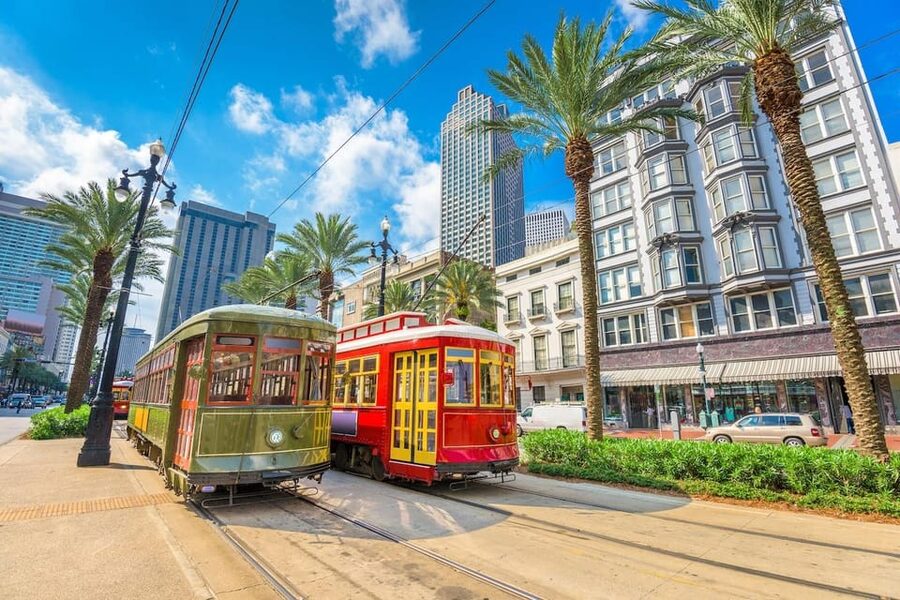
New Orleans music is one of the tour’s headline themes. The guide discusses the creation of jazz and the cultural conditions that allowed the music to grow.
The supplied details do not promise live music or a performance. You are going to hear the history of jazz, not attend a concert. That distinction helps you choose wisely. Pair the walk with live music later if music is your main reason for coming to New Orleans.
Mardi Gras also gets attention. The subject gives the guide a way to explain parade traditions, public celebration, identity, and the city’s habit of turning history into performance. You may already know the broad image of floats and costumes. The useful part is learning how the celebration fits into local life and the city’s past.
The tour also touches on legalized prostitution. That topic points to the old Storyville era and to the way New Orleans has often appeared in national headlines. The description does not promise a separate visit to every former district or building connected with the subject, so think of it as part of the wider historical conversation.
Original cuisine and America’s first cocktails round out the cultural story. Again, this is not a cooking class or tasting tour. You will hear how food and drink fit into the city’s identity, then you can use the guide’s recommendations to plan your own meal.
Floods, hurricanes, and why the river matters
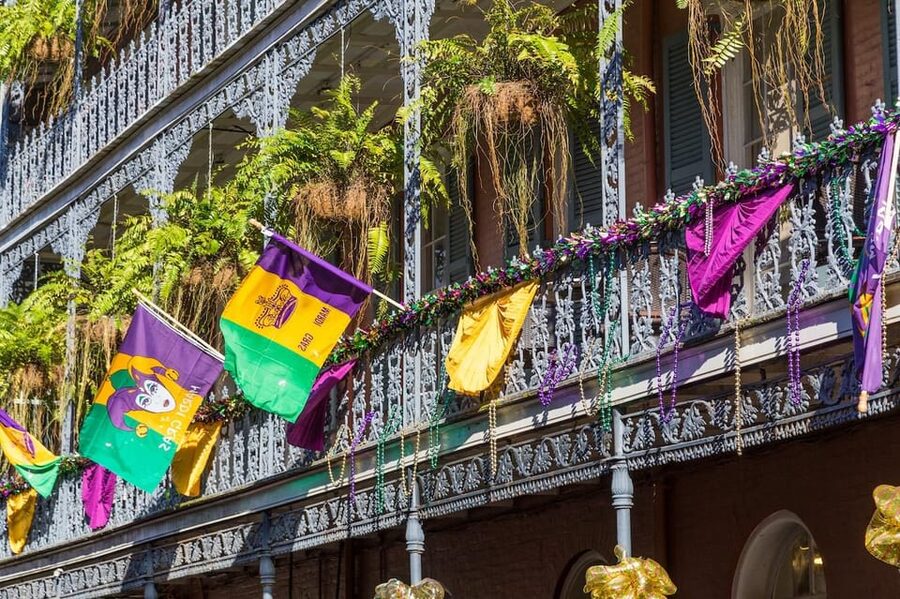
New Orleans cannot be understood without its disasters. Floods and hurricanes are among the subjects covered, and they add needed weight to the picture of the city.
A historic street can look permanent, but the forces around it are not. The river brings trade and life, while water also brings risk. Hearing about floods and hurricanes while standing among old buildings helps you see the French Quarter as a place shaped by survival as much as celebration.
The tour description says the full story of New Orleans could fill volumes. That is fair. Two hours cannot explain every neighborhood, era, or family. The practical benefit is that you leave with a set of themes and questions, which makes later sightseeing more meaningful.
What the two-hour pace is really like
Two hours is long enough to move beyond a quick orientation and short enough to fit into a busy New Orleans schedule. You have time for several historic areas, the cathedral, the river, and a sustained conversation without giving up an entire day.
The pace will depend on the group, the guide, weather, and street conditions. During Jazz Fest, Angela’s group encountered blocked streets and crowds and missed some places. That is a useful warning: major events can change the route and reduce access to certain parts of the Quarter.
This is a walking tour, so expect time on your feet and regular outdoor exposure. Comfortable shoes and water are specifically recommended. The activity is listed as wheelchair accessible, but temporary street closures and crowd conditions can still affect how easily the group moves. If access is especially important for you, discuss the current route when booking.
The guide speaks English. No other language is listed.
The finish near Café Du Monde
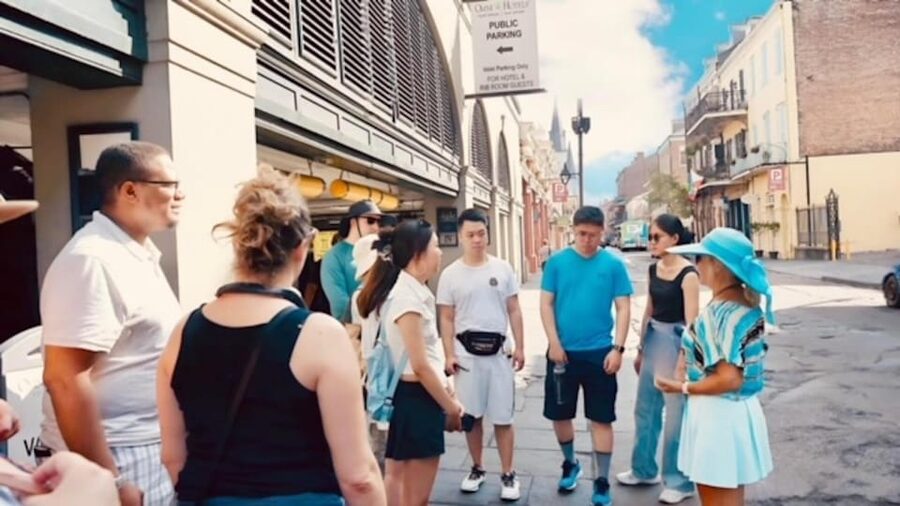
The walk ends in the vicinity of 848 Decatur Street, near Café Du Monde, although the itinerary also lists 768 Decatur Street as the return point. The practical message is clear: you finish in the central French Quarter, close to one of the city’s best-known places for beignets.
The ending is well chosen for a first visit. You can continue with coffee and powdered-sugar pastries, or use the guide’s suggestions to choose another restaurant, bar, or sight. The guide also helps make sure you know where you are headed next.
Do not treat the finish as a formal meal stop included in the price. Beignets and drinks are not listed as included. Think of Café Du Monde as a nearby option and a useful landmark.
Is $30 a fair price?
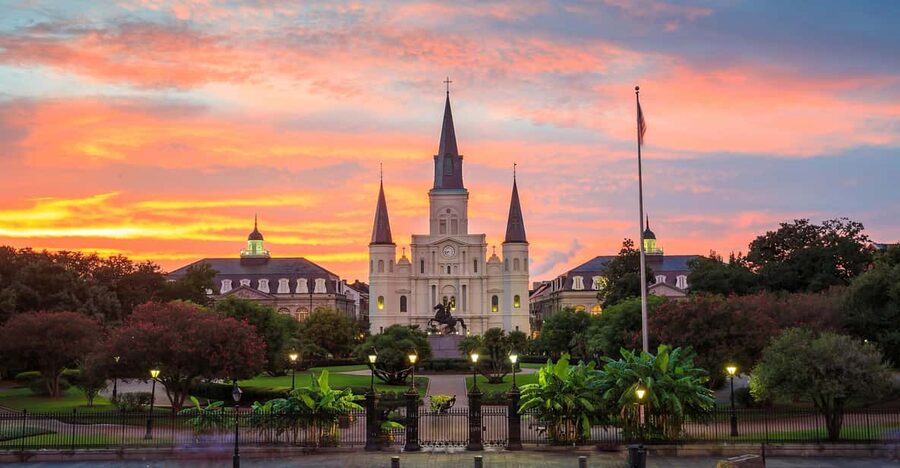
At $30 per person, this is a reasonable price for a two-hour guided walk, especially if you value local interpretation rather than simply following a map.
The price pays for a licensed guide, historical explanation, access to a structured route, and the chance to ask questions as you go. The family connection is also part of the appeal. A self-guided walk costs less, but it cannot easily provide the same running explanation of architecture, culture, music, slavery, disasters, and local customs.
The value depends on how you use it. Book it early in your New Orleans stay and you can use the guide’s food and sightseeing suggestions for the rest of your visit. Book it after you already know the Quarter well, and some of the orientation benefit will be gone.
Nothing listed suggests that food, drinks, transportation, or building admission is included. Budget separately for those. Free cancellation up to 24 hours before the activity and the option to reserve now and pay later also reduce the risk if your schedule is still changing.
Who should book this walk?
I would choose this tour if you want the French Quarter explained through people and events, not just photographed from the street. It fits first-time visitors, history fans, and anyone who wants a useful introduction before exploring alone.
It also suits families with older children who can handle two hours of walking and serious historical subjects. The stories about jazz, Mardi Gras, cocktails, and unusual parts of the city’s past can keep the subject lively, while the discussion of Native American life and enslavement adds substance.
You may want a different activity if you need a fast, purely visual tour, a food tasting, a ghost walk, or a music performance. Those are not promised here. You should also allow for route changes during festivals and crowded periods.
Should you book the French Quarter History Walking Tour?
Book it if personal storytelling and cultural context matter to you. The best reason to go is the chance to hear New Orleans history from guides connected to local founding families, with the city’s architecture, river, music, food, and hard past treated as one connected story.
The clearest caution is the uncertain meeting information and the possibility of crowd-related changes. Confirm whether you should meet at 768 Decatur Street or 400 Esplanade Avenue, then arrive ready to walk. At $30, this is a solid introduction to the French Quarter, especially when scheduled near the beginning of your stay.
FAQ
How long is the French Quarter History Walking Tour?
The tour lasts two hours.
How much does the tour cost?
The price is $30 per person.
What language is the tour offered in?
The live tour is offered in English.
Where does the tour meet?
The itinerary lists 768 Decatur Street, with guests meeting at the bottom of the concrete steps. The tour description also refers to 400 Esplanade Avenue in front of the United States Mint, so confirm the exact meeting point before arrival.
Where does the tour finish?
The tour ends in the vicinity of 848 Decatur Street near Café Du Monde. The itinerary also lists 768 Decatur Street as the return point.
What landmarks are included?
You will see St. Louis Cathedral, historic French and Spanish architecture, buildings hundreds of years old, the oldest building in the Mississippi Valley, and the Mississippi River.
What should I bring?
Bring comfortable shoes and water.
Can I cancel the booking?
You can cancel up to 24 hours in advance for a full refund. You can also reserve now and pay later.
More Walking Tours in New Orleans
- New Orleans Premier Ghost, Voodoo and Vampire Walking Tour
★ 4.5 · 12,856 reviews - St. Louis Cemetery No. 1 Official Walking Tour
★ 4.5 · 3,941 reviews - Ghost and Vampire Walking Tour Of The French Quarter
★ 4.5 · 2,406 reviews - New Orleans Adults-Only True Crime and Ghost Walking Tour
★ 5.0 · 1,666 reviews
Just added around New Orleans
- New Orleans: Whitney Plantation Audio Tour with Transfers★ 4.7 · 3 reviews
- New Orleans Instagram Photo Tour★ 4.5 · 3 reviews
- New Orleans: Voodoo, Storyville, and Treme Walking Tour★ 3.3 · 3 reviews
- Outdoor Escape Room in New Orleans – The French Quarter★ 5.0 · 3 reviews
- New Orleans: Private Custom Guided Walking Tour★ 4.0 · 3 reviews
- Private New Orleans City and Cemetery Bus Tour Up to 24 People★ 5.0 · 3 reviews
- New Orleans: Voodoo History Guided Walking Tour★ 4.8 · 3 reviews
- New Orleans: French Quarter Cocktail and Foodie Crawl Tour★ 5.0 · 3 reviews
French Quarter Tours, compared.

New Orleans Food Walking Tour of the French Quarter with Small-Group Option
Read our review →
New Orleans French Quarter, Voodoo and Culture Walking Tour
Read our review →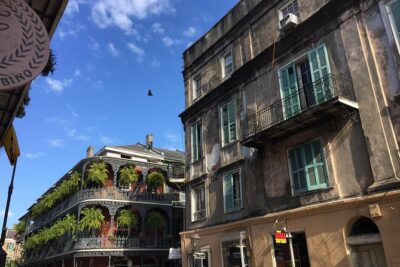
French Quarter Historical Sights and Stories Walking Tour
Read our review →
Ghost and Vampire Walking Tour Of The French Quarter
Read our review →
New Orleans City Tour: French Quarter, Garden District & Cemetery
Read our review →
New Orleans French Quarter Food Tour: Cajun, Creole and Culture
Read our review →
New Orleans French Quarter and More Carriage Ride
Read our review →
French Quarter walking Food Tour Famous Flavors of New Orleans
Read our review →Browse the lists this tour appears in