
Reviewed · FRENCH QUARTER TOURS
French Quarter History and Landmark Waking Tour
The most striking part of this tour is the way it links New Orleans’ grand landmarks with its stranger stories. In about two hours, you move from Congo Square and Catholic New Orleans to Bourbon Street, the French Market, and the above-ground tombs of St. Louis No. 1 Cemetery.
I like the strong history focus, especially the attention given to New Orleans as an 18th-century French colony and to Congo Square’s role across changing empires. I also like the small maximum group of 16, which gives guides such as Mike, David, Dane, Tara, and Graham room to answer questions and tailor the walk.
The main drawback is the pace. This is a walking tour in a hot, mostly exposed city, and the cemetery offers little shade. A past scheduling problem also caused one party to wait 45 minutes, so you should confirm the meeting details before setting out.
In This Review
- Key points to know before you book
- Why this two-hour walk works as an introduction
- Starting at Congo Square
- Jackson Square, the Cabildo, and the Presbytère
- Royal Street and the quieter side of the Quarter
- Bourbon Street, past and present
- Café du Monde and the French Market
- St. Louis No. 1 and the tomb of Marie Laveau
- The guides make the difference
- Who should take this walk
- Price, timing, and cancellation
- Should you book it?
- FAQ
- How long does the French Quarter walking tour last?
- What time does the tour start?
- Where does the tour begin?
- Where does the tour end?
- Is St. Louis No. 1 Cemetery included?
- Are food and drinks included?
- What is the cancellation policy?
Key points to know before you book
- Congo Square gives the tour a wider lens: You learn about its pre-colonial roots and its influence over time, not just the usual French Quarter anecdotes.
- St. Louis No. 1 is the signature stop: The above-ground tombs and Marie Laveau connection add a memorable, solemn edge to the walk.
- You cover many core landmarks: Jackson Square, the Cabildo, the Presbytère, Café du Monde, the French Market, Royal Street, and Bourbon Street all fit into the route.
- The guide shapes the experience: The best accounts praise Mike, Michael Naughton, David, Dane, Tara, Graham, Randy, and Mark for making complex history clear and entertaining.
- The group is capped at 16 people: That is small enough for questions without requiring the cost of a private tour.
- Plan for heat and walking: Wear comfortable shoes, bring water and a hat, and expect limited shade at the cemetery.
Why this two-hour walk works as an introduction
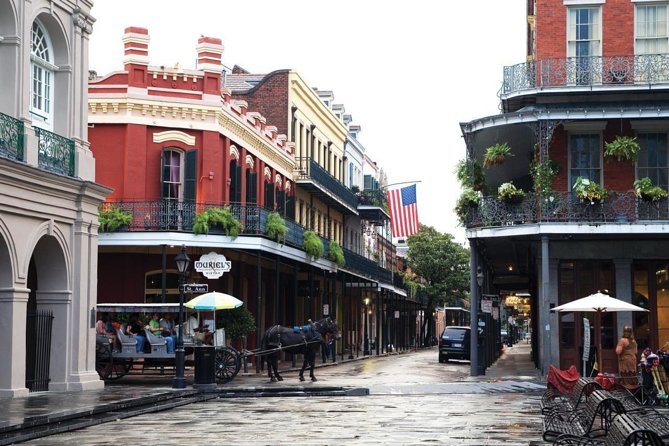
New Orleans can feel confusing at first. The streets carry French names, Spanish-era buildings, Catholic traditions, Creole customs, American commercial culture, and a modern party scene. A good first walk helps you see how those layers sit beside one another.
This tour is useful because it does not treat the French Quarter as a row of pretty buildings. It connects places to people and events. You hear about colonial New Orleans, Creole aristocrats, Catholic influence, voodoo priestesses, famous residents, and the way old landmarks function today.
At $30 per person, the price is reasonable for a two-hour guided walk led by a professional historian. You are paying less for admission than for interpretation. The landmarks themselves are easy to see from the street, but the context is what turns a short stroll into something worthwhile.
The format also suits a first morning in the city. The start time is 10:00 a.m., early enough to avoid the worst of the afternoon heat and useful for getting your bearings before an afternoon of independent exploring. You finish in the French Quarter, so you can continue with lunch, shopping, or a second look at a place that caught your eye.
More ways to walk the French Quarter:
- New Orleans Food Walking Tour of the French Quarter with Small-Group Option
★ 5.0 · 6,118 reviews - New Orleans French Quarter, Voodoo and Culture Walking Tour
★ 4.5 · 2,961 reviews - French Quarter Historical Sights and Stories Walking Tour
★ 5.0 · 2,724 reviews
Starting at Congo Square
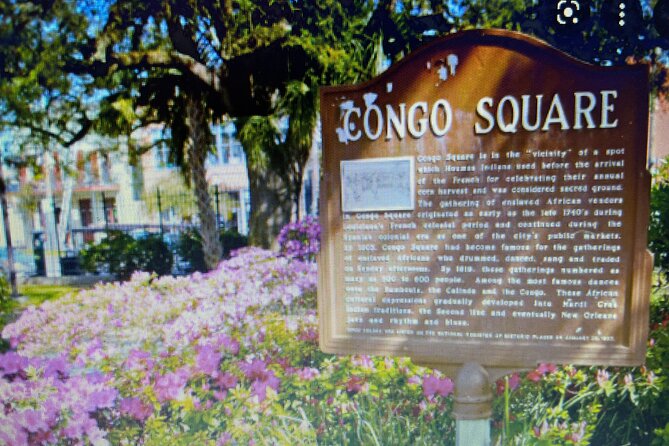
Congo Square is the tour’s most important stop for understanding New Orleans beyond its European beginnings. The focus here is on the area’s pre-colonial origins and its changing role across empire and time.
That matters because New Orleans history is often presented too narrowly, as if the city began with French settlers and ended with jazz clubs and Bourbon Street. Congo Square points to older cultural roots and to the way a place can change in meaning while remaining central to a city’s identity.
You spend about 20 minutes at this stop. That is long enough for a focused explanation, though not long enough for an extended lecture. If this subject interests you, ask questions. The small group limit should make that practical, especially on a quieter departure.
The tour’s treatment of Catholic influence also helps explain why New Orleans looks and feels different from many other American cities. Religious customs, burial practices, architecture, and public spaces all reflect that influence. You will not just be looking at buildings. You will be hearing why certain traditions took hold here.
Jackson Square, the Cabildo, and the Presbytère
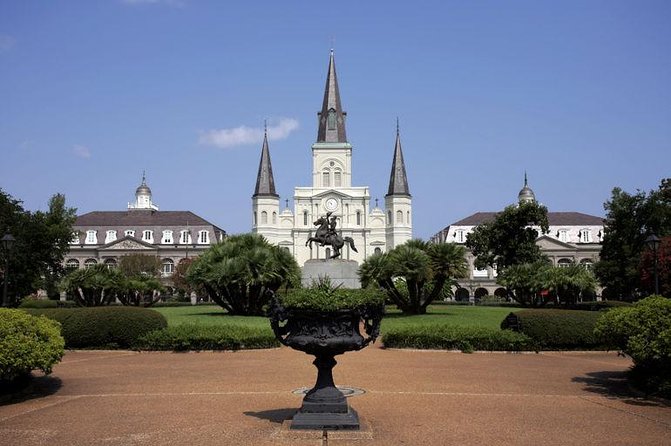
Jackson Square is one of the French Quarter’s essential stops, and the guide uses it to explain the city’s colonial past and its public landmarks. The square gives you a useful visual anchor: historic buildings, open space, and the political and religious institutions that shaped early New Orleans.
The nearby Cabildo and Presbytère add detail to that picture. Their backstories help explain how government, religion, and civic life developed in the city. The tour does not simply point out the façades. It places them within the story of New Orleans as a French colony and later as a city shaped by several European powers.
I especially like this part for first-time visitors who want a foundation rather than a collection of disconnected facts. You can return later on your own and look at the architecture with a clearer sense of what it represents.
The tradeoff is that a two-hour tour cannot give every building a full treatment. The guide has to keep moving, and some stops receive more attention than others. If your main goal is museum interiors, this is not the right format. It is an outdoor orientation walk with historical explanation.
Royal Street and the quieter side of the Quarter
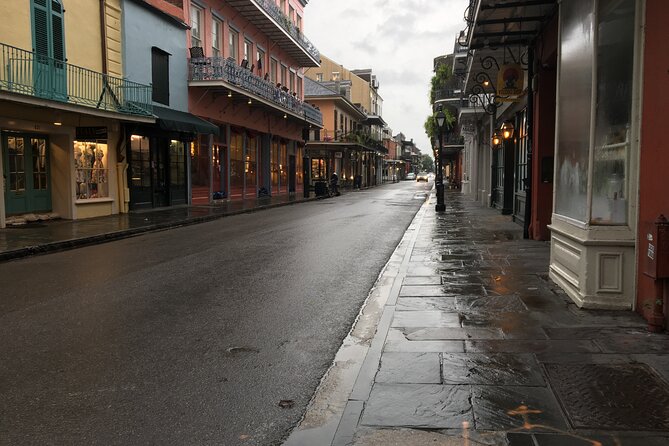
Royal Street offers a different mood from Bourbon Street. The tour points out upscale shops and galleries, giving you a look at the French Quarter as a place of commerce and art as well as nightlife.
This is a useful contrast. Many first-time visitors associate the Quarter almost entirely with drinking, music, and crowded sidewalks. Royal Street shows another side, one with a more polished feel and a stronger connection to shopping and galleries.
The guide can also help you read the street as part of the larger neighborhood rather than as a separate attraction. That is one reason I prefer taking a walk like this early in a stay. You learn where the atmosphere changes, then you can return later at your own pace.
Do not expect a long shopping stop. The point is to see the street and understand its place in the Quarter. If you want time to browse, plan to come back after the tour.
More history tours in New Orleans:
- New Orleans Garden District History Walking Tour
★ 5.0 · 2,879 reviews - New Orleans Small-Group Haunted History Carriage Tour
★ 4.5 · 2,289 reviews - New Orleans Haunted History Ghost Tour
★ 4.5 · 2,084 reviews - Paddlewheeler Creole Queen Historic Mississippi River Cruise
★ 4.5 · 1,948 reviews
Bourbon Street, past and present
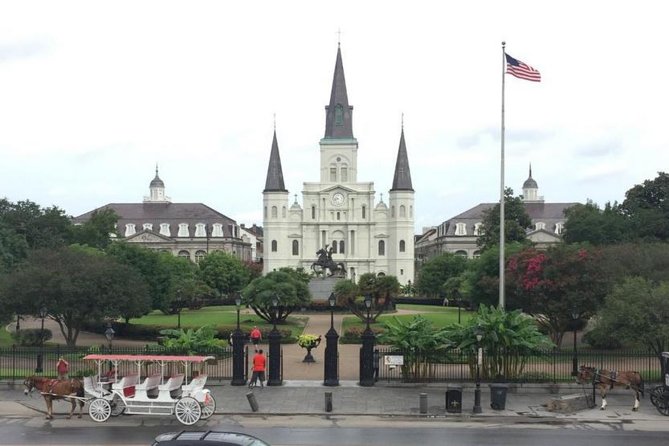
Bourbon Street receives both historical and modern attention. You hear about its earlier role and then consider the current scene, which can be noisy, crowded, and very different from the stately image of Jackson Square.
That contrast is valuable. New Orleans is not a preserved stage set. The French Quarter is a working neighborhood and a major entertainment district, with daily life and tourism sharing the same narrow streets.
A historian can make Bourbon Street easier to understand by explaining how its identity developed instead of treating it as either a must-see party strip or a place to avoid. The tour gives you context before you decide how much time you want to spend there.
The street may not appeal to everyone. If you prefer quiet architecture and cemetery history, you may find this section less comfortable than Royal Street or Jackson Square. Still, it belongs in a basic French Quarter orientation because it is such a visible part of modern New Orleans.
Café du Monde and the French Market
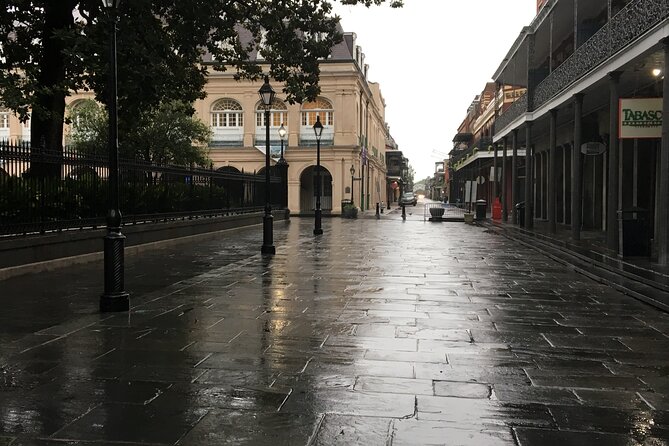
Café du Monde and the French Market connect the historic Quarter with everyday food, trade, and public life. The tour explains the backstories behind these familiar landmarks rather than including food or drinks.
That last point is important. Your $30 ticket does not cover coffee, beignets, or lunch. You can treat the tour as a guide to places where you may want to eat later, but budget separately for anything you buy.
Café du Monde is a natural place to continue after the walk, particularly if you want to try a local staple. The French Market also gives you a chance to compare the carefully presented historic image of the Quarter with its active commercial side.
Because this is a walking experience, the guide’s comments help you notice more than a quick independent pass would. You learn why these places matter and how they fit into the city’s past. Just do not expect time for a sit-down meal during the route.
St. Louis No. 1 and the tomb of Marie Laveau
St. Louis No. 1 Cemetery is the emotional high point of the tour. Its above-ground tombs look unlike the below-ground cemeteries familiar in many parts of the United States, and they provide a direct link to New Orleans burial customs and Catholic influence.
The cemetery also brings the city’s famous voodoo traditions into the walk. The tour visits the final resting place associated with Marie Laveau, often described as a voodoo queen. The guide’s job here is especially important. You want the stories to be fascinating without turning a sacred place into a sideshow.
The cemetery is reportedly accessible through a licensed guide, making this portion more useful than simply trying to wander nearby on your own. The experience gives you a structured way to see the tombs and ask questions about voodoo, burial customs, and the people connected with the site.
This is also where practical planning matters most. Bring water and a hat. One person specifically noted that the cemetery was scorching even in November and had no shade. Wear shoes you can comfortably walk in, and be prepared for a respectful visit rather than a casual photo stop.
If you are uncomfortable with cemetery tourism, you may prefer a French Quarter walk that skips this site. For many visitors, though, St. Louis No. 1 adds depth and gives the tour a clear ending instead of finishing with another street corner.
The guides make the difference
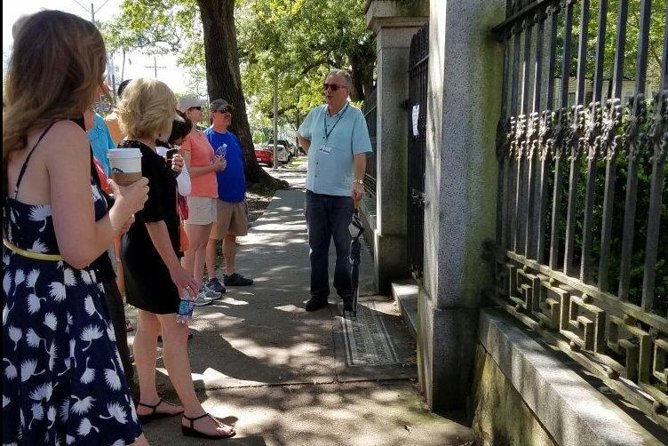
The strongest part of this experience is the guide’s ability to turn facts into a story you can follow. The best guide accounts praise Mike, also identified as Michael Naughton, along with David, Dane, Graham, Tara, Randy, and Mark.
Mike receives especially warm attention for answering questions, explaining the cemetery with care, and making the walk personal when the group was very small. Graham is described as flexible and well informed, while Dane is noted for an entertaining morning walk that was adjusted to suit the group.
Those details tell you what to look for. This is not a recorded audio route where every departure feels identical. The personality and preparation of the historian matter. You may get a lively storyteller, a guide who focuses on detail, or someone who follows your questions into subjects such as voodoo and local personalities.
The group maximum of 16 helps. It is not a private tour, but it is small enough that you should be able to hear the guide and ask questions. Some departures may be much smaller. One couple and one pair of friends had the walk almost to themselves, which allowed for a more personal experience.
There is one service warning to keep in mind. A past departure suffered a scheduling failure when the original guide did not arrive, and the group waited while trying to reach the operator. The company said it issued a full refund and arranged a backup guide for a complementary tour. That response is reassuring, but the disruption still shows why you should check your confirmation and meeting point before leaving your hotel.
Who should take this walk
I would choose this tour if you want a short but serious introduction to New Orleans. It suits a first visit, a history-focused weekend, or anyone who wants to understand the French Quarter before exploring it alone.
It is also a good match for people who enjoy questions about colonial power, religion, burial customs, famous residents, and the line between history and legend. The tour includes ghostly material and voodoo stories, but it is not presented as only a spooky entertainment walk.
You should be comfortable walking for roughly two hours. Most people can participate, service animals are allowed, and the start is near public transportation. The supplied details do not promise a step-free route or seating at every stop, so contact the operator if you need specific mobility information.
Families with older children may find the stories engaging, though the cemetery and voodoo subjects may not suit every young child. The tour is also a sensible choice for solo visitors because a guide provides structure and company without the cost of a private booking.
Price, timing, and cancellation
At $30, this is a fair buy if you value interpretation. You could walk past Jackson Square, Royal Street, Bourbon Street, Café du Monde, and the French Market without paying anything, but you would miss the connections between them and may not be able to enter St. Louis No. 1 without the right guide.
The tour lasts about two hours and starts at 540 Chartres Street at 10:00 a.m. It ends in the French Quarter, not at a separate transport terminal, so the finish is convenient for continuing your day.
A mobile ticket keeps the booking simple. Confirmation is normally sent at booking, though bookings made within one day of departure are confirmed as soon as possible, subject to availability.
Free cancellation applies if you cancel at least 24 hours before the start time. Inside that window, the payment is not refunded, and changes are not accepted. The cut-off follows New Orleans local time, so do not leave cancellation decisions until the last minute.
Should you book it?
Book this tour if you want a compact history lesson with real places attached to it. Congo Square gives the walk unusual depth, while St. Louis No. 1 and Marie Laveau provide the memorable final chapter. The strong praise for guides such as Mike, David, Dane, Tara, and Graham also suggests that the human side of the experience can make a big difference.
Skip it if you dislike walking in heat, have little interest in history, or want a food tour with included tastings. You should also leave room in your schedule for a guide delay, even though that appears to have been an isolated service problem.
For most first-time visitors, I would take it near the beginning of a New Orleans stay. Wear comfortable shoes, bring water and a hat, and save time afterward for the beignets, galleries, and side streets you discover along the way.
FAQ
How long does the French Quarter walking tour last?
The tour lasts approximately two hours.
What time does the tour start?
The stated start time is 10:00 a.m.
Where does the tour begin?
The meeting point is 540 Chartres Street, New Orleans, Louisiana 70130.
Where does the tour end?
The tour ends in the French Quarter.
Is St. Louis No. 1 Cemetery included?
Yes. The walk includes the above-ground tombs of St. Louis No. 1 Cemetery and the final resting place associated with Marie Laveau.
Are food and drinks included?
No. Food and drinks are not included in the $30 ticket.
What is the cancellation policy?
You receive a full refund if you cancel at least 24 hours before the experience starts. Cancellations or changes made within 24 hours are not accepted and are not refunded.
Just added around New Orleans
- New Orleans Garden District Tour★ 5.0 · 8 reviews
- New Orleans Seance Experience★ 4.0 · 8 reviews
- Airport and City Transfers in New Orleans★ 5.0 · 8 reviews
- Sin and Tonic Pub Crawl in New Orleans★ 4.5 · 8 reviews
- The New Orleans Darkness Tour★ 4.4 · 9 reviews
- New Orleans Plantation Tour with Transportation★ 5.0 · 9 reviews
- New Orleans Self-Guided Kayak Bayou Swamp Tour★ 5.0 · 9 reviews
- Historic Carrollton Neighborhood Walking Tour★ 5.0 · 9 reviews
French Quarter Tours, compared.

New Orleans Food Walking Tour of the French Quarter with Small-Group Option
Read our review →
New Orleans French Quarter, Voodoo and Culture Walking Tour
Read our review →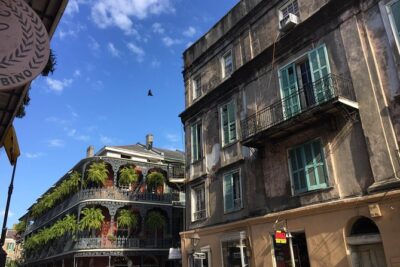
French Quarter Historical Sights and Stories Walking Tour
Read our review →
Ghost and Vampire Walking Tour Of The French Quarter
Read our review →
New Orleans City Tour: French Quarter, Garden District & Cemetery
Read our review →
New Orleans French Quarter Food Tour: Cajun, Creole and Culture
Read our review →
New Orleans French Quarter and More Carriage Ride
Read our review →
French Quarter walking Food Tour Famous Flavors of New Orleans
Read our review →Browse the lists this tour appears in