
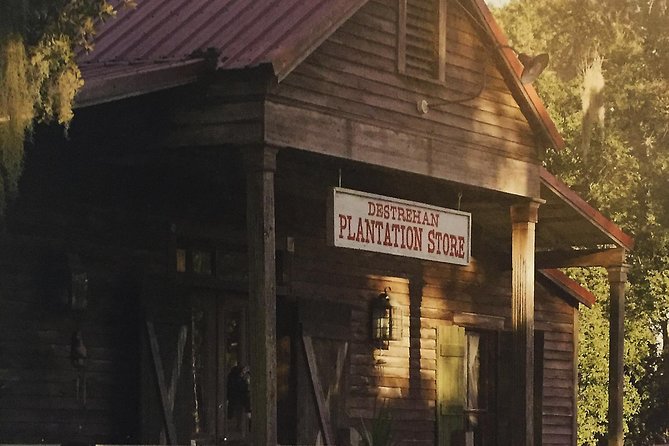
Reviewed · DESTREHAN PLANTATION TOURS
Destrehan Plantation Tour
Destrehan Plantation gives you a close look at Louisiana plantation life, including the people who owned the property and the enslaved workers whose labor made it possible. The strongest part is the attention to the 1811 Slave Revolt, the largest uprising of enslaved people in United States history.
I like the clear focus on political, social, and economic life, rather than treating the main house as a pretty old building alone. I also like the freedom to explore the dependency buildings and grounds after the guided portion. One thing to consider: the booking information lists about 45 minutes, while the on-site visit can take roughly two hours if you attend the tour and see every building.
In This Review
- Key points to know before you go
- Why Destrehan Plantation is worth your time
- The main house and the people who lived there
- The 1811 Slave Revolt exhibit
- The cabins and working buildings
- The Legacy Room and original documents
- Walking the grounds beneath the oak trees
- How much value do you get for $29.70?
- Getting there and planning your visit
- Who will appreciate Destrehan most?
- Should you book the Destrehan Plantation Tour?
- FAQ
- Where is Destrehan Plantation?
- How long does the Destrehan Plantation Tour last?
- How much does the tour cost?
- What language is the tour offered in?
- What is included in the visit?
- Is the 1811 Slave Revolt discussed?
- Can I reach Destrehan Plantation without driving?
- How large are the tour groups?
- What is the cancellation policy?
Key points to know before you go
- The 1811 Slave Revolt is given serious attention: The overseer’s cabin holds a dedicated exhibit about this major event.
- Costumed interpreters lead the main tour: Guides including Jim, Beverly, Jordan, Kelly, and others are praised for clear storytelling.
- The grounds add real value: You can walk among the oak trees, cabins, kitchen, washroom, and other historic buildings.
- It is close to New Orleans: The plantation is in Destrehan and can be reached by rideshare or taxi.
- The visit is small and manageable: Groups are limited to 19 people, making it easier to hear the guide and ask questions.
- The price is moderate: At $29.70 per person, the tour offers more than a quick look at the main house, especially if you stay for the full grounds visit.
Why Destrehan Plantation is worth your time
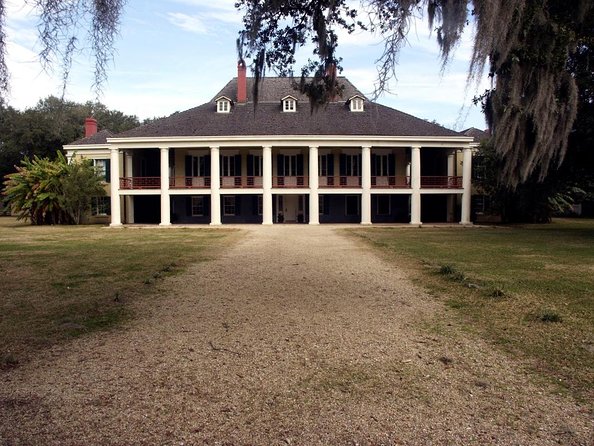
Many plantation tours in the New Orleans area are sold through photographs of grand columns and mossy oak trees. Destrehan does have those visual pleasures, but the more important reason to visit is the chance to connect the property’s architecture with the systems that supported it.
The tour addresses the plantation’s political, social, and economic life. That matters because a house like this was never just a private home. It was part of a working agricultural operation, a place shaped by wealth, labor, law, family, and the violence of slavery.
You should expect the experience to move between the lives of people who lived freely and those who were enslaved. That broader approach gives the visit more balance than a tour focused only on family furniture, construction, and restoration.
The property has a rating of 4.8 from 501 reviews, and 95 percent of people who rated it recommend it. That high approval fits the experience described here: the guides are a major part of the appeal, and the site gives you time to look beyond the main house.
More Destrehan Plantation visits:
- Airboat Swamp and Destrehan Plantation Tour from New Orleans
★ 5.0 · 258 reviews - Destrehan Plantation Haunted Night Tour
★ 4.5 · 100 reviews - Destrehan Plantation and Large Airboat Tour from New Orleans
★ 4.5 · 60 reviews
The main house and the people who lived there
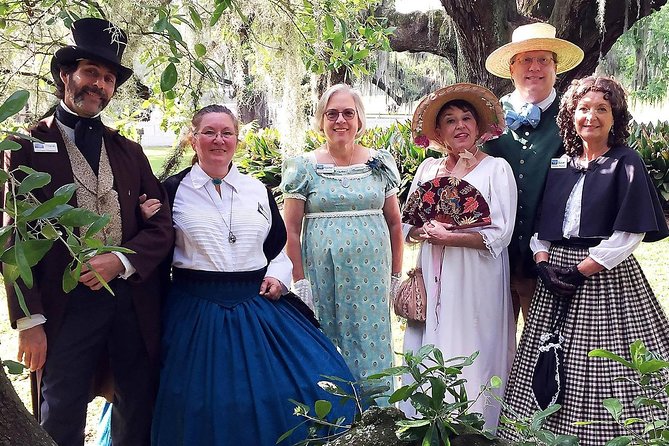
Your guided portion begins at Destrehan Plantation, where a costumed historical interpreter leads the storytelling. The period clothing adds a visual layer, but the real value comes from hearing how the plantation functioned and learning about the people connected to it.
Guides named Jim, Beverly, Jordan, Kelly, Kaitlin, Clint, Sarah, Alan, Ann, and others have led recent tours. Jim is repeatedly singled out for keeping people interested while explaining historical facts and personal stories. Beverly’s presentation is described as thought-provoking, especially when discussing the harsh conditions endured by enslaved people.
That range of guides means your experience will depend partly on who leads your group. The encouraging part is that praise is not limited to one person. The strongest descriptions consistently point to guides who answer questions, explain the house clearly, and connect individual lives to wider events.
You will hear about the plantation owners and their families, along with the enslaved people who lived and worked there. That human focus makes the house more than a collection of rooms. It helps you see the property as a place where very different lives existed side by side, under a deeply unequal system.
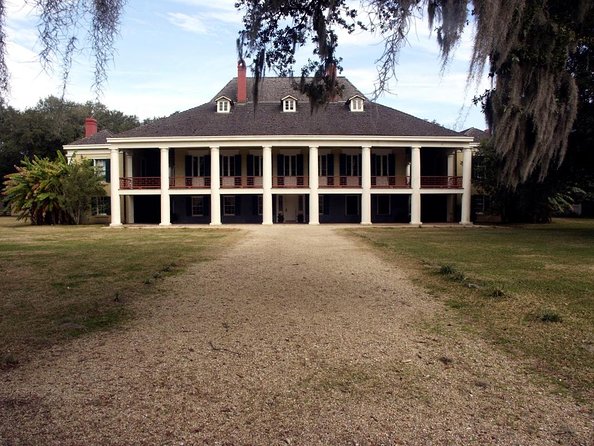
The main house is described as beautiful and impressive, and you will have a chance to consider its construction, upkeep, restoration, and family history. Still, the house should not be the only thing you come to see. The most meaningful parts of the visit extend into the smaller buildings and exhibits outside.
The 1811 Slave Revolt exhibit
The overseer’s cabin contains an exhibit devoted to the 1811 Slave Revolt. This is one of the most important reasons to choose Destrehan if you want to understand the region beyond its architecture.
The uprising involved enslaved people who resisted the plantation system in Louisiana. The experience presents it as the largest uprising in United States history, giving you a direct connection to one of the country’s most significant acts of resistance by enslaved people.
The exhibit helps place the plantation in a wider setting. You are not simply looking at a preserved home and imagining an elegant past. You are confronting the labor, fear, conflict, and resistance that were part of that past.
Ann is praised for explaining the revolt and its historical setting, while guides such as Jordan and Beverly are noted for making difficult subjects clear. You should allow time to listen carefully here. The topic is serious, and the exhibit adds the context needed to understand why the plantation’s story cannot be reduced to decorative details.
I especially value this part of the visit because it gives the tour moral and historical weight. You may come for the house and oak trees, but the 1811 exhibit is likely to be what you remember longest.
The cabins and working buildings
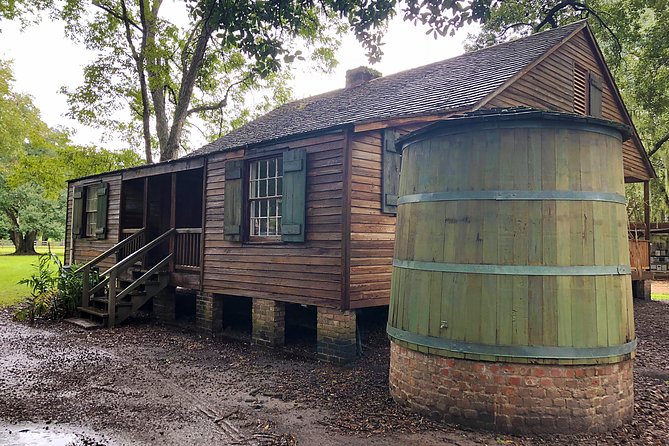
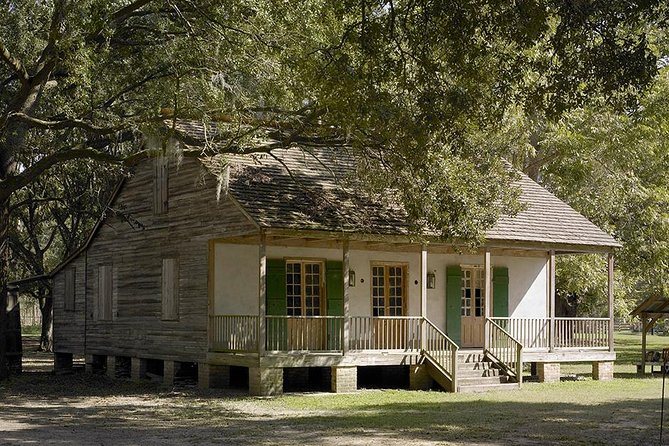
After the guided tour, you can explore several dependency buildings and parts of the grounds on your own. These smaller structures help explain daily life in a way the main house cannot.
A slave cabin includes an enslaved registry, an important document for understanding how people were recorded and controlled by the plantation system. The cabin also points to the cramped and unequal living conditions behind the comfort of the main residence.
The outdoor kitchen shows the practical side of plantation life. Food preparation required constant work, and separating the kitchen from the main house was part of the way large homes operated. The washroom adds another glimpse of the repetitive labor needed to keep the household running.
You can also see a trapper’s cabin, which broadens the visit beyond the central family story. These buildings are modest, but that is precisely why they matter. They help you picture the plantation as a community of work, not only as a grand residence.
The self-guided portion is a real advantage. You can move at your own pace, pause at the documents, and return to a building that raised questions during the guided tour. If you rush away after the main house, you will miss much of what makes the visit worthwhile.
More River Road plantation days:
- Swamp Boat Ride and Oak Alley Plantation Tour from New Orleans
★ 5.0 · 3,303 reviews - Oak Alley Plantation Tour with Transportation from New Orleans
★ 4.5 · 1,747 reviews - Whitney Plantation Tour with Transportation from New Orleans
★ 4.5 · 1,351 reviews - Laura Creole Plantation Guided Tour
★ 5.0 · 1,279 reviews
The Legacy Room and original documents
The Legacy Room displays original documents and artifacts connected to family members. This gives you a more direct link to the people who lived at Destrehan.
Original papers can reveal details that a recreated room cannot. They may show names, relationships, ownership, administration, or other parts of the plantation’s operation. The available information does not specify every item on display, so you should think of the room as a place for close looking rather than a fully described exhibit list.
The combination of the Legacy Room and enslaved registry creates an important contrast. One points toward family memory and preservation. The other reflects the record-keeping imposed on enslaved people. Seeing both within the same visit encourages you to think about whose lives were preserved, whose were reduced to paperwork, and how historic sites choose to tell their stories.
That is one reason I would not treat Destrehan as a simple house tour. The documents and smaller exhibits give you material to consider after the guide has finished speaking.
Walking the grounds beneath the oak trees
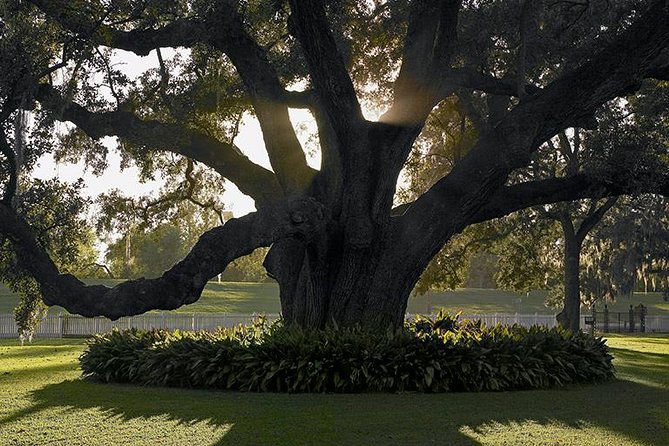
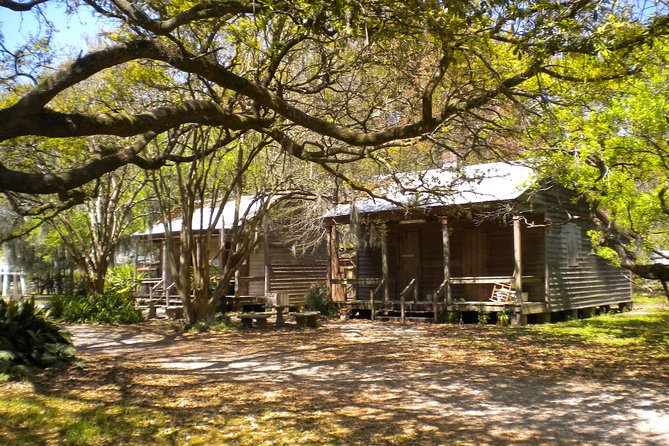
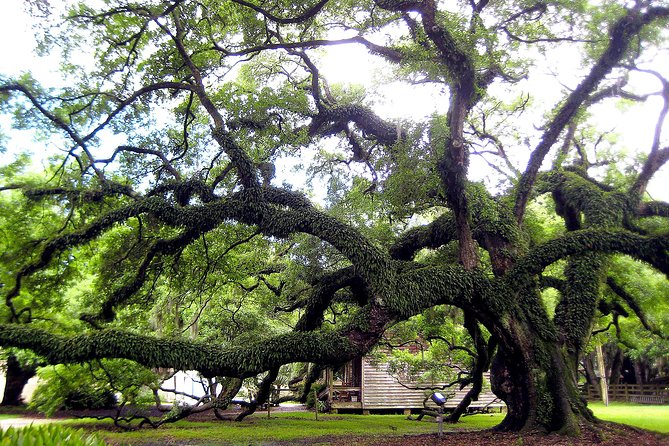
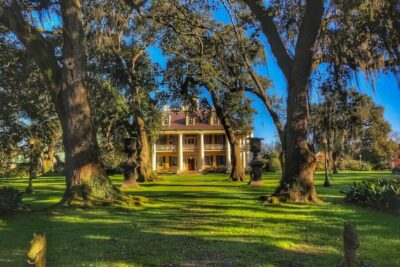
The grounds are peaceful and picturesque, with large oak trees that many visitors find especially memorable. You can walk around after the guided tour and take in the setting without being rushed through every moment.
This outdoor time works well as a pause after the heavier historical material. You might enjoy the quiet, study the relationship between the main house and outbuildings, or simply take photographs of the property. The beauty of the setting is real, but it should be viewed alongside the difficult history rather than used to soften it.
The option to explore solo is useful for families and mixed-age groups. One person can spend longer with an exhibit while another takes a walk. It also helps if you prefer to reflect privately after discussing slavery and revolt with a group.
Bring sensible expectations for the timing. The advertised tour duration is approximately 45 minutes, but the property’s planned visit includes about two hours for the guided tour, demonstrations, and self-guided grounds. Plan your schedule around the longer visit if you want to see the cabins and other buildings.
How much value do you get for $29.70?
At $29.70 per person, Destrehan is reasonably priced for a focused historic-site visit near New Orleans. The value depends on how you use the time.
If you only attend the short guided portion and leave immediately, the price may feel less compelling. If you stay for the main house, the 1811 Slave Revolt exhibit, the registry, the working buildings, the Legacy Room, and the grounds, the admission becomes easier to justify.
The small group limit of 19 people also helps. You are less likely to feel lost in a crowd, and you should have a better chance to hear the interpreter and ask a question. The quality of the guide matters, and the repeated praise for Jim, Beverly, Jordan, Kelly, and others suggests that storytelling is a central strength.
The visit is also a practical choice if you want plantation history without giving up an entire day. Several guides are praised for making the subject engaging while keeping the tour moving. That makes Destrehan suitable for a first plantation visit or for someone who wants a shorter, more focused stop.
Some visitors also find the nearby Indigo Café appealing, and the gift shop is described as affordable. These details are not the main reason to book, but they can make the stop feel more complete.
Getting there and planning your visit
The meeting point is 13034 River Road, Destrehan, Louisiana 70047. The tour ends back at the same location, so you do not need to arrange a second drop-off point.
Rideshare or taxi service can reach the plantation, which is helpful if you are staying in New Orleans and do not have a car. The activity is offered in English. Confirmation is provided when you book, and service animals are allowed.
The experience is limited to a maximum of 19 people. Most people can participate, but the property includes outdoor walking and several buildings, so comfortable shoes are a sensible choice. The supplied details do not specify whether every historic structure is fully accessible, so contact Destrehan Plantation directly if you have mobility questions.
You can cancel for a full refund up to 24 hours before the local start time. Cancellations or changes made within 24 hours are not refunded or accepted.
Who will appreciate Destrehan most?
I would recommend Destrehan to you if you want a plantation visit that treats slavery and resistance as central subjects, not as a footnote. The 1811 exhibit and enslaved registry make that focus clear.
It also suits families, couples, solo visitors, and small groups. The tour has enough structure to keep a first-time visitor oriented, while the self-guided grounds allow you to spend more time where your interest takes you.
History-minded visitors will get the most from the site, but you do not need specialist knowledge. Guides explain the family story, the plantation’s operation, its construction and restoration, and the wider history of the area in accessible terms.
I would be more cautious if you only want an elegant-house photo stop. The main house and oak trees are attractive, but the visit asks you to think about slavery, labor, and revolt. That seriousness is a strength, but it may not match every mood or travel plan.
Should you book the Destrehan Plantation Tour?
Book it if you want a manageable plantation visit near New Orleans with strong guides, a clear discussion of slavery, and time to explore historic outbuildings. At $29.70, it offers solid value when you stay for the full roughly two-hour property experience.
Choose Destrehan especially if the 1811 Slave Revolt interests you or if you want more than a polished tour of a grand home. Allow extra time beyond the stated 45-minute estimate, wear comfortable shoes, and do not skip the cabins, registry, overseer’s cabin, and Legacy Room. Those quieter spaces give the visit its lasting meaning.
FAQ
Where is Destrehan Plantation?
Destrehan Plantation is at 13034 River Road, Destrehan, Louisiana 70047, USA.
How long does the Destrehan Plantation Tour last?
The tour summary lists an approximate duration of 45 minutes. The property itinerary allows about two hours when you include the guided visit, demonstrations, and self-guided exploration of the grounds and buildings.
How much does the tour cost?
The listed price is $29.70 per person.
What language is the tour offered in?
The experience is offered in English.
What is included in the visit?
Admission includes the guided plantation experience and access to the grounds and dependency buildings, including the slave cabin, overseer’s cabin exhibit, outdoor kitchen, washroom, trapper’s cabin, and Legacy Room.
Is the 1811 Slave Revolt discussed?
Yes. The overseer’s cabin includes an exhibit about the 1811 Slave Revolt, described as the largest uprising in United States history.
Can I reach Destrehan Plantation without driving?
Yes. The provided information states that the plantation is accessible by rideshare or taxi.
How large are the tour groups?
The activity has a maximum of 19 travelers.
What is the cancellation policy?
You can cancel at least 24 hours before the experience for a full refund. Cancellations or changes made less than 24 hours before the local start time are not accepted and are not refunded.
Just added around New Orleans
- New Orleans Garden District Tour★ 5.0 · 8 reviews
- New Orleans Seance Experience★ 4.0 · 8 reviews
- Airport and City Transfers in New Orleans★ 5.0 · 8 reviews
- Sin and Tonic Pub Crawl in New Orleans★ 4.5 · 8 reviews
- New Orleans Plantation Tour with Transportation★ 5.0 · 9 reviews
- New Orleans Self-Guided Kayak Bayou Swamp Tour★ 5.0 · 9 reviews
- The New Orleans Darkness Tour★ 4.4 · 9 reviews
- Historic Carrollton Neighborhood Walking Tour★ 5.0 · 9 reviews
Destrehan Plantation Tours, compared.
Airboat Swamp and Destrehan Plantation Tour from New Orleans
Read our review →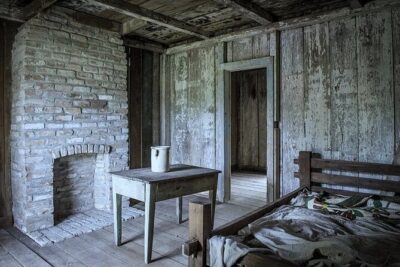

Destrehan Plantation and Large Airboat Tour from New Orleans
Read our review →

Destrehan Plantation and Swamp Tour from New Orleans
Read our review →

Browse the lists this tour appears in