
Reviewed · HISTORICAL TOURS
Tour Historic Vermilionville
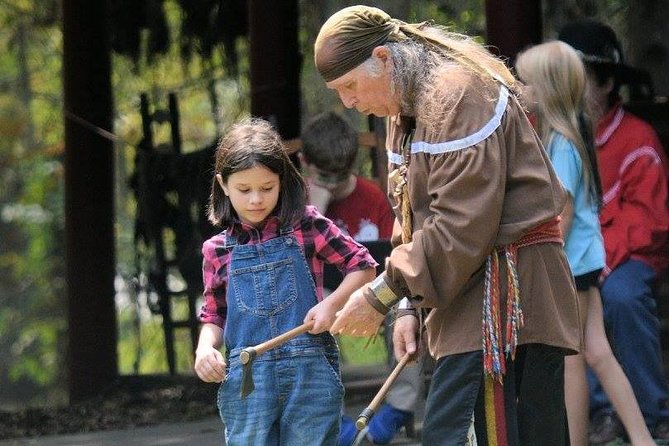
Vermilionville turns a 23-acre park in Lafayette into a walk through Acadiana between 1760 and 1890. You move among historic buildings, costumed artisans, and working demonstrations while learning how Native American, Acadian, Creole, and African American traditions shaped the region. The key choice is simple: explore alone, or add a guide.
I like the living demonstrations, which make the past easier to understand than a room of silent objects. I also like the chance to hear about the Acadian deportation and the French, Cajun, and Creole roots of the area from guides such as Camille and Kevin. The main drawback is practical: this is a lot of walking, and the park can be hot, with limited air-conditioning.
In This Review
- Key things to know before you go
- Entering Acadiana between 1760 and 1890
- What the 23-acre park lets you see
- Why the guided upgrade is worth considering
- A closer look at the two-hour visit
- Heat, shade, and the practical side of the visit
- Making time for the cafe
- Value for different kinds of visitors
- What I like most about Vermilionville
- Should you book this Lafayette experience?
- FAQ
- Where does the Vermilionville tour begin?
- Where does the activity end?
- How long does the visit take?
- Is admission included?
- Can I explore Vermilionville at my own pace?
- Is a guided tour available?
- What language is the experience offered in?
- Are service animals allowed?
- Can I cancel for a full refund?
Key things to know before you go
- A 23-acre open-air museum: Vermilionville gives you room to wander among buildings, paths, crafts, and demonstrations rather than moving through one indoor exhibit.
- Two ways to visit: Set your own pace with admission, or upgrade for a guided tour that explains the buildings and cultures in greater depth.
- Several communities shape the story: The experience covers Native Americans, Acadians, Creoles, and people of African descent, not just Cajun life.
- Guides add real value: Camille and Kevin receive especially strong praise for clear explanations, personal stories, and a strong grasp of Acadiana.
- Plan for heat and walking: Bring practical sun protection, and ask about a wheelchair in advance if you need one.
- A cafe can round out the visit: Lunch at the on-site cafe has been a popular part of the day, but reservations are worth considering.
Entering Acadiana between 1760 and 1890
Vermilionville works because it shows history at human scale. Instead of asking you to remember dates from a panel, it places you among homes, workshops, tools, and craft demonstrations. You can see the setting in which people lived and worked, then connect those details to the larger story of southern Louisiana.
The date range matters. This is not a recreation of one single year or one single community. It covers a period when Native American traditions, Acadian settlement, Creole culture, and the lives of people of African descent developed alongside one another. That mix helps explain why Acadiana has its own customs, foodways, language, music, and social traditions today.
Your visit begins at 300 Fisher Road in Lafayette, where the activity also ends. Admission is included, and you can walk through the park at your own pace. The advertised visit takes about two hours, though your actual time will depend on how long you spend at the demonstrations, buildings, and interpretive stops.
The self-guided option suits you if you like to pause, read, take photographs, or set your own rhythm. It also works well for families and mixed-age groups, since not everyone has to move from one stop to the next at the same speed.
More history tours in New Orleans:
- New Orleans Garden District History Walking Tour
★ 5.0 · 2,879 reviews - French Quarter Historical Sights and Stories Walking Tour
★ 5.0 · 2,724 reviews - New Orleans Small-Group Haunted History Carriage Tour
★ 4.5 · 2,289 reviews
What the 23-acre park lets you see
The size of Vermilionville is part of its appeal. You are not simply stepping into one furnished house. You are walking through a full outdoor setting with paths, structures, working crafts, and people dressed in period clothing.
The costumed artisans are important because they show how work was done in the era. A demonstration gives you something concrete to watch, and it can prompt useful questions about materials, tools, labor, and daily life. The information provided does not promise a fixed list of crafts at every visit, so expect the exact demonstrations to vary.
The buildings also give the visit its sense of place. You can learn the story of each structure on a guided tour, and you might find that the details of one house make more sense once a guide explains who lived there and how the space was used. The setting is especially helpful if you are trying to understand the difference between cultural labels that are often treated as interchangeable.
That distinction is one of Vermilionville’s strongest points. Acadian and Cajun are connected, but the story also includes Creole communities, Native American people, and African Americans whose contributions are essential to the region’s identity. A good guide helps you see those connections without reducing Acadiana to a single food or accent.
Why the guided upgrade is worth considering
The self-guided walk gives you freedom, but the guided option adds the framework that makes the park more meaningful. I would choose the guide if this is your first serious introduction to Acadian and Creole history, or if you want to understand how the individual buildings fit into the broader story.
The strongest guides named in the available feedback are Camille, Kevin, and Madeleine. Camille is described as friendly and clear, with a strong command of the subject. Kevin is praised for his passion for Acadiana, his personal connection to the region, and his ability to explain difficult subjects in an approachable way. Madeleine has led French-language tours and is described as warm, attentive, and clear.
The published tour feature says the experience is offered in English. Separate feedback describes French-language visits with Kevin and Madeleine, so if French is important to you, confirm the language when booking rather than assuming it is guaranteed on every departure.
A guided walk is especially useful for the history of the Acadian deportation. This is a subject that can be reduced to a simple migration story, but the right explanation shows how displacement, settlement, language, and family traditions affected the later culture of Acadiana. You can ask questions as you go, which is much better than trying to piece the story together from isolated signs.
The guide also adds the local words and personal stories that make the visit feel less like a textbook. One guide explained French terms along with each building’s history, while another shared family stories connected to the region. Those details help the past feel specific without turning the tour into a theatrical performance.
A closer look at the two-hour visit
Your route begins inside the Vermilionville living history museum and folklife park. There is no separate city transfer or bus ride involved. You arrive at the Fisher Road meeting point, visit the site, and return to that same location at the end.
For a self-guided visit, I would allow the full two hours. Start by getting a general sense of the paths and buildings, then stop at the artisans whose work interests you most. If you rush, you will see the structures but miss the practical details that make the experience worthwhile.
With a guide, expect the walk to focus on the history of the buildings, the cultures represented, and the development of contemporary Acadiana. The tour is private, meaning only your group participates in that activity. That can make it easier to ask questions and move at a pace that suits your party.
The word walking deserves attention. This is not a ride-through attraction. You will cover paths across a large outdoor site, and one family described the visit as physically demanding because of the distance. Wheelchair access and ramps are available, but you should request a wheelchair ahead of time if you need one. Service animals are allowed, and the activity states that most people can participate.
A completely different side of New Orleans:
- New Orleans Premier Ghost, Voodoo and Vampire Walking Tour
★ 4.5 · 12,856 reviews - New Orleans Steamboat Natchez Jazz Cruise with Dinner Option
★ 4.0 · 7,533 reviews - Adults-Only New Orleans Ghost, Crime, Voodoo, and Vampire Tour
★ 5.0 · 6,545 reviews - New Orleans Food Walking Tour of the French Quarter with Small-Group Option
★ 5.0 · 6,118 reviews
Heat, shade, and the practical side of the visit
Southern Louisiana weather can shape your experience as much as the exhibits do. One visit in May was described as very hot, with air-conditioning available only in the gift shop at the beginning and end. That means you should dress for an outdoor walk and plan your energy accordingly.
Wear comfortable walking shoes and bring water, sun protection, and anything you normally need for heat or allergies. These are simple precautions, but they matter when much of the visit takes place outside. If heat is a concern, a guided tour may help you keep a steady pace, while a self-guided visit lets you pause whenever you need.
Accessibility is not an afterthought here. Ramps are available, and wheelchairs can be requested, but the size of the grounds still means you should think about distance and rest stops. If you have neuropathy, mobility limits, or strong allergies, contact the provider before arrival so you can plan rather than struggle through the walk.
There has been one reported problem with map directions. A visitor found that the map link led to an inaccurate meeting point, then spotted the site kiosk and drove to the correct location. Use 300 Fisher Road, Lafayette, Louisiana 70508 as the address, and check the location before leaving.
Making time for the cafe
A meal can turn this into a comfortable half-day outing. The on-site cafe has served as a convenient lunch stop, and one birthday visit included a reserved meal that was described as delicious.
The available details do not provide a current menu or hours, so you should confirm those before relying on it. If lunch is important to your schedule, make a reservation when possible. Otherwise, treat the cafe as a useful addition rather than a guaranteed part of the plan.
The cafe is also practical because the main visit is outdoors. Sitting down for food can give you a break from the heat and walking, especially if you are visiting with children or older family members. Still, the core experience is the park itself, so do not book solely for the meal.
Value for different kinds of visitors
No price is provided here, so I cannot judge the exact cost. The value depends on how you use the admission. If you only make a quick circuit, you may feel you have seen the buildings without fully understanding them. If you take time with the artisans or add the guided option, the visit offers far more than a standard museum ticket.
For history-minded visitors, the value comes from the range of cultures included. You are not being given a narrow Cajun postcard. You are being asked to see Acadiana as a place shaped by several communities, each with its own story and influence.
For families, the outdoor setting and working demonstrations may hold attention better than a traditional gallery. The walking and heat are the tradeoffs. Families should allow breaks and avoid treating the two-hour estimate as a race.
For couples and friends, this is an easy afternoon activity with enough room for conversation. The self-guided format gives you flexibility, while the private guided option lets your group ask detailed questions without joining a large public group.
For French-speaking visitors, the named French-language guides make the experience particularly appealing, but language availability should be confirmed before booking. For English-speaking visitors, the official offering is in English, and the guides are well suited to explaining local history and culture.
What I like most about Vermilionville
I like that the park connects ordinary work to large historical themes. A craft demonstration or building tour may seem small, but it shows how people made a living, organized a household, and passed traditions to the next generation.
I also like the cultural breadth. The story includes Native American communities, Acadians, Creoles, and people of African descent. That approach gives you a more honest picture of Louisiana than a tour focused only on Cajun food, music, or architecture.
The guides are another major strength. Camille, Kevin, and Madeleine are singled out for their warmth, clarity, passion, and personal stories. That matters because a living history site depends on interpretation. The structures provide the setting, but the guide helps you understand why they matter.
The main weakness is the outdoor format. Heat, walking distance, and limited indoor cooling can reduce your enjoyment if you arrive unprepared. The park is beautiful and interesting, but it is not a quick, air-conditioned stop.
Should you book this Lafayette experience?
Book Vermilionville if you want a grounded introduction to Acadiana and have at least two hours for a real walk through the site. I especially recommend the guided option for first-time visitors, anyone curious about the Acadian deportation, and people who want the connections between Cajun, Creole, Native American, and African American history explained clearly.
Choose self-guided admission if you prefer freedom, need frequent pauses, or already know the regional background. Either way, bring water, wear good shoes, and use the Fisher Road address carefully.
I would skip it only if you want a short indoor attraction or cannot comfortably manage an outdoor site. For most people with an interest in Louisiana’s people and traditions, Vermilionville offers a useful, thoughtful afternoon, especially when a strong guide brings the buildings and stories together.
FAQ
Where does the Vermilionville tour begin?
The tour begins at 300 Fisher Road, Lafayette, Louisiana 70508, USA.
Where does the activity end?
The activity ends back at the meeting point at 300 Fisher Road.
How long does the visit take?
The visit takes approximately two hours.
Is admission included?
Yes. Admission to Vermilionville is included.
Can I explore Vermilionville at my own pace?
Yes. You can set your own pace while walking through the 23-acre living history museum and folklife park.
Is a guided tour available?
Yes. You can upgrade to include a guided tour of the village.
What language is the experience offered in?
The experience is offered in English. French-language tours have also been provided, so confirm availability if you specifically need a French guide.
Are service animals allowed?
Yes. Service animals are allowed.
Can I cancel for a full refund?
Yes, if you cancel at least 24 hours before the experience start time. Cancellations made less than 24 hours in advance are not refunded, and changes within 24 hours are not accepted.
Just added around New Orleans
- New Orleans Garden District Tour★ 5.0 · 8 reviews
- New Orleans Seance Experience★ 4.0 · 8 reviews
- Airport and City Transfers in New Orleans★ 5.0 · 8 reviews
- Sin and Tonic Pub Crawl in New Orleans★ 4.5 · 8 reviews
- The New Orleans Darkness Tour★ 4.4 · 9 reviews
- New Orleans Plantation Tour with Transportation★ 5.0 · 9 reviews
- New Orleans Self-Guided Kayak Bayou Swamp Tour★ 5.0 · 9 reviews
- Historic Carrollton Neighborhood Walking Tour★ 5.0 · 9 reviews
Historical Tours, compared.

New Orleans Garden District History Walking Tour
Read our review →
French Quarter Historical Sights and Stories Walking Tour
Read our review →
New Orleans Small-Group Haunted History Carriage Tour
Read our review →
Paddlewheeler Creole Queen Historic Mississippi River Cruise
Read our review →

Creole Queen History Cruise with Optional Lunch
Read our review →
Browse the lists this tour appears in