
Reviewed · CITY TOURS
Soul of New Orleans City Tour:Enslavement to modern culture
New Orleans reveals its deepest stories beyond the French Quarter, and this tour takes you into places tied to enslavement, jazz, Civil Rights, Hurricane Katrina, and today’s culture. Guides such as Dennis and Jay, also known as Jeremy, bring local knowledge and personal insight to the route.
I especially like the focus on African American history and the chance to see Treme, Congo Square, Musicians Village, and the Lower Ninth Ward in one trip. I also like the comfortable bus, the visits connected with Leona Tate and the Civil Rights era, and the fact that entrance fees are included. The tradeoff is simple: with only 150 minutes, you spend much of the tour looking from the vehicle, and some people will wish for more time off the bus.
In This Review
- Key points to know before booking
- A wider view of New Orleans than the French Quarter
- What the 150-minute route covers
- Antebellum slave quarters and the hard parts of the story
- Leona Tate, school desegregation, and Civil Rights
- Studio BE, murals, and the city’s visual voice
- Musicians Village and the birthplace of jazz
- The Lower Ninth Ward and Hurricane Katrina
- Markets, cemeteries, architecture, and everyday New Orleans
- The guides: Dennis and Jay
- Is $55 a fair price?
- Who should book this New Orleans tour?
- Should you book the Soul of New Orleans City Tour?
- FAQ
- How long does the Soul of New Orleans City Tour last?
- How much does the tour cost?
- Where does the tour meet?
- What language is the tour conducted in?
- Does the price include entrance fees?
- Does the tour operate in bad weather?
Key points to know before booking
- A tour beyond the French Quarter: Reach Treme, the Lower Ninth Ward, Musicians Village, and other areas that many first-time visits miss.
- History told through real places: Connect enslavement, Creole life, Plessy v. Ferguson, Civil Rights, jazz, and Katrina to the streets around you.
- Local guides make the difference: Dennis and Jay have been especially praised for clear explanations, humor, and personal New Orleans perspective.
- Meaningful cultural stops: Congo Square, Studio BE, historic cemeteries, and the school and museum linked to Leona Tate add depth to the route.
- Comfortable transport in rain or shine: The bus keeps the tour moving in poor weather, but you should dress for conditions during any stops.
- Good value at $55: Included entrance fees and a 2.5-hour guided route make this a useful first look at the city’s wider story.
A wider view of New Orleans than the French Quarter
The Soul of New Orleans City Tour is not a quick sightseeing loop built around grand facades and photo stops. It follows the city’s African American experience from enslavement to present-day culture, using neighborhoods, monuments, museums, markets, and surviving buildings as teaching points.
That focus gives the tour a clear purpose. You are not simply collecting names and dates. You are seeing how forced labor, Creole traditions, jazz, segregation, Civil Rights activism, government neglect, and community survival shaped New Orleans.
The route also reaches beyond the usual visitor circuit. You travel through Treme, described as the oldest African American neighborhood in New Orleans, and see places connected with the birth of jazz. You also reach the Lower Ninth Ward, an area where the effects of Hurricane Katrina remain central to the story.
I would book this early in a New Orleans stay if you want context for the rest of your visit. Afterward, familiar music, food, architecture, and street celebrations make more sense because you have learned something about the people and events behind them.
A few more New Orleans tours worth a look
- New Orleans City Sightseeing Hop-On Hop-Off Bus Tour
★ 4.5 · 4,943 reviews - New Orleans Sightseeing City Tour
★ 5.0 · 3,038 reviews - City Tour of New Orleans with Pickup
★ 4.5 · 2,407 reviews
What the 150-minute route covers
The tour lasts two and a half hours, so expect a fairly brisk overview rather than a slow neighborhood walk. The exact order can vary, but the experience brings together several major themes and locations.
You may see Congo Square, one of the most important cultural sites on the route. It is tied to the musical and communal traditions of enslaved and free people of African descent. Its place in the story of jazz gives you a useful link between earlier cultural practices and the music New Orleans later sent around the world.
Treme adds another layer. The neighborhood is connected with African American life, music, and local traditions, and the tour presents it as a living part of New Orleans rather than a backdrop. You will likely see streets and buildings from the bus, with your guide explaining how the area fits into the city’s story.
The route also includes sites related to Creole history, a subject that can be confusing if you only encounter it through restaurant menus or casual conversation. A live guide can explain how local identity developed through changing communities, colonial rule, slavery, freedom, and cultural exchange.
Plessy v. Ferguson is another key subject. The case became associated with the legal foundation of racial segregation in the United States, and its New Orleans connection gives the national story a specific local setting. This is one of the tour’s strengths: large historical events are tied to people and places rather than treated as distant textbook material.
You also hear about Solomon Northup, whose life story is linked to the wider history of enslavement. The tour’s title, Enslavement to modern culture, is accurate in that it does not stop at the antebellum period. It keeps moving through Reconstruction, segregation, Civil Rights, Katrina, and the present.
Antebellum slave quarters and the hard parts of the story
The tour does not soften the city’s past. Antebellum slave quarters and sites connected with enslavement show the conditions under which New Orleans wealth and culture developed.
That can make this an emotional experience. The point is not to turn suffering into a spectacle, but to help you understand the human cost behind historic buildings and famous traditions. I appreciate that the tour places African American contributions beside the violence and injustice that shaped them.
This balance matters. New Orleans is often sold through food, music, and celebration, but those pleasures did not appear out of nowhere. They grew from communities that held onto language, faith, music, craft, and family ties under very difficult conditions.
You should come ready to listen. This is not the best choice if you want only light sightseeing or a nonstop stream of cheerful anecdotes. The guide may shift from humor to serious discussion, and that change in tone is part of the experience.
Leona Tate, school desegregation, and Civil Rights
One of the most meaningful parts of the tour is its connection with Leona Tate and the school desegregation era. The route may include the school and museum associated with her story, and some tours have included a meeting with Leona Tate herself.
This gives the Civil Rights section a personal scale. Instead of hearing only about court decisions and national leaders, you encounter the experience through a New Orleans student connected to a defining moment in American education.
The school and museum visit was a major highlight for many people on the tour. It helps explain how desegregation unfolded in daily life, not just in legal documents. You can expect this part to be thoughtful and at times moving.
Jay has been praised for handling serious subjects while keeping the group engaged. Dennis is also known for combining local insight with humor and clear explanations. Guide choice may affect the tone, but both names are associated with strong experiences on this route.
A completely different side of New Orleans:
- New Orleans Premier Ghost, Voodoo and Vampire Walking Tour
★ 4.5 · 12,856 reviews - New Orleans Steamboat Natchez Jazz Cruise with Dinner Option
★ 4.0 · 7,533 reviews - Adults-Only New Orleans Ghost, Crime, Voodoo, and Vampire Tour
★ 5.0 · 6,545 reviews - New Orleans Food Walking Tour of the French Quarter with Small-Group Option
★ 5.0 · 6,118 reviews
Studio BE, murals, and the city’s visual voice

New Orleans tells stories on its walls as well as in its museums. The tour includes murals and artworks around the city, with Studio BE singled out as a particularly memorable exhibit.
This is useful for visitors who want to understand modern New Orleans culture, not only its historic buildings. Public art can address race, memory, music, loss, and local identity in a direct way. It also gives the tour visual variety after the heavier historical sections.
Expect the bus to provide a broad view of murals and neighborhood art rather than a long gallery visit at every stop. If you enjoy photography, keep your camera ready, but listen first. The explanation behind a work may be more important than a quick picture.
The tradeoff is time. One person specifically wished there were more stops and more chances to get off the bus. That is a fair criticism. The vehicle lets you cover a lot of ground, but you will not study every mural, market, or building at walking pace.
Musicians Village and the birthplace of jazz
Music is not treated as a separate entertainment topic here. It is part of the city’s social history.
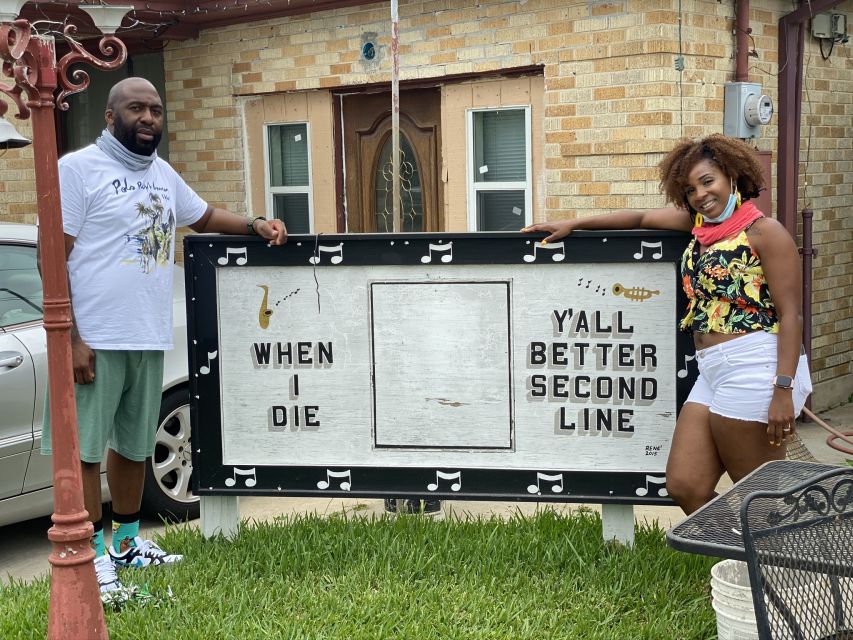
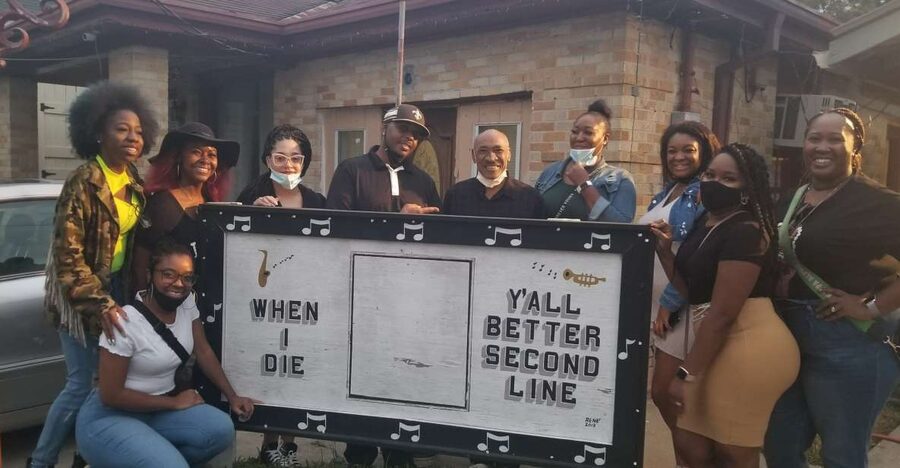
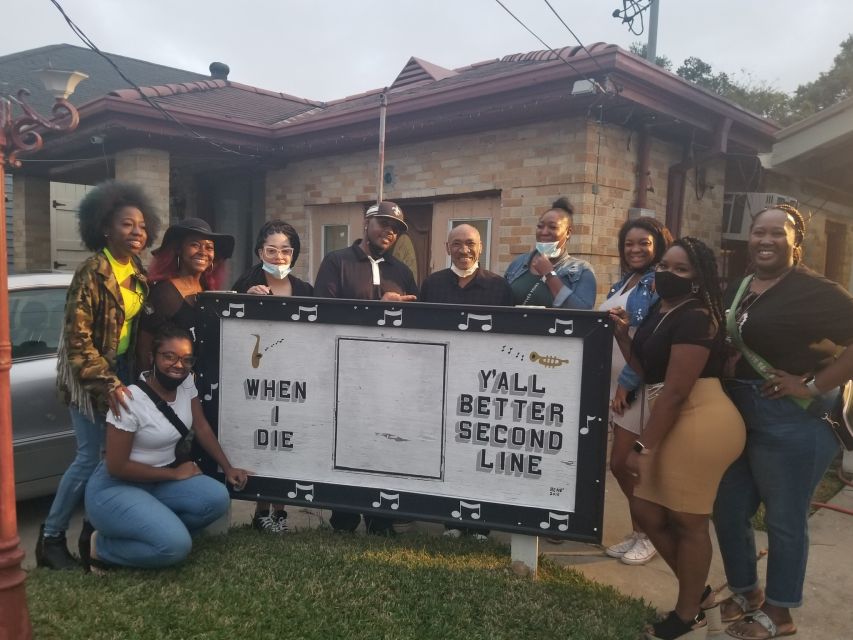
Musicians Village shows how New Orleans communities have supported musicians and preserved local traditions. The tour also presents Treme and Congo Square in connection with jazz, giving you a sense of how music grew from African and African American cultural practices.
For me, this is more useful than simply being told that New Orleans is the birthplace of jazz. You see the places that help explain why music developed here and why it remains so closely tied to neighborhood life.
The experience does not replace a live jazz performance. It gives you background that can sharpen your ears later. After the tour, you can listen differently because you have some sense of the people, streets, and traditions behind the sound.
The Lower Ninth Ward and Hurricane Katrina
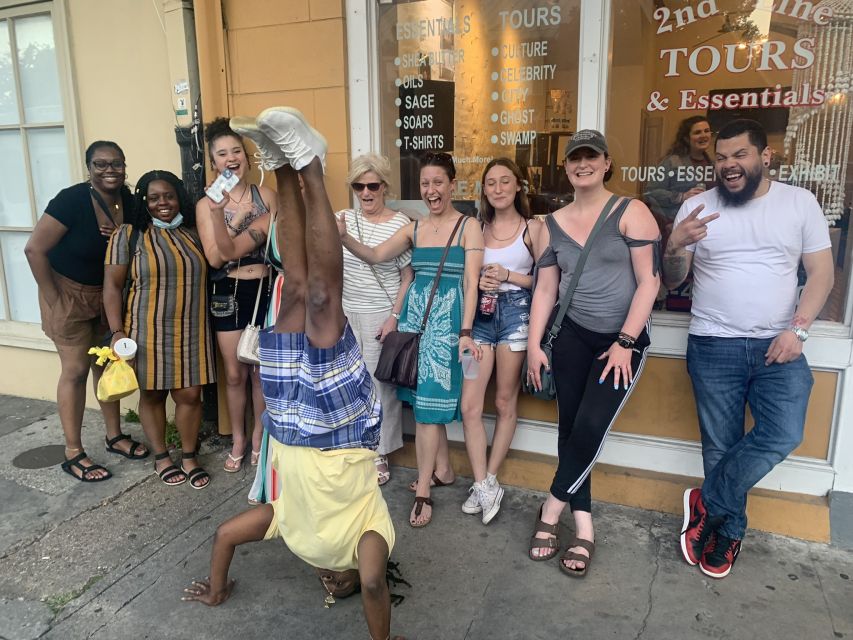
The Lower Ninth Ward is one of the tour’s most powerful stops. The area is tied to Hurricane Katrina’s destruction, the government response, and the long work of rebuilding and staying connected to home.
The guide presents more than a storm story. You also learn about false promises, neglect, survival, and the commitment of families with generations tied to the neighborhood. That wider view matters because Katrina did not begin or end with the day the floodwaters arrived.
This section may be emotional, especially when the guide links public decisions with personal consequences. You should not expect a polished redevelopment story. The tour makes room for unresolved questions and the endurance of local residents.
The Lower Ninth Ward also shows why a bus tour can be useful. It lets you reach an area well beyond the center in a limited amount of time, while the guide supplies the context you would miss by driving through alone.
Markets, cemeteries, architecture, and everyday New Orleans
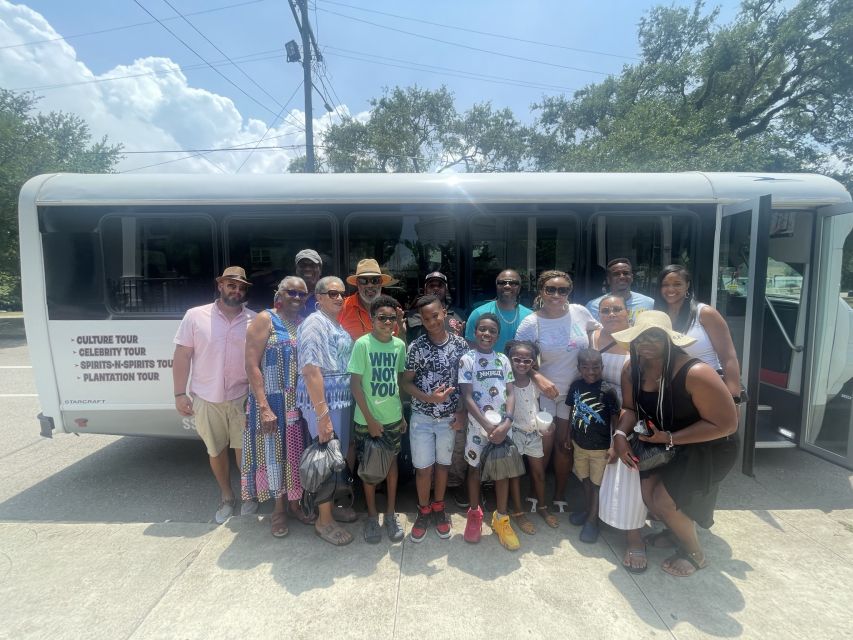
The route includes markets, museums, architecture, and historic cemeteries, so the tour does not focus on one type of attraction. These places help fill in the daily texture of the city.
Historic cemeteries connect with New Orleans burial traditions and the city’s long past. Markets offer a look at commerce and local life. Buildings and streets show how different groups shaped the city’s appearance and neighborhoods over time.
You may not have a long stop at every location. Think of these as pieces in a larger picture rather than stand-alone attractions. If you want extensive museum time or detailed cemetery photography, plan separate visits.
That said, the variety keeps the 150 minutes moving. The tour can shift from a serious Civil Rights story to art, architecture, music, or a neighborhood view without feeling like a standard sightseeing checklist.
The guides: Dennis and Jay
Guide quality matters more than almost anything else on a history tour. Here, Dennis and Jay receive the strongest praise.
Dennis is a New Orleans native who combines local perspective with a friendly, entertaining style. He has been described as passionate, professional, and able to keep the group informed even in rain. If Dennis leads your tour, expect a strong emphasis on local culture and personal connection.
Jay, also called Jeremy, is known for humor, honesty, and serious attention when the subject calls for it. He has offered restaurant suggestions, including Loretta’s beignets and sweet potato cookie, which adds a practical touch to the outing. His personal insight helps the route feel rooted in the city rather than read from a script.
Guide assignments can change, so you cannot select the exact personality you will get. Still, the experience depends on having someone who can handle painful history with care and keep the pace lively. The available feedback points strongly in that direction.
Is $55 a fair price?
At $55 per person, this is a fair price if you want a guided overview that covers several parts of New Orleans. Entrance fees are included, and the bus saves you the time and cost of arranging transport to Treme, the Lower Ninth Ward, Musicians Village, and other sites.
The value is strongest for first-time visitors, families, and anyone who wants historical context before exploring alone. A two-and-a-half-hour route can help you decide which neighborhoods, museums, or cultural sites deserve a return visit.
The value is weaker if you prefer to move slowly, wander on foot, or spend a long time inside each museum. Food and drinks are not included, and the tour is not a tasting outing. You will want to budget separately for meals and perhaps follow Jay’s restaurant suggestions afterward.
The bus received a perfect transport score, and one person specifically called it comfortable. That matters in New Orleans heat, humidity, or rain. Still, comfortable transport does not mean the entire experience is indoors. The tour runs rain or shine, so wear practical shoes and bring weather protection.
Who should book this New Orleans tour?
I would recommend it to you if you want:
- A city tour centered on African American history and culture
- A route that reaches beyond the French Quarter
- Local guides who can explain difficult subjects with warmth and humor
- A useful introduction to Treme, Congo Square, Musicians Village, and the Lower Ninth Ward
- A mix of museums, art, architecture, cemeteries, markets, and neighborhood views
- Historical context before you explore New Orleans on your own
Families can also find value here. A nine-year-old and a 75-year-old New Orleans native both took something meaningful from the experience, which suggests the material can work across generations.
I would hesitate if your main goal is a relaxed walking tour, a food experience, or long visits at a small number of attractions. The bus covers ground, but the schedule means some locations receive only a brief look.
Should you book the Soul of New Orleans City Tour?
Book it if you want to understand New Orleans through the people and events that shaped it, not just through music clubs and famous food. The strongest parts are the African American history, the Civil Rights connection with Leona Tate, the Lower Ninth Ward, and the local storytelling from guides such as Dennis and Jay.
Go in expecting serious material, changing weather, and a route where the bus does more work than your feet. At $55, the tour offers solid value for a broad, guided introduction, especially early in your trip. If you want more time at each stop, use this as a starting point and return to your favorite places later.
FAQ
How long does the Soul of New Orleans City Tour last?
The tour lasts 150 minutes, or two and a half hours.
How much does the tour cost?
The listed price is $55 per person.
Where does the tour meet?
The meeting point is the parking lot at 414 Canal Street, New Orleans, Louisiana 70130, near the Jazz Gumbo Landmark and one block from Caesars Casino. The guide waits near the tour bus.
What language is the tour conducted in?
The live guided tour is conducted in English.
Does the price include entrance fees?
Yes. Entrance fees and the guide are included. Food and drinks are not included.
Does the tour operate in bad weather?
Yes. The tour takes place rain or shine.
Just added around New Orleans
- New Orleans Garden District Tour★ 5.0 · 8 reviews
- New Orleans Seance Experience★ 4.0 · 8 reviews
- Airport and City Transfers in New Orleans★ 5.0 · 8 reviews
- Sin and Tonic Pub Crawl in New Orleans★ 4.5 · 8 reviews
- The New Orleans Darkness Tour★ 4.4 · 9 reviews
- New Orleans Plantation Tour with Transportation★ 5.0 · 9 reviews
- New Orleans Self-Guided Kayak Bayou Swamp Tour★ 5.0 · 9 reviews
- Historic Carrollton Neighborhood Walking Tour★ 5.0 · 9 reviews
City Tours, compared.
New Orleans City Sightseeing Hop-On Hop-Off Bus Tour
Read our review →


New Orleans City Tour: French Quarter, Garden District & Cemetery
Read our review →
New Orleans City and Cemetery 2-Hour Bus Tour
Read our review →
City Sightseeing New Orleans HOHO Bus Tour & Bookable Extras
Read our review →
New Orleans City and Cemetery Tour with Garden District Stroll
Read our review →Browse the lists this tour appears in