
Reviewed · CITY TOURS
Soul of New Orleans City Tour: Enslavement to Modern Day Culture
New Orleans makes more sense when you connect its music, neighborhoods, racial history, and disaster recovery. This 2-hour-45-minute tour does exactly that, moving from enslavement and Congo Square through Treme, jazz, school desegregation, Hurricane Katrina, and present-day culture.
I like the air-conditioned transport, which saves you from piecing together far-flung neighborhoods by bus or rideshare. I also like the human scale: guides Jay and Dennis explain the city through personal connection, video, and stories tied to real places. The main consideration is the emotional weight. This is not a light sightseeing loop, and some stops may be difficult.
In This Review
- Key things to know before booking
- Why this tour gives New Orleans a fuller story
- Treme, where music carries memory
- Congo Square and the culture people protected
- Studio Be turns history into public art
- Civil rights stories you can connect to real people
- The Lower Ninth Ward and Katrina’s continuing impact
- Dooky Chase, local voices, and food connections
- What the guides add to the experience
- Is $55 a fair price?
- Practical details for a smoother outing
- Who should book the Soul of New Orleans tour?
- FAQ
- How long is the Soul of New Orleans City Tour?
- How much does the tour cost?
- Where does the tour begin and end?
- Is transportation included?
- What language is the tour offered in?
- What is the cancellation policy?
Key things to know before booking
- Treme and Congo Square connect music to survival: You learn how African rhythms, Creole traditions, and Black community life shaped New Orleans culture.
- The tour reaches beyond the postcard center: Expect attention to the Lower Ninth Ward, Katrina, civil rights, and neighborhoods many short city tours skip.
- Jay and Dennis shape the experience: Both are praised for clear storytelling, humor, patience, and a strong connection to New Orleans.
- Video adds context inside the vehicle: Historical footage helps connect what you see today with earlier events.
- Studio Be supplies a visual highlight: Large murals give the tour a memorable art stop and a change of pace.
- The $55 price buys more than transport: You are paying for nearly three hours of guided interpretation across several parts of the city, not just a ride past landmarks.
Why this tour gives New Orleans a fuller story
Many first visits to New Orleans stay close to the French Quarter. That area has fine architecture, food, and music, but it can leave you with a narrow picture of the city. This tour widens the frame.
The central subject is the endurance of Black New Orleans culture. You hear about enslavement, the traditions people preserved under brutal conditions, the fight for civil rights, and the communities that continue to shape the city today. Music is part of the story, but so are schools, housing, art, food, levees, and neighborhood life.
I especially like that the tour does not treat history as something finished. The discussion reaches into modern New Orleans, including the effects of Katrina and the condition of areas still marked by the storm. You are asked to look at what remains, not simply admire the city’s famous past.
The tour is highly rated, with 98 percent of customers recommending it and a 4.9 rating from 393 reviews. That record fits the strongest pattern in the feedback: the guides make serious material understandable, personal, and engaging without turning the experience into a lecture.
A few more New Orleans tours worth a look
- New Orleans City Sightseeing Hop-On Hop-Off Bus Tour
★ 4.5 · 4,943 reviews - New Orleans Sightseeing City Tour
★ 5.0 · 3,038 reviews - City Tour of New Orleans with Pickup
★ 4.5 · 2,407 reviews
Treme, where music carries memory
Treme is the natural first chapter for a tour about New Orleans culture. It is identified here as America’s oldest Black community and as a birthplace of jazz. You pass music venues and hear about the musicians and traditions connected with the neighborhood.
The value of this stop is the link between place and sound. Jazz did not appear from nowhere. The tour explains how African musical forms, local customs, and community gatherings helped create a culture that later reached far beyond New Orleans.
The stop is listed as about five minutes, so do not expect a long neighborhood walk or a full music performance. You may spend more time listening to the guide and looking at the surroundings than exploring on foot. That brief format works well if you want a broad introduction, but it will not satisfy someone seeking an in-depth music-history tour.
Guide presentation matters here. Jay is repeatedly praised for humor, energy, and his ability to make information easy to follow. Dennis is described as a serious historian of the African American journey in New Orleans. With either guide, expect the commentary to carry much of the experience.
Congo Square and the culture people protected
Congo Square is one of the most important stops because it makes the tour’s central idea visible. The space is associated with enslaved people gathering to share music, dance, and culture. The tour also explains how African rhythms and Creole traditions met here.
This is a powerful reminder that enslaved people were not only victims of a system. They also maintained language, movement, music, faith, and social bonds under conditions designed to strip those things away. That context helps you hear New Orleans music with a more informed ear later in your visit.
Again, the listed stop is short, about five minutes. Treat it as a focused explanation rather than a long visit. You will get the most from it if you listen closely and resist the urge to turn the moment into a quick photo stop.
The tour’s approach is useful because it gives cultural history equal billing with architecture and entertainment. You learn why the city’s music matters, not just where to hear it.
Studio Be turns history into public art
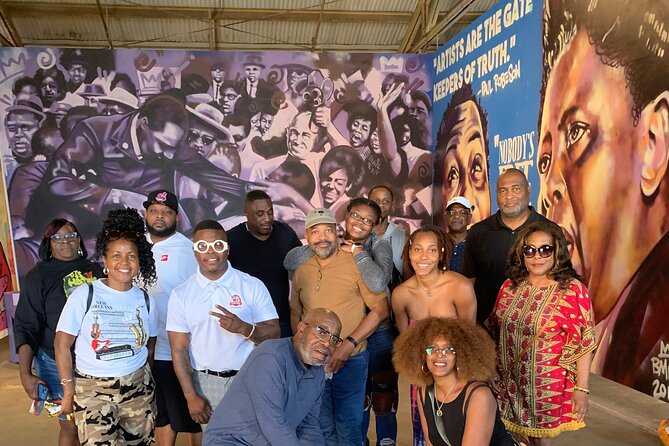
Studio Be provides one of the tour’s strongest visual breaks. You have a chance to see large New Orleans murals, and the art becomes a way to consider identity, memory, struggle, and pride in the city.
The exact amount of time at the stop is listed as about five minutes, so expect an overview rather than a long gallery visit. Still, even a short look can be memorable because the murals offer a direct, modern expression of ideas discussed throughout the tour.
I like the balance this creates. After hearing about enslavement and civil rights, you are not left only with dates and painful events. You also encounter art made for the present, with bold images that ask you to think about who gets remembered and how communities tell their own stories.
Studio Be is especially useful for visitors who connect more readily with images than with formal historical explanation. It is also a good photo opportunity, though the subject deserves more attention than a quick backdrop.
A completely different side of New Orleans:
- New Orleans Premier Ghost, Voodoo and Vampire Walking Tour
★ 4.5 · 12,856 reviews - New Orleans Steamboat Natchez Jazz Cruise with Dinner Option
★ 4.0 · 7,533 reviews - Adults-Only New Orleans Ghost, Crime, Voodoo, and Vampire Tour
★ 5.0 · 6,545 reviews - New Orleans Food Walking Tour of the French Quarter with Small-Group Option
★ 5.0 · 6,118 reviews
Civil rights stories you can connect to real people
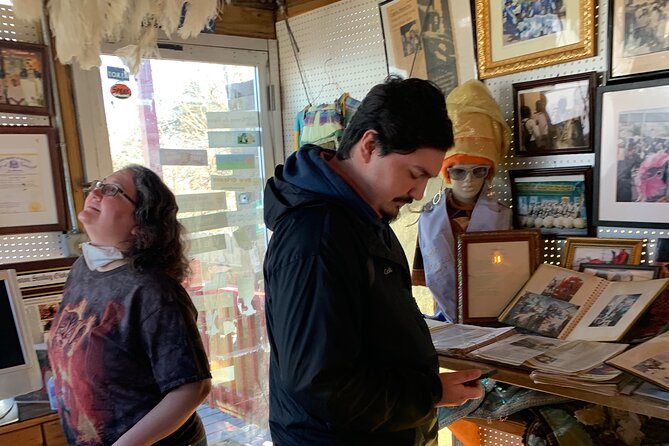
The tour reaches into New Orleans school desegregation and the civil rights movement. A particularly meaningful part may involve Leona Tate, one of the children connected with the desegregation of New Orleans schools. The experience has included an opportunity to meet her, along with discussion of the McDonogh Three.
That kind of encounter changes the scale of history. Instead of hearing only about a national movement, you connect the story to a person and a specific city. The bravery required of children and families becomes easier to understand when tied to actual schools, streets, and neighborhoods.
The tour also includes attention to the TEP Center, a place connected with this history. Details can vary by day, and the published schedule does not give a long time breakdown for every site, so consider the tour a guided overview rather than a formal museum program.
I would pay close attention during this section. It is one of the parts most likely to stay with you after the ride ends, especially if you have only encountered the better-known national stories of school integration.
The Lower Ninth Ward and Katrina’s continuing impact
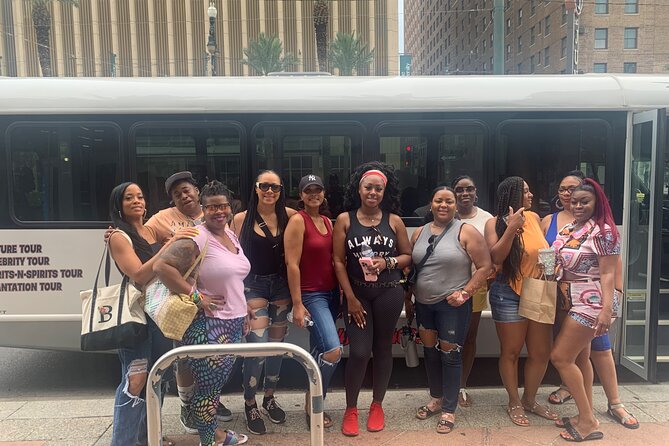
Several of the strongest moments concern the Lower Ninth Ward and Hurricane Katrina. The tour helps you see the neighborhoods affected by the storm and understand the scale of the damage caused by flooding and failed levees.
This is not a cheerful sightseeing stop. You may find it sad, and the tour does not try to smooth over that discomfort. That honesty is part of its value. Katrina is not presented as a single day from the past, but as an event whose effects remain visible in the city.
The guides use video footage to add context while you are inside the vehicle. This is a smart choice because present-day streets cannot always show the full force of the disaster. Images from before and after the storm help you compare what existed, what was lost, and what recovery has meant.
You should also expect discussion of poor communities and resilience. The point is not to turn hardship into a sightseeing spectacle. It is to show how policy, geography, race, infrastructure, and community strength shaped what happened.
If you prefer a purely upbeat introduction to New Orleans, choose a music or food tour instead. If you want to understand the city beyond its party reputation, this section is essential.
Dooky Chase, local voices, and food connections
The tour’s cultural story includes the legacy of Dooky Chase, a major name in New Orleans food and Black business history. The exact format can vary, but the stop or discussion helps connect cuisine with community leadership and civil rights.
That connection matters. Food in New Orleans is not just a list of dishes to sample. Restaurants can also be gathering places, businesses built under segregation, and centers of cultural memory. The tour gives you useful context before you choose where to eat later.
Jay is especially praised for restaurant recommendations, and food advice comes up more than once in the feedback. You will not receive a dedicated meal as part of the listed $55 price, so treat these suggestions as an added benefit rather than a substitute for a food tour.
One practical idea came up in the tour feedback: some people would gladly pay more for time at a market or an eating place. That tells you how to think about the format. This is a history and culture tour first. If you want time to browse or eat during the outing, ask about the schedule before booking.
What the guides add to the experience
The strongest praise goes to Jay and Dennis. Jay is described as polite, funny, direct, and deeply connected to the city. He uses video, answers questions, and may add surprises along the route. Dennis is praised for his command of African American history and for taking time to explain what you are seeing.
Those differences may shape the tone of your day, but both guides appear to share the same goal: make the history clear and personal. The experience is not simply a driver pointing out buildings. The guide leads the route, handles navigation, and supplies the meaning behind each stop.
The video clips are a useful tool. They help you picture earlier New Orleans and understand events that cannot be read from a modern street corner. The interactive style also works for families. A group that included children from age one through adults in their seventies found the tour manageable, and teenagers have enjoyed its direct, participatory approach.
The emotional tone depends partly on the guide and partly on the group. You may have many chances to ask questions, but a full group of up to 24 can make conversation less personal. That is still a reasonable maximum for a vehicle-based city tour, especially since transport is included.
Is $55 a fair price?
At $55 per person, this tour sits in a sensible range for a nearly three-hour guided city experience. The value comes from combining transportation, commentary, neighborhood coverage, and historical interpretation.
You are not paying only to be driven around. You are paying to connect places that would be difficult to understand on your own in one afternoon: Treme, Congo Square, Studio Be, civil rights sites, the Lower Ninth Ward, and Katrina-related locations. A rideshare could move you between areas, but it would not provide the same story.
The price is strongest for a first visit. You can use the tour to get your bearings, then return to places that interest you. It may also save you from spending money on separate transport to areas outside the central tourist zone.
The limitation is that the itinerary moves quickly. Some stops are listed at about five minutes, and the tour cannot give every neighborhood or subject the time of a museum visit. Think of it as a well-led introduction, not the final word on New Orleans history.
Practical details for a smoother outing
The tour begins at Adventures in New Orleans, 414 Canal Street, and returns there. That central meeting point is near public transportation, and mobile tickets make arrival simple.
The tour is offered in English and uses air-conditioned transport. That matters in New Orleans, where heat and humidity can make a long outdoor route tiring. You will still get out at stops, so bring water, comfortable shoes, and weather-appropriate clothing.
Service animals are allowed, and most people can participate. The group can reach 24 people, so arrive ready for a shared experience rather than a private tour. Confirmation is provided at booking.
The tour generally needs good weather and a minimum number of participants. If weather or low enrollment cancels it, you are offered another date or experience, or a full refund. You can cancel for a full refund up to 24 hours before the start time. Inside that window, refunds are not available and changes are not accepted.
Because the tour is often booked about 19 days ahead, planning early makes sense if your New Orleans dates are fixed.
Who should book the Soul of New Orleans tour?
I would choose this tour early in a New Orleans visit if I wanted a stronger understanding of the city’s Black culture, music, civil rights story, and post-Katrina reality. It suits solo visitors, couples, families, and anyone who prefers explanation over simply taking photos.
It is especially useful for visitors who have already seen the French Quarter and want to understand the neighborhoods beyond it. It also works well for families with mixed ages because the vehicle reduces walking and the guides use stories, humor, and video to keep the material moving.
You may want another option if your priority is food tasting, live music, architecture, or a slow walking tour. This experience touches all those subjects but does not specialize in any one of them.
Book it if you are willing to give serious history the same attention as New Orleans nightlife. Jay or Dennis can show you a city shaped by pain, creativity, faith, resistance, and pride. That makes the $55 fare a strong value for an honest first look at the soul behind the postcard.
FAQ
How long is the Soul of New Orleans City Tour?
The tour lasts approximately 2 hours and 45 minutes.
How much does the tour cost?
The listed price is $55 per person.
Where does the tour begin and end?
It begins at Adventures in New Orleans, 414 Canal Street, New Orleans, Louisiana 70130, and returns to the same meeting point.
Is transportation included?
Yes. The tour includes air-conditioned transportation, so you do not need to arrange public transport between the neighborhoods.
What language is the tour offered in?
The tour is offered in English.
What is the cancellation policy?
You can cancel at least 24 hours before the start time for a full refund. Cancellations or changes made less than 24 hours before the start time are not accepted for a refund. Poor weather or failure to meet the minimum number of participants may result in a new date, another experience, or a full refund.
Just added around New Orleans
- New Orleans Garden District Tour★ 5.0 · 8 reviews
- New Orleans Seance Experience★ 4.0 · 8 reviews
- Sin and Tonic Pub Crawl in New Orleans★ 4.5 · 8 reviews
- Airport and City Transfers in New Orleans★ 5.0 · 8 reviews
- The New Orleans Darkness Tour★ 4.4 · 9 reviews
- New Orleans Plantation Tour with Transportation★ 5.0 · 9 reviews
- New Orleans Self-Guided Kayak Bayou Swamp Tour★ 5.0 · 9 reviews
- Historic Carrollton Neighborhood Walking Tour★ 5.0 · 9 reviews
City Tours, compared.
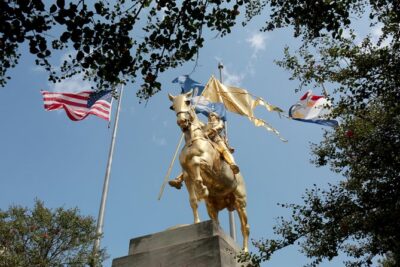
New Orleans City Sightseeing Hop-On Hop-Off Bus Tour
Read our review →

New Orleans City Tour: French Quarter, Garden District & Cemetery
Read our review →
New Orleans City and Cemetery 2-Hour Bus Tour
Read our review →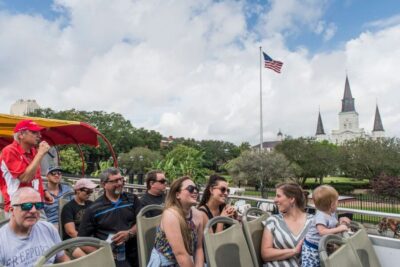
City Sightseeing New Orleans HOHO Bus Tour & Bookable Extras
Read our review →
New Orleans City and Cemetery Tour with Garden District Stroll
Read our review →Browse the lists this tour appears in