
Reviewed · GARDEN DISTRICT TOURS
Small-Group Glamorous Garden District Tour
The best part of this tour is the way it turns the Garden District’s grand houses into stories. In two hours, you walk past Buckner Mansion, the Anne Rice House, Colonel Short’s Villa, the Dolan House, and the so-called Benjamin Button House while learning about the people, architecture, films, and local events tied to them.
I like the small group of no more than 15 people, which gives you room to ask questions. I also like the guides’ mix of history and humor. Dane is praised for his storytelling, while Barbara and Mikko bring strong local knowledge and a clear love of New Orleans.
The main drawback is simple: this is a walking tour in a hot, busy city. Tree roots can make the sidewalks uneven, traffic may drown out parts of the talk, and Lafayette Cemetery No. 1 is closed to the public, so you see it from outside the gates.
In This Review
- Key points to know before you book
- Why the Garden District is worth two hours
- Meeting at 2800 St. Charles Avenue
- Walking through the American Sector
- The stories behind the mansions
- Lafayette Cemetery No. 1 from outside the gates
- Magazine Street and the end of the route
- Is $37 a fair price?
- Heat, sidewalks, and what to bring
- Who will enjoy this Garden District walk?
- Booking, cancellation, and practical facts
- Should you book it?
- FAQ
- How long does the Small-Group Glamorous Garden District Tour last?
- Where does the tour begin?
- Where does the tour end?
- Can I enter Lafayette Cemetery No. 1?
- What homes and sights are included?
- How many people can join the tour?
- What happens if I need to cancel?
Key points to know before you book
- Grand houses with real stories: See Buckner Mansion, the Anne Rice House, Colonel Short’s Villa, the Dolan House, and the Benjamin Button House.
- A useful first look at the Garden District: The route gives you a clear sense of the neighborhood’s architecture, people, and past.
- Local guides set the tone: Dane, Barbara, and Mikko are praised for humor, storytelling, local knowledge, and an easy pace.
- Lafayette Cemetery is exterior-only: You learn about New Orleans burial customs and the cemetery’s origins without entering the grounds.
- Magazine Street adds local flavor: The route ends near Magazine Street, with the chance to stop at a deli for a drink or snack.
- Wear proper walking shoes: Live oak roots and uneven sidewalks can make casual footwear a poor choice.
Why the Garden District is worth two hours
New Orleans is often introduced through the French Quarter, but the Garden District gives you a different picture of the city. Here, the streets are lined with large nineteenth-century homes, broad porches, ironwork, old trees, and carefully kept gardens. The mood is quieter than Bourbon Street, though traffic on St. Charles Avenue and nearby roads can still be loud.
The neighborhood was once called the American Sector of New Orleans. That name points to an old divide in the city, when Creole families and newer American residents tended to live in different areas. A guide helps you see that the Garden District is not only a collection of pretty houses. Its streets reflect money, politics, social change, Civil War effects, plantation wealth, and the ambitions of the people who built the homes.
That context is the reason I would choose a guided walk instead of simply strolling through the district with a map. On your own, you can admire the columns and balconies. With Dane, Barbara, or Mikko, you can connect a house to its builder, owner, architectural style, or place in popular culture.
The tour is also a good orientation. Afterward, you can return to a favorite block, continue toward Magazine Street, or use the nearby area as part of a larger New Orleans day.
More Garden District walks:
- New Orleans Garden District History Walking Tour
★ 5.0 · 2,879 reviews - New Orleans City Tour: French Quarter, Garden District & Cemetery
★ 4.5 · 2,209 reviews - New Orleans Small-Group Garden District Walking Tour
★ 5.0 · 1,384 reviews
Meeting at 2800 St. Charles Avenue
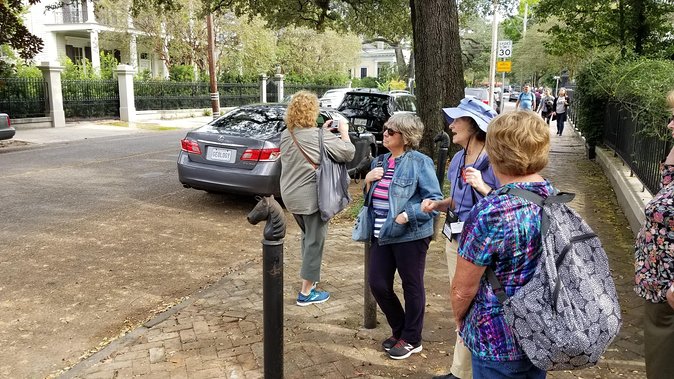
The tour begins at 10:00 a.m. at 2800 St. Charles Avenue. That is a practical start time for a walking route, especially during warm months, though New Orleans can already feel hot and sticky by late morning. Plan to arrive ready to walk rather than treating the meeting point as a place to get organized.
The end point is 1403 Washington Avenue, a couple of blocks from the starting area. You do not finish far away, which makes it easier to continue exploring or return to your hotel. The route is near public transportation, so you can reach the area without relying only on a car or rideshare service.
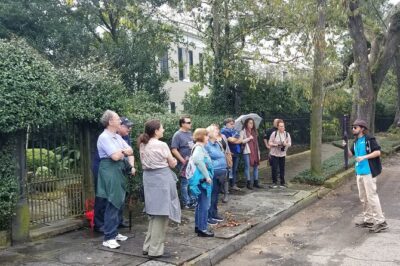
The tour lasts about two hours. That is long enough to cover a good stretch of the Garden District without turning into an exhausting half-day march. The small group limit of 15 matters here. A group this size is easier to gather around a house, and you should have a better chance of hearing the guide and asking a question.
Still, the one-star experience in the supplied ratings points to a real concern: traffic noise can interfere with the narration. If hearing every word matters to you, stay near the guide and avoid drifting to the back of the group when standing beside a busy street.
Walking through the American Sector
The first part of the route takes about an hour and a half. This is the heart of the experience, with the guide explaining who lived in the homes and why the district looks the way it does.
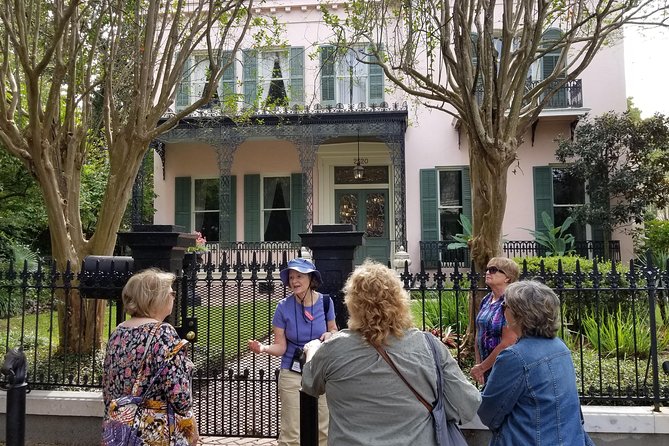
Expect to spend time outside the properties rather than entering them. The appeal is in the façades, grounds, iron fences, porches, rooflines, and the stories tied to each address. You will want to look up and around, not just straight ahead. Several of the details that make these homes interesting are easy to miss from a passing streetcar or an independent walk.
The route includes:
- Buckner Mansion, one of the district’s most recognizable grand residences.
- The Anne Rice House, linked to the New Orleans author.
- McGehee School for Girls, an important local institution included in the neighborhood story.
- Colonel Short’s Villa, known for its distinctive historic appearance.
- The Dolan House, another example of the district’s large residential architecture.
- The Benjamin Button House, familiar to many people through its connection with film.
The celebrity and film references are fun, but they are not the whole point. A good guide uses them as doorways into bigger subjects: how homes changed hands, how New Orleans families built status, and how the city’s architecture has been used in popular culture.
I would especially pay attention when the guide discusses architectural details. The homes are not all alike, even when they share grand proportions. The tour can help you notice differences in design, materials, decorative trim, balconies, and the way each house meets the street.
Several people rate Dane highly for keeping a good pace while explaining architecture and local history. Barbara is described as a native New Orleanian with an attentive manner, and Mikko is praised for combining jokes with detailed information. Since guides can vary, your experience will depend partly on who leads your departure, but the recurring strength is clear: the best guides make the houses easier to read.
The stories behind the mansions
A walking tour earns its price when it gives you information that does not sit on a plaque. This route touches on the Livaudais plantation, the builders and owners of the houses, and the effects of the Civil War. Those subjects give the neighborhood more weight than its polished appearance suggests.
The Garden District grew from land with a complicated past. Looking at grand homes without learning how the area developed leaves out much of the story. The guide’s job is to connect the homes to the people and economic forces that shaped them.
You also get a sense of how the district works as a living neighborhood. These are not museum rooms arranged for visitors. The houses are private residences or active properties, and you should remain respectful at gates, fences, and sidewalks. The experience is strongest when you treat the area as a place where people live, not as a film set built for a tour.
The film and celebrity stops provide lighter moments. The Anne Rice House and Benjamin Button House appeal to fans of New Orleans-based fiction and movies, while the other addresses add architectural and social history. If you mainly want a list of famous filming locations, the tour may feel broader than expected. If you want those connections folded into a picture of the neighborhood, the mix works well.
A completely different side of New Orleans:
- New Orleans Premier Ghost, Voodoo and Vampire Walking Tour
★ 4.5 · 12,856 reviews - New Orleans Steamboat Natchez Jazz Cruise with Dinner Option
★ 4.0 · 7,533 reviews - Adults-Only New Orleans Ghost, Crime, Voodoo, and Vampire Tour
★ 5.0 · 6,545 reviews - New Orleans Food Walking Tour of the French Quarter with Small-Group Option
★ 5.0 · 6,118 reviews
Lafayette Cemetery No. 1 from outside the gates

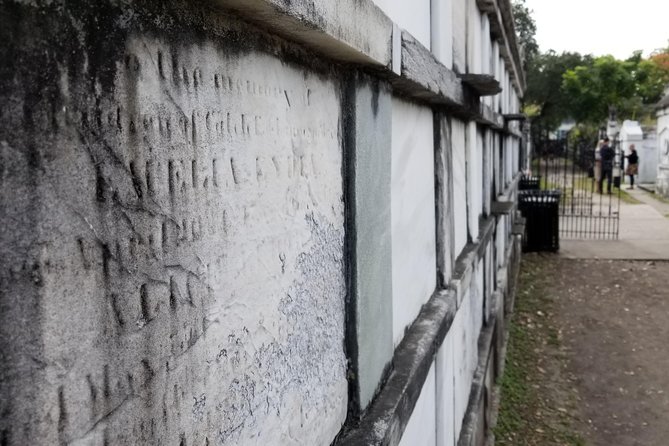
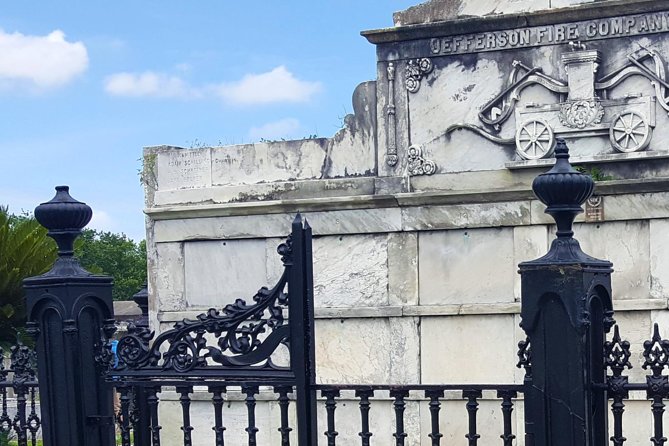
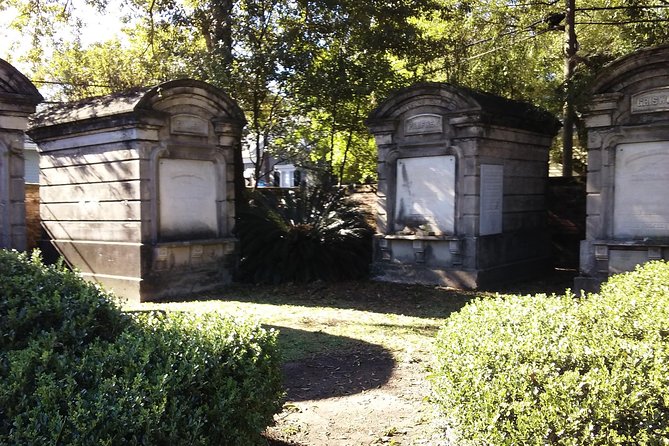
The cemetery portion takes about 20 minutes. Lafayette Cemetery No. 1 is the oldest city-owned cemetery in New Orleans, and the guide explains how it was founded and how local burial practices developed.
You will not enter the cemetery. It is closed to the public, so the guide conducts this part outside the gates. That limitation should be clear before you pay. You can still learn about the cemetery and view its exterior, but you will not walk among the tombs or examine the burial structures up close.
This is an important distinction because cemetery access is often a major reason people choose New Orleans tours. If your main goal is to explore above-ground tombs from inside the grounds, this experience will not provide that. If you want the cemetery included as part of a broader Garden District walk, the stop adds useful context without taking over the tour.
The short cemetery segment also helps break up the house-focused portion. New Orleans burial customs are part of the city’s identity, and the guide can explain why local cemeteries look different from ordinary burial grounds. You get the setting and the background, even with the gate closed.
Magazine Street and the end of the route
The tour is described as covering the Garden District and Magazine Street, and it finishes at 1403 Washington Avenue. The end point puts you near a useful part of the neighborhood rather than dropping you in an isolated spot.
One guide has been praised for stopping at a good deli for drinks and a snack. That kind of pause is not listed as a formal inclusion, so you should not book expecting food or a guaranteed stop. Still, it shows how the route can connect the historic district with everyday New Orleans life.
Magazine Street is a good place to continue after the tour because it gives you a change of pace. The Garden District offers grand homes and old streets. Magazine Street brings you closer to shops, food, and local activity. The tour does not include a meal, but its finish makes it easy to plan lunch afterward.
Is $37 a fair price?
At $37 per person, this is a reasonable price for a two-hour small-group walking tour, especially if your guide gives the architecture and history the attention described by many participants. You are paying for a local guide, a planned route, and stories that would be difficult to assemble quickly on your own.
The value is strongest for a first visit. You get a neighborhood orientation, a list of addresses to revisit, and enough historical background to understand what you are seeing. The 15-person maximum is also important. A private tour would cost more, while a large group could make narrow sidewalks and street-side stops frustrating.
The price is less compelling if you only want to photograph houses. You can walk the Garden District independently for free. The paid part is the interpretation: identifying homes, explaining architecture, connecting residents to events, and answering questions.
Admission tickets are not charged for the Garden District stops or the cemetery portion. The only included service listed is the local guide. Food, drinks, transportation, and entry inside Lafayette Cemetery are not included.
Heat, sidewalks, and what to bring

Treat this as a serious walking outing, even though two hours sounds manageable. Wear tennis shoes or another pair with solid support. Live oak roots can push up sections of sidewalk, and the pavement may be uneven.
Bring water. New Orleans heat and humidity can make a steady walk feel harder than the distance suggests. Light clothing, sun protection, and a hat are sensible choices, and you should dress for the weather because the tour operates in all conditions.
Rain does not automatically cancel the outing. The experience operates in all weather, so check the forecast and bring suitable protection. Wet sidewalks, heat, or heavy humidity can affect your comfort even when the guide continues as planned.
Service animals are allowed, and most people can participate. The supplied details do not promise a fully accessible route, so anyone with mobility concerns should consider the uneven sidewalks, tree roots, outdoor standing time, and the need to keep pace with a group.
Who will enjoy this Garden District walk?
I would recommend it most strongly to first-time visitors who want a clear introduction to the Garden District. It also suits anyone interested in architecture, New Orleans social history, famous homes, film locations, or local stories that are easy to miss on a self-guided walk.
Families can do well here if children are comfortable walking and listening for two hours. The guides’ humor and film connections may help hold attention, though there is no special children’s program described.
Couples and friends who prefer a relaxed outdoor activity will also find a good fit. The route has enough structure to keep you moving, but the small group allows questions and conversation. It is less suitable for someone seeking indoor comfort, extensive cemetery access, or a quiet route far from traffic.
You should also consider how much you enjoy houses. This tour is built around residences and streetscapes. If grand mansions, old trees, ironwork, and architectural details do not interest you, the subject may feel repetitive by the second hour.
Booking, cancellation, and practical facts
You receive confirmation at booking, and the ticket is mobile. The tour is offered in English and is booked, on average, about 19 days before the start date, so arranging it ahead of time is sensible if your New Orleans schedule is tight.
Free cancellation is available up to 24 hours before the 10:00 a.m. start time for a full refund. Within 24 hours, cancellations and changes are not accepted for a refund. The cut-off uses New Orleans local time, so keep that in mind if you are changing plans from another time zone.
The tour is operated by Unique NOLA. The overall rating is 4.9 from 99 ratings, with 98 percent of participants recommending it. Those numbers suggest a reliable experience, but the traffic-noise complaint is worth remembering. Stand close to the guide, especially near busy roads, and speak up if you cannot hear.
Should you book it?
Book this tour if you want the Garden District explained rather than simply photographed. The price is fair, the route covers several memorable homes, and the small group gives the guide room to tell stories about architecture, owners, celebrities, films, plantation history, and the Civil War’s effect on the area.
Choose another activity if entering Lafayette Cemetery is essential, if you dislike outdoor walking in heat, or if you want a private and silent look at the homes. For most first-time visitors, though, this is a useful two-hour introduction. Wear good shoes, carry water, stay near the guide, and keep your expectations clear about the cemetery gates.
FAQ
How long does the Small-Group Glamorous Garden District Tour last?
The tour lasts approximately two hours. About 1 hour and 30 minutes is spent in the Garden District, followed by about 20 minutes at Lafayette Cemetery No. 1.
Where does the tour begin?
The tour begins at 2800 St. Charles Avenue, New Orleans, Louisiana 70115, at 10:00 a.m.
Where does the tour end?
The tour ends at 1403 Washington Avenue, New Orleans, Louisiana 70130. This is a couple of blocks from the starting point.
Can I enter Lafayette Cemetery No. 1?
No. The cemetery is closed to the public, so this portion of the tour takes place outside the gates.
What homes and sights are included?
The Garden District route includes Buckner Mansion, the Anne Rice House, McGehee School for Girls, Colonel Short’s Villa, the Dolan House, and the Benjamin Button House.
How many people can join the tour?
The tour has a maximum of 15 participants.
What happens if I need to cancel?
You can cancel at least 24 hours before the experience start time for a full refund. Cancellations or changes made within 24 hours are not refunded.
Just added around New Orleans
- New Orleans Garden District Tour★ 5.0 · 8 reviews
- New Orleans Seance Experience★ 4.0 · 8 reviews
- Sin and Tonic Pub Crawl in New Orleans★ 4.5 · 8 reviews
- Airport and City Transfers in New Orleans★ 5.0 · 8 reviews
- The New Orleans Darkness Tour★ 4.4 · 9 reviews
- New Orleans Plantation Tour with Transportation★ 5.0 · 9 reviews
- New Orleans Self-Guided Kayak Bayou Swamp Tour★ 5.0 · 9 reviews
- Historic Carrollton Neighborhood Walking Tour★ 5.0 · 9 reviews
Garden District Tours, compared.

New Orleans Garden District History Walking Tour
Read our review →
New Orleans City Tour: French Quarter, Garden District & Cemetery
Read our review →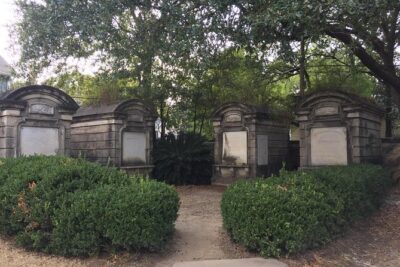
New Orleans Small-Group Garden District Walking Tour
Read our review →
New Orleans City and Cemetery Tour with Garden District Stroll
Read our review →

New Orleans Highlights of the Garden District Walking Tour
Read our review →
Browse the lists this tour appears in