

Reviewed · GARDEN DISTRICT TOURS
New Orleans: Garden District Guided Walking Tour
The most memorable part of this Garden District walk is the way architecture and human stories meet on the same leafy streets. You will see grand antebellum homes, hear about the speculators and dreamers who built the neighborhood, and look through the gates of Lafayette Cemetery No. 1, which is currently closed to the public.
I like the tour’s two-hour length and its useful ending near Magazine Street. I also like that guides such as James, Renee, Lesley, and Yvonne bring humor, local pride, and practical New Orleans tips to the walk. The main drawback is simple: uneven sidewalks can make the route tiring, and the cemetery visit is a look through the gates rather than a full public visit.
In This Review
- Key points at a glance
- Why the Garden District deserves two hours
- Starting with the people behind the mansions
- Reading the Garden District’s antebellum architecture
- Lafayette Cemetery No. 1 from behind the gates
- A relaxed pace, but not an effortless walk
- Why the guide makes the difference
- The Magazine Street finish
- Is $35 a fair price?
- Who should book this Garden District walk?
- Should you book it?
- FAQ
- How long is the Garden District walking tour?
- What language is the tour conducted in?
- Does the tour enter Lafayette Cemetery No. 1?
- Is the tour wheelchair accessible?
- What should I wear?
- Can I bring a pet or smoke during the tour?
- What can I do after the tour?
Key points at a glance

- Lafayette Cemetery No. 1: Look through the gates of a National Historic Landmark and learn why New Orleans uses above-ground tombs.
- Antebellum architecture: Connect the district’s porches, columns, ironwork, gardens, and grand scale to the city’s growth after the Louisiana Purchase.
- Story-led guiding: Guides including James, Renee, Jackie, Libby, Lesley, and Yvonne are praised for humor, local insight, and lively storytelling.
- A good break from the French Quarter: The Garden District offers a quieter walk through residential streets and old mansions.
- Useful finish: End near Magazine Street, where you can continue with shopping, dining, or a casual meal.
- Practical comfort: Allow two hours, wear sturdy shoes, and remember that the tour is in English and does not allow pets or smoking.
Why the Garden District deserves two hours

New Orleans is often reduced to the French Quarter, jazz clubs, and bright nightlife. The Garden District gives you a different city. Here, broad streets and old live oaks frame some of New Orleans’ most carefully preserved homes.
The point of this walk is not simply to photograph pretty houses. Your guide explains why the district looks so different from older Creole parts of the city. After the Louisiana Purchase, wealthy newcomers and ambitious local figures developed this area as a fashionable suburb. Their homes reflected money, confidence, and a taste for the grand architectural styles associated with the American South.
That background makes the details easier to read. A column is no longer just a column. A deep porch suggests how people used the house. A garden tells you something about status, climate, and the desire to create a private world behind the street frontage.
I especially like this kind of guided walk for a first visit because you get context quickly. You can look at the buildings on your own, but it is much harder to understand who built them, why they chose this neighborhood, and how the district changed without a guide.
More Garden District walks:
- New Orleans Garden District History Walking Tour
★ 5.0 · 2,879 reviews - New Orleans City Tour: French Quarter, Garden District & Cemetery
★ 4.5 · 2,209 reviews - New Orleans Small-Group Garden District Walking Tour
★ 5.0 · 1,384 reviews
Starting with the people behind the mansions
The tour begins with a short introduction to New Orleans and the Garden District. That opening matters because the neighborhood’s appearance can seem almost too polished at first. The stories add tension and movement to what might otherwise feel like a slow parade of expensive houses.
You will hear about risk-takers, land speculators, and dreamers who helped turn the area into a wealthy suburb. The focus is not only on architecture. Guides also discuss the people who shaped the neighborhood and the lives connected to its homes.
This human angle is one of the strongest reasons to book the tour. The best guides do not deliver a dry list of dates. James is repeatedly praised for mixing facts with jokes and answering questions. Renee brings the perspective of a New Orleans local, while Lesley has been praised for connecting the district’s past with its present-day life. Other guides, including Jackie, Yvonne, Libby, Betsy, Tim, and others, have also led highly regarded walks.
Your guide will vary by departure, so do not book solely because you expect one particular person. Still, the repeated praise for the guiding style is encouraging. The common thread is clear: you can expect an English-speaking guide who treats the neighborhood as a living part of New Orleans, not just an outdoor museum.
Reading the Garden District’s antebellum architecture

The walking route takes you along tree-lined streets lined with ornate homes and gardens. You will likely spend time studying the features that give the district its distinctive look, including large front porches, columns, decorative ironwork, formal entrances, and carefully planted yards.
The tour explains the origins of the district’s antebellum-style architecture, a useful phrase to understand before you arrive. It refers to the period before the American Civil War, when many of these grand homes were built or designed in the style associated with wealthy Southern residents.
You should keep your eyes open for small details rather than only the biggest house on the block. Look at how the homes sit on their lots. Notice the relationship between the street, the garden, the porch, and the front door. The district’s beauty comes from the combined effect of architecture, mature trees, and greenery, not from one building alone.
Several guides also bring in plants and flowers. Renee has been praised for explaining flowers and botanical details, while James has been noted for discussing both architecture and local plant life. That is useful if you want more than a basic overview of house styles.
The route is also a good choice if you like photography, but remember that this is a residential neighborhood. You are viewing buildings from public streets, not touring private interiors. The value lies in the explanation and the street-level details, not in access to the mansions.
Lafayette Cemetery No. 1 from behind the gates

The cemetery is the tour’s most distinctive stop. You will peek through the gates of Lafayette Cemetery No. 1, a National Historic Landmark, and learn about New Orleans’ above-ground interment customs.
The cemetery is currently closed to the public, so expectations matter. This is not a free-roaming cemetery visit where you wander among the tombs at your own pace. The experience is a guided look from outside the gates, paired with an explanation of why above-ground tombs became such an important part of New Orleans burial culture.
For many people, this is the emotional center of the walk. The tombs connect architecture, climate, custom, and family history in a way that feels very specific to New Orleans. The cemetery also has strong connections to the city’s popular culture, which makes this stop especially appealing if you know the television series The Originals or The Vampire Diaries.
The best approach is to treat the stop as a lesson in local customs rather than simply a spooky photo opportunity. Your guide can explain how the tombs are used and why they look the way they do. That gives the cemetery a place in the larger story of New Orleans.
Because access is restricted, this portion may feel short if you expected an interior visit. Still, the combination of the gate-side view and the explanation makes it worthwhile, especially when included in a broader Garden District walk.
More walking tours in New Orleans:
- New Orleans Premier Ghost, Voodoo and Vampire Walking Tour
★ 4.5 · 12,856 reviews - New Orleans Food Walking Tour of the French Quarter with Small-Group Option
★ 5.0 · 6,118 reviews - St. Louis Cemetery No. 1 Official Walking Tour
★ 4.5 · 3,941 reviews - New Orleans French Quarter, Voodoo and Culture Walking Tour
★ 4.5 · 2,961 reviews
A relaxed pace, but not an effortless walk
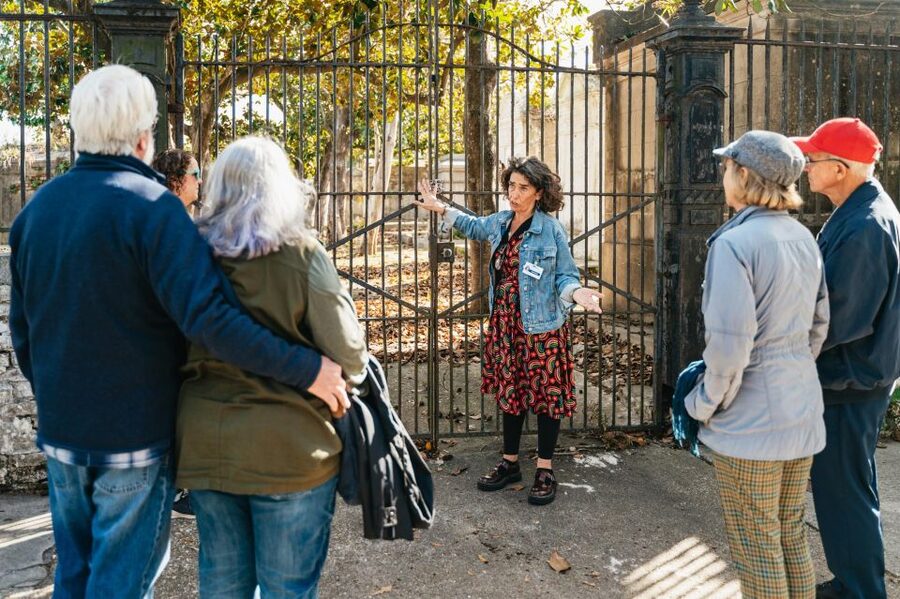
The activity lasts two hours, which is enough time to cover the key streets without turning the experience into a half-day commitment. You will be standing and walking for most of that period, with attention directed toward houses, gardens, and stories along the route.
A number of guides are praised for keeping a comfortable pace. That matters in New Orleans, where heat, humidity, and sudden rain can change how the walk feels. One guide adjusted well to cold weather, while another continued the tour during rain. These details suggest a flexible style, but weather can still affect your comfort.
The surfaces are uneven, and sturdy walking shoes are strongly recommended. This is important even if you normally manage city walks without trouble. Old sidewalks, tree roots, and changes in pavement can make a two-hour route more demanding than the distance suggests.
The tour is listed as wheelchair accessible, but the uneven walking surfaces deserve careful consideration. If you use a wheelchair, contact the operator before booking if you need to confirm how the route will work for your particular mobility needs. The available information supports accessibility, but it does not describe the exact route or every surface.
Pets and smoking are not allowed. The tour is conducted in English, so you should be comfortable following a spoken explanation for two hours.
Why the guide makes the difference
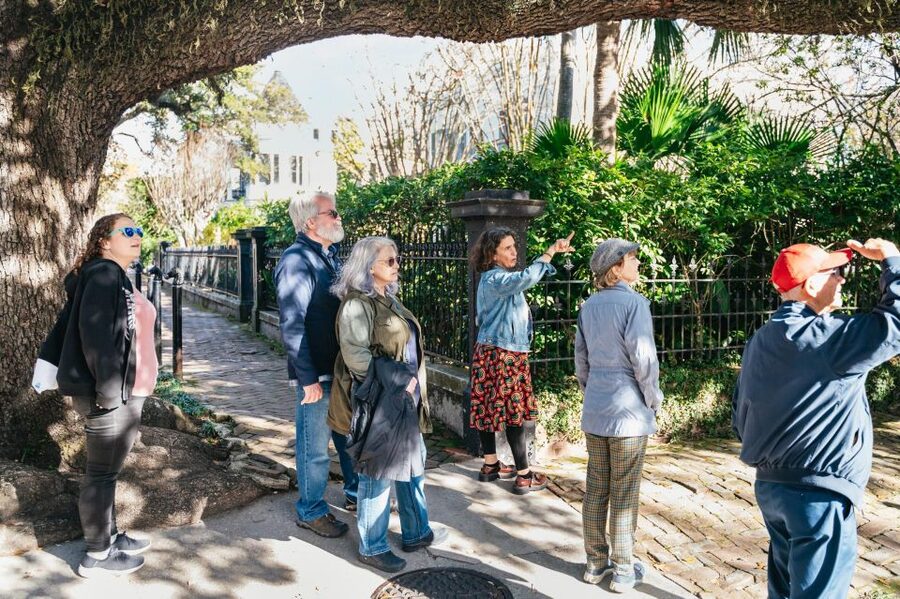
The Garden District is attractive enough to explore without help. That is also the danger. Without context, you may remember a row of beautiful houses but little about the forces that created the neighborhood.
A good guide turns the walk into a conversation with the city. James has been praised for humor, detailed local knowledge, questions, and practical tips about New Orleans infrastructure. Renee has shared personal stories as a New Orleans native and offered suggestions shaped around what visitors wanted to do. Libby has been praised for making architecture, history, and culture feel lively rather than academic.
Guides have also offered lunch suggestions and ideas for exploring New Orleans and Louisiana after the tour. That can add real value at the end of your visit, when you may be ready for a meal but unsure where to go.
The tour can also adapt to the interests of the group. One departure was split into two groups so a small party could stay together without feeling crowded. Another guide made time to include houses the group had asked about. These examples suggest that questions are welcome, though the exact experience depends on the guide and the size of your departure.
I would ask questions as you walk. The route is more rewarding when you connect it to your own interests, such as architecture, plants, local culture, cemetery customs, or film and television locations.
The Magazine Street finish

The tour ends near eclectic Magazine Street, which is a practical feature rather than a minor detail. After two hours of looking at mansions, you can switch from residential architecture to shops, restaurants, and a more everyday side of New Orleans.
This makes the activity easy to pair with the rest of your day. You can continue exploring the Garden District, spend more time near the cemetery, or head toward Magazine Street for shopping and dining. The ending gives you choices instead of leaving you at an isolated meeting point.
A casual meal is a sensible plan. One visitor enjoyed brunch at Gracious Bakery, and several guides have offered lunch suggestions. You should confirm current opening hours yourself, but the general idea is sound: use the tour as a bridge between sightseeing and a meal.
Magazine Street also helps you see why the Garden District is more than a collection of historic homes. The nearby commercial area gives the walk a local, lived-in finish. You move from grand houses and old tombs to places where people shop, eat, and spend an ordinary afternoon.
Is $35 a fair price?
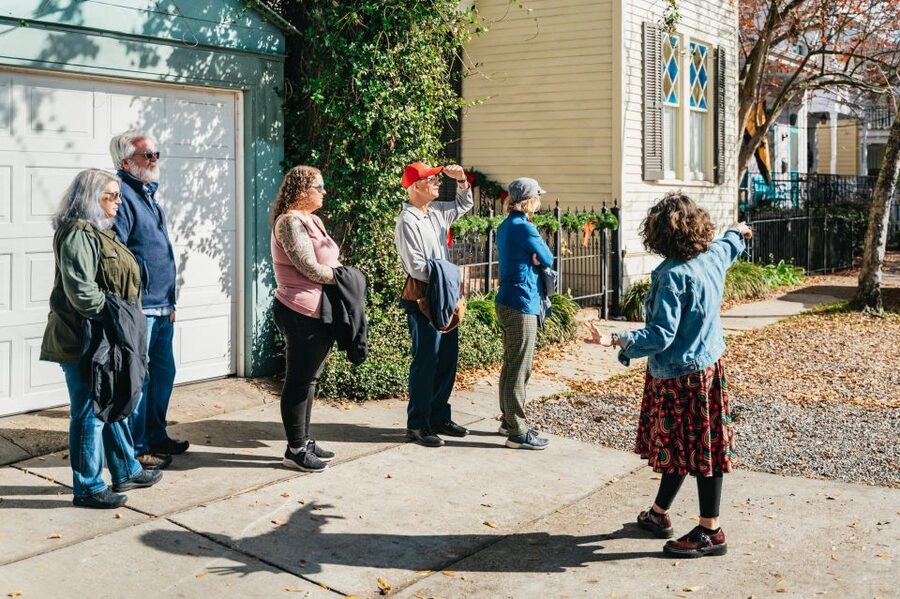
At $35 per person, this is a reasonable price for a two-hour guided walk, especially if you value explanation over simple sightseeing. You are paying for a live English-speaking guide, a planned route, local stories, architectural interpretation, and access to a gate-side view of Lafayette Cemetery No. 1.
The value is strongest when you are new to New Orleans or when you want to understand the city beyond the French Quarter. A self-guided walk costs less, of course, but it requires research and will not give you the same chance to ask questions or hear personal stories.
The price is less compelling if you want to enter the cemetery, see the interiors of private mansions, or spend most of the time taking photos. This is a neighborhood walk, not a house tour or a cemetery admission ticket.
The free cancellation window, up to 24 hours in advance, and reserve-now-pay-later option make it easier to fit into a changing itinerary. Those policies are useful in a city where weather can shift quickly, but check the exact meeting point for the option you book because it may vary.
Who should book this Garden District walk?

I would recommend it to first-time visitors who want a clear introduction to one of New Orleans’ most distinctive neighborhoods. It also suits repeat visitors who have seen the French Quarter and want a quieter, more residential side of the city.
Architecture fans will get plenty to study. History-minded visitors will appreciate the discussion of the Louisiana Purchase, neighborhood development, local customs, and the people connected to the homes. If you enjoy plants, flowers, and gardens, guides may add another layer to the walk.
The tour is also a good fit for couples, families with older children, and small groups who prefer a manageable activity. The two-hour format leaves room for lunch or another attraction, and the route does not demand a full day.
I would be more cautious if you have difficulty walking on uneven surfaces, dislike outdoor heat or rain, or expect indoor access. You should also keep your expectations realistic about Lafayette Cemetery No. 1. At present, you peek through the gates rather than enter as a regular visitor.
Should you book it?
Book this tour if you want stories, architecture, and local context in a compact outing. The strongest part is the guide-led interpretation, especially when your guide adds humor, personal experience, plant details, and useful recommendations for the rest of your stay.
Skip it if you only want to stroll independently or if a closed cemetery and exterior-only house viewing would disappoint you. For most visitors, though, $35 is fair for two hours of informed company in a beautiful neighborhood, with the useful bonus of ending near Magazine Street.
FAQ
How long is the Garden District walking tour?
The tour lasts two hours. Check availability for the starting times offered on your chosen date.
What language is the tour conducted in?
The tour is conducted in English with a live English-speaking guide.
Does the tour enter Lafayette Cemetery No. 1?
The tour includes a peek inside the gates of Lafayette Cemetery No. 1. The cemetery is currently closed to the public, so this is not a standard walk-through visit.
Is the tour wheelchair accessible?
The activity is listed as wheelchair accessible. The area has uneven walking surfaces, so sturdy shoes and advance consideration of route conditions are recommended.
What should I wear?
Wear sturdy walking shoes because the Garden District has uneven walking surfaces. You will be outdoors and walking for about two hours.
Can I bring a pet or smoke during the tour?
Pets and smoking are not allowed on the tour.
What can I do after the tour?
You can continue exploring the Garden District and the cemetery area, or head to nearby Magazine Street for shopping and dining.
Just added around New Orleans
- New Orleans Garden District Tour★ 5.0 · 8 reviews
- New Orleans Seance Experience★ 4.0 · 8 reviews
- Airport and City Transfers in New Orleans★ 5.0 · 8 reviews
- Sin and Tonic Pub Crawl in New Orleans★ 4.5 · 8 reviews
- The New Orleans Darkness Tour★ 4.4 · 9 reviews
- New Orleans Plantation Tour with Transportation★ 5.0 · 9 reviews
- New Orleans Self-Guided Kayak Bayou Swamp Tour★ 5.0 · 9 reviews
- Historic Carrollton Neighborhood Walking Tour★ 5.0 · 9 reviews
Garden District Tours, compared.

New Orleans Garden District History Walking Tour
Read our review →
New Orleans City Tour: French Quarter, Garden District & Cemetery
Read our review →
New Orleans Small-Group Garden District Walking Tour
Read our review →
New Orleans City and Cemetery Tour with Garden District Stroll
Read our review →
New Orleans Highlights of the Garden District Walking Tour
Read our review →

NOLA Garden District and Gates of Lafayette Cemetery Tour
Read our review →Browse the lists this tour appears in