

Reviewed · GARDEN DISTRICT TOURS
New Orleans Garden District Architecture Tour
The most interesting part of this tour is the way it teaches you to read the Garden District. Instead of simply pointing out pretty houses, your guide explains Italianate design, homes built in different eras, changing owners, burial customs, and the neighborhood’s place in New Orleans life. Guides have included Angela, a 10th-generation New Orleanian, along with Doug, Lee, Pauline, Gary, Eva, John, Chelsea, Kelsey, and others.
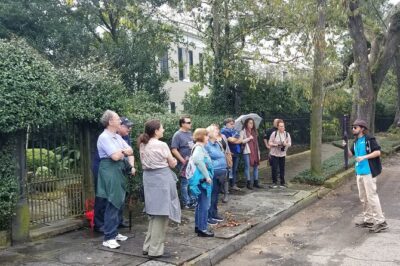
I like the small group of no more than 14, which makes it easier to ask questions and hear the guide on a busy street. I also like the practical mix of architecture and local stories, including Commander’s Palace, the old Rink skating center, Lafayette Cemetery, and homes connected with well-known residents. The main consideration is the weather: this is a two-hour outdoor walk, and even the tree-lined streets can feel hot.
In This Review
- Key points to know before you book
- Why the Garden District works so well on foot
- Starting at Lafayette Cemetery No. 1
- Commander’s Palace and the neighborhood’s social side
- Reading the Morris-Israel House
- Two eras at the Women’s Opera Guild House
- From family residence to school library
- A second Samuel Jameson house
- The Rink and changing recreation in New Orleans
- The main Garden District walk
- What the $40 price really buys you
- Handling heat, rain, and the cemetery closure
- Who will enjoy this walk most
- Should you book the Garden District Architecture Tour?
- FAQ
- How long is the New Orleans Garden District Architecture Tour?
- How much does the tour cost?
- Where does the tour begin?
- Where does the tour end?
- Is Lafayette Cemetery included?
- Is transportation included?
- How large is the tour group?
- What happens if bad weather cancels the tour?
Key points to know before you book

- Italianate architecture gets the spotlight: Learn how to recognize the style on homes such as the Morris-Israel House and Carroll-Crawford House.
- Lafayette Cemetery adds a different side of New Orleans: A short stop covers above-ground burial customs and the city’s famous Cities of the Dead.
- The guide shapes the experience: Angela, Doug, Pauline, Lee, Gary, and other local guides have led this walk, each adding personal stories and visual aids in some cases.
- The tour stays small: The maximum group size is 14, a useful balance between personal attention and a reasonable price.
- It is a full walking experience: Transportation is not included, comfortable shoes are recommended, and the tour begins and ends at 2727 Prytania Street.
- The $40 price pays for interpretation: You are paying for a licensed, insured local guide who helps you understand buildings you could otherwise pass without noticing.
Why the Garden District works so well on foot
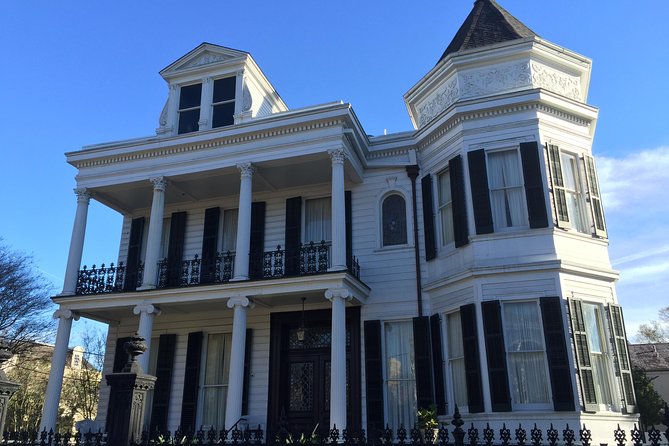
New Orleans has plenty of famous sights, but the Garden District rewards a slower pace. Its streets are lined with large 19th-century houses, mature trees, ironwork, and broad façades that make sense only when someone explains what you are seeing.
This tour uses architecture as the main doorway into local history. You learn why one house has Italianate details, how another combines two periods of construction, and how private homes later became schools or public-facing buildings. That approach gives you a useful skill for the rest of your stay. After the walk, you can look at another New Orleans house and make a better guess about its age, style, and original purpose.
The pace is leisurely rather than rushed. The experience lasts about two hours, with short talks at several buildings and a longer stretch devoted to the Garden District itself. You will spend much of the time outdoors, so bring water and plan around the weather even though transportation is not part of the booking.
More Garden District walks:
- New Orleans Garden District History Walking Tour
★ 5.0 · 2,879 reviews - New Orleans City Tour: French Quarter, Garden District & Cemetery
★ 4.5 · 2,209 reviews - New Orleans Small-Group Garden District Walking Tour
★ 5.0 · 1,384 reviews
Starting at Lafayette Cemetery No. 1
The walk begins at 2727 Prytania Street, close to Lafayette Cemetery No. 1. The cemetery portion takes only about five minutes, but it introduces one of the city’s most distinctive traditions: above-ground burial in family tombs.
This is not a long cemetery visit or a separate admission attraction. The guide uses the stop to explain New Orleans burial customs and why the city’s cemeteries are often called Cities of the Dead. That short discussion helps you understand the practical and cultural reasons these burial grounds look so different from many cemeteries elsewhere in the United States.
There is an important restriction here. City permission allows the tour to enter, but the cemetery can close when services are being held. If that happens, the tour may need to adjust this portion. Treat the cemetery as a valuable introduction rather than the main event.
Commander’s Palace and the neighborhood’s social side
The next pause centers on Commander’s Palace, one of the Garden District’s best-known buildings. You do not receive admission to the restaurant as part of the tour, and the stop lasts about three minutes, so this is an exterior discussion rather than a meal or restaurant visit.
The guide covers the architecture, the owners, and the culinary experience associated with the restaurant. That combination matters because the Garden District is not just a collection of old houses. Its buildings have continued to serve social, commercial, educational, and residential roles.
If you want to eat at Commander’s Palace afterward, the tour gives you useful context before you arrive. It does not include a reservation, food, or an extended look inside, so you should plan that separately.
Reading the Morris-Israel House
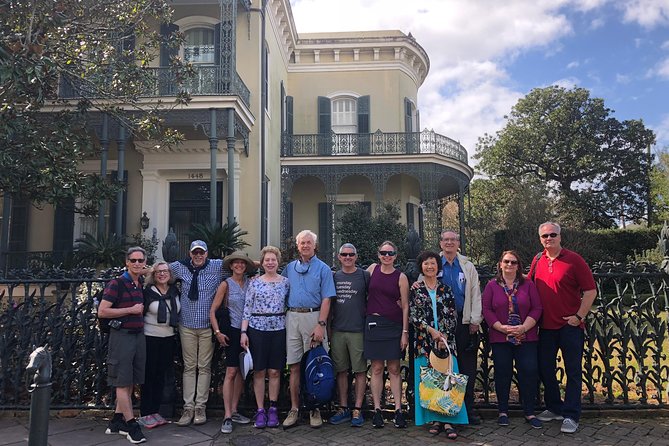
The Morris-Israel House is a strong teaching stop. Samuel Jameson designed it in 1869, and the building offers a clear example of Italianate architecture in the Garden District.
You will learn what features help identify the style and how it relates to other designs nearby. This is where the tour earns its price for anyone who enjoys buildings but does not know architectural terms. Rather than leaving you with a list of names, the guide connects one house to the wider pattern of the neighborhood.
The stop lasts about five minutes. You should expect an explanation from the street, not an interior tour. That is typical of the experience: the focus is on close observation, context, and stories about the buildings and their occupants.
A completely different side of New Orleans:
- New Orleans Premier Ghost, Voodoo and Vampire Walking Tour
★ 4.5 · 12,856 reviews - New Orleans Steamboat Natchez Jazz Cruise with Dinner Option
★ 4.0 · 7,533 reviews - Adults-Only New Orleans Ghost, Crime, Voodoo, and Vampire Tour
★ 5.0 · 6,545 reviews - New Orleans Food Walking Tour of the French Quarter with Small-Group Option
★ 5.0 · 6,118 reviews
Two eras at the Women’s Opera Guild House
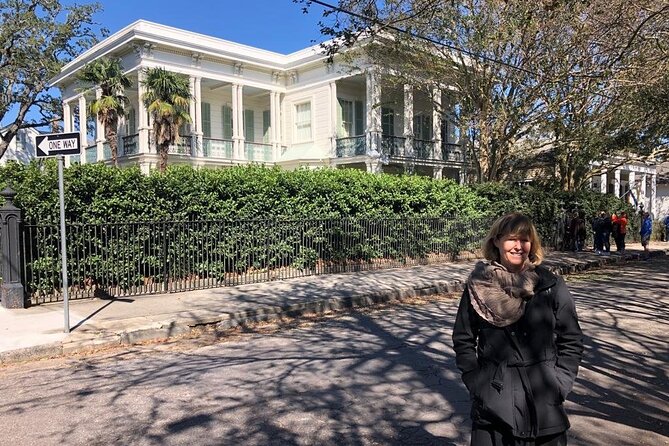
At the Women’s Guild of the New Orleans Opera, the guide points out a house built in two different periods and two different styles. The discussion lasts about three minutes, but the idea is useful because it shows that historic homes were not always completed in one clean phase.
You learn how to spot the difference between the styles and how later work can change the appearance of an older building. This gives you another way to examine the neighborhood. Look for shifts in materials, proportions, and decorative details rather than seeing every large home as part of one uniform look.
As with the other stops, admission is free because the building is viewed from outside. The value lies in the explanation, not access to a private interior.
From family residence to school library

The Louise S. McGehee School provides one of the longer stops, at about 10 minutes. Its building began as a single-family residence and later became the school’s library.
That change gives the tour a wider time frame. You are not only hearing about how homes were built in the late 19th century. You are also seeing how buildings can be adapted as neighborhoods change. A private house can become part of an educational institution, while its older form still tells you something about the people and period that produced it.
I particularly like this type of stop because it moves beyond the usual celebrity-home story. The building’s later use helps you think about preservation in practical terms: an old structure remains useful because its function can change.
A second Samuel Jameson house
The Carroll-Crawford House returns to the work of Samuel Jameson and offers another example of Italianate design. Seeing two buildings by the same architect helps you compare them rather than studying each one in isolation.
The stop takes about five minutes. You can expect the guide to discuss the house’s architecture and its place among the surrounding homes. This kind of comparison is one of the tour’s strengths. A single building can be interesting, but several examples make the neighborhood’s design choices easier to understand.
If architecture is your main reason for booking, pay close attention here. The tour is not a general sightseeing walk with a few decorative details added on. It places real emphasis on the forms, styles, and people behind the houses.
The Rink and changing recreation in New Orleans
The Rink Shopping Center looks less like a grand mansion, but it adds an important change of pace. In 1884, this simple building housed the largest skating rink in the country at the time it was built.
The talk lasts about seven minutes and focuses on popular recreation around the turn of the century. That detail helps you picture the Garden District as a lived-in neighborhood, not a frozen museum of old façades. People came here to work, socialize, shop, and enjoy leisure activities.
This is also a reminder that the tour covers more than antebellum mansions. You see how a building’s purpose reflects the interests and habits of its period. The Rink brings a bit of everyday life into a walk otherwise dominated by private residences.
The main Garden District walk
The broader Garden District portion takes up the heart of the two-hour experience. You walk beneath tree-lined streets while the guide explains when the homes were built, who designed them, and who lived in them.
The supplied schedule lists the Garden District stop as two hours, which effectively describes the full walking portion rather than a two-hour pause at one address. Expect a continuous neighborhood walk with shorter stops folded into it.
This is where your guide’s personality matters most. Angela has been praised for combining local knowledge with her family connection to New Orleans, and her background as a 10th-generation New Orleanian gives her stories a personal angle. Doug has been noted for a friendly manner, a steady pace, photos that help explain the past, and stories about famous residents. Pauline brings careful research into how buildings changed over the decades, along with details about owners and the people who commissioned the houses.
Other guides have their own strengths. Lee is described as witty and able to make history feel immediate. Gary uses photos to clarify his points and welcomes questions. Kelsey has been praised for staying in touch when a group was delayed by traffic and for researching the area carefully. Eva, Chelsea, John, Phant, also called Caroline, and others have led engaging walks.
Guide assignments can change, so you should not book expecting one particular person unless the provider confirms it. The consistent feature is the local guide rather than a recorded script. You can ask questions, request clarification, and follow a story that catches your interest.
What the $40 price really buys you
At $40 per person, this is not the cheapest way to see the Garden District. You can walk the streets on your own for free, and the outside views cost nothing.
The question is what you want from the walk. If you only need photographs of impressive homes, self-guided wandering may be enough. If you want to understand Italianate design, burial customs, ownership changes, famous residents, and the story behind buildings such as the Rink, the guide adds clear value.
The group limit of 14 also matters. You are not paying for a huge procession where the guide must repeat every point. A small group gives you a better chance to hear the explanation and ask a question without interrupting the whole street.
The price includes a licensed, insured local guide and an English-language walking experience. It does not include transportation, food, restaurant admission, or entry to private houses. The tour starts and ends at the same Prytania Street meeting point, so you can plan another Garden District activity before or after it.
The experience is booked an average of 19 days ahead, which suggests you should reserve before your New Orleans visit if your schedule is tight. Confirmation arrives at booking, and free cancellation is available until 24 hours before the start time. Within 24 hours, changes and refunds are not accepted.
Handling heat, rain, and the cemetery closure
Weather is the main practical concern. The tour requires favorable conditions, and poor weather can lead to a new date or a full refund. A separate four-star experience specifically noted a hot day, so do not assume the shade will keep the walk cool.
Wear comfortable walking shoes. You will be outside for about two hours, and the stop-and-start format means you may stand while listening. The neighborhood is near public transportation, but you are responsible for getting to and from the meeting point.
Lafayette Cemetery may close during services. City permission allows access, but the cemetery is not guaranteed to be open at every departure. That is a normal limitation for a functioning cemetery, not a reason to skip the tour, but it is worth knowing before you book.
Service animals are allowed, and most people can participate. The provider says the activity is suitable for most participants, but the supplied details do not give a specific distance, step-free route, or accommodation plan. If you need those details, ask before reserving.
Who will enjoy this walk most
I would choose this tour for a first visit to New Orleans when you want an introduction that is calmer than the French Quarter. The Garden District offers a different mood, with large homes, mature trees, and fewer distractions from the buildings themselves.
It suits you especially well if you:
- Want architecture explained in plain language
- Prefer a small group to a large sightseeing crowd
- Enjoy local stories about owners, designers, and famous residents
- Want a gentle introduction to Lafayette Cemetery
- Like walking tours that leave you with useful context for later sightseeing
- Are happy to remain outdoors for about two hours
Families can also make good use of it. One family brought a 17-year-old who enjoyed the architecture and history, and the mix of visual details and stories gives younger visitors more to follow than a lecture focused only on dates.
This is less suitable if you want to go inside historic homes, eat during the tour, or ride between sights. It is also not ideal if the forecast calls for difficult weather or if you prefer a short outing with little standing.
Should you book the Garden District Architecture Tour?
Book it if you want to understand what you are looking at, not just walk past attractive houses. The strongest parts are the small group, the local guides, the clear focus on architecture, and the range of subjects, from Lafayette Cemetery and Commander’s Palace to the old skating rink and former family residences.
At $40, the tour is a fair buy for an informed two-hour introduction. You will not receive interior access or transportation, but you will gain a framework for exploring the Garden District on your own afterward.
I would schedule it early in your New Orleans stay. That way, the guide’s explanation of Italianate homes, neighborhood development, and local residents can sharpen everything you see during the rest of your visit. Choose another activity if you mainly want a restaurant experience, an indoor tour, or guaranteed cemetery access.
FAQ
How long is the New Orleans Garden District Architecture Tour?
The tour lasts approximately two hours.
How much does the tour cost?
The price is $40 per person.
Where does the tour begin?
It begins at 2727 Prytania Street, New Orleans, Louisiana 70130.
Where does the tour end?
The activity ends back at the meeting point.
Is Lafayette Cemetery included?
The tour includes a short segment at Lafayette Cemetery No. 1, with no admission charge. The cemetery may close when services are being performed.
Is transportation included?
No. Transportation to and from the attractions is not included.
How large is the tour group?
The activity has a maximum of 14 travelers.
What happens if bad weather cancels the tour?
If poor weather causes a cancellation, you will be offered an alternative date or a full refund. You may also cancel for a full refund if you do so at least 24 hours before the start time.
Just added around New Orleans
- New Orleans Garden District Tour★ 5.0 · 8 reviews
- New Orleans Seance Experience★ 4.0 · 8 reviews
- Airport and City Transfers in New Orleans★ 5.0 · 8 reviews
- Sin and Tonic Pub Crawl in New Orleans★ 4.5 · 8 reviews
- The New Orleans Darkness Tour★ 4.4 · 9 reviews
- New Orleans Plantation Tour with Transportation★ 5.0 · 9 reviews
- New Orleans Self-Guided Kayak Bayou Swamp Tour★ 5.0 · 9 reviews
- Historic Carrollton Neighborhood Walking Tour★ 5.0 · 9 reviews
Garden District Tours, compared.

New Orleans Garden District History Walking Tour
Read our review →
New Orleans City Tour: French Quarter, Garden District & Cemetery
Read our review →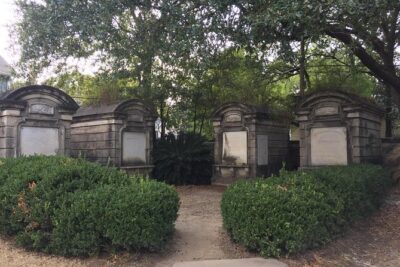
New Orleans Small-Group Garden District Walking Tour
Read our review →
New Orleans City and Cemetery Tour with Garden District Stroll
Read our review →

New Orleans Highlights of the Garden District Walking Tour
Read our review →
Browse the lists this tour appears in