
Reviewed · HISTORICAL TOURS
New Orleans African American Heritage Walking Tour
New Orleans African American Heritage Walking Tour brings you to the places where African culture helped shape the city from its earliest days. You’ll stand in Congo Square, then walk through the French Quarter while tracing the roots of jazz, voodoo, Creole food, dance, and architecture.
I like the local perspective, especially when guides such as Keynin, a New Orleans native and musician, or Mika explain the city in a personal, conversational way. I also like the small price and focused length: $29 for two hours is a fair way to add historical context to a French Quarter visit.
The main consideration is that this is a walking tour with no food, drinks, or attraction admissions included. The group may reach 30 people, and one serious complaint describes a guide pressuring a participant about a tip. Tipping is optional, so you should never feel forced to pay more than you choose.
In This Review
- Key points to know before you book
- Why Congo Square matters so much
- Walking into the French Quarter’s Black history
- Guides who make the history easier to follow
- How much the $29 price gets you
- Why the 4:00 p.m. start works
- What you may take away from the walk
- Who should book this New Orleans walking tour
- Booking advice and cancellation rules
- Should you book it?
- FAQ
- Where does the New Orleans African American Heritage Walking Tour begin?
- What time does the tour start?
- How long does the experience last?
- Where does the tour end?
- What does the tour include?
- What places are visited?
- Can I cancel for a full refund?
Key points to know before you book
- Congo Square is the tour’s emotional center: Learn how enslaved Africans and other laborers gathered to trade, make music, dance, and socialize.
- The tour connects African traditions to modern New Orleans: Expect discussion of jazz, voodoo, Creole food, dance, and architecture.
- Guides bring different strengths: Keynin is described as a New Orleans native and local musician, while Mika is noted for her clear, patient, engaging approach.
- The route lasts about two hours: It begins at 4:00 p.m. at 401 Decatur Street and returns there.
- The $29 price is reasonable for a guided introduction: You pay for the guide’s interpretation, not meals or entry tickets.
- Book with a little flexibility: The tour requires a minimum number of participants and may be canceled if that number is not reached.
Why Congo Square matters so much
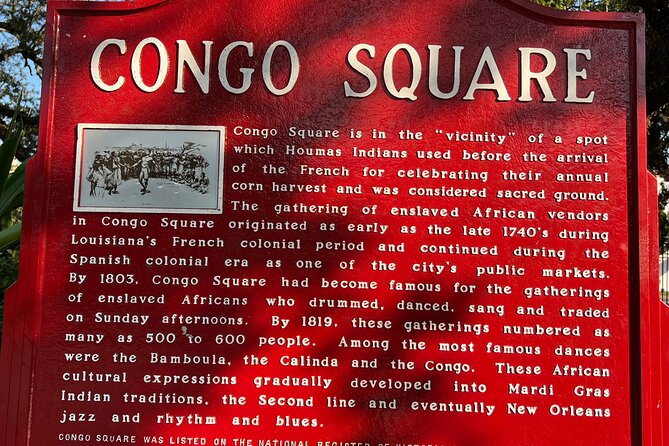
The tour opens with one of the most important places in New Orleans for understanding African American culture: Congo Square, now part of Louis Armstrong Park on the edge of the French Quarter in Faubourg Tremé.
The story begins in 1719, within a year of New Orleans being established. People of African ancestry were forcibly brought to French Louisiana from the Senegambia region of West Africa. About 5,000 Africans survived the Middle Passage during the 1720s. In the 1780s, Spanish authorities brought a similarly large group from areas connected with the Benin and Congo regions.
Those numbers are difficult to grasp from a plaque alone. A guide can help connect them to the city you see around you. Enslaved Africans cleared forests, grew crops, and built much of the infrastructure that allowed colonial New Orleans to function. Their labor was exploited, but their culture was not erased.
At Congo Square, enslaved people and free Black workers gathered on Sundays to trade goods, play music, dance, and spend time together. This was not simply a recreational space. It was a place where people preserved memory, maintained social ties, exchanged skills, and carried musical and spiritual traditions forward.
You’ll spend about 45 minutes here. That gives the guide time to explain the location rather than treating it as a quick photo stop. Look for the connection between the open gathering space and the traditions that later shaped New Orleans music and public culture.
One detail that may make the past feel present is the discussion of offerings found under an old tree in Louis Armstrong Park. You should not expect a staged performance or theatrical show. The power of the stop comes from seeing how spiritual practices and cultural memory can continue in the same place across generations.
More history tours in New Orleans:
- New Orleans Garden District History Walking Tour
★ 5.0 · 2,879 reviews - French Quarter Historical Sights and Stories Walking Tour
★ 5.0 · 2,724 reviews - New Orleans Small-Group Haunted History Carriage Tour
★ 4.5 · 2,289 reviews
Walking into the French Quarter’s Black history
The remaining hour and 15 minutes takes place in the French Quarter. Most people know the Quarter for balconies, restaurants, bars, and music clubs. This tour asks you to read it differently.
The buildings and streets are not only decorative scenery. They are part of a story shaped by enslaved workers, free people of color, immigrants, merchants, cooks, musicians, craftspeople, and religious leaders. The guide uses the neighborhood to explain how African American life influenced the city’s character.
You’ll learn where traditions connected to voodoo came from and how African spiritual ideas survived under colonial rule and later social pressure. The tour also connects African American culture with dance and jazz, two parts of New Orleans life that are often presented as entertainment without enough attention to their roots.
Food is another useful part of the discussion. Creole cooking developed through many cultural influences, including African methods and ingredients. A guide may point out how food traditions reflect the movement of people and the blending of cultures, rather than treating Creole cuisine as a simple restaurant category.
Architecture also enters the story. The tour looks at Creole architecture through an African American lens, showing how the city’s built environment was shaped by the people who constructed, maintained, and inhabited it. You may leave with a better sense that the French Quarter’s history is not only about famous buildings or wealthy residents.
The walk stays on a clear theme. That makes it a good companion to a general French Quarter tour, not a substitute for one. If you want cemetery interiors, museum admissions, or a long list of famous landmarks, this is not that kind of outing. Its strength is interpretation and context.
Guides who make the history easier to follow
A history tour depends heavily on the person leading it. Here, the guide names that appear most often are Keynin and Mika, with one reference also spelling his name Keenan and another spelling hers Meka.
Keynin is described as a New Orleans native with a strong command of local history and a background as a musician. That combination matters. He can connect the city’s past with its music culture and explain local stories in a way that feels tied to real places rather than a memorized script.
Mika is described as patient, friendly, and able to balance serious subjects with easy conversation. That balance is important on a tour covering enslavement, racism, resistance, and cultural survival. You want a guide who can treat the subject with care without making the walk feel stiff or inaccessible.
The guides are also praised for answering questions and adapting to the group. One family completed the walk with a wheelchair rental for a parent, and the guide was described as accommodating. The official details say most people can participate, service animals are allowed, and the route is near public transportation.
Still, guide quality can vary from one departure to another. One highly negative account describes pressure to give a larger tip and a threat to cancel the walk. That is not acceptable conduct. The clear takeaway for you is simple: tipping is not part of the $29 price, and it remains your choice. If a guide pressures you, you are entitled to decline.
How much the $29 price gets you
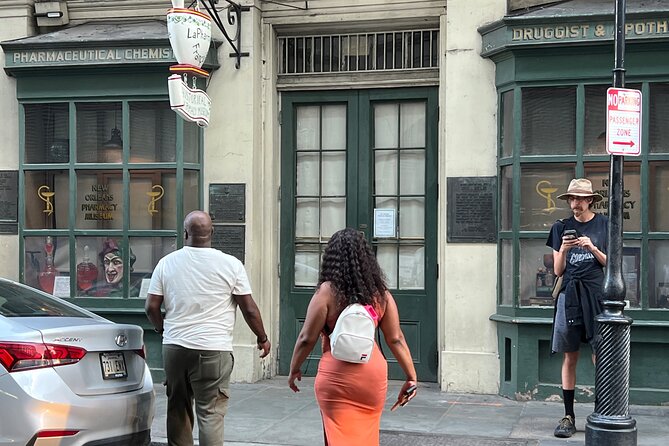
At $29 per person, this is priced below many longer New Orleans sightseeing tours. The fee covers the tour guide, but not food, drinks, tips, or admission tickets. The listed stops are public spaces, so you are paying for the guide’s storytelling, organization, and local knowledge.
That is a fair arrangement if you want a strong introduction before exploring on your own. You could walk through Congo Square and the French Quarter without paying an admission fee, but you would miss the connections between specific places and the wider African American story.
The value is best for first-time visitors who want more than a surface-level look at New Orleans. It is also useful if you have already seen the Quarter and want a different theme. The two-hour format keeps the cost and time commitment modest.
The tradeoff is that the tour does not include a tasting. If you are hoping to sample gumbo, Creole dishes, or a po’boy as part of the experience, plan to eat separately. A guide named Keynin has recommended a good po’boy spot to participants, but the meal itself is not included.
More walking tours in New Orleans:
- New Orleans Premier Ghost, Voodoo and Vampire Walking Tour
★ 4.5 · 12,856 reviews - New Orleans Food Walking Tour of the French Quarter with Small-Group Option
★ 5.0 · 6,118 reviews - St. Louis Cemetery No. 1 Official Walking Tour
★ 4.5 · 3,941 reviews - New Orleans French Quarter, Voodoo and Culture Walking Tour
★ 4.5 · 2,961 reviews
Why the 4:00 p.m. start works
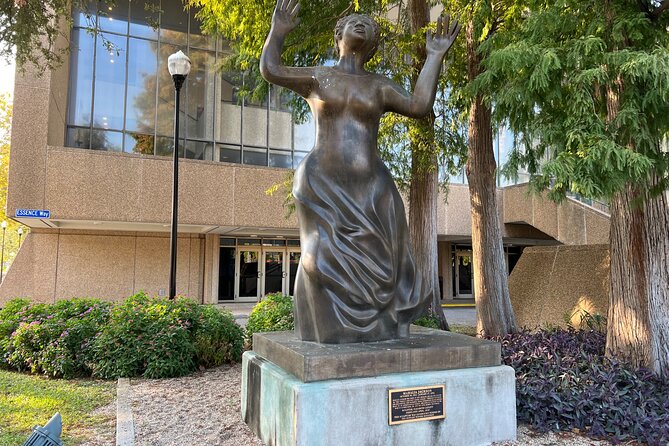
The tour starts at 4:00 p.m. at 401 Decatur Street and ends back at the same meeting point. That timing makes it easy to fit into a day of sightseeing. You can spend the morning in a museum or market, have lunch, and still reach the starting point without giving up the entire afternoon.
The return to the meeting point is useful if you have dinner plans in the French Quarter. It also means you are not left trying to find your way back from another neighborhood at the end.
The duration is approximately two hours, but you should still arrive ready for a sustained walk. Wear comfortable shoes and bring water, particularly in warm weather. Those suggestions are basic, but they matter more here because the tour has no included refreshment stop.
The group can have up to 30 people. That is not a private walk, and a full group may make it harder to ask long questions or hear every word in a noisy street. On the other hand, the fixed route and public meeting points make the tour easy to join for many visitors.
What you may take away from the walk
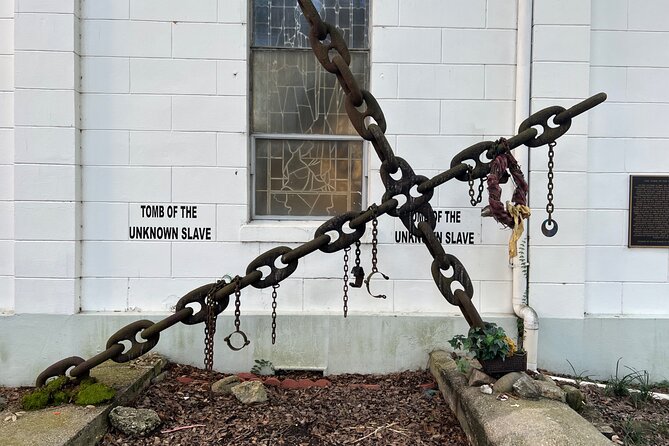
The strongest result should be a more complete understanding of how New Orleans developed. Instead of seeing African American culture as one part of the city’s identity, you’ll see its role in the city’s foundations.
You’ll learn about people who were forced into the region and then made cultural life possible under harsh conditions. The tour gives attention to labor, but it also moves beyond suffering to focus on creativity, resilience, belief, music, and community.
That balance is one reason this experience can feel important rather than merely informative. A good guide does not reduce the past to a list of dates. The story includes difficult subjects, but it also shows how people created social and cultural systems in circumstances they did not choose.
You may also hear less familiar local stories. One guide is described as sharing stories that are not commonly presented in standard New Orleans sightseeing tours. A reference to a particularly frightening story suggests that the walk may include darker local material if you ask, though the provided details do not explain exactly what that story is.
I would treat that as an optional extra, not the reason to book. The core value is the historical context, especially the movement from West Africa to colonial Louisiana and then into the cultural life of modern New Orleans.
Who should book this New Orleans walking tour
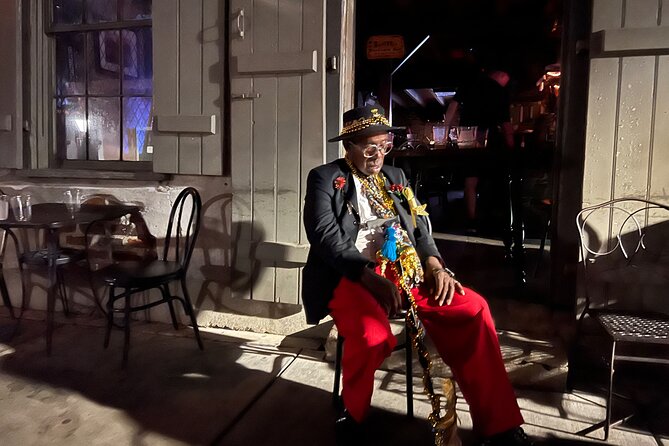
This tour suits you if you want to understand the city before spending your evening listening to jazz or eating Creole food. It gives those experiences a stronger foundation.
It is especially appropriate for:
- First-time visitors who want a more serious introduction to New Orleans
- People interested in African diaspora history and cultural survival
- Visitors who have already taken a general French Quarter tour
- Families and mixed-age groups who prefer discussion over a museum visit
- Anyone looking for a two-hour activity at a moderate price
- Visitors who value a local guide’s perspective
It may not suit you if walking is difficult, you dislike historical discussions about enslavement and racism, or you want a food-focused outing. Most people can participate, and service animals are allowed, but the experience is still a walking tour through public streets and park areas.
Booking advice and cancellation rules
The tour is booked an average of 12 days ahead, so reserving before your New Orleans trip is sensible. Confirmation arrives at booking, and the activity uses a mobile ticket.
You can cancel for a full refund if you do so at least 24 hours before the 4:00 p.m. start time. Cancellations or changes made within 24 hours are not accepted for a refund. The local time in New Orleans controls the cutoff.
The tour also requires a minimum number of participants. If the operator cancels because that minimum is not met, you should be offered another date or experience, or a full refund. This is worth remembering if you are building a tightly timed itinerary around the walk.
Should you book it?
I would book the New Orleans African American Heritage Walking Tour if you want the French Quarter to mean more than pretty balconies and good food. Congo Square gives the experience a clear center, and the French Quarter portion shows how African American culture shaped music, religion, cooking, dance, and the city itself.
The $29 price is reasonable, the two-hour length is manageable, and the 4:00 p.m. start fits neatly into a sightseeing day. Go with comfortable shoes, bring water, and keep your expectations focused on history and storytelling rather than included attractions or tastings.
Book it with the understanding that guide quality matters. Keynin and Mika are associated with warm, engaging, local presentations, but one complaint about tip pressure is serious and should not be brushed aside. If you want an accessible, thoughtful introduction to New Orleans African American history, this is worth considering, with the simple reminder that gratuity is always your decision.
FAQ
Where does the New Orleans African American Heritage Walking Tour begin?
It begins at 401 Decatur Street, New Orleans, Louisiana 70130.
What time does the tour start?
The tour starts at 4:00 p.m.
How long does the experience last?
The walking tour lasts approximately two hours.
Where does the tour end?
It ends back at the meeting point on Decatur Street.
What does the tour include?
The tour includes a guide. Food, drinks, and tips are not included.
What places are visited?
The tour visits Congo Square in Louis Armstrong Park and the French Quarter, with a focus on African American history and culture.
Can I cancel for a full refund?
Yes. You can cancel at least 24 hours before the start time for a full refund. Cancellations or changes made less than 24 hours before the experience are not accepted for a refund.
Just added around New Orleans
- New Orleans Garden District Tour★ 5.0 · 8 reviews
- New Orleans Seance Experience★ 4.0 · 8 reviews
- Airport and City Transfers in New Orleans★ 5.0 · 8 reviews
- Sin and Tonic Pub Crawl in New Orleans★ 4.5 · 8 reviews
- The New Orleans Darkness Tour★ 4.4 · 9 reviews
- New Orleans Plantation Tour with Transportation★ 5.0 · 9 reviews
- New Orleans Self-Guided Kayak Bayou Swamp Tour★ 5.0 · 9 reviews
- Historic Carrollton Neighborhood Walking Tour★ 5.0 · 9 reviews
Historical Tours, compared.
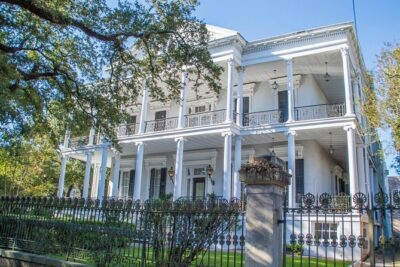
New Orleans Garden District History Walking Tour
Read our review →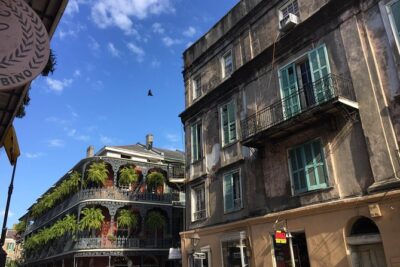
French Quarter Historical Sights and Stories Walking Tour
Read our review →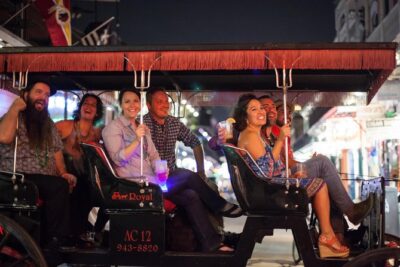
New Orleans Small-Group Haunted History Carriage Tour
Read our review →
Paddlewheeler Creole Queen Historic Mississippi River Cruise
Read our review →
Creole Queen History Cruise with Optional Lunch
Read our review →
Browse the lists this tour appears in