
Reviewed · GARDEN DISTRICT TOURS
Hidden History of New Orleans Garden District
The Garden District tells a different New Orleans story: not jazz clubs and haunted bars, but grand porches, old money, famous residents, and tombs above the ground. This two-hour walk takes you past Colonel Short’s Villa, the only true Gothic Revival house in the neighborhood, Anne Rice’s former home, and the Manning family house.
I like the sharp architectural focus and the way the route connects buildings to real people. I also like the small-group feel reported on this tour, since a guide can answer questions instead of simply marching everyone from one address to the next. The main drawback is that Lafayette Cemetery is closed to groups for maintenance, so you discuss it from the gate rather than walk inside.
In This Review
- Key details at a glance
- Why the Garden District deserves two hours on foot
- Colonel Short’s Villa starts the story
- Briggs-Staub House brings a Gothic twist
- Commander’s Palace connects food and place
- Toby’s Corner recalls an earlier New Orleans
- The Manning house adds a modern sports connection
- Anne Rice’s former home brings a literary side
- Rosegate offers a quieter pause
- Jefferson Davis’s final address
- Lafayette Cemetery is discussed at the gate
- What the guide adds to the walk
- Price, pace, and practical value
- Shoes, weather, and mobility notes
- Who should book this Garden District tour
- Should you book it?
- FAQ
- How long does the Hidden History of New Orleans Garden District tour last?
- Where does the Garden District tour meet?
- Is Lafayette Cemetery open during the tour?
- Is the tour suitable for children?
- What language is the tour offered in?
- Is the tour wheelchair accessible?
Key details at a glance
- Colonel Short’s Villa: Begin with one of the Garden District’s finest Italianate houses and its colorful past.
- Briggs-Staub House: See the neighborhood’s only true Gothic Revival example, an unusual contrast to the usual Greek Revival and Italianate styles.
- Famous former residents: Pass homes linked to Archie Manning, Peyton, Eli, Cooper Manning, and novelist Anne Rice.
- Commander’s Palace: Stop near the landmark restaurant, a Garden District institution dating to 1893.
- Lafayette Cemetery: Learn about New Orleans’s above-ground tombs, although the cemetery is currently viewed from the entrance.
- Two hours on foot: Meet at Prytania Street and Washington Avenue, wear good walking shoes, and prepare for the weather.
Why the Garden District deserves two hours on foot
New Orleans is easy to reduce to the French Quarter, but the Garden District offers a quieter and more polished side of the city. Its broad streets and large homes reflect the ambitions of wealthy families who built here in the 19th century.
A walking tour makes sense because the appeal is close-up detail. You can study ironwork, columns, shutters, balconies, fences, and gardens at street level. A guide also gives the houses a human connection. Instead of seeing one grand facade after another, you learn who lived there, what changed over time, and why a particular building matters.
This is not a museum tour with indoor exhibits. You view the homes from public streets, listen to stories, and move at a steady pace. If you enjoy architecture, local personalities, and neighborhood history, the format gives you plenty to notice without taking up half a day.
The tour meets at the southwest corner of Prytania Street and Washington Avenue, next to the white wall. Plan to arrive ready to walk. The activity lasts about two hours and is usually offered in the afternoon.
More Garden District walks:
- New Orleans Garden District History Walking Tour
★ 5.0 · 2,879 reviews - New Orleans City Tour: French Quarter, Garden District & Cemetery
★ 4.5 · 2,209 reviews - New Orleans Small-Group Garden District Walking Tour
★ 5.0 · 1,384 reviews
Colonel Short’s Villa starts the story
The first major stop is Colonel Short’s Villa, a striking Italianate house with the kind of detail that rewards a slow look. Its design helps set the tone for the Garden District, where large homes were meant to show status from the street.
Your guide explains the home’s past and the people connected with it. That context matters because architecture here can blur together if you only glance at the buildings. The Italianate style, with its formal proportions and decorative touches, looks different once you know what to watch for.
I would pay close attention at this stop rather than rush to take pictures. Ask about the former residents and the building’s design. The guide’s role is especially useful here, since the value comes from details that are not obvious from a sidewalk.
Briggs-Staub House brings a Gothic twist
The Briggs-Staub House changes the visual rhythm. It is described as the only true Gothic Revival house in the Garden District, making it an important stop for anyone interested in architecture.
Gothic Revival buildings often use pointed forms and a more dramatic mood than the calm symmetry of Greek Revival homes. Here, the contrast helps you understand that the neighborhood was not built in one single style.
This is also a good example of why a guide improves the walk. You may notice that the house looks different, but a guide can explain why that difference matters. The stop is short, yet it gives the route architectural range instead of presenting the district as one long row of similar mansions.
Commander’s Palace connects food and place
The route continues past Commander’s Palace, one of New Orleans’s best-known restaurants. The restaurant has served the area since 1893 and remains a major part of the Garden District’s public identity.
You do not receive food or drinks on this tour, so think of this as an exterior and neighborhood stop, not a dining visit. Still, it gives you a useful connection between architecture and daily life. The Garden District is not just a collection of private houses. It also has long-running businesses that help define the area.
If you want to eat at Commander’s Palace during your trip, this walk can help you recognize the setting and plan a separate visit. Do not assume a stop here includes a meal. It does not.
More history tours in New Orleans:
- French Quarter Historical Sights and Stories Walking Tour
★ 5.0 · 2,724 reviews - New Orleans Small-Group Haunted History Carriage Tour
★ 4.5 · 2,289 reviews - New Orleans Haunted History Ghost Tour
★ 4.5 · 2,084 reviews - Paddlewheeler Creole Queen Historic Mississippi River Cruise
★ 4.5 · 1,948 reviews
Toby’s Corner recalls an earlier New Orleans
Toby’s Corner is identified as the oldest house in the Garden District. Its Greek Revival design offers another chance to compare styles along the route.
Greek Revival architecture is known for its classical look, often with columns and a strong sense of order. In a neighborhood filled with large homes, an older house such as Toby’s Corner helps connect the grand district to New Orleans’s earlier development.
The stop is valuable because it gives the tour a timeline. You are not only seeing beautiful residences. You are following how the neighborhood grew and how its buildings reflect different periods and tastes.
The Manning house adds a modern sports connection
The Manning House brings a familiar American story into the walk. It was home to former New Orleans Saints quarterback Archie Manning and the childhood home of Peyton, Eli, and Cooper Manning.
This stop works well for visitors who know the family from football, but it also adds a broader point about celebrity and place. Famous people in New Orleans are often connected to ordinary-looking street addresses rather than formal monuments. Seeing the house gives you a small link between the Garden District and the city’s sports culture.
The address is viewed from outside, as with the other homes. Keep that in mind if you expect interior access. The attraction is the story and the setting, not a house visit.
Anne Rice’s former home brings a literary side
The Brevard-Mahat-Rice House is one of the route’s most interesting stops. Anne Rice, known for her New Orleans vampire novels, renovated the house and used it as her main residence for many years. She also placed her Witching Hour trilogy inside the home.
That connection makes the building more than a fine old residence. It links the physical Garden District with the supernatural New Orleans found in Rice’s fiction. You can look at the real place and then understand why the neighborhood has inspired so many stories about ghosts, vampires, family secrets, and old houses.
The house also gives the tour a useful balance. The route is not only about 19th-century architecture or wealthy families. It shows how the Garden District continued to shape culture long after its original builders were gone.
Rosegate offers a quieter pause
Rosegate provides a look at the neighborhood’s gardens and plant life. The stop includes a notable early chain-link fence design, an unexpected detail that shows how even practical features can have historical interest.
You might find this part of the walk calmer than the stops tied to famous residents. It gives you time to notice the relationship between homes, gardens, fences, and sidewalks. In the Garden District, those outdoor details are a large part of the visual experience.
Do not expect a large public garden visit. The description points to views of the gardens as you walk past. The appeal is the glimpse into private residential design and the small historical detail about the fence.
Jefferson Davis’s final address
The Payne-Strachan House is linked to Jefferson Davis, the only president of the short-lived Confederate States of America. He died there, giving the home a direct connection to one of the most divisive periods in American history.
This stop requires a thoughtful approach. The story is historically important, but it is not a reason to romanticize the antebellum South or the Confederacy. A good guide should provide context around the person, the period, and the home without turning the stop into nostalgia.
For you, the value is in seeing how national history appears in an ordinary city block. New Orleans often places major political, literary, musical, and social stories right beside daily life.
Lafayette Cemetery is discussed at the gate
The tour ends at Lafayette Cemetery, one of New Orleans’s best-known cemeteries. The above-ground tombs are a central part of the city’s funeral tradition and give the Garden District a final, distinctive point of interest.
At present, the cemetery is closed to groups for maintenance. You discuss it at the gate rather than enter. That limitation matters, especially if seeing the tombs from inside is your main reason for booking.
Even without entry, the stop can help you understand why New Orleans cemeteries look so different from burial grounds in many other American cities. The above-ground tombs are tied to local conditions and custom, and your guide can explain their place in the city’s past.
If cemetery access is essential to your plans, check the current status before paying. This tour does not promise an interior visit under the present conditions.
What the guide adds to the walk
The guide is the difference between an address list and a worthwhile neighborhood tour. The best parts of this route involve stories: former residents, unusual designs, literary connections, sports fame, and the city’s changing social history.
The available tour details do not name a specific guide, so you should not book expecting a particular person. The guide speaks English, and the experience has been praised for being funny, welcoming, and able to provide context at each stop.
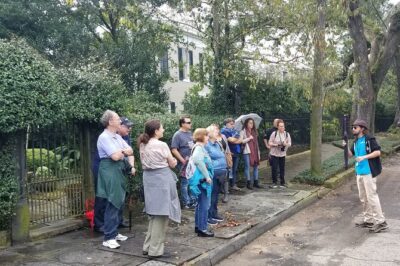
A smaller group can also improve the experience. You have more room to hear, ask questions, and stop briefly for a closer look. That is especially useful on residential streets, where the most important detail may be a small feature around a doorway or window.
The strongest praise has focused on the guide’s warmth and the small-group setting. One useful benefit is advice for the rest of your New Orleans visit. That can make this a good early-trip activity, when you still have time to use local suggestions.
Price, pace, and practical value
The cost is $49 per person for two hours. That is not the cheapest way to see the Garden District, since you can walk the streets on your own. The question is what you want from the visit.
If you already know architectural styles and have read about the neighborhood, a self-guided walk may be enough. You can still see the exteriors of Colonel Short’s Villa, the Briggs-Staub House, Commander’s Palace, Toby’s Corner, the Manning house, the Brevard-Mahat-Rice House, Rosegate, and the Payne-Strachan House.
I think the fee makes better sense if you want the stories organized into a clear route. You are paying for interpretation, local context, and the chance to ask questions. The small-group format can also make the price feel fairer than a large walk where the guide has little time for individual questions.
The tour includes no hotel pickup, food, or drinks. Build in time to reach the meeting point yourself. Since the walk is usually in the afternoon, check the weather and dress for New Orleans conditions.
Shoes, weather, and mobility notes
Wear comfortable walking shoes. The activity covers neighborhood streets for two hours, and there is no vehicle component to provide a break.
Dress for the forecast. Heat, humidity, rain, or strong sun can change how enjoyable a walking tour feels. Bring only what you need and be ready to remain outdoors for the full route.
The information provided is mixed on accessibility. The activity is marked wheelchair accessible in one place, but it is also listed as unsuitable for wheelchair users and people with mobility impairments. I would contact the provider before booking if you use a wheelchair or have difficulty walking, and ask about the exact route, street surfaces, stops, and cemetery access.
Children under eight are not considered suitable for this activity. Smoking, drinks, food in the vehicle, and flash photography are not allowed, although the tour is a walking experience rather than a vehicle ride.
Who should book this Garden District tour
I would choose this tour if you enjoy:
- Architecture and historic residential neighborhoods
- New Orleans writers, athletes, and unusual local stories
- A calm break from the French Quarter
- Small-group walking tours with time for questions
- Seeing famous addresses from the public street
It is especially useful for a first visit because it shows a side of New Orleans that can be missed if you stay around Bourbon Street and Jackson Square. The route also suits repeat visitors who want a more focused look at the city’s homes and residents.
I would skip it if you dislike walking, want indoor access to historic houses, or mainly want to enter Lafayette Cemetery. The cemetery closure also reduces the experience for anyone expecting a full cemetery tour.
Should you book it?
Book this Garden District walk if you want architecture explained by a lively English-speaking guide, with stories about Anne Rice, the Manning family, Commander’s Palace, and the people tied to these grand homes. The route offers a good two-hour change of pace and has earned a perfect rating from the available feedback, especially for its friendly guides and smaller groups.
Before booking, confirm the cemetery’s current status and clarify the accessibility issue if needed. At $49, it is best value for you if personal stories and historical context matter more than simply seeing the buildings. If you prefer to explore independently and take your time, save the money and use the route as a self-guided neighborhood walk.
FAQ
How long does the Hidden History of New Orleans Garden District tour last?
The walking tour lasts two hours and is usually available in the afternoon.
Where does the Garden District tour meet?
Meet at the southwest corner of Prytania Street and Washington Avenue, next to the white wall.
Is Lafayette Cemetery open during the tour?
The cemetery is currently closed to groups for maintenance. The guide discusses it at the gate rather than taking the group inside.
Is the tour suitable for children?
The activity is not suitable for children under eight years old.
What language is the tour offered in?
The tour is conducted in English with a live guide.
Is the tour wheelchair accessible?
The information is mixed. The activity is marked wheelchair accessible, but it is also listed as unsuitable for wheelchair users and people with mobility impairments. Contact the provider before booking to confirm whether the current route works for your needs.
Just added around New Orleans
- New Orleans: Whitney Plantation Audio Tour with Transfers★ 4.7 · 3 reviews
- New Orleans Instagram Photo Tour★ 4.5 · 3 reviews
- New Orleans: Voodoo, Storyville, and Treme Walking Tour★ 3.3 · 3 reviews
- Outdoor Escape Room in New Orleans – The French Quarter★ 5.0 · 3 reviews
- New Orleans: Private Custom Guided Walking Tour★ 4.0 · 3 reviews
- New Orleans: Voodoo History Guided Walking Tour★ 4.8 · 3 reviews
- Private New Orleans City and Cemetery Bus Tour Up to 24 People★ 5.0 · 3 reviews
- New Orleans: French Quarter Cocktail and Foodie Crawl Tour★ 5.0 · 3 reviews
Garden District Tours, compared.

New Orleans Garden District History Walking Tour
Read our review →
New Orleans City Tour: French Quarter, Garden District & Cemetery
Read our review →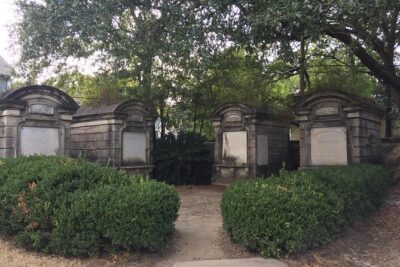
New Orleans Small-Group Garden District Walking Tour
Read our review →
New Orleans City and Cemetery Tour with Garden District Stroll
Read our review →

New Orleans Highlights of the Garden District Walking Tour
Read our review →
Browse the lists this tour appears in