

Reviewed · GARDEN DISTRICT TOURS
Glamorous Garden District Tour
New Orleans reveals its social history in its streets, and this tour puts that story right in front of you. I like the contrast between grand Garden District mansions and the simpler shotgun houses nearby, and I like that the walk includes Lafayette Cemetery and Magazine Street rather than stopping at pretty homes alone. The main drawback is simple: two hours on foot, with plenty of standing, can feel tiring in hot, wet, or rainy weather.
You’ll also get a look at homes tied to Anne Rice, Sandra Bullock, and John Goodman, plus filming locations from The Curious Case of Benjamin Button and American Horror Story. Small groups can make a real difference here. One tour had only five people, which made it easy to hear the guide and ask for particular houses.
In This Review
- Key points to know before booking
- Starting on St. Charles Avenue in the Garden District
- Grand houses and the people behind them
- Lafayette Cemetery and New Orleans burial customs
- Magazine Street, where class lines met
- The Irish Channel and its shotgun houses
- Celebrity homes and New Orleans on screen
- How the guide shapes the experience
- Is $37 a fair price for two hours?
- Timing, comfort, and who should book
- Should you book the Glamorous Garden District Tour?
- FAQ
- How long does the Garden District tour last?
- How much does the tour cost?
- Where does the tour meet?
- What language is the tour in?
- Does the tour include Lafayette Cemetery?
- What should I wear for the tour?
Key points to know before booking
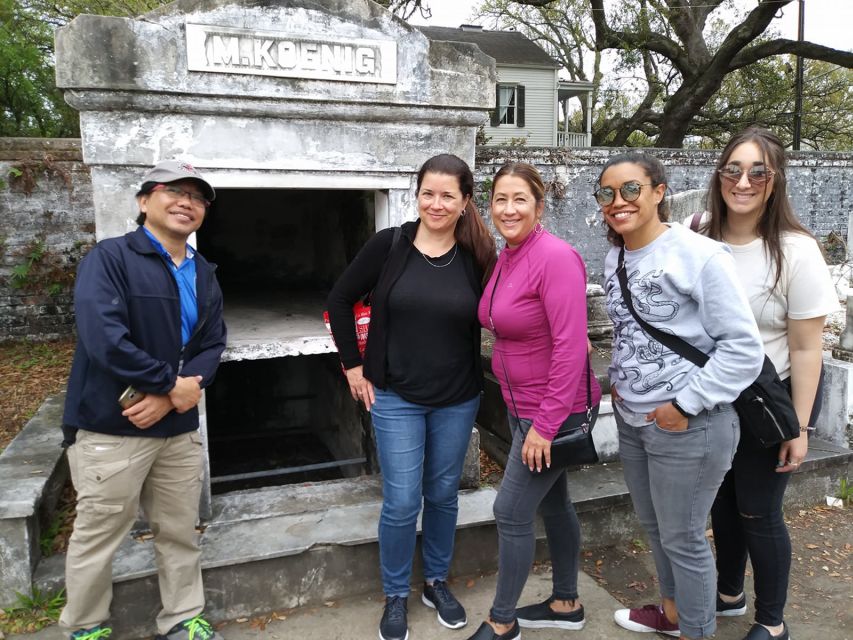
- Garden District mansions: See grand homes and broad lawns in a neighborhood founded in 1832.
- Lafayette Cemetery: Learn why New Orleans burial customs differ from those in much of the United States.
- Magazine Street’s old divide: Walk along the historic line between wealthy residents and working people.
- Irish Channel houses: See the narrow shotgun homes that offer a sharp contrast with the mansions.
- Film and celebrity connections: Spot homes linked to Anne Rice, Sandra Bullock, John Goodman, and well-known productions.
- Two hours with a live guide: The tour is in English, costs $37 per person, and meets at 2800 St. Charles Avenue.
Starting on St. Charles Avenue in the Garden District

The tour begins at 2800 St. Charles Avenue, a useful location for reaching the Garden District from other parts of New Orleans. You’ll want to arrive 15 minutes early for check-in, since the walk starts promptly and the group will be on foot from the start.
The Garden District was founded in 1832 between St. Charles Avenue, First Street, Magazine Street, and Toledano Street. It began as its own city before New Orleans annexed it in 1852. That detail helps explain why the area feels so different from the French Quarter. The neighborhood was planned around large homes, generous lots, and grand lawns, rather than the tight streets and courtyards of the older quarter.
I like beginning here because the setting gives you an immediate sense of New Orleans beyond its best-known historic center. Instead of focusing only on Creole architecture and French Quarter traditions, you see the period when wealthy Americans built a different kind of New Orleans neighborhood.
The name Garden District is fitting. The homes are separated by lawns and plantings, and the open space gives the streets a slower feel. Your guide will point out architectural features and explain how the district developed. The focus is not just on taking pictures of handsome houses. It is on understanding who built them, how the neighborhood grew, and why the street plan looks the way it does.
More Garden District walks:
- New Orleans Garden District History Walking Tour
★ 5.0 · 2,879 reviews - New Orleans City Tour: French Quarter, Garden District & Cemetery
★ 4.5 · 2,209 reviews - New Orleans Small-Group Garden District Walking Tour
★ 5.0 · 1,384 reviews
Grand houses and the people behind them
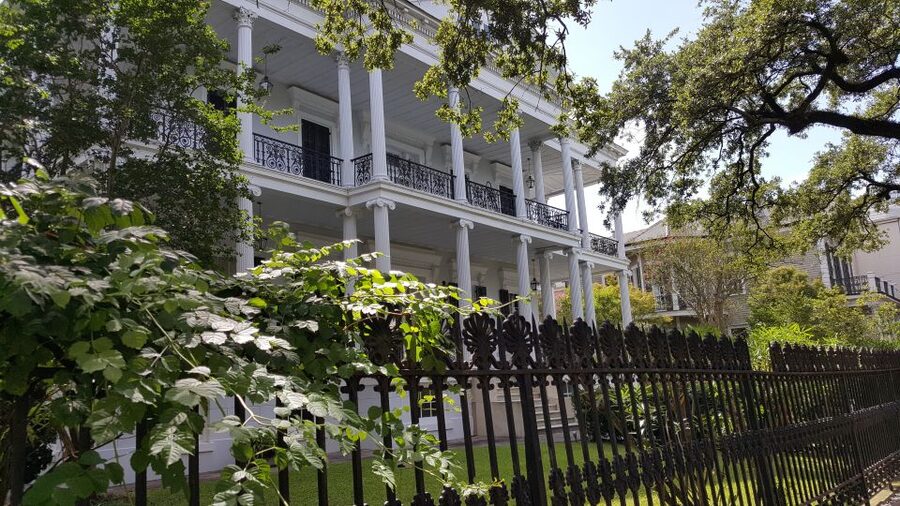
The main pleasure of this tour is the steady parade of large houses. You’ll see homes with ornate details, broad fronts, and lawns that make them feel more like private estates than ordinary city residences.
The guide adds context to the buildings, including unusual construction stories and local legends. An English-speaking guide named Barbara was praised for covering architecture, history, unusual buildings, their origins, and a few mysterious tales. That mix suits New Orleans. The city’s past is full of documented events, family stories, strange traditions, and stories that have grown taller with age.
You should expect the guide to do more than identify a house and move on. The value comes from learning how architecture reflects the people who lived there. The Garden District’s grand scale points to wealth and ambition. Large lawns required land and upkeep, while elaborate houses signaled social position.
The pace also gives you time to look up. New Orleans architecture rewards attention to small details, and a guided walk helps you notice features you could easily pass without understanding. The information is especially useful if you enjoy old homes, urban history, or photography, but it still works for a first-time visitor who simply wants to see a striking neighborhood.
This is a residential area, not an open-air museum. You’ll view exteriors and hear about the people connected to them, but you should not expect to enter private homes. The tour is at its best when you treat the streets as a living neighborhood rather than a collection of attractions.
Lafayette Cemetery and New Orleans burial customs

A stop at Lafayette Cemetery adds substance to the walk. The cemetery is the oldest city-owned cemetery, and it gives your guide a place to explain the burial practices and traditions that make New Orleans cemeteries distinctive.
Above-ground tombs are one of the city’s most recognizable features. The cemetery stop helps explain why burial customs developed in this form and how local conditions and tradition shaped the practice. You’ll get more from the rows of tombs once you understand what you are looking at.
I like this part because it shifts the tour from wealth and architecture to community customs. A cemetery can easily become just another photo stop, but the guide’s explanation gives it a human purpose. You are learning how New Orleanians handled death, remembrance, and family burial over time.
The cemetery is also a reminder that this is a walking history tour, not just a celebrity-home outing. The famous addresses may attract attention, but Lafayette Cemetery gives the experience more depth. It connects the district to everyday traditions and to the practical realities of life in New Orleans.
You should be prepared for an outdoor stop with standing. The tour takes place rain or shine, so weather can affect how comfortable you feel while listening. Wear shoes that can handle two hours of walking and standing, and bring suitable protection from sun or rain.
Magazine Street, where class lines met
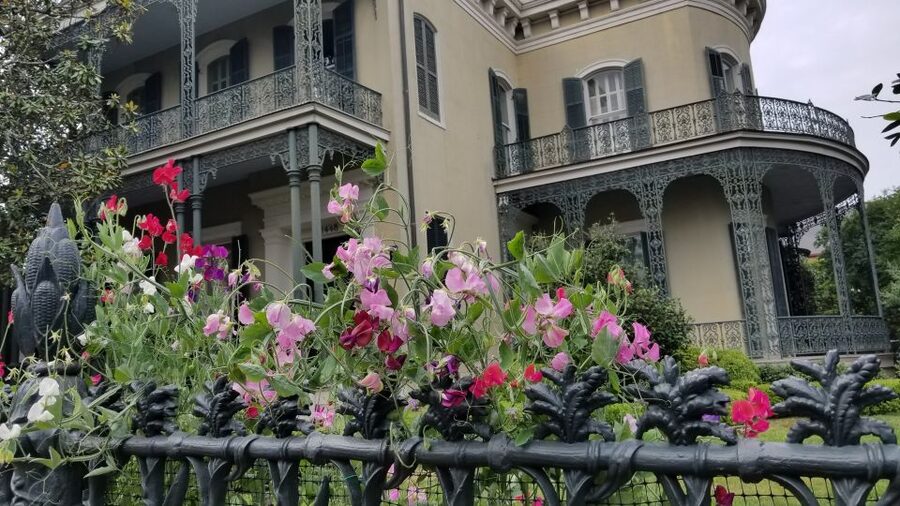
Magazine Street provides one of the tour’s most useful pieces of historical context. You’ll walk along a street that once marked the separation between wealthy residents and the working class of New Orleans.
That dividing line becomes easier to understand when you move from the Garden District toward the Irish Channel. Within a short distance, the scale and style of the homes change. Instead of only admiring mansions, you see how neighborhood design reflected income, work, and social position.
I especially like this section because it puts the Garden District in a wider setting. A walk through expensive-looking streets can feel disconnected from the rest of the city. Magazine Street shows that these neighborhoods developed beside one another, but not on equal terms.
The tour includes a stroll along beautiful Magazine Street and continues a few blocks into the Irish Channel. This makes the route more interesting than a simple loop around the largest houses. You’ll see how the city changes block by block, and you’ll get a better idea of how residents lived outside the district’s most formal homes.
The contrast is not presented as a modern real-estate comparison. It is part of the district’s past, when the street helped separate social groups. That historical framing matters. You are not just looking at different house styles. You are seeing how class shaped the physical city.
A completely different side of New Orleans:
- New Orleans Premier Ghost, Voodoo and Vampire Walking Tour
★ 4.5 · 12,856 reviews - New Orleans Steamboat Natchez Jazz Cruise with Dinner Option
★ 4.0 · 7,533 reviews - Adults-Only New Orleans Ghost, Crime, Voodoo, and Vampire Tour
★ 5.0 · 6,545 reviews - New Orleans Food Walking Tour of the French Quarter with Small-Group Option
★ 5.0 · 6,118 reviews
The Irish Channel and its shotgun houses
The Irish Channel section adds a strong visual counterpoint to the Garden District. Here you’ll see the famous shotgun houses, narrow homes with a very different scale and feel from the district’s large mansions.
The provided details do not promise entry into a shotgun house, so expect to view the exteriors from the street. Even so, the change in architecture is one of the most memorable parts of the route. It helps you see that New Orleans residential history is not defined by one style.
This section is valuable for anyone who wants to understand how people actually lived, not just where the city’s wealthiest residents built homes. The tour’s description makes that contrast central: grand lawns and opulent houses on one side, compact working-class housing on the other.
I would pay close attention to the guide here. The houses may look simple at first glance, but their importance comes from the context. A good explanation turns a short walk into a lesson about work, family life, neighborhood identity, and the uneven distribution of space.
Celebrity homes and New Orleans on screen
The tour includes current residences associated with Anne Rice, Sandra Bullock, and John Goodman. You’ll see the outside of homes connected to these New Orleanians, not a private-house tour or a promise that a celebrity will be present.
That distinction is worth keeping in mind. Celebrity addresses can be fun, but they are a small part of the experience. The real value is that these homes connect the district’s old reputation for grand residences with its place in modern popular culture.
You’ll also see locations featured in The Curious Case of Benjamin Button and the Buckner Mansion, known for its connection with American Horror Story. If you enjoy film locations, these stops add a playful layer to the neighborhood walk. You can picture how the streets and houses were used on screen, then compare the filmed image with the real setting.
The film connections also explain why the Garden District appears so often in visual storytelling. Its large homes, lawns, and old streets provide a ready-made period setting. You do not need to be a serious film fan to enjoy the locations, but fans should find this portion especially worthwhile.
The best approach is to treat the celebrity and movie sites as highlights within a broader history walk. If you book the tour only to see famous homes, you may find the experience less satisfying than expected. If you enjoy architecture, local stories, and film history together, the combination works well.
How the guide shapes the experience
This tour depends heavily on the guide. The format is a live English-language walk, and the guide is responsible for turning a series of streets into a coherent story.
The available guide names include Barbara, Shawn, and Mikko. Barbara was singled out for leading a small group through architecture, history, unusual buildings, and local legends. Shawn was described as thorough, though a bit antsy at times. Mikko was praised in a short, direct note as an excellent guide.
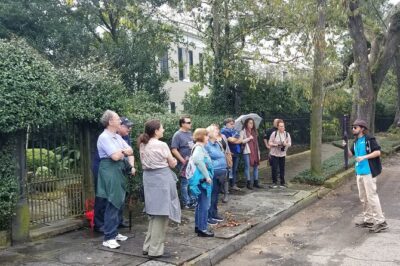
The small-group experience can be a major advantage. One group had only five people, making it easy to hear, ask questions, and tailor the route slightly toward particular famous houses. Group size can vary, so you should not assume every departure will be that intimate. Still, the possibility matters because a walking tour is much more enjoyable when you can hear the guide without straining.
I also like that the tour can respond to the interests of the group. If several people want to see a certain famous house, the guide may be able to give that location more attention. That kind of flexibility is more useful than a rigid script, especially in a neighborhood where every block has several possible stories.
The tone appears friendly and experienced, with particularly strong praise for the guides’ explanations and warmth. One German visitor called the guide friendly and experienced, while another praised the clear explanations that complemented the sights. Those points match what you need from this sort of outing: a guide who keeps the walk moving but leaves room for questions.
Is $37 a fair price for two hours?
At $37 per person, this is not the cheapest way to walk through the Garden District, since you can explore the streets on your own. The price makes more sense if you want the history, cemetery explanation, social context, and film connections delivered in one organized route.
You are paying for a live guide rather than transportation, admission to a house, or a meal. The tour includes a two-hour walking tour, but no private-home visits are listed. If you mainly want photographs and are comfortable researching the neighborhood yourself, you may prefer a self-guided walk.
For many visitors, the value comes from efficiency. In two hours, you cover the Garden District, Lafayette Cemetery, Magazine Street, part of the Irish Channel, famous residences, and film locations. You also avoid spending your limited New Orleans time figuring out how the pieces fit together.
I consider the price reasonable for someone who wants interpretation rather than just directions. The rating of 4.9 from 29 reviews and the repeated praise for guides such as Barbara, Shawn, and Mikko suggest that the human side of the tour is its strongest asset. Still, value depends on your priorities. Architecture fans and first-time visitors are likely to get more from it than someone seeking a long stop inside historic buildings.
Timing, comfort, and who should book

Two hours is long enough to see a good section of the neighborhood without turning the outing into an all-day commitment. It is short enough to fit around other New Orleans plans, but you should not treat it as a casual stroll with frequent indoor breaks.
The tour takes place rain or shine. Comfortable shoes are essential because you’ll walk and stand for much of the two hours. The format may be a poor fit if you have trouble walking for that length of time or strongly prefer indoor attractions.
I would book this for:
- First-time visitors who want to get beyond the French Quarter
- People interested in architecture and urban history
- Film fans who want to see real locations
- Visitors curious about New Orleans burial traditions
- Anyone who prefers a guide’s explanations to a printed map
- Small groups that enjoy asking questions and following particular interests
I would think twice if you want to enter historic homes, avoid outdoor walking, or prefer a tour built around food and shopping. Magazine Street is part of the route, but this is not a shopping tour.
The meeting point is 2800 St. Charles Avenue. You should check in 15 minutes before departure and plan your clothing for the weather. Free cancellation is available up to 24 hours before the start time, and you can reserve now and pay later, which helps if your New Orleans schedule is still changing.
Should you book the Glamorous Garden District Tour?
Book it if you want a compact, guided look at New Orleans beyond the French Quarter. The strongest parts are the mix of grand houses, Lafayette Cemetery, Magazine Street’s class history, Irish Channel shotgun houses, and movie locations.
I would not book it solely for celebrity homes. Those addresses are appealing extras, while the real substance comes from the neighborhood’s architecture and social history. The tour is also a better choice for walkers who can handle two hours outdoors than for anyone needing frequent rest or indoor stops.
For $37, you get a focused introduction led by an English-speaking guide, with the chance of a small group and some personal attention. Arrive early, wear comfortable shoes, and let the contrast between mansions and shotgun houses tell you how New Orleans grew.
FAQ
How long does the Garden District tour last?
The walking tour lasts two hours.
How much does the tour cost?
The price is $37 per person.
Where does the tour meet?
The meeting point is 2800 St. Charles Avenue, New Orleans, Louisiana 70115.
What language is the tour in?
The tour is conducted in English with a live guide.
Does the tour include Lafayette Cemetery?
Yes. The route includes a stop at Lafayette Cemetery, where you’ll learn about New Orleans burial practices and traditions.
What should I wear for the tour?
Wear comfortable shoes because the tour includes a lot of walking and standing. Tours take place rain or shine.
Just added around New Orleans
- New Orleans Garden District Tour★ 5.0 · 8 reviews
- New Orleans Seance Experience★ 4.0 · 8 reviews
- Airport and City Transfers in New Orleans★ 5.0 · 8 reviews
- Sin and Tonic Pub Crawl in New Orleans★ 4.5 · 8 reviews
- The New Orleans Darkness Tour★ 4.4 · 9 reviews
- New Orleans Plantation Tour with Transportation★ 5.0 · 9 reviews
- New Orleans Self-Guided Kayak Bayou Swamp Tour★ 5.0 · 9 reviews
- New Orleans Premium Six-Passenger Airboat Adventure★ 5.0 · 9 reviews
Garden District Tours, compared.

New Orleans Garden District History Walking Tour
Read our review →
New Orleans City Tour: French Quarter, Garden District & Cemetery
Read our review →
New Orleans Small-Group Garden District Walking Tour
Read our review →
New Orleans City and Cemetery Tour with Garden District Stroll
Read our review →

New Orleans Highlights of the Garden District Walking Tour
Read our review →
Browse the lists this tour appears in