
Reviewed · HISTORICAL TOURS
Eras of New Orleans: A History Lover’s Walking Tour
New Orleans history gets personal on this two-hour walk through the French Quarter. At Jackson Square, you move from the city’s first settlers to slave rebellions and the remarkable Michaela Almonester. Later, you hear how smuggling, piracy, disease, fire, religion, and architecture shaped the streets around you.
I like the tour’s serious historical focus and its attention to people and subjects often trimmed from basic sightseeing walks. I also like the ending at Lafitte’s Blacksmith Shop Bar, one of the city’s oldest operating bars, though your drink is not included and the tour is BYOB.
The main consideration is pace and content. Guides such as Graham can pack a great deal into each stop, so this suits adults who enjoy long explanations more than families seeking a light, quick introduction. The French Quarter’s uneven terrain can also be hard for some visitors.
In This Review
- Key points to know before you book
- A history walk that treats New Orleans as a set of eras
- Jackson Square: where the city’s story begins
- St. Louis Cathedral and the business of the early city
- Voodoo Authentica and a clearer look at Marie Laveau
- Old Ursuline Convent: religion as a force in city life
- 919 Royal Street: fire, yellow fever, and a city under pressure
- Madame John’s Legacy and the details of New Orleans architecture
- Lafitte’s Blacksmith Shop Bar: a fitting final stop
- What the pace and group size mean for you
- The strongest reason to book: serious, human-centered storytelling
- Who will get the most from this $27.99 walk?
- Should you book the Eras of New Orleans walk?
- FAQ
- How long does the tour last?
- What time does the tour begin?
- Where does the tour start?
- Where does the tour end?
- Is the tour private?
- Is alcohol included?
- Is admission to the stops included?
- What happens if the tour is canceled?
Key points to know before you book
- Jackson Square sets the frame: Spend about 30 minutes connecting early settlement, slavery, rebellion, and Michaela Almonester.
- The stories go beyond postcard New Orleans: French, Spanish, Indigenous, African, and American influences all receive attention.
- Voodoo gets careful treatment: The stop at Voodoo Authentica explains what New Orleans Voodoo is, and what it is not, while introducing Marie Laveau.
- Expect a lecture-style walk: The information is detailed, and one guide, Graham, has been praised for remembering a remarkable amount of material.
- The route ends away from the start: You begin near Exchange Place and finish at Lafitte’s Blacksmith Shop Bar on Bourbon Street.
- Small-group value comes with some uncertainty: The maximum is 22 people, but the tour requires a minimum number to operate.
A history walk that treats New Orleans as a set of eras
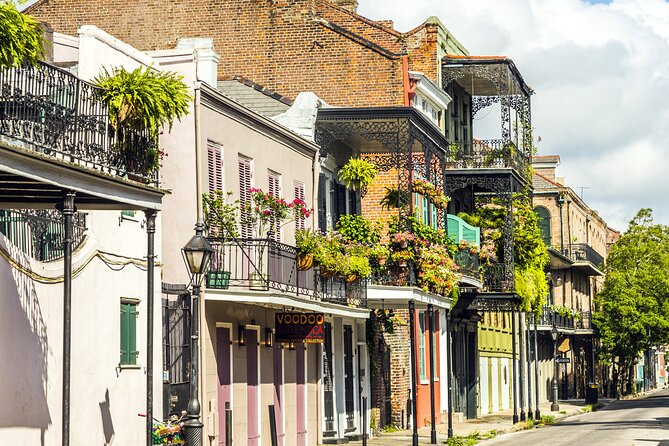
Many French Quarter tours concentrate on balconies, ghosts, cocktails, and colorful characters. This walk takes a different route. It asks how New Orleans changed hands, who held power, who was left out of the usual story, and how disease, trade, religion, and architecture shaped daily life.
That approach gives you a useful framework for the rest of your visit. Instead of seeing the French Quarter as a collection of pretty facades, you begin to read it as a city formed by several governments and cultures. French and Spanish rule, the American period, slavery, African traditions, Catholic institutions, epidemics, fire, and commerce all appear along the way.
The tour runs about two hours and costs $27.99 per person. For a guided walk with a live guide and several substantial stops, that is a fair price, especially if you want context rather than simple orientation. You are paying for interpretation and storytelling, not admission to a series of attractions.
The tradeoff is that the tour is information-heavy. Graham, one guide associated with this experience, has been praised for his command of the subject, but one person found his delivery occasionally sounded like a textbook. That is useful warning. If you prefer quick anecdotes and plenty of free time for photographs, this may feel dense.
More history tours in New Orleans:
- New Orleans Garden District History Walking Tour
★ 5.0 · 2,879 reviews - French Quarter Historical Sights and Stories Walking Tour
★ 5.0 · 2,724 reviews - New Orleans Small-Group Haunted History Carriage Tour
★ 4.5 · 2,289 reviews
Jackson Square: where the city’s story begins
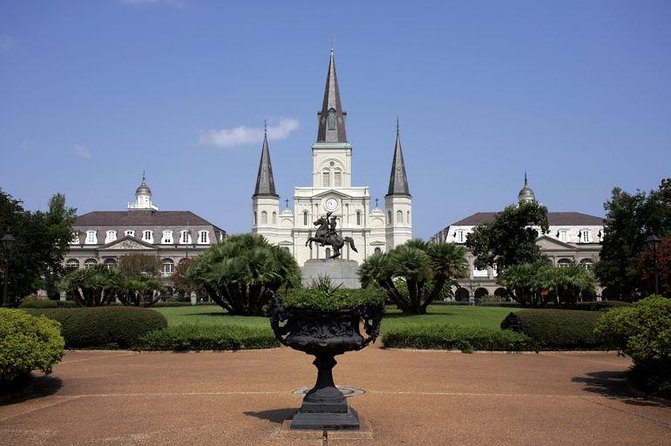
The walk starts at Jackson Square, with about 30 minutes devoted to the broad foundations of New Orleans. This is the longest stop, and rightly so. The square gives the guide a natural place to explain the city’s earliest settlers, the forces that shaped the colony, and the changing groups that controlled it.
The discussion also includes slave rebellions and Michaela Almonester, a remarkable woman whose life opens a window onto wealth, power, gender, and social position in early New Orleans. This is one of the tour’s better choices: rather than presenting the city only through famous male leaders, it gives attention to a woman who influenced the city in significant ways.
You should expect history with political and social weight here. The goal is not merely to tell you when New Orleans was founded. You hear how the city developed, how authority shifted, and how people at the bottom and top of society affected its direction.
Jackson Square is also a practical first stop because it helps you get your bearings. You are in the center of the French Quarter, surrounded by major landmarks, but the guide uses the setting as a classroom rather than rushing through a checklist. Admission to the square is free.
St. Louis Cathedral and the business of the early city
The next stop is outside St. Louis Cathedral, for about 10 minutes. You do not receive admission to the cathedral as part of the tour, so this is an exterior discussion rather than an indoor visit.
The subject matter takes an appealing turn toward economics, smuggling, and piracy. Those themes remind you that New Orleans was not shaped by religion and architecture alone. Its position made trade central to city life, and illegal commerce was part of that story.
This short stop works best if you enjoy connecting a landmark to the systems around it. The cathedral is more than a handsome church facade in this context. It becomes a starting point for understanding the money, goods, and risks that moved through early New Orleans.
Because the stop is brief, do not expect a full cathedral tour. If you want to go inside, plan a separate visit and check current access on your own.
Voodoo Authentica and a clearer look at Marie Laveau
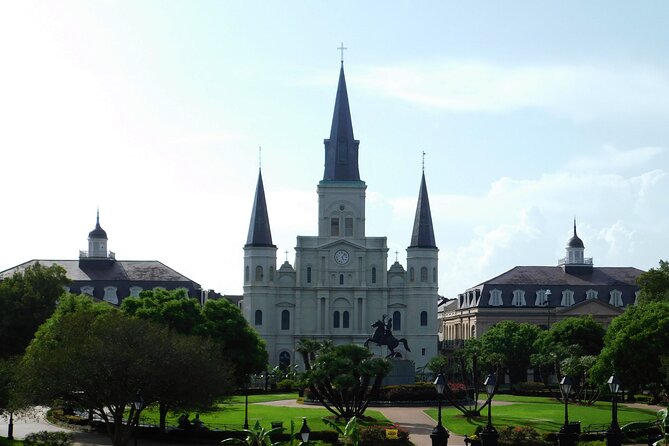
At Voodoo Authentica, the guide spends about 10 minutes discussing New Orleans Voodoo. The emphasis is on separating the city’s actual spiritual and cultural traditions from the simplified horror-movie version often sold to visitors.
Marie Laveau, the famous Voodoo Queen, receives particular attention. Her place in New Orleans history is complex, and this stop gives you a chance to hear about her in connection with the city rather than as a spooky name attached to a cemetery story.
The short time limit means this is an introduction, not a full study of Voodoo. Still, it adds an important layer to the walk. You are encouraged to think about how African traditions, local beliefs, Catholic influence, community leadership, and later popular myths became tangled together.
Admission is not included. The value here comes from the guide’s explanation and the chance to place Voodoo within the city’s wider past.
More walking tours in New Orleans:
- New Orleans Premier Ghost, Voodoo and Vampire Walking Tour
★ 4.5 · 12,856 reviews - New Orleans Food Walking Tour of the French Quarter with Small-Group Option
★ 5.0 · 6,118 reviews - St. Louis Cemetery No. 1 Official Walking Tour
★ 4.5 · 3,941 reviews - New Orleans French Quarter, Voodoo and Culture Walking Tour
★ 4.5 · 2,961 reviews
Old Ursuline Convent: religion as a force in city life
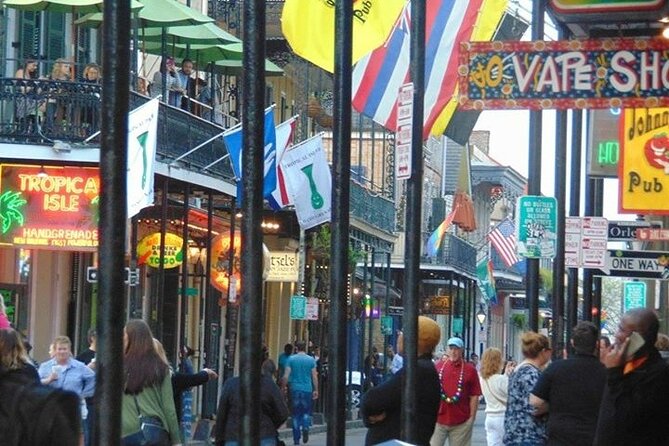
The Old Ursuline Convent Museum receives roughly 20 minutes. The guide explains who the Ursuline nuns were, how they came to New Orleans, and how they affected early life in the city.
This stop helps balance the tour’s focus on commerce and conflict. Religious institutions played a practical role in education, social services, and community structure, and the Ursulines were part of that early civic world.
You should note that entrance to the museum is not included. The stop may focus on the exterior and surrounding history rather than giving you time to explore the museum’s rooms. If the convent is high on your personal list, set aside another visit so you are not trying to squeeze a separate museum experience into the walk.
The 20-minute pause is long enough to explain the institution’s importance without making the tour entirely about church history. It also gives the route a welcome change of subject after the Voodoo discussion.
919 Royal Street: fire, yellow fever, and a city under pressure
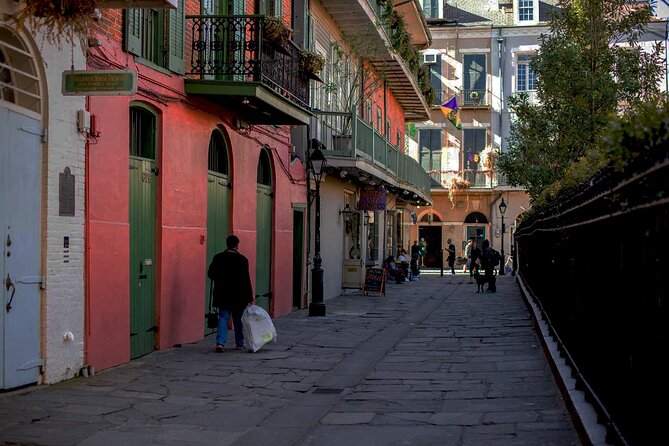
At 919 Royal Street, the guide looks at what New Orleans was like in the 18th and 19th centuries. About 15 minutes are devoted to the fires and yellow fever outbreaks that repeatedly damaged or threatened the city.
This is the kind of stop that changes how you view the French Quarter. The old buildings can look permanent, but New Orleans has repeatedly faced forces that could erase neighborhoods and disrupt everyday life. Fire altered the city’s buildings and streets. Yellow fever affected population, commerce, and public life.
You may find this part more useful than another round of architectural description because it explains why the built environment developed as it did. A city’s style is not just decoration. It often reflects danger, climate, available materials, wealth, and repeated rebuilding.
There is no admission charge at this stop. As with the rest of the route, you are standing in public streets, so the experience depends on listening closely while dealing with normal French Quarter activity around you.
Madame John’s Legacy and the details of New Orleans architecture
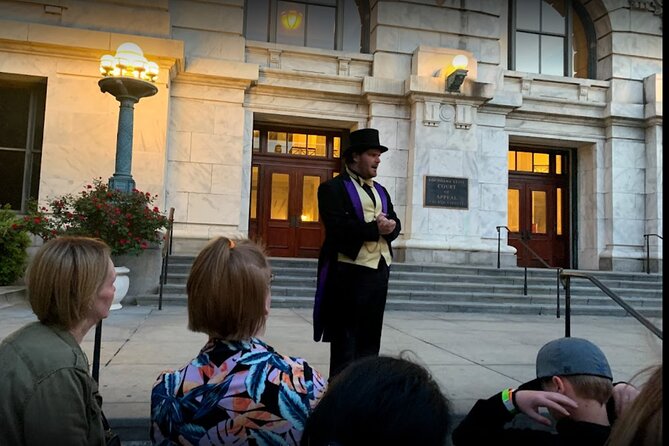
The stop at Madame John’s Legacy lasts about 10 minutes and focuses on New Orleans architecture. You hear about different building types and the details that make the city’s streets look distinct.
This is a good point in the walk to connect the earlier history to what you can see around you. French and Spanish periods, fires, rebuilding, local conditions, and social status all influenced the city’s structures. The guide’s job here is to help you notice those differences rather than treating every old building as part of one general style.
The stop is not a museum visit with included entry. It is an explanation in front of an important architectural site, so you should expect a concise visual lesson.
I like this approach because architecture becomes evidence. After the tour, you can look at balconies, courtyards, facades, and building materials with more curiosity. The guide gives you questions to ask about the Quarter instead of only handing you a list of dates.
Lafitte’s Blacksmith Shop Bar: a fitting final stop
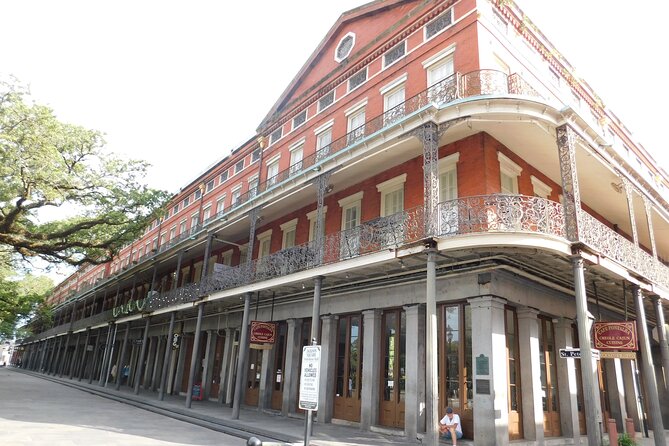
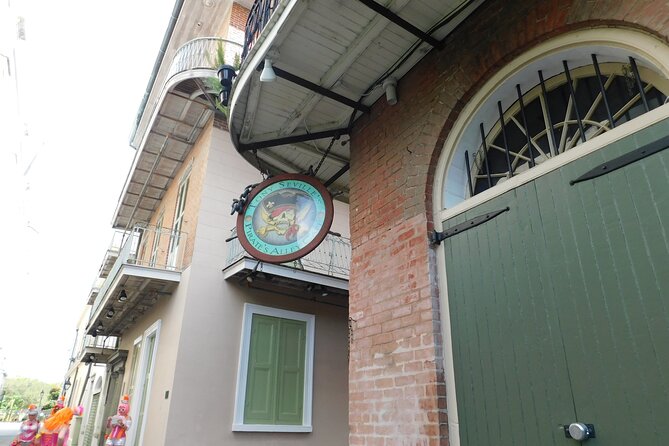
The tour ends at Lafitte’s Blacksmith Shop Bar on Bourbon Street, with about five minutes at the final stop. It is described as one of the oldest operating bars in the city, making it a fitting place to finish a walk through New Orleans’ layered past.
Alcohol is not included, and the tour is BYOB. In practical terms, that means you should budget separately if you want to stay for a drink. The final stop is short, so do not assume the tour includes a long bar visit or reserved seating.
Ending here also gives you a clear point from which to continue your afternoon. You are not returned to the starting point near Witches Brew Gallery and Haunted Sanctuary on Exchange Place. If you have a dinner reservation, hotel appointment, or another activity, allow time to walk back or arrange your next step.
The distance between the starting and ending points is not presented as a problem, but it matters when planning your day. The route is one-way, so think of the tour as a way to cross the French Quarter with a guide rather than as a loop.
What the pace and group size mean for you
The published maximum is 22 people, though some tour details and guide responses refer to smaller groups on particular days. Either way, this is a group walk, not a private lesson. A group can keep the cost down, but it can also make it harder to ask a long series of questions or hear every word in a noisy street.
The experience is offered in English with a live guide. You should arrive ready to stand and walk for about two hours. Comfortable shoes are important, and a moderate level of physical fitness is advised.
French Quarter terrain can create challenges for people with mobility limitations. The operator tries to accommodate different needs, but the historic streets are not always easy to navigate. Service animals are allowed, and the meeting point is near public transportation.
The 1:30 pm start is useful if you want a slower morning. It also places much of the walk in the afternoon, when heat or poor weather could affect comfort. The tour requires good weather, so a cancellation may lead to another date or a full refund.
The strongest reason to book: serious, human-centered storytelling
The most praised part of this experience is the guide’s command of New Orleans history and his enthusiasm for sharing it. Graham has been singled out for his preparation, storytelling, and ability to recall a large amount of material. That matters on a tour like this because the route itself is not the main attraction. The interpretation is.
You will hear about Indigenous, French, Spanish, African, and American influences, along with the sociopolitical forces that shaped the city. The tour also makes room for subjects that can disappear from a simplified New Orleans narrative, including slave rebellions, Voodoo, disease, smuggling, and women’s roles.
The strongest caution is the same feature seen from the other side: there is a lot to absorb. One assessment described the guide as sounding like a textbook at times and advised against bringing children or adolescents. That does not make the tour poor for families, but it does suggest that younger visitors may need a strong interest in history to stay engaged.
There have also been cancellations when the minimum number of participants was not reached, as well as at least one cancellation caused by a staff emergency. These cases appear to be unusual, but you should avoid booking this as the only fixed activity on a tightly planned day. If the tour is canceled, the operator offers another date or experience, or a full refund. It is wise to check your messages before heading to the meeting point, since the retail staff at Witches Brew Gallery may not handle tour updates.
Who will get the most from this $27.99 walk?
I would choose this tour if you want to understand how New Orleans developed and you enjoy listening to a guide for extended stretches. The $27.99 price is strong value for a two-hour, guide-led walk, especially compared with a private tour.
It is a particularly good fit for you if:
- You want more than ghost stories and famous buildings.
- You enjoy political, economic, religious, and social history.
- You want context for French and Spanish rule before the Louisiana Purchase.
- You are comfortable walking on historic streets.
- You prefer a group price over a private guide.
- You can give the guide your full attention for most of two hours.
I would look elsewhere if you want indoor admissions, a relaxed drink-focused outing, a short family activity, or a tour with very little speaking between photo stops. The experience is also not ideal if uneven streets cause you significant difficulty.
Free cancellation is available up to 24 hours before the 1:30 pm start. Changes made inside that 24-hour window are not accepted for a refund, and poor weather or low enrollment can affect the schedule.
Should you book the Eras of New Orleans walk?
Book it if you want the French Quarter explained rather than simply displayed. The stops are familiar names, but the subjects connect them in a thoughtful way: settlement, slavery, rebellion, trade, piracy, Voodoo, religion, disease, fire, and architecture.
The best reason to go is the guide-led storytelling, particularly if Graham is leading your departure. Just come prepared for a substantial amount of information, sturdy shoes, a one-way route, and a separate budget for any drink at Lafitte’s.
For a history-minded visitor, $27.99 is a sensible buy. For a casual sightseeing afternoon, it may feel more like a class than a stroll. Know which kind of experience you want, and the decision becomes easy.
FAQ
How long does the tour last?
The walking tour lasts approximately two hours.
What time does the tour begin?
The scheduled start time is 1:30 pm.
Where does the tour start?
The meeting point is Witches Brew Gallery and Haunted Sanctuary at 311 Exchange Place, New Orleans, Louisiana 70130.
Where does the tour end?
The tour ends at Lafitte’s Blacksmith Shop Bar at 941 Bourbon Street. The bar is described as one of the oldest operating bars in the city.
Is the tour private?
No. It is a group tour with a maximum of 22 travelers.
Is alcohol included?
No. Alcoholic beverages are not included. The tour is BYOB.
Is admission to the stops included?
The live guide is included, but admission is not included for St. Louis Cathedral, Voodoo Authentica, the Old Ursuline Convent Museum, or Madame John’s Legacy. Jackson Square and the 919 Royal Street stop have no admission charge listed.
What happens if the tour is canceled?
If poor weather or an insufficient minimum number of participants causes cancellation, you will be offered another date or experience, or a full refund. You can also cancel up to 24 hours before the start time for a full refund.
Just added around New Orleans
- New Orleans Garden District Tour★ 5.0 · 8 reviews
- New Orleans Seance Experience★ 4.0 · 8 reviews
- Airport and City Transfers in New Orleans★ 5.0 · 8 reviews
- Sin and Tonic Pub Crawl in New Orleans★ 4.5 · 8 reviews
- The New Orleans Darkness Tour★ 4.4 · 9 reviews
- New Orleans Plantation Tour with Transportation★ 5.0 · 9 reviews
- New Orleans Self-Guided Kayak Bayou Swamp Tour★ 5.0 · 9 reviews
- Historic Carrollton Neighborhood Walking Tour★ 5.0 · 9 reviews
Historical Tours, compared.
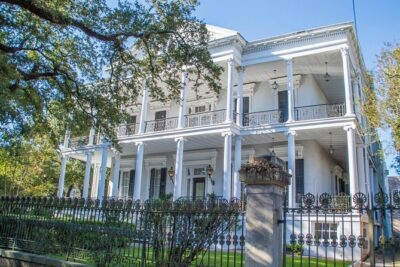
New Orleans Garden District History Walking Tour
Read our review →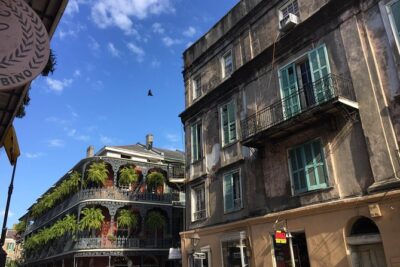
French Quarter Historical Sights and Stories Walking Tour
Read our review →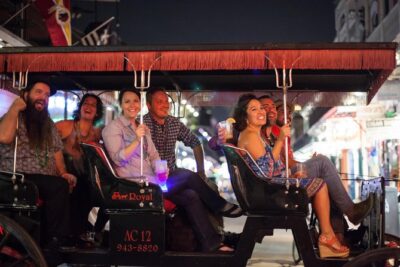
New Orleans Small-Group Haunted History Carriage Tour
Read our review →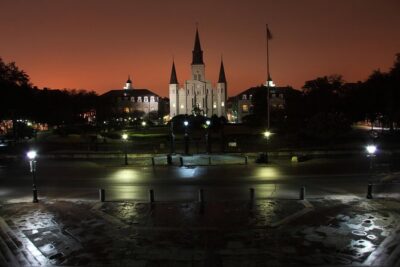
Paddlewheeler Creole Queen Historic Mississippi River Cruise
Read our review →
Creole Queen History Cruise with Optional Lunch
Read our review →
Browse the lists this tour appears in