
Reviewed · VOODOO TOURS
Voodoo Queen of New Orleans Walking Tour
New Orleans voodoo is not just gris-gris, ghost stories, and tourist-shop dolls. This 90-minute French Quarter walk explains how West African beliefs, Haitian traditions, Catholic rites, slavery, music, and local families shaped one of the city’s most misunderstood religions. You’ll also connect voodoo with Congo Square, the place where African music and dance helped shape New Orleans jazz.
I like two things in particular: the tour gives Marie Laveau a human and historical setting, and it links voodoo to New Orleans music rather than treating it as spooky entertainment. Guides including Scott, Gomez, Orion, and Wes have been praised for clear storytelling, thoughtful answers, and respect for the culture. The main drawback is that you may expect more ceremonies or dramatic supernatural sights than the tour actually offers. This is mainly a history walk, with shops and ghost lore along the way.
In This Review
- Key points to know before you book
- What this voodoo walk is really about
- Starting near Decatur Street in the French Quarter
- St. Louis Cathedral and the French Quarter setting
- Voodoo Authentica and the role of voodoo shops
- Congo Square, where music and religion meet
- Marie Laveau’s home and the ghost story
- How the guides shape the day
- Price, length, and overall value
- Who will enjoy this French Quarter walk?
- Should you book the Voodoo Queen of New Orleans walk?
- FAQ
- Where does the Voodoo Queen of New Orleans Tour start?
- What time does the tour start?
- How long does the tour last?
- Is the tour offered in English?
- Is parking available near the meeting point?
- Can I use public transportation?
- Is the tour wheelchair accessible?
- Does the tour include St. Louis Cemetery No. 1 or Marie Laveau’s tomb?
Key points to know before you book
- Congo Square connects voodoo and jazz: You’ll learn why this place matters to both African religious traditions and New Orleans music.
- Marie Laveau is treated as a historical figure: The tour covers her family, influence, home, and the story of her final ghost sighting.
- Expect education more than scares: Guides explain what voodoo is and is not, rather than relying only on haunted-tour theatrics.
- The route stays in the French Quarter: You’ll pass St. Louis Cathedral, visit voodoo shops, and walk through historic streets.
- Guide quality shapes the experience: Scott, Gomez, Orion, Wes, D.J., Carlos, and others have earned praise for humor, research, and strong group communication.
- Wear good shoes and plan for weather: The tour runs in rain or heat, and uneven sidewalks can be hard for anyone with mobility limits.
What this voodoo walk is really about
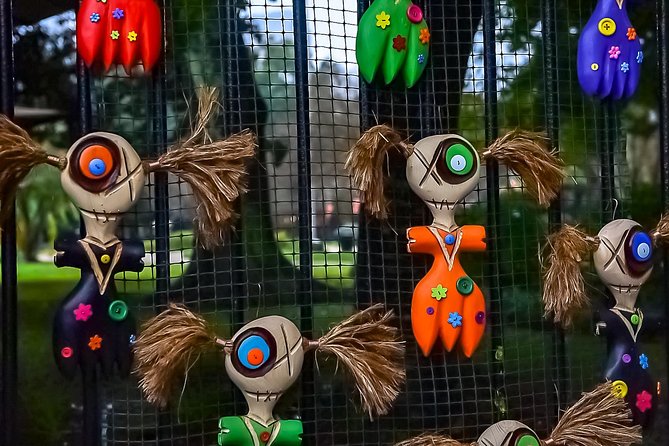
The word voodoo often arrives wrapped in Hollywood fog. This tour works to clear some of that away. Your guide explains voodoo, also called Voudou, as a folk religion with African and Haitian roots, later practiced alongside Catholic customs in New Orleans.
That context matters. You are not simply collecting tales about spells and mysterious queens. You are learning how enslaved West Africans carried beliefs to Louisiana, how Haitian immigrants added new traditions after the 1791 revolution, and how Black communities kept cultural practices alive under brutal conditions.
The tour also places voodoo within the wider story of New Orleans. That means discussion of the city’s founding, slavery, migration, religion, music, and social life. A good guide can make these subjects connect without turning the walk into a lecture. Past tours led by Gomez, Orion, and others have been praised for doing just that, with questions, humor, music, and local detail.
You should also expect the subject matter to be more serious than the title may suggest. The walk may discuss the slave trade and violence connected to it. That is an important part of the story, but parents should decide how much historical brutality their children are ready to hear.
More voodoo history tours in New Orleans:
- New Orleans Premier Ghost, Voodoo and Vampire Walking Tour
★ 4.5 · 12,856 reviews - Adults-Only New Orleans Ghost, Crime, Voodoo, and Vampire Tour
★ 5.0 · 6,545 reviews - New Orleans Adults-Only Ghost, Voodoo and Vampire Tour
★ 5.0 · 3,291 reviews
Starting near Decatur Street in the French Quarter
The scheduled meeting point is Bon’s New Orleans Street Food at 620 Decatur Street, Unit 1B. The tour starts at 11 a.m. and returns to the same general meeting point after about an hour and a half.
Arrive at least 15 minutes early. The French Quarter is easy to reach on foot from many central hotels, but driving is less appealing. Parking is limited, costs extra, and can take time to find. Public transportation is recommended, and the provider notes access near the St. Charles and Sixth Street streetcar stop.
There is one practical detail worth checking before you leave your hotel. The supplied meeting information names Bon’s on Decatur Street, while the provider’s FAQ also refers to a departure near Gracious Bakery and the St. Charles and Sixth Street stop. These details do not line up perfectly. Use the exact location in your booking confirmation and contact the operator if the map pin looks unclear.
The group can include up to 28 people. That is not a private walk, but it is still small enough for a guide to take questions and keep the group together. One useful sign of a well-run tour is how clearly the guide speaks. D.J. was praised for making sure people at the back could hear, while Orion took time to find shade and sitting spots when needed.
St. Louis Cathedral and the French Quarter setting
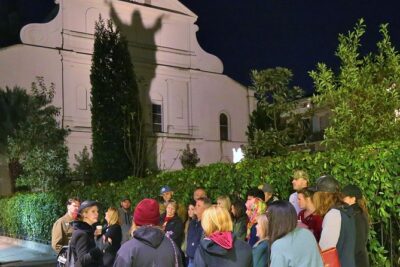
The walk takes place in the French Quarter, so the streets themselves are part of the experience. You pass St. Louis Cathedral, one of New Orleans’ best-known landmarks and the oldest cathedral in continuous use in the United States.
The cathedral helps explain the Catholic side of New Orleans spiritual life. Voodoo developed in a city where African beliefs and Catholic practices existed side by side. Your guide may point out how public Catholic symbols and private African traditions could share the same cultural space.
This early section also gives you a wider view of the French Quarter. Architecture, courtyards, churches, shops, and narrow streets provide the setting, but the focus remains on people and beliefs. If you have already taken a standard French Quarter architecture walk, this route may revisit familiar streets. The difference is the lens: you are looking for the communities and spiritual practices that shaped the city beneath its tourist image.
The walk is generally flat, but flat does not mean perfectly easy. Historic sidewalks can be cracked, uneven, or crowded. A manual wheelchair user completed the tour with help from an accommodating guide, yet the street and pavement conditions still created difficulties. If you use a wheelchair or have back, knee, or balance problems, contact the operator and be ready for a slower pace.
Voodoo Authentica and the role of voodoo shops
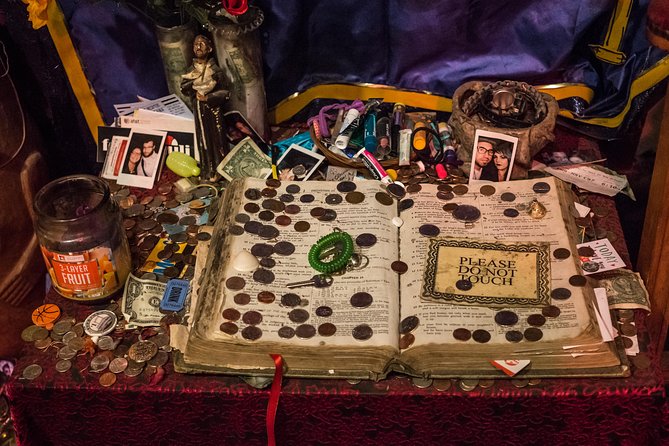
One short stop is Voodoo Authentica, an authentic voodoo shop. You have about five minutes to look around, so think of this as a quick introduction rather than a long shopping session.
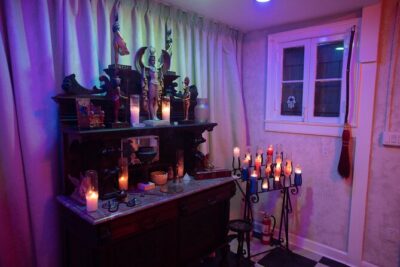
The shop stop is useful because it lets you see how voodoo is presented in modern New Orleans. You may find items connected with protection, ritual, symbolism, and folk practice. The guide can help separate religious meaning from the simplified commercial version often sold to curious visitors.
You also pass or stop at Marie Laveau’s House of Voodoo, where you can browse potions and protection spells. These businesses can feel commercial, and that is the fair criticism. They are part of today’s tourism economy, not untouched religious spaces. Still, paired with a guide who explains the background, they can help you understand how Marie Laveau’s name continues to shape New Orleans culture.
Do not expect to take part in a ceremony. The information provided describes visits to shops and a voodoo temple, but not participation in a ritual. The emphasis is on explanation, observation, and history.
More walking tours in New Orleans:
- New Orleans Food Walking Tour of the French Quarter with Small-Group Option
★ 5.0 · 6,118 reviews - St. Louis Cemetery No. 1 Official Walking Tour
★ 4.5 · 3,941 reviews - New Orleans French Quarter, Voodoo and Culture Walking Tour
★ 4.5 · 2,961 reviews - New Orleans Garden District History Walking Tour
★ 5.0 · 2,879 reviews
Congo Square, where music and religion meet
Congo Square is the heart of the tour for anyone interested in music. Here you learn how African traditions, gatherings, rhythm, movement, and community life helped shape the city’s musical culture.
The stop lasts about 10 minutes, which is enough for a focused explanation but not a long visit. Your guide connects Congo Square to voodoo and jazz, showing why the same city can be discussed through both religion and music.
This is where the tour becomes more than a collection of Marie Laveau stories. New Orleans jazz did not appear from nowhere. The city’s African diaspora preserved forms of expression that influenced later music, and Congo Square gives you a physical place to understand that process.
Several guides have used music to make the connection memorable. Gomez has been praised for singing and playing music, while another tour ended with a second line, the lively New Orleans-style parade tradition. Those extras may depend on the guide and the day, so do not book expecting a guaranteed performance. But they show how a strong guide can turn a historical explanation into something you feel as well as hear.
Marie Laveau’s home and the ghost story
The Laveau family receives major attention, and rightly so. The tour stops at the original site of Marie Laveau’s home for a photo opportunity and an explanation of her role in New Orleans voodoo.
Marie Laveau was not presented simply as a cartoon witch or a spooky legend. The tour places her within the city’s social and religious world, then explains how she and her daughter influenced the public image of voodoo. That family story gives you a better way to understand why Marie Laveau remains one of New Orleans’ most famous figures.
The exact original home site is a stop on the route, but the admission note says the related attraction is not included. You should think of this as an exterior visit and storytelling point, not an entry ticket to a preserved house.
The walk also passes the Rampart Treehouse, described as the place where Marie Laveau’s ghost was last seen. This is the tour’s clearest supernatural moment. It adds atmosphere, but the larger value is the contrast between documented history, local tradition, and ghost lore.
The tour may also discuss St. Louis Cemetery No. 1 and Marie Laveau’s tomb. Entry to the cemetery is not included, and you do not visit the tomb as part of this walk. If you want to see it in person, you will need a separate cemetery visit.
How the guides shape the day
The strongest part of this experience is the guide. You are walking through ordinary streets, and the guide is what turns them into a connected story.
Scott has been praised for making the subject entertaining while explaining New Orleans history and voodoo practice. Gomez has received especially warm comments for weaving the founding of New Orleans into the story, welcoming questions, and adding music and a possible second-line finish. Orion is known for detailed research, respect for the city’s Black communities and religious traditions, and a style that links serious history with pop culture.
Wes has been praised for answering questions and offering lunch suggestions. D.J. was noted for speaking clearly to the whole group, and Carlos for adding friendly humor. You may receive a different guide, so the personality and extras will vary. The common thread is an emphasis on explanation, storytelling, and cultural respect.
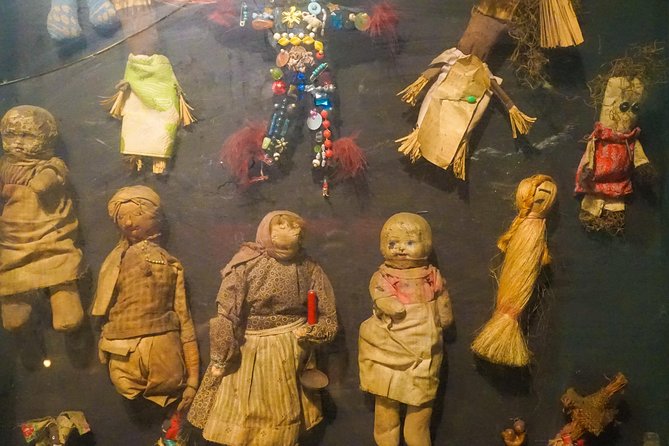
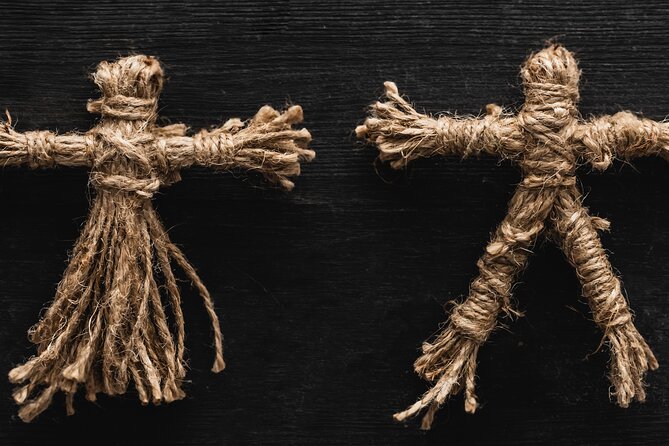
That last point is important. Voodoo has often been mocked or reduced to horror imagery. The best guides on this tour push back against that treatment. You should expect direct discussion of misconceptions, voodoo dolls, religious practice, and the difference between belief and tourist folklore.
One poor experience involved a guide who did not appear, with the group leaving after 15 minutes. That seems to be an unusual but serious service failure. Arriving early is still wise, and if no guide appears, contact the operator promptly rather than waiting without information.
Price, length, and overall value
At $25.60 per person, this is a fairly modest price for a guided 90-minute walk in the French Quarter. You are paying for a licensed guide, not admission to a major museum or cemetery. Parking, food, drinks, and any separate cemetery entry cost extra.
The value is strongest if you want context. In an hour and a half, you get a guide-led introduction to African and Haitian roots, Catholic influence, Marie Laveau, Congo Square, jazz, voodoo shops, and French Quarter history. That is a lot of ground for the price.
The value is weaker if you want a long stop inside the Voodoo Museum, a cemetery tour, or a hands-on spiritual experience. The route passes several meaningful places, but the walking and storytelling happen at a steady pace. Book it as a cultural history tour with spooky edges, not as a full museum visit or ritual encounter.
It is often booked about 22 days ahead, so reserve early if your schedule is fixed. The tour has free cancellation up to 24 hours before departure. Within 24 hours, changes and refunds are not accepted. If poor weather causes the operator to cancel, you are offered another date or a full refund.
Who will enjoy this French Quarter walk?
I would recommend it to you if you like local history, religion, music, architecture, and stories about the people who shaped New Orleans. It also works well as an early trip activity because it can give later visits to the French Quarter, jazz clubs, shops, and cemeteries more meaning.
Families can take the tour, but use your judgment. Children interested in history may enjoy the shops, stories, and music. Some discussion covers slavery, violence, death, and supernatural beliefs, so the right age depends on the child.
The tour runs in all weather conditions. Wear comfortable shoes, light layers, and weather protection. New Orleans heat can make a slow walk feel longer, while rain can make uneven pavement more awkward. Bring water, since food and drinks are not included.
Service animals are allowed, and most people can participate. The route is described as wheelchair accessible and mostly flat and paved, but the French Quarter’s sidewalks may still be hard for a manual wheelchair. Routes can change because of parades, construction, or other local conditions.
Should you book the Voodoo Queen of New Orleans walk?
Book it if you want the truth behind the legends. The best parts are the link between Congo Square and jazz, the careful treatment of Marie Laveau, and the chance to ask questions while walking through the places tied to the story.
Skip it if you want a purely scary night tour, a cemetery entry, or a private experience with guaranteed music and a specific guide. The tour’s mood can range from serious history to playful ghost lore, and guide assignments vary.
For most people, $25.60 is a sensible way to spend 90 minutes in the French Quarter. Confirm the meeting point, arrive early, wear sturdy shoes, and keep your expectations focused on history rather than spectacle. If you get Gomez, Orion, Scott, Wes, D.J., or Carlos, you may find the guide’s personality adds an extra lift to an already worthwhile walk.
FAQ
Where does the Voodoo Queen of New Orleans Tour start?
The stated meeting point is Bon’s New Orleans Street Food at 620 Decatur Street, Unit 1B, New Orleans, Louisiana 70130. The tour ends back at the meeting point.
What time does the tour start?
The scheduled start time is 11 a.m. You should arrive at least 15 minutes early.
How long does the tour last?
The walking tour lasts approximately 90 minutes.
Is the tour offered in English?
Yes. The experience is offered in English and includes a mobile ticket.
Is parking available near the meeting point?
Limited parking is available near the departure area, and parking fees apply. Walking, public transportation, or a rideshare service such as Uber or Lyft may be easier.
Can I use public transportation?
Yes. The provider says public transportation stops are near the departure location, including the St. Charles and Sixth Street streetcar stop.
Is the tour wheelchair accessible?
The route is described as mostly flat and paved and is wheelchair accessible. Historic French Quarter streets and sidewalks can still be difficult, especially for a manual wheelchair.
Does the tour include St. Louis Cemetery No. 1 or Marie Laveau’s tomb?
No. The guide discusses the cemetery and Marie Laveau’s tomb, but cemetery entry is not included.
Just added around New Orleans
- New Orleans Garden District Tour★ 5.0 · 8 reviews
- New Orleans Seance Experience★ 4.0 · 8 reviews
- Sin and Tonic Pub Crawl in New Orleans★ 4.5 · 8 reviews
- Airport and City Transfers in New Orleans★ 5.0 · 8 reviews
- The New Orleans Darkness Tour★ 4.4 · 9 reviews
- New Orleans Plantation Tour with Transportation★ 5.0 · 9 reviews
- New Orleans Self-Guided Kayak Bayou Swamp Tour★ 5.0 · 9 reviews
- Historic Carrollton Neighborhood Walking Tour★ 5.0 · 9 reviews
Voodoo Tours, compared.
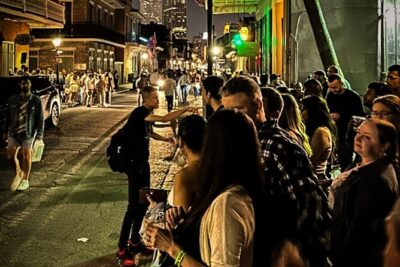
New Orleans Premier Ghost, Voodoo and Vampire Walking Tour
Read our review →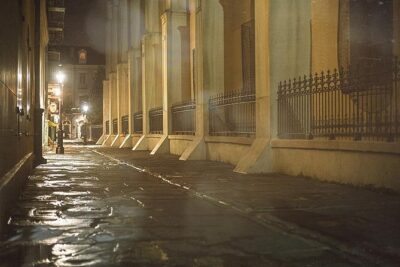
Adults-Only New Orleans Ghost, Crime, Voodoo, and Vampire Tour
Read our review →
New Orleans Adults-Only Ghost, Voodoo and Vampire Tour
Read our review →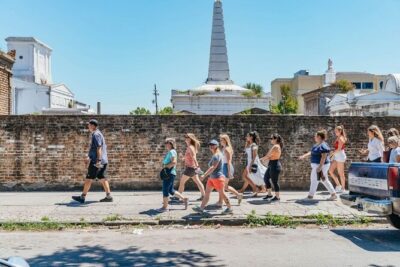
New Orleans French Quarter, Voodoo and Culture Walking Tour
Read our review →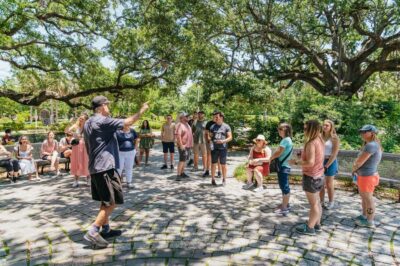
New Orleans Ghost, Vampire, Witch, Voodoo, and Mystery Tour
Read our review →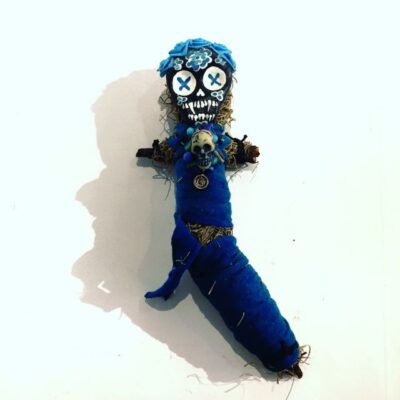
New Orleans Spirits & Spells: Witchcraft, Voodoo, and Ghost Tour
Read our review →Browse the lists this tour appears in