
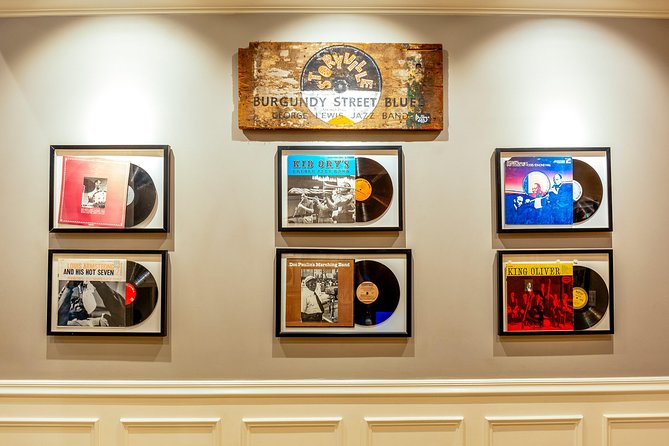
Reviewed · JAZZ & LIVE MUSIC TOURS
The Soul of New Orleans: Jazz History Private Tour
New Orleans jazz began long before the famous clubs. This private walk takes you from Congo Square, where enslaved Africans gathered and shared music, to Frenchmen Street, where you can still find live jazz today. Along the way, you connect music with Creole culture, voodoo, writers, churches, and old hotels.
I like the private format, since your guide can focus on your questions and adjust the conversation to your interests. I also like the practical ending on Frenchmen Street, where you get advice on music venues and the Louisiana Music Factory instead of simply taking a few photos and leaving.
The main drawback is pace. Ten stops in about two and a half hours means many visits are brief, usually around 15 minutes each. You should also expect a walking tour, not a concert, and hotel transport is not included.
In This Review
- Key points to know before booking
- Why this tour begins with Congo Square
- Saint Ann Street and the city’s Creole traditions
- Rampart Street’s recording-studio surprise
- Tennessee Williams and the music-loving French Quarter
- St. Mark’s Church and the St. Pierre Hotel
- Preservation Hall and the sound of traditional jazz
- Jackson Square puts the music story in its historic setting
- Palm Court Jazz Café and La Maison Perrilliat
- The Louisiana Jazz Museum before Frenchmen Street
- Frenchmen Street, local music tips, and the Louisiana Music Factory
- What the private format is worth at $111.20
- Walking, meeting point, and who should book
- Should you book The Soul of New Orleans?
- FAQ
- How long is The Soul of New Orleans tour?
- Is this a private tour?
- What is the price?
- Where does the tour begin?
- Where does the tour end?
- Is hotel pickup included?
- Does the tour include a jazz concert?
- Is the tour suitable for people with limited mobility?
- Can I cancel for a refund?
Key points to know before booking
- Congo Square connects the tour to jazz’s earliest roots, not just its later club scene.
- Holley brings a strong personal love of music and useful suggestions for food and local performances when she is your guide.
- The private group format keeps the tour flexible, with only your party taking part.
- The route links jazz with voodoo, Creole culture, literature, churches, and historic buildings.
- Frenchmen Street is the practical payoff, with tips on choosing venues and time to browse the Louisiana Music Factory.
- The $111.20 per-person price buys context and planning help, but not hotel transfers, concert tickets, or a long stop at any one venue.
Why this tour begins with Congo Square
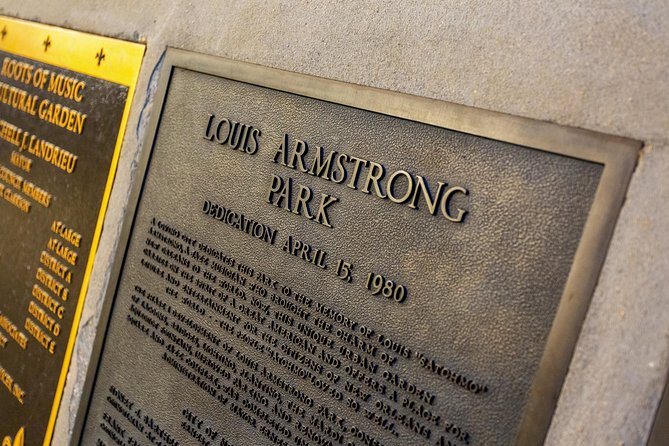
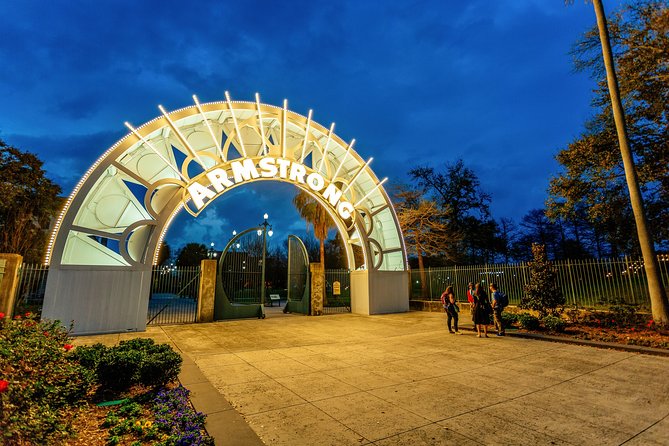
New Orleans is often sold as the birthplace of jazz, but that phrase can become a shallow slogan. This tour gives it a physical starting point at Congo Square, near Louis Armstrong Park.
That matters because music here is presented as part of community and culture, not as a sound that appeared fully formed in a nightclub. Congo Square is tied to the African roots that helped shape later New Orleans music. Your guide can place those beginnings within the city itself, giving the rest of the walk a clear purpose.
The stop is scheduled for about 15 minutes. That is enough for an introduction and a look around, but not a long historical lecture. If this subject matters to you, use the private setting to ask for more detail.
The meeting point is the Best Western Plus French Quarter Courtyard Hotel at 920 North Rampart Street. That puts you close to Louis Armstrong Park and makes the first section easy to understand geographically. You end on Frenchmen Street, so the route moves from origins toward the places where you can seek out music during the rest of your stay.
More live music nights in New Orleans:
- New Orleans Steamboat Natchez Jazz Cruise with Dinner Option
★ 4.0 · 7,533 reviews - New Orleans Steamboat Natchez Jazz Cruise
★ 4.5 · 5,334 reviews - New Orleans: Evening Steamboat Jazz Cruise + Optional Dinner
★ 4.3 · 4,548 reviews
Saint Ann Street and the city’s Creole traditions
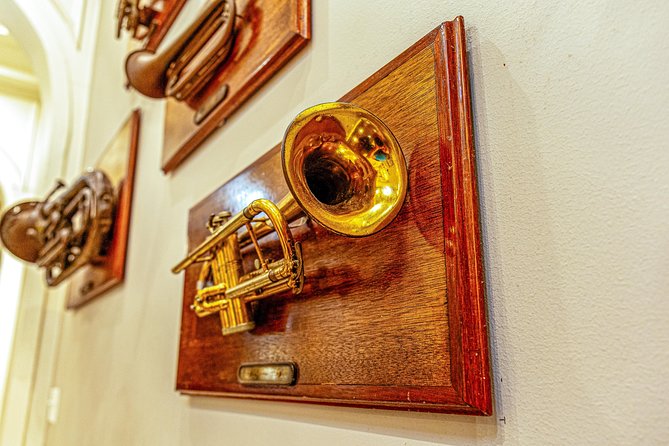
The next stop shifts from musical roots to the cultural mix that shaped New Orleans. On Saint Ann Street, the focus is voodoo and Creole culture, including the home associated with the Voodoo Queen.
This is a useful change of subject. Jazz did not grow in isolation, and the tour treats New Orleans as more than a collection of music venues. You get a look at the beliefs, people, and traditions that form part of the city’s identity.
The 15-minute timing again makes this an introduction rather than an in-depth visit. Do not expect a long museum-style presentation or a formal voodoo ceremony. The value is in hearing how this part of the French Quarter connects to the city you are walking through.
I would pay close attention to the guide’s explanations here. Stories about voodoo can quickly become tourist folklore. A private guide gives you a better chance to ask where popular stories meet actual Creole traditions.
Rampart Street’s recording-studio surprise
The route returns near the starting area at Louis Armstrong Park and moves toward Rampart Street. The unusual detail here is a regular-looking laundromat that once served as a recording studio for famous stars.
That kind of stop is one reason I prefer a focused local walk to a general sightseeing circuit. A grand building is easy to spot. A place that looks ordinary today requires someone to point it out and explain why it matters.
The stop is brief, and the description does not promise an open studio or a concert setting. Think of it as an exterior discovery and a story about the working side of New Orleans music. You may find this more memorable than another view of a famous facade.
Louis Armstrong Park also gives the early part of the tour a strong sense of place. The park, Congo Square, and Rampart Street are close enough to form a connected chapter in the city’s music story.
Tennessee Williams and the music-loving French Quarter
The former home of Tennessee Williams adds a literary note to the route. Williams is best known as a playwright, but he was also a devoted music fan, making this stop a natural bridge between New Orleans writing and New Orleans sound.
You are not booking a dedicated Tennessee Williams house tour, so the stop is short. The point is to see how the city attracted artists who responded to its music, mood, and street life.
I like this kind of connection because it keeps the tour from becoming a list of jazz names. New Orleans culture crosses categories. Writers, musicians, religious traditions, architecture, and neighborhood life all overlap.
The tour provides a look at the former home, but it does not state that you enter or receive an indoor visit. Plan on a brief stop and an explanation from your guide.
More history tours in New Orleans:
- New Orleans Garden District History Walking Tour
★ 5.0 · 2,879 reviews - French Quarter Historical Sights and Stories Walking Tour
★ 5.0 · 2,724 reviews - New Orleans Small-Group Haunted History Carriage Tour
★ 4.5 · 2,289 reviews - New Orleans Haunted History Ghost Tour
★ 4.5 · 2,084 reviews
St. Mark’s Church and the St. Pierre Hotel
At St. Mark’s United Methodist Church, the route pauses near a striking church before moving to the St. Pierre Hotel. The hotel has a musical link: it was once home to what is described as the world’s first jazz museum.
This section asks you to notice the buildings around the music story. Churches and hotels can seem unrelated to jazz until a local guide shows you how the city’s institutions and gathering places fit together.
The St. Pierre Hotel is a look-inside stop, according to the tour plan, but it is not presented as a full museum visit. The former jazz museum is part of the building’s story, and the visit gives you a way to picture how early jazz was collected, remembered, and presented.
With only about 15 minutes here, I would treat the church and hotel as connected snapshots. If you want extended time inside historic buildings, this tour may feel brisk.
Preservation Hall and the sound of traditional jazz
Near Place de Henriette Delille, you visit Preservation Hall on St. Peter Street. This is one of the most important music stops on the route.
Preservation Hall presents intimate, acoustic New Orleans jazz concerts more than 350 nights a year. Its current collective includes more than 50 local master practitioners. Those details help explain why the venue matters: it is not simply a historic sign on a wall. It remains tied to local musicians and live performance.
The tour does not include a concert ticket. That is important when you plan your evening. Your guide can explain the venue and its place in New Orleans jazz, but you should not assume the 15-minute stop becomes a full performance.
Still, this is a valuable stop for planning. If traditional acoustic jazz is your priority, ask your guide how to fit Preservation Hall into your schedule. The private format gives you room to make that question specific to your dates and interests, though the experience does not promise a booking or admission.
Jackson Square puts the music story in its historic setting
Jackson Square is a National Historic Landmark and one of the French Quarter’s key public spaces. The tour uses it to broaden the story beyond music venues.
The square helps you see New Orleans as a city shaped by public gathering places, architecture, and civic history. After hearing about Congo Square and Preservation Hall, you can compare two kinds of spaces where people meet, listen, perform, and share traditions.
This is another stop where the guide’s explanation matters more than the amount of time spent. A photo stop alone tells you little. A good private guide can help connect the square to the surrounding French Quarter and explain why it remains central to the city.
The itinerary allows about 15 minutes. You may want extra time here on your own, especially if you are interested in the square’s buildings and setting. The tour keeps moving, so save a return visit for later if you want a slower look.
Palm Court Jazz Café and La Maison Perrilliat
Near La Maison Perrilliat, the tour turns to Palm Court Jazz Café. The cafe is presented as one of the city’s finest music venues and a place to consider for live jazz.
This is where the tour becomes especially useful for the rest of your stay. New Orleans has plenty of music listings, but choosing a place can be harder than finding one. A guide can help you sort out the difference between a venue you might enjoy and one aimed mainly at passing foot traffic.
The description does not include a meal, drink, or performance. You should treat Palm Court as a stop and recommendation, not a dinner reservation. The same is true for the other venues along the route.
La Maison Perrilliat adds another historic building to the surroundings. As with several stops, the point is not a long interior tour. It is the way the guide links a recognizable building, a music venue, and the neighborhood around them.
The Louisiana Jazz Museum before Frenchmen Street
Before reaching the final street, the tour stops at the Louisiana Jazz Museum. The description refers to fascinating collections inside the museum, so this is one of the route’s more direct encounters with jazz objects and memorabilia.
The museum stop should help turn the earlier stories into something more tangible. You have heard about musicians, recording spaces, public squares, and old venues. Here, collections give you another way to understand the people and sounds behind the city’s reputation.
The time allowance remains about 15 minutes. That is not enough for a slow museum visit if you want to read every display. If you already know you like museums, consider returning later with more time.
This stop also sets up the final section well. Instead of ending with a general view, the tour moves toward a street where you can act on the advice you have received.
Frenchmen Street, local music tips, and the Louisiana Music Factory
Frenchmen Street is the final stop and the practical finish. You stroll along the famous street while your guide points out music venues and explains how to make the most of them.
This is the part I like best for a first visit. You do not just hear that Frenchmen Street has music. You get help deciding where to look and how to avoid places that may not suit your taste. The tour also includes the Louisiana Music Factory, where you can browse albums from across the ages.
The Louisiana Music Factory is a strong final stop for anyone who wants a physical connection to New Orleans music. A record shop lets you take home more than a photo, and the collection can help you continue exploring after the walk ends.
The endpoint is Frenchmen Street, not your hotel. That is both a drawback and an advantage. You need to arrange your own way back, but you can stay in the area for dinner, drinks, shopping, or live music.
The tour does not include a performance, so plan your evening separately. The guide’s suggestions may help, but availability, schedules, and admission are not covered in the stated price.
What the private format is worth at $111.20
At $111.20 per person, this tour costs more than a large group walking tour. The difference is the guide’s full attention and the fact that only your group participates.
That matters in New Orleans because the subject is broad. You may want to focus on early jazz, Creole traditions, voodoo, recording history, Preservation Hall, or current music venues. A private guide can spend more time on the subjects you care about instead of following a fixed speech for a mixed crowd.
The value is strongest for two or more people who plan to use the advice during the rest of their visit. You are paying not only for 2.5 hours of history, but also for help finding music and food that fit your interests. Holley is singled out for her enthusiasm, love of music, and useful suggestions for places to eat and hear music.
The value is weaker if you mainly want live jazz during the tour. No concert is included, and most stops last about 15 minutes. Someone seeking a full musical performance should pair this walk with an evening show.
The tour is booked an average of 48 days in advance, which suggests that you should plan ahead if the date matters. Confirmation arrives when you book, and free cancellation is available until 24 hours before the start time. Changes or cancellations inside that 24-hour window are not accepted for a refund.
Walking, meeting point, and who should book
You meet at the Best Western Plus French Quarter Courtyard Hotel on North Rampart Street and finish on Frenchmen Street. Hotel pickup and drop-off are not included, so allow time to reach the starting point and plan what you will do after the final stop.
The tour is near public transportation, but the route itself is on foot. A moderate level of physical fitness is required. Wear comfortable shoes and expect regular walking between stops, even though the listed time at each point is short.
I would recommend this experience to:
- First-time New Orleans visitors who want a framework for the city’s jazz scene.
- Music lovers who want local suggestions instead of a generic sightseeing route.
- Couples, families, or small parties who value private conversation.
- Visitors interested in how music connects with Creole culture, voodoo, literature, and landmarks.
- Anyone who plans to spend an evening on Frenchmen Street or at another recommended venue.
I would be more cautious if you want an indoor museum tour, a full concert, or a slow look at every landmark. The route covers a lot, but it does so in short sections.
Should you book The Soul of New Orleans?
Book it if you want the story behind the music and practical help choosing where to hear more of it. The route covers meaningful places, from Congo Square to Preservation Hall and Frenchmen Street, while the private setup lets you ask questions that a large group cannot handle well.
The strongest reason to choose it is the combination of context and usable advice. Holley’s enthusiasm for music and suggestions for good food and music spots add value beyond the scheduled stops.
Skip it if your top priority is a performance or a long visit inside one museum. In that case, arrange a concert separately and consider a more specialized indoor tour. For a first look at New Orleans jazz, culture, and music-going options, this is a well-focused and efficient introduction.
FAQ
How long is The Soul of New Orleans tour?
The tour lasts approximately 2 hours and 30 minutes.
Is this a private tour?
Yes. Only your group participates, and a local guide leads the experience.
What is the price?
The listed price is $111.20 per person.
Where does the tour begin?
It begins at the Best Western Plus French Quarter Courtyard Hotel, 920 N Rampart St, New Orleans, Louisiana 70116.
Where does the tour end?
The tour ends on Frenchmen Street in New Orleans.
Is hotel pickup included?
No. Hotel pickup and drop-off are not included.
Does the tour include a jazz concert?
No concert admission is listed as included. The tour visits and discusses music venues, including Preservation Hall and Palm Court Jazz Café.
Is the tour suitable for people with limited mobility?
The tour requires a moderate level of physical fitness and includes walking between multiple stops. The supplied details do not provide further accessibility information.
Can I cancel for a refund?
Yes. You can cancel at least 24 hours before the experience start time for a full refund. Cancellations or changes made less than 24 hours before the start time are not accepted for a refund.
Just added around New Orleans
- New Orleans: Whitney Plantation Audio Tour with Transfers★ 4.7 · 3 reviews
- New Orleans Instagram Photo Tour★ 4.5 · 3 reviews
- New Orleans: Voodoo, Storyville, and Treme Walking Tour★ 3.3 · 3 reviews
- Outdoor Escape Room in New Orleans – The French Quarter★ 5.0 · 3 reviews
- New Orleans: Private Custom Guided Walking Tour★ 4.0 · 3 reviews
- Private New Orleans City and Cemetery Bus Tour Up to 24 People★ 5.0 · 3 reviews
- New Orleans: Voodoo History Guided Walking Tour★ 4.8 · 3 reviews
- New Orleans: French Quarter Cocktail and Foodie Crawl Tour★ 5.0 · 3 reviews
Jazz & Live Music Tours, compared.

New Orleans Steamboat Natchez Jazz Cruise with Dinner Option
Read our review →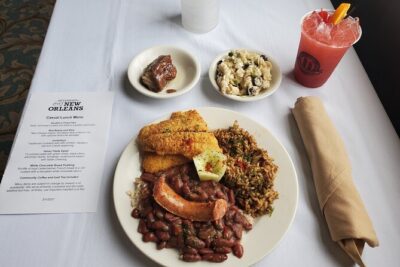
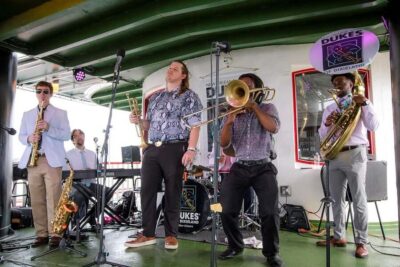
Evening Steamboat Jazz Cruise + Optional Dinner
Read our review →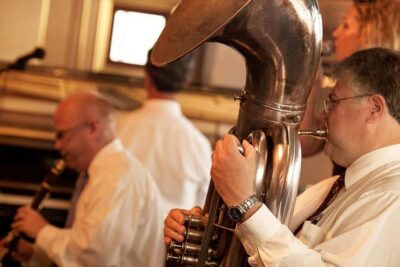
Daytime Steamboat Jazz Cruise + Optional Lunch
Read our review →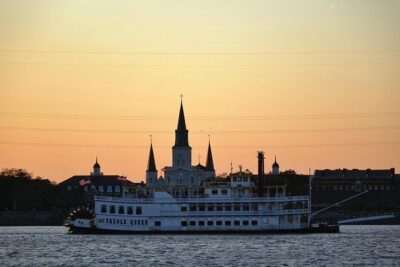
Paddlewheeler Creole Queen Jazz Dinner Cruise in New Orleans
Read our review →
Evening Jazz Boat Cruise with Optional Dinner
Read our review →
VIP Jazz Dinner Cruise with Private Tour and Open Bar Option
Read our review →Browse the lists this tour appears in