Reviewed · TOURS
The Badly Behaved Women Who Made New Orleans Tour
New Orleans history gets especially sharp when you look at who had power, who made money, and who was blamed for the city’s vices. This two-hour walk follows that story through the French Quarter, Marie Laveau’s world, Storyville, and the former red-light districts, with stops at places such as May Baily’s Place and the Golden Lantern.
I like the small maximum of 15 people, which should make it easier to hear the guide and ask questions. I also like the way guides such as Josh and Tracy add architecture and wider New Orleans history instead of sticking to one narrow subject.
The main drawback is that this is a walking tour at 2:00 pm, and New Orleans heat can make the pace feel harder than the two-hour duration suggests. You may also stop for drinks, but alcoholic beverages cost extra.
In This Review
- Key points to know before booking
- New Orleans history told from the women’s side
- Starting at Chartres Street and the Ursulines convent
- Lafitte’s Blacksmith Shop and the smuggling connection
- Marie Laveau beyond the usual voodoo story
- Golden Lantern and the Southern Decadence story
- May Baily’s Place and the world of legal brothels
- Storyville from Louis Armstrong Park
- What the $35 price delivers
- The guides and the pace
- Who should book this walk
- Should you book The Badly Behaved Women Who Made New Orleans Tour?
- FAQ
- How long is the tour?
- Where does the tour begin?
- Where does the tour end?
- What time does the tour start?
- Are drinks included in the price?
- How many people can join the tour?
Key points to know before booking
- The story centers on women, vice, and power, not just famous buildings or old cocktails.
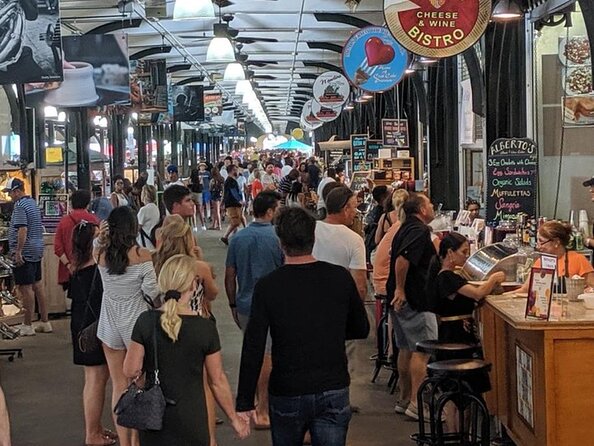
- The French Market area once had a dangerous reputation, giving the early part of the walk a darker edge.
- Marie Laveau is discussed through her money and work, not simply presented as a voodoo legend.
- Louis Armstrong Park offers shade and seating for a look at photographs and the former Storyville district.
- Historic drink stops are suggestions only, and the price of alcohol is not included.
- The walk runs from Chartres Street to Louis Armstrong Park, with a maximum group size of 15.
New Orleans history told from the women’s side
Many tours of New Orleans focus on architecture, music, food, or ghosts. This one takes another route. It asks you to look at the city through prostitution, brothels, smuggling, voodoo, sexual control, and the women who found ways to survive or profit within those systems.
That makes the subject more complicated than a simple parade of famous madams. The tour deals with women who were exploited, women who operated businesses, women who gained influence, and women whose reputations were shaped by men, churches, courts, and later storytellers.
The title has a playful edge, but the material is not only playful. You will hear about the vice districts and red-light areas that helped shape New Orleans, including Storyville, the officially regulated district that once occupied part of the area near Basin Street. The tour also considers how these places were later erased or replaced.
I appreciate that focus because it gives you a better way to read the French Quarter. A pretty balcony, a narrow lane, or an old bar can look charming on its own. Once you learn how commerce, sex, religion, law, and race shaped the neighborhood, the same streets carry more weight.
Other New Orleans tours people book alongside this one:
- New Orleans Premier Ghost, Voodoo and Vampire Walking Tour
★ 4.5 · 12,856 reviews - New Orleans Steamboat Natchez Jazz Cruise with Dinner Option
★ 4.0 · 7,533 reviews - Adults-Only New Orleans Ghost, Crime, Voodoo, and Vampire Tour
★ 5.0 · 6,545 reviews
Starting at Chartres Street and the Ursulines convent
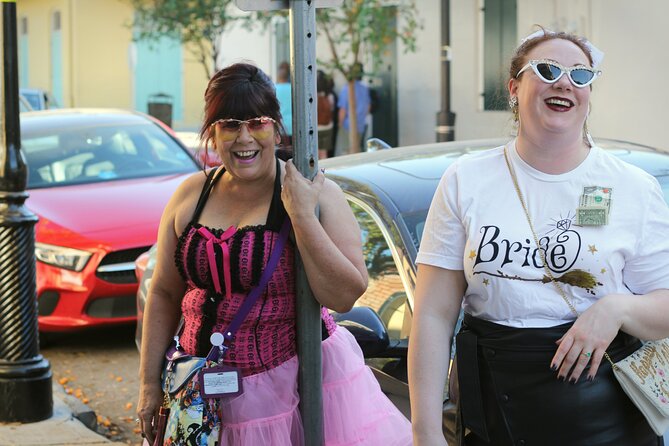
The walk begins at Chartres Street and Ursulines Avenue at 2:00 pm. The opening subject is the Ursulines convent, whose construction began in 1727 and which is described as the oldest building in the French Quarter.
The convent introduces one of the tour’s most troubling themes: the role of respectable institutions in controlling women. You will hear the tour’s account of how church authorities and King Louis XV sent women to the colony, including so-called correction girls, and how the nuns were expected to discipline them.
The story includes claims of public nudity and lashings. That is difficult material, but it matters because it challenges the usual picture of the convent as only a peaceful religious landmark. The tour asks a pointed question: were these women really the problem, or were they being forced into a system they did not control?
This stop is useful for setting the tone. You are not simply hearing tales of glamorous women and colorful nightlife. You are also examining how women’s bodies and behavior were managed by institutions with far more authority than they had.
The meeting point is easy to place in the French Quarter, but arrive ready to walk and stand. The tour has no stated transport between stops, and the route ends at Louis Armstrong Park rather than returning you to the starting point.
Lafitte’s Blacksmith Shop and the smuggling connection
The group often pauses at Lafitte’s Blacksmith Shop Bar, described as the oldest building housing a bar in North America. The stop is used to discuss its history as a smuggling front.
That detail fits the wider theme nicely. New Orleans vice was not limited to brothels. Smuggling, drinking, gambling, shipping, and prostitution all fed into one another, and places that looked ordinary could serve less visible business interests.
This is also one of the tour’s practical breaks. You may stop for about 10 minutes, cool down, and consider a historic cocktail. The drink is not included in the $35 tour price, so bring extra money if you want to order one.
I like this kind of pause because it gives the walk a natural rhythm. You are not asked to absorb two straight hours of historical detail. Still, you should not book this expecting a full cocktail tour. The drinks are suggestions, not a tasting package, and alcohol is specifically excluded.
Marie Laveau beyond the usual voodoo story
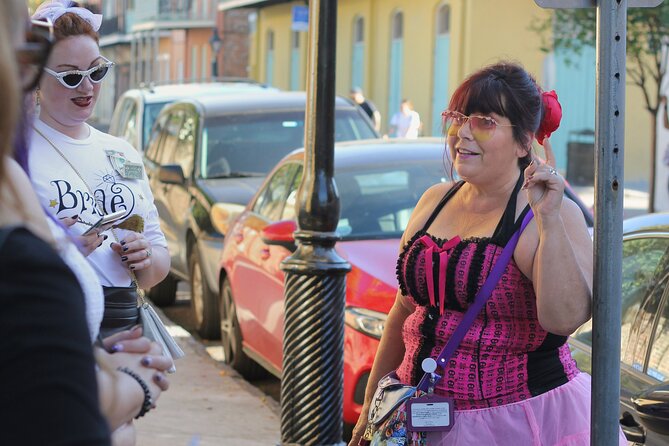
Marie Laveau is one of New Orleans’ most famous historical figures, yet she can be reduced to a few familiar images: voodoo, rituals, mystery, and the title of Voodoo Queen. This tour takes a more pointed approach by discussing her birthplace and asking how she made most of her real money.
That shift is valuable. It moves Marie Laveau from legend into the city’s working economy. Her story becomes part of the tour’s larger look at women who built influence through service, business, spiritual practice, personal networks, or intimate knowledge of the city.
The stop is brief, about seven minutes, so you will not get every detail of her life. Instead, it works as a compact challenge to the standard tourist version of her story. You should expect interpretation and context rather than a long visit inside a museum.
One detail matters here: the tour does not simply stop at the Marie Laveau House of Voodoo shop. It focuses on the real birthplace instead. That gives the discussion a more historical purpose and keeps the subject connected to the women and working lives at the center of the walk.
A completely different side of New Orleans:
- New Orleans Food Walking Tour of the French Quarter with Small-Group Option
★ 5.0 · 6,118 reviews - New Orleans Swamp and Bayou Boat Tour with Transportation
★ 5.0 · 5,399 reviews - New Orleans Steamboat Natchez Jazz Cruise
★ 4.5 · 5,334 reviews - New Orleans City Sightseeing Hop-On Hop-Off Bus Tour
★ 4.5 · 4,943 reviews
Golden Lantern and the Southern Decadence story
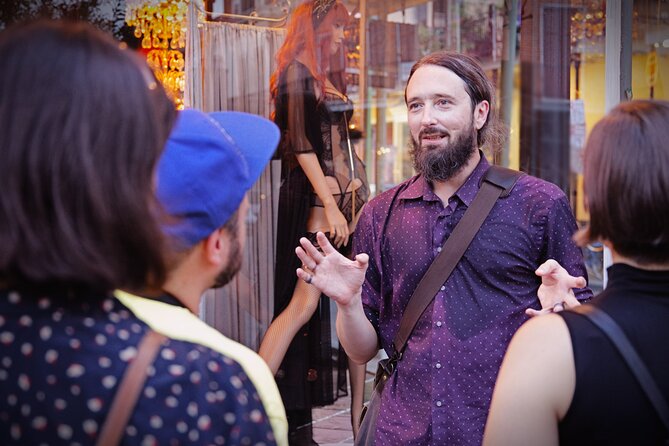
The Golden Lantern provides another link between old New Orleans vice and the city’s later nightlife. Here, you hear the story of Southern Decadence, a festival and celebration associated with the French Quarter.
The subject helps show that New Orleans’ history of sexual freedom, nightlife, and public performance did not end with the old brothels. The city kept finding new ways to turn private behavior, nightlife, and social rebellion into public culture.
This part should appeal to you if you want a tour that connects older history with a more recent New Orleans tradition. It also gives the walk a broader range than a tour devoted only to Storyville.
Because the tour is built around discussion, the exact amount of time at the Golden Lantern may vary. The supplied schedule identifies several stops and gives times for some of them, but not for every location. Plan on a moving conversation rather than a tightly timed series of admissions.
May Baily’s Place and the world of legal brothels
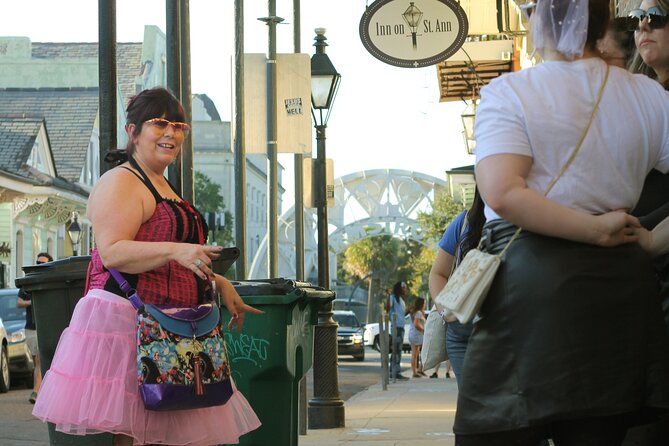
May Baily’s Place is presented as the first legal brothel in New Orleans. That makes it one of the clearest stops for understanding how the city tried to regulate vice rather than simply eliminate it.
The word legal deserves attention. Regulation did not mean that every woman involved had equal power or good choices. It meant that city authorities could define a district, set rules, collect money, and decide which activities were tolerated. A stop here can help you see prostitution as part of civic policy and business, not only as a private moral issue.
The subject also gives you a chance to think about the difference between public image and private reality. A famous brothel can be treated as a colorful relic, but the women who worked there lived within strict social and economic limits. The tour’s women-centered angle should make that tension part of the discussion.
If you prefer polished interiors and formal museum exhibits, this may feel less substantial. The value comes from the guide’s explanation and the connections among the places, not from a long indoor visit or a collection of objects.
Storyville from Louis Armstrong Park
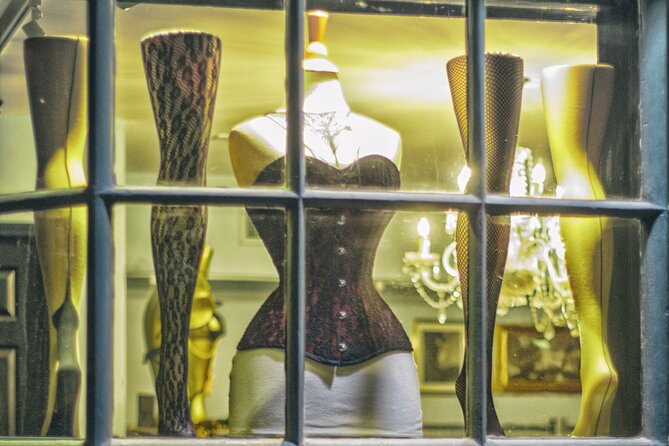
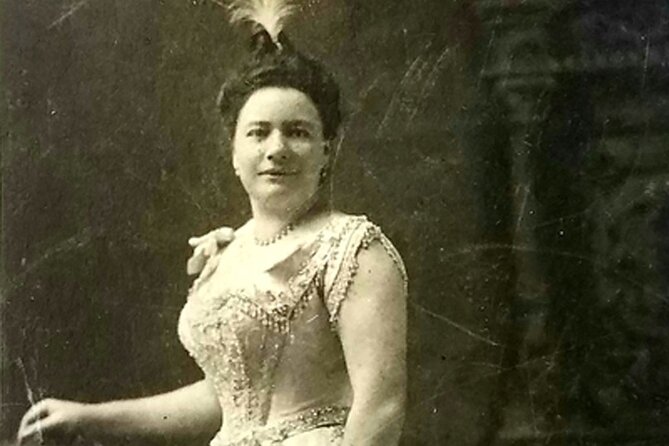
The final major stop is Louis Armstrong Park, which overlooks the area where Storyville once stood. The grand buildings associated with Storyville on Basin Street were replaced by the Iberville Projects, so the park offers a place to consider what disappeared and what replaced it.
This is the longest listed stop, about 25 minutes. You have enough time to sit in shade, view photographs, and hear about the district’s most notorious figures. That pause matters after the walking portions. It gives you a chance to organize the names, places, and stories before the tour ends.
I especially like the use of photographs here. Storyville is easy to turn into a fantasy of piano music, expensive rooms, and scandal. Images help ground the story in actual streets and buildings, even though the original district is no longer there in its old form.
Louis Armstrong Park also makes a practical ending point. The tour finishes at 701 North Rampart Street, rather than bringing you back to Chartres Street. The park is near public transportation, so you can continue elsewhere in New Orleans after the walk.
What the $35 price delivers
At $35 per person, this is priced as a focused walking tour, not a full-day attraction. The fee covers about two hours of guided history, and there are no separate admissions listed for the stops.
The value depends on how much you want interpretation. If you simply want to walk past old bars and buildings, you could explore the French Quarter on your own. If you want the connections among the Ursulines convent, smuggling, Marie Laveau, legal brothels, Southern Decadence, and Storyville explained in one route, the price is reasonable.
The small group limit improves that value. With no more than 15 people, you should have a better chance of hearing the guide on busy streets and asking about details that interest you. The two-hour length also fits well into a New Orleans day. You can book it without giving up an entire afternoon.
Do budget for a drink if you want one at a suggested cocktail stop. Alcohol is not included, and the tour is not presented as an all-inclusive bar crawl.
The guides and the pace
Josh is praised for combining the women’s stories with architectural details and other New Orleans history. Tracy is described as fun and well informed about the city as a whole, adding side stories without making the walk feel rushed.
That gives you a useful idea of the guiding style. The tour is not limited to a memorized script about brothels. You can expect the guide to connect the main subject to buildings, neighborhoods, and wider city events.
The pace is described as comfortable rather than hurried. That is helpful because the subject contains a lot of names and context. You have time to listen, take in the surroundings, and ask questions instead of racing from one stop to the next.
Still, comfort depends on the weather. The 2:00 pm start puts you outside during a warm part of the day, and New Orleans can be hot and humid. Wear comfortable shoes, carry water, and treat the shaded seating at Louis Armstrong Park as a welcome part of the route.
Who should book this walk
I would choose this tour if you want New Orleans history that deals with power and social rules rather than only architecture or ghost tales. It suits adults interested in women’s history, sex work, voodoo, nightlife, law, religion, and the way cities turn uncomfortable subjects into tourist stories.
It also works well for repeat visitors. You may already know the French Quarter’s main streets, but this route can change how you understand familiar places.
The tour may not suit you if you want a quiet architectural walk, a formal museum experience, or a broad overview of every period in New Orleans history. The material is frank, and some stories involve sexual exploitation, punishment, and social control.
Most people can participate, and service animals are allowed. The experience is offered in English only. Confirmation arrives when you book, and you can cancel for a full refund up to 24 hours before the 2:00 pm start. Cancellations or changes made inside that 24-hour window are not refunded or accepted.
Should you book The Badly Behaved Women Who Made New Orleans Tour?
Book it if you want a compact, story-led look at New Orleans through women, vice, and the city’s changing rules. The combination of the Ursulines convent, Marie Laveau’s birthplace, May Baily’s Place, the Golden Lantern, and Storyville gives the tour a clear theme without trapping you in one narrow chapter.
The strongest reasons to go are the small group, the comfortable pace, and guides such as Josh and Tracy, who add architecture and wider city context. The main cautions are the afternoon heat, extra drink costs, and the frank subject matter.
At $35, I consider it a good choice for a first or second day in New Orleans, especially if you want the French Quarter to feel less like a pretty backdrop and more like a place shaped by difficult choices.
FAQ
How long is the tour?
The walking tour lasts approximately two hours.
Where does the tour begin?
It begins at Chartres Street and Ursulines Avenue in New Orleans.
Where does the tour end?
The tour ends at Louis Armstrong Park, at 701 North Rampart Street.
What time does the tour start?
The scheduled start time is 2:00 pm.
Are drinks included in the price?
No. The tour may suggest historic cocktail stops, but alcoholic beverages are not included.
How many people can join the tour?
The tour has a maximum group size of 15 travelers.
Just added around New Orleans
- New Orleans: Whitney Plantation Audio Tour with Transfers★ 4.7 · 3 reviews
- New Orleans Instagram Photo Tour★ 4.5 · 3 reviews
- New Orleans: Voodoo, Storyville, and Treme Walking Tour★ 3.3 · 3 reviews
- Outdoor Escape Room in New Orleans – The French Quarter★ 5.0 · 3 reviews
- New Orleans: Private Custom Guided Walking Tour★ 4.0 · 3 reviews
- New Orleans: Voodoo History Guided Walking Tour★ 4.8 · 3 reviews
- Private New Orleans City and Cemetery Bus Tour Up to 24 People★ 5.0 · 3 reviews
- New Orleans: French Quarter Cocktail and Foodie Crawl Tour★ 5.0 · 3 reviews
Tours, compared.
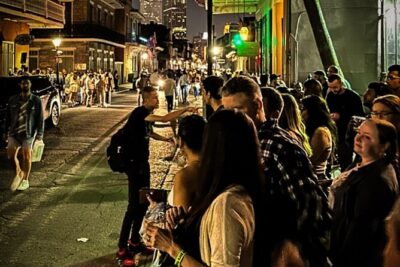
New Orleans Premier Ghost, Voodoo and Vampire Walking Tour
Read our review →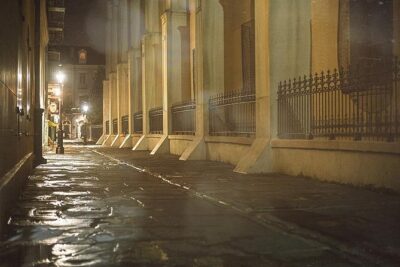
Adults-Only New Orleans Ghost, Crime, Voodoo, and Vampire Tour
Read our review →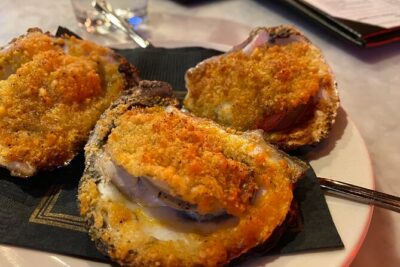
New Orleans Food Walking Tour of the French Quarter with Small-Group Option
Read our review →
New Orleans Swamp and Bayou Boat Tour with Transportation
Read our review →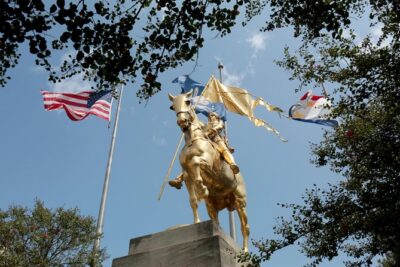
New Orleans City Sightseeing Hop-On Hop-Off Bus Tour
Read our review →
St. Louis Cemetery No. 1 Official Walking Tour
Read our review →
Swamp Boat Ride and Oak Alley Plantation Tour from New Orleans
Read our review →