
Reviewed · GHOST & HAUNTED TOURS
NOLA’s BIG 4 PRIVATE CITY TOUR – NO GHOST, ONLY FACTS!
New Orleans reveals itself in layers, and this private SUV tour gives you four of them in about two hours: the French Quarter, Garden District, City Park, and Metairie Cemetery. Guide Paul Angelica, a licensed local who was born and raised here, keeps the focus on city history, culture, architecture, and people. There are no ghost stories, only facts.
I like two things right away. First, you get beyond Bourbon Street and the French Quarter to see places many first-time visitors would miss. Second, the private Toyota RAV4 lets Paul adjust the conversation and route to your interests instead of delivering a fixed speech to a busload of strangers.
The trade-off is time. Four stops in roughly two hours means this is an orientation, not a full visit to each place. You will see and learn a lot, but you will need to return later if you want long walks through the Garden District, City Park, or the cemeteries.
In This Review
- Key points at a glance
- Why this tour works best at the start of your stay
- French Quarter: the city’s oldest familiar face
- Garden District: mansions, oaks, and old New Orleans ambition
- City Park: live oaks and a different pace
- Metairie Cemetery: New Orleans funerary design
- What the private SUV adds
- Paul Angelica’s guiding style
- Is $150 per person a fair price?
- Who should book this New Orleans tour?
- Should you book NOLA’s Big 4?
- FAQ
- How long is NOLA’s Big 4 Private City Tour?
- Which areas does the tour visit?
- Is this a ghost tour?
- Is the tour private?
- Does the tour offer pickup and drop-off?
- Is the tour offered in English?
- What happens if the weather is poor?
Key points at a glance
- Four distinct sides of New Orleans: Visit the French Quarter, Garden District, City Park, and Metairie Cemetery in one short outing.
- A private four-passenger SUV: Your group rides alone, with easier conversation, hotel pickup, and a flexible drop-off point.
- Fact-based guiding: Paul Angelica focuses on New Orleans history and daily life rather than haunted tales.
- A strong first-day choice: Use the tour to plan restaurants, neighborhoods, museums, and later sightseeing.
- Useful for mixed mobility needs: The driving format reduces walking, and the vehicle is enclosed and air-conditioned.
- $150 per person: The price is easier to justify for couples or small groups who value privacy and personal advice.
Why this tour works best at the start of your stay
New Orleans is not a city you understand from one stroll down Royal Street. The French Quarter gets most of the attention, but the city’s character changes quickly as you move toward the Garden District, City Park, and the cemeteries beyond the central tourist zone.
That is the main purpose of this experience. Paul gives you a quick map of how the city fits together, then adds the background that makes each area more meaningful. You can use the tour to decide where to spend your remaining time instead of guessing from a hotel brochure.
I would book it on your first day, or at least early in your visit. The tour can help you choose where to eat, which areas deserve a return visit, and how to reach places such as City Park by streetcar or other local transport. Several people found Paul’s recommendations useful for planning the rest of their trip, including meals and regional specialties.
The private setup matters here. In a small SUV, you can ask about a building, neighborhood, restaurant, or custom interest as it comes up. Paul has also adjusted the route for specific questions and accommodated schedule problems when possible. That flexibility is difficult to get on a large group tour.
More haunted nights in New Orleans:
- New Orleans Premier Ghost, Voodoo and Vampire Walking Tour
★ 4.5 · 12,856 reviews - Adults-Only New Orleans Ghost, Crime, Voodoo, and Vampire Tour
★ 5.0 · 6,545 reviews - New Orleans Adults-Only Ghost, Voodoo and Vampire Tour
★ 5.0 · 3,291 reviews
French Quarter: the city’s oldest familiar face
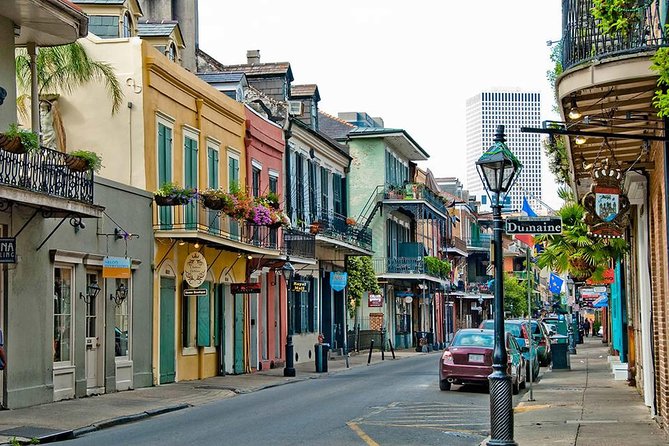
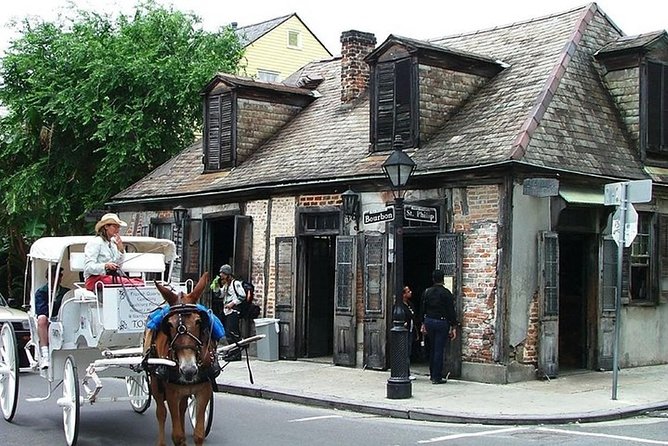
The first stop covers the French Quarter, founded in 1718 and still the center of New Orleans tourism. You will hear about Jackson Square, St. Louis Cathedral, the French Market, Lafitte’s Blacksmith Shop Bar, Royal Street, Frenchmen Street, old restaurants, and Creole cottages.
The value here is not simply checking off landmarks. Paul’s approach places the Quarter’s nightlife beside its residential life. Behind the balconies, ironwork, courtyards, and bright storefronts is a neighborhood shaped by people who care about its old buildings and handmade details.
St. Louis Cathedral dates to 1727, the French Market to 1791, and Lafitte’s Blacksmith Shop Bar to 1772. Those dates give you a sense of how old the Quarter is, but the tour also helps explain why the district feels unlike a standard American downtown.
You will likely pass many of the Quarter’s best-known sights from the vehicle, with time to get out for photos. The listed stop lasts about 30 minutes, so do not expect a detailed interior visit or a slow architectural walk. If you want to study the cathedral, browse the market, or explore Royal Street on foot, save that for another outing.
This is also where Paul draws a clear line between his tour and a ghost-themed experience. His stated goal is to explain documented events, people, architecture, and local culture. That makes the tour a better fit for someone who wants a factual introduction rather than theatrical legends.
Garden District: mansions, oaks, and old New Orleans ambition
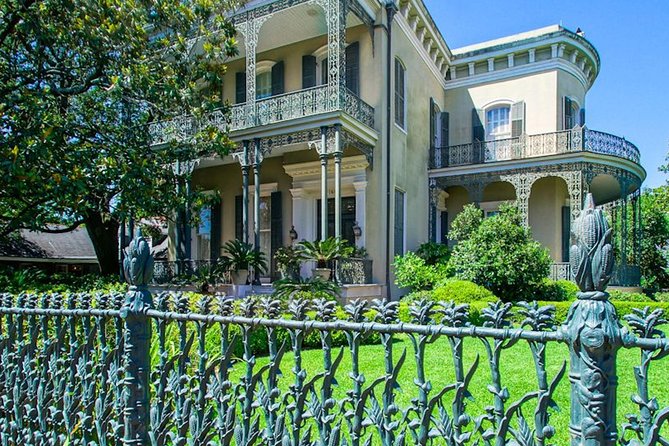
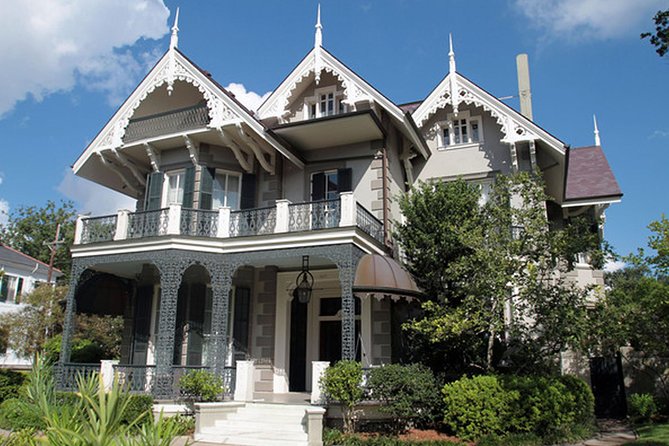
The Garden District dates to 1832 and offers a sharp change from the compact French Quarter. Here, broad streets, brick sidewalks, mature oak trees, and private gardens frame large homes built during the city’s antebellum period.
Paul points out local and celebrity-associated properties, including homes connected with Sandra Bullock, John Goodman, Anne Rice, American Horror Story, and The Curious Case of Benjamin Button. The Cornstalk Fence is another memorable detail, along with Lafayette Cemetery, St. Charles Avenue, the streetcar line, Mardi Gras traditions, and Commander’s Palace.
The appeal is architectural and social. The Garden District lets you see how New Orleans developed beyond its original colonial core, with grand homes and landscaped grounds replacing the Quarter’s narrow streets and tightly packed buildings.
Lafayette Cemetery dates to 1833, the St. Charles Avenue streetcar to 1835, Mardi Gras traditions in the area to 1857, and Commander’s Palace to 1893. Paul uses these markers to connect buildings with the customs and institutions that still shape the city.
The limitation is the same as in the Quarter. A 30-minute pass through the area cannot replace a walking tour. You may see the cemetery and notable houses, but you will not have much time to examine every gate, tomb, garden, or street. Still, this quick introduction can help you decide if the Garden District deserves a longer visit.
I especially like this stop for first-time visitors who might otherwise stay close to Bourbon Street. It gives you a calmer, more residential view of New Orleans and shows why the city’s appeal is not limited to music clubs and nightlife.
City Park: live oaks and a different pace

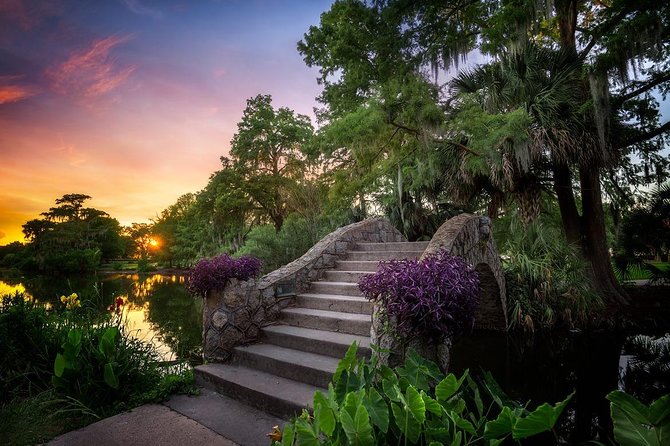
City Park covers about 1,300 acres and dates to 1854. It is one of the tour’s most useful contrasts because the park replaces old buildings and busy streets with open space, water, gardens, museums, and enormous southern live oaks.
The park’s live oak grove is its main visual treat. One Grand Oak is said to be more than 800 years old, and some older limbs extend farther than the trees are tall. Even from a short stop, the trees give you a strong sense of the region’s climate and the scale of the park.
Paul also identifies the New Orleans Museum of Art, Sculpture Garden, Big Lake, Botanical Gardens, Children’s Museum, amusement park, Story Land, miniature golf, Café du Monde, and a cypress swamp associated with the wetlands on which New Orleans was built.
City Park is often the stop that turns a quick sightseeing ride into a useful trip-planning tool. If you have children, an interest in art, or simply want a break from the French Quarter, you can return here for a longer visit. One couple followed the suggestion to take the streetcar to the park and spent much of a day there, including lunch.
The 30-minute stop gives you a preview rather than a park day. The park is far too large to cover on foot in that time, and the tour does not include admission to the museums or attractions. Think of Paul’s visit as a sampler that shows you what to put on your list.
The park also offers a welcome middle point in the tour. After the dense architecture of the Quarter and the formal homes of the Garden District, the oak trees and open areas reset your view of the city.
A few more New Orleans tours worth a look
- VIP Jazz Dinner Cruise with Private Tour and Open Bar Option
★ 4.5 · 838 reviews - Private Airport Transfer From New Orleans
★ 5.0 · 702 reviews - New Orleans Private Carriage Tour of the French Quarter
★ 5.0 · 537 reviews - New Orleans Private Luxury Airport Transfer to Downtown Hotels
★ 4.5 · 400 reviews
Metairie Cemetery: New Orleans funerary design
The final stop is Metairie Cemetery at 5100 Pontchartrain Boulevard. It began as a cemetery in 1872 after the Civil War, on the site of a former racetrack. Its oval shape still reflects that earlier use.
The cemetery contains more than 9,000 people and more than 10,000 above-ground family tombs, according to the tour description. The tombs show how New Orleans families adapted burial practices to local conditions, while also creating a distinct form of memorial architecture.
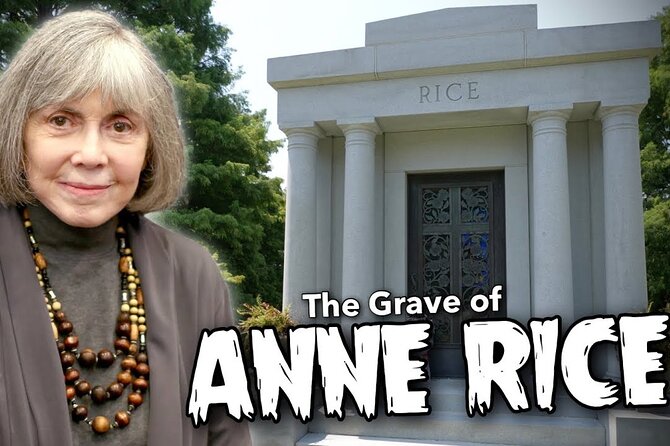
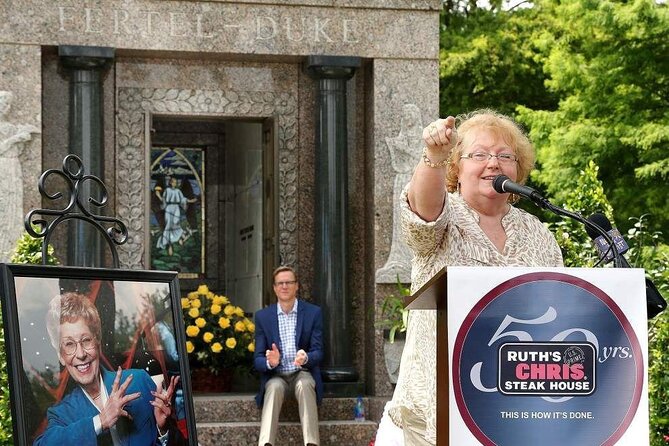
Paul points out notable people connected with the cemetery, including Al Copeland, founder of Popeyes Fried Chicken; Ruth Fertel, founder of Ruth’s Chris Steak House; Tom Benson, owner of the New Orleans Saints; novelist Anne Rice; Civil War general P. G. T. Beauregard; and kings of Carnival. The Weeping Angel statue is another featured sight.
This stop is especially useful if you have never visited a New Orleans cemetery. The above-ground tombs are not just a spooky backdrop. They reflect the city’s customs, family wealth, public memory, and response to local ground conditions.
The practical drawback is that cemetery visits can be sensitive and visually demanding. You should be comfortable with a quiet historical site and respectful of the fact that it remains a place of burial. As with the other stops, you get an introduction, not time to inspect every tomb.
Including Metairie Cemetery also makes the route feel less predictable than a standard city highlights ride. The tour is not limited to famous streets and photo stops. It includes a place where New Orleans history is recorded in stone.
What the private SUV adds
The tour uses a four-passenger Toyota RAV4, and only your group attends. That makes the experience best for one to four people who want personal attention without paying for a larger private vehicle.
The vehicle is enclosed and air-conditioned, which matters in New Orleans heat, humidity, rain, or an unusually cold spell. One booking was chosen specifically because the weather was colder than expected, while another person valued the reduced walking because of mobility problems.
Paul provides pickup and drop-off at a desired location, subject to arranging the details in advance. The drop-off can be especially useful if you want to finish near a restaurant or another part of the city rather than return to your hotel.
Several practical touches also help. Paul has arrived early for pickups, keeps the SUV clean, and has provided bottled water. These are small details, but they matter when you are moving through New Orleans in warm weather.
Do not mistake the driving format for a fully hands-off experience. The route includes opportunities to get out for photos, and Paul can answer questions along the way. Still, you should expect more time in the car than on foot. Wear comfortable shoes for the short stops, but do not plan to complete a long walking circuit during the tour.
Paul Angelica’s guiding style
Paul describes himself as a 55-year New Orleans local and has worked as a guide since 2018. He is licensed as a New Orleans tour guide and has studied the city through courses and extensive reading.
His strongest quality is his local focus. He does not simply point at a famous address, then move on. He talks about schools, grocery stores, side streets, boulevards, restaurants, and ordinary neighborhoods as the vehicle moves between the headline sights.
That local view helps you see New Orleans as a lived-in city rather than a stage set for visitors. Paul is also known for humor and a warm Southern manner, including calling people Miss followed by their first name. His style will suit you if you like conversation and questions. If you prefer a quiet, highly scripted tour, the personal approach may feel more informal than expected.
The content can be adjusted to your interests. Ask about food, architecture, music, Mardi Gras, cemeteries, neighborhood life, or places to visit later. Paul’s role is part guide and part trip planner, and that second role may be just as useful as the two-hour sightseeing route.
Is $150 per person a fair price?
At $150 per person, this is not the cheapest way to see New Orleans. A public bus, streetcar ride, or self-guided walk will cost less, and those options give you more time in one area.
The price makes more sense if you have two to four people sharing the experience and value privacy, pickup, air conditioning, and a local guide. You are paying for the vehicle, the route across four areas, Paul’s time, and the ability to ask for recommendations tailored to your trip.
The tour can also save you time. Instead of arranging separate visits to the French Quarter, Garden District, City Park, and Metairie Cemetery, you get a quick look at all four. If Paul’s restaurant and sightseeing suggestions shape the rest of your stay, the cost may feel more useful than a simple two-hour ride.
For solo visitors, the per-person price is harder to justify unless privacy and personal guidance are especially important. For a couple, family, or group of friends, the private format offers better value than it first appears.
The tour is often booked about 40 days ahead, so popular dates may disappear early. Free cancellation is available up to 24 hours before the start time. Poor weather can lead to a new date or a full refund, and service animals are allowed.
Who should book this New Orleans tour?
I would choose this for first-time visitors who want to get their bearings quickly, especially if the trip is short. It is also a good match for repeat visitors who want to see neighborhoods beyond the French Quarter and ask a local about places they have missed.
The tour suits couples, families, and small friend groups who prefer a private ride. It can help if you have walking limits, dislike large groups, or are visiting during weather that makes an open-air tour uncomfortable.
It is less suited to you if you want long walks, museum admissions, food tastings, or a single-topic tour focused only on architecture, music, or cemeteries. The four-stop plan is broad by design, and each location receives only a short visit.
Should you book NOLA’s Big 4?
Book this tour if you want a fact-based introduction to New Orleans from a local who can connect famous sights with everyday city life. The best use of your two hours is to schedule it early, bring questions, take notes or record key suggestions with permission, and treat the stops as a preview for later exploring.
Skip it if you already know the city well and prefer to spend two hours walking one neighborhood in depth. For most first-time visitors, though, the private SUV, four-area route, flexible conversation, and practical restaurant advice make this a useful start to a New Orleans trip.
FAQ
How long is NOLA’s Big 4 Private City Tour?
The tour lasts approximately two hours.
Which areas does the tour visit?
The route includes the French Quarter, Garden District, City Park, and Metairie Cemetery.
Is this a ghost tour?
No. The experience is presented as a fact-based tour focused on New Orleans history, culture, architecture, and people.
Is the tour private?
Yes. Only your group participates, with a capacity of up to four passengers in a Toyota RAV4.
Does the tour offer pickup and drop-off?
Yes. Pickup and drop-off at a desired location are offered, with the details arranged for your booking.
Is the tour offered in English?
Yes. The tour is offered in English.
What happens if the weather is poor?
The experience requires good weather. If it is canceled because of poor weather, you can choose another date or receive a full refund. You can also cancel up to 24 hours before the start time for a full refund.
Just added around New Orleans
- New Orleans Garden District Tour★ 5.0 · 8 reviews
- New Orleans Seance Experience★ 4.0 · 8 reviews
- Airport and City Transfers in New Orleans★ 5.0 · 8 reviews
- Sin and Tonic Pub Crawl in New Orleans★ 4.5 · 8 reviews
- The New Orleans Darkness Tour★ 4.4 · 9 reviews
- New Orleans Plantation Tour with Transportation★ 5.0 · 9 reviews
- New Orleans Self-Guided Kayak Bayou Swamp Tour★ 5.0 · 9 reviews
- Historic Carrollton Neighborhood Walking Tour★ 5.0 · 9 reviews
Ghost & Haunted Tours, compared.
New Orleans Premier Ghost, Voodoo and Vampire Walking Tour
Read our review →
Adults-Only New Orleans Ghost, Crime, Voodoo, and Vampire Tour
Read our review →
New Orleans Adults-Only Ghost, Voodoo and Vampire Tour
Read our review →
Cemetery and Ghost BYOB Bus Tour in New Orleans
Read our review →
Ghost and Vampire Walking Tour Of The French Quarter
Read our review →
New Orleans Small-Group Haunted History Carriage Tour
Read our review →

Browse the lists this tour appears in