

Reviewed · CEMETERY TOURS
New Orleans: St. Louis Cemetery #3 Guided Walking Tour
New Orleans’s St. Louis Cemetery #3 is not a quiet patch of lawn with rows of headstones. It is a city of tombs, with narrow aisles, whitewashed walls, family vaults, public mausoleums, and burial customs shaped by the region’s history. The cemetery still functions today, averaging about one burial a day.
I like the tour’s focus on how the cemetery works, not just who is buried there. I also like that guide Sally brings research, local history, and unusual stories together without relying on cheap thrills. The main consideration is the weather: you walk outdoors for 90 minutes, rain or shine, with little room to escape New Orleans heat, sun, or rain.
In This Review
- Key points
- Why St. Louis Cemetery #3 Makes a Good Tour Setting
- Starting at the Front Gates
- Understanding New Orleans Tombs
- Walking the Main Aisles and Changing Architectural Styles
- Meeting New Orleans Chefs, Architects, and Civil Rights Leaders
- The Hunchbacked Photographer and Other Unusual Stories
- What Makes the Guide Important
- The Value of a $25, 90-Minute Tour
- Heat, Rain, and What to Bring
- Who Should Book This Cemetery Walk
- Should You Book St. Louis Cemetery #3?
- FAQ
- How long is the St. Louis Cemetery #3 tour?
- How much does the tour cost?
- Where does the tour meet?
- Is the cemetery still active?
- What language is the tour conducted in?
- What should I bring?
Key points
- An active cemetery: St. Louis Cemetery #3 still handles burials, giving the tour a connection to present-day New Orleans.
- A wide range of tombs: See wall vaults, columbariums, family tombs, society tombs, and public mausoleums.
- Architecture in one place: Look for Greek, Roman, Gothic, Egyptian, Baroque, and Byzantine influences.
- Stories beyond famous names: Hear about chefs, architects, Reconstruction Era civil rights leaders, and a hunchbacked photographer.
- A strong guide matters: Sally is an author, podcaster, and tour guide who builds the walk around research and storytelling.
- Simple, useful logistics: The tour lasts 90 minutes, costs $25, is in English, and begins at the cemetery’s front gates.
Why St. Louis Cemetery #3 Makes a Good Tour Setting

St. Louis Cemetery #3 was established in 1854. It is often described as the younger sister of St. Louis Cemetery #1 and #2, but it is twice the size of those two cemeteries combined.
That size changes the experience. You are not simply walking to one famous tomb, hearing a short story, and leaving. You move through a working burial site with long main aisles, side paths, clusters of family vaults, and tombs built for organizations and public use.
The cemetery’s main aisles are named after saints and church clerics. That detail helps you read the layout as you walk. You are seeing a place with its own internal order, not a random collection of monuments.
I find this setting more useful for understanding New Orleans than a tour based only on spooky legends. The cemetery shows how the city handles death, family memory, religion, status, and practical burial needs. It also gives you a close look at architecture that is easy to miss if you visit alone without context.
More cemetery walks in New Orleans:
- St. Louis Cemetery No. 1 Official Walking Tour
★ 4.5 · 3,941 reviews - Cemetery and Ghost BYOB Bus Tour in New Orleans
★ 4.5 · 2,685 reviews - New Orleans City Tour: French Quarter, Garden District & Cemetery
★ 4.5 · 2,209 reviews
Starting at the Front Gates

You meet your guide at the front gates of St. Louis Cemetery #3, at coordinates 29.9827491, -90.0874501. There is no hotel pickup or drop-off, so plan your route to the cemetery before booking.
The entrance is a practical meeting point because you begin with the whole site in front of you. Your guide can set the scene before you head along the main aisles, explaining when the cemetery opened and why its design differs from a standard modern graveyard.
The opening part of the tour should help you get comfortable with the site’s scale. St. Louis Cemetery #3 can feel confusing at first, with repeated tomb forms and many narrow passages. A guide gives you a framework for what you are seeing and why the cemetery is arranged this way.
Because this is an active cemetery, expect the tone to be respectful. You are visiting a place where families still bury loved ones, not a preserved monument that exists only for sightseeing. That makes the walk more meaningful, but it also means you should keep your voice low and follow the guide’s lead around active burial areas.
Understanding New Orleans Tombs
One of the best reasons to take this tour is the explanation of burial practices. Instead of treating every tomb as a decorative curiosity, the guide helps you distinguish between different forms.
You can expect to see:
- Wall vaults built into cemetery walls
- Columbariums for cremated remains
- Public mausoleums
- Family tombs
- Society tombs connected to groups or organizations
These forms tell you something about how New Orleans families and communities remember their dead. The cemetery is arranged vertically in places because tombs make practical use of limited ground space. The result is an architectural setting that feels more like a small stone neighborhood than a conventional cemetery.
The guide also explains how tombs serve different groups. A private family tomb is not the same as a public mausoleum or a society tomb. Once you understand those differences, the cemetery becomes easier to read. You begin noticing the relationship between size, design, lettering, symbols, and intended use.
I especially like this part for first-time visitors because it gives you a method. You are not just collecting names and dates. You are learning what to look for in the next aisle, even after the tour ends.
Walking the Main Aisles and Changing Architectural Styles
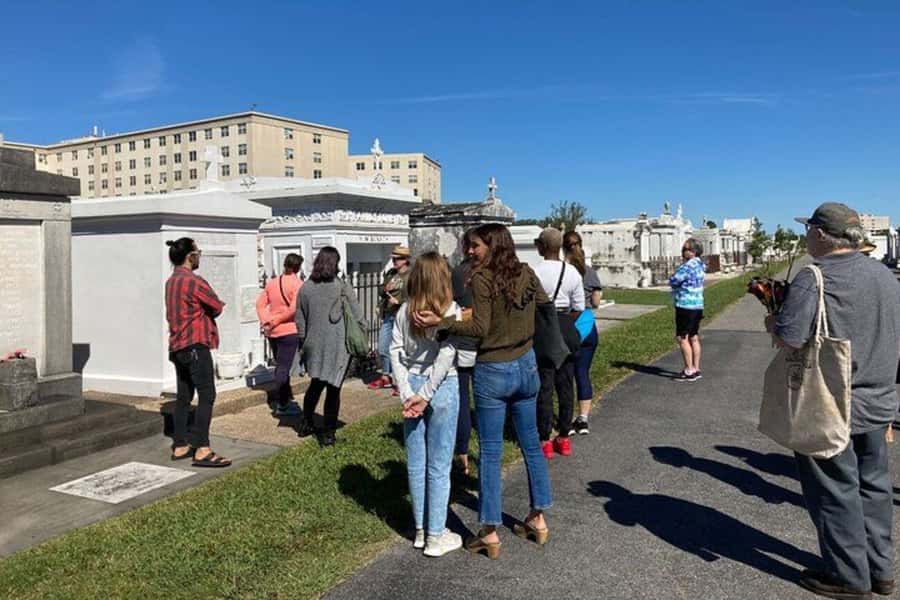
The walk follows the cemetery’s main aisles, which are named after saints and various clerics of the church. Along the way, the guide points out several architectural styles, including classic Greek and Roman, Gothic, Egyptian, Baroque, and Byzantine.
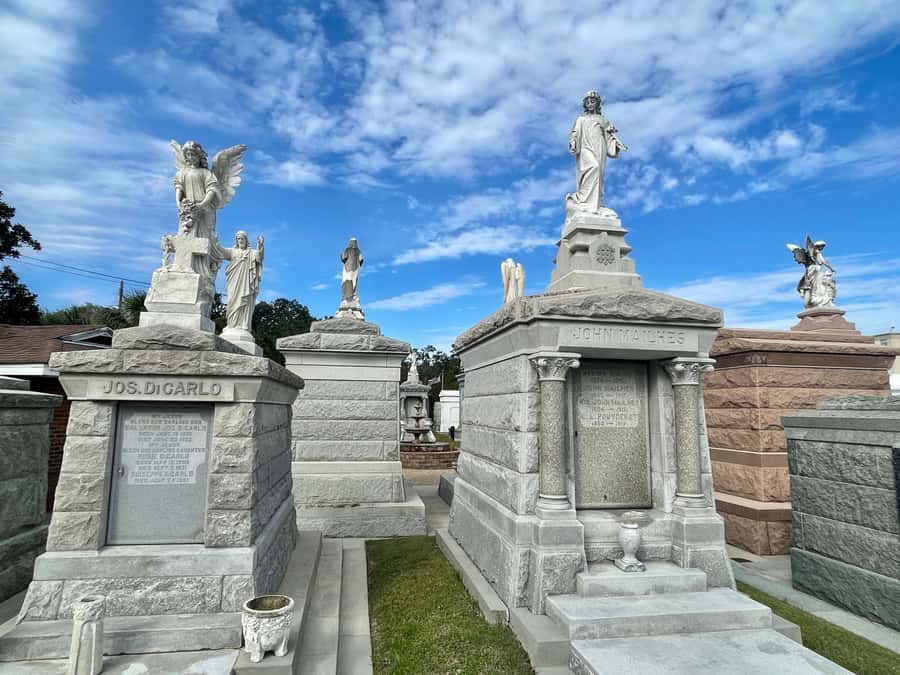
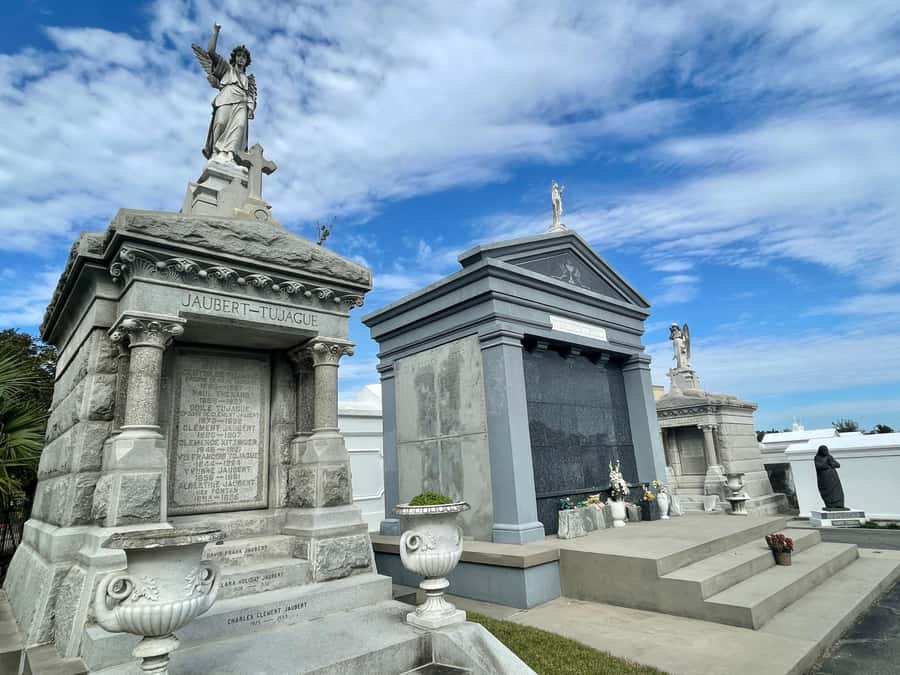
That variety gives the tour a visual rhythm. One tomb may use columns and a formal classical front. Another may have Gothic details. Elsewhere, Egyptian motifs or Baroque decoration change the mood of the aisle.
You do not need to be an architecture specialist to enjoy this section. The guide’s job is to show you the signs of each style and explain why they appear in a New Orleans cemetery. These details make the walk more than a series of graves. You can compare tombs as you go and see how families, societies, and designers used stone to express identity.
The architecture also gives the cemetery a strong sense of place. St. Louis Cemetery #3 does not look like a generic burial ground copied from somewhere else. Its tombs reflect local customs and the city’s mix of religious and cultural influences.
Take your time looking upward and sideways. The most interesting detail may be on a tomb’s upper section, side wall, doorway, or small architectural feature. Comfortable shoes matter here because the tour lasts 90 minutes and follows cemetery aisles rather than a short paved route through a compact exhibit.
More walking tours in New Orleans:
- New Orleans Premier Ghost, Voodoo and Vampire Walking Tour
★ 4.5 · 12,856 reviews - New Orleans Food Walking Tour of the French Quarter with Small-Group Option
★ 5.0 · 6,118 reviews - New Orleans French Quarter, Voodoo and Culture Walking Tour
★ 4.5 · 2,961 reviews - New Orleans Garden District History Walking Tour
★ 5.0 · 2,879 reviews
Meeting New Orleans Chefs, Architects, and Civil Rights Leaders

The tour visits the graves of notable New Orleanians, including chefs, architects, and civil rights leaders from the Reconstruction Era. Those categories alone make the tour broader than a standard famous-people walk.
The stories connect the cemetery to New Orleans life outside the gates. Chefs point toward the city’s food culture. Architects connect to the built environment you see throughout New Orleans. Reconstruction Era civil rights leaders bring in the political and social struggles that shaped the city after the Civil War.
This is where a guide’s research makes a real difference. A name on a tomb tells you very little by itself. A useful story explains what the person did, why the person mattered, and how that life fits into the city’s past.
Sally is the guide named for this experience. She is also an author and podcaster, and her approach is built around research rather than a string of staged tricks. That does not mean the tour is dry. Her style includes unusual details and thoughtful tangents, but the core remains history and evidence.
I would choose this tour if you prefer stories with substance. You will still hear about unusual characters, but the focus is not simply on making the cemetery seem spooky.
The Hunchbacked Photographer and Other Unusual Stories

New Orleans history has plenty of strange corners, and this tour does not avoid them. One featured story involves a hunchbacked photographer who secretly photographed prostitutes.
That kind of tale adds texture to the walk. It shows that the cemetery contains people who lived complicated lives, not only famous citizens with polished public reputations. The unusual stories also help break up the architectural explanations and make certain tombs easier to remember.
The key is balance. A cemetery tour can become a parade of sensational anecdotes, but this experience is described as research-based and fact-focused. Sally’s stories appear to use the odd details as a way into the larger history, rather than as an excuse for theatrical scares.
You should not expect a haunted-house attraction. The supplied experience is a guided history walk through an active cemetery, with unusual people and burial customs included. That distinction matters if you want context instead of jump scares.
What Makes the Guide Important

A cemetery is difficult to understand without a guide. The tombs can look similar, and the names may mean little unless someone explains the people, symbols, and customs connected to them.
Sally’s strengths are her preparation and storytelling. She is described as deeply engaged with who is buried here, how New Orleans cemeteries operate, and why the site looks the way it does. Her background as an author and podcaster also suggests a guide who can shape a story rather than simply recite dates.
The tour is in English. If English is not your first language, the pace and detail may require extra concentration, but Sally has been described as taking time to explain things clearly when language is a challenge.
The experience is also wheelchair accessible. That is useful, but the supplied details do not describe specific surface conditions or which parts of the cemetery route may be easiest. If you need precise access information, confirm the route before you go.
The Value of a $25, 90-Minute Tour
At $25 per person, this is a modestly priced guided experience for New Orleans. The value comes from the amount of interpretation packed into 90 minutes: cemetery history, burial methods, architecture, notable residents, and the workings of a site that still averages one burial each day.
You can enter a cemetery and look around on your own, but you may not know which tombs matter or how to interpret the different designs. The guide turns a large site into a readable story. That is the main reason I think the fee is fair.
The price is especially reasonable if you care about local history, architecture, or the culture of New Orleans beyond its restaurants and nightlife. It is less useful if you want a fast photo stop or a short list of famous names.
There is also some booking flexibility. You can reserve now and pay later, and cancellation is free up to 24 hours before the tour for a full refund. Those policies do not change the experience itself, but they make it easier to fit the walk into a changing New Orleans schedule.
Heat, Rain, and What to Bring

This activity takes place rain or shine. That is the one practical point I would take seriously. New Orleans weather can make an outdoor walk feel easy one day and tiring the next.
Wear comfortable shoes, comfortable clothes, and sunscreen. Bring water. The cemetery is large enough that you will be walking for the full 90 minutes, and there is no reason to make the outing harder with poor footwear or too little water.
A small weather check before leaving is sensible, even though the tour operates in rain. If showers are possible, bring suitable rain protection. If the sun is strong, use sunscreen before you arrive rather than waiting until you feel the heat.
The tour is offered in English, and the duration is fixed at 90 minutes. Check the available starting times when booking so you can choose a part of the day that suits your energy and the weather.
Who Should Book This Cemetery Walk
I would recommend St. Louis Cemetery #3 to you if you enjoy:
- New Orleans history told through individual lives
- Architecture and urban design
- Religious customs and burial traditions
- Small-group guided walks
- Unusual true stories without heavy theatrical effects
- Places that still serve a living purpose
It is also a good choice if you have already seen the French Quarter and want a different side of the city. The cemetery offers a quieter setting and a more focused look at local customs.
Families should consider the tone and the age of their children. The unusual stories may interest older children and teenagers, while very young children may find a 90-minute cemetery walk slow. The supplied information does not specify a minimum age, so check the booking details if that matters to your group.
You may want to skip it if you dislike walking outdoors, have very limited time, or want a purely supernatural tour. This is a history-focused experience, and the cemetery remains an active place of burial.
Should You Book St. Louis Cemetery #3?
Book this tour if you want to understand how New Orleans remembers its dead, not merely photograph ornate tombs. For $25, you get a 90-minute guided walk through a large, functioning cemetery, with clear attention to burial types, architecture, local figures, and unusual lives.
The strongest reason to go is Sally’s approach. Her research, writing background, and interest in the city’s cemetery customs give the walk a human focus. The main caution is practical: prepare for sun or rain, wear good shoes, and treat the site with the respect due to an active cemetery.
If that sounds like your kind of New Orleans, this is a worthwhile use of an afternoon or morning.
FAQ
How long is the St. Louis Cemetery #3 tour?
The guided walking tour lasts 90 minutes.
How much does the tour cost?
The listed price is $25 per person.
Where does the tour meet?
Meet your guide at the front gates of St. Louis Cemetery #3. The coordinates are 29.9827491, -90.0874501.
Is the cemetery still active?
Yes. St. Louis Cemetery #3 is still a functioning burial site and averages about one burial a day.
What language is the tour conducted in?
The live guided tour is conducted in English.
What should I bring?
Bring comfortable shoes, sunscreen, water, and comfortable clothes. The tour operates rain or shine.
Just added around New Orleans
- New Orleans Garden District Tour★ 5.0 · 8 reviews
- New Orleans Seance Experience★ 4.0 · 8 reviews
- Airport and City Transfers in New Orleans★ 5.0 · 8 reviews
- Sin and Tonic Pub Crawl in New Orleans★ 4.5 · 8 reviews
- The New Orleans Darkness Tour★ 4.4 · 9 reviews
- New Orleans Plantation Tour with Transportation★ 5.0 · 9 reviews
- New Orleans Self-Guided Kayak Bayou Swamp Tour★ 5.0 · 9 reviews
- Historic Carrollton Neighborhood Walking Tour★ 5.0 · 9 reviews
Cemetery Tours, compared.

St. Louis Cemetery No. 1 Official Walking Tour
Read our review →
Cemetery and Ghost BYOB Bus Tour in New Orleans
Read our review →
New Orleans City Tour: French Quarter, Garden District & Cemetery
Read our review →
New Orleans Dead of Night Ghosts and Cemetery Bus Tour
Read our review →
New Orleans City and Cemetery 2-Hour Bus Tour
Read our review →
New Orleans Cemetery Bus Tour with Exclusive Cemetery Access
Read our review →
Cemetery Bus Tour At Dark with Exclusive Access
Read our review →
Browse the lists this tour appears in