Reviewed · TOURS
New Orleans Pestilence, Pandemic and Plague Tour
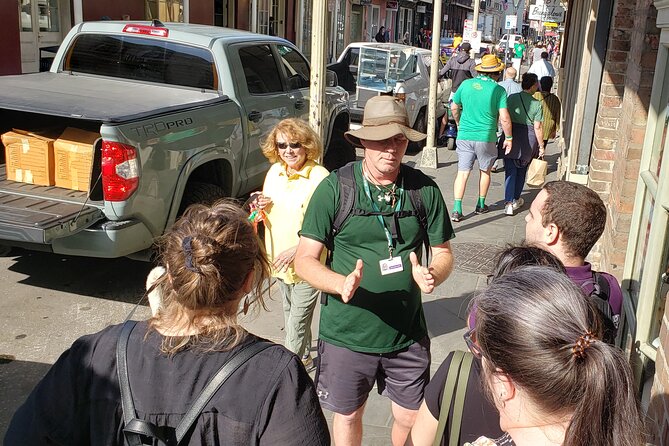
New Orleans has always been shaped by more than music, food, and grand old buildings. Disease shaped it, too. This two-hour walking tour follows epidemics, bad medical ideas, sanitation failures, and public health choices through the French Quarter, turning familiar streets into clues from the city’s past.
I like the way the tour connects medical history with everyday New Orleans details, including railings, street surfaces, and an unusual look at in-ground garbage. I also like the guides’ flexible approach. Mikko, Dalvin, Dane, and Anderson have each led tours, and the best feedback points to sharp humor, clear storytelling, and a willingness to adjust the pace.
The main drawback is that this is a talk-heavy walking tour. One person found the guide difficult to hear, and the French Quarter can be noisy. You’ll need comfortable shoes, water, and enough stamina for about 100 minutes outdoors.
In This Review
- Key points to know before you book
- Why disease is a useful way to read New Orleans
- Starting at 815 Toulouse Street
- The Pharmacy Museum and the history of old remedies
- Jackson Square, where public life meets public health
- Eighty minutes across the French Quarter
- The guides bring different flavors to the same subject
- What the $37 price really buys you
- Who will enjoy this walk most
- Timing, weather, and the end of the route
- Should you book the Pestilence, Pandemic and Plague Tour?
- FAQ
- Where does the tour begin?
- What time does the tour start?
- Where does the tour end?
- How long does the experience last?
- Is admission to the New Orleans Pharmacy Museum included?
- Is the tour offered in English?
- How large can the group be?
- Can I cancel for a refund?
Key points to know before you book
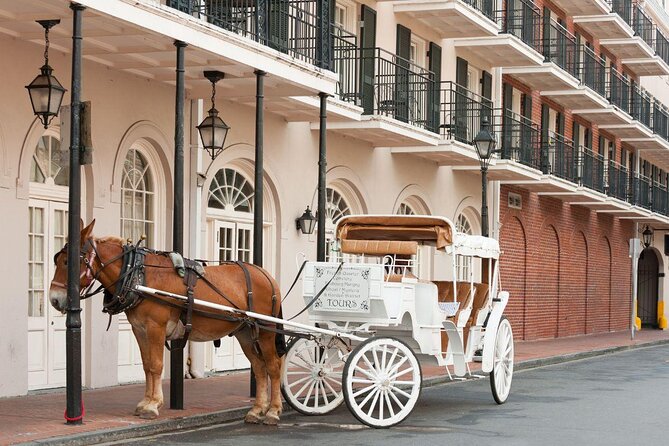
- Disease explains more than medicine: You’ll see how epidemics affected New Orleans culture, streets, buildings, and public behavior.
- The Pharmacy Museum adds a strange medical angle: The tour covers old remedies and the ways doctors approached disease before modern science.
- Jackson Square anchors the story: This central French Quarter site links public space, city history, and disease outbreaks.
- The French Quarter is the main classroom: Most of the two hours are spent walking among stops tied to historic and more recent pandemics.
- The guide makes or breaks the experience: Mikko, Dalvin, Dane, and Anderson have all led it, with humor and strong subject knowledge receiving the most praise.
- The price is reasonable for a focused history walk: At $37 per person, you’re paying for a guide and a specialized subject, not museum admission or a full-day tour.
Why disease is a useful way to read New Orleans
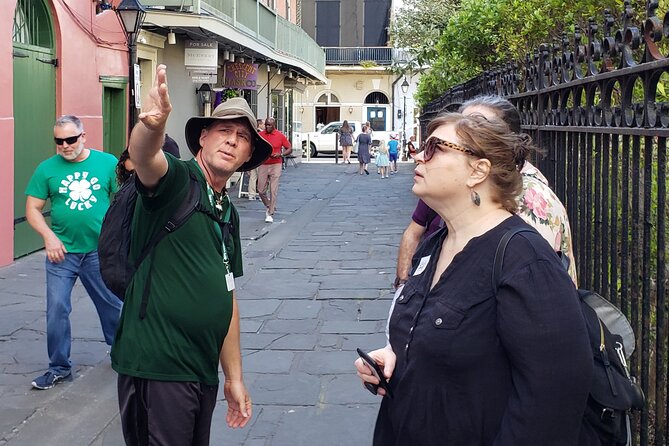
A standard French Quarter walk points out courtyards, iron balconies, old churches, and famous streets. This tour uses a different lens. It asks how people responded when illness spread, what they believed caused it, and how public fear changed the way the city worked.
That approach gives familiar places a second layer. You may look at a railing, a street topping, or a piece of city infrastructure and think less about decoration and more about sanitation and public safety. The unusual subject is the reason to book this tour, but the payoff is a broader understanding of New Orleans.
The tone is not meant to be grim for two hours. The guides mix serious material with humor, local stories, and observations about modern life. One guide, Mikko, is known for pointing out a trash can as part of the tour’s story. That sounds like a small detail, but it captures the experience well: ordinary objects become useful evidence.
The subject also reaches beyond New Orleans. The tour places local outbreaks within the wider history of disease in the United States, moving from colonial-era scourges to nineteenth and twentieth-century events and the modern day. You won’t just hear a list of illnesses. You’ll consider how disease affected decisions, habits, and city culture.
Other New Orleans tours people book alongside this one:
- New Orleans Premier Ghost, Voodoo and Vampire Walking Tour
★ 4.5 · 12,856 reviews - New Orleans Steamboat Natchez Jazz Cruise with Dinner Option
★ 4.0 · 7,533 reviews - Adults-Only New Orleans Ghost, Crime, Voodoo, and Vampire Tour
★ 5.0 · 6,545 reviews
Starting at 815 Toulouse Street
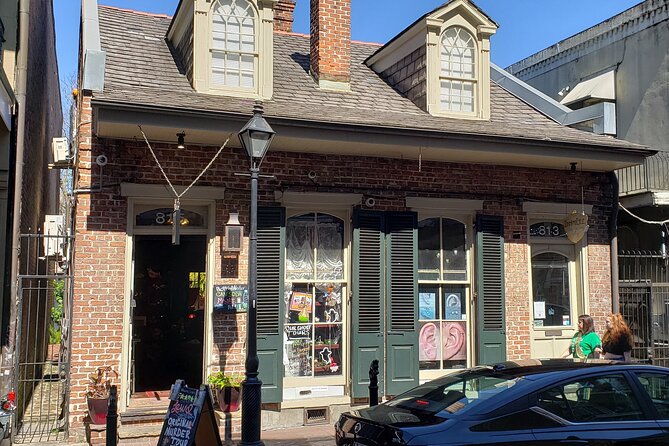
The tour begins at 1:00 p.m. at 815 Toulouse Street, in the French Quarter. Plan to arrive with comfortable shoes and water. The route is outdoors for much of the time, and New Orleans heat and humidity can make a moderate walk feel harder than the distance suggests.
The tour has a maximum group size of 56 people. That is not a tiny private walk, so your experience may depend partly on where you stand near the guide. The one less-positive account specifically raised a hearing problem. If the group is large or the street is loud, stay close to the guide and speak up early if you are missing details.
The meeting point is useful for a first afternoon in the French Quarter because you begin near streets packed with historic buildings and local activity. The guide takes care of directions, so you don’t need to study a map or keep checking your phone. That matters here. The value of a walking tour is not just information, but the freedom to look up and notice what is around you.
The professional guide is the central inclusion. Museum admission is not included, and the tour does not promise a meal, transportation, or other extras. You are paying for interpretation and local navigation.
The Pharmacy Museum and the history of old remedies
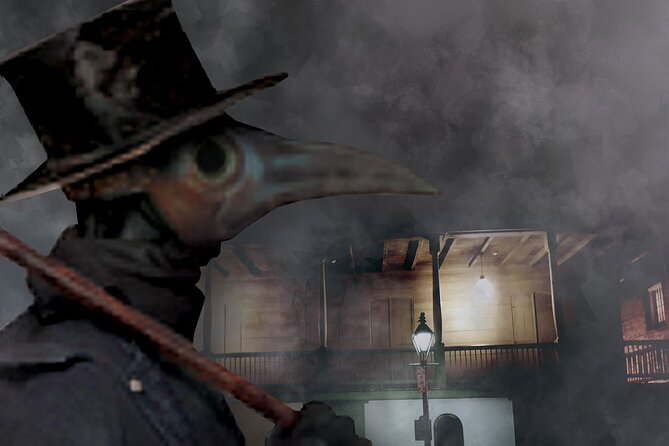
The first planned stop is the New Orleans Pharmacy Museum, with about 20 minutes devoted to the history of medical practice during pandemics. The focus is not simply on a building or collection. It is on the strange, limited, and sometimes misguided ways people tried to treat illness.
This section should appeal to anyone interested in medical history. You’ll hear how ideas about disease changed and how the medical field approached outbreaks before modern methods gave doctors better tools. It is a useful reminder that confident treatment does not always mean effective treatment.
Admission to the museum is not included. The tour still discusses the museum and its subject, but you should not assume that your $37 ticket covers entry. The available information also indicates that the museum may be closed on a given day, so check the day’s conditions if entering the museum matters to you.
That limitation does not erase the value of the stop. The tour’s main purpose is to explain the story as you walk. Still, if you particularly want to see the museum’s exhibits, treat that as a separate plan rather than a guaranteed part of the ticket.
The Pharmacy Museum stop also sets the tone. This is not a conventional ghost walk built around shock. It is a history tour about medical beliefs, public health, and the way people tried to make sense of frightening outbreaks.
Jackson Square, where public life meets public health
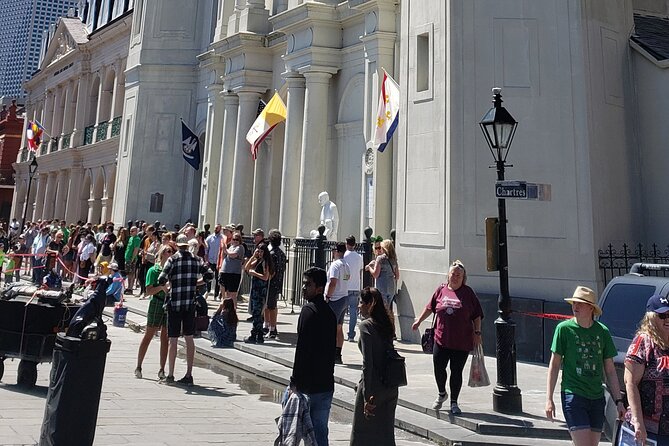
The walk continues to Jackson Square, the center of the French Quarter. You spend about 20 minutes here, using the square and its surrounding history to discuss disease and other health crises.
Jackson Square works well as a teaching point because it is a major public space. It lets the guide move from medical treatment to the way cities manage crowds, movement, fear, and shared facilities. The square is also a natural place to pause, listen, and connect the larger story to the physical center of the neighborhood.
This part may feel less specialized than the Pharmacy Museum. You are not only learning about disease, but also about New Orleans as a working city with public spaces and changing needs. If you have already taken a basic French Quarter tour, this stop gives Jackson Square a new purpose.
The tour does not charge admission for the square. You should expect the usual city sounds and activity around you, though the exact atmosphere will change with the time of day and local events. The guide’s ability to find a workable place to speak matters here.
A completely different side of New Orleans:
- New Orleans Food Walking Tour of the French Quarter with Small-Group Option
★ 5.0 · 6,118 reviews - New Orleans Swamp and Bayou Boat Tour with Transportation
★ 5.0 · 5,399 reviews - New Orleans Steamboat Natchez Jazz Cruise
★ 4.5 · 5,334 reviews - New Orleans City Sightseeing Hop-On Hop-Off Bus Tour
★ 4.5 · 4,943 reviews
Eighty minutes across the French Quarter
The longest part of the experience is the French Quarter walk, lasting about one hour and 20 minutes. This is where the tour earns its keep. Instead of spending most of the time at one museum, you move through several locations connected to historic and recent pandemics and plague.
The guide handles the route, which is helpful in a neighborhood where it is easy to get distracted or lose your sense of direction. You’ll stop at different points, hear the story attached to each, and gradually see how disease has left traces in ordinary parts of the Quarter.
The walk includes a good share of city highlights, but it is not a general sightseeing tour. You should not book it expecting a complete overview of architecture, restaurants, music, or local shopping. Those things may appear around you, and guides can add useful New Orleans context, but the main subject remains disease.
That narrow focus is also its strength. A guide can spend time on details that a broad city tour would skip. The result is more specific and, for people interested in science, history, or public health, more memorable.
You may hear about outbreaks from several periods, including colonial times, the nineteenth and twentieth centuries, and the modern era. The available details do not provide a full list of diseases or every street stop, so I would not book this expecting a fixed script of named sites. The exact route and emphasis can vary with the guide, group, weather, and conditions.
The guides bring different flavors to the same subject
The strongest part of the tour is the guide. Mikko is described as bringing a sharp wit and broad knowledge of New Orleans, with a talent for making odd details stick. His style appears especially suited to people who enjoy medical history and unusual facts.
Dalvin is noted for charisma and for handling intelligent exchanges about the topic. If you like asking questions instead of simply listening, that matters. A guide who can discuss the subject beyond a memorized speech makes a specialized tour more rewarding.
Dane has led the experience in a way that balances information with fun. He has also been praised for genuine interest in how disease shaped the city from early periods through modern times. Anderson is associated with a strong command of New Orleans history and a tour that fits comfortably into a reasonable walking length.
You cannot choose the guide from the information provided, and the experience will not be identical every day. That is worth keeping in mind. At the same time, the range of guide styles is a positive sign. You may get more humor, more medical detail, more city history, or more conversation depending on who leads the walk.
The guide also needs to manage practical matters. During hot weather, stopping in shade, offering water, and allowing rest can make a major difference. One guide provided water at the start, which is a thoughtful touch, but I would still bring your own bottle.
What the $37 price really buys you
At $37 per person, this is priced like a specialized city walking tour rather than a budget stroll. For two hours of guided interpretation, the cost is fair, especially if you are interested in medical history and want a topic you will not get from a standard French Quarter route.
The value comes from the guide’s research, storytelling, and ability to point out things you would otherwise pass without noticing. It also includes the convenience of a planned route through a confusing, busy neighborhood.
The price does not include admission to the Pharmacy Museum. That is the main extra cost to keep in mind. If you want to visit inside, confirm the museum’s opening status and admission arrangements separately.
I would compare this tour with other New Orleans walks based on subject, not just duration. A general French Quarter tour may cover more famous buildings. This one gives you a more unusual explanation of why the city developed as it did. For a first-time visitor who wants only the headline sights, another tour may be a better first choice. For a repeat visitor, history fan, health worker, or science-minded person, $37 is easier to justify.
The experience is also recommended by 96 percent of its booking audience and carries a 4.9 rating from 26 reviews. That is a strong satisfaction signal, though the small review count means you should still pay attention to the practical drawbacks, especially hearing the guide and managing the heat.
Who will enjoy this walk most
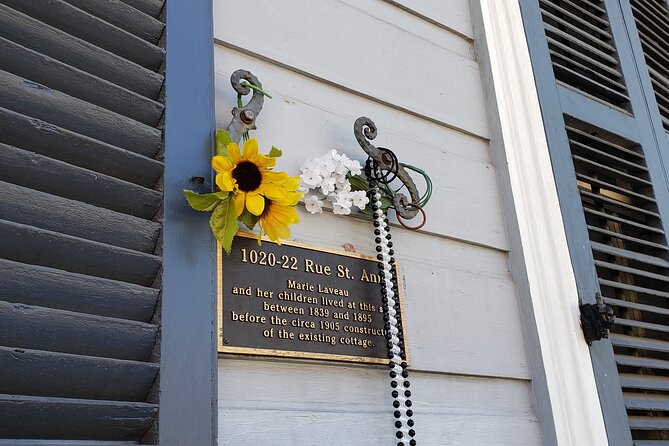
I would recommend it to anyone who likes history with a clear theme. Medical professionals, public health workers, students, science fans, and people who enjoy unusual city stories should get the most from it.
It also works for families with older children who can handle a serious subject without needing a spooky production. The tone is educational rather than gross, and the guides use humor to keep the material moving.
Solo visitors can benefit from the route and the chance to ask questions. Couples and families get a shared way to see the French Quarter that is different from simply moving between restaurants and landmarks.
You should think twice if you dislike walking tours, have difficulty hearing in noisy streets, or want a light sightseeing experience with little discussion of death and disease. The tour is not presented as grim, but the subject is still serious.
A moderate physical fitness level is recommended. Service animals are allowed, and the activity is near public transportation. Those details make it easier to fit into a wider New Orleans day, but you still need to plan for outdoor walking and possible heat.
Timing, weather, and the end of the route
The tour starts at 1:00 p.m., which places much of the walk in the warmest part of the day. Spring may be comfortable, but summer conditions can be hot and humid. Wear breathable layers, carry water, and use comfortable shoes.
The walk ends at Bourbon Street and Dumaine Street. That is a practical finish because you are still in the French Quarter, with plenty of options for continuing your afternoon. You can use the end point to plan dinner, another walk, or a break nearby.
The end point also means you should not expect the tour to return you to Toulouse Street. If you have left belongings at the starting point or arranged transport there, allow time to get back.
Free cancellation is available if you cancel at least 24 hours before the 1:00 p.m. start time. Changes or cancellations inside that window do not qualify for a refund. That policy is fairly standard, but it is worth noting if your New Orleans plans may shift.
Should you book the Pestilence, Pandemic and Plague Tour?
Book it if you want a focused, unusual history walk and enjoy learning how disease shaped New Orleans. The Pharmacy Museum connection, Jackson Square discussion, and long French Quarter route create a useful mix of medical history and local context.
I would especially choose it after taking a general city tour, or for a second day in the French Quarter when you want something less predictable. At $37, it offers good value for a specialized two-hour experience, provided you understand that museum admission is separate.
Skip it if your priority is architecture, food, music, or famous landmarks without a serious historical theme. Also reconsider if you may struggle to hear a guide outdoors or walk in afternoon heat.
For the right audience, this is a memorable way to read New Orleans. You may never look at a railing, street surface, or trash can in quite the same way again.
FAQ
Where does the tour begin?
The tour begins at 815 Toulouse Street, New Orleans, Louisiana 70112.
What time does the tour start?
The scheduled start time is 1:00 p.m.
Where does the tour end?
The tour ends at the corner of Bourbon Street and Dumaine Street in the French Quarter.
How long does the experience last?
The tour lasts approximately two hours.
Is admission to the New Orleans Pharmacy Museum included?
No. Admission to the New Orleans Pharmacy Museum is not included.
Is the tour offered in English?
Yes. The experience is offered in English.
How large can the group be?
The activity allows a maximum of 56 people.
Can I cancel for a refund?
Yes. You can cancel at least 24 hours before the start time for a full refund. Cancellations made less than 24 hours before the tour are not refunded.
Just added around New Orleans
- New Orleans Garden District Tour★ 5.0 · 8 reviews
- New Orleans Seance Experience★ 4.0 · 8 reviews
- Airport and City Transfers in New Orleans★ 5.0 · 8 reviews
- Sin and Tonic Pub Crawl in New Orleans★ 4.5 · 8 reviews
- The New Orleans Darkness Tour★ 4.4 · 9 reviews
- New Orleans Plantation Tour with Transportation★ 5.0 · 9 reviews
- New Orleans Self-Guided Kayak Bayou Swamp Tour★ 5.0 · 9 reviews
- Historic Carrollton Neighborhood Walking Tour★ 5.0 · 9 reviews
Tours, compared.
New Orleans Premier Ghost, Voodoo and Vampire Walking Tour
Read our review →
Adults-Only New Orleans Ghost, Crime, Voodoo, and Vampire Tour
Read our review →
New Orleans Food Walking Tour of the French Quarter with Small-Group Option
Read our review →
New Orleans Swamp and Bayou Boat Tour with Transportation
Read our review →
New Orleans City Sightseeing Hop-On Hop-Off Bus Tour
Read our review →
St. Louis Cemetery No. 1 Official Walking Tour
Read our review →
Swamp Boat Ride and Oak Alley Plantation Tour from New Orleans
Read our review →