
Reviewed · WALKING TOURS
New Orleans Music Walking Tour
New Orleans music begins with a drumbeat in Congo Square, and this two-hour walk follows that beat through opera, jazz, rhythm and blues, and the second line. You’ll finish at Preservation Hall, one of the city’s best-known traditional jazz venues.
I like the compact route and the small maximum of 14 people. I also like the use of recorded music and video clips, which can make names and old sounds easier to grasp. The main caution is reliability: several bookings were spoiled by a guide no-show or late cancellation, so confirm the meeting details before you set out.
In This Review
- Key points to know before you book
- Why Congo Square is the right place to begin
- Louis Armstrong Park links opera and the second line
- Basin Street and the story behind a famous song
- Storyville brings early jazz into the walk
- May Baily’s Place gives you a look inside old Storyville
- Bourbon Street reveals the city’s less expected musical sides
- Preservation Hall is the natural finish
- What the guide can add to the experience
- Is $25 a fair price?
- Timing, walking, and weather
- Who should take this walk?
- Should you book the New Orleans Music Walking Tour?
- FAQ
- How long does the New Orleans Music Walking Tour last?
- What time and where does the tour start?
- Where does the tour end?
- Is admission to a Preservation Hall performance included?
- How many people can join the tour?
- What happens if the weather is poor?
Key points to know before you book
- Congo Square gives the tour its musical foundation: Learn about West African traditions and the bamboula.
- The route connects several music eras: You move from Congo Square and opera to Storyville jazz, R&B, and traditional jazz.
- Guide David has a lively teaching style: He has used an iPad for sound bites and video clips and adjusted the walk to individual musical interests.
- Storyville gets more than a passing mention: You hear recorded music from the old red-light district and enter a replica parlour at May Baily’s Place.
- The $25 price is reasonable for a focused introduction: You get about two hours of guided interpretation, but admission to any Preservation Hall performance is not included.
- Expect an actual city walk: A moderate fitness level is recommended, and weather can cancel the outing.
Why Congo Square is the right place to begin
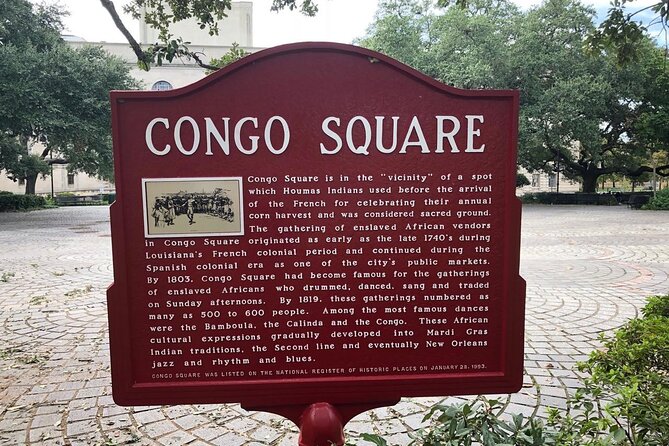
The tour starts at the Rampart Treehouse, at 740 North Rampart Street, with a 2:00 pm departure. From there, the opening stop is Congo Square, where your guide explains the West African religious and musical traditions connected with the bamboula.
This is the most important stop for understanding the rest of the walk. New Orleans music did not appear from one source. African rhythms, European instruments, church traditions, opera, dance music, and later American styles met here over time. The guide uses Congo Square to show you that music in New Orleans is not simply entertainment. It is also memory, community, ritual, and public expression.
You spend about 20 minutes here. Admission is free, and the stop is more about explanation than a formal attraction. I like that approach. A good guide can help you hear the connection between an old rhythmic pattern and later New Orleans music without turning the lesson into a dry history lecture.
If you are mainly looking for a concert, this stop may feel quiet. If you want the roots behind the city’s sound, it gives the walk a firm starting point.
More walking tours in New Orleans:
- New Orleans Premier Ghost, Voodoo and Vampire Walking Tour
★ 4.5 · 12,856 reviews - New Orleans Food Walking Tour of the French Quarter with Small-Group Option
★ 5.0 · 6,118 reviews - St. Louis Cemetery No. 1 Official Walking Tour
★ 4.5 · 3,941 reviews
Louis Armstrong Park links opera and the second line
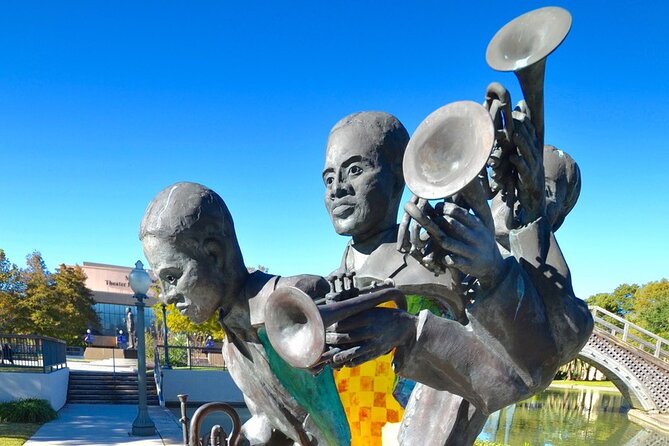
The next 25 minutes take place in Louis Armstrong Park. The subject expands from African musical traditions to several New Orleans styles, including opera and the second line.
The tour presents the park as a place where different strands of the city’s musical life meet. You’ll hear how New Orleans moved between formal European music and the more spontaneous public traditions associated with parades and second lines. The repeated mention of opera is useful, since many visitors think only of jazz when they think about New Orleans music.
This portion should appeal to you if you want a broad picture rather than a narrow jazz tour. The guide is not simply pointing out buildings. He is explaining how music worked in public spaces and how styles could exist side by side.
There is also a practical advantage to spending time here early in the walk. You get context before the route reaches Bourbon Street and the old Storyville area. By then, you have a better sense of why the city’s music cannot be reduced to one genre.
Basin Street and the story behind a famous song
At Basin St. Station, the walk continues for about 15 minutes. The guide discusses musical elements connected with New Orleans and the origins of Basin Street Blues.
This is a short stop, but it helps connect a physical street with a song that carried New Orleans imagery far beyond the city. You’ll get more from this section if you enjoy seeing how place names, local culture, and popular music feed one another.
Do not expect a long museum visit here. The stop is part of a moving conversation, and its value depends on the guide’s ability to make the song and setting feel connected. David, one of the guides praised most strongly for this experience, has been described as energetic, personable, and good at bringing music into the explanation.
The group size matters here. With no more than 14 people, it should be easier to hear the guide than on a large coach tour. That also gives you a better chance to ask a question about a song, style, or musician that interests you.
Storyville brings early jazz into the walk
The Storyville District receives about 15 minutes, with attention to the early days of jazz and the district’s former role as a red-light neighborhood. You’ll hear recorded music from this period rather than relying only on names and dates.
That audio element is one of the strongest features of the experience. Early jazz can seem distant when it is presented as a list of musicians. A recorded sound bite gives you something concrete to listen for. You may find it easier to understand the guide’s points about rhythm, instrumentation, and performance once the music is actually playing.
The guide also explains the complicated setting in which this music developed. Storyville was not simply a music district, and the tour does not treat it as a polished legend. Its connection to nightlife, sex work, and early jazz is part of the story, but the stop is brief.
If you want a full study of Storyville, this walk will not provide it. You get a focused introduction, with the music used to make the period more immediate.
A completely different side of New Orleans:
- New Orleans Steamboat Natchez Jazz Cruise with Dinner Option
★ 4.0 · 7,533 reviews - Adults-Only New Orleans Ghost, Crime, Voodoo, and Vampire Tour
★ 5.0 · 6,545 reviews - New Orleans Swamp and Bayou Boat Tour with Transportation
★ 5.0 · 5,399 reviews - New Orleans Steamboat Natchez Jazz Cruise
★ 4.5 · 5,334 reviews
May Baily’s Place gives you a look inside old Storyville
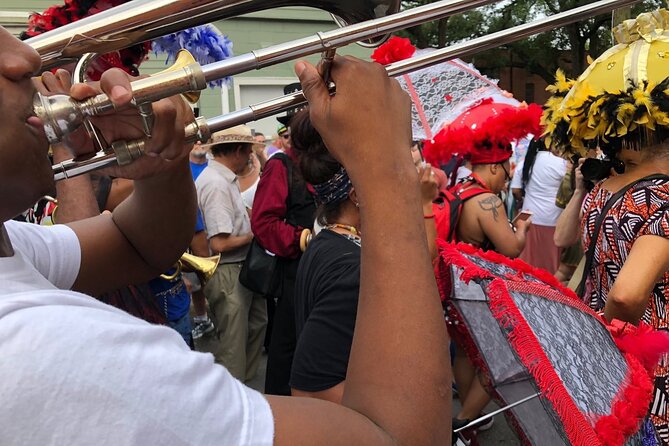
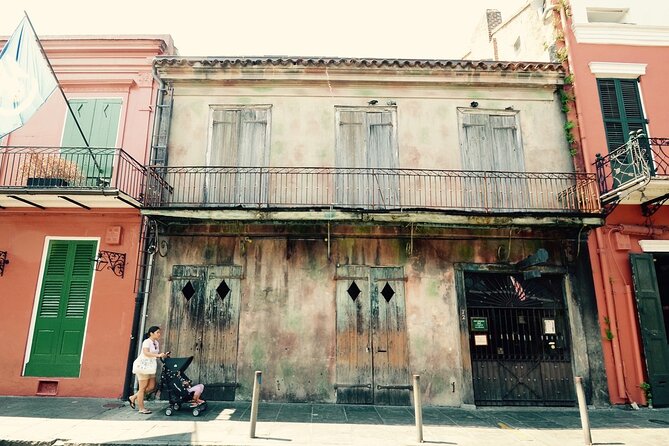
The stop at May Baily’s Place lasts about 15 minutes and includes entry into a replica of a Storyville parlour. This is a welcome change from standing outdoors and imagining what the district once looked like.
A replica cannot replace an original interior, but it gives the discussion a physical setting. You can better picture the kind of room associated with the district and understand that Storyville was made up of working spaces, performers, customers, and businesses, not just a name on a map.
This is also where the tour’s mix of walking and visual context pays off. The guide can explain the setting while you look at it, then reinforce the point with music. That variety helps keep the two-hour route moving.
The stop is short, so treat it as an introduction rather than a full historical exhibit. If you are sensitive to the subject matter connected with a former red-light district, keep in mind that the tour discusses Storyville as part of New Orleans’ cultural past.
Bourbon Street reveals the city’s less expected musical sides
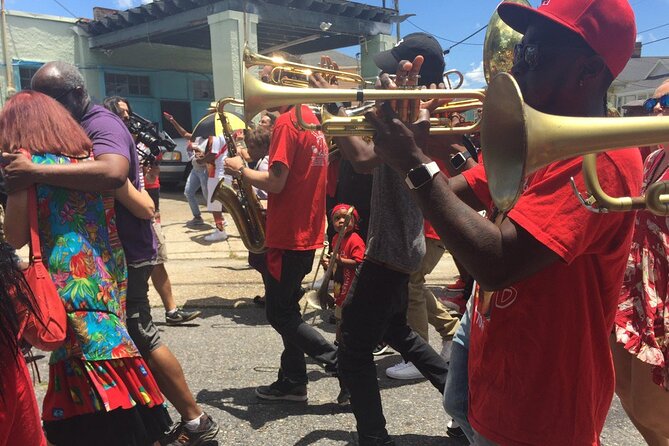
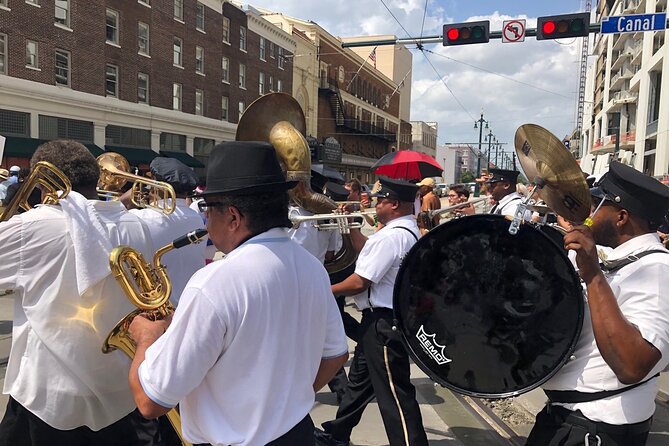
Bourbon Street is the next major setting, with about 15 minutes devoted to French opera and R&B traditions. This may surprise you. Many people associate the street almost entirely with nightlife, drinking, and crowds, but the tour asks you to listen for older and broader musical connections.
The guide places Bourbon Street within New Orleans’ performance culture. You’ll learn about the French Opera tradition and the development of R&B, giving the famous street a more layered identity than its party reputation suggests.
This is one place where conditions can affect the experience. Bourbon Street can be noisy and crowded, and the guide may need to keep the group close and speak clearly. One person described David as staying on track even during a parade, which suggests he can handle interruptions and changing street conditions. Still, you should expect a live city environment, not a quiet classroom.
The stop is free, like the other outdoor portions of the walk. Its real value comes from the explanation and the connections between places and sounds.
Preservation Hall is the natural finish
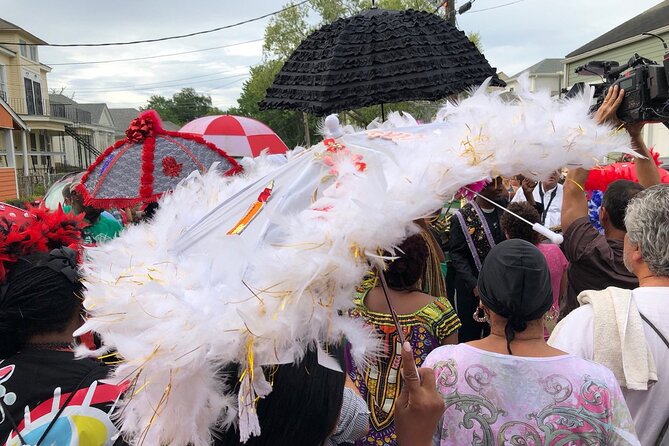
The walk ends at Preservation Hall, at 726 St. Peter Street. The final stop lasts about 15 minutes and brings the discussion to traditional jazz in a venue closely associated with New Orleans music.
This ending makes sense. You have moved from the African traditions of Congo Square through opera, second lines, Basin Street, Storyville, and R&B. Preservation Hall gives the route a present-day point of reference while keeping traditional jazz at the center.
You should note one important cost detail: the tour ends at Preservation Hall, but admission to a performance is not included. The provided information does not promise entry to a concert, so do not assume that the walking tour ticket gets you inside for a show.
Even without a performance, the final stop helps you decide what to do next. If the music discussion has caught your interest, you can consider returning to Preservation Hall separately. Ending here also places you in a central part of the French Quarter, making it practical to continue exploring on your own.
What the guide can add to the experience
The strongest praise has gone to David, who has been described as passionate, entertaining, and full of energy. He has used an iPad to play sound bites and video clips, which is a smart way to make the material easier to remember.
He has also asked about musical interests and adjusted the conversation to the people in front of him. On one especially small departure, the guide even joined a participant at a piano in an art gallery. That kind of flexibility is not guaranteed every day, but it shows the personal style this tour can offer when the group is small.
You should still recognize that a walking tour depends heavily on the individual guide. The supplied feedback includes several serious no-show complaints, including cases where the guide became ill or did not arrive at all. That does not tell you that every departure will fail, but it is enough reason to check your confirmation and contact the operator if the meeting point is unclear.
The provider is NOLA Historic Tours. Confirmation is issued at booking, and the activity is offered in English.
Is $25 a fair price?
At $25 per person, I consider this a fair price for a two-hour introduction to New Orleans music. You are paying for a guide who interprets the city, not for major attraction admission. All listed stops are free except that a Preservation Hall performance is not part of the ticket.
The price works best for you if you are new to New Orleans music and want a framework for the rest of your visit. After this walk, names such as Congo Square, Storyville, Basin Street, and Preservation Hall should have more meaning. You can then listen to live music with a better sense of how the pieces connect.
The value is less clear if you already know the city’s musical story well. In that case, the tour’s worth depends on the guide, the audio clips, and the chance to ask questions. David’s style appears particularly suited to people who enjoy an animated guide rather than a formal lecture.
The maximum group size of 14 is another point in its favor. It is not a private tour, but it is small enough for a more conversational experience than you would get with a large bus group.
Timing, walking, and weather
Plan on roughly two hours, starting at 2:00 pm. The route goes from North Rampart Street to St. Peter Street, with several outdoor stops along the way. You should be comfortable standing and walking for the duration, since a moderate level of physical fitness is recommended.
The tour is near public transportation, which helps if you are coming from outside the French Quarter. The exact walking distance is not provided, so allow time to reach the Rampart Treehouse before the 2:00 pm start rather than arriving at the last moment.
Service animals are allowed. The activity requires good weather, and poor conditions can lead to a different date or a full refund. If the forecast looks uncertain, keep your plans flexible.
Free cancellation is available if you cancel at least 24 hours before the start time. Cancellations or changes within 24 hours are not refundable, so pay attention to the local New Orleans cut-off time.
Who should take this walk?
I would choose this tour for a first visit to New Orleans, especially if you want more than a general French Quarter stroll. It suits you if you enjoy music, urban history, short stops, and a guide who explains why places matter.
It is also a good fit for families with older children or for anyone who learns better by hearing music than by reading dates. The sound clips and video snippets can make the subject more accessible, though the tour is still a serious walk through adult historical subjects such as Storyville.
You may want a different experience if your main goal is a live concert, a long set of performances, or a detailed study of one musician. This is an interpretive walk. It gives you context and recorded examples, but it does not include a performance ticket.
Should you book the New Orleans Music Walking Tour?
Book it if you want a compact introduction to how New Orleans helped shape American music. The route is well chosen, the price is moderate, and the progression from Congo Square to Preservation Hall gives the city’s musical story a clear shape.
I especially like the combination of West African traditions, opera, second lines, Storyville, R&B, and traditional jazz. Ask for David if guide assignments allow, since his use of recordings, videos, questions, and personal musical connections can make the walk much more engaging.
My reservation is the record of missed departures. Confirm the time and meeting point, and avoid scheduling an important paid event immediately afterward. With that caution, this is a useful first-day activity for putting New Orleans music into focus.
FAQ
How long does the New Orleans Music Walking Tour last?
The tour lasts approximately two hours.
What time and where does the tour start?
It starts at 2:00 pm at the Rampart Treehouse, 740 N Rampart Street, New Orleans.
Where does the tour end?
The tour ends at Preservation Hall, 726 St. Peter Street, New Orleans.
Is admission to a Preservation Hall performance included?
No. The walking tour ends at Preservation Hall, but admission to a performance is not included.
How many people can join the tour?
The group can have a maximum of 14 travelers.
What happens if the weather is poor?
The experience requires good weather. If it is canceled because of poor weather, you will be offered another date or a full refund.
Just added around New Orleans
- New Orleans Seance Experience★ 4.0 · 8 reviews
- New Orleans Garden District Tour★ 5.0 · 8 reviews
- Airport and City Transfers in New Orleans★ 5.0 · 8 reviews
- Sin and Tonic Pub Crawl in New Orleans★ 4.5 · 8 reviews
- The New Orleans Darkness Tour★ 4.4 · 9 reviews
- New Orleans Plantation Tour with Transportation★ 5.0 · 9 reviews
- New Orleans Self-Guided Kayak Bayou Swamp Tour★ 5.0 · 9 reviews
- Historic Carrollton Neighborhood Walking Tour★ 5.0 · 9 reviews
Walking Tours, compared.
New Orleans Premier Ghost, Voodoo and Vampire Walking Tour
Read our review →
New Orleans Food Walking Tour of the French Quarter with Small-Group Option
Read our review →
St. Louis Cemetery No. 1 Official Walking Tour
Read our review →
New Orleans French Quarter, Voodoo and Culture Walking Tour
Read our review →
New Orleans Garden District History Walking Tour
Read our review →
French Quarter Historical Sights and Stories Walking Tour
Read our review →
Ghost and Vampire Walking Tour Of The French Quarter
Read our review →
New Orleans Adults-Only True Crime and Ghost Walking Tour
Read our review →Browse the lists this tour appears in