Reviewed · TOURS
New Orleans Music Tour
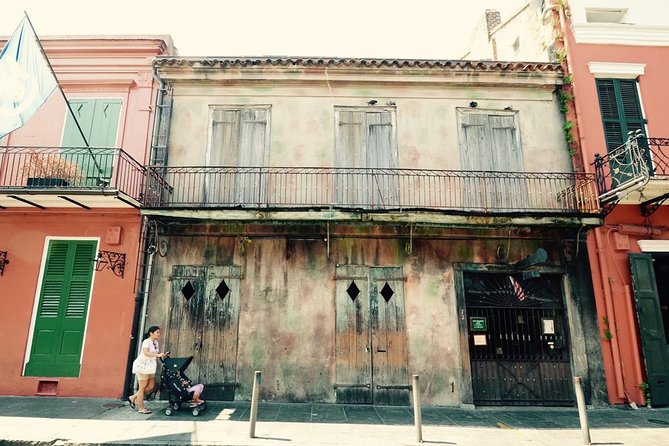
New Orleans music did not begin in a concert hall. It grew from Congo Square, where enslaved Africans gathered, kept West African rhythms alive, and created a foundation for jazz, rock, and much of modern popular music. This two-hour walk follows that thread through Armstrong Park, Basin Street, Storyville, and the French Quarter.
I like two things here: the direct link between slavery and music, and the way the tour connects jazz to later New Orleans sounds such as rock and bounce. Guides including David Higgins bring strong musical knowledge and, in some cases, a musician’s own family background. The main caution is that the experience can depend heavily on the guide and the day. Some departures cover the planned route in detail, while others have spent too long in Armstrong Park or skipped listed stops.
In This Review
- Key points at a glance
- Why Congo Square matters more than another jazz stop
- J&M Studios and the sound that changed American music
- Basin Street and the music of Storyville
- The Tango Belt, May Bailey’s, and a lost opera house
- Preservation Hall and the music still being made
- The guides bring different strengths
- What the two hours feel like on foot
- Is $25 a fair price?
- Who will get the most from this walk?
- Should you book the New Orleans Music Tour?
- FAQ
- How much does the New Orleans Music Tour cost?
- How long does the tour last?
- What time does the tour begin?
- Where does the tour meet?
- Where does the tour end?
- Does the tour include a Preservation Hall concert?
- What should I bring?
- How many people can join the tour?
Key points at a glance
- Congo Square sets the story: Learn how West African musical and religious traditions survived under slavery and shaped New Orleans music.
- J&M Studios links jazz to rock: See the former site tied to Fats Domino, Professor Longhair, Allen Toussaint, Little Richard, Ray Charles, and others.
- Storyville adds a darker chapter: Walk Basin Street and hear how musicians worked in the old red-light district.
- Guides make or break the afternoon: David Higgins is especially praised for lively storytelling, music clips, and wide knowledge of local culture.
- The route ends near Preservation Hall: You finish at 726 St. Peter Street, near the line for the 5 PM show.
- Bring walking gear: Comfortable shoes, water, sunscreen, a hat, and protection from rain or sun will serve you well.
Why Congo Square matters more than another jazz stop
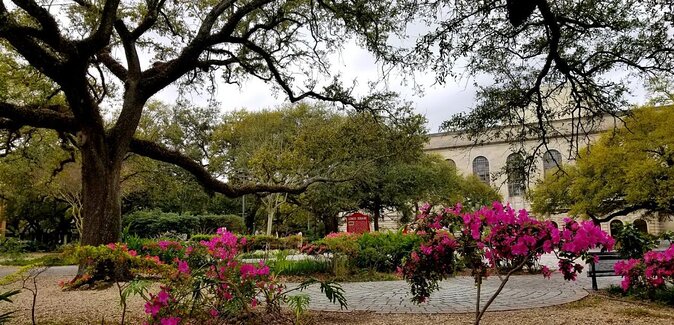
The best part of this tour is its starting point. Louis Armstrong Park is not simply a pleasant green space with statues of musicians. It is the setting for a difficult and important story about forced migration, cultural survival, and artistic change.
At Congo Square, you learn about gatherings of enslaved Africans and the continuation of West African religious and musical practices. The tour presents this place as the source of New Orleans music, and therefore as a major source for American popular music. That idea gives the rest of the walk a clear shape. You are not just collecting famous names. You are tracing rhythms, customs, and social conditions across time.
This portion can take about 30 minutes, and it deserves your attention. The history is serious. A good guide explains it without turning the stop into a dry lecture, linking the past to the sound you hear in New Orleans today. The park also hosted the first New Orleans Jazz and Heritage Festival in 1970, another useful link between the city’s older traditions and its modern music culture.
The park contains sculptures and memorials connected with local musicians. Those sights help you place names and faces, though the experience is mostly interpretive rather than a formal museum visit. You will want to listen closely, especially if your guide uses a phone or tablet to play musical examples.
Other New Orleans tours people book alongside this one:
- New Orleans Premier Ghost, Voodoo and Vampire Walking Tour
★ 4.5 · 12,856 reviews - New Orleans Steamboat Natchez Jazz Cruise with Dinner Option
★ 4.0 · 7,533 reviews - Adults-Only New Orleans Ghost, Crime, Voodoo, and Vampire Tour
★ 5.0 · 6,545 reviews
J&M Studios and the sound that changed American music
From Armstrong Park, the walk takes you toward the former site of Cosimo Matassa’s J&M Studios. The original building is now associated with another business, and you should not expect a preserved recording studio open for a guided interior visit. The value is in understanding what happened there.
J&M helped create what is often called the New Orleans Sound. The list of musicians tied to the studio is impressive: Professor Longhair, Dave Bartholomew, Fats Domino, Guitar Slim, Shirley and Lee, Lloyd Price, Ernie K-Doe, Allen Toussaint, and Clarence Frogman Henry. Visitors from outside New Orleans also recorded there, including Little Richard, Ray Charles, and Jerry Lee Lewis.
This is where the tour makes its strongest case for New Orleans as a birthplace of rock and roll. You hear how local rhythm and blues moved beyond the city, carried by performers and records that reached a national audience. For music fans, the stop is worth far more than the modest $25 price alone because it gives a physical address to a sound that can otherwise feel abstract.
There is a practical wrinkle. Since the building is not presented as a traditional attraction, this stop works best if your guide explains the people, sessions, and musical connections vividly. If the talk wanders, you may feel you are looking at an ordinary storefront. A guide who brings recordings and images can make the location come alive.
Basin Street and the music of Storyville
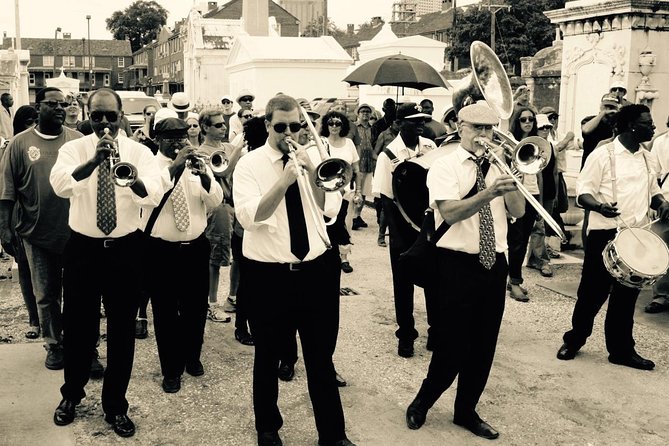
Basin Street Station leads into one of the city’s most complicated music stories. You walk along Basin Street and learn about Storyville, New Orleans’ former red-light district. Its parlors and saloons hired musicians, giving early jazz players regular places to work and an audience ready to hear something new.
The district was not a romantic playground. It was shaped by poverty, exploitation, segregation, and vice. Still, it became an important setting for musicians such as King Oliver, Buddy Bolden, Jelly Roll Morton, and Sidney Bechet. The tour uses this area to show how music often grows in places where different communities, classes, and cultures meet under unequal conditions.
You also hear about Frank Early’s My Place Saloon, connected with the song Pretty Baby. Much of Storyville has disappeared, so this section relies on street geography and storytelling rather than grand surviving buildings. That can be frustrating if you expect a row of preserved jazz clubs. It is useful, though, if you want to understand how a vanished neighborhood shaped the careers of early musicians.
The Basin Street portion takes about 20 minutes. That is enough time for an overview, but not enough for every musician, venue, and social issue. If you have a particular interest in early jazz, ask questions. Guides such as David Higgins have been praised for welcoming questions and moving beyond a fixed script.
The Tango Belt, May Bailey’s, and a lost opera house
The route continues through the area once known as the Tango Belt, then to May Bailey’s Place and the former site of the Old French Opera House. This section shifts the focus from the roots of jazz to the entertainment districts that helped make New Orleans a magnet for performers.
May Bailey’s name is tied to Storyville’s old nightlife. The Old French Opera House represents another side of the city’s cultural life, one that sat close to the French Quarter’s theaters, hotels, saloons, and music rooms. The stop helps you see that New Orleans music did not develop in isolation. It shared streets and audiences with opera, dance, theater, cabaret, and popular song.
As with J&M Studios and Storyville, the physical remains are limited. You are not touring a fully restored venue. You are walking through a present-day neighborhood while your guide reconstructs what stood there. I find that approach rewarding when the guide gives you a clear sense of place, but it may disappoint you if you want interiors or live performances at every stop.
A completely different side of New Orleans:
- New Orleans Food Walking Tour of the French Quarter with Small-Group Option
★ 5.0 · 6,118 reviews - New Orleans Swamp and Bayou Boat Tour with Transportation
★ 5.0 · 5,399 reviews - New Orleans Steamboat Natchez Jazz Cruise
★ 4.5 · 5,334 reviews - New Orleans City Sightseeing Hop-On Hop-Off Bus Tour
★ 4.5 · 4,943 reviews
Preservation Hall and the music still being made
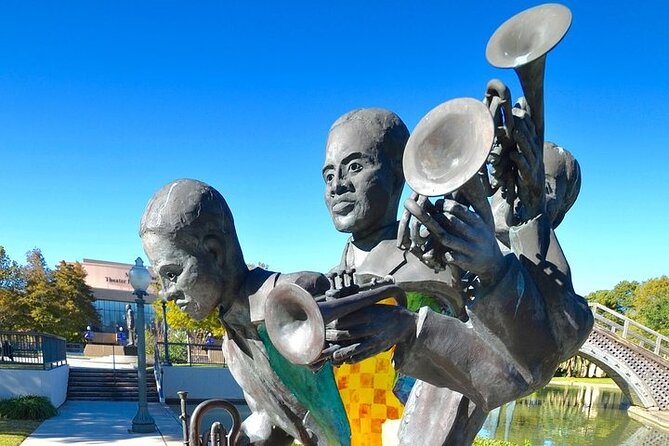
The walk finishes at Preservation Hall on St. Peter Street, one of New Orleans’ best-known homes for traditional jazz. The tour treats the hall as a link between the city’s past, its current performers, and its future musicians.
The experience does not include a concert ticket. You finish outside at 726 St. Peter Street, where people may already be lining up for the 5 PM show. That timing is handy. You can end the tour and decide on your next step without crossing the city. If you want to attend the performance, check the separate ticket arrangements before you arrive.
The final section also introduces New Orleans bounce music and points you toward current street performers. This matters because the tour is not only a history lesson about Armstrong, Fats Domino, or Jelly Roll Morton. It asks you to listen for the city’s music in the present.
Street music is not guaranteed on a schedule, so treat this as a possible bonus rather than the central reason to book. If a musician is playing nearby, you may get a memorable live moment. If not, the guide’s explanation of current styles still gives you a useful frame for exploring on your own later.
The guides bring different strengths
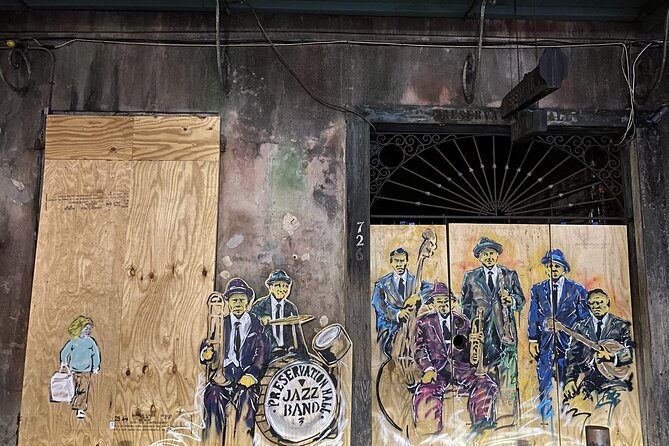
The strongest feedback centers on the guides, especially David Higgins. He is described as lively, warm, and deeply informed about the city’s music and wider cultural story. He sometimes uses a tablet for photographs and recordings, and he welcomes questions rather than rushing people through a preset speech.
David’s background as a musician, and his connection to a musical family, add a personal layer to the tour. One especially appealing detail is that he has played a little jazz during a walk, giving the group more than spoken explanation. That sort of moment cannot be promised, but it shows why a guide with musical experience can change the feel of the afternoon.
Eva, Margie, and Rob have also led positive departures. Eva is noted for warmth and for connecting music with the people and events that shaped the city. Margie is praised for clear teaching, while Rob brings musical examples into the walk. Anna received mixed feedback, with the main concern being time spent in Armstrong Park and limited coverage of the wider route.
That variation is important. You are buying a small-group walking experience, not a recorded audio tour with identical delivery every time. The maximum group size is 20, though some departures have been much smaller. A tiny group can lead to a more flexible conversation and more attention from the guide. A larger group may feel less personal, especially when listening to music from a phone or tablet outdoors.
What the two hours feel like on foot
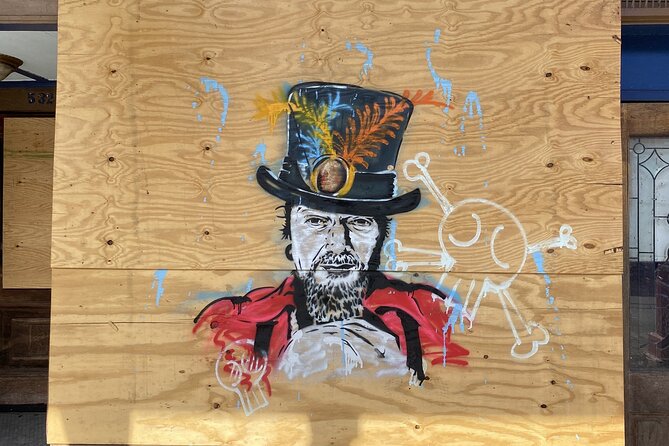
The tour starts at 2 PM at the Rampart Treehouse, 740 N Rampart Street, and ends at Preservation Hall. The route stays in central New Orleans and is close to public transportation. Most people can take part, but you should expect a steady walk through city streets and open areas.
Wear shoes you can walk in for two hours. Bring water, sunscreen, a hat, and protection from rain or strong sun. New Orleans weather can shift quickly, and the experience requires good weather. If poor weather cancels the tour, you are offered another date or a full refund.
The timing gives you a useful afternoon introduction before evening music. Ending near Preservation Hall also puts you close to the French Quarter, so you can continue with dinner, another club, or a self-guided walk toward Frenchmen Street. The tour itself does not promise admission to a venue, a cemetery, or a concert, so make separate plans for those activities.
Service animals are allowed. Confirmation arrives when you book, and free cancellation is available up to 24 hours before the start time. Within 24 hours, changes and refunds are not accepted.
Is $25 a fair price?
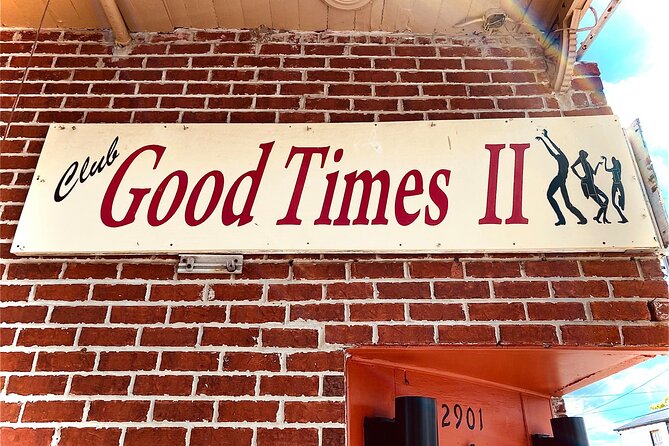
At $25 per person, this is inexpensive for a two-hour guided walk in a city with such a large musical story. The fee covers the guide and visits to music-related landmarks, not food, drinks, transportation, or a show. You are paying for interpretation and access to a structure that can help you make sense of the city.
The value is highest for first-time visitors who want a strong musical framework before spending an evening in clubs. After the walk, names such as Armstrong, Domino, Toussaint, Bolden, and Morton have places attached to them. You also gain context for the city’s African roots, its history of slavery, and the social settings where musicians found work.
The value drops if you expect every stop to be a functioning music venue. Several key places are former sites, exterior views, or ordinary buildings with an extraordinary past. The tour also covers a lot in two hours. One departure may feel full and focused, while another may spend too much time on one topic.
I would book it for the guide-led context, not for guaranteed performances. If your main goal is live jazz, put the $25 toward a concert instead, or pair this walk with a Preservation Hall show after the tour.
Who will get the most from this walk?
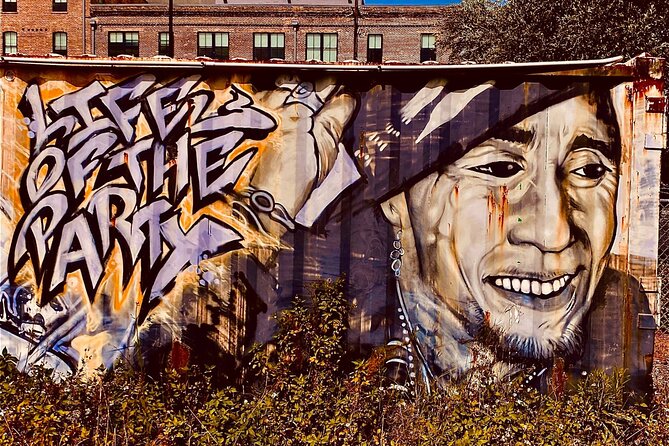
You should consider this tour if you enjoy music history, local stories, and walking through places that are more meaningful after someone explains them. It suits couples, families with older children, and friends who want something more substantial than a general French Quarter stroll.
It is especially useful for people who know the famous names but do not know how the pieces connect. You will learn about African traditions, slavery, early jazz, rhythm and blues, rock and roll, traditional jazz, and bounce in one compact outing.
You may want another option if you dislike outdoor listening, need a fully accessible indoor attraction, or want a tightly timed route with guaranteed entry to every advertised stop. The guide’s style matters here. Ask questions early and tell the guide what kind of music interests you most. That can help shape a small-group departure.
Should you book the New Orleans Music Tour?
Book it if you want the story behind the sound. The price is fair, the route covers important musical ground, and the best guides, especially David Higgins, make the past feel connected to the music you hear today. Congo Square, J&M Studios, Storyville, and Preservation Hall form a strong backbone for a first visit.
Go in with realistic expectations. This is a walking lecture with musical examples and occasional street sounds, not a concert crawl. Because the experience can vary by guide, confirm the route at the start and ask how much time will be spent at each stop. If the afternoon is focused, you will leave with a better ear for New Orleans and a clear plan for your evening music.
FAQ
How much does the New Orleans Music Tour cost?
The tour costs $25 per person.
How long does the tour last?
The experience lasts approximately two hours.
What time does the tour begin?
The tour starts at 2 PM.
Where does the tour meet?
The meeting point is the Rampart Treehouse at 740 N Rampart Street, New Orleans, Louisiana 70116.
Where does the tour end?
The tour ends at Preservation Hall, 726 St. Peter Street, New Orleans, Louisiana 70116.
Does the tour include a Preservation Hall concert?
No. The tour ends at Preservation Hall, but a concert ticket is not included.
What should I bring?
Bring comfortable shoes, water, sunscreen, a hat, and protection from rain or sun.
How many people can join the tour?
The tour has a maximum group size of 20 people.
Just added around New Orleans
- New Orleans Garden District Tour★ 5.0 · 8 reviews
- New Orleans Seance Experience★ 4.0 · 8 reviews
- Airport and City Transfers in New Orleans★ 5.0 · 8 reviews
- Sin and Tonic Pub Crawl in New Orleans★ 4.5 · 8 reviews
- The New Orleans Darkness Tour★ 4.4 · 9 reviews
- New Orleans Plantation Tour with Transportation★ 5.0 · 9 reviews
- New Orleans Self-Guided Kayak Bayou Swamp Tour★ 5.0 · 9 reviews
- Historic Carrollton Neighborhood Walking Tour★ 5.0 · 9 reviews
Tours, compared.
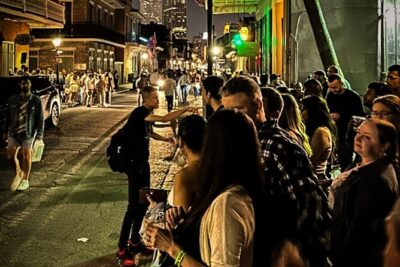
New Orleans Premier Ghost, Voodoo and Vampire Walking Tour
Read our review →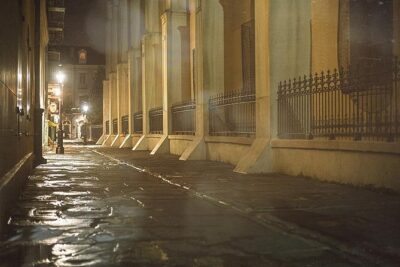
Adults-Only New Orleans Ghost, Crime, Voodoo, and Vampire Tour
Read our review →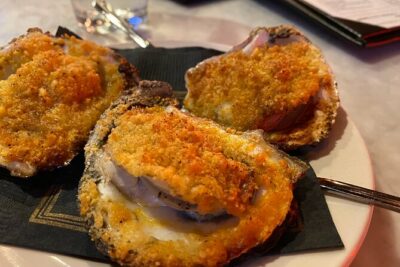
New Orleans Food Walking Tour of the French Quarter with Small-Group Option
Read our review →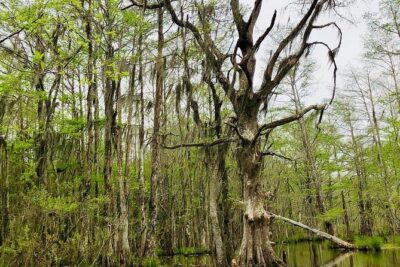
New Orleans Swamp and Bayou Boat Tour with Transportation
Read our review →
New Orleans City Sightseeing Hop-On Hop-Off Bus Tour
Read our review →
St. Louis Cemetery No. 1 Official Walking Tour
Read our review →
Swamp Boat Ride and Oak Alley Plantation Tour from New Orleans
Read our review →