
Reviewed · CEMETERY TOURS
New Orleans: Millionaire’s Tombs of Metairie Cemetery Tour
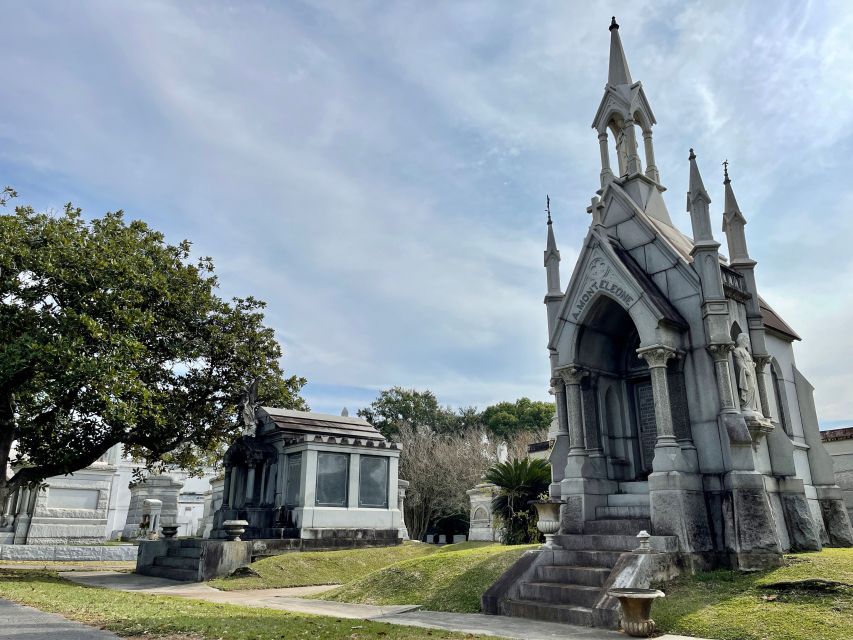
Metairie Cemetery is where New Orleans history gets carved in stone. Under nearly 1,000 shade trees, you’ll meet mayors, governors, Carnival kings, mob bosses, law officers, journalists, and characters whose lives were every bit as unusual as their tombs. The highlight is Millionaire’s Row, a parade of grand mausoleums that turn a cemetery walk into a lesson in money, power, faith, and local style.
I like two things right away: Sally Asher’s storytelling and the close look at symbols most people would walk past. She is a local author, lecturer, and historian who explains not only who is buried here, but why a family chose a certain design, statue, window, or inscription. I also like that the route includes famous names such as Anne Rice and Popeyes founder Al Copeland alongside less familiar New Orleans figures.
The main consideration is the walking. This is about 2 miles over two hours, and the tour runs rain or shine. Bring water, sunscreen, comfortable shoes, and an umbrella or other sun protection. The cemetery has shade, but New Orleans weather can still make a long outdoor walk tiring.
In This Review
- Key points to know before you book
- Why Metairie Cemetery makes such a good walking tour
- Meeting Sally at the Law Enforcement Memorial
- Millionaire’s Row and the price of stone
- The sphinx-guarded pyramid
- Anne Rice, Al Copeland, and New Orleans fame
- Stained glass, limestone, and family stories
- What the tour teaches about New Orleans burials
- Pace, weather, and walking comfort
- Is $35 a fair price?
- Who will enjoy this cemetery walk most?
- Practical advice for a better visit
- Should you book the Millionaire’s Tombs tour?
- FAQ
- How long is the Metairie Cemetery tour?
- Where do I meet the guide?
- Who guides the tour?
- What famous graves and tombs are included?
- Is the tour wheelchair accessible?
- What should I bring?
- Can I cancel or pay later?
Key points to know before you book
- Anne Rice’s tomb: Visit the burial place of the New Orleans novelist known for her vampire fiction.
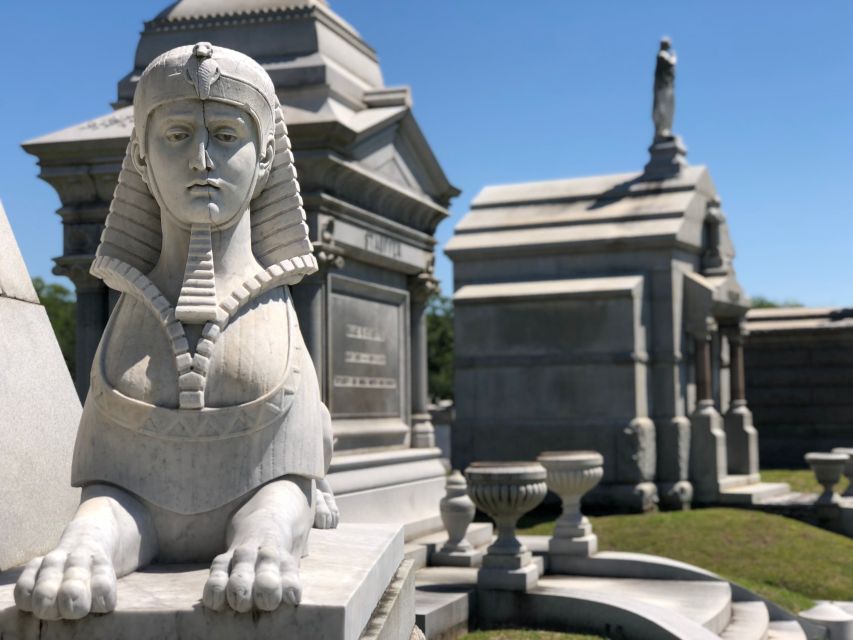
- A sphinx-guarded pyramid: See one of Metairie Cemetery’s strangest monuments and learn about its symbolism.
- Millionaire’s Row: Examine expensive family tombs, ornate architecture, and details that are easy to miss alone.
- Sally Asher as guide: Expect a personal, story-led tour from a local writer who has studied the cemetery and its people for years.
- About 2 miles on foot: Plan for a steady but relaxed walk through the cemetery’s tree-lined grounds.
- Useful local advice: The tour includes tips about New Orleans food, music, and culture.
Why Metairie Cemetery makes such a good walking tour
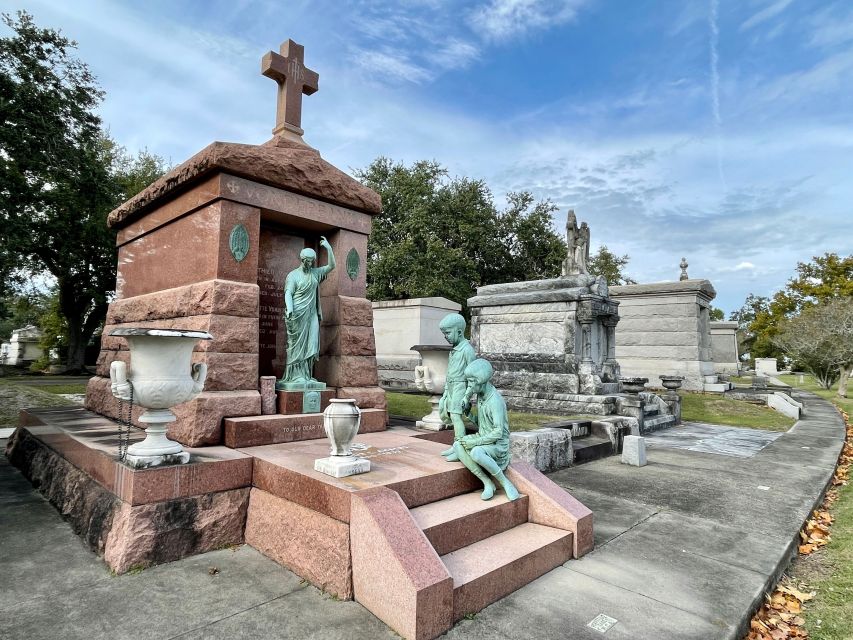
Many cemeteries are quiet collections of names. Metairie Cemetery feels more like a condensed biography of New Orleans. Its residents include people who shaped city government, business, journalism, law enforcement, Carnival, organized crime, and popular culture.
The setting helps. Nearly 1,000 trees shade the lanes, giving the cemetery a calm, park-like feel even as the tombs tell stories of ambition and rivalry. The combination of old trees, stone monuments, ironwork, statues, and stained glass gives you plenty to study while Sally explains what you are seeing.
Metairie Cemetery was established in 1872 and is listed on the National Register of Historic Places. That designation matters here because the cemetery is not simply a place to spot famous graves. Its architecture, burial customs, memorial art, and connections to New Orleans life all form part of its value.
I would not book this as a quick stop between major French Quarter sights. You need two hours and a willingness to walk slowly. But if you enjoy architecture, local history, unusual biographies, or New Orleans customs, the time is well spent.
More cemetery walks in New Orleans:
- St. Louis Cemetery No. 1 Official Walking Tour
★ 4.5 · 3,941 reviews - Cemetery and Ghost BYOB Bus Tour in New Orleans
★ 4.5 · 2,685 reviews - New Orleans City Tour: French Quarter, Garden District & Cemetery
★ 4.5 · 2,209 reviews
Meeting Sally at the Law Enforcement Memorial
The meeting point is the Law Enforcement Memorial, to the right of the funeral home. If you drive, you can use the parking lot, then take a right at the stop sign and enter through any of the gates to reach the memorial.
This arrangement is practical, but give yourself enough time to find the memorial rather than arriving at the last minute. You will meet Sally there and begin the walking tour inside the cemetery.
Sally’s background shapes the whole outing. She is not simply reading names from a prepared list. Her approach connects architecture with the people who commissioned it and the customs that shaped New Orleans burials. She also welcomes questions and adjusts the talk to the interests of the group.
That flexibility is useful in a cemetery. One group may care most about funeral traditions, another about architecture, and another about famous residents or local crime stories. Sally’s talks have been described as relaxed, funny, personal, and full of details gathered from families, friends, historians, and local sources.
Millionaire’s Row and the price of stone
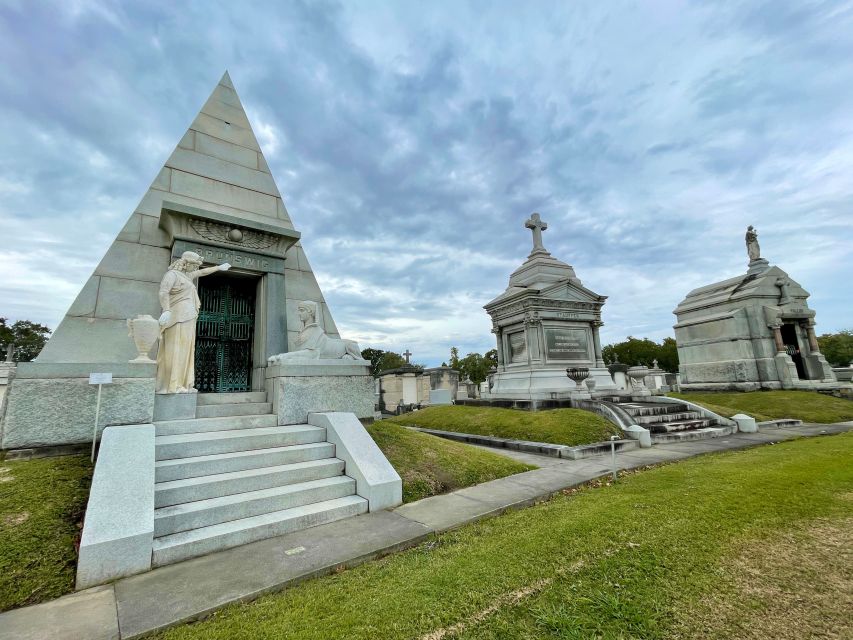
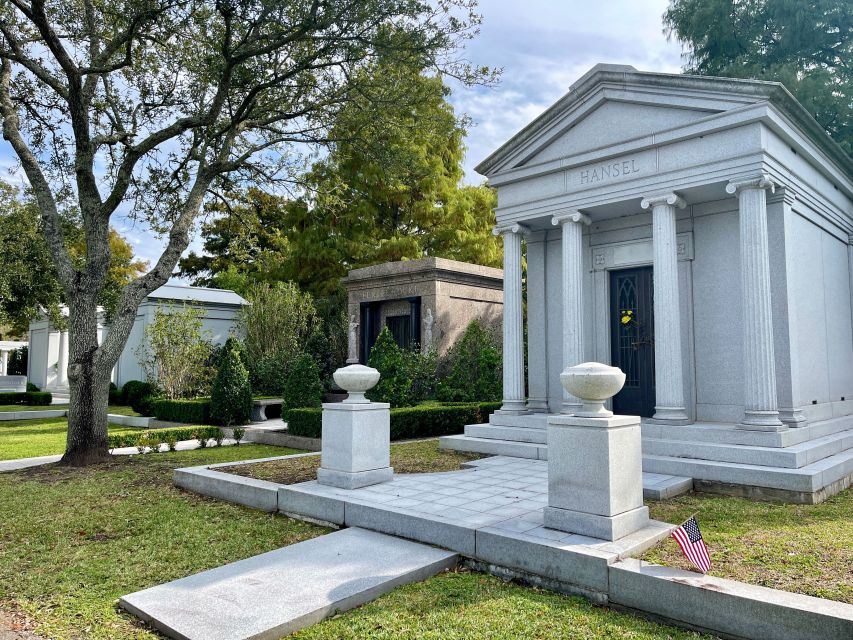
The tour moves into the cemetery’s most extravagant section, commonly called Millionaire’s Row. Here, the tombs reflect the wealth and social standing of the families who built them.
The point is not simply that these monuments cost a lot. Sally explains how their shapes and decoration communicate status, religious belief, family identity, and ideas about death. You may notice statues, columns, carved details, iron gates, and other design choices that seem decorative at first but carry a specific meaning.
This is where a guide earns the $35 price. You can walk through the cemetery alone without paying an admission fee beyond the tour cost, but you may not know which tombs deserve a closer look or what their symbols mean. Sally helps you slow down at the right places.
The word millionaire in the tour title is not just a sales hook. The cemetery contains multi-million-dollar tombs and mausoleums, and their cost reflects the money and influence held by some of New Orleans’ leading families. At the same time, the tour does not treat wealth as the only story. The human details, personal tragedies, ambitions, and odd habits make the monuments more memorable.
The sphinx-guarded pyramid
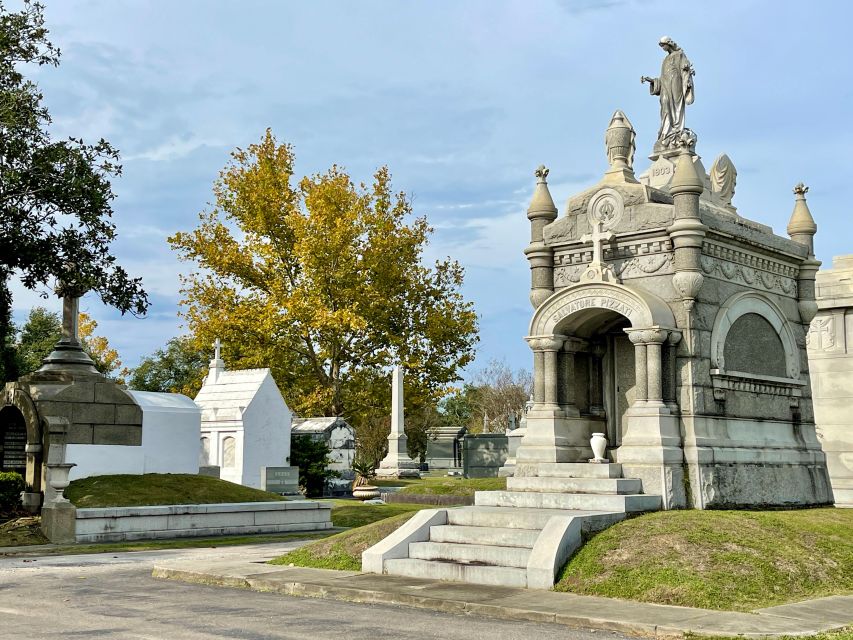
One of the tour’s most striking stops is a pyramid guarded by a sphinx. It is the kind of monument you might photograph quickly and then leave, but its symbolism gives it more weight.
Sally discusses the history and meaning behind the design, helping you consider why a New Orleans family would choose an Egyptian-inspired form for a tomb. The sphinx adds another layer, suggesting protection, mystery, and the long association between pyramids and death.
The pyramid is also a good example of why this tour works better than a simple list of famous graves. You are not only collecting sights. You are learning to read the cemetery’s visual language.
Bring a phone or camera if you like taking pictures, but remember that this is an active cemetery, not a theme park. Keep your voice low around other mourners and treat the tombs as memorials first and architectural subjects second.
A completely different side of New Orleans:
- New Orleans Premier Ghost, Voodoo and Vampire Walking Tour
★ 4.5 · 12,856 reviews - New Orleans Steamboat Natchez Jazz Cruise with Dinner Option
★ 4.0 · 7,533 reviews - Adults-Only New Orleans Ghost, Crime, Voodoo, and Vampire Tour
★ 5.0 · 6,545 reviews - New Orleans Food Walking Tour of the French Quarter with Small-Group Option
★ 5.0 · 6,118 reviews
Anne Rice, Al Copeland, and New Orleans fame
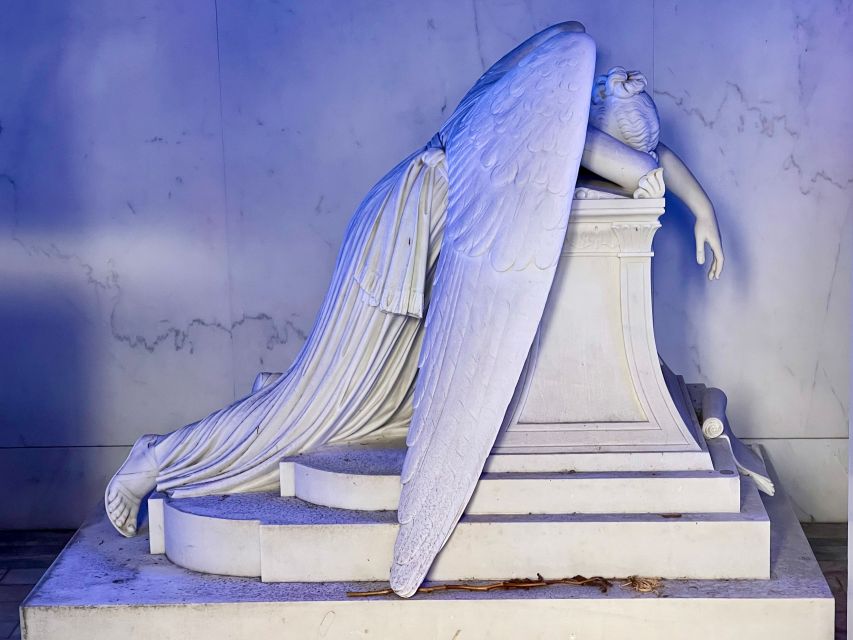
The route includes Anne Rice’s tomb, an important stop for anyone interested in New Orleans literature or gothic fiction. Rice’s vampire novels helped shape how many readers imagine the city, and seeing her burial place connects her work with the city that influenced it.
You will also stop at the tomb of Al Copeland, founder of Popeyes. His monument offers a different kind of New Orleans story, one tied to restaurants, business, and popular culture rather than literature.
These stops give the tour a broad reach. You are not hearing only about politicians or wealthy families from the nineteenth century. The cemetery’s story continues into modern New Orleans, with public figures from food, books, law, entertainment, and city life.
Sally also tells stories about people connected to the cemetery’s less polished side, including a brothel madam and mob figures. That mix is important. New Orleans history is rarely tidy, and the cemetery reflects the city’s combination of ceremony, commerce, crime, performance, and personal drama.
Stained glass, limestone, and family stories
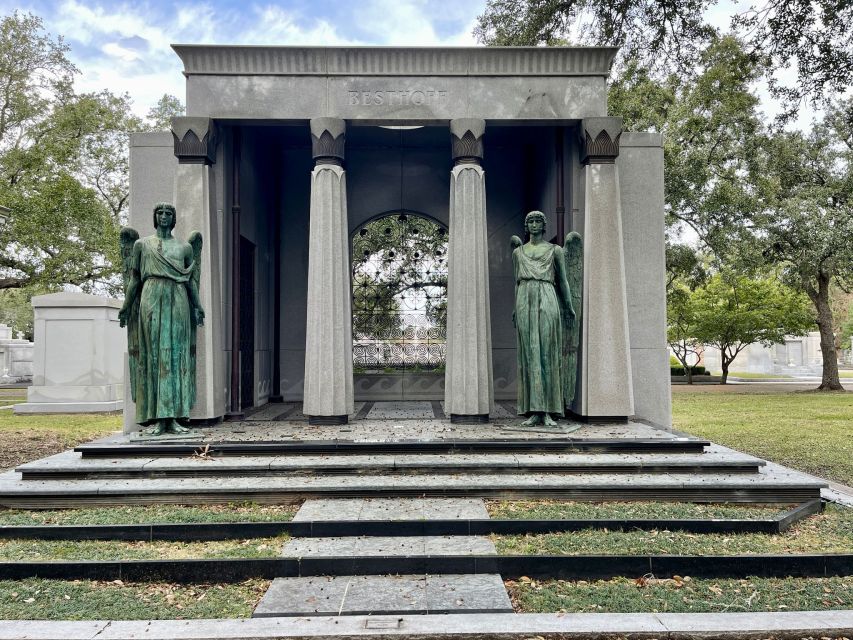
Another stop features a tomb with jewel-like stained-glass windows. The windows bring color into a setting dominated by gray stone and white marble, and they show how memorials could be designed as carefully as churches or private chapels.
You will also see an Islamic-inspired limestone tomb built by a Confederate general for his daughter. Its design is a reminder that New Orleans memorial architecture does not fit into one simple religious or cultural category.
This part of the walk is especially rewarding if you like details. Look for the features Sally points out, then compare them with nearby tombs. The contrasts reveal how families used architecture to express grief, faith, social position, taste, or a wish to be remembered in a particular way.
The cemetery’s art is not limited to grand scale. A statue, window, inscription, or small carved symbol can carry a story. Without a guide, you might notice that something is unusual but miss the reason it was included.
What the tour teaches about New Orleans burials
A strong part of the walk is the discussion of New Orleans burial practices. The above-ground tombs are not simply a response to the city’s weather or soil. They are part of a local cemetery culture with its own customs and traditions.
Sally connects those practices to the people and monuments around you. That keeps the information grounded. Instead of hearing a general lecture before walking past the tombs, you learn the meaning of local customs as you see them in place.
The tour also brings out the relationship between public life and memorials. Mayors, governors, Carnival kings, law officers, journalists, business owners, and criminals all remain part of the city’s story after death. Their tombs preserve names, but the stories explain their impact.
I especially like this balance between architectural detail and biography. Too much architecture can feel dry. Too many colorful anecdotes can turn a cemetery into gossip. Sally’s approach, based on the available descriptions of her tours, joins the two and gives each monument a reason to matter.
Pace, weather, and walking comfort
The tour lasts about two hours and covers roughly 2 miles. The pace is described as relaxed, but this is still a sustained walk on cemetery paths and lanes. Wear shoes you can comfortably use for the full distance.
The trees provide welcome shade, yet you should bring water and sunscreen. An umbrella can help in strong sun, and it may also be useful if rain threatens. The tour takes place rain or shine, so check the forecast and dress for the conditions.
Wheelchair access is available, though the information provided does not describe the surface of every path or the exact route around each monument. If you use a wheelchair, contact the provider before arriving to confirm any route details that matter to you.
The cemetery is an outdoor setting, so this is not the best pick if you want air conditioning, frequent seating, or a short stroll. It is a better fit for someone who enjoys taking time with a place and does not mind being outside for the full tour.
Is $35 a fair price?

At $35 per person, the tour sits in a reasonable range for a two-hour guided walk in New Orleans. You are paying for entry to Metairie Cemetery and Lake Lawn Metairie, but the real value comes from Sally’s interpretation.
I would not judge the price by the number of stops alone. You can see a pyramid, a stained-glass tomb, or Anne Rice’s grave without a guide. The fee makes more sense when you consider the connections between those sights, the explanation of burial customs, and the stories behind people whose names may not mean much at first glance.
The tour also includes local suggestions for food, music, and culture. That is a useful extra if you are still shaping your New Orleans plans. Treat those tips as a chance to ask Sally specific questions about what fits your interests.
Free cancellation up to 24 hours before the tour and the option to reserve now and pay later make booking less risky. Those policies are helpful if your New Orleans schedule is still changing.
Who will enjoy this cemetery walk most?
I would recommend the tour first to people who enjoy historic cemeteries, memorial art, architecture, gothic literature, and unusual biographies. It also suits returning visitors who want something beyond the usual French Quarter route.
Fans of Anne Rice will appreciate the literary connection. Food lovers may enjoy the Al Copeland stop. Anyone curious about Mardi Gras, local power, law enforcement, or the city’s more notorious figures will find an entry point in the stories.
Families with older children and teenagers could enjoy it if they are comfortable with a long walk and serious subjects. The material includes death, crime, and burial traditions, so it may not suit young children or anyone looking for a light sightseeing activity.
I would skip it if you have limited mobility, dislike outdoor heat or rain, or prefer a tour built around grand city views. The reward here comes from close observation and patient storytelling, not from a fast list of attractions.
Practical advice for a better visit
Arrive with comfortable clothes, sturdy walking shoes, water, and sunscreen. An umbrella is a smart addition because the tour runs in all weather and can also shield you from the sun.
Keep your camera ready, but listen before photographing. Some of the most interesting details are small symbols or design features that Sally points out as you pass.
Ask questions. The tour is especially useful when you follow your own interests, and Sally’s style allows room for extra context. If you care about burial customs, architecture, Anne Rice, organized crime, Mardi Gras, or New Orleans food culture, say so early.
Also leave room in your day after the tour. The walk may give you ideas for a meal, music venue, or cultural stop, and the included local tips are more useful when you have time to act on them.
Should you book the Millionaire’s Tombs tour?
Book it if you want a thoughtful, story-led look at New Orleans and you enjoy cemeteries as places of art and memory, not just sightseeing stops. Sally Asher is the key reason to choose this tour. Her writing and research background, warm delivery, humor, and eye for overlooked symbols make the cemetery easier to understand.
At $35, it offers good value for two hours, especially if you would otherwise walk past the tombs without knowing their stories. Just plan for 2 miles outdoors, bring protection from sun or rain, and choose another activity if you want a short, casual stop.
FAQ
How long is the Metairie Cemetery tour?
The tour lasts two hours and includes about 2 miles of walking.
Where do I meet the guide?
Meet at the Law Enforcement Memorial to the right of the funeral home. Take a right at the stop sign and use any entry gate to reach the memorial.
Who guides the tour?
The tour is led in English by local author and historian Sally Asher.
What famous graves and tombs are included?
The route includes Anne Rice’s tomb, Al Copeland’s tomb, Millionaire’s Row, a sphinx-guarded pyramid, a tomb with stained-glass windows, and an Islamic-inspired limestone tomb built by a Confederate general for his daughter.
Is the tour wheelchair accessible?
Yes, the activity is listed as wheelchair accessible. The available information does not give detailed conditions for every path, so contact the provider if you need specific route information.
What should I bring?
Bring comfortable shoes, sunscreen, water, and comfortable clothing. An umbrella can also be useful because the tour runs rain or shine.
Can I cancel or pay later?
You can cancel up to 24 hours in advance for a full refund. You can also reserve your place and pay later.
Just added around New Orleans
- New Orleans Garden District Tour★ 5.0 · 8 reviews
- New Orleans Seance Experience★ 4.0 · 8 reviews
- Airport and City Transfers in New Orleans★ 5.0 · 8 reviews
- Sin and Tonic Pub Crawl in New Orleans★ 4.5 · 8 reviews
- New Orleans Plantation Tour with Transportation★ 5.0 · 9 reviews
- New Orleans Self-Guided Kayak Bayou Swamp Tour★ 5.0 · 9 reviews
- The New Orleans Darkness Tour★ 4.4 · 9 reviews
- Historic Carrollton Neighborhood Walking Tour★ 5.0 · 9 reviews
Cemetery Tours, compared.

St. Louis Cemetery No. 1 Official Walking Tour
Read our review →
Cemetery and Ghost BYOB Bus Tour in New Orleans
Read our review →
New Orleans City Tour: French Quarter, Garden District & Cemetery
Read our review →
New Orleans Dead of Night Ghosts and Cemetery Bus Tour
Read our review →
New Orleans City and Cemetery 2-Hour Bus Tour
Read our review →
New Orleans Cemetery Bus Tour with Exclusive Cemetery Access
Read our review →
Cemetery Bus Tour At Dark with Exclusive Access
Read our review →
Browse the lists this tour appears in