
Reviewed · JAZZ & LIVE MUSIC TOURS
New Orleans Jazz History and Music Walking Tour
New Orleans jazz is best understood on foot, where the city’s streets, parks, clubs, and stories connect. This 2.5-hour walk begins in Tremé at Louis Armstrong Park and Congo Square, then moves through the French Quarter toward a live music stop chosen by your guide. The history is tied to real places, not just names in a textbook.
I like the small groups, capped at 12, and the chance to hear local musicians in working venues. I also like the practical advice you get for the rest of your stay, from where to look for music listings to when to arrive at a club. The main drawback is the amount of walking, about 14 blocks or 1.5 miles, and the experience can lean more toward neighborhood and social history than musical theory.
In This Review
- Key points to know before booking
- Starting with Louis Armstrong in Tremé
- Congo Square and the roots of an American sound
- Walking into the French Quarter
- Bourbon Street, Frenchmen Street, or both
- The live music stop and complimentary drink
- Preservation Hall and the French Quarter’s musical memory
- What the 2.5-hour pace feels like
- Is $60.56 a fair price?
- Who should book this New Orleans music walk?
- Should you book it?
- FAQ
- Where does the New Orleans Jazz History and Music Walking Tour begin?
- Where does the tour end?
- How long does the tour last?
- How far do you walk?
- What neighborhoods does the tour visit?
- Is live music included?
- Is a drink included?
- Can anyone under 21 join?
- How many people can join?
- What happens if the weather is poor?
Key points to know before booking
- Congo Square gives the tour its strongest sense of place: You learn how African, Caribbean, Creole, and European influences met in New Orleans.
- Louis Armstrong Park is more than a pretty starting point: It sets up the story of Tremé, Armstrong, gospel, and early jazz.
- The route can change with the music: Your guide may use Bourbon Street, Frenchmen Street, or both, depending on where the best sounds are that evening.
- Live music is part of the price: You enter a local venue and receive one complimentary drink, though extra drinks and food cost more.
- Small groups make a real difference: With no more than 12 people, it is easier to hear the guide and ask questions.
- Comfortable shoes matter: You walk roughly 1.5 miles, often through busy streets and historic districts.
Starting with Louis Armstrong in Tremé
Meet at 701 N Rampart Street, just outside the French Quarter. The tour begins in Louis Armstrong Park, a calm green space that gives you room to orient yourself before the evening gets louder.
Your guide introduces the early forces behind New Orleans jazz and explains why Louis Armstrong matters so much to the city and to American music. Armstrong was born in New Orleans, and his name here is not just a landmark label. It opens a conversation about musicians, neighborhoods, performance traditions, and the city’s lasting influence on jazz.
I like beginning here because the park gives the tour a clear starting point. You are not dropped into Bourbon Street noise and asked to absorb a history lesson over passing crowds. Instead, the first portion has space for stories and questions.
You may also pass the Mahalia Jackson Theater of the Performing Arts, named for the New Orleans-born gospel singer. That stop broadens the musical picture. New Orleans is not only about jazz clubs and brass bands. Gospel, blues, African musical traditions, Caribbean sounds, and European instruments all form part of the story you are beginning to hear.
The first stop lasts about 35 minutes. Admission to the park is included, and there is no separate ticket to buy.
More live music nights in New Orleans:
- New Orleans Steamboat Natchez Jazz Cruise with Dinner Option
★ 4.0 · 7,533 reviews - New Orleans Steamboat Natchez Jazz Cruise
★ 4.5 · 5,334 reviews - New Orleans: Evening Steamboat Jazz Cruise + Optional Dinner
★ 4.3 · 4,548 reviews
Congo Square and the roots of an American sound
Congo Square is one of the most important places on the walk. It was an area where enslaved people and free people of color were allowed to gather and socialize. The site helps explain how music in New Orleans grew from cultural exchange, survival, community, and performance.
Your guide connects West African and Caribbean sounds with European musical influences. That explanation is valuable because it keeps jazz from seeming like a sudden invention by a few famous men. The music developed through many traditions meeting in one port city.
Expect about 15 minutes at Congo Square, though the surrounding discussion begins earlier in the park. The exact order can vary, but this part gives the tour its strongest historical foundation.
I would pay close attention here, even if you booked mainly for the clubs. Later, when a band begins playing, you will have more context for rhythm, call and response, instrumentation, and the cultural forces behind the sound. The tour is not a formal music class, but it gives you a useful framework for listening.
One practical note: a guide may play short examples from a phone while explaining early jazz. That can be hard to hear if an event is taking place nearby or if the group is large. If the sound is unclear, ask the guide to repeat the point. The maximum group size is 12, but outdoor noise can still get in the way.
Walking into the French Quarter
From Louis Armstrong Park, the route heads into the Vieux Carré, the French Quarter. This is where the tour shifts from broad history to the way music operates in New Orleans today.
The walk takes about 10 minutes into the quarter, followed by stops and stories along the way. You see historic streets and landmarks while learning how the neighborhood’s culture developed. Your guide may point out places linked to musicians, clubs, and the long relationship between residential streets and commercial nightlife.
This is a useful part of the tour because the French Quarter can feel like a collection of bars and decorative buildings if you explore it without context. A local guide helps you read the streets differently. You begin to notice where music happens, how venues fit into the neighborhood, and why one block may feel suited to traditional jazz while another leans toward a different sound.
The walk is not a sightseeing tour of every famous building. The focus stays on music and the people and places connected to it. If your main goal is architecture, food, or major historic sites, you will get only a side serving of those subjects.
Bourbon Street, Frenchmen Street, or both
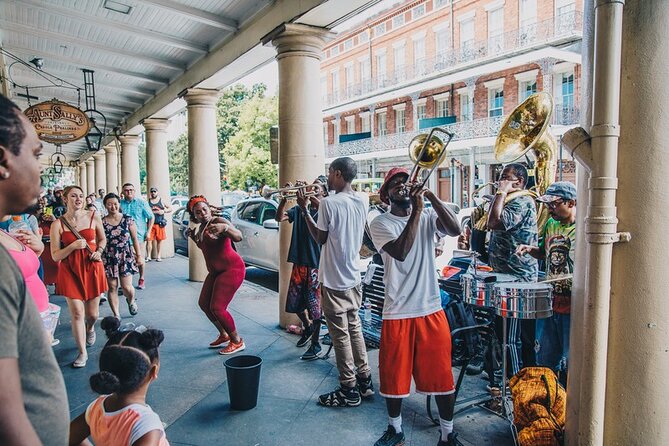
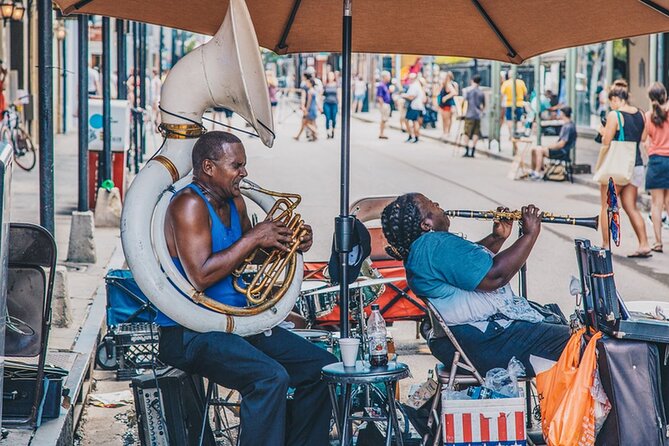
The route is intentionally flexible. One possible path includes Bourbon Street, where the guide explains the street’s history and its links to blues and jazz collaborators. You might also catch a busker near the historic French Market.
Another possible route heads toward Frenchmen Street, known for its concentration of live music venues. The guide chooses the route based on where the evening’s music is likely to be strongest. That flexibility is a practical advantage, since a fixed route can send you to a club at the wrong time or miss a better performance nearby.
Some evenings include visits to two clubs, with different bands and settings. Other details depend on the route and the night. The supplied description guarantees a live music venue selected by the guide, so you should see the two-club experience as possible rather than automatic.
Frenchmen Street is a good match if you want several music options close together. Bourbon Street offers a different look at one of New Orleans’ most famous nightlife corridors. Either way, you are not simply being shown a famous street and sent on your own. The guide explains how to make choices later, including how to find listings and when to arrive.
More history tours in New Orleans:
- New Orleans Garden District History Walking Tour
★ 5.0 · 2,879 reviews - French Quarter Historical Sights and Stories Walking Tour
★ 5.0 · 2,724 reviews - New Orleans Small-Group Haunted History Carriage Tour
★ 4.5 · 2,289 reviews - New Orleans Haunted History Ghost Tour
★ 4.5 · 2,084 reviews
The live music stop and complimentary drink
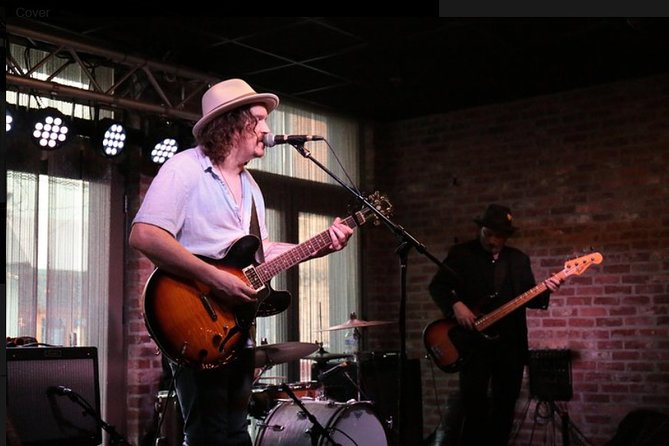
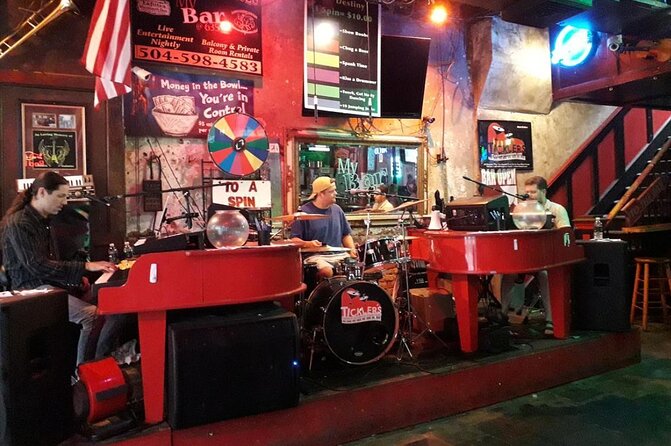
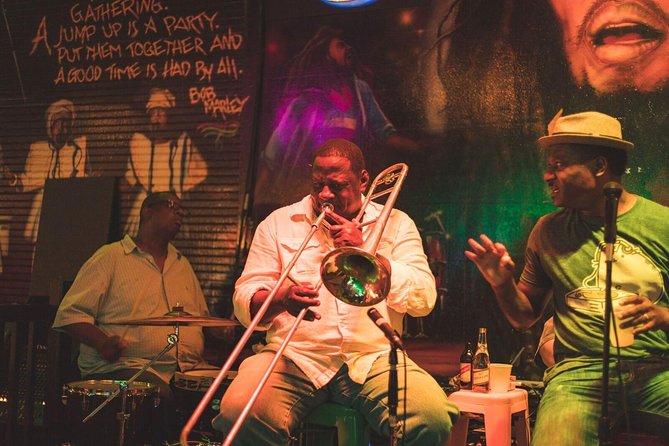
At a music venue, you go inside to hear local performers. You receive one complimentary drink at a music stop. You can order additional beverages or food, but those extras are not included.
The drink is a pleasant benefit, yet the stronger value is access and guidance. New Orleans has plenty of clubs, but choosing one at random can lead to a thin set, a long wait, or a room that does not suit your taste. Your guide selects a place for the group and explains what you are hearing.
Past tours have included two music venues, and some groups stayed at the second club after the official walk ended. That makes this experience useful early in your trip. You can return to a place you liked, use the guide’s recommendations, or explore another part of the city with a better sense of how the night works.
The music stop also supports local musicians and venues. Your booking contributes to the livelihoods of performers, helping them continue their work. That does not guarantee a particular band, style, or length of performance, but it gives the evening a direct connection to the working music scene.
You should budget for tips to the guide and musicians, since gratuities are not included. It is also smart to bring money for extra drinks if you plan to stay out after the tour.
Preservation Hall and the French Quarter’s musical memory
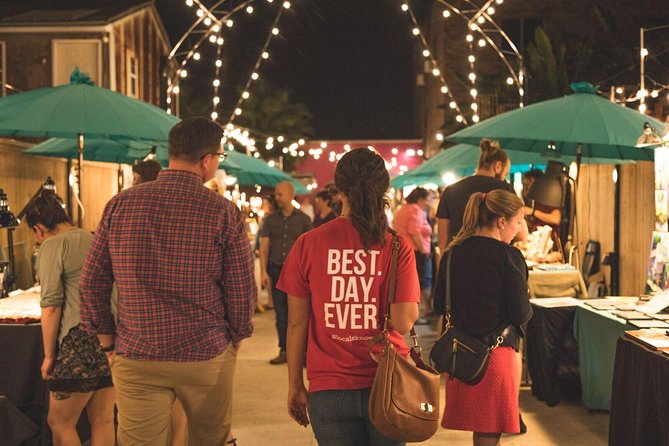
The route may pass Preservation Hall, a historic venue devoted to protecting and continuing traditional New Orleans jazz. Even if you do not attend a performance there during this tour, seeing the building helps connect the city’s past with its present music culture.
This is one of the tour’s strengths. You are not only hearing about Louis Armstrong and Congo Square in isolation. You are also seeing the places where traditional jazz is still presented and supported.
The guide may explain how clubs and venues function, how musicians earn a living, and how you can find performances during the rest of your stay. One guide, Kristi, is also a musician, and that perspective can add useful detail about the music scene. Adam has also led the tour, and Andre has guided groups through the same general experience.
Guide style matters here. The strongest outings are led by someone who can balance stories, history, and actual listening time. One past account described the discussion as too focused on current political and economic problems and not focused enough on jazz itself. That is a fair consideration: the tour includes social and economic context, but the balance may depend on who leads your walk.
What the 2.5-hour pace feels like
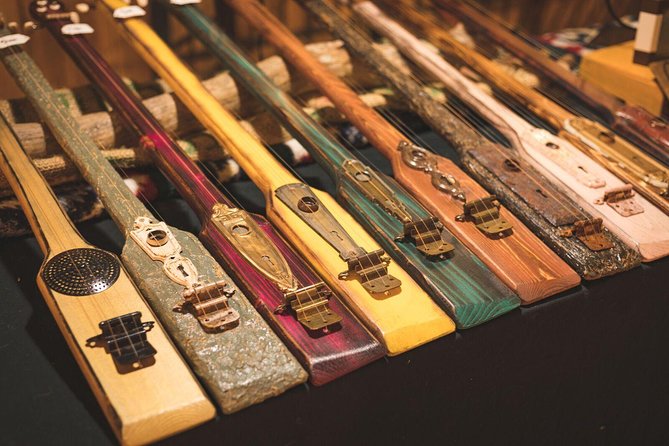
The full experience lasts about two hours and 30 minutes. It covers roughly 14 blocks, or 1.5 miles, on foot. That is manageable for most people who can take part in a normal city walk, but the distance does not tell the whole story.
You may stop often for explanations, cross streets, enter venues, and wait for the right moment to hear a band. Wear comfortable shoes. The pavement, crowds, and evening weather can make the walk feel longer than the mileage suggests.
The tour requires good weather. If poor weather forces a cancellation, you can choose another date or receive a full refund. If you need to cancel yourself, do it at least 24 hours before the start time for a full refund. Changes or cancellations inside that window are not accepted.
The tour is offered in English and uses a mobile ticket. It is near public transportation, and the end point is in the French Quarter. Since the meeting point is at the edge of the quarter and the finish is in the quarter, plan your evening around the end rather than assuming you will return to the starting point.
Is $60.56 a fair price?
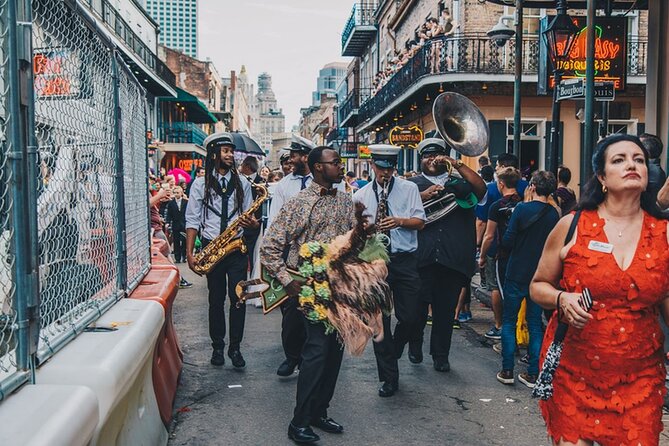
At $60.56 per person, this is not the cheapest way to hear music in New Orleans. You could walk into a club on your own and pay only for a drink. The price makes more sense if you value the local guide, the historical setting, a planned route, and help choosing a venue.
You also receive one drink and a small-group format. With a limit of 12 people, the guide can adjust the route and answer questions more easily than on a large city tour. Some departures may be much smaller, which can make the walk feel almost private.
The real question is how you want to spend your evening. If you already know New Orleans music well and have club plans, you may not need this tour. If you are new to the city and want history plus a practical introduction to live music, the price is easier to justify.
The tour also offers group discounts, though the exact savings are not provided. It supports local performers and venues, which adds a worthwhile local benefit, but you should still treat that as a bonus rather than the main reason to book.
Who should book this New Orleans music walk?
I would book this for a first evening or early in a New Orleans stay. You get names, places, and ideas that can shape the rest of your trip. Several people wished they had taken it sooner, since the club recommendations would have helped them plan other nights.
It suits solo visitors, couples, and friends who like a mix of walking, history, and live music. It can also work for families with older members, but no one under 21 may join, and the evening includes venues where alcohol is available.
You should choose it if you want:
- A local explanation of jazz’s origins
- A look at Tremé, Louis Armstrong Park, and Congo Square
- A guided walk through the French Quarter
- At least one live music venue
- Advice for finding music after the tour
- A small group rather than a large bus outing
You may want another activity if you need guaranteed access to a specific performer, a seated concert, a technical lecture on jazz, or very little walking. The venue and route are chosen for the evening, so flexibility is part of the deal.
Should you book it?
Book this tour if you want New Orleans music to make more sense, not just fill the background while you drink. The combination of Congo Square, Louis Armstrong Park, French Quarter streets, and live music gives you a useful story arc from cultural roots to today’s clubs.
The strongest guides, including Kristi and Adam, bring warmth and strong local knowledge to the walk. The best outings may include two clubs and leave you with a short list of places to visit later. Just keep your expectations clear: the tour includes social history and current issues, as well as music, and the route can change.
For most first-time visitors who enjoy live music, the timing, small group, complimentary drink, and local venue support make $60.56 reasonable. Bring good shoes, stay open to the guide’s route, and book it near the start of your visit.
FAQ
Where does the New Orleans Jazz History and Music Walking Tour begin?
It begins at 701 N Rampart Street, New Orleans, Louisiana 70116, USA, near the edge of the French Quarter.
Where does the tour end?
The tour ends in the French Quarter at a central location in the area.
How long does the tour last?
The experience lasts approximately two hours and 30 minutes.
How far do you walk?
You walk approximately 14 blocks, or about 1.5 miles, through Tremé and the French Quarter.
What neighborhoods does the tour visit?
The route includes Louis Armstrong Park and the Tremé neighborhood, along with the French Quarter. It may also include Bourbon Street or Frenchmen Street.
Is live music included?
Yes. You visit a live jazz or music venue selected by your guide. The route and venue can vary by evening.
Is a drink included?
Yes. One complimentary drink is included at a music stop. Additional drinks and food are not included.
Can anyone under 21 join?
No. Participants under 21 are not permitted to join this tour.
How many people can join?
The tour has a maximum of 12 participants.
What happens if the weather is poor?
The activity requires good weather. If it is canceled because of poor weather, you can select another date or receive a full refund.
More Walking Tours in New Orleans
- New Orleans Premier Ghost, Voodoo and Vampire Walking Tour
★ 4.5 · 12,856 reviews - New Orleans Food Walking Tour of the French Quarter with Small-Group Option
★ 5.0 · 6,118 reviews - St. Louis Cemetery No. 1 Official Walking Tour
★ 4.5 · 3,941 reviews - New Orleans French Quarter, Voodoo and Culture Walking Tour
★ 4.5 · 2,961 reviews
Just added around New Orleans
- New Orleans Garden District Tour★ 5.0 · 8 reviews
- New Orleans Seance Experience★ 4.0 · 8 reviews
- Sin and Tonic Pub Crawl in New Orleans★ 4.5 · 8 reviews
- Airport and City Transfers in New Orleans★ 5.0 · 8 reviews
- The New Orleans Darkness Tour★ 4.4 · 9 reviews
- New Orleans Plantation Tour with Transportation★ 5.0 · 9 reviews
- New Orleans Self-Guided Kayak Bayou Swamp Tour★ 5.0 · 9 reviews
- Historic Carrollton Neighborhood Walking Tour★ 5.0 · 9 reviews
Jazz & Live Music Tours, compared.

New Orleans Steamboat Natchez Jazz Cruise with Dinner Option
Read our review →
Evening Steamboat Jazz Cruise + Optional Dinner
Read our review →
Daytime Steamboat Jazz Cruise + Optional Lunch
Read our review →
Paddlewheeler Creole Queen Jazz Dinner Cruise in New Orleans
Read our review →
Evening Jazz Boat Cruise with Optional Dinner
Read our review →
VIP Jazz Dinner Cruise with Private Tour and Open Bar Option
Read our review →Browse the lists this tour appears in