
Reviewed · VOODOO TOURS
Adults-Only Voodoo History Guided Walking Tour in New Orleans
New Orleans voodoo is often sold as spooky theater, but this 90-minute walk takes a more serious route. You move through places tied to Black history, spiritual practice, and the legends of Marie Laveau, while your guide sorts old facts from later fantasy. Congo Square and the walls of St. Louis Cemetery No. 1 give the tour a real sense of place.
I like the small maximum of 20 people, since it makes it easier to hear stories and ask questions. I also like the mix of research and showmanship, especially with Doug, the tour’s writer and frequent guide, whose kilt or fur coat is hard to miss.
The main drawback is simple: you do not enter the cemetery or any haunted buildings. This is a walking history talk through public streets, not a cemetery-access tour or a series of staged scares. Arrive early, too, because the guide leaves on time and late arrivals may miss the walk.
In This Review
- Key points to know before you book
- A serious look at New Orleans voodoo
- Basin Street Station and the meeting point
- St. Louis Cemetery No. 1 and Marie Laveau
- Congo Square and the roots of public ceremony
- Dauphine Street and the myth of the voodoo doll
- Conjure New Orleans and the midpoint pause
- Jackson Square gives the tour a useful finish
- What the guides do best
- Is the $37 price fair?
- Practical comfort and access
- Who should book this walking tour?
- Should you book it?
- FAQ
- How early should I arrive for the tour?
- Where does the tour begin?
- Where does the tour end?
- Does the tour enter St. Louis Cemetery No. 1?
- Is the tour suitable for children?
- Are drinks included?
- Can I join if I arrive late?
- What happens if bad weather cancels the tour?
Key points to know before you book
- Marie Laveau takes center stage: Learn about New Orleans’ best-known Voodoo Queen, her life, her reputation, and the legends attached to her burial place.
- Congo Square is a major stop: This former gathering place offers a direct link to African-American music, ceremony, and spiritual traditions in New Orleans.
- The tour corrects popular myths: Voodoo dolls, Gates of Guinee, hoodoo, and the idea of Voodoo as an evil practice all receive closer attention.
- Doug brings theatrical energy: He is known for strong storytelling, a playful costume, and a talent for keeping a quiet group involved.
- The route ends at Jackson Square: That gives you a useful finish in the French Quarter, close to restaurants, shops, museums, and the Mississippi River.
- It is adults only and capped at 20 people: The tone suits adults seeking cultural and historical context rather than a family ghost show.
A serious look at New Orleans voodoo
The word voodoo carries a lot of baggage in popular culture. Movies and novelty shops often reduce it to curses, dolls, black magic, and cartoonish superstition. This tour works against that picture by placing New Orleans Voodoo within the city’s African, Caribbean, Catholic, and colonial past.
That approach is the central reason to choose this walk. You are not simply shown a supposedly haunted corner and told to feel frightened. Instead, the guide explains how practices developed, how ceremonies were understood, and how public stories changed over time.
The tour also separates New Orleans Voodoo from related traditions elsewhere. That matters because the word is often used as if it describes one fixed religion with one set of rules. The tour focuses on the local form and on the people who shaped its place in the city.
The tone is respectful but not dry. Doug, Claire, and Mac have each been praised for making difficult material easy to follow. Doug is especially theatrical, using costume, humor, and vivid storytelling without turning the subject into a joke.
More voodoo history tours in New Orleans:
- New Orleans Premier Ghost, Voodoo and Vampire Walking Tour
★ 4.5 · 12,856 reviews - Adults-Only New Orleans Ghost, Crime, Voodoo, and Vampire Tour
★ 5.0 · 6,545 reviews - New Orleans Adults-Only Ghost, Voodoo and Vampire Tour
★ 5.0 · 3,291 reviews
Basin Street Station and the meeting point
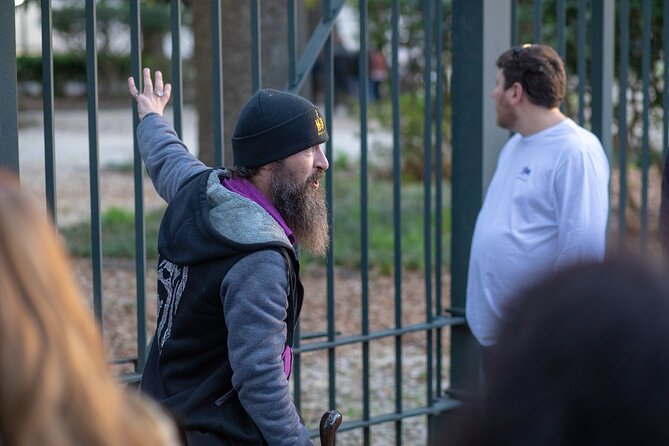
The walk begins at Basin St. Station at 11 a.m. The booking information gives 1201 St. Louis Street as the start address, while the meeting instructions also refer to the Basin Street Station corner near St. Louis Street and Basin Street. Read the directions on your ticket carefully before setting out.
This is one place where you should give yourself extra time. The operator asks you to arrive 30 minutes early for check-in, and that is sensible in this part of New Orleans. Streets, buildings, and addresses can become confusing, especially when you are looking for a guide rather than a shop sign.
The guide waits outside near the station. A phone number is supplied before the tour in case you lose the group. Do not count on joining later, though. The tour departs at its scheduled time, and late arrivals are not accepted. The operator may sometimes offer rescheduling for $5 per person, but you should not rely on that option.
Public transportation serves the area. If you drive, parking may be available in the Basin Lot at 1205 St. Louis Street, with rates subject to change. I would avoid building a tight schedule around parking, since the tour’s late-arrival rule is strict.
St. Louis Cemetery No. 1 and Marie Laveau
The first major discussion takes place outside St. Louis Cemetery No. 1. You do not go inside, and admission is not included. That distinction is important because many people associate New Orleans cemetery tours with visits among the above-ground tombs.
From outside the walls, the guide discusses Marie Laveau and the Gates of Guinee, described here as an entry point to the spirit realm. The stop gives you a physical setting for stories that can otherwise seem unconnected to the city.
Marie Laveau is not treated as a simple witch figure. The tour looks at her place in New Orleans society and at the way later generations turned her into a larger-than-life legend. Several guides have been praised for explaining her life without losing sight of the myths that surround her.
If your main goal is to see the cemetery’s tombs, choose a tour that includes cemetery admission instead. This experience uses the cemetery as a starting point for a wider discussion of spiritual history. That makes it a better choice for cultural context than for architectural sightseeing.
Congo Square and the roots of public ceremony
Congo Square is the route’s most important setting for African-American and Voodoo history. This is where the tour connects spiritual practice with music, dance, communal gathering, and the survival of cultural traditions under difficult conditions.
The stop also helps explain why New Orleans cannot be understood through European architecture alone. The city’s identity was shaped by people from Africa, the Caribbean, France, Spain, and other places, and Congo Square offers a clear point of connection between those worlds.
Your guide may discuss how music and instruments were borrowed, changed, or later presented through other cultural labels. This part of the tour can prompt strong opinions, so listen closely to the historical explanation rather than expecting a simple ghost story.
The area is outdoors, and New Orleans weather can be hard on you by late morning. Guides have made a point of finding shade when stopping to speak, but wear light clothing, bring water, and use sun protection. Comfortable flat shoes are a must.
More history tours in New Orleans:
- New Orleans Garden District History Walking Tour
★ 5.0 · 2,879 reviews - French Quarter Historical Sights and Stories Walking Tour
★ 5.0 · 2,724 reviews - New Orleans Small-Group Haunted History Carriage Tour
★ 4.5 · 2,289 reviews - New Orleans Haunted History Ghost Tour
★ 4.5 · 2,084 reviews
Dauphine Street and the myth of the voodoo doll
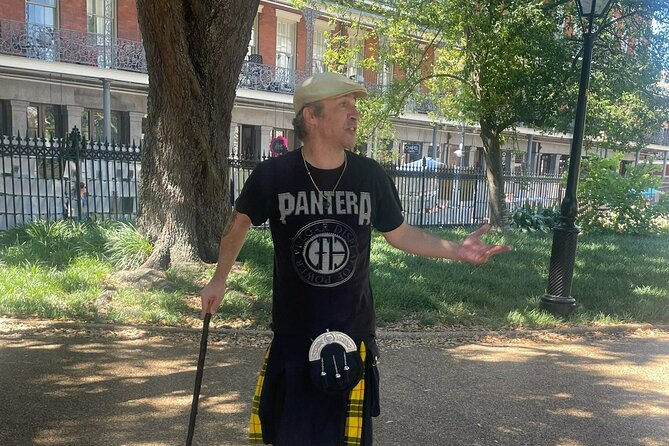
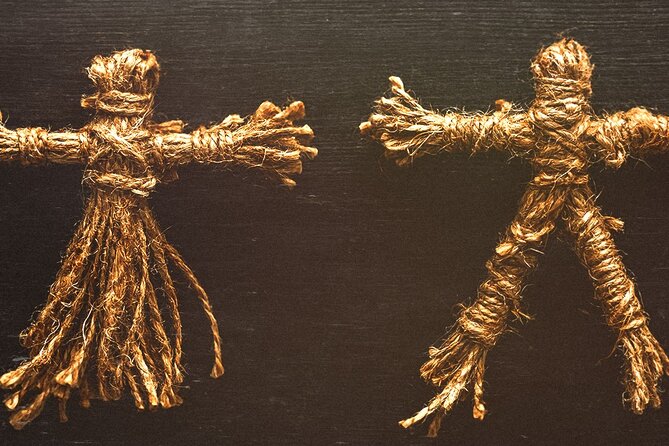
At Dauphine Street, the discussion turns to negative Voodoo propaganda and the familiar voodoo doll. This is one of the tour’s most useful corrections because the doll has become the public symbol of a religion that is far more complex than the souvenir version suggests.
You learn how the image was used and why it became linked with fear. The goal is not to claim that every story is false, but to show how language, commerce, prejudice, and popular entertainment helped shape the image most outsiders recognize.
This stop is more about explanation than spectacle. You will not be led into a ritual or asked to handle a mysterious object. If you want a shop visit, New Orleans has plenty of places to browse independently, but the tour itself focuses on meaning and history.
This is also where a good guide matters. Doug has been praised for answering questions and keeping the group engaged, while Claire has been described as careful with the basic religious concepts. Since the guide may vary, the delivery can feel more theatrical or more classroom-like depending on who leads your walk.
Conjure New Orleans and the midpoint pause
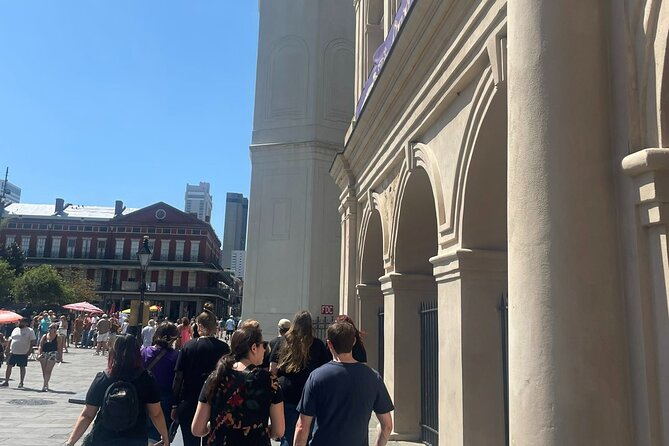
Conjure New Orleans serves as the midpoint break. You have a chance to pause, use nearby facilities, and, if you wish, purchase a drink at a local bar when the schedule allows. Alcohol is not included in the $37 ticket.
The operator has a strict rule about intoxication. A drink is one thing, but anyone who is drunk, disruptive, or unsafe will not be allowed to continue. That policy is fair on a small walking tour, where one unruly person can spoil the experience for 19 others.
The break also helps with the pace. Ninety minutes on foot is manageable for most people, but New Orleans heat, uneven pavement, and crowded sidewalks can make it feel longer. Use the pause to refill water and adjust your shoes or clothing.
Jackson Square gives the tour a useful finish
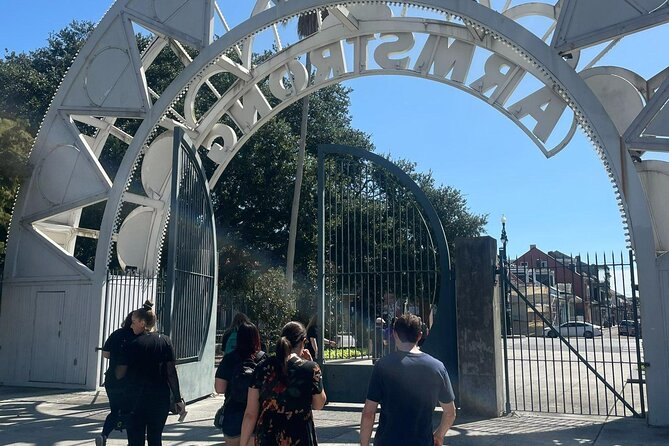
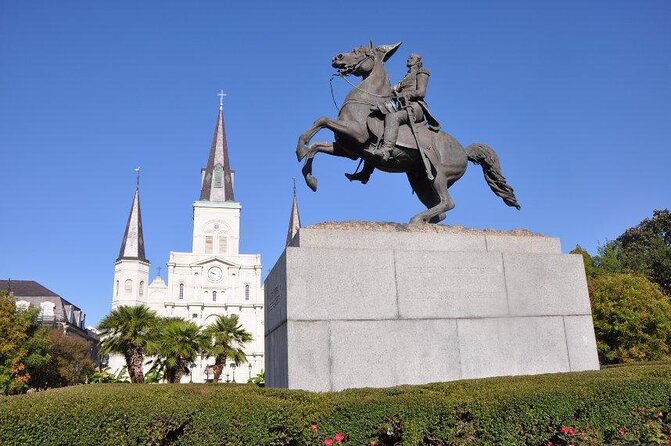
The walk ends at Jackson Square, one of the easiest places in the French Quarter for continuing your day. You are close to restaurants, bars, shops, museums, street performers, and the riverfront.
Ending here works well because the tour moves from the city’s northern edge toward the center of the French Quarter. You do not need to return to the starting point, and you can continue sightseeing without arranging a second ride.
Jackson Square also gives the final conversation a broad setting. After hearing about ceremonies, public memory, and New Orleans’ spiritual traditions, you can look across one of the city’s best-known public spaces and see how many eras occupy the same few blocks.
What the guides do best
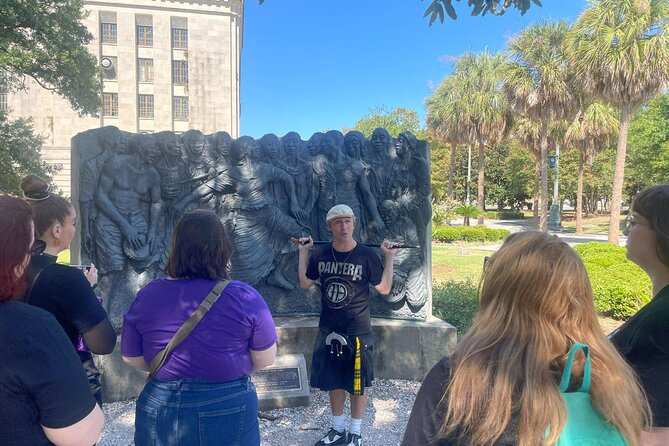
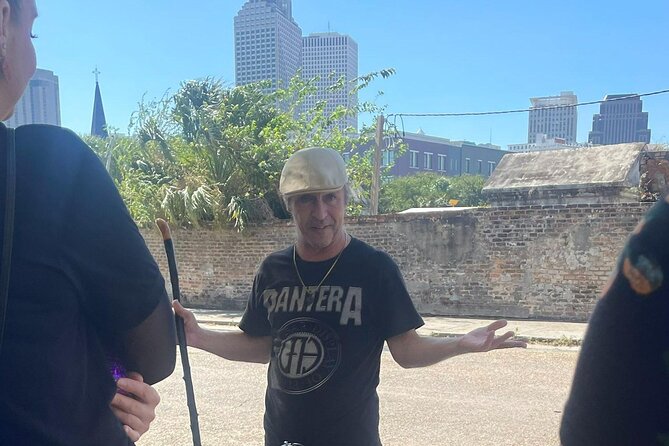
The strongest part of this tour is the guiding. Doug receives the most consistent praise for his energy, humor, theatrical timing, and ability to make historical figures feel present. His unusual costumes, including a kilt in warm weather and a fur coat in colder weather, make him easier to spot at the meeting point.
His style is not quiet or understated. If you enjoy animated storytelling, it adds fun to the walk. If you prefer a formal lecture, the performance may feel a little large. The useful point is that the theater supports the information rather than replacing it.
Claire has also led the tour and has been praised for a more academic and respectful presentation. Mac has been described as an engaging guide who adds spooky atmosphere while answering questions clearly. The experience can therefore vary in tone, but the subject remains focused on New Orleans Voodoo and its historical setting.
You should feel free to ask questions. Several comments highlight how well the guides respond to curiosity, and the maximum group size makes that easier than on a large bus tour. The guide’s job is not to perform a ritual for you, and the tour does not promise supernatural proof.
Is the $37 price fair?
At $37 per person, this is reasonably priced for a small, 90-minute guided walk in the French Quarter. You are paying for an in-person guide, a planned route, historical interpretation, and a group limited to 20 people.
The value depends on what you want to see. If you want access to St. Louis Cemetery No. 1, this is not the right purchase because the walk remains outside the gates. If you want a compact introduction to Marie Laveau, Congo Square, Voodoo beliefs, and the way myths developed, the price is easier to justify.
The tour also gives you a useful orientation to several parts of the city. It starts near Basin Street and finishes at Jackson Square, so you can pair it with independent sightseeing before or after. The one thing not covered is alcohol, and any drinks during the break are your responsibility.
Practical comfort and access
Most people can take part, including those using service animals. The route uses old city streets and sidewalks, some of which are uneven, crowded, or short on ramps. The operator says the walk is wheelchair accessible, but people with limited mobility should note that the historic French Quarter can be difficult to navigate.
If you use a wheelchair or have serious mobility limits, bring someone who can assist. Electric scooters are strongly encouraged for people with more severe mobility needs, and you should list special requirements when booking so the guide can prepare.
New Orleans weather deserves attention. The tour generally runs in light rain, but dangerous conditions such as flooding, lightning, hurricanes, tornado warnings, or other serious weather can lead to cancellation. Wear light layers, carry rain protection, and use comfortable shoes.
The adults-only rule gives the tour a more mature tone. The material may be spooky or disturbing, but there are no fake ghosts, monsters, jump scares, or scheduled stunts. Think historical unease rather than a haunted-house attraction.
Who should book this walking tour?
I would choose this tour if you are interested in:
- Marie Laveau and the people behind New Orleans legends
- African-American history and the role of Congo Square
- The difference between Voodoo, hoodoo, and pop-culture fantasy
- Storytelling with some costume and theatrical flair
- A small group rather than a bus or large crowd
- An adults-only activity during the day
I would look elsewhere if your main goal is entering a cemetery, touring haunted buildings, attending a ceremony, or getting a guaranteed supernatural scare. The route stays outdoors, and the emphasis is on explanation.
The tone may not suit everyone. One published one-star account raised concerns about the guide’s treatment of race and religion. That criticism is not reflected in the many positive accounts, which describe the presentation as respectful and historically focused, but it is a reminder that this tour addresses sensitive subjects and may challenge familiar assumptions.
Should you book it?
Book it if you want New Orleans Voodoo explained through real places, local figures, and historical context, with a guide who can keep the material lively. Doug is the safest bet for maximum theater and storytelling, while Claire may appeal if you prefer a more measured approach, though guide assignments can change.
Do not book it expecting cemetery entry or a ghost attraction. Arrive 30 minutes early, follow the exact meeting instructions on your ticket, wear good walking shoes, and bring water. For $37, this is a strong introduction to a subject that New Orleans often presents badly, provided you value stories and context more than physical access to monuments.
FAQ
How early should I arrive for the tour?
Arrive at least 30 minutes before the 11 a.m. start time for check-in and to locate the guide. The tour leaves sharply at its scheduled departure time.
Where does the tour begin?
The tour begins near Basin Street Station, at the corner of St. Louis Street and Basin Street. The booking information gives 1201 St. Louis Street as the meeting address, so follow the specific directions on your ticket.
Where does the tour end?
The tour ends at Jackson Square in New Orleans’ French Quarter. You must arrange your own transportation afterward.
Does the tour enter St. Louis Cemetery No. 1?
No. The tour begins outside the cemetery walls and discusses Marie Laveau and the Gates of Guinee. Cemetery admission is not included.
Is the tour suitable for children?
No. This is an adults-only activity.
Are drinks included?
No. Alcoholic beverages are not included. You may have time to buy a drink at a local bar, but intoxicated guests are not permitted to continue.
Can I join if I arrive late?
Late arrivals are not accepted once the tour has departed. The operator may be able to reschedule you for $5 per person, but you should contact the local operator as soon as possible.
What happens if bad weather cancels the tour?
The tour usually operates in rain, but dangerous weather can cause cancellation. If the operator cancels because of poor weather or because the minimum number of people is not met, you can choose another date or receive a full refund. You can also cancel for a full refund up to 24 hours before the start time.
More Walking Tours in New Orleans
- New Orleans Food Walking Tour of the French Quarter with Small-Group Option
★ 5.0 · 6,118 reviews - St. Louis Cemetery No. 1 Official Walking Tour
★ 4.5 · 3,941 reviews - New Orleans French Quarter, Voodoo and Culture Walking Tour
★ 4.5 · 2,961 reviews - Ghost and Vampire Walking Tour Of The French Quarter
★ 4.5 · 2,406 reviews
Just added around New Orleans
- New Orleans Garden District Tour★ 5.0 · 8 reviews
- New Orleans Seance Experience★ 4.0 · 8 reviews
- Airport and City Transfers in New Orleans★ 5.0 · 8 reviews
- Sin and Tonic Pub Crawl in New Orleans★ 4.5 · 8 reviews
- The New Orleans Darkness Tour★ 4.4 · 9 reviews
- New Orleans Plantation Tour with Transportation★ 5.0 · 9 reviews
- New Orleans Self-Guided Kayak Bayou Swamp Tour★ 5.0 · 9 reviews
- Historic Carrollton Neighborhood Walking Tour★ 5.0 · 9 reviews
Voodoo Tours, compared.
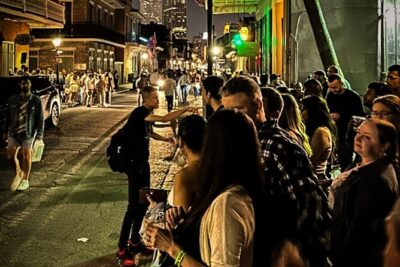
New Orleans Premier Ghost, Voodoo and Vampire Walking Tour
Read our review →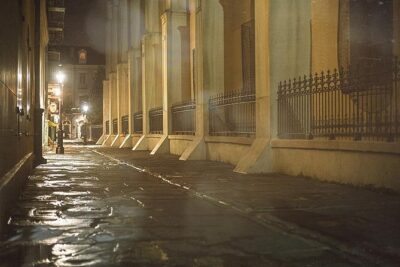
Adults-Only New Orleans Ghost, Crime, Voodoo, and Vampire Tour
Read our review →
New Orleans Adults-Only Ghost, Voodoo and Vampire Tour
Read our review →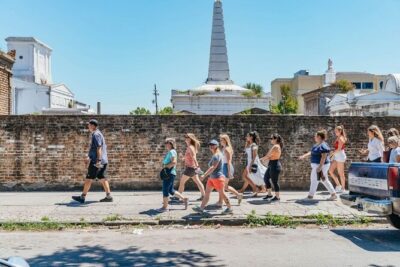
New Orleans French Quarter, Voodoo and Culture Walking Tour
Read our review →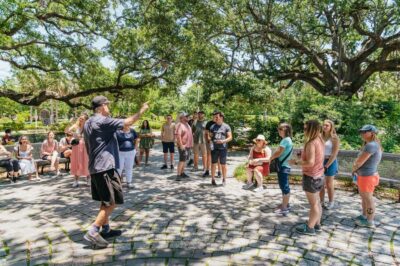
New Orleans Ghost, Vampire, Witch, Voodoo, and Mystery Tour
Read our review →
New Orleans Spirits & Spells: Witchcraft, Voodoo, and Ghost Tour
Read our review →Browse the lists this tour appears in