
Reviewed · CEMETERY TOURS
5 Cemeteries of New Orleans – Anne Rice’s & other famous graves
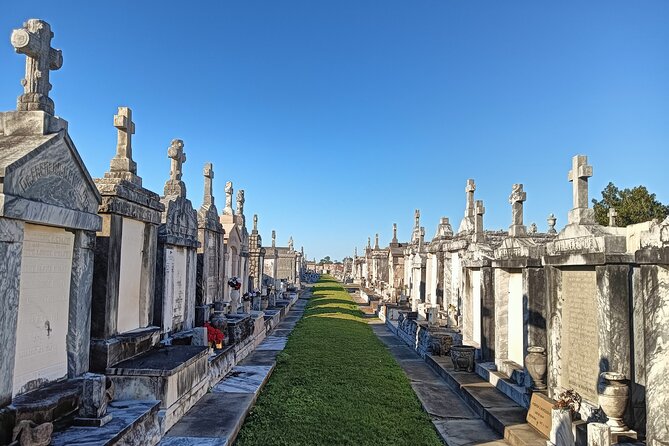
New Orleans cemeteries are not quiet side attractions. They are outdoor history books, filled with above-ground tombs, family feuds, immigrant stories, yellow fever tragedy, famous names, and the unusual burial customs that grew from the city’s wet ground. This two-hour tour visits Greenwood, Cypress Grove, Gates of Juhad, Metairie, the St. Patrick cemeteries, Charity Hospital Cemetery, and the Hurricane Katrina Memorial.
I like the wide range of stories packed into a short morning, from Anne Rice and Louis Prima to Irish immigrants and Katrina victims. I also like the small maximum group of 22, since guides such as Bobby, Chris, and Christopher have been praised for answering questions, adjusting the pace, and leaving time for photographs.
The main consideration is the tour’s cemetery count. It is promoted as five cemeteries, but the route actually includes several cemetery sections and memorial grounds, so you should expect a broad survey rather than long, quiet exploration of each site. The tour also begins at 10 a.m. and ends where it starts, which may shape the rest of your sightseeing day.
In This Review
- Key points to know before booking
- Why these cemeteries tell New Orleans’ story
- Greenwood and Cypress Grove: grand tombs and a family feud
- Gates of Juhad: a different set of burial customs
- Metairie Cemetery and Anne Rice’s grave
- St. Patrick No. 1 and the Irish immigrant story
- Charity Hospital Cemetery and the yellow fever years
- The Hurricane Katrina Memorial and the story of 80 lives
- What the two-hour format feels like
- Who will get the most from this tour
- Is the $29 price fair?
- Should you book the cemetery tour?
- FAQ
- How long does the cemetery tour last?
- What time does the tour begin?
- Where does the tour start?
- Where does the tour end?
- Which famous grave can I see?
- How many cemeteries does the tour visit?
- Is a guide included?
- How many people can join the tour?
- Can I cancel for a full refund?
Key points to know before booking
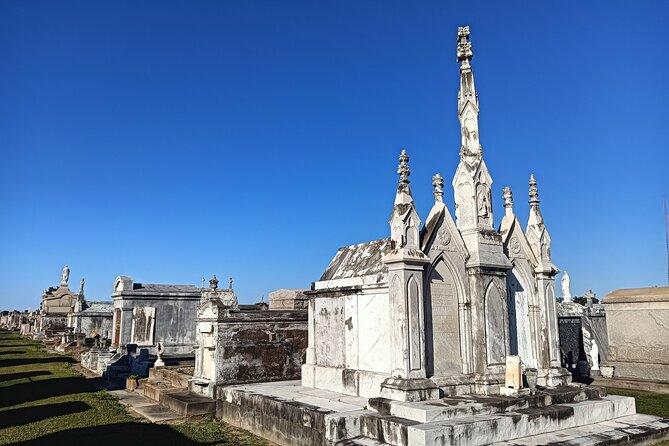
- New Orleans burial customs: Learn why above-ground tombs became such a practical part of local funerals.
- Anne Rice’s grave: Visit the resting place of the author of Interview with the Vampire at Metairie Cemetery.
- Several cemetery traditions: Compare Catholic, Protestant, Jewish, and Irish burial grounds.
- Unusual family feud: Hear the story behind two of New Orleans’ largest and most imposing tombs.
- Yellow fever and Katrina: See places linked to two very different public tragedies.
- Morning timing: The 10 a.m. start leaves much of the afternoon open for other New Orleans plans.
Why these cemeteries tell New Orleans’ story
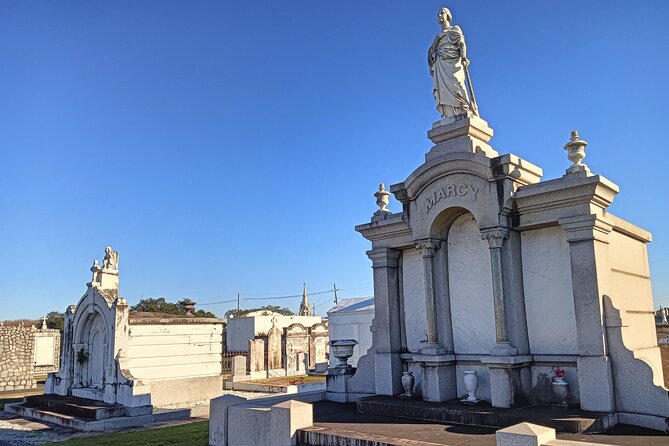
I like this tour because it uses graves to explain the city, rather than treating cemeteries as collections of famous names. You see how religion, immigration, disease, wealth, weather, and disaster shaped the way New Orleanians buried their dead.
The route also shows sharp contrasts. Some graves are modest and crowded. Others are vast stone monuments built to signal family status. One cemetery reflects Jewish customs, another Irish Catholic immigration, and another Protestant traditions. That variety gives the tour more substance than a simple famous-graves walk.
The guide is central to the experience. The strongest feedback focuses on Bobby, Chris, and Christopher, each described as friendly, prompt, entertaining, and willing to answer questions. One participant even received an improvised solo tour from Bobby during severe weather, with the rain and thunder adding an eerie mood to the setting. Weather can change the feel of this experience, so bring suitable clothing and be ready for an outdoor walk.
At $29 per person, the value is good if you want context. You could visit some cemetery areas on your own, but you would need to identify the correct entrances, locate notable graves, and understand the differences among burial customs without the guide’s help. The price also covers a two-hour guided route with a maximum of 22 people, which is more useful than paying for access to a single site.
More cemetery walks in New Orleans:
- St. Louis Cemetery No. 1 Official Walking Tour
★ 4.5 · 3,941 reviews - Cemetery and Ghost BYOB Bus Tour in New Orleans
★ 4.5 · 2,685 reviews - New Orleans City Tour: French Quarter, Garden District & Cemetery
★ 4.5 · 2,209 reviews
Greenwood and Cypress Grove: grand tombs and a family feud
The morning begins at the Morning Call Coffee Stand at 5101 Canal Boulevard. From there, the route moves through Greenwood Cemetery and Cypress Grove Cemetery, with Gates of Juhad included in this first part of the tour.
Greenwood is described as a beautiful cemetery with imposing graves and statues. This is the kind of place where the physical setting matters as much as the names on the tombs. The guide explains how burial in New Orleans differs from the procedures you may know from other parts of the United States.
The local use of above-ground tombs is one of the tour’s essential lessons. The city’s conditions made traditional below-ground burial difficult, so families developed different ways to house remains. A guide can explain the practice in the setting where you see the tombs, which makes the subject easier to understand than a general history lecture.
Greenwood also includes several celebrity graves. The supplied information does not identify every name, so you should book this part for the stories and setting rather than a fixed checklist of famous people. The guide’s explanations are likely to be more useful than simply taking photographs of names.
Cypress Grove is a Protestant cemetery with two especially large and monumental graves. Their size is not just an architectural curiosity. The tour connects them to a feud between the families who built them, giving you one of those very New Orleans stories where mourning, money, pride, and rivalry share the same address.
I would pay attention to the contrast between Greenwood and Cypress Grove. The point is not only to see two attractive cemeteries. It is to notice how communities and families expressed identity through stone, layout, and scale.
The first section is allotted about 30 minutes, so the pace will be purposeful. You should have time for photographs and questions, but not unlimited wandering. Comfortable shoes matter, and you will get more from the stop if you listen while walking instead of expecting a long pause at every tomb.
Gates of Juhad: a different set of burial customs
Gates of Juhad is a Jewish cemetery, and its inclusion gives the tour a useful religious comparison. You hear how Jewish burial practices in New Orleans differ from Catholic and Protestant traditions.
This stop is valuable because it keeps the tour from presenting New Orleans burial culture as one single system. The city’s cemeteries reflect separate faith communities, each with its own customs and history. The tour gives you a chance to compare those practices within a single morning.
The available details do not specify individual graves or how much time is spent inside the Jewish cemetery. I would treat it as a teaching stop rather than a celebrity-grave stop. If your main goal is to see famous names, Metairie will likely be the stronger match. If you want a broader view of the city, Gates of Juhad adds an important piece.
Metairie Cemetery and Anne Rice’s grave
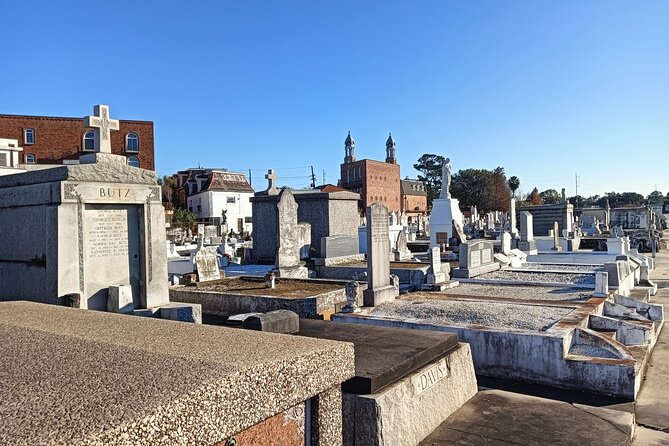
Metairie Cemetery is often called one of the most beautiful cemeteries in America. The title is subjective, but the cemetery’s appeal is clear from the range of graves included on the route. You see Anne Rice’s grave, the resting place of rock-and-roll musician Louis Prima, graves of actors, and the tombs of some mafiosos.
Anne Rice gives this stop an obvious draw for readers and film fans. Her grave connects the cemetery to Interview with the Vampire and to the Gothic side of New Orleans culture. Even if you are not a fan, the stop shows how the city’s literary identity overlaps with its real places.
Louis Prima adds a different note. His grave links the cemetery to music and performance rather than fiction. The mention of actors and mafiosos broadens the picture again, reminding you that Metairie contains many kinds of public and private lives.
I like the balance here. You get recognizable names, but the stop is not built around one celebrity. Metairie also gives the guide room to explain how prominent families and public figures were memorialized.
The itinerary allows about 30 minutes. That is enough for a focused introduction and photographs, but you should not expect to inspect every section. The cemetery is part of a larger route, not a standalone architecture tour. If you want time to study inscriptions or wander slowly, plan a separate visit if that is possible within your New Orleans schedule.
A completely different side of New Orleans:
- New Orleans Premier Ghost, Voodoo and Vampire Walking Tour
★ 4.5 · 12,856 reviews - New Orleans Steamboat Natchez Jazz Cruise with Dinner Option
★ 4.0 · 7,533 reviews - Adults-Only New Orleans Ghost, Crime, Voodoo, and Vampire Tour
★ 5.0 · 6,545 reviews - New Orleans Food Walking Tour of the French Quarter with Small-Group Option
★ 5.0 · 6,118 reviews
St. Patrick No. 1 and the Irish immigrant story
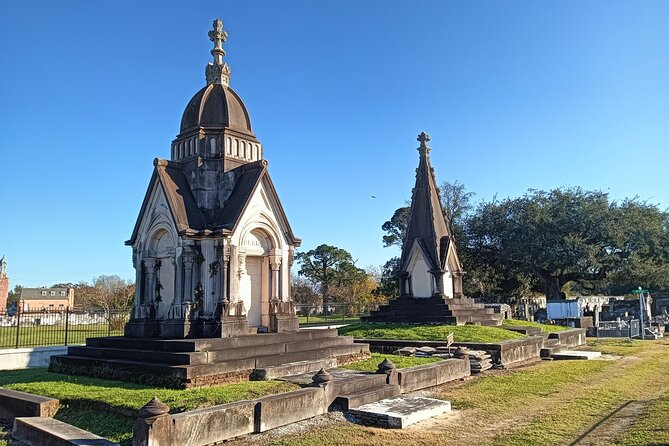
The St. Patrick section is actually made up of three cemetery areas: St. Patrick No. 1, St. Patrick No. 2, and Charity Hospital Cemetery. This is one reason the tour’s advertised cemetery total can feel confusing. The route covers several distinct grounds, but some are grouped together under one stop.
St. Patrick No. 1 is the oldest Irish Catholic cemetery in the city. It was created by immigrants who escaped the Irish Potato Famine, and the graves reflect the hard conditions faced by that first generation of Irish New Orleanians.
The cemetery’s modest and haphazard graves are important precisely because they lack the grand scale seen at Greenwood or Metairie. Poverty shaped what families could build. The uneven arrangement also helps you picture a community establishing itself with limited money and little social power.
This is one of the tour’s most human stops. The guide does not just point out old stones. You hear about the struggles of Irish immigrants in the early days of New Orleans and how a cemetery can reveal class, migration, and survival.
Across the street, St. Patrick No. 2 shows what changed for the Irish-American community a generation later. The graves are more imposing, ornate, and monumental. The difference suggests new money and greater security.
I find this side-by-side comparison especially useful. You do not need a long lecture to understand social change when you can see modest graves in one cemetery and elaborate tombs in another. The two sites turn immigration history into something visible.
The stop lasts about 30 minutes, divided among three areas. Expect to cross between locations and keep moving. This is not a single enclosed cemetery where you remain in one place. Pay attention to the guide’s transitions, because the connection between the sites is the point.
Charity Hospital Cemetery and the yellow fever years
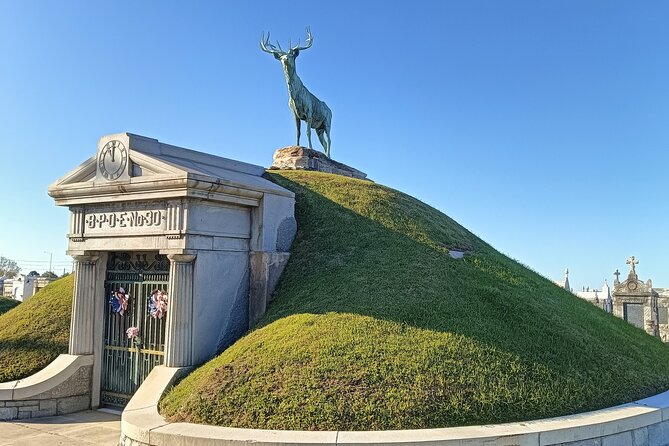
Next door is Charity Hospital Cemetery, a mass burial ground used in the past for victims of yellow fever. The subject is grim, but it explains a major part of New Orleans’ past.
The guide discusses why yellow fever was so prevalent in the city and how the disease affected the population. The cemetery’s mass-burial function gives the story a physical setting. You are not simply hearing that epidemics caused suffering. You are standing near a place created to handle the dead.
This stop may be difficult for some people. The subject involves disease, mass death, and a sinister chapter of local history. Still, it is an important part of understanding New Orleans. The tour does not reduce the cemetery to atmosphere or spooky entertainment. It connects the site to public health and the city’s past problems.
If you prefer light sightseeing, this is a point to consider before booking. The tour includes macabre material along with architecture and celebrity graves. That mix is part of its character.
The Hurricane Katrina Memorial and the story of 80 lives
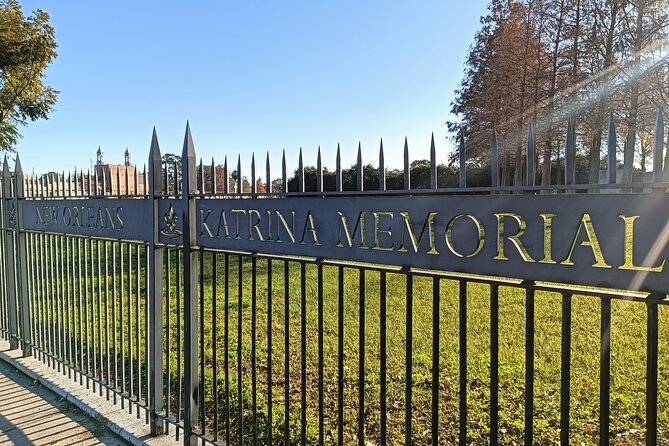
The final stop is the Hurricane Katrina Memorial. It serves both as a memorial and as a cemetery for 80 local people who died in the 2005 hurricane.
This part of the route shifts the focus from distant history to a disaster within living memory. The guide tells the story of the victims and the unusual chain of events surrounding their remains. Their bodies were lost by local authorities and later found in an obscure massive freezer, after which they received a proper burial.
That story is disturbing, but the memorial also offers dignity. The purpose is not simply to shock you with an administrative failure. It is to remember the people and explain why this place was created.
The stop is scheduled for about 30 minutes. That gives the guide time to describe the memorial, tell the story, and allow a more reflective pause than you may have at a celebrity grave. I would approach this part respectfully. It is a memorial for real people, not a haunted attraction.
This final stop also gives the tour a clear modern connection. You move from immigrant cemeteries and yellow fever to a disaster that still shapes how people think about New Orleans. The result is a broad view of the city, from its earliest communities to a defining event of the 21st century.
What the two-hour format feels like
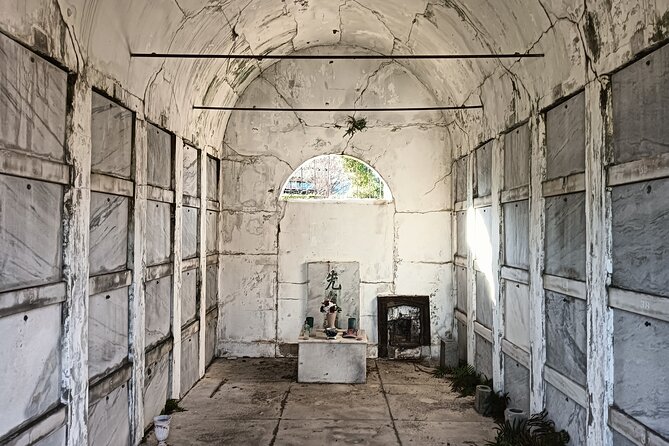
The tour begins at 10 a.m. and lasts about two hours. That timing is practical. You can spend the afternoon in the French Quarter, visit a museum, explore another neighborhood, or make a lunch reservation without giving up the whole day.
The route is described as easily walkable, with time for photographs and questions. Still, the number of stops means you should expect steady movement. Wear comfortable shoes and keep your attention on the guide. Some of the best information comes from comparing one cemetery with the next.
The maximum group size is 22. That is not a private tour, but it is small enough to make questions possible. The strongest guide feedback points to an interactive style, with Chris adjusting to the group’s pace and Christopher answering questions throughout the walk. Bobby is also praised for making the tour personal and entertaining.
The exact guide is not guaranteed. You may receive Bobby, Chris, Christopher, or another guide. What you can reasonably look for is a guide who explains the differences among the sites instead of rushing from famous name to famous name.
The tour is offered in English and includes a mobile ticket. Alcohol and lunch are not included, so plan your food separately. The activity ends back at the Morning Call Coffee Stand, and the meeting point is near public transportation.
Who will get the most from this tour
I would recommend this experience to you if you enjoy history told through places. It suits people curious about architecture, religion, immigration, public health, literature, music, and New Orleans disasters.
It is also a good choice if Anne Rice brought you to the cemetery subject in the first place. You will see her grave, but you will not spend the entire morning on vampire lore. The tour gives that literary connection a larger setting.
Families and mixed-interest groups may also find the route useful. One person can focus on famous graves, another on architecture, and another on the Irish or yellow fever stories. The guide-led structure keeps everyone moving together.
I would think twice if you want a slow, private photography session. The route covers many sites in two hours, and the group may need to maintain a schedule. I would also think twice if cemetery visits or disease history make you uncomfortable.
The 4.9 rating from 14 submitted ratings and the 100 percent recommendation figure suggest strong satisfaction, but the sample is small. I would take the praise as a useful sign about the guides and organization, not as a promise that every group will have the same guide or weather.
Is the $29 price fair?
At $29, I consider this a solid value for a focused two-hour introduction. You are paying for a guide who links several cemetery traditions and notable graves into one story. The value is highest if you would otherwise have trouble finding the correct cemeteries or understanding what you are seeing.
The price is less compelling if you plan to spend hours at one cemetery on your own. A self-guided visit gives you more freedom, but it does not provide the same built-in explanation of the family feud, Irish social change, yellow fever, or Katrina memorial.
Free cancellation is available if you cancel at least 24 hours before the 10 a.m. start time. Changes or cancellations inside that window are not accepted for a refund. That policy is simple, but you should watch the local cutoff time, especially if weather may affect your plans.
Should you book the cemetery tour?
Book it if you want a compact, story-driven introduction to New Orleans burial customs and cemetery history. The best reasons are the religious and social comparisons, Anne Rice’s grave, the Irish cemetery contrast, and the serious final stop at the Katrina Memorial.
I would choose it early in your New Orleans visit, since the morning schedule leaves room to use the afternoon for another neighborhood or attraction. Go with comfortable shoes, an open mind, and realistic expectations about the pace.
Skip it if you want only a famous-graves checklist or a long, unhurried cemetery walk. For most people who want context as well as photographs, $29 is a sensible way to see how New Orleans remembers its dead.
FAQ
How long does the cemetery tour last?
The tour lasts approximately two hours.
What time does the tour begin?
The tour begins at 10 a.m.
Where does the tour start?
It starts at the Morning Call Coffee Stand, 5101 Canal Boulevard, New Orleans, Louisiana 70124.
Where does the tour end?
The activity ends back at the meeting point.
Which famous grave can I see?
The tour includes Anne Rice’s grave at Metairie Cemetery and the grave of Louis Prima. It also visits graves connected with actors, musicians, and some mafiosos.
How many cemeteries does the tour visit?
The experience is described as covering five cemeteries, but the route details include Greenwood, Cypress Grove, Gates of Juhad, Metairie, St. Patrick No. 1, St. Patrick No. 2, and Charity Hospital Cemetery, plus the Hurricane Katrina Memorial.
Is a guide included?
Yes. A tour guide is included, and the experience is offered in English.
How many people can join the tour?
The maximum group size is 22 people.
Can I cancel for a full refund?
Yes. You can receive a full refund if you cancel at least 24 hours before the experience start time. Cancellations or changes made less than 24 hours before the start are not accepted for a refund.
Just added around New Orleans
- New Orleans Garden District Tour★ 5.0 · 8 reviews
- New Orleans Seance Experience★ 4.0 · 8 reviews
- Airport and City Transfers in New Orleans★ 5.0 · 8 reviews
- Sin and Tonic Pub Crawl in New Orleans★ 4.5 · 8 reviews
- The New Orleans Darkness Tour★ 4.4 · 9 reviews
- New Orleans Plantation Tour with Transportation★ 5.0 · 9 reviews
- New Orleans Self-Guided Kayak Bayou Swamp Tour★ 5.0 · 9 reviews
- Historic Carrollton Neighborhood Walking Tour★ 5.0 · 9 reviews
Cemetery Tours, compared.
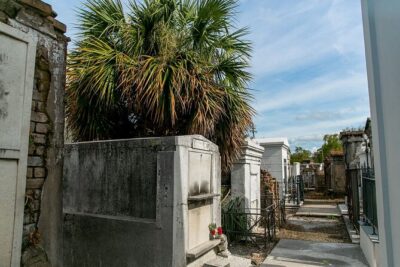
St. Louis Cemetery No. 1 Official Walking Tour
Read our review →
Cemetery and Ghost BYOB Bus Tour in New Orleans
Read our review →
New Orleans City Tour: French Quarter, Garden District & Cemetery
Read our review →
New Orleans Dead of Night Ghosts and Cemetery Bus Tour
Read our review →
New Orleans City and Cemetery 2-Hour Bus Tour
Read our review →
New Orleans Cemetery Bus Tour with Exclusive Cemetery Access
Read our review →
Cemetery Bus Tour At Dark with Exclusive Access
Read our review →
Browse the lists this tour appears in