
Reviewed · CYCLING TOURS
New Orleans: Heart of the City Bike Tour
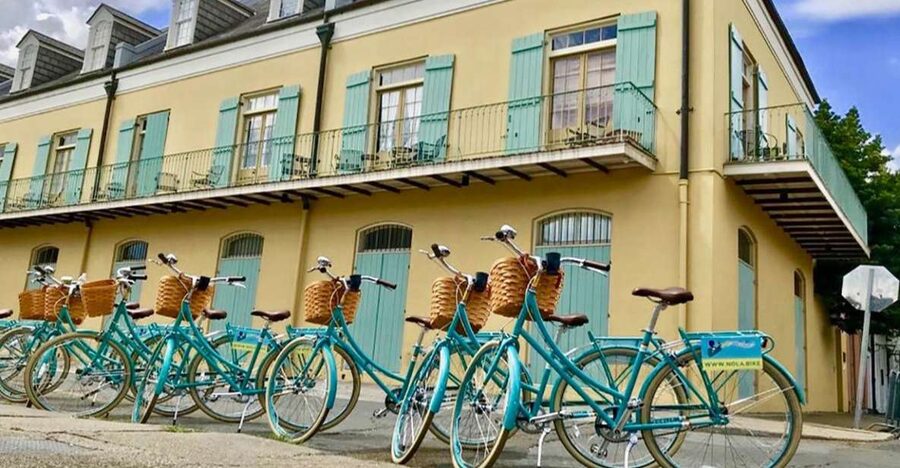
New Orleans’ Creole story makes the most sense when you move through the neighborhoods where it developed. This three-hour bike ride links the French Quarter, Faubourg Marigny, Bywater, the Mississippi River, and St. Roch Cemetery at an easy pace, giving you a useful first look at the city beyond Bourbon Street.
I like the small group of 10 or fewer, which gives the guide room to answer questions and point out details. I also like the cemetery stop: it adds a thoughtful look at New Orleans burial customs rather than treating the city as a nonstop party town. The main drawback is simple: you need to ride in city streets, and the tour runs in rain unless weather forces a change before departure.
- Six miles at an easy pace: This is sightseeing by bicycle, not a fitness test.
- Five historic neighborhoods: You see more than the French Quarter alone, including Faubourg Marigny and Bywater.
- St. Roch Cemetery: Learn why above-ground burial is part of New Orleans life and memory.
- Creole culture explained: The guide connects colonial history with the people and traditions that shaped the city.
- English-speaking guide, small group: Guides such as Eric add local food, jazz, and neighborhood advice to the historical talk.
- Morning timing: The usual morning departure leaves the rest of your day open for exploring.
In This Review
- Why a Bike Is a Smart Way to Meet New Orleans
- Starting Between Toulouse and St. Peter Streets
- The French Quarter: Start With the City’s Colonial Roots
- Faubourg Marigny and the Changing Face of Old New Orleans
- Along the Mississippi River at a Leisurely Pace
- Bywater: See the City Beyond the Tourist Center
- St. Roch Cemetery and New Orleans Burial Customs
- How Much History Can Fit Into Three Hours?
- The $55 Price: Good Value for the Right Kind of Sightseer
- Who Should Book This New Orleans Bike Tour?
- Should You Book the Heart of the City Bike Tour?
- FAQ
- How long is the Heart of the City Bike Tour?
- Where does the bike tour meet?
- Which New Orleans areas does the tour visit?
- Does the tour visit a cemetery?
- Is the bicycle provided?
- Who can take this bike tour?
- What happens if it rains?
Why a Bike Is a Smart Way to Meet New Orleans
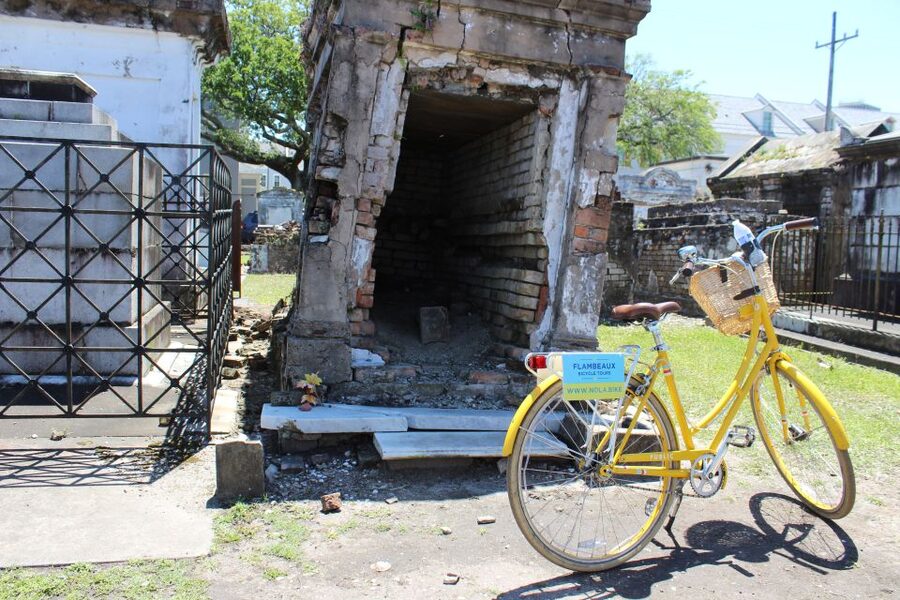
New Orleans is flat, and this route covers only about six miles. That makes a bicycle a practical middle ground between walking and riding a sightseeing bus. You cover enough ground to see several old neighborhoods, yet you move slowly enough to notice balconies, streets, cemeteries, and the changing feel of each district.
I like the way this tour uses the bicycle as a link between stories. The French Quarter is not treated as the whole city. You pedal outward through Faubourg Marigny and Bywater, follow the Mississippi River, and reach St. Roch Cemetery. The route gives you a sense of how New Orleans grew beyond its original core.
The pace is deliberately gentle. You should be comfortable riding a bike, but you do not need to be an experienced cyclist. The bikes are professionally maintained, and a helmet is available, though listed as optional. A bottle of water is included, which is useful in Louisiana’s heat.
The city-street setting still matters. You will share roads with local traffic, so this is not a closed-path ride. Comfortable shoes are required, and sandals, flip flops, and slippers are not allowed. I would choose light clothing, bring sun protection, and expect the weather to affect your comfort even on an easy route.
Starting Between Toulouse and St. Peter Streets
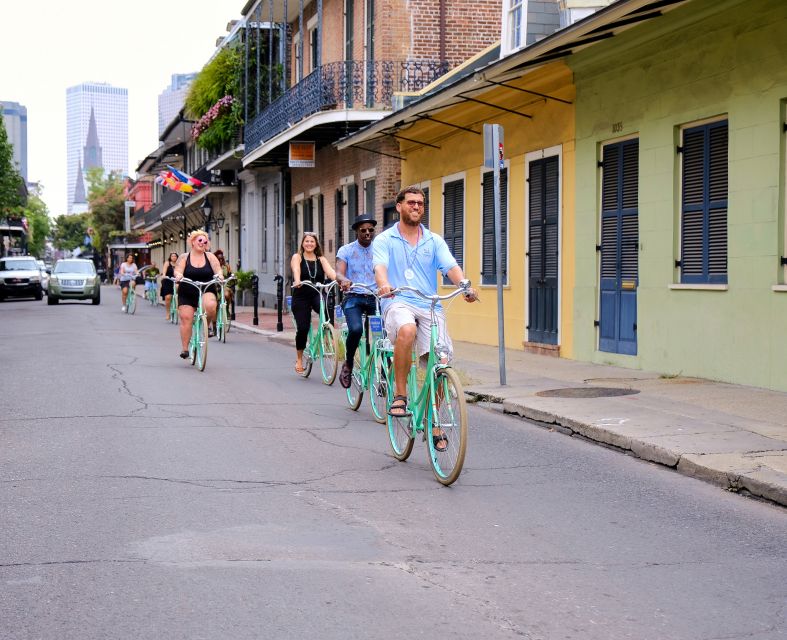
The meeting point is between Toulouse Street and St. Peter Street, next door to Arrow Cafe. That location puts you close to the French Quarter and makes it easy to arrive early for coffee or a quick bite, though food and drinks are not part of the tour.
Allow a little extra time to find the exact storefront and get settled. The experience includes the bicycle, but it does not include hotel pickup. You need to make your own way to the meeting point and return independently after the ride.
The group limit of 10 is one of the tour’s strongest practical features. A guide can keep the pace together without turning every stop into a long wait. It also makes questions easier, which matters on a tour built around explanation rather than simply following a route.
English is the tour language. If you want a ride with a lot of historical storytelling, this is a good match. If you prefer a quiet cycle with only occasional commentary, you may find the steady narration less appealing.
More bike days around French Quarter:
- New Orleans French Quarter and Garden District Bike Tour
★ 5.0 · 410 reviews - New Orleans: Garden District and French Quarter Bike Tour
★ 5.0 · 60 reviews - New Orleans French Quarter & Cemetery Bike Tour
★ 5.0 · 25 reviews
The French Quarter: Start With the City’s Colonial Roots
The ride begins in the French Quarter, where the guide introduces New Orleans’ colonial past and the forces that shaped its early streets. You will pedal through the oldest parts of the city, learning how the city developed before moving into the later neighborhoods.
The benefit of seeing the Quarter by bike is scale. On foot, you may spend most of your time around a few famous blocks. From a bicycle, you can move through the district and then quickly see how its streets connect with the neighborhoods beyond it.
The French Quarter can be crowded, and bikes require care around pedestrians, parked cars, and uneven city surfaces. The leisurely pace helps, but you should still pay attention rather than treating the ride like a casual cruise.
This opening section also gives context for the rest of the day. The tour is not only about buildings. It looks at the people, customs, and cultural exchanges that shaped New Orleans. That is where the discussion of Creole culture becomes useful, since the subject is tied to the city’s development rather than presented as a detached vocabulary lesson.
Faubourg Marigny and the Changing Face of Old New Orleans
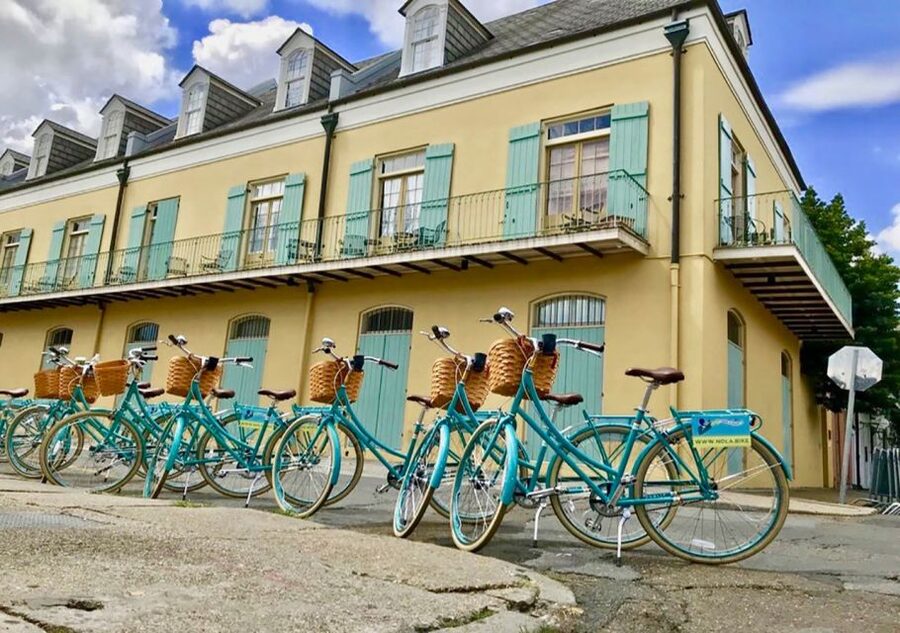
From the French Quarter, the route continues into Faubourg Marigny, one of the historic neighborhoods included on the ride. Here, the change in streets and atmosphere helps show that New Orleans is made up of distinct areas, each with its own place in the city’s story.
Your guide pauses along the way to explain the local heritage and the development of Creole life. The value is in the connections: instead of memorizing dates, you can see how the city’s culture took shape across neighborhoods.
The exact stops may vary with traffic, weather, and the guide’s judgment. That flexibility can be a plus, since a small group can spend more time on a question or a place that sparks interest. It also means you should not expect a rigid, minute-by-minute sightseeing schedule.
Guides such as Eric receive especially strong praise for making the history easy to follow and entertaining. He is also known for offering useful suggestions for restaurants and jazz bars, which can help you plan the rest of your stay. Those recommendations are not a formal part of the package, but they add value if you are new to the city.
Along the Mississippi River at a Leisurely Pace

The ride follows the banks of the Mississippi River, giving you a change from the close streets of the old neighborhoods. This section is less about checking off a single attraction and more about understanding New Orleans as a river city.
The river helps explain why the settlement grew where it did and why movement, trade, and cultural exchange have mattered so much here. Your guide uses the ride and the stops to connect the physical setting with the city’s colonial past.
You should not book this as a dedicated riverfront sightseeing excursion. The river is one part of a wider route, and the tour’s main subject remains the history and culture of New Orleans. Still, the change of setting is welcome. It breaks up the urban streets and gives you time to pedal without rushing from one talking point to the next.
The route’s flat terrain is helpful, especially in a city where heat can make even modest exertion feel harder. The total distance is about six miles, but the slow pace and frequent stops keep the focus on listening and looking rather than speed.
A few more French Quarter tours worth a look
- New Orleans City Tour: French Quarter, Garden District & Cemetery
★ 4.5 · 2,209 reviews - New Orleans City Sightseeing Hop-On Hop-Off Bus Tour
★ 4.5 · 4,943 reviews - New Orleans Sightseeing City Tour
★ 5.0 · 3,038 reviews - City Tour of New Orleans with Pickup
★ 4.5 · 2,407 reviews
Bywater: See the City Beyond the Tourist Center
The route continues through Bywater, another neighborhood that helps widen your view of New Orleans. This is one of the tour’s better features because it moves you beyond the most familiar French Quarter streets without asking you to commit a full day to a distant excursion.
As you ride, the guide explains how New Orleans developed and points out the cultural details that are easy to miss when you move only between major attractions. You may find that this part of the tour gives you the best sense of how the old city extends into everyday neighborhood life.
Because the tour runs on public streets, conditions can vary. Traffic, weather, and the group’s riding ability all affect the rhythm. That is a fair trade for seeing more of the city in a small group, but it is worth keeping in mind if you want a tightly controlled sightseeing route.
I would use this section as a scouting trip for the rest of your visit. Make a note of streets, restaurants, bars, and places that catch your attention. Eric’s food and jazz suggestions can be especially useful here, but any guide may have different local advice.
St. Roch Cemetery and New Orleans Burial Customs
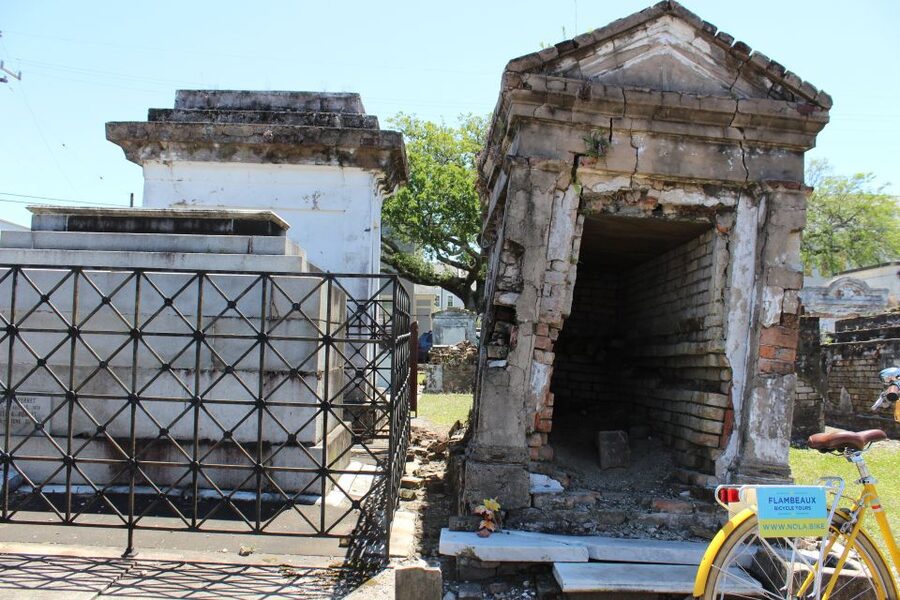
The stop at St. Roch Cemetery is the tour’s most distinctive feature. Rather than passing another street corner, you enter an above-ground cemetery and learn about New Orleans burial practices.
This adds depth to the day. Cemeteries are not simply scenic stops in New Orleans. They are part of how the city remembers its dead and manages burial in a place shaped by local conditions. The guide explains the customs and the cultural meaning, giving you a more respectful understanding of something you may otherwise see only from the outside.
The cemetery visit also changes the mood of the tour. After the movement and neighborhood commentary, you have time to listen and consider how family, faith, and local tradition appear in the city’s public spaces. The stop is educational without turning the experience into a solemn walking lecture.
Recent tour feedback gives special attention to this visit, including the guide’s friendly ties with people at the cemetery. That local familiarity can make the stop feel less like a quick photo opportunity and more like part of the neighborhood. You should still approach it with care. This is an active place of remembrance, not an attraction designed only for sightseeing.
If you are looking for New Orleans beyond music, food, and architecture, St. Roch Cemetery is a strong reason to choose this ride. It offers a subject that many general city tours skip.
How Much History Can Fit Into Three Hours?
The guide covers colonial New Orleans, the city’s oldest neighborhoods, Creole culture, local heritage, and burial traditions in three hours. That is enough time for a useful introduction, not a full course in Louisiana history.
The strongest guides make the information easy to absorb while you ride. Eric is repeatedly singled out for explaining history with ease, humor, and warmth. That matters because a bike tour can become tiring if every stop turns into a long speech. Here, the comments point to a lively style that keeps the ride moving.
You should expect a mix of riding and stops. The pace is easy, but the tour is still information-heavy. If you want to learn how New Orleans developed and plan to explore the neighborhoods again later, the format works well.
I would book it early in your visit. The route can help you decide where to return for meals, music, or a slower walk. It also gives you a framework for later sightseeing. Once you understand the relationship between the French Quarter, Faubourg Marigny, Bywater, the river, and the cemetery, the city feels easier to read.
The $55 Price: Good Value for the Right Kind of Sightseer
At $55 per person, the tour offers three hours of guiding, a maintained bicycle, an optional helmet, and water. Food, drinks, and hotel transportation are extra, so the true cost is the tour price plus whatever you spend getting to the meeting point.
I consider that fair value if you want both transportation and interpretation. A standard walk may focus on a smaller area, while a bus can cover more ground but give you less direct contact with the streets. This bike tour sits between the two: you travel far enough to reach five historic neighborhoods, but you remain close to the city.
The small group improves the value. You are not paying only to follow a large crowd through the streets. You get a guide who can keep the ride at a comfortable pace and respond to questions.
The price is less compelling if you already know the city well, dislike city cycling, or want a food-centered experience. You will need to supply your own meals and drinks, and the tour does not include entrance packages or hotel pickup.
Free cancellation is available up to 24 hours before the tour for a full refund, and you can reserve now and pay later. If poor weather is forecast before the ride, you can reschedule or receive a refund. Once the tour has started, a refund is not offered if rain arrives.
Who Should Book This New Orleans Bike Tour?
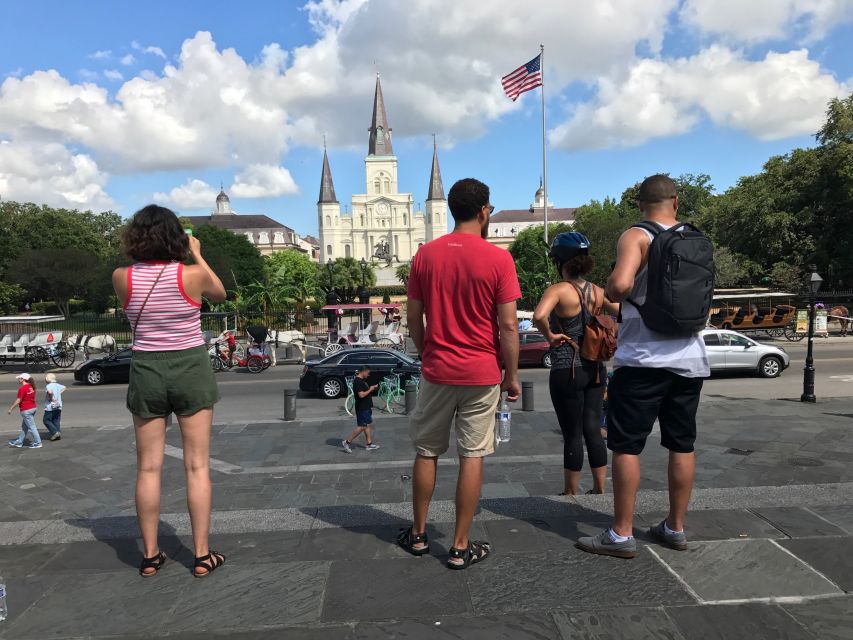
I would recommend it to first-time visitors who want a clear introduction to New Orleans and enjoy learning while moving. It suits couples, friends, and families with teenagers who can ride safely on city streets.
The age rules are firm. Participants must be over 13 and at least 4 feet 11 inches tall, though the additional information also gives a 4-foot 9-inch minimum, so confirm the applicable requirement when booking. Anyone under 18 must ride with a legal guardian.
This is not suitable for children under 13, people who cannot ride a bike, or people with mobility impairments. Sandals, flip flops, and slippers are not allowed. Comfortable closed shoes are the sensible choice.
You should also be ready for a rain-or-shine outing. Weather may lead to a change before the start, but once the ride begins, the tour does not offer refunds because of rain. A morning booking is usually available, and that timing leaves your afternoon and evening open.
Should You Book the Heart of the City Bike Tour?
Book this tour if you want history with movement, a small group, and a chance to see New Orleans beyond the French Quarter. The St. Roch Cemetery stop, the discussion of Creole culture, and the ride through Bywater give it more substance than a basic city orientation.
I would skip it if you cannot ride comfortably, want a fully enclosed vehicle, or prefer a tour centered on food, ghosts, jazz, or nightlife. Those subjects may be better served by other New Orleans experiences.
For most active visitors, the $55 cost is reasonable. You get six easy miles, five historic neighborhoods, a local guide, and practical ideas for the rest of your stay. Book it near the start of your trip, wear proper shoes, and treat the ride as both a history lesson and a way to find the parts of New Orleans you will want to revisit.
FAQ
How long is the Heart of the City Bike Tour?
The tour lasts three hours and covers about six miles at a very leisurely pace.
Where does the bike tour meet?
The meeting point is between Toulouse Street and St. Peter Street, next door to Arrow Cafe.
Which New Orleans areas does the tour visit?
The route includes the French Quarter, Faubourg Marigny, Bywater, the Mississippi River banks, and other historic areas. It covers five of New Orleans’ oldest neighborhoods.
Does the tour visit a cemetery?
Yes. The route includes St. Roch Cemetery, where the guide explains New Orleans’ above-ground burial practices and related cultural traditions.
Is the bicycle provided?
Yes. A professionally maintained bicycle is included, along with a bottle of water. A helmet is available but optional.
Who can take this bike tour?
Participants must be over 13 and at least the stated minimum height requirement. Participants under 18 must be accompanied by a legal guardian. The activity is not suitable for people who cannot ride a bike or people with mobility impairments.
What happens if it rains?
The tour operates in city streets and runs rain or shine. If bad weather occurs before departure, you may reschedule or receive a refund. Once the tour has begun, refunds are not offered because of rain.
Just added around French Quarter
- Spirits of the French Quarter: A Halloween Special Event Tour★ 3.5 · 9 reviews
- New Orleans French Quarter and Cemetery Walking Tour★ 4.0 · 9 reviews
- New Orleans: Shrimp Boil Experience in French Quarter★ 4.8 · 9 reviews
- French Quarter Guided Walking Tour★ 3.5 · 10 reviews
- New Orleans: French Quarter Walking Tour★ 5.0 · 10 reviews
- French Quarter Walking Tour: LGBTQ History, Literary History, and Voodoo★ 5.0 · 11 reviews
- French Quarter Tour with Local Guide and Creole Stories★ 5.0 · 11 reviews
- Private French Quarter Walking Tour★ 5.0 · 11 reviews
Cycling Tours, compared.
New Orleans French Quarter and Garden District Bike Tour
Read our review →
New Orleans Creole Odyssey Small-Group Bike Tour
Read our review →
Creole New Orleans Electric Bike Tour (ages 16 & up)
Read our review →
New Orleans History and Sightseeing Small-Group Bike Tour
Read our review →
New Orleans Garden District and Cemetery Bike Tour
Read our review →

Browse the lists this tour appears in